CHOREOGRAPHIC TOOLBOX | HOW TO GROW YOUR OWN PROJECT
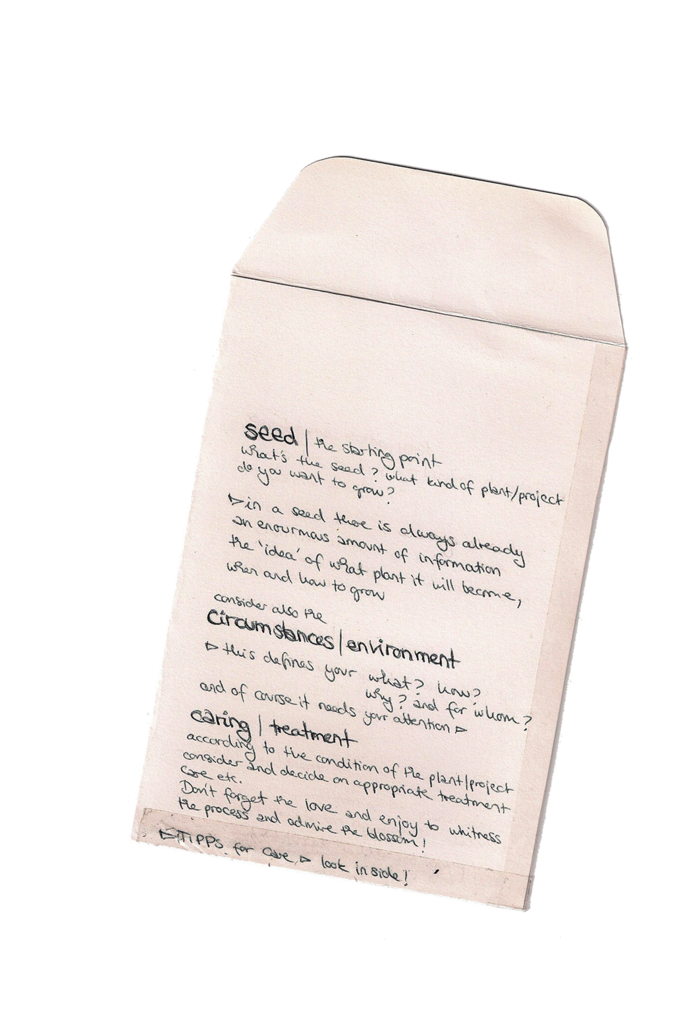
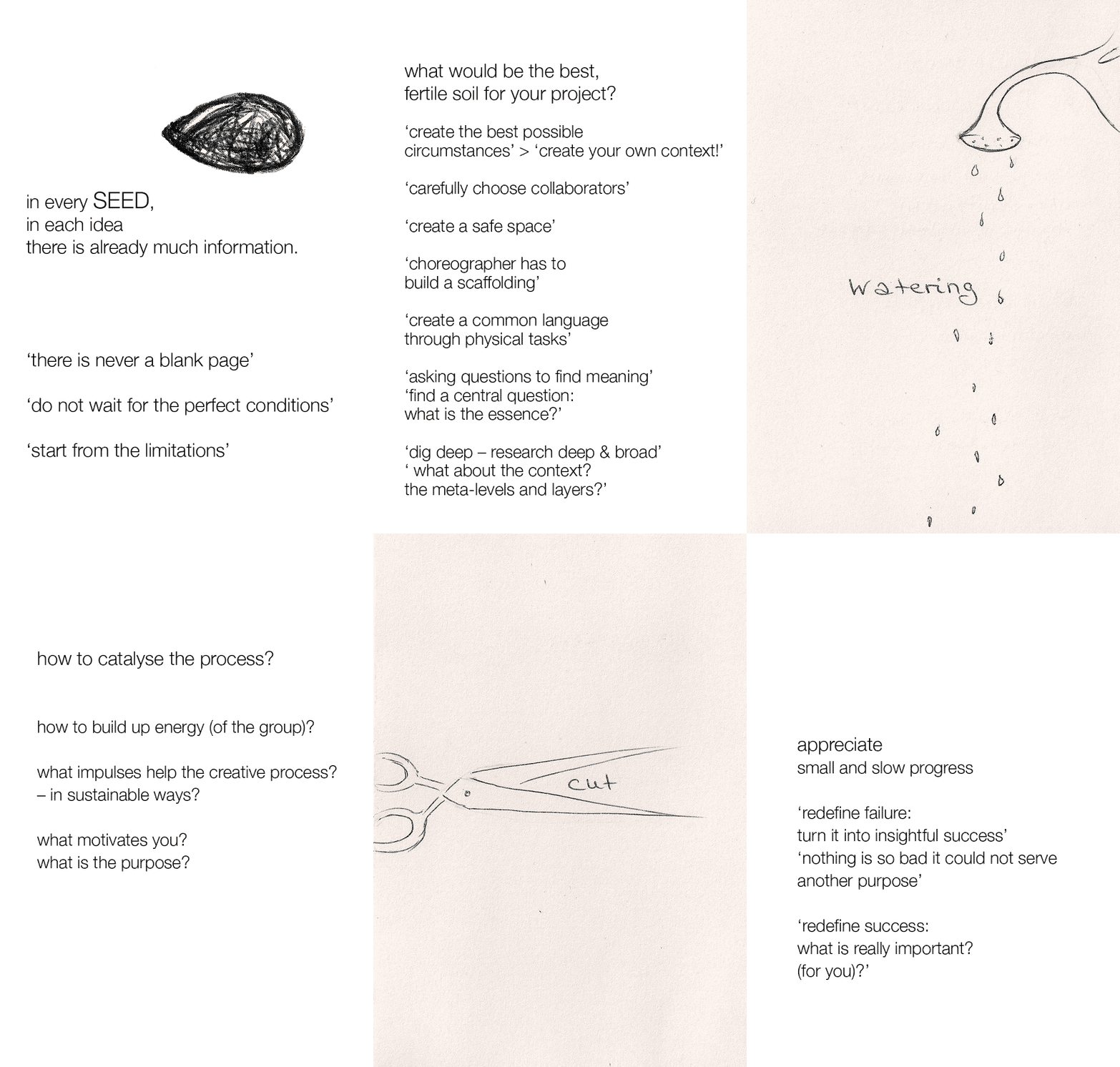
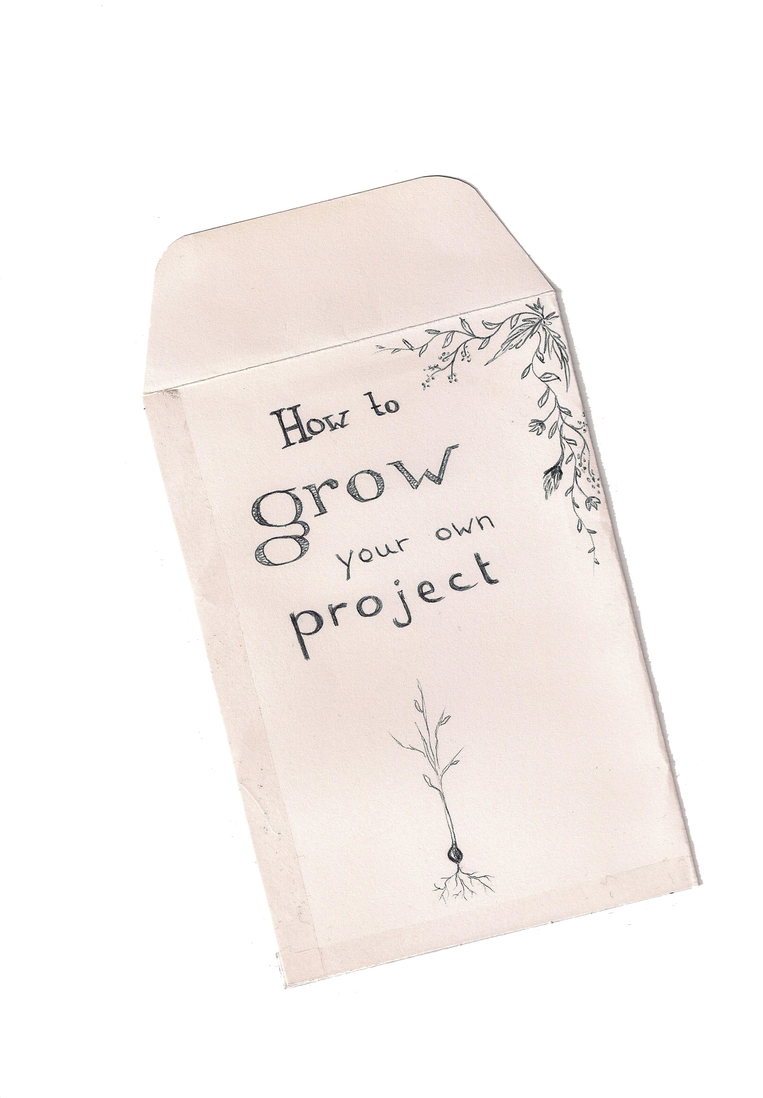
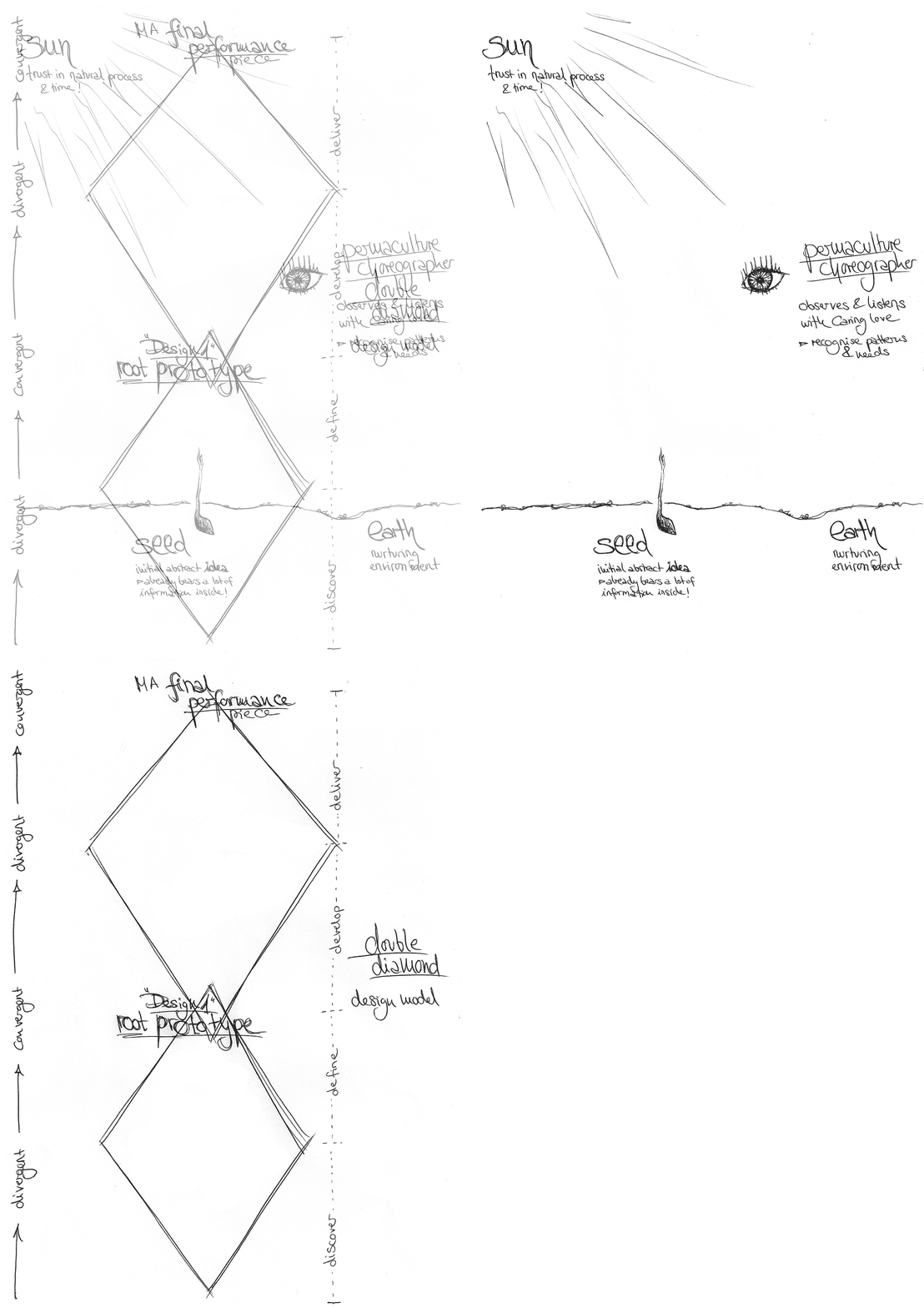
For an exercise about making a choreographic toolbox I created a, in retrospective, visionary prototype of what later became the seed for this transfer and application of permaculture design principles to my research trajectory. My toolbox design took gardening as a metaphor for the conceptualisation of an artistic process in which I was comparing it to the growing of plants.
‘how to grow your own project’ is a set of cards drawn and written by hand, in a seedbag-like envelope. My choreographic tools I have listed on the cards representing metaphorical categories I associated to the art and craft of gardening, such as watering, cutting, love, sun and nature.
12 PRINCIPLES OF PERMACULTURE DESIGN
Diving deep into the subject matter I quickly came upon the 12 PRINCIPLES of permaculture design defined by the founding father of the permaculture movement Bill Mollison and his student David Holmgren. I immediately felt a profound resonance with the content, these principles spoke to me even though I knew very little about their actual application in gardening. Actually I intentionally did not research their gardening specific practical application in depth, but at first wanted to make an effort to interpret and apply them myself by transferring them to the context of my movement creation.
Discover in the footnotes my personal remarks,
on how I interpreted the 12 Principles.
»I hate the term methodology, its a terrible word, we are a bit stuck with (...) method is simply a way of working with things (...) (but) methodology is a way of holding things at arms length as a guarantor of objectivity.«
(Ingold, 2018, min.28:00)
A TRUE ARTISTIC METHODOLOGY
Personally I share this impression of Tim Ingold which represents that a methodological framing feels somehow pretentious and dishonest towards my very personal and passionate approach of research in an artistic context. The only answer I found for this (formal) need of Artistic Research to follow a certain methodology was something, which in a way could count as such, but to a certain extend also contradicts the idea of a methodology in itself (at least in terms of hard science):
Permaculture Design is based on ideological principles, axioms (self-evident truths) that create a certain mind-set and attitude in relation to your surrounding. »It is part of a new ecological paradigm« and »defines itself as building on systems theory« (Rothe, 2014, p.1)
In that way on the one hand there is a structural, cognitive-analytic approach in the Permaculture Design, to guide, interpret and evaluate, an artistic research trajectory, that might qualify it for a methodology.
On the other hand though Permaculture Design allows, or even asks for empathy rather than intellectual reasoning. Its key principle and most important tool is sensitive observation, which enables the action of pattern recognition.
»A process of continuous observation in order to recognize patterns and appreciate details is the foundation of all understanding. Those observed patterns and details are the source for art, science and design. The natural and especially the biological world, provides by far the greatest diversity of patterns and details observable without the aid of complex and expensive technology.« (Holmgren 2002, p.13)
In Permaculture Design »patterns are a visual embodiment of nature’s knowledge. Permaculture explores, observes and describes these patterns and then transforms them into various systems.« (Rothe, 2014, p.4). For my artistic practice as a movement artist this was key to my attempt of transferring the principles of permaculture to a research and creation process around aerial acrobatics.
Already I have naturally been applying my designers thinking approach to creative processes in my choreographic work. How these thinking patterns show in my practice could actually be described as ‘designing from patterns to details’, which is essentially one of the principles in Permaculture Design.
When I plunged myself deeper into the concepts of Permaculture Design I discovered even more fascinating perspectives that resonate very much, not only with my artistic practice as a mover, but also with my understanding of artistic research.
Especially I was attracted not only by the parallels and metaphoric coherence of the topics, but also by how »The philosophy of permaculture design questions the division between theory and practice or between rationality and sensibility.«
(Rothe, 2014, p.1). Something I felt resonating very much with my resistance of the traditional scientic methodologies of research, and how I imagine practice-led research in the arts and especially with and around physical movement should be approached in my point of view as a inseperable intertwinement of theory and practice.
THE PATTERN AS EMBODIED KNOWLEDGE
The permaculture concept of the PATTERN AS EMBODIED KNOWLEDGE is in my point of view a potential answer to the challenge of artistic research in the performing arts of how to intertwine theory and practice. In our art the knowledge is literally present in the body itself, and epistemological insights might present themselves in tacit, embodied form, recognizable in patterns through observation.
So maybe permaculture would not be aknowledged as serious methodology in hard science, but actually for artistic research it seems, at least to me, the perfect way to guide the trajectory and evaluate findings (which I consciously will not call ‘data’ here).
»permaculture knowledge is not scientific knowledge derived from systems theory, but axiomatic, practical, visual knowledge gained through osmosis« (Rothe, 2014, p.5)
Furthermore she specifies Holmgrens »kind of knowledge transfer as osmosis or ‘practical resonance’« which gives also a hint to the interpretation of observation, as not only involving the visual sense, but as Holmgren, with Bill Mollision co-founder of the Permaculture Design, writes himself »we must relearn the ability to see, hear, and otherwise recognize the patterns of nature«.
I feel the same is true for the embodied knowledge of our physical bodies, expressed in our movements. We must recognize this value again, and find appropriate ways how to make this knowledge accessible and appreciated through and within artistic research, beyond traditional language based forms.
Also in the very same article »Permaculture Design: On the Practice of Radical Imagination« Katja Rothe concludes: »Patterns bundle complex knowledge in a visual form. Abstraction and the reduction of complexity are intertwined with imagery and thus imagination. Patterns are ‘embodied’ systems theory knowledge«.
For me the saying 'an image says more than thousand words' is scaling up to 'a physical performance is as complex as a library'. Therefore Rothes further elaborations in the same article speak a lot to me: »Patterns as embodied, visualized knowledge are not simply abstractions, but directly transport a complex knowledge of systems.« (Rothe, 2014)
To me, all these theoretical concepts around permaculture made perfect sense, and as mentioned above I felt I was already applying the ‘design from pattern to detail’ principle, but when I started to explicitly apply Permaculture Design as a methodology in my research one of the first major outcomes was a collection of PRE-CHOREOGRAPHIC ELEMENTS, which emerged from a process of observation and pattern recognition in my own aerial acrobatic practice.
REFERENCES
Burrows, J. (2010). A Choreographer's Handbook. London, England: Routledge.
Holmgren, D. (2002) Permaculture. Principles and Pathways Beyond Sustainability.
Ingold, T. (2018) Search and Search Again: On the Meaning of Research in Art, min.28:00. CCA Glasgow (Presenter) [Podcast] Retrieved from: https://soundcloud.com/cca-glasgow/tim-ingold-search-and-search-again-on-the-meaning-of-research-in-art
Rothe, K. Permaculture Design: On the Practice of Radical Immagination (2014)
communication+1, Vol 3 (Iss.1) Article 4
‘(...) the afterlife of systems theory as expressed in the concept of permaculture, first developed by Bill Mollison and David Holmgren, should not only be sought in theoretical and analytical discourse. Instead we can understand permaculture as a form of figurative, ecological reasoning; a form of radical imagination drawn from the composite knowledge of a heterogeneous network of actors. Permaculture is thus neither a branch of environmental science nor an environmental political movement. Rather the philosophy of permaculture design questions the division between theory and practice or between rationality and sensibility. In permaculture design, these modes of knowledge are inextricably linked in explorations of patterns.’
(Rothe, 2014, p1)
'Utopia is on the horizon. I move two steps closer, it moves two steps further away. I walk another ten steps and the horizon runs ten steps further away. As much as I may walk, I'll never reach it. So what's the point of utopia? The point is this: to keep walking.'
– Eduardo Galeano
UTOPIA
how could this be possible at all?
as a human being – striking roots?
and furthermore into what? – the void?
Of course it may not be interpreted that literally, but rather as a poetic metaphor. However I do like to allude to the notion of utopia within this articultation of my research question.
It is inherent and an essential feature to my field of art, the circus, to attempt things that seem impossible to do, things that seem to require superhuman skill and power. And I think that we humans should dare ourselves much more and approach risks, not by growing stiff in the view of fear, but by facing them with a healthy mixture of attention and daring courage to go with the flow of the natural uncertainty of life.
That principle of minimum interference for me reflects also the permaculture philosophy. Furthermore it was a basic ideas of my vision what it meant to apply permaculture as methodology in a movement co-creational process. It has anyway been present in my choreographic toolbox for some time already in the form of 'work with what is present, what is already there, work with the limitations' and I am still practicing how to constantly re-interpret my limitations, turn them into a source for creativity and find the maximum freedom within the frame.
Always keeping my circus-rooted fondness for the utopic thought, to find the courage to keep walking into the void...
the PERMACULTURE CHOREOGRAPHER &
Ingolds notion of CORRESPONDENCE
Tim Ingolds vision, in my point of view, proposes a permaculture-like alternative approach to traditional methodologies. It speaks less about competitive and goal-oriented leadership in a scientific sense of research and in a neoliberal economy, but rather about mutual responsiveness. This for me relates closely to the mind-set of a permaculture choreographer.
Ingold calls this ‘mutual responsiveness’ CORESPONDENCE and refers it to his work as an anthropologist as doing ‘participant observation’.
So this approach opposing big data evaluating neoliberal economic thinking, comes quite close to my vision of applying a permacultural mindset to my choreographic working process:
»Imagine that you have a hard ball, something like a cricket ball and you keep throwing it at the surfaces of things. You keep on throwing and after a while, like you throw it to a window, and the window breaks. So the surface of the world has broken as a result to your insistent blows. So everytime you throw this hard ball to the world, everytime you get an impact, that is a datum and if you throw the ball often enough, you will achive what they call a BREAKTHROUGH.
So the idea in this scientific imagination is that the world has this hard surface, it won’t willingly reveal it’s secrets, but if you keep on throwing hard things at it eventually the world will break and reveal some secrets to you, and you achieve your breakthrough.
So that’s hard science.
The soft ball on the other hand imagine if you have a softball, a spungy ball and you keep throwing it to the world, even if you throw it to the window, the window is not going to break, but everytime the softball hits the surface it bends and deforms a little taking into itself some of the characteristics of the things that it hits while those things also bend to its pressures in their own ways. So there is a kind of mutual responsiveness. You throw the ball to the surface, the surface bend alittle bit in response to the ball, the ball squishes a little in response to the surface each takes in something of the other.
And the result is a kind of mutual responsiveness of the surface of the ball answering to the surface of the world and I call that mutual responsiveness - CORRESPONDENCE.
Corespondence is a kind of labour of love.
A process of giving back to the world what we owe to it
we owe our existence to the world (...) give and take (...)
in antropology “participant observation”«
(Ingold, 2018, min.09:09)
This 'participant observation' is in my point of view very close to the concept of permaculture design, with its key principles of observation & pattern recognition.
For me those two perspectives merged with my personal designers mind approaches into a complex 'permaculture design (non)methodology'.
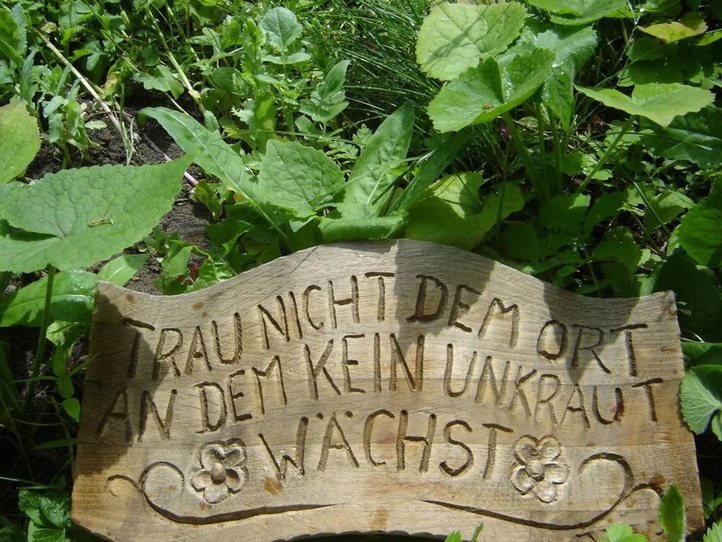
»If I couldn't change everything what was the sense of trying to change anything?
Gradually I came to appreciate the principle of minimum interference. Sometimes, when I am feeling impotent to alleviate the burden of human suffering, it is enough to look directly into the eyes of a homeless person and smile.«
(Keen, 1999, p78)
GIERSCH | my story about the goutweed
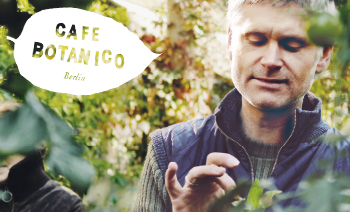
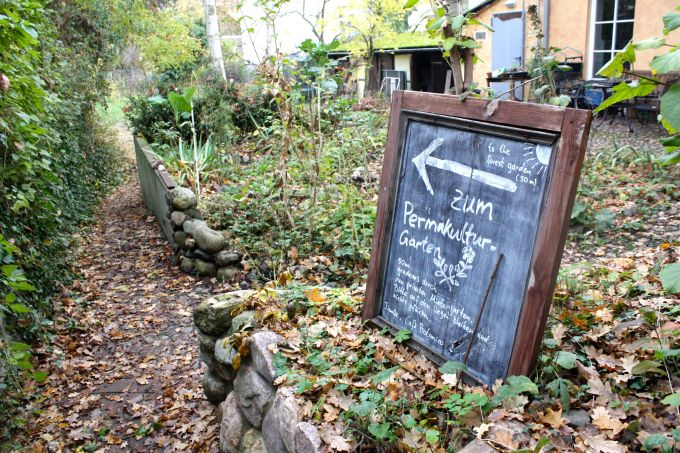
How I actively became in touch with permaculture was through a practical volunteer workshop by Natasha Weddepohl in a permaculture garden of Café Botanico, in the middle of Berlin-Neukölln. A small team of gardeners cultivate a 1000 sqm and as 'forest garden' according to the permaculture paradigm to grow salad and vegetables that are served in the associated restaurant right next to it.
Within this 5 hours hands-on workshop Natasha introduced a handful of volunteers into the ideas and concepts of Permaculture. From the beginning she pointed out, that permaculture is not just to be understood as a way and method of gardening, but in its wholistic approach also includes almost everything, and in that way can be considered as a philosophy of life.
Giersch is a perennial plant in the carrot family growing in rhizomes, and is by most of the conventional gardeners considered as 'pest plant' one has to get rid of. Which is apparently very tough and quickly requires the need of some effective warfare agent. This plant is just so much at home in that sort of soil, as also Botanico has it, it found the perfect conditions to grow there in abundance.
What the gardeners at Botanico ‘did’ was simply a 180° shifting of their own perspective when they re-interpret the Giersch as a valuable good (actually it is a tasty wild vegetable) and made it their main ingredient of their house salad. Giersch is actually very delicious, but just in a certain stage of its growth. They have to harvest the tender young leaves in the early stages of their development to make best use of this nutritious ‘salad’ that in other contexts would be fought against and thrown away.
As often in life it is much more about how we approach certain situations, how we interpret and deal with things to turn a failure into a sucess-story.
This example marked a big insight for me, and researching more and more around the concepts of permaculture design it triggered this idea in me to make it my methodology for this artistic research.
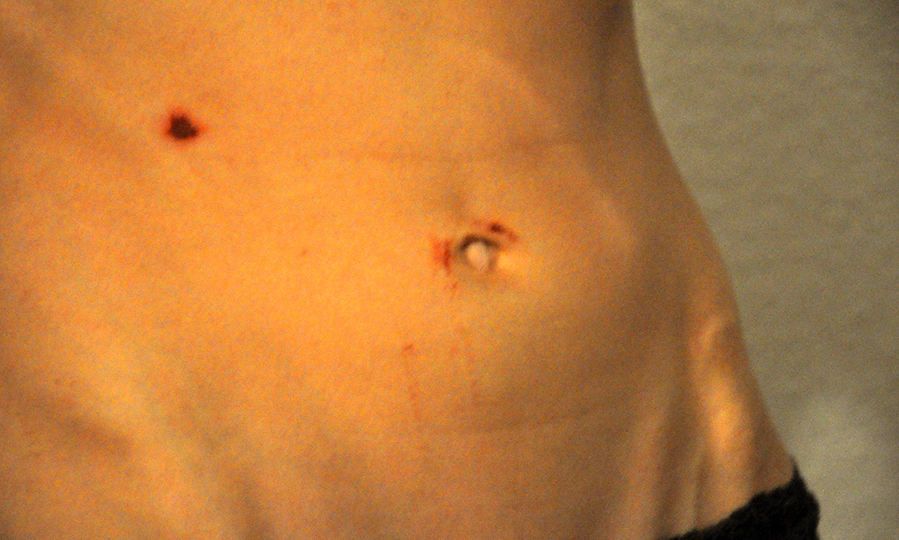
‘Collaboration is like two people banging their heads against each other
and the collaboration is the bruises that are left behind.’ (Burrows, 2010)
Does it really have to be like that?

Two pictures from my photo documentation of my 'Dialogues with a Tree Root'
Even though I had a strong focus on researching 'no-impact' movement, and undertook a careful & gentle attitude towards any body & object relationship's which are the central element of my practice. Just a fracture of a second of not being fully present was enough to risk scratches and bruises.
Looking back, I have to admit that initially I had a rather naive approach when I started my physical research into ‘no-impact’ movement research with the idea that I could treat the object very carefully, pay attention to its needs and be ‘oh-so-generously sensitive and attentive’ in building up my relationship to the tree root. What I realised later though: this was not only a purely altruistic attitude, but I was actually moving very slowly and carefully and attentively also very much for my own sake.
I do not see the object as inanimate matter (and try to avoid the term 'apparatus', which is often used referring to circus objects') but for me rather its my 'dance partner' and is a co-creator of my pieces, and has its own 'voice'.