SOUNDTRACK
Whilst thinking and writing this paper, I listened to Looped by Kiasmos, on repeat.
CLARE
Re-enactment is a fundamental technique in the construction of knowledge. Learning through replication is prevalent throughout all stages of life, ranging from a newborn mimicking their caregiver's smile to the development of language proficiency and the acquisition of social skills. It occurs within academic papers, including this one I am writing now. In composing this paper, I am performing others I have read through citation practices. But as I’m writing this, I can feel my distortion of their ideas and my bending of their original meaning. My re-enactment, my performance of other's previous knowledge is failing, and my own performativity is exposed. Maybe it is the re-enactments fundamental ineptitude in precisely enacting the past, its inevitability in performing differences, failures, or misfires in re-imagining, which troubles a static understanding of the past and offers new, flexible ways of knowing.
When I initially tell people my research interest is re-enactment, I think they have visions of me staggering around a muddy field, chasing after people dressed in historical costumes …
(Slight sounds of amusement from academics in the audience.)
…but this is not, unfortunately, what I am going to talk about. I am not interested in re-enactment as a literal re-presentation or performance through repetition of a historical moment or image, but rather in a more expanded understanding of how, in re-enactments, performative replaying, our understanding of the past is reshaped by our present. This understanding of re-enactment within an artistic context, as a creative re-examination of past representations, I define as artistic re-enactment.
I've been employing artistic re-enactment since studying for my Documentary Photography Bachelor's degree, where I began questioning photography’s reliance on representational normativity and visual conformity. In particular, I started to notice this in British documentary photography’s obsession with representing people from low-income families and communities. Couples living with alcoholism, unemployed people, or just families enjoying a day out at the beach. Their lives—and the lived experiences of many others from similar backgrounds—seemed primed for a photographer to arrive, shove a camera in their face, and create a detached visual spectacle. This contributed to an orthodoxy that was being replicated across the genre of documentary photography in Britain at the time, leaving little room for alternative methods of representation. In this instance, photography as visual monumentation and as a method of sharing how other people experience the world seems not to offer its subjects a method of representative liberations but to entrap them in a homogenised visualise determinism. This ontological resistance to a photographic language that "shoots," "captures," and subjugates was informed by the work of post-colonial thinkers such as Frantz Fanon and Aimé Césaire, as well as feminist practitioners like Jo Spence and Cindy Sherman, who all sought to challenge a fixed understanding of being—an understanding that the static image of photography could be seen to reinforce. Instead, they advocated for an understanding rooted in struggle—one that is always in a state of becoming and transformation, rather than being static. In my own photography practice, I aimed to align my approaches with this dialectical ontologically, one that aims to reframe and reaffirm the photographic image as an unstable and fluid method in representing ways of being.
During this same time, I started to engage with art history and became interested in classicism and its dominant and often unquestioned role in shaping British identity. I came to see how much classicism continues to underpin the foundations of our education, politics, cultural institutions, and how it lies at the centre of social hierarchy and elitism. Furthermore, it was also the time I fully realised my own place within the class system.
(Clare finally remembers to change the presentation slides, which have remained on the title slide since she began speaking. She quickly flicks past images of historical re-enactments, representations of class, and works by Spence and Sherman, before finally landing on a photo of herself in a swimming costume.)
In Playing with the Gods, I wanted to reclaim classicism, back from the dusty bookshelves and the walls of elitist institutions, reclaim is probably too nice of a word for it, at the time it was more a feeling of wanting to rob, to smash the glass and take. I wanted these past images to be reusable, or recyclable, not untouchable behind museum grade glass and locked away in subterranean climate controlled vaults...
(One audience member gets up and tries to leave quietly, awkwardly shuffling past others as they realise another paper being presented at the same time might be more relevant. Clare doesn’t pause in her reading, but instead ploughs on at the same relentless pace.)
…I wanted to use, reform, rip up, echoing the photomontage practices of feminists like Martha Rosler and Barbara Kruger, I wanted to break the myth that the classics, their use and the resulting knowledge were only accessible to posh people. I want them to do something for our lives now, not merely mean something in the past.
I did this through performance, reenacting classical paintings within moments and places of my life at the time. Remixing together my lived experience with narratives of Classicism and subverting their symbolism. The divine beauty of Venus became me and my obese body in a bathing suit, the pleasures of Dionysus became a messy night out, the fate and transformation of Persephone became my secret eating. Initially, I considered these re-enactments to be iconoclastic revisions, aiming to ridicule and disfigure these highly revered symbols of Western ideology through unfaithful imitation and parody. I thought that by interjecting my life with all its fallibilities, I could subvert the conventional understanding of Classicism as being fixed to/in the past and instead suggest a more malleable, adaptable and applicable understanding, creating different possible interpretations and different overlooked meanings. As I continued to develop my photographic practice, I continued to explore more amateur renditions, revisiting religious iconography, Pre-Raphaelite, personal memories and more modernist images from visual culture. I started to coin my approach as artistic re-enactment and define it as the visual re-examination of past representations. Over time, I came to realize that my praxis of artistic re-enactment was fundamentally rooted in performative inquiry.
At the core of artistic re-enactment is an entanglement of performance and performativity: performance as the act of re-staging a past image, and performativity as both my representation of self and my embodied re-interpretation of that past image within a new photographic context. This enmeshment blurs the boundary between where performance ends and performativity begins, making it difficult to pinpoint where one transforms into the other. Perhaps more significantly, it is through this very entanglement—and the embodiment it produces—that new ways of knowing, experiencing, and interpreting the image are generated, precisely because re-enactment does not erase the presence of the performer. On the contrary, it embraces them, moulding itself to their body and becoming visible via their unique performativity. The performer’s body becomes a synergetic space—both subject, a Homo histrio performer (to borrow a term from Ronald J. Pelias), one who is “created and maintained through enactment, through doing what they do” (Pelias, 2008)—and a material object: the past image itself. A performance of a subjective object. This understanding of embodiment, and more specifically, my understanding of Artistic Re-enactment, acknowledges the body as a space of knowledge—politically, philosophically, empathically —and as a contested cultural site.
As my practice continued to engage with artistic re-enactment, I began to reconsider my understanding of it function—not as just parodic and intentionally failed performances, marked by my inability to render my own performativity invisible, but as generative transformances. In these works, my present-day, non-normative queer body becomes the reused canvas through which I revisit, reshape, and reconfigure past narratives. In doing so, I re-examine previously assumed, fixed understandings of historical representation and uncover overlooked, innovative insights within old knowledge. Artistic Reenactment is an act of performative mimesis, in the Luce Irigaray….
(Clare struggles with the Belgian philosopher’s name, and a few audience members visibly cringe at the awkward pronunciation. Her second attempt at Irigaray isn’t much better.)
…Luce Irigaray sense, where the equilibrium between consent and dissent of the original material/image is what creates new understanding, enabling past representations to impact and do something to the representations of now (Irigaray, Porter and Burke, 1985)
I started to examine reenactment from a systemic perspective. I started to consider the wider context and potential impact of reenactment as a creative phenomenon — not just as an explicit artistic approach, but also its potential role as a generative engine within diverse contexts. For example, within the development of an artistic practice, reenactment can function as a mode of reflection and critical iteration, contributing to the refinement of craft and the expansion of creative capacity. But also, in everyday experiences and interaction through communicating, learning and becoming, through continuous implicit re-performances, people engage with creative reenactment not just to fit in but as a means of innovation, of self-identification as a unique individual within their community. Then also its role in understanding how we relate historical and establish knowledge, it performative functions on us as people as bodies that embodied, bodies that think and representations of these bodies. Furthermore, I start to consider the speculative potential of re-enactment as a creative means of reaching back to reinterpret the past, to critique the present, but also as a tool for imagining alternative or maybe even better futures.
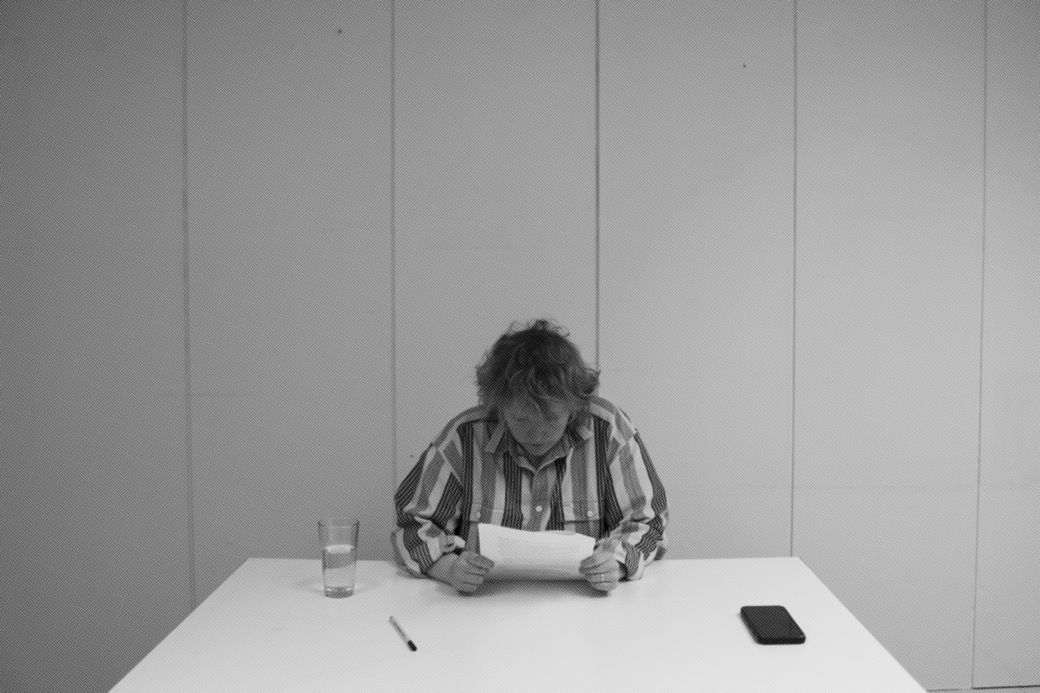
(Clare briefly peers over the top of the paper she’s reading to check if the audience is still following. She makes eye contact with someone in the front row, who politely smiles back. Her eyes dart back to the paper as she continues reading.)
With all these possibilities buzzing in my head and encouraged by my role as a creative educator committed to advancing critical approaches to the understanding and teaching of representational practices, I set out to critically interrogate the re-enactment process as an embodied return to the past. It didn’t take long to realise that the concept of ‘returning’ has deep philosophical roots — explored across cultures and centuries. For example, in early Western philosophy, the Stoics proposed the concept of Eternal Return—the idea that all events in the universe recur in an infinite cycle. This idea was later reimagined by Nietzsche as an ethical and existential challenge to one’s approach to life (Nietzsche, 2020). Perhaps even more significantly for us, Gilles Deleuze offered a radical rethinking of repetition itself in his critique of representation, centring on the concepts of difference and becoming (Deleuze, 2014). Moreover, even earlier, in Eastern religious traditions, Buddhism introduced the concept of samsara, a cycle of death and rebirth driven by karma and craving. Across historical and cultural contexts, there appears to be a persistent and varied engagement with the notion of return, with which the practice of re-enactment meaningfully aligns.
This sparked a growing interest in exploring how re-enactment—particularly artistic re-enactment—might function within a scientific/research context. What insights could be gained by examining re-enactments through a research lens, particularly in relation to their implications for the construction of visual identity and the representation of people/s? Additionally, there is value in exploring this from an opposing perspective: what might be revealed about the nature of research itself through the exploration of creative re-enactment practices? Could such an approach enhance our understanding of how the function of creative reimaging both explicitly or implicitly forms part of the research inquiry and wider forms of knowledge creation?
(Clare again briefly glances up from the paper, as she turns the page)
With all these possibilities buzzing in my head…
(Clare realises she has lost her place.)
Ahh shhhhi… sorry… one moment… sorry…
(Clare shuffles through the slightly crumpled paper pages.)
…Furthermore, how might re-enactment further the understanding of performativity, embodiment, and creativity within research practices? Could its use help expand the field of artistic research by offering a method that re-envisions the past to imagine potential futures? Might re-enactment challenge the research field’s dominant fixation on novelty, instead proposing a knowledge-making process centred on the overlooked, the misrepresented, or the intentionally ignored? Could the parallels between re-enactment and research—when both are viewed as creative, embodied, iterative practices—reveal alternative methods of understanding representation? One where representation, both visual and representations of knowledge claims in research, is understood not for its deterministic, celebrated for its originality or rooted in essentialism, but instead as part of a continual, transformative, and liberatory practice of not knowing, but becoming.
Now, as I shift my use of re-enactment from artistic practice into artistic research, I am eager to explore these questions through artistic gestures, philosophical inquiry, and research methodologies. In this hybrid text—part paper, part soliloquy—I propose re-enactment as a research method in its own right. Through textual analysis and situated reflections, I will explore how performative returning might destabilize and reconfigure canonical understandings of the past and consider the implications such an approach might have for broader research practices.
(Exaggerated pause as Clare takes an audible grasp for air.)
As I’ve noted, my interest in the potential of re-enactment to unsettle or decentre established knowledge is by no means original. A more recent example of someone who shares a similar curiosity is academic Barbara Bolt, who has also sought to explore the implications of performative repetition within the context of artistic research. In the article 'Artistic Research: A Performative Paradigm,' Bolt argues the need to understand performativity within research in relation to its performative force, in creating, as she tells us...
‘…capacity to effect “movement” in thought, word and deed in the individual and social sensorium. These movements enable a reconfiguration of conventions from within rather than outside of conventions.’ (Bolt, 2016)
For Bolt, the performative act alone is an engine of innovation—it can transform understandings and impact both our world and our perception of it. Rather than treating performativity as a technique or a component of a broader research methodology or merely a byproduct of it, Bolt positions performativity itself as the central paradigm. This stance challenges the traditionally assumed dominance that authenticity has in the construction of knowledge within research practices.
Bolt’s new performative model reconfigures how performative iteration functions within established research methods. Where in traditional research, acts of replication are utilised to seek sameness or uniformity, and subsequently, provide validity to a hypothesis, instead, in Bolt's paradigm, the act of replication is employed as a method of exposing differences. This readjustment in how performative repetition is understood or utilized within the research process holds transformative potential. If we view acts of replication not just as ways to confirm knowledge, but as catalysts that generate new understanding through the differences introduced in each iteration, then we can begin to see knowledge as something that is never fixed in the past. In Bolt’s paradigm, past understanding is malleable, reclaimable, and reusable from different positionalities and from different futures.
One example of performativity's ability to generate movement in thought appears in Bolt's own re-enactment of prior understanding during the development of her proposed paradigm. In constructing this new paradigm, Bolt returns to Judith Butler’s conception of citationality in performativity, in which Butler states…
‘Performativity cannot be understood outside of a process of iterability, a regularized and constrained repetition of norms. And this repetition is not performed by a subject; this repetition is what enables a subject and constitutes the temporal condition for the subject.’ (1993, p.95)
Butler developed the notion of citationality to frame the construction of gender identity. Suggesting that identities and social norms are not original or self-generated but are produced through repeated reference to established conventions —what she calls the repetition of norms. This repetition is achieved through performativity, for Butler, gender should be understood as a performative reiteration of all preceding representations of gender. There is no authenticity or truth within this performativity; rather, it is an internalized citation or even, in some cases, a parody of itself. Here, Butler’s citationality is itself a reanimation of Derrida’s concept of iterability, which underpins the idea that signs, expressions, and speech acts gain meaning only through their capacity to be repeated across varying contexts. As Derrida explains:
‘Every sign, linguistic or non-linguistic, spoken or written (in the current sense of this opposition), in a small or large unit, can be cited" put between quotation marks; in so doing it can break with every given context, engendering an infinity of new contexts in a manner which is absolutely illimitable.’ (1988, p.12)
Derrida, in turn, reengages J.L. Austin’s theory of performative utterances, which challenges the traditional assumption that language simply describes the world. Instead, Austin shows that certain utterances do not report facts but perform actions — for example, saying “I apologize” doesn’t just state something, it enacts the apology itself. This distinction between constative (descriptive) and performative speech is foundational for both Derrida’s and Butler’s theories. As Austin writes…
(Clare has once again forgotten to advance the slides—it's still showing the self-portrait of her in a swimming costume.)
Ah, sorry…
(Clare skips through slides of the previous quotes until landing on the following…)
‘[Defining the Performative]
Utterances can be found… such that:
A. They do not ‘describe’ or ‘report’ or constate anything at all, are not ‘true or false,’ and
B. The uttering of the sentence is, or is a part of, the doing of an action, which again would not normally be described as, or as ‘just,’ saying something.’ (1962, p.5)
This exercise of re-turning/re-enacting through citational acts, which took place in the construction of Bolt’s performative paradigm, could continue to reach/research backwards. However, this may not be the time or place to unpack the impact and forward projection each citation had on present understanding, as it might become an overly technical task or even tedious in nature.
(Clare quickly peeks over the top of the paper to check if people are still listening. Most seem to be, though a few are distracted—either by messages on their phones or drifting off into daydreams. Clare continues reading.)
Rather, the aim of excavating the sediments of iteration is to show that when one thinker cites or rearticulates another, they enact a new iteration — a recycling of their predecessor — that is itself an act of performativity. Moreover, with each citation, the original context to which it was anchored is loosened, and new contexts might seep in or meaning may be formed as it drifts through new renditions.
Another important thread to pull in the Austin → Derrida → Butler → Bolt lineage, I myself just performed - is how performativity, when engaged with as a mode of inquiry in research, challenges the dominance of authenticity as the basis for legitimate knowledge. Performativity could be perceived as an obstruction to established research models that rely on the concept of a fixed, original, or “authentic” positionality from which new knowledge is produced. The absence of a stable, authentic origin has significant implications for how research claims truth or originality. This is one reason why performativity has often been viewed with suspicion — a suspicion I’m familiar with, as it echoes the way photography is still widely understood. The medium remains dominated by its association with documentation and observation, privileging authenticity over constructed or performative modes of knowing.
This same suspicion has surfaced in response to my engagement with re-enactment throughout my research — both in my photographic work and academic writing. The implication is often that performativity alone is not sufficient; while performance may be accepted as a method of production, it is seen as inadequate as a conclusion. The assumption remains that authenticity or a representation of something “real” should be the ultimate goal. Yet I often struggle to determine whether my photographs truly represent me authentically, or whether my voice comes across as genuine in my writing. For me, it has never been about being my “authentic self.” Rather, it has been about learning to act in certain ways — trying to pass, to fit in.
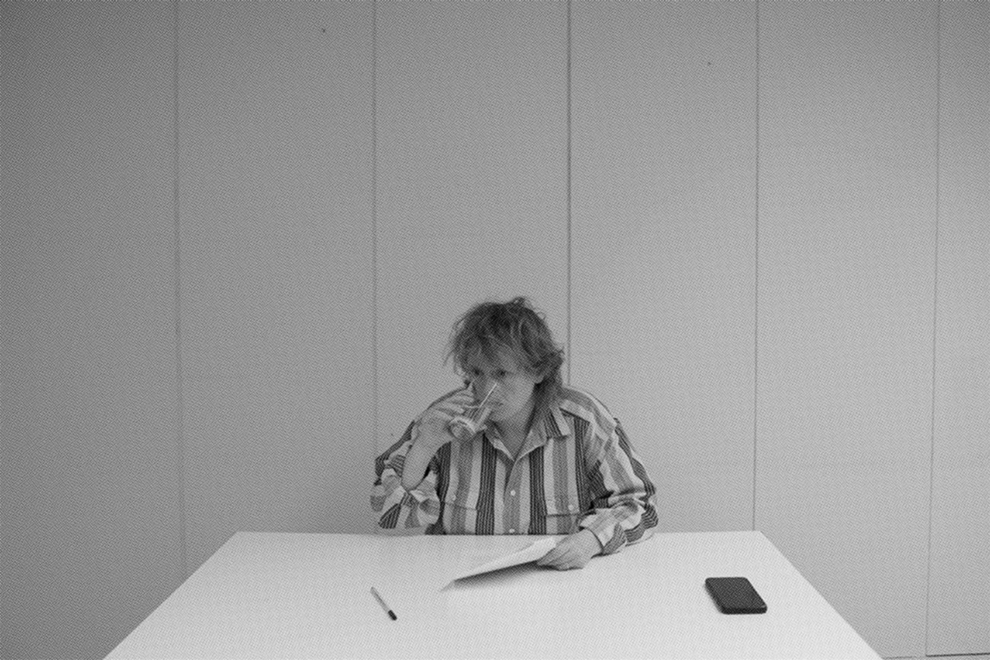
(Clare coughs, her voice beginning to sound a little hoarse, likely from a dry mouth caused by nerves and the fact that she’s not pausing enough as she reads.)
Instead, my experience aligns more closely with Butler’s position — that there is “no subject who precedes the repetition. Rather, through performance, ‘I’ comes into being” (2016, p.135). This mode of performativity as a way of existing may be more overt for queer and crip individuals, for whom performance is often a condition of life — something inhabited or even deliberately employed as a means of survival. Could this understanding of being without authenticity offer new possibilities for research? Perhaps. By troubling the notion of authenticity through performativity and, in turn, through re-enactment, alternative research practices might emerge, along with new goals and frameworks for knowledge production.
Returning to Bolt, she defines the transformative differences elicited by performativity in research as (de)constituting possibilities, a term she recalls from Butler. However, in a brilliant moment of the performative paradigm performing itself, as I diligently performed my duties as a doctoral candidate and revisited Butler's original text, I discovered that Bolt’s citation of (de)constituting possibilities was, in fact, a misinterpretation or perhaps a reinterpretation of Butler's initial term reconstituting possibilities. This minute change from 'de' to 're' creates a slippage in understanding. 'De' implies a deconstructive approach, which unpacks or unravels the original, whereas 're' implies a reconstructive approach to find alternative understandings. Bolt's own repetitive difference doesn’t hinder understanding, but in fact widens the possible perceptions of Butler's original application. I include this anecdote not in any way as a form of malicious nit-picking…
(One academic chuckles)
...but to point to an example of both Butler's and Bolt's hypotheses. Performative repetition holds the potential to fiction new possibilities for knowing and being by embracing movement and slippage within meaning. When this understanding is applied to re-enactment — as a gesture of repetitive performativity — its capacity to re(de)constitute possibilities becomes explicit as a research method. In this way, re-enactment overtly declares its purpose: to touch the past with the present. An embodied intermingling of the then with the now, the there with the here, and them with us.
It is this re(de)constituting possibilities of re-enactment that is being utilised by female-identifying, queer, crip, and Global Ethnic Majority photographic artists for its TARDIS-like time and place-traveling abilities.
(Clare looks up from her paper at the audience.)
That’s…a … umm… a Doctor Who reference…
(Clare coughs and re-focuses on her paper.)
Notable photographic artists such as Cindy Sherman, Yasumasa Morimura, Samuel Fosso, Zanele Muholi, and Sunil Gupta have all engaged with re-enactment practices. Through re-enactment, they reimagine dominant and often oppressive histories from their situated positions, blending temporal planes, places, and people. But what specific aspects of the re-enactment process allow these artists to generate new understandings and visual echoes that challenge traditional narratives?
One aspect is re-enactment’s ability to remix. In her 2020 book Glitch Feminism: A Manifesto, Legacy Russell proposes the re-enactment process as inherently remixing dominant understandings of the past. She offers remixing as a method to provoke more queer ways of knowing, acknowledging the original recording's reliance on hegemony. For people who identify as non-normative, the application of re-enactments can offer the capacity to reclaim, rearrange, repurpose, and rebirth new understandings of the original records. Re-enactment becomes, as Russell describes, an ‘emancipatory enterprise, creating new “records" through radical re-imagining’ (2020, p.133). Through its remixing abilities, re-enactment becomes an act of self-determination. However, it is not just remixing of temporal and spatial planes that gives the process of artistic re-enactment it’s re-incarnating capabilities, artistic re-enactment also depends on the remixing of the live and still mediums of performance and photography.
(Clare coughs again, the dryness in her mouth now making a sticky sound from the lack of saliva. Some audience members begin to fixate on the sound, their attention shifting away from the presentation.)
Re-enactment combines the theatrical use of performance, pose, and gesture to represent the past, with photography being utilized to record it. The interanimation of performance and photography is at the core of artistic use of the re-enactment process, or as performance scholar Rebecca Schneider identifies it, the ‘inter(in)animation… of intermedia, of syncopated time, and of theatrical acts’ (2011, p.7). Schneider's addition of the parenthesized '(in)' emphasizes that the two individual mediums, photography and theatre, are no longer distinguishable within the re-enactment process. Moreover, the individual roles attributed to them—the performance and the reproduction—are no longer relevant. The photograph does not merely act as a record of the performance; it is the re-enactment. As Schneider attests...
‘…for it is through the material support of the photograph that the re-enactment takes place as performance: the performance takes place as photograph, and in this sense might be considered redocumentation as much as re-enactment, troubling a distinction between the two.’ (2011, p.182)
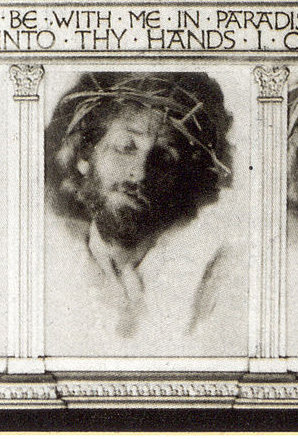
The entanglement of re-enactment and redocumentation, and the inter(in)animation between theatre and photography, has been engaged with since the early days of photographic practices, exploring the medium's usefulness for self-determination. An early example would be Fred Holland Day, a pioneer of photographic art and the genre of Pictorialism. Day returned to biblical imagery by combining Pictorialism's distinct visual language of uncorrected lenses with personal performance; his dedication to the role even included a severely restrictive diet. The resulting photographic works have an unfixed, dreamlike quality where specifics of time and place are obscured, and where the indexicality or details of the image are secondary to the symbolic. Day’s example of artistic re-enactment is a result of artists' efforts to disengage knowledge derived from past images and intermix it with their present and embodied experience.
As a contemporary spectator, there is another interesting effect of Day’s re-enactment when looking at his Seven Last Words series. From my perspective, it has an envisioning ability, a future-oriented glitch, akin to the much later documentary photographs of the 1990s depicting our queer elders in the later stages of AIDS diagnosis, fighting for their lives amidst the clinical brightness of hospital rooms. I am reminded of the ongoing nature of the HIV/AIDS epidemic and the futures lost due to government discrimination and ineptitude.
(An audience member's phone starts to ring, they quickly manoeuvre their way along the row and out the door. Their phone conversation is still audible even as the door closes behind them. A few audience members share disapproving sounds.)
(Clare continues, too anxious to react)
This future envisioning or glitching for a contemporary spectator could build on the entangled relationship between redocumentation/re-enactment to include ideas of pre-documentation and pre-enactment. Re-enactments inter(in)animation between performance’s ephemerality, as a medium of passing moments, and photography, a medium of commemoration and monumentalisation, create living stills or still-living representations. These visual representations, with their disturbed authenticity and recycled originality, are not tied to a certain time, place, or person, but instead float unanchored, available for continuous reinterpretations, and even to drift into future possibilities or predictions.
Schneider's comprehension of the term inter(in)animation exhibits an intriguing and relevant syncopation within its lineage, making it worth unpacking further. When Schneider first introduces the term in the foreword to her book Performing Remains: Art and War in Times of Theatrical Re-enactment, she cites John Donne and Fred Moten as individuals who have used past iterations of the word. Donne used the term interinanimation (minus the parentheses) in his 1633 metaphysical love poem The Extasie. In the poem, Donne explores his philosophy of love, proposing it as based on the union of the body as well as the union of the soul, a radical notion for its time, bridging Christian and Platonic teachings.
(Clare proceeds to read a segment of the poem, but it is clear she lacks the understanding of the poem’s meter)
‘When love with one another so
Interinanimates two souls,
That abler soul, which thence doth flow,
Defects of loneliness controls.
We then, who are this new soul, know
Of what we are composed and made,
For th' atomies of which we grow
Are souls, whom no change can invade.’
(Donne 1633)
(The session moderator holds up a piece of paper with 1 minute scribbled on it. It catches Clare's eye, and there is a clear sign of panic on her face. She takes a long breath in and quickens her reading pace…)
For Donne, it is through the physical medium of the body and the spiritual medium of the soul that love will form, and where the definitions of different individuals will join in unison or interanimation. This emphasis on reading one medium through the other is similar to performance studies scholar Fred Moten's understanding of interanimation. For Moten, it is about reading photography through sound/music. In his 2003 publication, In the Break: The Aesthetics of the Black Radical Tradition, he positions the importance of listening in photography, challenging what he calls the ocularcentrism of photographic theory, and encourages us to reclaim the ‘mimetic improvisation’ potential for phonic materiality that ‘moves in excess of meaning’ (Moten, 2003, p.202).
(A few audience members are starting to have a glazed over look. Clare’s rapid delivery continues without pause. Some have quietly given up trying to follow along.)
However, interestingly for us, returning to Schneider, in her footnotes, she reveals that Moten doesn’t directly cite Donne when using the term interinanimation; in fact, she herself had made the connection. Moten's use of the word, which he employs as a functioning word throughout many of his works, made her remember reading Donne’s The Exstasie whilst at college. For Schneider, Moten's use of the word came first, and then Donne came after, as well as before. For Schneider, this remixing of lineage ‘felt like a dance, or sidestep’ (2011, p.189). Again, I don’t raise this as an inaccuracy but to point out that the action of citation is not always a linear progression, that there is room for syncopation, sidestepping, or even two-stepping within iteration in research. Non-linear, maybe even chaotic, approaches to citation, where the importance of who came first is disregarded, can offer research an alternative relationship to temporality. One not based on a continuous march forward, of continuous new accumulation, but one that can reinterpret, revisit, reassess, echoing re-enactments returning to embrace different possibilities or missed understandings.
Re-enactment, approached through Bolt’s performative lens, reveals its potential as a powerful research method for creating movement in understanding. Moreover, we can recognize how it already has an implicit impact on constructing, deconstructing, and reconstructing knowledge. We have explored its relation to, and role in, citationality practices—exposing differences through the slippage of meaning and destabilizing the centrality of authenticity and originality. Both re-enactment and research embrace the possibilities of syncopating and remixing time, positions, and people in the creation of new records. The interinanimation at the core of re-enactment is mirrored in artistic research, where art—the medium of making—inter(in)animates with research—the medium of measuring. We can see that re-enactment, research, and practices of reiteration are closely aligned in their epistemologies. Understanding the synergy between art as a practice and research as a practice may reveal alternative methods of developing knowledge—methods rooted not in originality, but in re-claiming.
This closeness might also help clarify the significance of the ‘re’ in both research and re-enactment. I wonder whether a ‘pre’ might also be introduced into this expanded understanding, for—to return one last time to Moten—there is 'massive itinerancy here, a fugitivity' (2003, p. 202). In understanding research as re-search or even pre-search, we are offered the opportunity to say what wasn’t said, to release what was repressed, and to acknowledge freedom to exist in a continuous process of becoming in the formation of knowledge.
(Clare finally looks up from her paper and lets out an audible sigh of relief.)
SETTING:
The play is set in an indistinct, dully lit classroom, with Clare anxiously readjusting her sitting position behind a desk at the front next to the projector. In front of her is a room full of chairs, with only about a third of them occupied by other academics. It is the first session after lunch on the second day of a conference.
PROLOGUE
CLARE is a slightly overwhelmed and overweight doctoral research candidate. This is her first time presenting her research since returning to her studies at Aalto University. Although she is regularly presenting in front of an audience as part of her job as a lecturer, today her nerves are getting the better of her. When she presents in front of her students, she is confident, enjoying sharing ideas and knowledge, however in this present setting she has definite imposter syndrome.
She is worried about involuntarily beginning to cry.
Clare spent the entire previous day and most of the night re-reading, re-editing, and re-working her paper, desperately trying to cut it down to a 10-minute length. Due to Clare’s exaggerated fear of running overtime, she performs the paper at an uncomfortably fast pace, with exaggerated pauses where she gasps for air or quickly takes a sip of water. While the audience members can and do follow her presentation, there is an overall feeling of unnecessary rushing. Some audience members squint their eyes and lean forward in their chairs as visual clues that they are applying extra effort to follow the paper. However, these clues go unnoticed by Clare.
REFERENCES
Bolt, B. (2016) 'Artistic Research A Performative Paradigm?', Parse Journal, Summer 2016(3). Available at: https://parsejournal.com/ (Accessed: 5 June 2024).
https://doi.org/10.70733/0axrkvoqb26w
Butler, J. (1993) Bodies that matter: on the discursive limits of 'sex'. New York London: Routledge.
Deleuze, G. (2014) Difference and repetition. Second edition. London, England ; Bloomsbury Academic (Bloomsbury Revelations).
Donne, J. and Smith, A.J. (2004) The complete English poems. London: Penguin (Penguin classics).
Irigaray, L., Porter, C. and Burke, C. (1985) This sex which is not one. Ithaca, New York: Cornell University Press.
Nietzsche, F. (2020) Gay Science. Dover Publications.
Pelias, R.J. (2008) '16 Performative Inquiry: Embodiment and Its Challenges', in. Thousand Oaks California: SAGE Publications, Inc, p. 194. Available at:
https://doi.org/10.4135/9781452226545.n16
Russell, L. (2020) Glitch Feminism A Manifesto. London: Verso.
Schneider, R. (2011) Performing remains: art and war in times of theatrical reenactment. Abingdon, Oxon New York: Routledge.
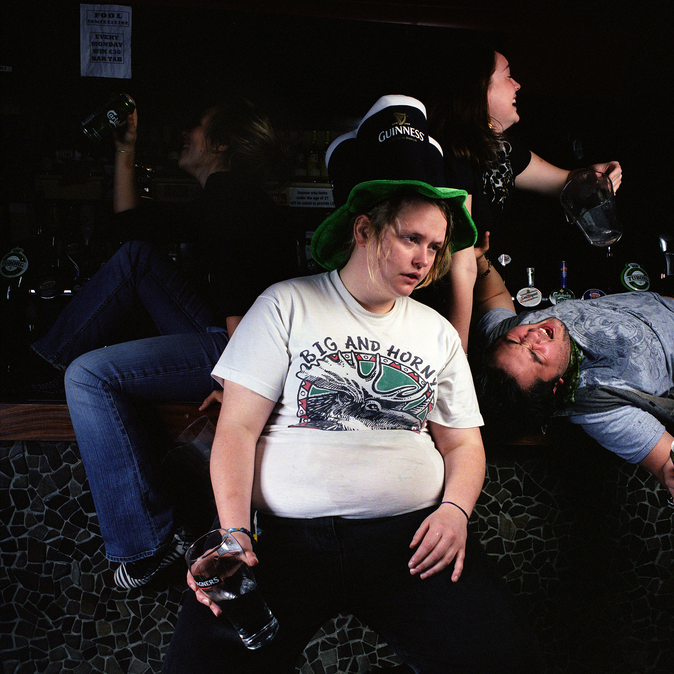
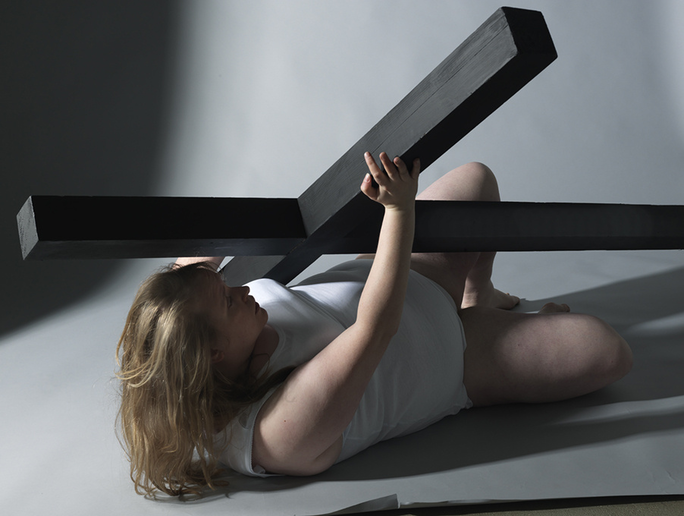
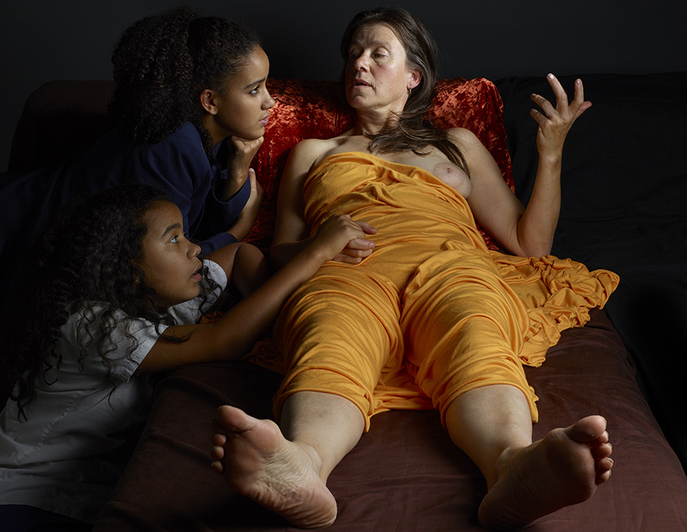
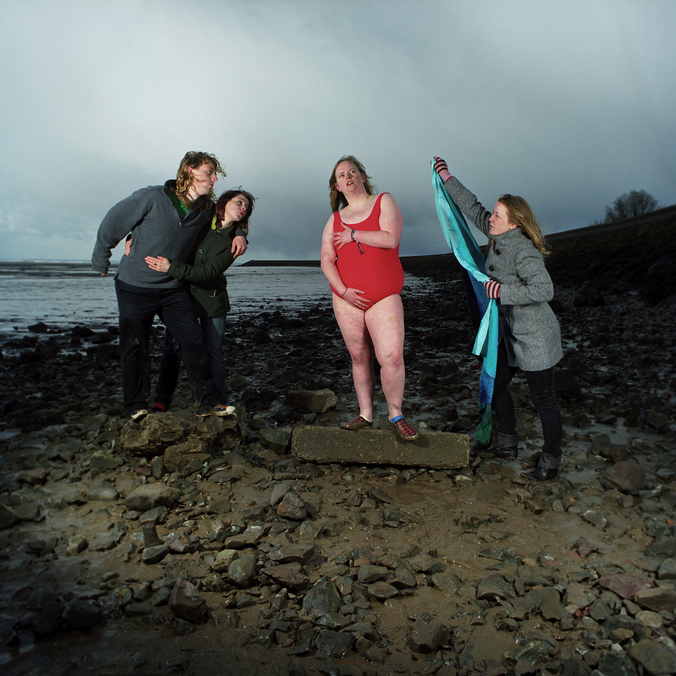
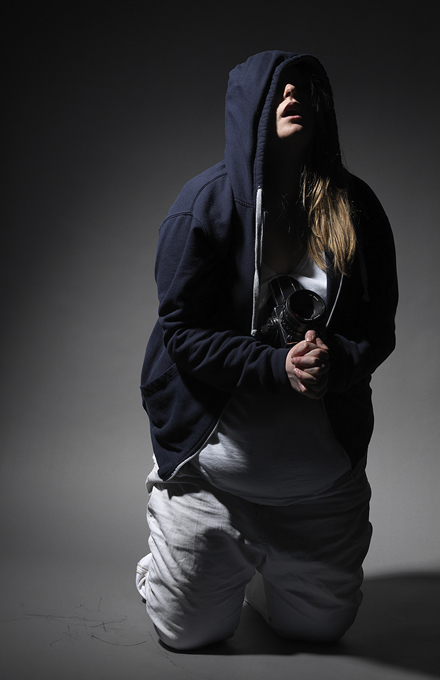
Dionysus – Playing with the Gods, 2009
Clare Bottomley
Fine art pigment print, custom-painted beech frame, 90 x 90 cm
...and another thing... - The Birth of the Image, 2019
Clare Bottomley and Hermione Wiltshire
Fine art pigment print, custom-painted beech frame, 70 x 90 cm
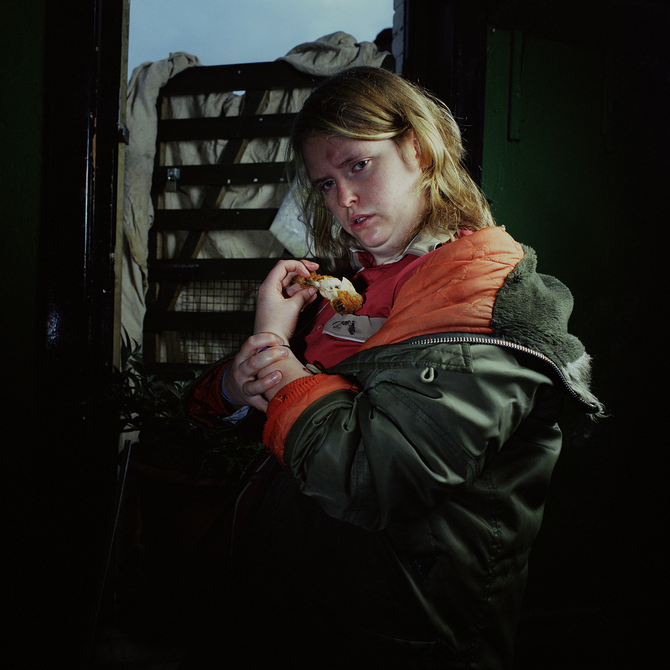
Venus – Playing with the Gods, 2009
Clare Bottomley
Fine art pigment print, custom-painted beech frame, 90 x 90 cm
Wooden Cross – Innumerable Messiahs, 2013
Clare Bottomley
Fine art pigment print, custom-painted beech frame, 70 x 90 cm
Persephone – Playing with the Gods, 2009
Clare Bottomley
Fine art pigment print, custom-painted beech frame, 90 x 90 cm