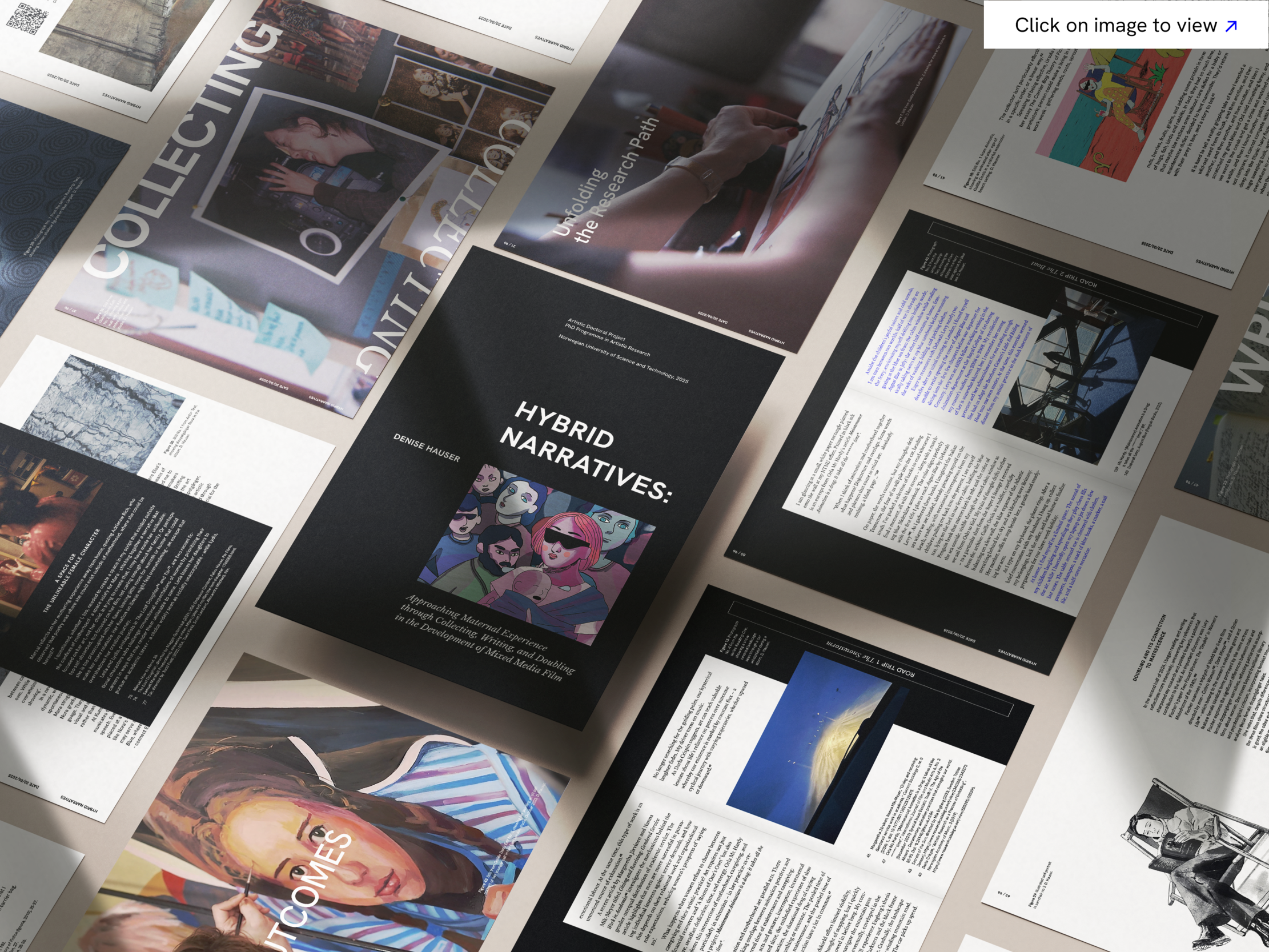
Motherhood in cinema is often a side plot – this PhD project in Artistic Research seeks to challenge that. Through collecting, writing, and “doubling” as methods, it explores the maternal experiences of three filmmakers and how these complex realities can take shape in a hybrid film blending fiction, documentary, live action, and animation.
The research addresses a gap in representation, where female doppelgängers and alter egos are rarely linked to motherhood, despite its deeply transformative nature – an obvious foundation for doubling. In filmic narratives, female doubles are often cast as antagonists or disruptions rather than reflections of a mother’s evolving self. The lens post-birth shifts to the child’s development and perspective, leaving the mother’s transformation – her shifting identity and sense of self – largely unexplored.
This project takes a different approach, using interviews, video recordings, animated investigations, and personal reflections to explore the challenges of balancing motherhood and filmmaking. By aligning maternal experience with cinematic doubling, it highlights the multifaceted roles women navigate in both fields.
The research also engages with filmmakers and artists who challenge conventional portrayals of motherhood. Though caregiving perspectives appear in short-form animation, hybrid long-form representations are still rare. Influences include literary works exploring motherhood, identity, and doubling, such as Matrescence by Lucy Jones and August Blue by Deborah Levy.
Rather than aiming for a traditional completed film, the outcome prioritizes the process. It includes a synopsis and excerpts from the evolving script Make Her See, alongside documentary footage, interviews, animation tests, and live-action experiments. Incorporating doppelgängers and animated alter-egos, the project blends realism and surrealism to examine a woman’s vulnerabilities and resilience as she redefines herself.
This artistic research expands the representation of motherhood in mixed media film, connects the maternal experience to cinematic doubling, and opens new possibilities for nuanced maternal narratives.