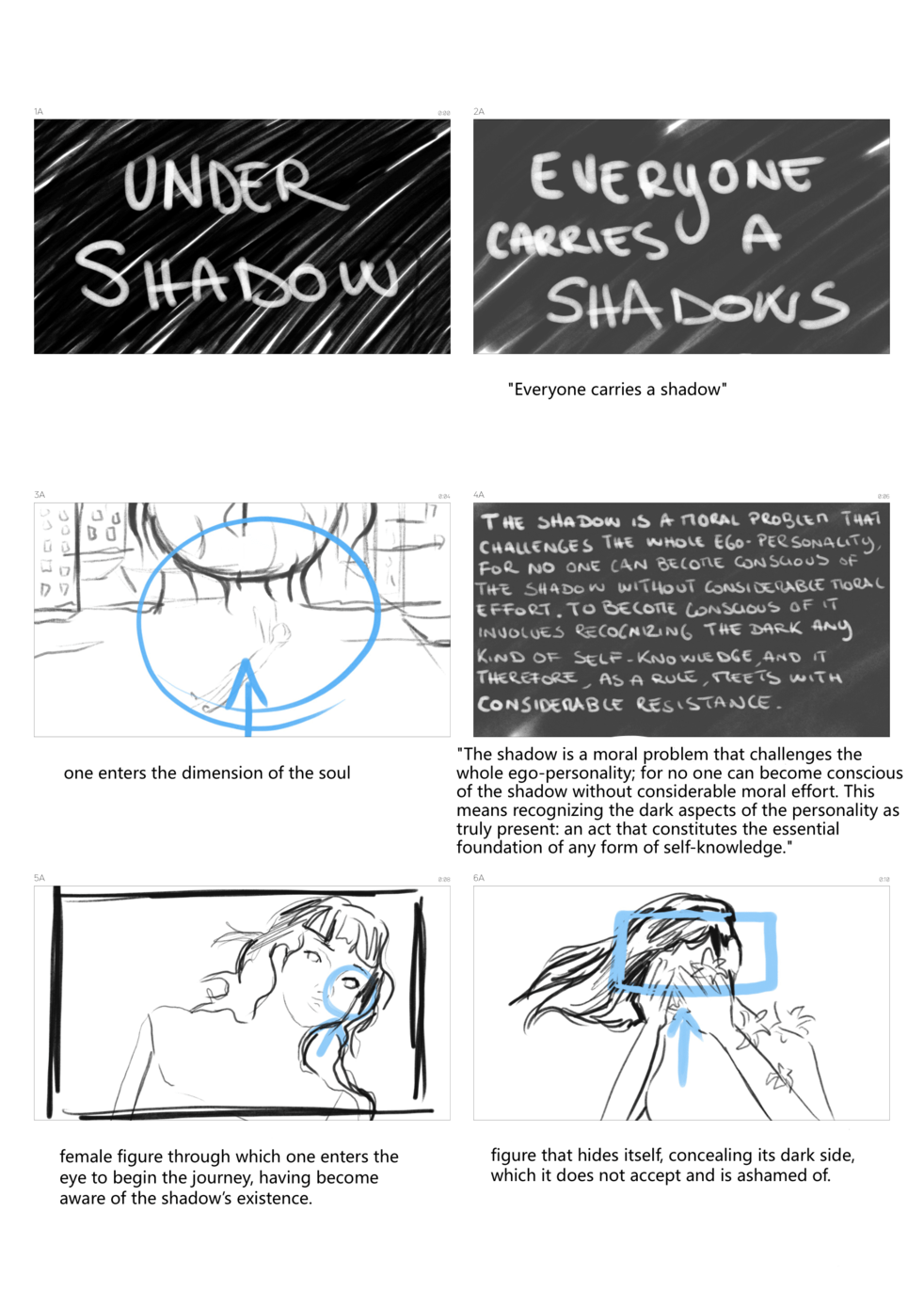
It begins with:
“Everyone carries a shadow”. I included this phrase as it introduces the idea that each of us inevitably has a shadow, which begins to form in early childhood. It is important to become aware of our shadow parts in order to grow into more mature and conscious individuals.
Next, I inserted:
“The shadow is a moral problem that challenges the whole ego-personality, for no one can become conscious of the shadow without considerable moral effort. To become conscious of it involves recognizing the dark aspects of the personality as present and real. This act is the essential condition for any kind of self-knowledge, and it therefore, as a rule, meets with considerable resistance.”
This quotation essentially explains the problem of the shadow and the difficulty of perceiving it within ourselves; it resides in that dark abyss of the mind into which one must venture in order to achieve self-awareness.
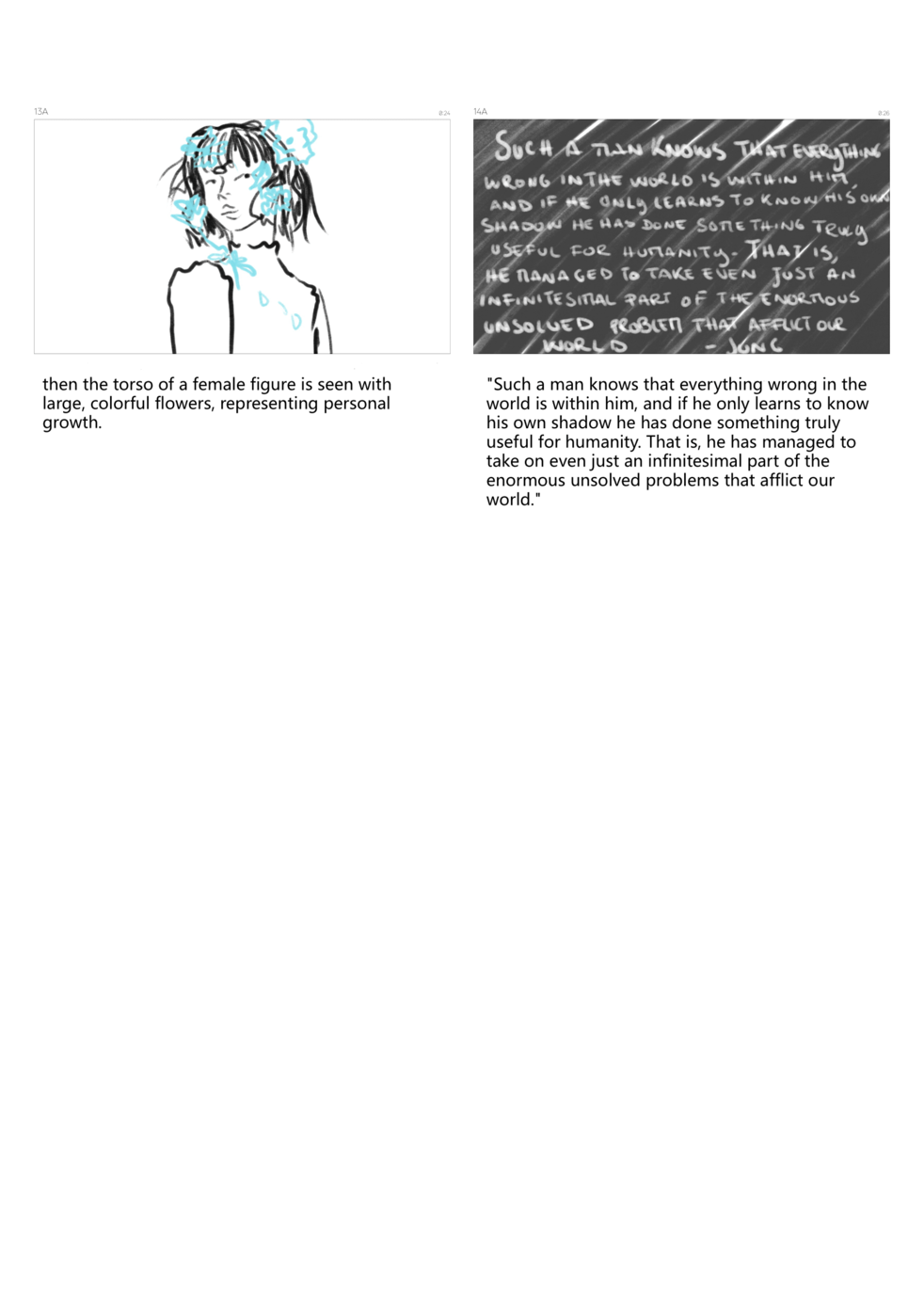
Finally, I included:
“Such a man knows that everything wrong in the world is within him, and if he only learns to know his own shadow he has done something truly useful for humanity. That is, he managed to take on even just an infinitesimal part of the enormous unsolved problems that afflict our world.”
I wanted to end with this phrase because it sums up the idea that in order to change the world, one must begin by knowing oneself. It highlights the benefit of bringing our shadow into the light and integrating it into consciousness.
For Jung, the Shadow represents our Unconscious, which we refuse to recognize as part of ourselves, and it stands in contrast to our conscious self, the part in light.
The Shadow represents the set of psychic potentialities we have lost contact with, but which continue to work within us, calling for our attention and producing effects.
The concept of the shadow refers primarily to that “dark” side of the individual personality, which contrasts with the “light” and conscious parts of the Ego.
The development of consciousness inevitably involves the removal of certain aspects of personality (mostly emotional and instinctual) that appear foreign and fail to harmonize with the self-image being formed.
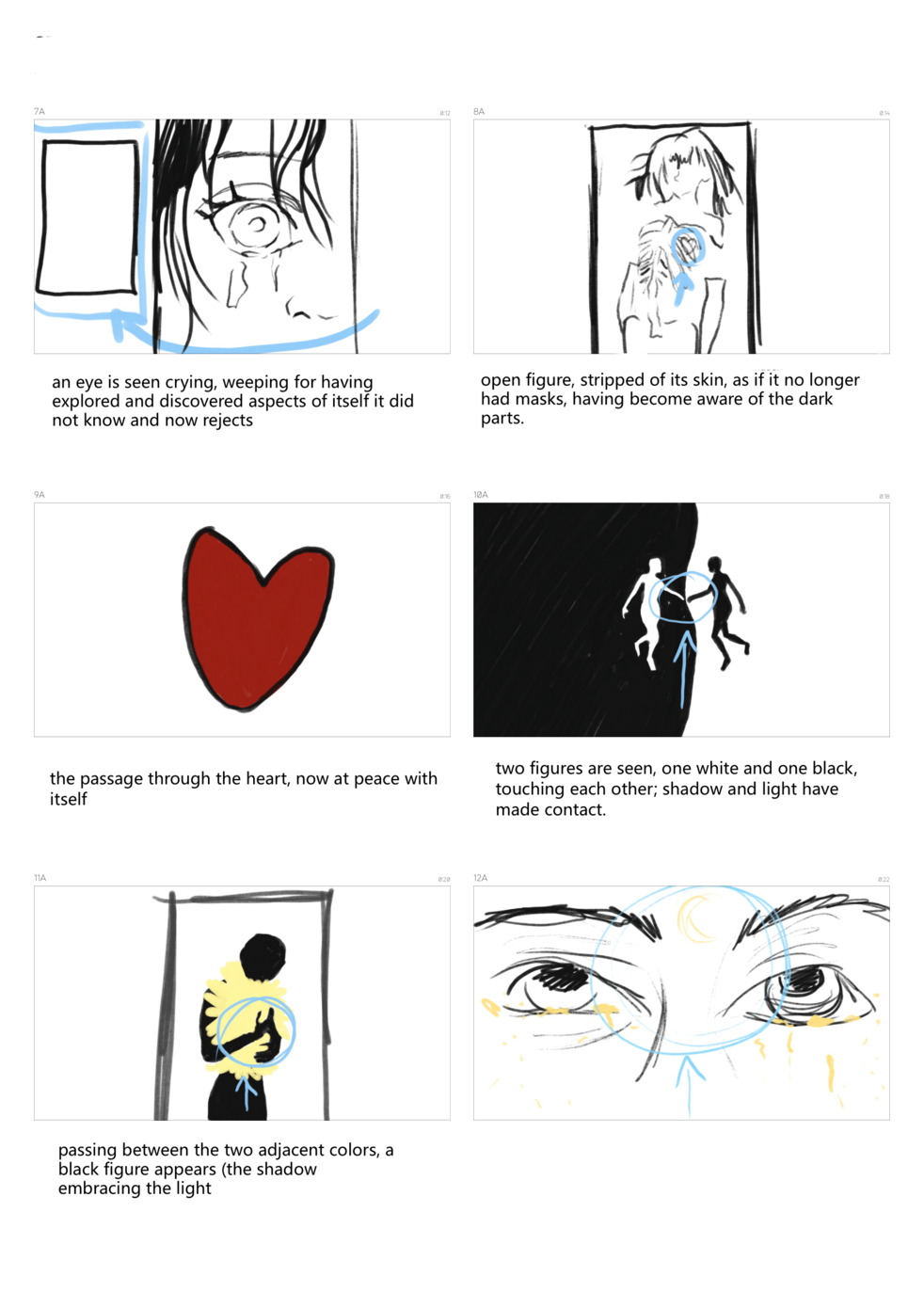
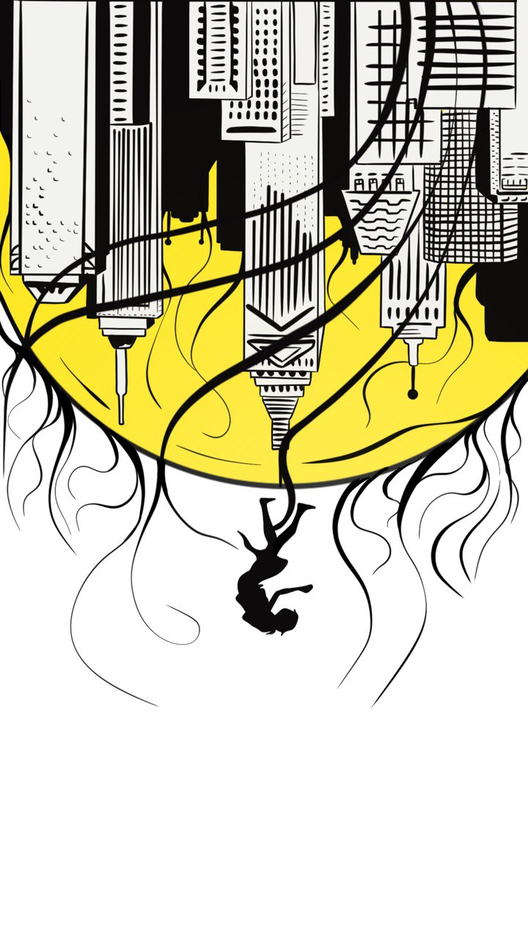
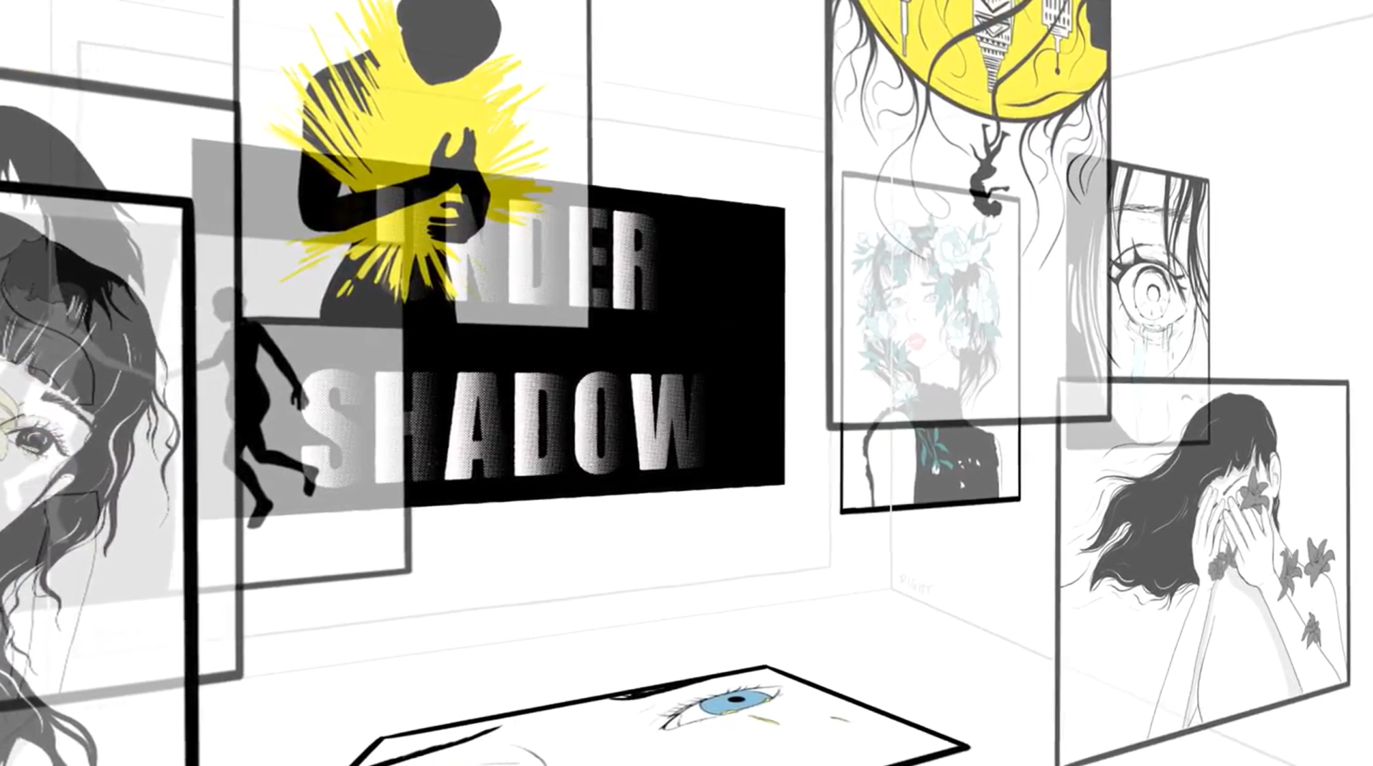
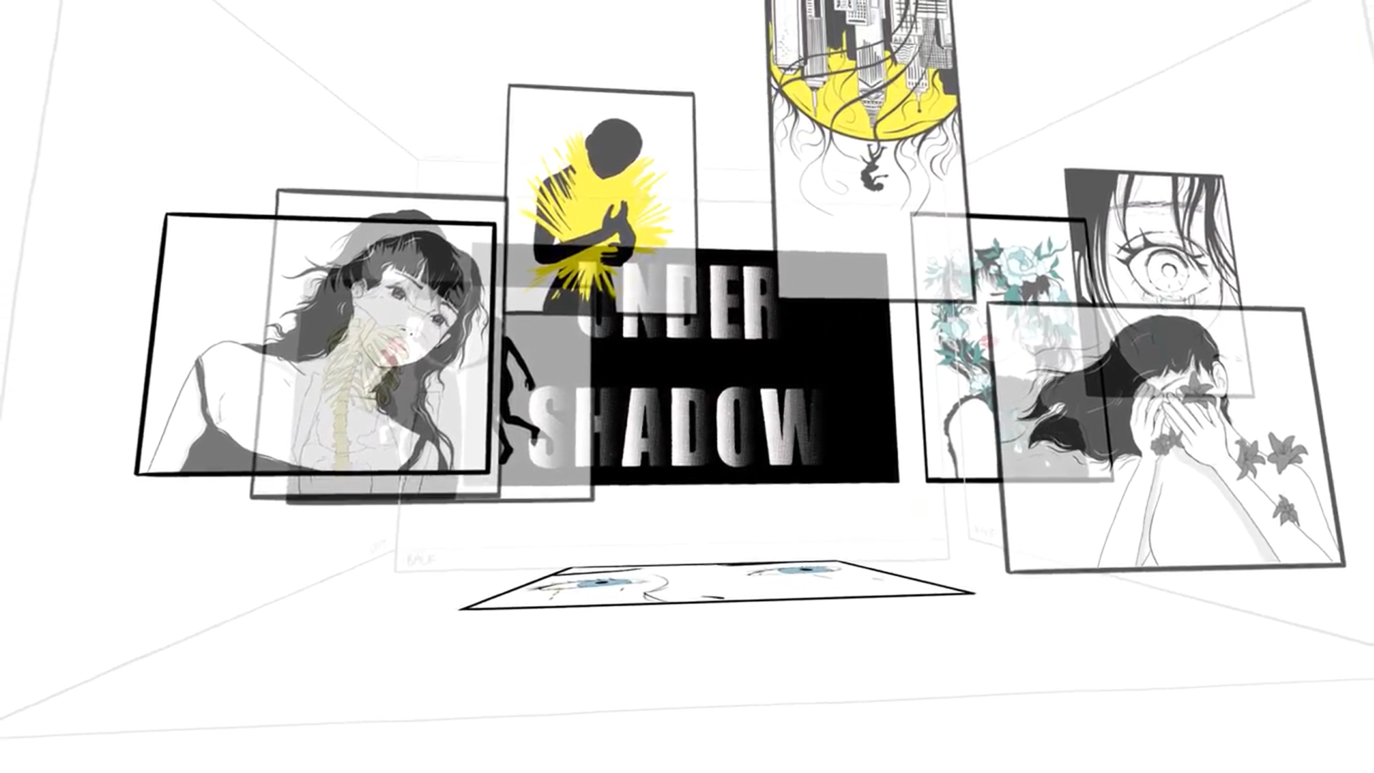
Considering that the shadow may appear in dreams and in other forms, I chose to shape this journey through a visual narrative inspired by some of Jung’s quotations, so that it resembles a dream or an inner revelation. Indeed, interactions with the shadow in dreams can shed light on one’s inner state.
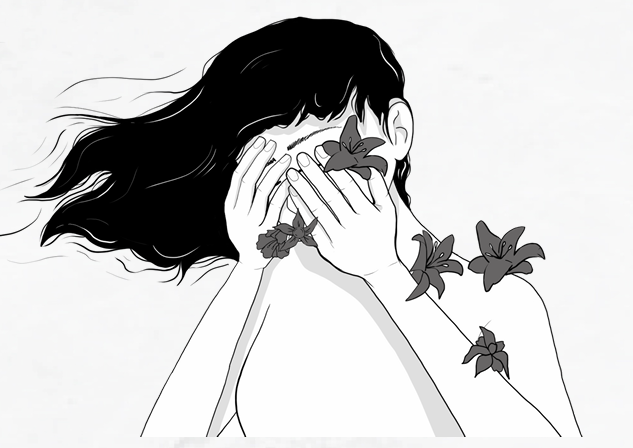
The shadow in dreams can take on various shapes and figures, which is why I created simple drawings with characters that are minimally defined.
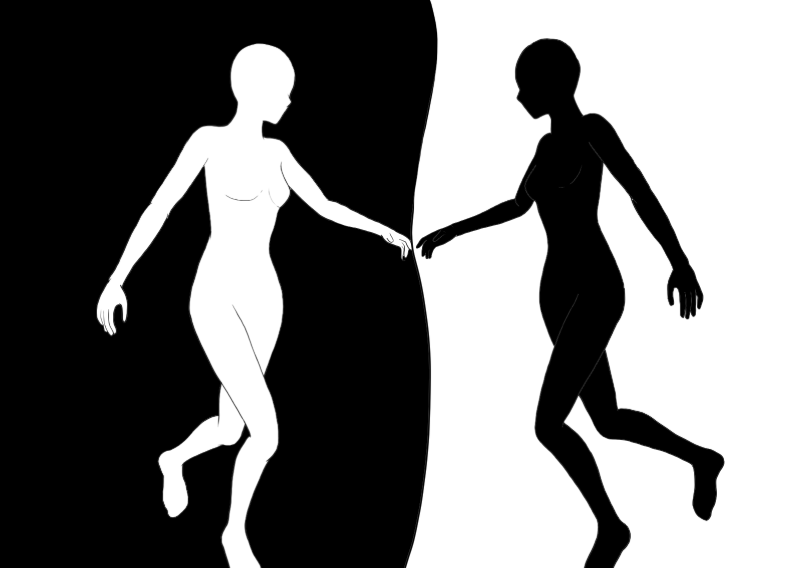
Two figures, one white and one black: they touch each other, symbolizing contact between shadow and light
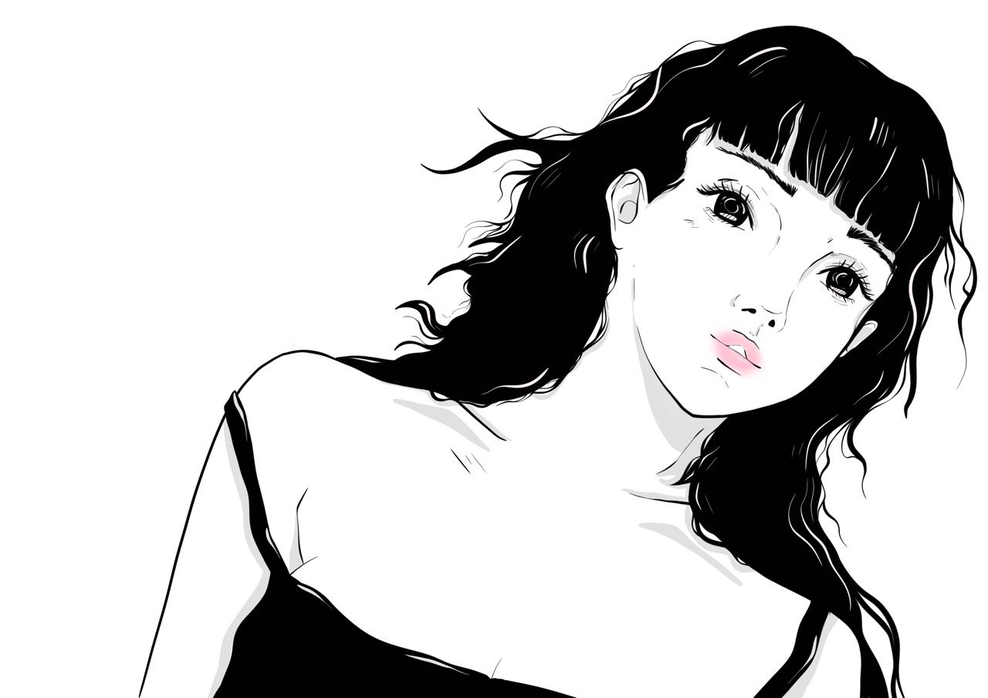
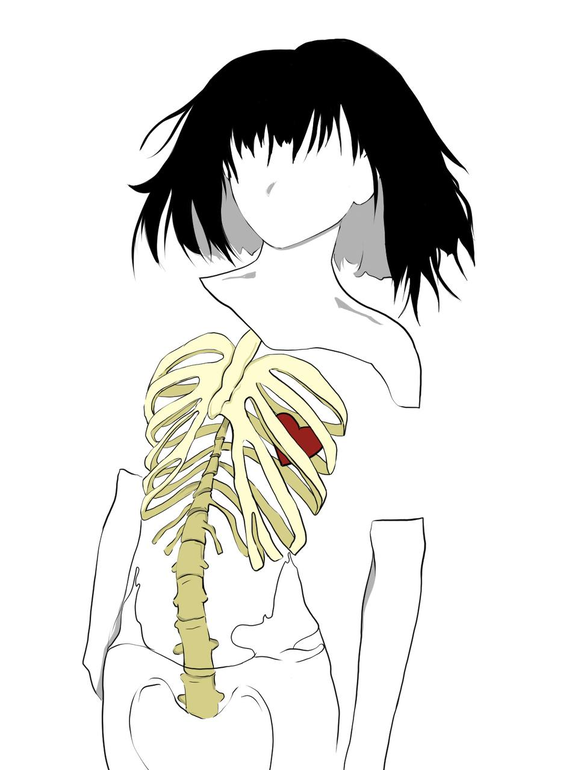
The female figure: through her, one enters the eye to begin the journey, having become aware of the shadow’s existence.

A female figure: through her, one enters the eye to begin the journey, having become aware of the shadow’s existence.
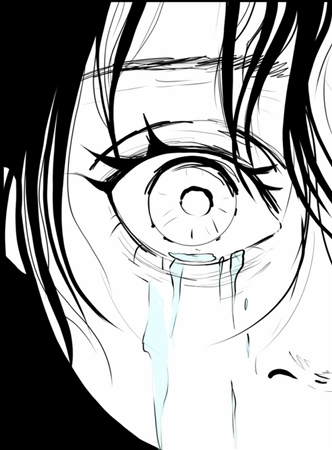
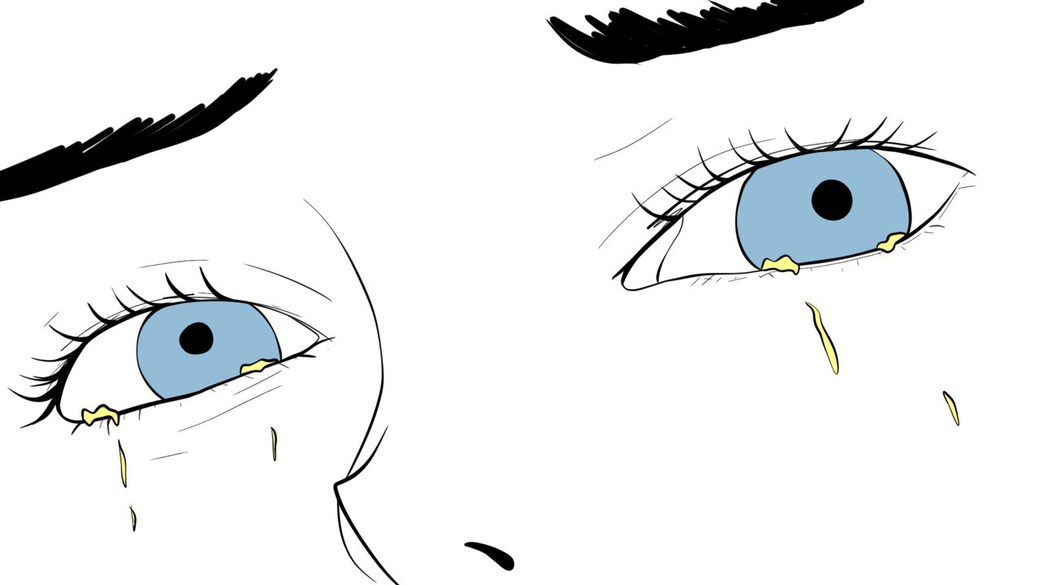
The crying eye: it weeps after exploring and discovering aspects of itself that were previously unknown and are now rejected.
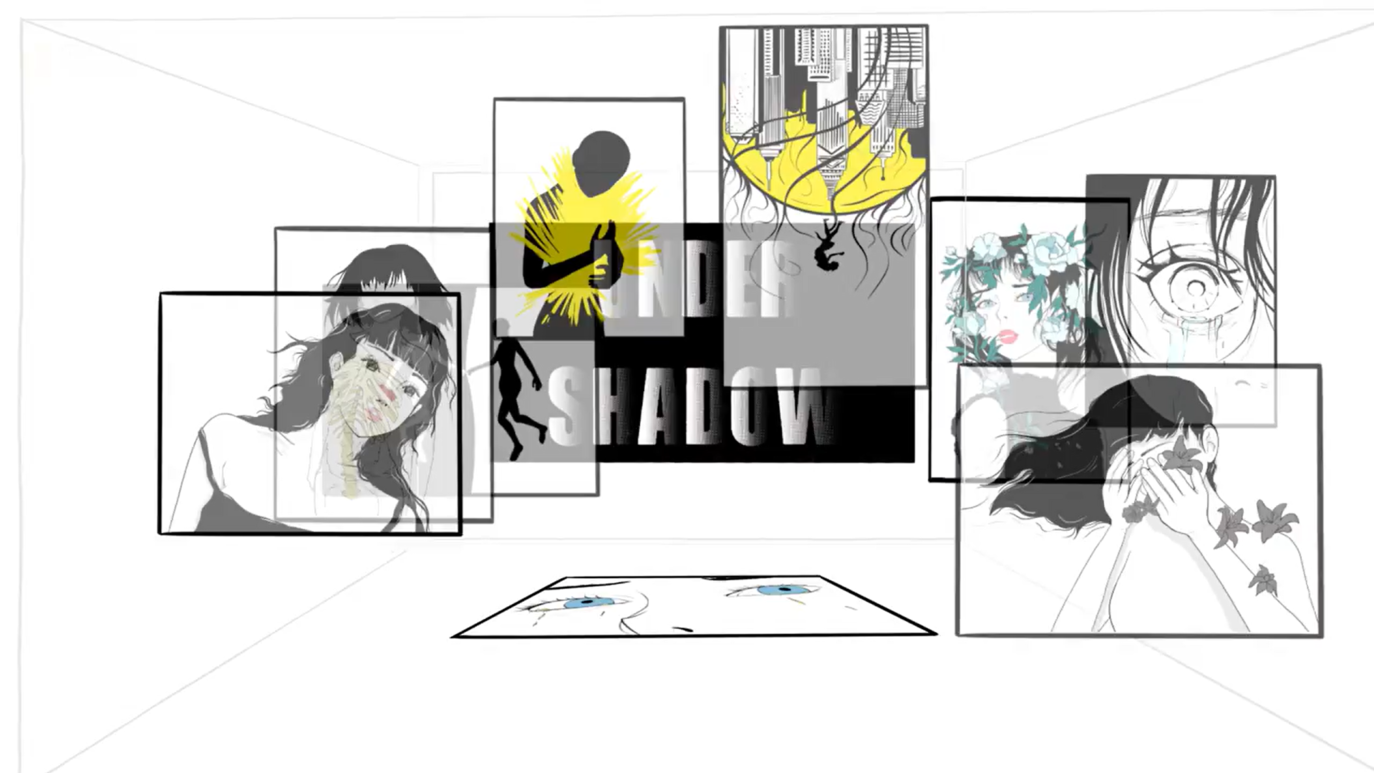
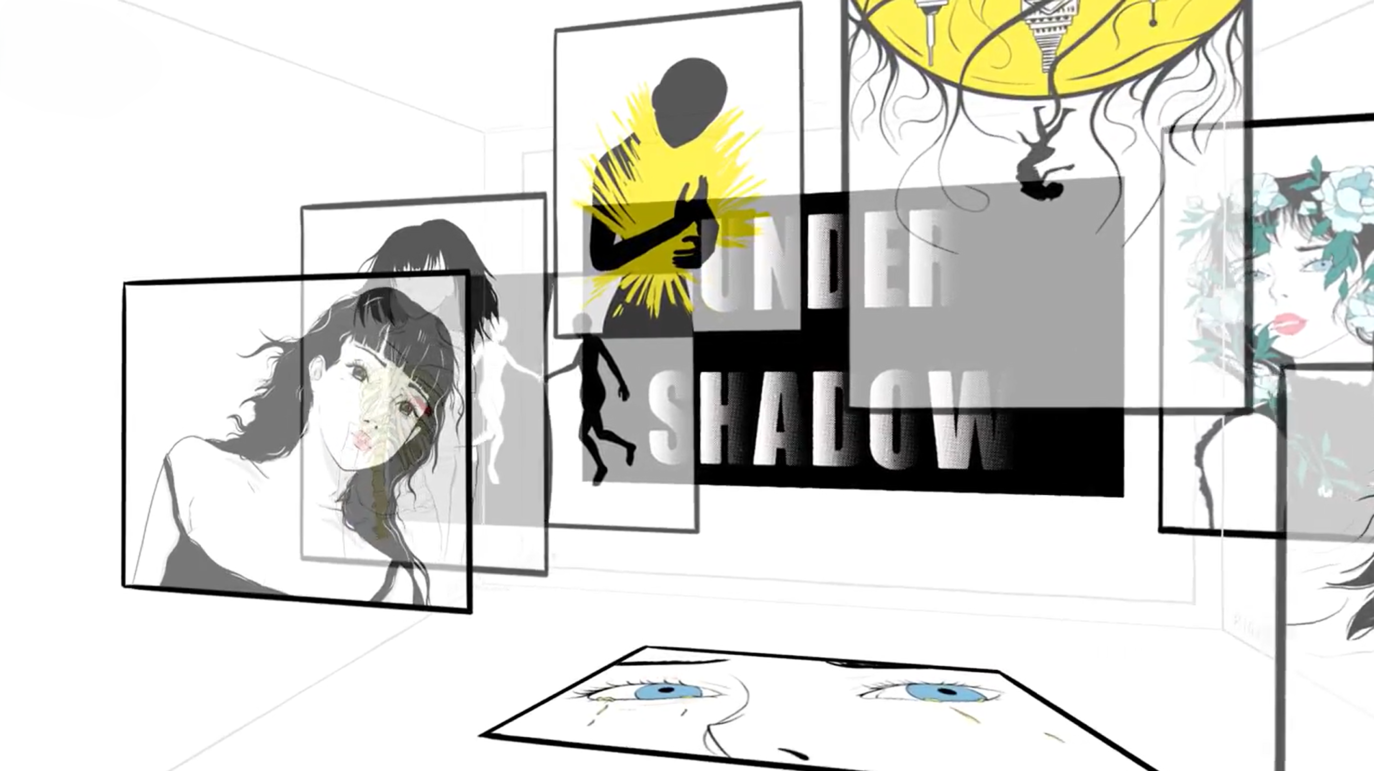
My project includes the installation of a series of plastic panels on which the illustrations will be printed.
They will be arranged as follows: three panels on the left wall, another three on the right wall, one on the floor, and two on the ceiling.
On the back wall of the room, the video will be projected.
Through the combination of static and dynamic elements, the installation aims to foster deep and personal reflection, offering a space for introspection and self-understanding.
The arrangement of the plastic panels along the path guides visitors through a visual narrative.
At the end of the journey, the video provides the link between the images and an explanation of the theme, offering a broader context.