Introduction
In the artistic intervention Foot Baths for All, we, Julia Weber (CH) and Mayumi Arai (JP), transformed public fountains located in densified, regulated urban spaces in Zurich into free, collective foot baths. We used a DIY infrastructure, consisting of a shelter, buckets, a water supply, an electric kettle, bath towels, a broom set, lemon balm oil, coffee cream, and other everyday items. Water from the fountains was heated by using private electricity systems from the surrounding neighbourhood. Over ten days in October 2024, the intervention was carried out at various locations in Zurich – Europaallee, Piazza Cella, Lochergut, Münsterhof, and Hallwylplatz – to explore new forms of appropriation and participation in urban life.
As part of the artistic research project Urban Wasteland as Ambiguous Spaces of Appropriation and Participation (2024-2025),1 the artistic intervention emerged from an ethnographic exploration of collective forms of life on wastelands in Switzerland. Subjects such as self-organized care, occupation, informal infrastructure, gift economies, and the shared use of water and electricity formed the conceptual basis of Foot Baths for All.
This explorative project is situated in the field of artistic urban research, combining ethnographic methods with processes of artistic production and intervention. It is based on an expanded concept of art that departs from the institutional context and intervenes in public urban spaces by means of installations and performative practices, such as "Art in Public Interest" (Kwon 1997) and "Genre Public Art" (Lacy 1995). Intervention art in public space is socially engaged, interactive, and designed for a diverse audience. Our different perspectives – arts-based urban research/social science (Julia Weber) and fine arts/artistic research (Mayumi Arai) – interacted productively throughout all phases of the research.
The present text is structured as follows: it begins by defining what constitutes a wasteland. Next, it describes the ethnographic investigation conducted in various wastelands in Zurich and Bern and presents the resulting experiences and insights. The discussion then turns to how these insights were translated into the artistic intervention Foot Baths for All, as well as to the experiences and reflections that emerged during its realisation in Zurich's city centre.
[1] The research project Urban Wastelands as Ambiguous Spaces for Appropriation and Participation (2024-2025) was led by Julia Weber, funded by the Swiss National Science Foundation (see: https://data.snf.ch/grants/grant/221246), and hosted by the Institute for Contemporary Art Research of Zurich University of the Arts. Julia Weber formed a research team with Mayumi Arai and Martin Schick.
The ambiguous potential of urban wastelands
Since the 1990s, urban wastelands in Swiss cities have been disappearing due to the increasing demand for residential and living space. To be mentioned in this context are, for example, the transformation of the industrial wasteland Zurich West since the beginning of the 1990s (Thissen 2015) and the eviction of the squatters of the occupied Koch-Areal (Jacoby 2023). The eviction of the squatters showed a broad public the importance of such urban niches that people can appropriate in a self-determined way to participate in urban life. Urban researchers criticize these processes of densification and displacement in Swiss and European cities and draw attention to the fact that a sustainable city requires urban spaces shaped by diversity, openness, and the encounter with the other (Angéli et al. 2016; Belina 2006; Sassen 2012; Wildner 2003).
What is an urban wasteland? Urban wastelands are today understood as having lost their original function and now awaiting future usage, be it temporary or permanent (Milchert 1983, cited in Rentzsch 2000). They emerge from the complex interplay of economic, political, and social conditions and processes that shape urban structures (Brighenti 2016; Silva 2022). While earlier urban wastelands were seen as signs of recession, urban planners since the 1960s have been trying to symbolically upgrade these areas as part of creative and market-driven urban policies (Colomb 2012; Fabian & Samson 2018). Temporary commercial uses of urban wastelands, e.g. Frau Gerolds Garten,2 have become highly relevant in terms of urban planning and aesthetics and are now part of Zurich’s city marketing.
In contrast to these developments, the project deals with the upgrading of urban wastelands, which can be observed since the environmental movement in the 1970s. As these urban spaces are accessible to a variety of overlapping appropriations and attributions of meaning (Kowarik 1993; Tessin 2008; Tschäppeler et al. 2007), they enable the encounter between heterogeneous actors. Urban wastelands are thus urban spaces that can be interpreted and used in a self-determined way by heterogeneous groups of users. At the same time, urban wastelands are also places of conflict where different political, social, and economic actors meet, and demands are negotiated (Broich & Ritter 2017, 11).
The ambiguity of these urban spaces is thus rooted in the inherent unpredictability of wastelands, which allows for the site-specific production of new meanings, processes, and usages. These spaces resist fixed interpretations and encourage bottom-up processes of city-making. Such appropriations have a socially inclusive effect because the actors directly experience the impact of their own actions in participating in urban life (see Weber 2018, 2026). Due to their potential openness, urban wastelands are not incorporated in the urban order and thus form the "other of the city" (Rentzsch 2000, 31).
The presented academic approaches interpret the effects of reurbanization on urban spaces critically. They also make an important contribution to understanding the societal potentials of inner-city wastelands against the backdrop of urban transformations. Distinguishing itself from these approaches, the aim of this project was not only to interpret how different actors collectively appropriate urban wastelands, but also to fictionalize the practical knowledge gained from them in order to intervene in selected places in Zurich with artistic practices.
[2] See: https://www.fraugerold.ch/home.
Ethnographic exploration as a learning process
Between March and July 2024, we conducted field research in inhabited wastelands in Zurich and Bern. We explored the Hardturmbrache in Zurich, as well as two other wastelands in Bern, which shall remain unnamed. These sites represent urban niches of temporary alternative use, ranging from a community garden to spaces occupied by subcultures and coordinated by a local association.
The primary research focus was the area managed by the Stadionbrache association on the Hardturmbrache since 2011. The association provides a non-commercial, open, publicly accessible space with a garden, a playground, a skate park, a sauna, and open spaces for projects from all citizens.3 Adjacent to this is the Rotonda squatter settlement, which emerged following the eviction from the Koch-Areal in 2023. At the time of the research, part of the area was inhabited for four weeks by Swiss and international travellers. The Hardturmbrache constitutes a heterogeneous neighbourhood that is constantly changing. It is shaped by the coexistence of diverse aesthetics and forms of use. By contrast, the other wastelands in Bern that we studied are inhabited by single, more clearly defined subcultural communities.
We examined the appropriation practices of heterogeneous protagonists on these urban wastelands, and the associated perceptions, experiences, and dreams, using ethnographic-artistic methods including participatory field observation, interviews, drawings, and photography. From a methodological point of view, we followed the ethnographic approach of hanging out, which counts as a widely used approach of urban ethnographers (Duneier et al. 2014, 1). During the ethnographic hanging out, the researcher adapts "to the practice of subcultural scenes at the site of events, without having a clearly defined role, but in the hope that something significant will happen" (Schwanhäusser 2015, 86). The approach focused on exposing ourselves as openly as possible to situations and encounters on the wasteland, being ready for the unexpected, and allowing ourselves to be surprised repeatedly (see Lindner 1990, 10–11). Mayumi Arai primarily employed visual research tools, such as drawing and photography. Julia Weber used photography and conducted conversations with various protagonists living and working in these urban wastelands. In this period of ethnographic fieldwork, we conducted individual research and met regularly as a research team to share our observations, insights, and experiences. We both understand our approach to be an active, selective process of producing meaning. Through dialoguing with these environments, infrastructures, and protagonists, we were able to gain practical knowledge about bottom-up city-making practices in the selected urban wastelands. Thus, the ethnographic research was a learning process (see Weber 2026).
[3] See: https://www.stadionbrache.ch.
Learnings from the wasteland practitioners
Through the ethnographic-artistic approach, aspects of the unique logics of the protagonists’ practices and their associated contexts of meaning and significance were covered. The insights were synthesized into the model of Self-organized Care, accompanied by the sub-themes of Occupation, Water & Electricity, Gift Economies, Informal Infrastructure, and Fluidity & Porosity (see figure 1).
Central was the observation that care is a foundational principle of wasteland community life. Theoretically, our understanding of care draws on the broad definition offered by Joan Tronto and Berenice Fisher (1990), who describe care as encompassing “everything that we do to maintain, continue, and repair our ‘world’ so that we can live in it as well as possible. That world includes our bodies, our selves, and our environment, all of which we seek to interweave in a complex, life-sustaining web” (40). Tronto and Fisher thus extend the concept of care beyond the interpersonal realm, emphasizing also its political, social, and ecological dimensions.
Building on this foundation, care highlights three key characteristics: context-sensitivity, relationality, and transformation. In line with Joan Tronto, care is understood as "contextual, particular and always situated" (1993, 5), meaning it is embedded in specific cultural, social, and political conditions. Relationality emphasizes that care is anchored in the dynamic relationships between people, things, and places (Puig de la Bellacasa 2017). Finally, care is also inherently transformative, actively working to reshape existing conditions in more just and sustainable ways. As Tronto writes, "[c]are is not just a personal or interpersonal practice, but a transformative one, when it is made visible and politicized" (2013, 24).
In the context of wastelands, care manifests itself as self-organized practices directed towards people, social relations, infrastructures, and the environment. These practices unfold through attentiveness, shared labour, negotiation, and mutual dependency. They respond to site-specific material, social, cultural, and political conditions and are shaped by them. These self-organized acts of care are both deeply intimate and inherently collective, forming an ongoing mode of spatial engagement and transformation. These practices involve designing, maintaining and repairing spaces to remain flexible to changing individual and collective needs, while fostering sustainability through collective stewardship.
In the following, the learnings from the wasteland practitioners around the key concepts of self-organized care are highlighted:
Occupation: Collective appropriation practices on wastelands embody the principles of the "right to the city" (see Lefebvre 1996). These practices make visible that wastelands are urban spaces for diverse, unforeseen interests and demands, and foster encounters with the other. By reinterpreting these spaces and applying specific practices, squatters and other communities create self-determined spaces within given time and space structures. Following Michel de Certeau (1984), these are their “tactics”. The self-organized communities that emerge demonstrate the power of bottom-up processes of urban space production. These life forms are not only acts of protest, but also acts of care to produce more inclusive and democratic environments that belong to the people who use them.
Water & Electricity: Access to water and electricity is central to the squatting practice on wastelands. Water and electricity are seen as basic resources that allow squatters to transform abandoned areas into functional environments. In doing so, squatters hack the neighbourhood and reinterpret existing water and electricity resources for their needs. They create informal synergies with the neighbourhood. Neighbours become accomplices.
Gift Economies: The subcultural initiatives Freeshop (see figure 2) and Küche für alle embody principles of the gift economy. In the Freeshop, you can do shopping without money. People can take things they need and bring what they don’t need anymore. The Küche für alle provides food and hospitality at no cost or on a donation basis, offering a space where people can relax, recharge, and eat as much as they want. These care service systems create communal spaces that foster connection, solidarity, and mutual care. By operating on the margins of capitalist structures, they challenge normative models of consumption and productivity, offering low-threshold access to basic needs.

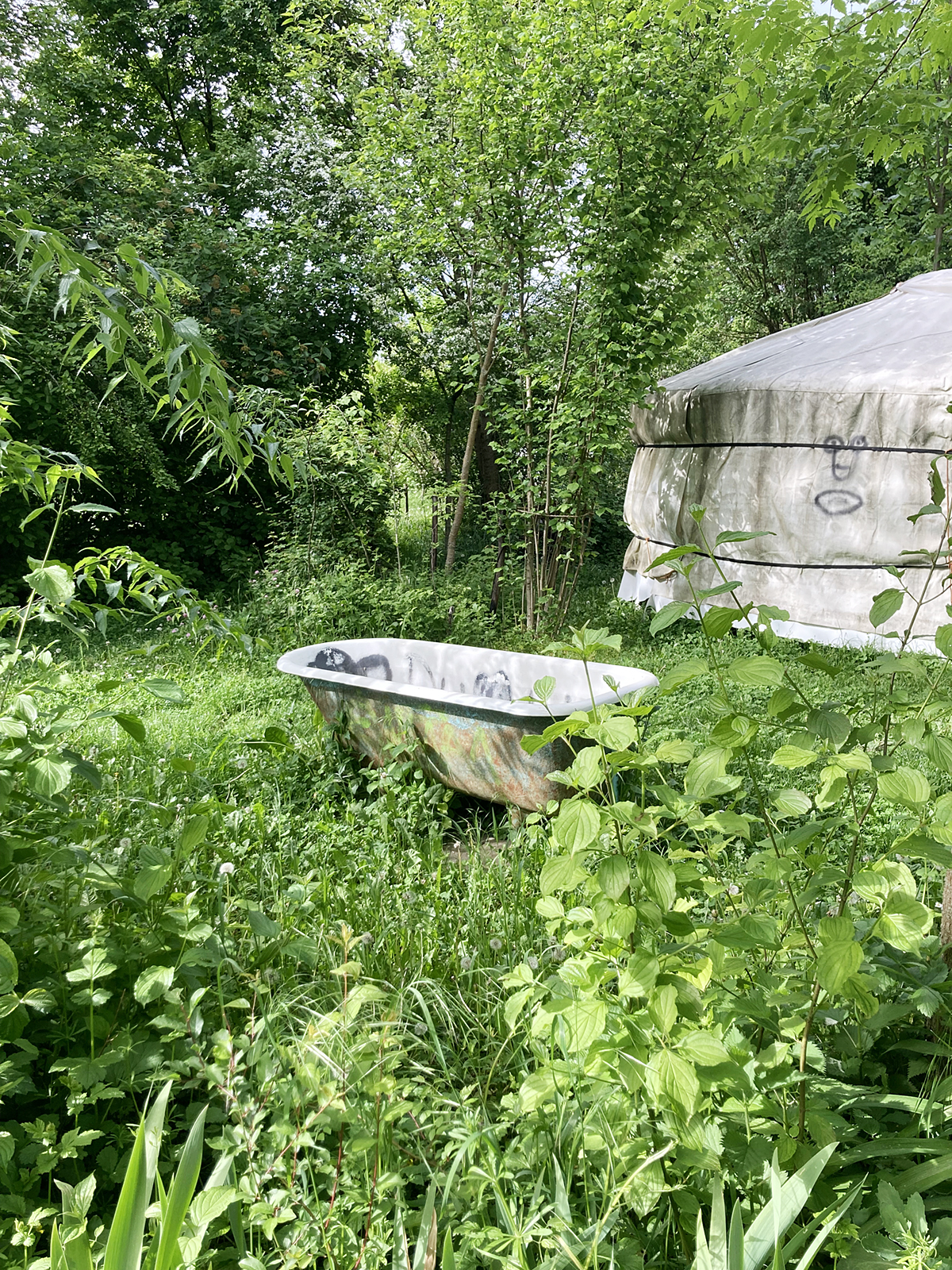
Informal Infrastructure: In all explored wastelands in Bern and Zurich, the infrastructure is based on a DIY aesthetic. Reuse and reinterpretation are integral parts of its informal design. The incomplete and fragile infrastructures are assembled from materials that carry multiple meanings and histories. Each layer and modification tells a unique story of individual and community aspirations (see figures 3–7). The infrastructures are designed to adapt to specific locations and create flexible environments with open futures. The emphasis is on the practical and efficient use of existing materials to meet the immediate needs of the individuals and communities.
Reuse, reinterpretation, and assemblage are building principles that contribute to ecological sustainability. By extending the life of materials, they reduce waste. These building practices can be understood as acts of care, using resources responsibly, and considering the needs of future generations.
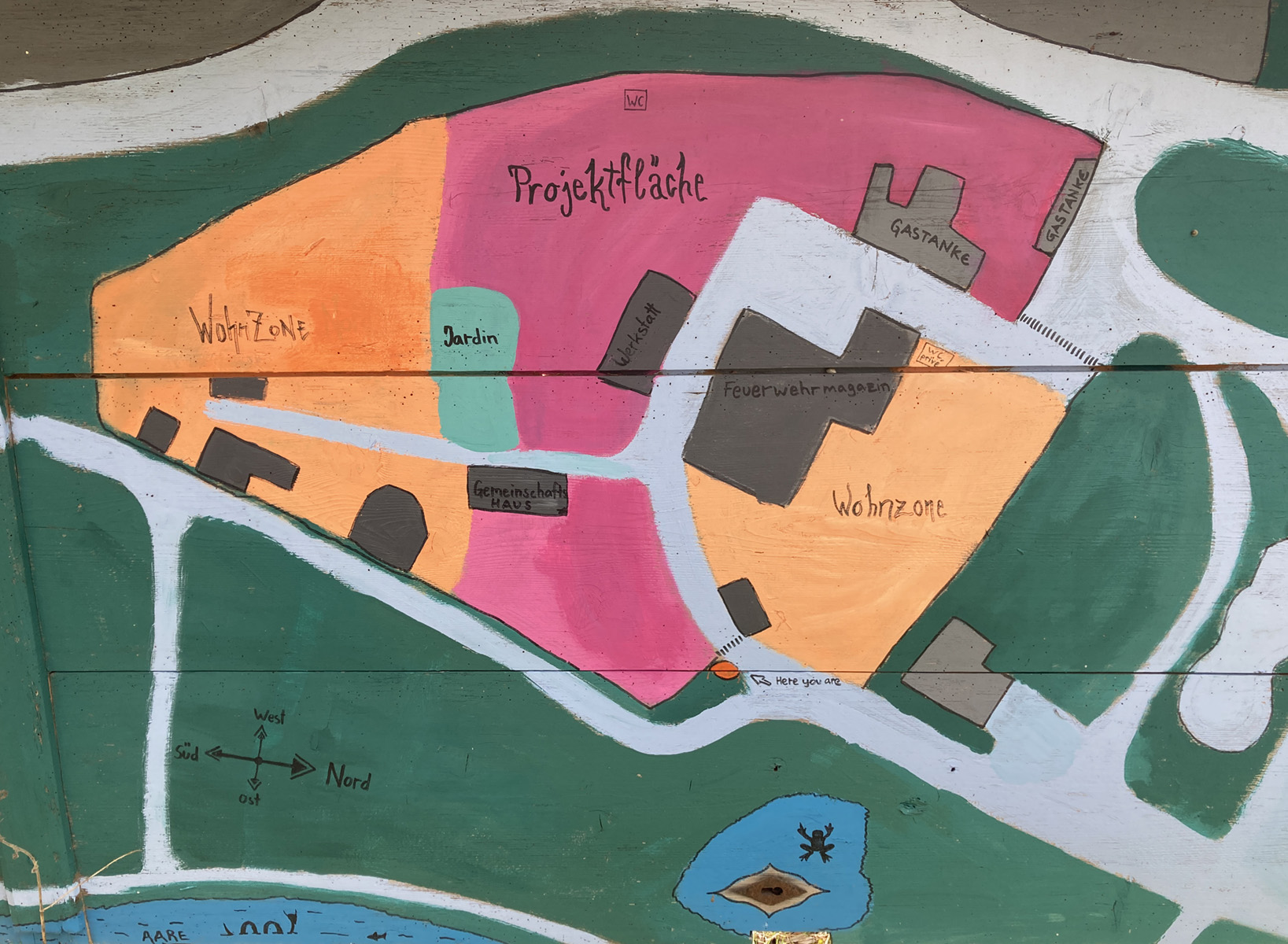
Fluidity & Porosity: In wasteland settlements, the boundaries between private, communal, and public space are fluid and flexible. Residents can define and redefine these borders themselves. As a result, wastelands are socio-material environments that transform according to how the community members negotiate their needs, relationships, and collective priorities (see figure 8).
Not only spaces but also communities inhabiting them are porous, both internally and externally. Private spaces are often small and fragile, such as life in a caravan, where only a thin shell separates the private from the communal, public space. At the same time, wasteland communities are constantly exposed to external political and social forces of urban transformation, such as densification, gentrification, and displacement. Urban wastelands serve as shelters for marginalised groups (e.g. homeless people, refugees, sans-papiers, or others facing social exclusion). Consequently, these communities deal directly with the impacts of social exclusion and provide their own form of support.
Urban wastelands thus emerge as fluid and porous zones in which concepts of privacy, community, and the public sphere are dynamic and constantly renegotiated. This enables alternative models of coexistence, shared vulnerability, and mutual care to emerge.


Conceptualization of the artistic invention Foot Baths for All
During the conceptualization phase of the artistic intervention Foot Bath for All, we dealt with the question of how the ethnographic insights into and experiences with collective forms of life on Swiss urban wastelands can be fictionalized and recontextualized in more regulated and densified urban public spaces in Zurich, and what new forms of appropriating and participating in public life could this open up.
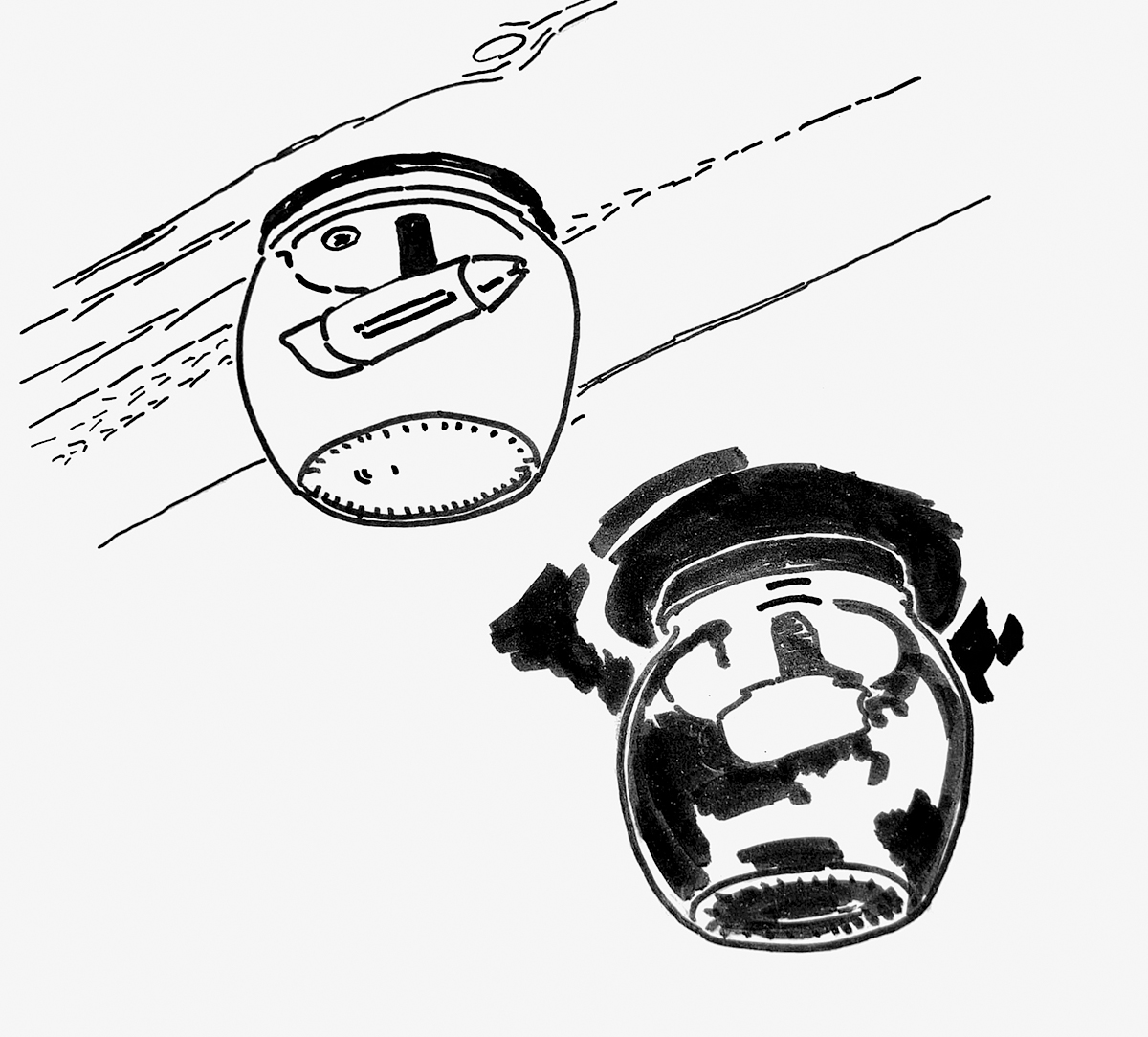
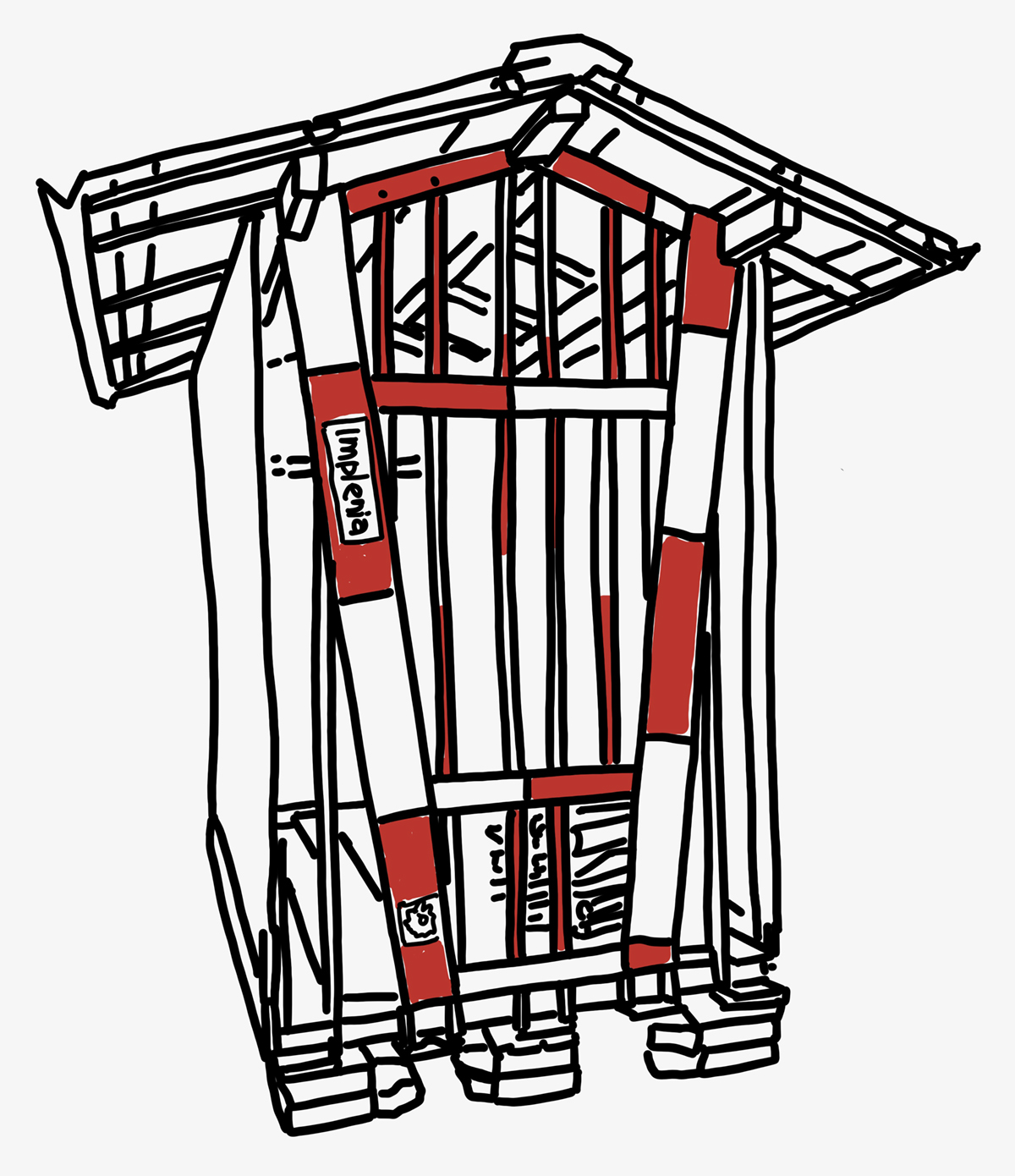
The artistic translation of ethnographic insights into the intervention Foot Baths for All was not a linear transfer of knowledge. Instead, it unfolded as an open and experimental process in collaboration with the scenographer and artist Monika Schori. During this process, which involved discussions, material experiments, and bricolage technique, sketches became both a working and communication method. They allowed us to explore spatial and material possibilities and served as a tool for collective ideation, providing a shared basis for discussion.

The concept of the free, collective footbath draws on two interrelated references. First, it is based on the fieldwork on informal care service systems that operate outside market-driven structures, such as the initiatives Freeshop and Küche für alle. These self-organized initiatives promote sharing, solidarity, and accessibility within the subcultural communities, and are based on the logic of the gift economy. Building on the subcultural strategies on wastelands, the artistic aim was to create a public care service system that would be freely accessible to a broad public in the inner city.
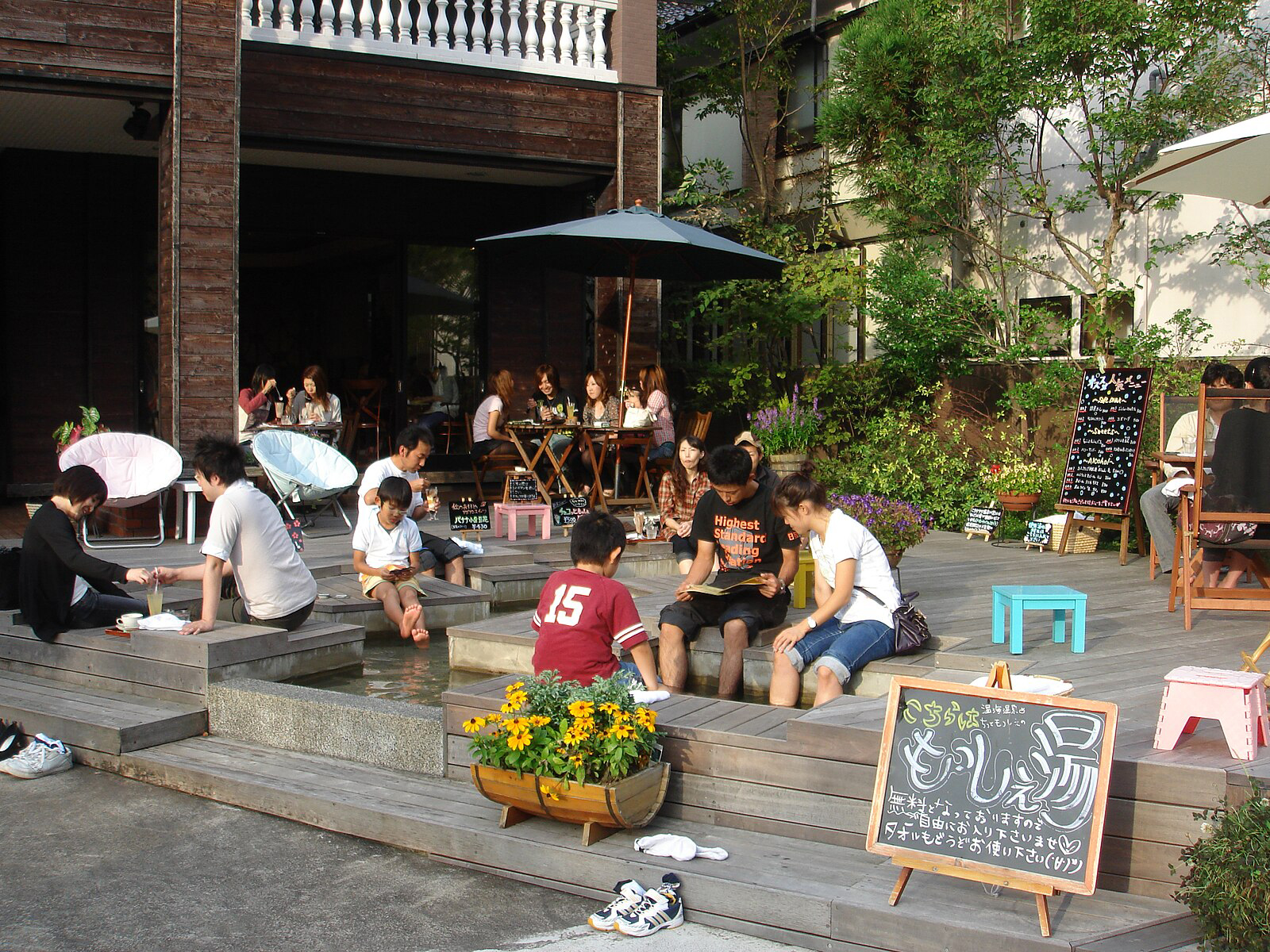
The second reference is the Japanese foot bath (ashiyu), a culturally embedded example of institutionalized public care (see figure 11). Typically maintained by local governments in spa towns, foot baths are freely accessible and invite passers-by to moments of pause, relaxation, and spontaneous social interaction. While Freeshop and Küche für alle exemplify bottom-up, self-organized infrastructures of care in the wasteland context, ashiyu demonstrates how similar non-commercial, low-threshold practices can be integrated into public space as civic infrastructure. Together, these references informed the initial concept of a temporary, shared, and inclusive public foot bath (see figure 10).
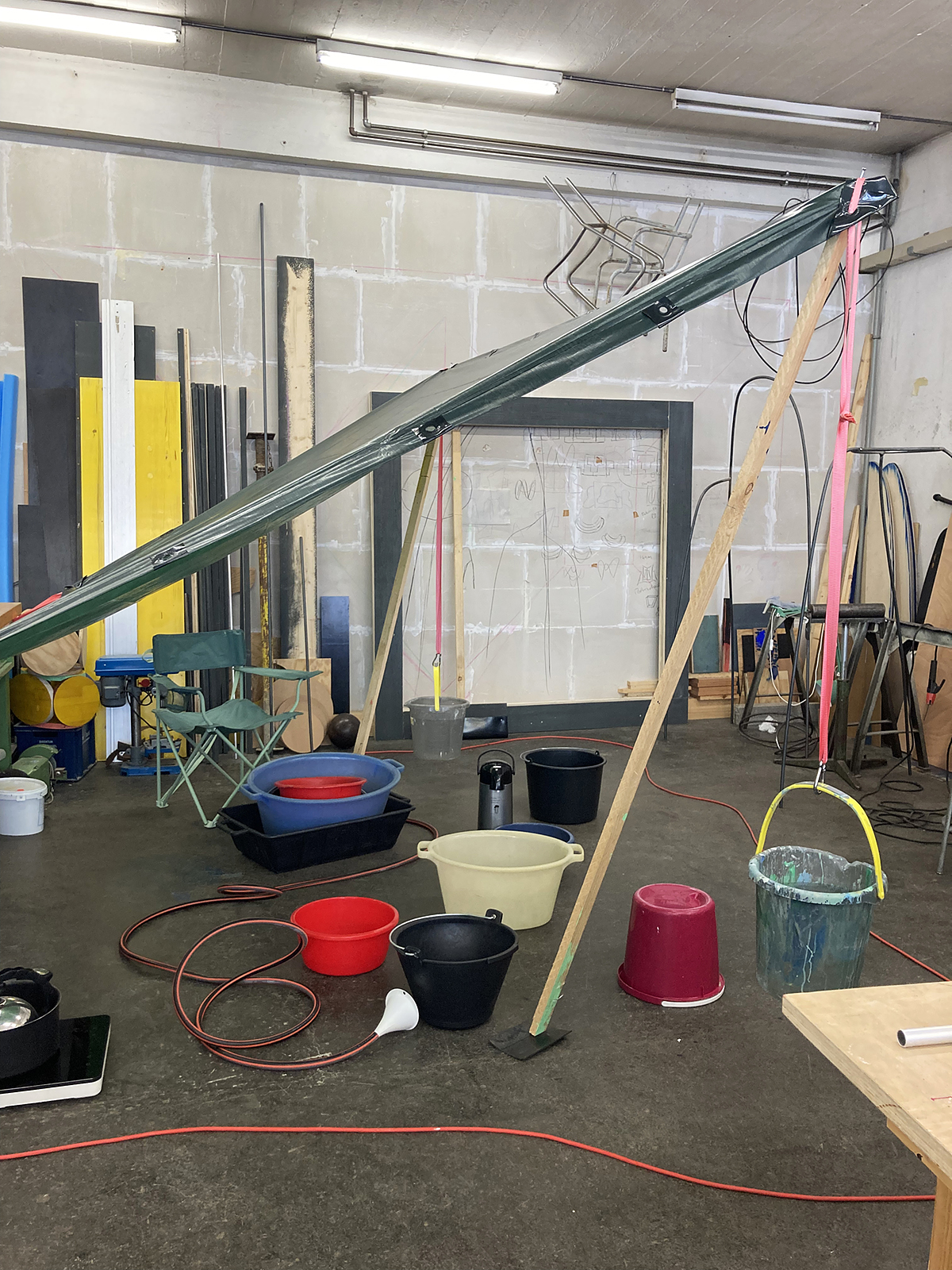
On the level of the infrastructural design, key criteria were that the foot bath infrastructure would be portable, allowing it to be transported easily on a bicycle trailer (see figure 12), and that it would be designed to adapt tactically to diverse locations. The resulting care infrastructure is a DIY assemblage, which is incomplete and heterogeneous (see figure 13), and constitutes a low-threshold space where people can relax, recharge, and experience collective self-care. Each object has its own function and enables both individual and collective actions: the self-built tent provides shelter, buckets serve as basins and seats, and the self-built water supply system brings water to the basins. The banner “Fussbad für alle” (“Foot Bath for All”) functions as a communicative tool, announcing the intervention and attracting passers-by. Alongside these objects, domestic elements are also integrated – an electric kettle, a broom kit, bath towels, lemon balm oil, coffee cream, a self-made apron, and shoes. These objects trace the private into the public realm.


The heart of the infrastructure is a lightweight tent that functions as a semi-permeable shelter – at once protective and open (see figures 14 and 15). The shelter consists of a tarpaulin (2×3 meters) that can be attached to an existing infrastructure or trees in public spaces with two ropes. On the opposite side, two wooden poles serve as supports, while buckets filled with water act as counterweights. The shelter can only be put up through collective performance — a joint effort to build a fragile and flexible installation that is in constant flux.
Most of the items used to develop the infrastructure were borrowed from friends and neighbours, or sourced from a thrift store. We reinterpreted and reused the objects: Buckets were repurposed as basins or used as seats. A hose was combined with a funnel to create a simple water supply to transport water from the fountain to the basins. Our bricolage practices reflect critical materiality and are rooted in the principles of reuse and reinterpretation of wasteland building practices.

Through the city with the mobile foot bath
With the implementation of the artistic project Foot Baths for All, we, Julia Weber and Mayumi Arai, transported the care infrastructure – loaded onto a wagon and pulled by bike – from one location to the other. For eleven days in October 2024, we occupied unannounced diverse urban spaces – Europaallee, Piazza Cella, Lochergut, Münsterhof, and Hallwylplatz – and transformed public fountains into free, collective foot baths using this DIY infrastructure.
The performance consisted of cleaning and occupying the sites, tapping into water and electricity resources, inviting passers-by, offering hospitality, engaging in communal foot bathing, resting together, observing, and recording the conversations with guests. Through our engagement, we became co-creators of the environment and its relationships, and part of its transformation.

Passers-by responded in diverse ways: some welcomed our invitations to participate in foot bathing, while others insulted, ignored, or regarded us with suspicion. We were labelled as artists, urban and climate activists, and social workers who provided food and hygiene supplies to marginalised people. Other labels included “yuppies”, “Christian missionaries”, “street cooks”, and even “linke Zecken” (“left-wing ticks” in English). On several occasions, we were evicted by the police. In this way, our presence in and occupation of public spaces became a contested terrain where our intentions partially collided with the different assumptions and expectations of passers-by. These multiple labels highlight the situational and political nature of the intervention.
Central to the Foot Bath for All intervention was the hacking of existing public water supplies from fountains and the sourcing of electricity from neighbouring cafés and shops. These micro-synergies reflect the informal co-operations observed in the wastelands, where access to water and electricity is negotiated through site-specific relationships and tacit trust. The hacking can be perceived as a political gesture – a reassertion of the right to basic resources. Thus, the intervention reimagines water and electricity as accessible, free, and shared resources. Neighbours and public fountains become accomplices, expanding the project beyond human solidarities into the realm of public infrastructure.
Within the foot bath setting, the boundaries between private, communal, and public space remained porous. Guests removed their shoes and soaked their feet. The act of foot bathing, usually a private practice, became a communal ritual with strangers in the public realm. Hot fountain water served as a medium that brought people together through a shared experience of intimacy and vulnerability. Small gestures such as offering a towel, sharing a story, or simply making space are invitations to connect with others in the here and now. By transforming public spaces into spaces of shared openness, the project challenges urban anonymity and individualism.
The participants came from diverse social and cultural backgrounds. Interestingly, participants with migrant backgrounds often engaged more enthusiastically with the project than local Swiss passers-by. This observation may reflect different cultural understandings of public and private life, bodily proximity, and foot bathing traditions. In many non-Western contexts, the boundary between public and private tends to be more fluid, and practices of foot washing are culturally embedded, sometimes tied to religious and communal rituals. These cultural sensibilities may have contributed to a greater openness towards this intimate, shared act of foot bathing in urban public space.
Nevertheless, collective foot bathing enables strangers of various backgrounds to become accomplices, if only for a moment, through the shared experience of intimacy and vulnerability. New social bonds could form in this way, opening up a temporary space for recognition and trust across social and cultural differences. Through the creation of this temporary, inclusive gathering, the Foot Bath for All intervention offers a vision of an alternative urban future – one that counters the segregated and unequal urban environments shaped by class, privilege, and access.


From wastelands to Foot Bath Urbanism
The artistic intervention Foot Baths for All brings the ethos of self-organized care from urban wastelands into contact with broader publics in the inner city of Zurich. Emerging from a fictionalization of ethnographic insights, the project translates everyday practices of care, improvisation, and co-operation found in wastelands into public settings. Care becomes visible in urban public spaces as a transformative, site-specific, and relational artistic practice, involving people, social relations, objects, and the environment. This opens up new forms of appropriation and participation in urban life.
The connection between the care approach and Michel de Certeau’s concept of tactic reveals how the intervention Foot Baths for All produces ambiguity in urban spaces, demonstrating that acts of care can also be political practices. The intervention challenges the boundaries between public and private, making care visible in urban public space and transforming it into a societal responsibility – something that is not bound to institutions or private households. At the same time, the intervention performs a form of tactical urbanism in the sense of Michel de Certeau, occupying urban space from below, with DIY means and hacking strategies to challenge the homogenizing impulses of commercialized and controlled urban public spaces.
Like the wasteland communities that inspired it, the intervention Foot Baths for All makes visible the possibility of an urbanism that is shaped from below, in dialogue with the space and with others. At its core, the intervention Foot Baths for All is an artistic method which combines tactical urban practices with gestures of collective care, transforming urban public spaces into temporary sites of access, inclusion, and shared urban resources. Mutual care, interaction, and dialogue take priority over privatization, commercialization, and displacement in everyday urban life. Ultimately, Foot Bath Urbanism encourages us to reimagine the city as a shared, ongoing, and democratic process – a living commons sustained through care, negotiation, and participation, and distinguished by the unforeseeable.
Bibliography
Angélil, Marc, Rebecca Bornhauser, Kees Christiaanse, Maik Hömke, Thomas Kissling, Philipp Klaus, Simon Kretz, Lukas Kueng, Vittoria Magnago Lampugnani, Gabriela Muri-Koller Rahel Nüssli, Verena Poloni Esquivié, Christan Schmid, Carlone Ting, and Günther Vogt. 2016. Urbane Qualitäten. Ein Handbuch am Beispiel der Metropolitanregion Zürich. Zürich: ETH Zürich.
Belina, Bernd. 2006. Raum, Überwachung, Kontrolle. Vom staatlichen Zugriff auf städtische Bevölkerung. Münster: Westpfälisches Dampfboot.
Brighenti, Andrea Mubi, ed. 2013. Urban Interstices: The Aesthetics and the Politics of the In-Between. London:Routledge.
Broich, Marie Jacqueline and Daniel Ritter, eds. 2017. Die Stadtbrache als “terrain vague”. Geschichte und Theorie einesunbestimmten Zwischenraums in Literatur, Kino und Architektur. Bielefeld: Transcript Verlag.
De Certeau, Michel. 1984. The Practice of Everyday Life. Berkeley, Los Angeles, London: University of California Press.
Colomb, Claire. 2012. “Pushing the Urban Frontier: Temporary Uses of space, City marketing, and the Creative City Discourse in 2000s Berlin”. Journal of Urban Affairs 34 (2): 131–152.
Duneier, Mitchell, Philip, Kasinitz, and Alexandra Murphym eds. 2014. The Urban Ethnography Reader. Oxford: OxfordUniversity Press.
Fabian, Louise, and Kristine Samson. 2014. “DIY Urban Design: Between Ludic Tactics and Strategic Planning”. In Enterprising Initiatives in the Experience Economy: Transforming Social Worlds, edited by Britta Timm Knudsen, Dorthe Refslund, and Per Blenker, 38–59. London: Routledge.
Fisher, Berenice, and Joan Tronto. 1990. “Toward a Feminist Theory of Caring”. In Circles of Care: Work and Identity in Women’s Lives, edited by Emily K. Abel, Margaret K. Nelson, 35–62. Albany: State University of New York Press.
Jacoby, Simon. 2023. “‘Am liebsten hätte ich, wenn die Besetzung weiter bestanden hätte’”. Tsüri, 14 February. https://al-zh.ch/blog/2023/02/am-liebsten-haette-ich-wenn-die-besetzung-weiter-bestanden-haette/ (accessed 1 December 2025)
Lacy, Suzanne, ed. 1995. Mapping the Terrain: New Genre Public Art. Seattle/Washington: Bay Press.
Lefebvre, Henri. 1996. “The Right to the City”. In: same, Writings on Cities, edited by Kofman, Eleonore; Lebas, Elizabeth, 63–184. Cambridge, Massachusetts: Wiley-Blackwell.
Kowarik, Ingo. 1993. “Stadtbrache als Niemandsländer, Naturschutzgebiete oder Niemandsländer”. In Städtische Brachflächen und ihre Bedeutung aus der Sicht von Ökologie, Umwelterziehung und Planung, edited by WittigRüdiger, 33–41. Frankfurt am Main: Geobotanische Kolloquien 9.
Kwon, Miwon. 1997. "Im Interesse der Oeffentlichkeit". Springer. Hefte der Gegenwartskunst Volume II, Issue 4: 30–35.
Puig de la Bellacasa, Maria. 2017. Matters of Care: Speculative Ethics in More than Human Worlds. Minneapolis: University of Minnesota Press.
Rentzsch, Franziska. 2000. “Urbane Brachen-Bilder: Ergebnisse einer qualitativen Studie zum Mensch-Umwelt-Verhältnis anhand zweier städtischer Brachlandschaften”. Geografica Helvetica 55: 31–44.
Sassen, Saskia. 2012. “Die globale City ist ein brutaler Ort”. WOZ – Die Wochenzeitung, No. 25, 21 June. https://www.woz.ch/1225/saskia-sassen/die-global-city-ist-ein-brutaler-ort (accessed 2 March 2023)
Schwanhäusser, Anja. 2015. “Herumhängen. Stadtforschung aus der Subkultur”. Zeitschrift für Volkskunde, 1: 76–93.
Silva, A. Cristian. 2022. The Interstitial Spaces of Urban Sprawl. Geographies of Santiago de Chile’s Zwischenstadt. London: Routledge.
Tessin, Wulf. 2011. Freiraum und Verhalten. Soziologische Aspekte der Nutzung und Planung städtischer Freiräume. Wiesbaden: Verlag für Sozialwissenschaften.
Thissen, Fee Natalie. 2015. Vom Industrieareal zum Stadtteil: Zürich West. Räumliche Transformation – Planungsprozesse – Raum(um)nutzung. Aachen: Rheinisch-Westfälischen Technischen Hochschule Aachen. https://publications.rwth-aachen.de/record/538378/files/538378.pdf (accessed 18 March 2023)
Tronto, Joan. 1993. Moral Boundaries. A Political Argument for an Ethic of Care. New York: Routledge.
Tschäppeler, Sabine, Sabine Gresch, and Martin Beutler. 2007. Brachland. Urbane Freiflächen neu entdecken. Bern & Wien: Haupt Verlag.
Weber, Julia. 2018. “Loitering in Urban Public Space – Wandering with a Street Poet in Berlin”. WiderScreen (1–2): 1–9.
Weber, Julia. 2026. Herumlungern?! Potenziale einer urbanen Lebensform. Zürich: Diaphanes.
Wildner, Kathrin. 2003. “La Plaza: Public Space as Space of Negotiation”. Transversal Text 11/03. https://transversal.at/transversal/1203/wildner/en (accessed 7 April 2023)