1 Introduction
2 About the researcher
2.1 Research ethics
3 Theoretical and conceptual framework
3.1 Antiracism
3.2 White supremacy
3.3 The recording process
4 Core references
4.1 How to Be an Antiracist
4.2 White Fragility
4.3 Me and White Supremacy
5 Applying antiracism to the recording process
5.1 Preparation
5.2 Recording
5.3 Overdubbing
5.4 Mixing down
5.5 Mastering
6 Project example
7 Key findings
7.1 Challenging the invisible
7.2 Representation
7.3 Change, immediacy
8 Reflection
8.1 The research process
8.2 Where to go from here
9 References
I want to thank:
- Nathan Riki Thomson for guiding me through this process as well as the Global Music Department for all the support during my years of studying at the Sibelius Academy.
- Tomás Doncker, James Dellatacoma, David Frank, Michael Brauer, and Jimmy Bralower for introducing me to the world of the recording studio
- Michael "Smidi" Smith, Rick Schmunk, and Sean Holt at the University of Southern California for having me as an exchange student in 2022

The goal of this thesis is to examine current, 21st century antiracist ideas and approaches presented by the likes of Ibram X. Kendi (2023) and Ijeoma Oluo (2021) while finding out if they can be effectively applied into modern music production pedagogy. As a researcher I want to pose the question of whether we teach this subject without considering enough the socioeconomical conditions and phenomenon created by racism, and whether we are this way fostering ignorance and thus separating music from its creators.
The study will be conducted by using the approach of qualitative research. I am going to introduce and examine several contemporary, widely available publications and articles that are currently being used to teach about (anti)racism and white privilege, with the goal of learning whether some of their key concepts and ideas can be applied in the context of music production pedagogy.
I will be reflecting from the point of audio engineering/music production context using Huber’s and Runstein’s (2005) five-stage definition of “The Recording Process” as the foundational framework. (p 24) Through reflection my hope is to find practical, direct ways pedagogues of diverse backgrounds can increase both their awareness and resourcefulness on antiracist action when covering all five stages in a pedagogic setting.
In addition, I will unpack one project example from my own work as a producer, and use it to further reflect on the key concepts of the study in order to provide both theoretical, as well as more practical insight into the subject matter.
The goal of this thesis is to examine and further increase awareness and understanding of racism as a systemic agenda of oppression that continues to affect not just the US but societies worldwide every day. By asking myself the question: ” How can understanding of antiracist strategies help create new practices and approaches in music production pedagogy?” I also want to address the concept of white privilege by answering the question of “why.”
The role of a music producer is arguable one of the most fluid, ever-changing positions in the music industry. Often evolving directly in tandem with the ebb and flow of the industry, its technology, and financial infrastructure, the skillsets and requirements for a person to become a music producer can vary greatly depending on the socio-geographical, cultural, and historical contexts.
Throughout its relatively short lifespan the pedagogical approaches in music production and audio engineering pedagogy have been dominated by euro- and US-centrism, often with no references to non-Western people, companies, or cultures. In the case of popular music production, much of the musical landscape that has shaped the course of recent musical history, was - and still is - originally created by marginalized and oppressed people in order to address and rebel against the systemic racism that has been present in the US throughout its history. (Galloway, 2021)
With so many of today’s music industry’s leading producers and trendsetters still located in the US, I want to present the idea of how important it is to increase awareness of the racist infrastructure that still very much exists to this day. By understanding the reality of how racism works as an agenda and a dynamic (both conscious and unconscious), I believe we can use antiracist concepts directly to envision a more equal future in music production pedagogy.
Through organizations such as We Are Moving The Needle, the world has recently seen a steady increase in female producers and audio engineers. Due to the increased accessibility in technology needed to create recorded music, many current-day learners are self-learning the art of record production, and much of todays’ learning material now involves publishing streamable content such as web classes, video workshops and e-books.
I am suggesting that in the search of new ways of teaching, we must create a new set of rules, conventions, and ways of approaching audio engineering pedagogy, with an awareness of the underlaying conditions and dynamics that are all part of the music we make. This requires a certain amount of self-reflection and thoughts on identity as well as a value-driven foundational work inside each pedagogue and institution.
The process of writing this thesis has been fueled by various experiences I have gone through while traveling and living in the US between 2013-2019. Being a white European student of African American culture and music, and having been exposed to various layers of systemic racism and oppression through my teachers, friends, and musical groups I’ve been involved with, permanently have left me wanting to do whatever I possibly can to seek and foster equality and justice through my own work.
In the context of this thesis, I recognise my positionality as a Finnish cis male researcher, and will approach this study with particular attention to ethical and cultural sensitivity beyond the subject matter. English is not my first language, and although never intended, I do recognise any potential word choices that may be misleading to some readers.
I want to emphasize that throughout this thesis my idea is not to represent in any way any part of the people nor cultures discussed in the subject matter, but to examine, amplify, and hopefully reflect further the voices of the authors and creators behind the referenced texts.
Referred throughout this thesis, the term draws heavily on Kendi’s (2023) definition of antiracism as an agenda of directly opposing current prevailing structural dynamic of racism.
Instead of an arguably more historical definition of racism as a direct oppressing action against a socioethnical group, racism is here defined as a foundational idea of a hierarchy, or an active policy leading to racial inquity or injustice.
Therefore, the idea of an antiracist is one expressing an idea of racial equality, or one who is actively supporting a policy leading to racial equity or justice. (p 15)
Closely related to racism/antiracism as a concept, the term “white supremacy” refers to the idea described by DiAngelo (2018) as the dominant paradigm forming the foundation from which norms, rules, and laws are created. (p 30) Again, instead of a direct action towards an individual or group of people, this ongoing dynamic creates a platform where the dominant socioethnical group is dominating.
DiAngelo (2018) points out that as a phenomenon, white supremacy is a system you have been born into – therefore it is the current prevailing condition of a society, not a choice made by an individual. DiAngelo (2018) explains how this system has been designed to keep white people asleep and unaware of their unearned privilege, protection, and power that non-white people do not have. (p 32)
As suggested by Huber and Runstein (2005), the process of creating recorded music in this thesis will be divided into five different working stages – preparation, recording, overdubbing, mixing down, and mastering. As the increased accessibility of studio equipment continues to make the recording process more personal (2005), arguably more direct (“hands-on”) knowledge of each stage is required by the modern-day producer as the person with responsibility of overall quality control.
Widely regarded as a key resource regarding antiracist concepts, Kendi (2023) opposes the prevalent idea of racism as a direct hateful act with the concept of racism as an agenda or policy of either producing or sustaining racial inequity or injustice. (p. 21) By demonstrating systemic racial inequity using current houselessness rates for Black Americans in the US, Kendi (2023) exemplifies the way a history of oppression is still present in clear, measurable forms. (p. 20)
Kendi’s (2023) definition of racism and antiracism, as well as various associated phenomenon, will be further reflected throughout this thesis in the context of music production pedagogy. His idea of defining racial prejudice as conserving presently existing racism instead of something that creates racism, sets a clear, strong foundation for discussing issues such as culture, aesthetic, and power dynamics in a music production context. (p. 142)
Equally allowing as well as maintaining, the concepts of white fragility and white supremacy play an important part in understanding how racism works. Both DiAngelo (2018) and Saad (2020) discuss racism from the viewpoint of a White person. What it means to be White - to be able to afford to stay unaware of what happens beyond the scope of one’s White reality.
DiAngelo (2018) describes white fragility as a certain combination of simultaneous denial and subconscious guilt of exclusion, prejudice, and privilege. A general unawareness of one’s surroundings is a key element, which often comes with a strong emotionally charged defense of a White person’s innocence (“…but I have Black friends!”). A common argument being that “racism is evil” often leads to an understanding of racism as something only “bad” people take part in, excluding people who mean good, but subconsciously do not want to sacrifice what they have. Part of racism is in the way it is built in order to keep White people blind of what happens outside their social environment, and thus much emphasis is being placed on the invisible and excluded.
Reminding of the importance of awareness and knowledge, DiAngelo’s (2018) work brings forward important issues that resonate in music production pedagogy: how do you acknowledge everything that has been excluded? How do you reflect on your own positionality as a pedagogue? In what ways does white fragility occur during the different areas of pedagogic content?
Approaching from the perspective of white supremacy, Saad (2020) presents the infrastructural nature of racism, and asks important questions regarding how we can establish change in not just people, but societies, institutions, and infrastructures built and developed as products of a history of oppression.
Saad (2020) states that white supremacy is not a matter of personal choice, but a system one has been born into. It is a system that grants White people various privileges, protection, and power that others do not receive. Thus it is the existing condition of upholding White dominance that surrounds us regardless of any personal values or actions.
Saad (2020) breaks the foundational concepts of white supremacy down into everyday social phenomenon such as norms, rules and laws, and thus reminding of the multifaceted and complex nature of racism. In the context of music production, Saad (2020) makes a pedagogue critically examine not just pedagogy, but the institution itself – what purpose it has been created to serve, and the different ways this dynamic continues to affect the said establishment in its present operation as well as future development. When reflected against Kendi’s (2023) definition of racism as a policy (p. 73), Saad (2020) provides an important reminder to assess the question of intent – why a given pedagogical context is being funded, upheld, and further developed.
From the perspective of music production, all different stages of the recording process are filled with various power dynamics and interplay between all the different parties involved in the creative process. By teaching awareness and understanding of the structural design of a producer’s work environment, could students and future creators be armed with more tools to fight oppression dynamically on multiple artistic and societal levels?
When approaching music production pedagogy, I am suggesting that antiracism could here be seen as “The North Star” - a clear set of principles and concepts that guide a pedagogue into facilitating discussion and teaching around the different stages of creating recorded music (Huber, Runstein. 2005). As a pedagogue, addressing positionality will be critical in both creating a safe space as well as setting an example on being vulnerable and constantly open for improval. By asking “What role do I play in this situation from an antiracist point of view?” a pedagogue can lead in setting tone for transparent self-reflection, establishing a truly critical and ethical approach of the subject.
More general topics such as “people/soft skills” can be approached from the perspective of transparency, self-awareness, as well as recognition of the various power dynamics and agencies inside of an institution. Awareness and understanding of not just the creative process but how the surrounding infrastructure works – and the socioeconomical effects it has - can create new possible directions in artistic work both in and outside of the classroom.
Looking at the five different stages described further below, the majority of the key findings can be applied in addition to the following concepts:
From an antiracist perspective, understanding and defining quality from the viewpoint of the client (often the artist or the label) will be extremely important for the producer. Being able to discuss the relationship between “what the client wants” and “what the world needs” can provide an important tool when setting up the foundations for antiracist approaches.
This theme can be further articulated by asking the question: “What is the discussion the record wants to be a part of?” Understanding context, message, as well as the client’s intention, can help a producer position oneself and apply antiracist principles and action in tandem with the recording process.
A large part of a producer’s work can be related to choosing and designing the workflow and process for making a record. Making choices related to location, personnel, and gear can be examined through the lens of acknowledging various racist infrastructures. Recognizing underlying power dynamics and hierarchies within the “audience-release-artist-studio-label” relationships can be beneficial when setting a starting point in applying antiracist approaches and concepts.
In addition to quality, arguably biased terminology such as “professional”, “essential”, and “world class”, are often used in the world of audio engineering in order to showcase superiority. Words such as “You need to have x in order to create quality recordings” are therefore often used both by companies and people alike in order to create financial exclusion as a marketing strategy. Approaching this critically as the producer can help identify areas where antiracist concepts can help dismantle invisible power hierarchies by finding new ways to empower, enable, and amplify the voices of the oppressed.
Preparation, or the often-called “pre-production” phase can involve such activies as fine-tuning the artistic vision together with the client, going through A&R considerations regarding material to be recorded, assessing any arrangement issues, as well as planning out the logistics of the overall recording process. Here a producer can acknowledge ones positionality as well as initiate discussion regarding the artist’s relationship to the material in question as well as the culture and society surrounding the music.
Other activities may include budget and timeline discussions, where awareness and understanding of the financial infrastructure of both the music business as well as the local socioeconomical conditions can further help initiate antiracist action.
Selection of recording locations and personnel are often considered essential questions regarding the beginning of the recording process. Here reflection and awareness on representation and racism as an invisible agenda can be of great help when approaching these decisions with an antiracist approach.
Who owns the studio? Where is the studio located? Who will be “in the room” – meaning the audio engineer as well as any assistants present in the recording process. Taking chances by not relying on the people who are already established can act as an opportunity to invite and support companies and people outside of a racist hierarchy.
Traditionally considered the phase following initial tracking, overdubbing often involves recording all the additional instruments and parts not included in the basic tracking session. Here any additional studio musicians or collaborators can be invited or hired, and using antiracist strategies can result in choosing personnel outside of the dominant race – here the goal is to challenge and deconstruct the normalization of White as the dominant race, and help increasing diversity in the process.
Arrangement choices can often be present during the overdubbing phase, where additional parts may be composed throughout the recording session. A producer may also provide suggestions and ideas regarding performance – here, understanding the culture around the music being recorded, as well as any underlying power and racial dynamics between the producer and the artist, can help establish an antiracist approach by increasing transparency and openness.
After all of the material having been recorded, the mixing stage is often operated either by a dedicated mixing engineer, the recording engineer, the producer – or a combination of all three. Recognizing the role of the mix – in what ways and how much the mix should affect the representation of the artist, can benefit from antiracist reflection.
Mixing tools often include outboard hardware, as well as software in the form of effect “plugins”, and the selection of tools can be done using an antiracist mindset. Mindful consideration on which audio companies to support – based on factors such as who owns the company, where the company is located, and whether a company has taken or is currently taking any visible antiracist action - as a professional can help increase antiracism as an agenda in the music business.
As the final stage of the recording process, mastering involves overall balancing of frequency, dynamics, and stereo information. Here, the selection of a mastering engineer, as well as thorough understanding of the context, can form the basis for antiracist reflection. Could representation be seen as an important way of “maintaining ownership” – an act against such issues such as cultural appropriation?
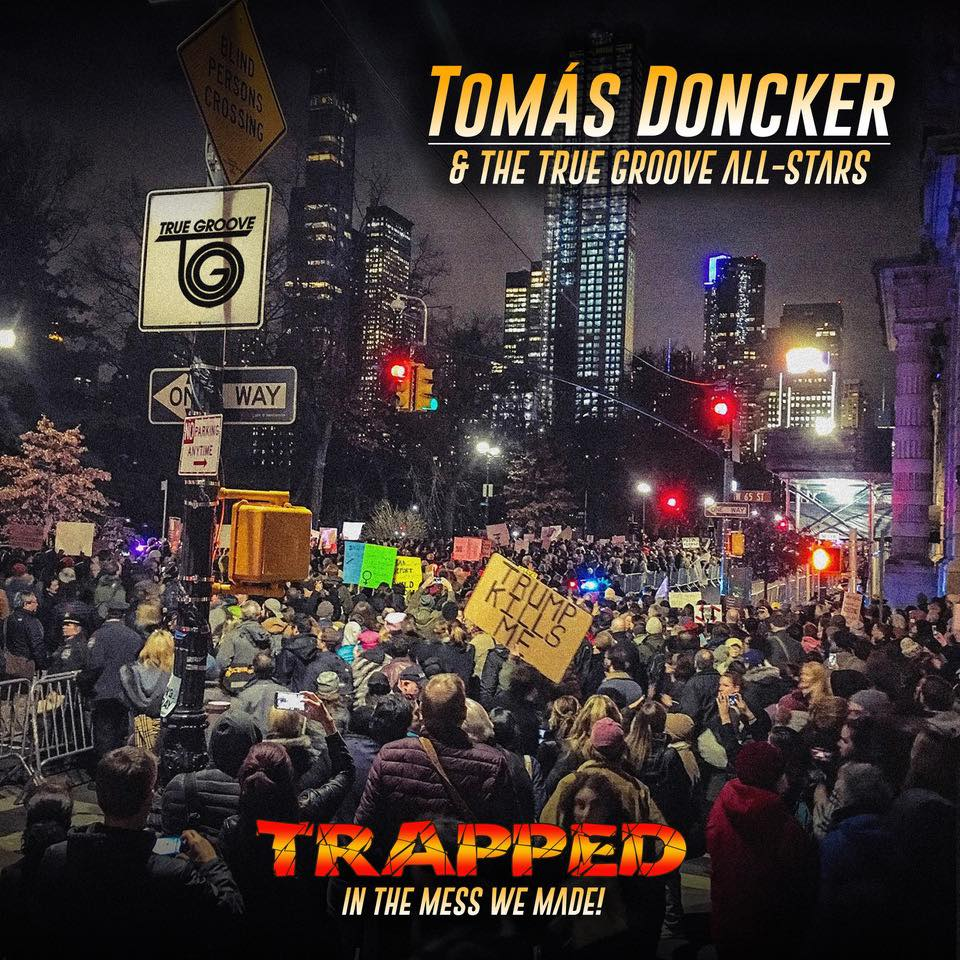
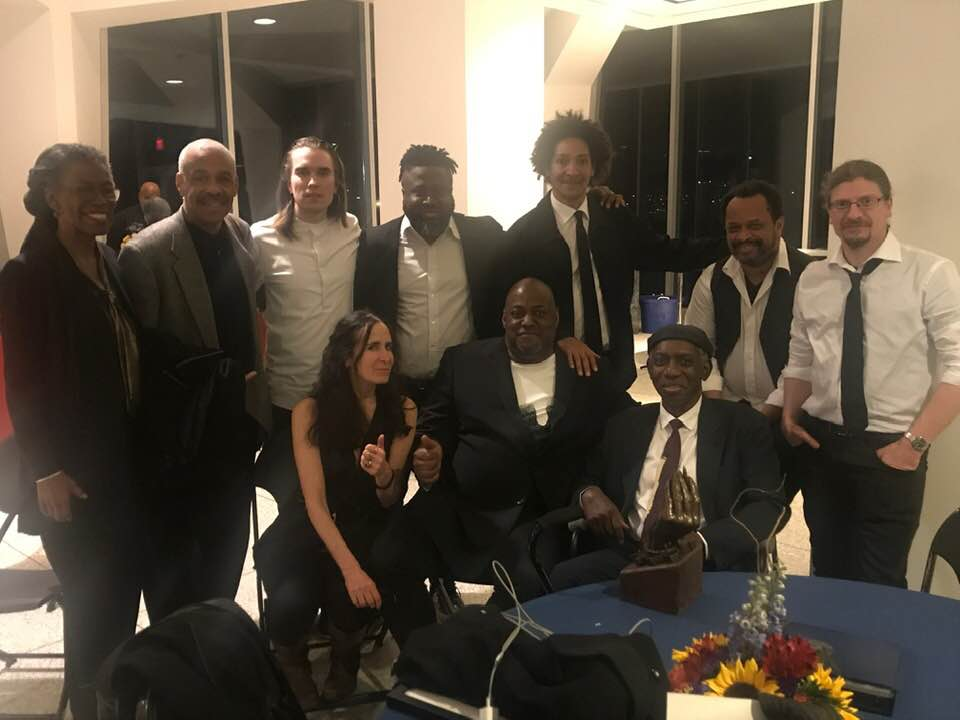
In this chapter I am drawing an example of antiracist action as the driving force behind a recording project and artistic expression by reflecting on one of the albums I co-produced for True Groove Records in 2019. “Church is Burning Down” was one of the songs written in direct response to the Charleston church shooting in June, 2015 in South Carolina, United States, and the album “Trapped… In The Mess We Made” was a collection of re-imagined versions that built on the initial themes of (anti)racism, justice, and equality.
As one of the only White - and the only non-American - members of the performing group and production team, I had to pay special attention in order to position myself throughout the recording process. Also being one of the co-engineers on the song, I fine-tuned my approach to focus on purely capturing the message, and exploring ways I could amplify the voice of the artist without influencing or altering the message of the song in any way - in contrast to a more involved, “hands-on” production approach.
My contribution in the creative process was also that of an ally, to the best of my ability. Here I prioritized open and transparent communication, which also fueled my own reflection throughout the different working stages. Reflecting on – as well as discussing - the privileges I had over my colleagues allowed me to take part in a project not just as someone who wanted to “level up his CV”, but someone who wanted to use their resources and privilege to take part as an antiracist ally, and I strongly believe this brought a depth and authenticity to my musical contribution that otherwise wouldn’t have been there.
Going through and examining the source material left me reflecting on the ways racism can consist of so much that is not seen. The people who are not included, not provided for, not protected, or not taken into account. When approaching the subject this way, it is hard to see anything that racism as a subconscious learned agenda and policy of oppression hasn’t affected throughout the history of the world.
Understanding power structures and interpersonal dynamics in the music making process is a vital part of being able to operate as a music producer, and including knowledge and awareness of racism as a hierarchical dynamic can provide students with new ways of musically taking part in sociocultural conversations through their work as producers.
By acknowledging all the layers and history of racism while being aware of what presently happens outside the White narrative, expanding perspective beyond the scope of “bad people taking direct hateful action” can help a student take part in antiracist action. Could therefore awareness on all the invisible, excluded, and left out lead to concrete results in the future?
The second prevailing theme throughout the majority of the source material connects the concepts of racism, white privilege, and oppression to representation. As Saad (2020) suggests, one of the ways a system of racism maintains itself is by making the oppressed unseen – both from the ones who benefit from the systems as well as the ones who don’t.
How can a student recognize one’s own potential and power when none of the people they look up to look like them? This is something that urgently needs to be addressed in music production pedagogy – with so many of the idustry’s leading voices still being White, in order to establish more equality and antiracism a pedagogue needs to make more effort in featuring diversity when using case studies and references to industry professionals.
With several of the authors discussing historical aspects and the weight of a dynamic that has been developed and protected for centuries, I began reflecting on change and the nature of goal setting in a pedagogical context. With systemic racism having been constructed, fostered, and upheld for so long, can direct, immediate institutional change even be expected?
As pedagogues, how do we navigate between facilitating current-day teaching, establishing change in the future, and fostering results which may not be immediately visible? How do we communicate, examine, and reflect on the values of opposing a system of oppression inside a given infrastructure, confined by the limits of a particular establishment? How much can we do in order to expose any racist hierarchies and power structures, and can we truly be able to make a promise of being honest to our students?
Throughout the writing of this thesis it became evident that the key concepts and ideas regarding antiracism can be applied to a musical context. By adopting a thorough understanding of antiracism as an agency a pedagogue can develop a personal foundation for effectively applying antiracist action to music production pedagogy.
As Kendi (2023) expressed, there is no middle ground when it comes to a racist agency existing around us. This research project addressed among other approaches the method of revealing racist agencies and biases by shifting one’s focus into what’s left outside the white narrative (Saad, 2020). In the context of music pedagogy, this technique of examining institutional and interpersonal bias and silent exclusion reveals the importance of understanding racism as a multi-layered, complex social dilemma (DiAngelo, 2018).
This thesis was in the making for over two years – during a phase where I saw various health challenges which kept me from taking part in my studies. However, the time I spent away from studying proved to be essential in finding a new focus for my thesis, as well as a direction for my upcoming Master studies.
The subject of antiracism is very important to me, and I struggled finding objectivity in the form of academic research writing. While I found the essay form of many of my references engaging, in hindsight I would have benefited from having included more academic articles in my references. This would have also helped me refine the writing style of my thesis to better fit the context of an academic study.
This mini research project has revealed basic antiracist concepts and ideas that can be applied into music production pedagogy. Understanding how different agendas are present throughout the recording process can help students build a socioethical foundation for their work as producers as well as further develop their interpersonal skills through increased communication and self-reflection.
I am personally happy with my chosen subject – as it ended up being the result of a long consideration, I found it very satisfying to examine antiracism in music production pedagogy from an academic perspective. I believe this subject to be very important, topical, and much-needed in the world of audio engineering, and I hope this text could be of use for other people in the future.
It is my hope to further explore and research this field, as antiracist work is largely absent in music production literature, and I look forward to developing this research work further in the coming years - hopefully as well as a pedagogue in the form of socially aware workshops and courses.
Clauhs, M., Franco B., Cremata R. (2019). Mixing It Up – Sound Recording and Music Production in School Music Programs. Music Educators Journal, September 2019.
Delgado R., Stefancic J. (1997). Critical White Studies – Looking Behind the Mirror. Temple University Press, Philadelphia (USA).
Delgado R., Stefancic J. (2012). Critical Race Theory, 2nd Edition. New York University Press (USA).
DiAngelo, R. (2018). White Fragility – Why It’s So Hard for White People to Talk About Racism. Beacon Press.
Eddo-Lodge, R. (2017). Why I’m No Longer Talking to White People About Race. Bloomsbury Circus.
Galloway, K. (2021). Listening to and Sampling the Land - On the Decolonization of Electronic Music Pedagogy. B. Stevens. (Ed.), Teaching Electronic Music: Cultural, Creative, and Analytical Perspectives. Routledge.
Huber D. M., Runstein R. E. (2005). Modern Recording Techniques – Sixth Edition. Focal Press.
Kendi, I. X. (2023). How to be an Antiracist. One World.
Oluo, I. (2021). Mediocre – The Dangerous Legacy of White Male America. Seal Press.
Saad, L. F. (2020). Me and White Supremacy – Combat Racism, Change the World, and Become a Good Ancestor. Thorndike Press.
Tate, G. (2003). Everything But the Burden: What White People Are Taking from Black Culture. Broadway Books.
We Are Moving The Needle. https://www.wearemovingtheneedle.org/
Wilkerson, I. (2021). Caste – The Origins of Our Discontents. Thorndike Press.
https://tenk.fi/sites/default/files/2023-11/RI_Guidelines_2023.pdf