Short abstract
Investigating the potentials of expressing lived maternal experiences, through autoethnographic storytelling by using multidisciplinary practices grounded in clay and ceramics. Utilising its malleability, its material meanings and craft histories. Investigating the potentials and strategies of working as an artistic researcher with other mothering people within healthcare and community spaces, as a resistance to further marginalisation of mothering people, and the healing of individual and collective trauma and maternal disempowerment.
Do you hear me now? Experessions of maternal experience through auto-ethnography and bodily embodiment of clay (working title)
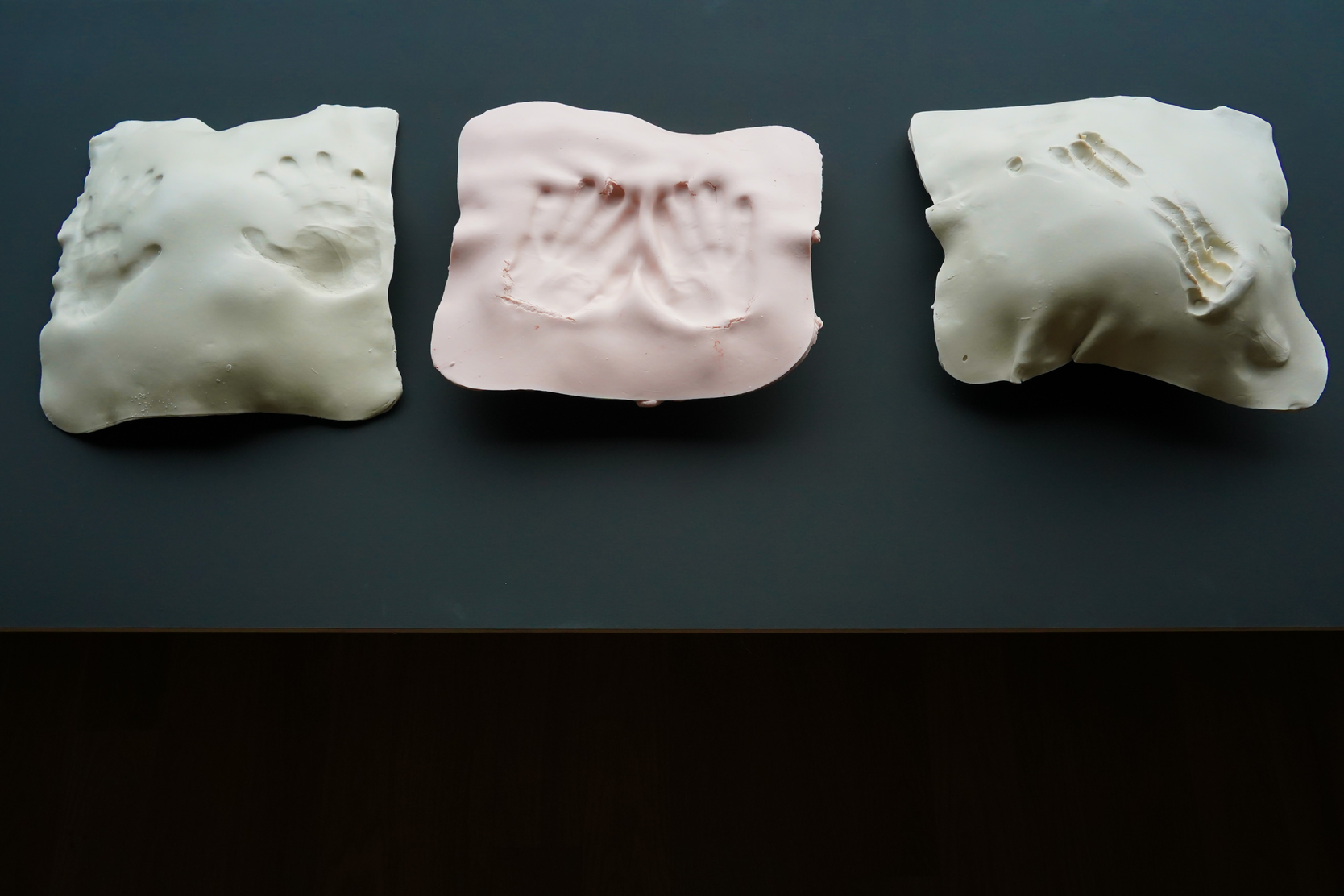
"Do you hear me now?" explores personal experiences, emotions, and reflections through autoethnographic visual art focused on birth, motherhood, and mental health. The work aims to communicate the internal and emotional dimensions of these experiences—both the difficult and the joyful—while offering social and political commentary on maternal care and the societal roles assigned to mothers.
Research questions:
- How can autoethnography support healing through the sharing of personal experiences for me individually, and within group participatory practices?
- How can autoethnographic methods contribute to improving maternal healthcare systems?
- How does storytelling foster connection between individuals?
- What does clay, as a malleable material, contribute to these dialogues, particularly in relation to embodiment?
Autoethnography, understood as the use of personal narrative to illuminate cultural and social experience, enables shared understanding by connecting individual stories to broader social contexts. As Norman Denzin argues in Interpretive Autoethnography, this approach validates lived experience as a central form of knowledge production, transforming the personal into the social and encouraging consideration of multiple perspectives. Personal narratives, rather than numerical data alone, often create the most meaningful shifts in empathy and understanding.
Using my lived experience I will explore how creating spaces for sharing, supporting and making with clay can create better mental health outcomes for mothering people. How do these practices co exist together - the individual making and the shared making of collective space for connection and storytelling?
I will continue to use visual art to articulate experiences that resist linear or complete verbal expression, particularly within complex maternal contexts. This includes examining how working with clay can create the emotional distance necessary to express, process, and communicate difficult events. In this context, I will investigate my own experience of abjection during an emergency caesarean section and consider how clay might serve as a medium to represent processes of dehumanisation and recovery. Through this investigation, I will explore how material engagement can support reflection and how artistic research can make these insights accessible to others.