Introduction
Zoos have long been framed as spaces of education and conservation, yet their architecture and scenography reveal deeper cultural narratives.
From the Menagerie at Versailles to Carl Hagenbeck’s naturalistic designs, zoological gardens have functioned as imperial microcosms—encapsulating distant geographies within controlled environments.
Contemporary biozones continue this lineage, choreographing visitor experience through cinematic sequencing and theatrical staging.
This exposition situates the zoo within a critical framework of representation, drawing on John Berger’s critique of estrangement and Donna Haraway’s notion of natureculture.
By focusing on scenographic elements rather than animals, the project reveals the zoo as a theatre of illusion where nature is continually repackaged for human spectatorship.
Context
The zoo is not a neutral repository of animals but a cultural theatre shaped by historical, architectural, and philosophical forces. From the Menagerie at Versailles, where exotic fauna symbolised royal power, to nineteenth‑century zoological gardens that reinforced imperial possession, zoos have long functioned as microcosms of colonial imaginaries.
Carl Hagenbeck’s “naturalistic” panoramas and Bernard Tschumi’s cinematic biozones extend this lineage, choreographing visitor movement through staged landscapes that simulate authenticity while concealing artifice. Jean Estebanez’s notion of the zoo as a dispositif⁵ underscores its role in mediating human–animal relations through scenography, while Berger critiques the estrangement of animals reduced to spectacle. Haraway’s concept of natureculture further dissolves binaries, exposing the zoo as an ideological theatre where illusion dictates perception.
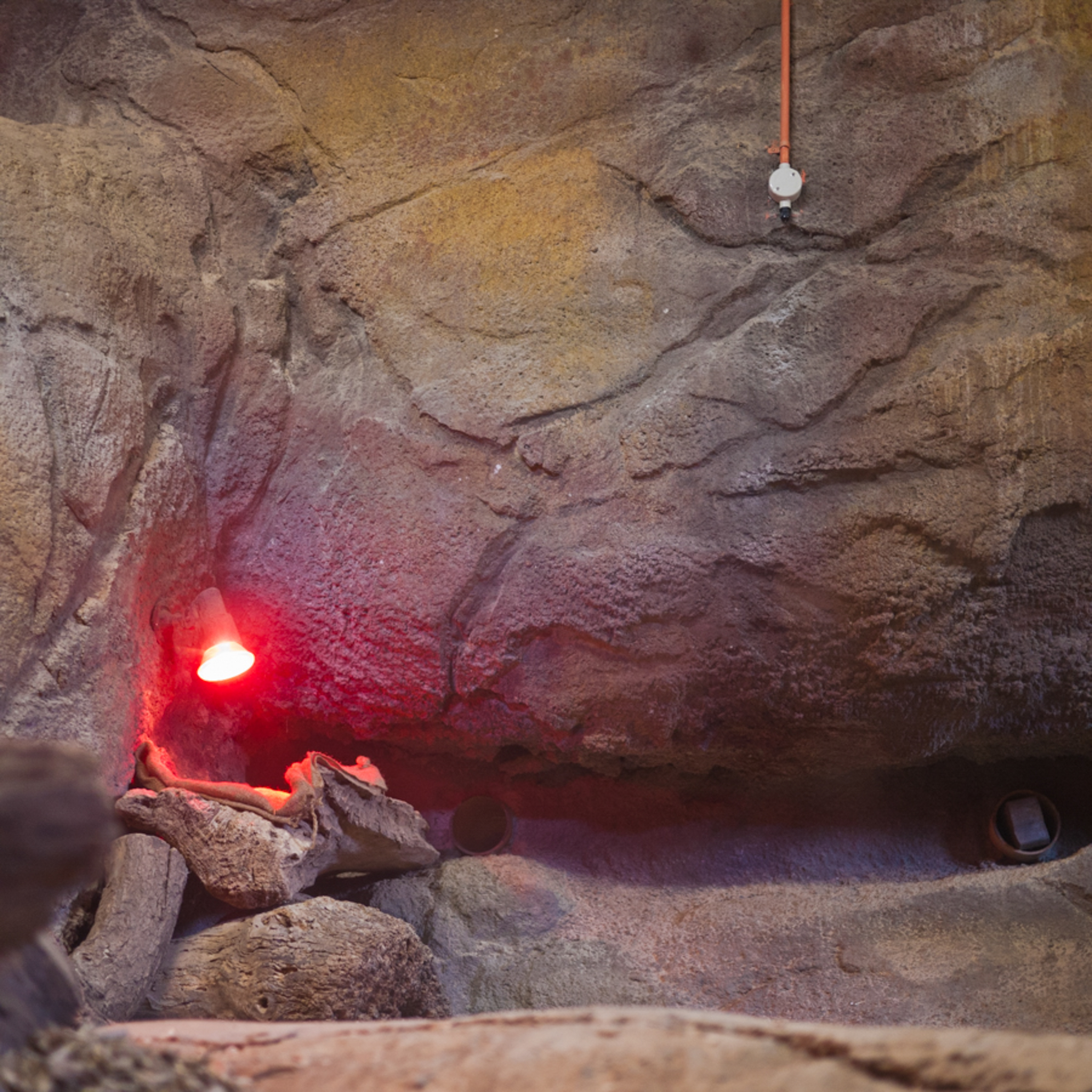
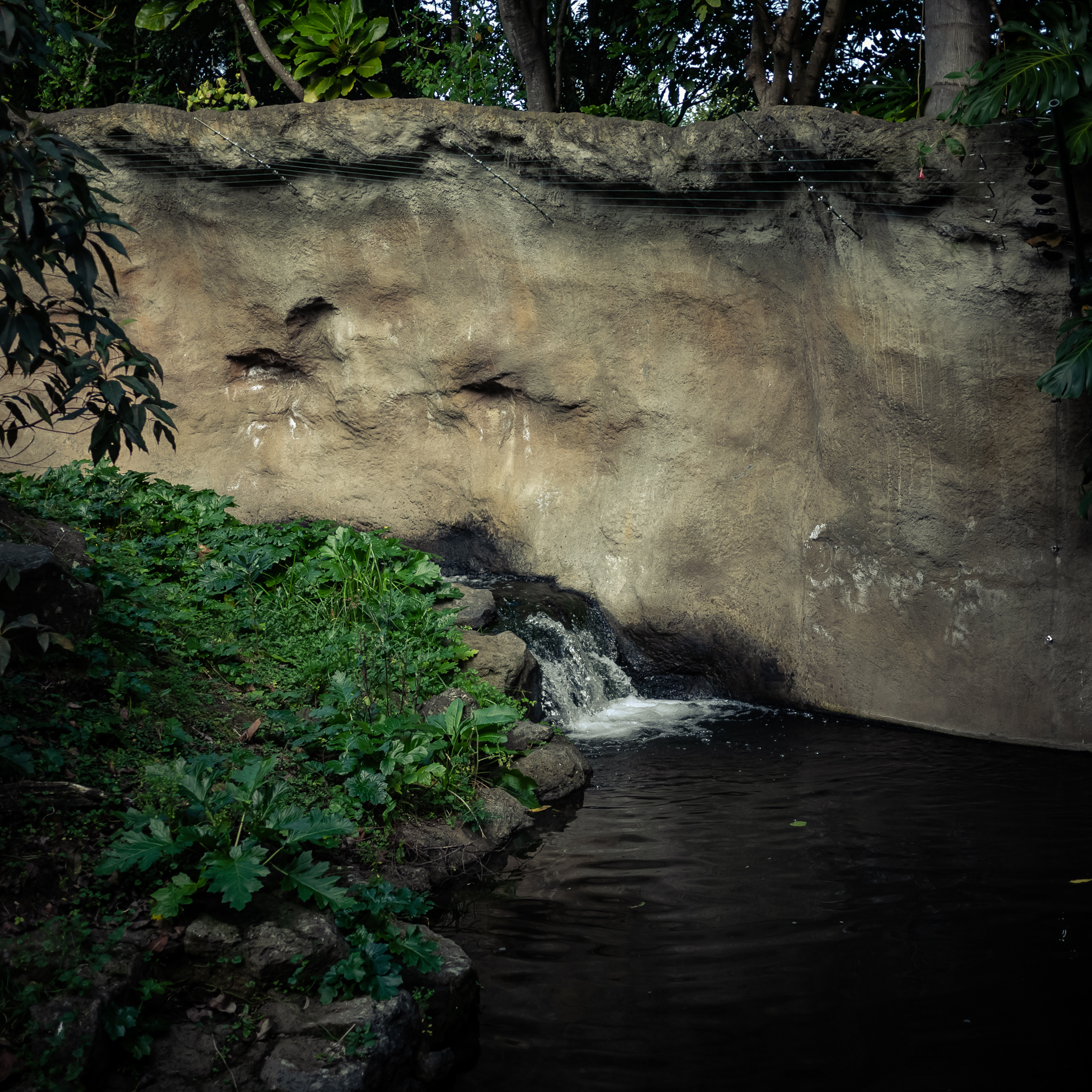
This project situates itself within that matrix, interrogating how fabricated rocks, controlled lighting, and concealed barriers construct believable geographies that remain fragments of fiction—landscapes designed for human satisfaction rather than ecological integrity.
Method
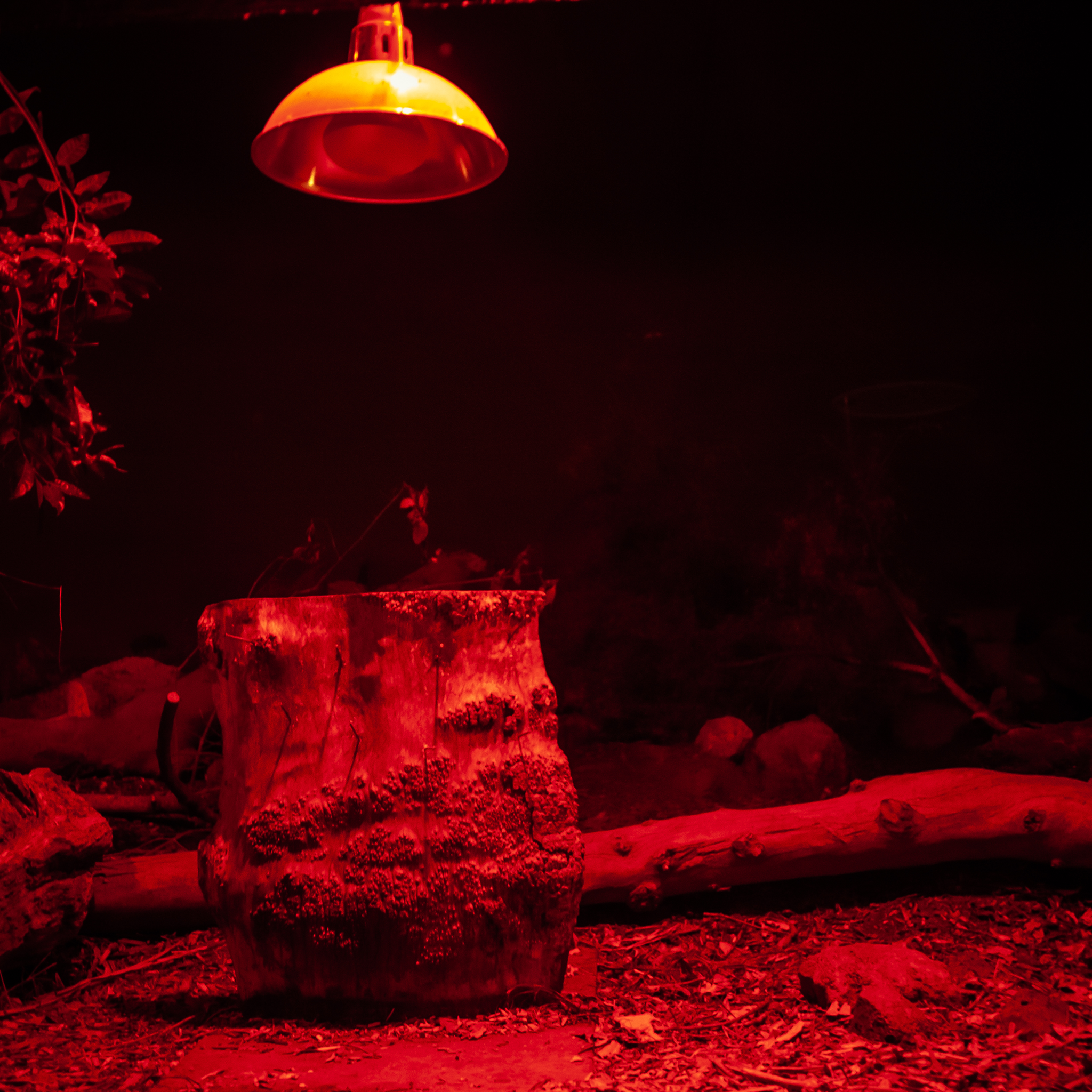
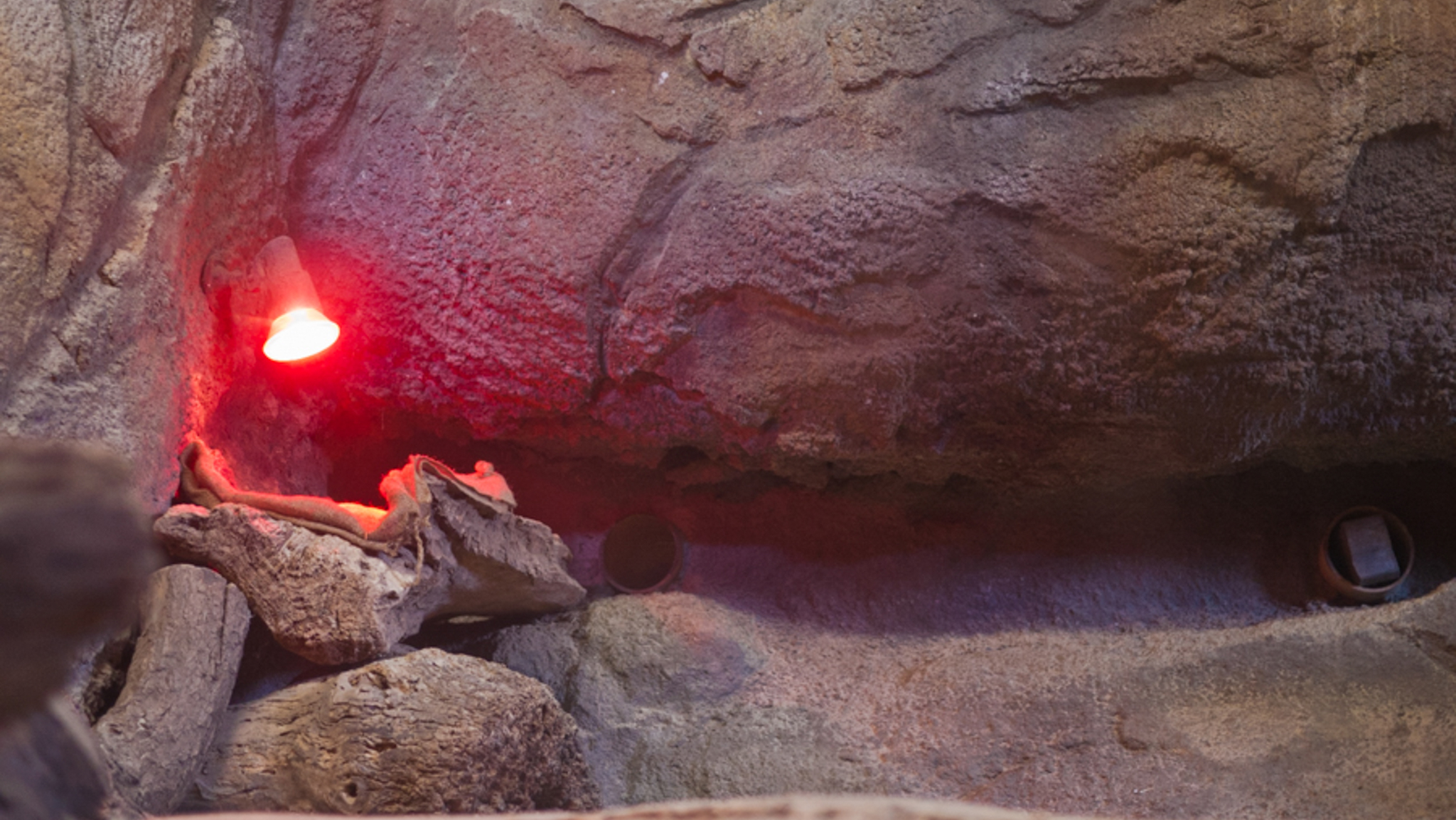
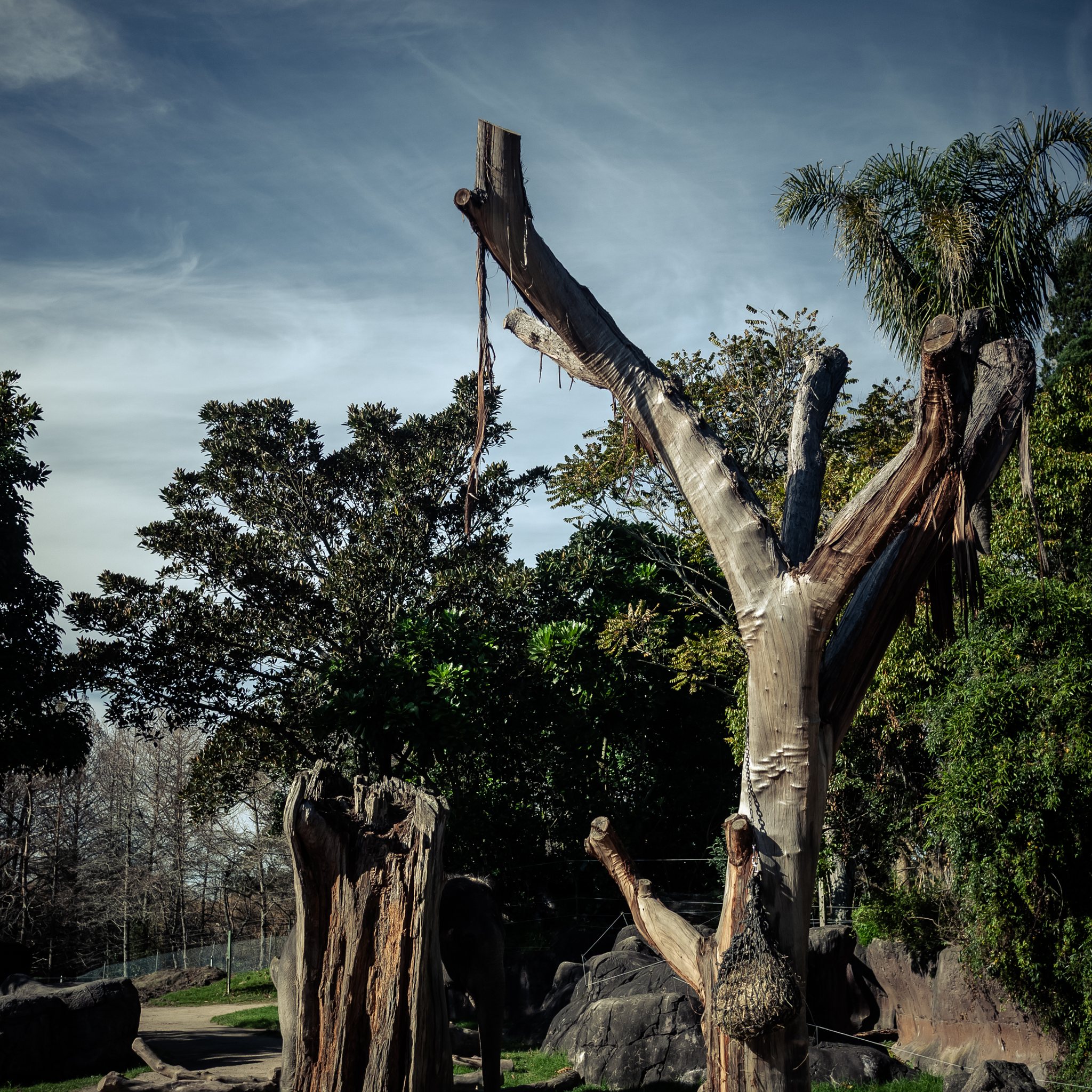
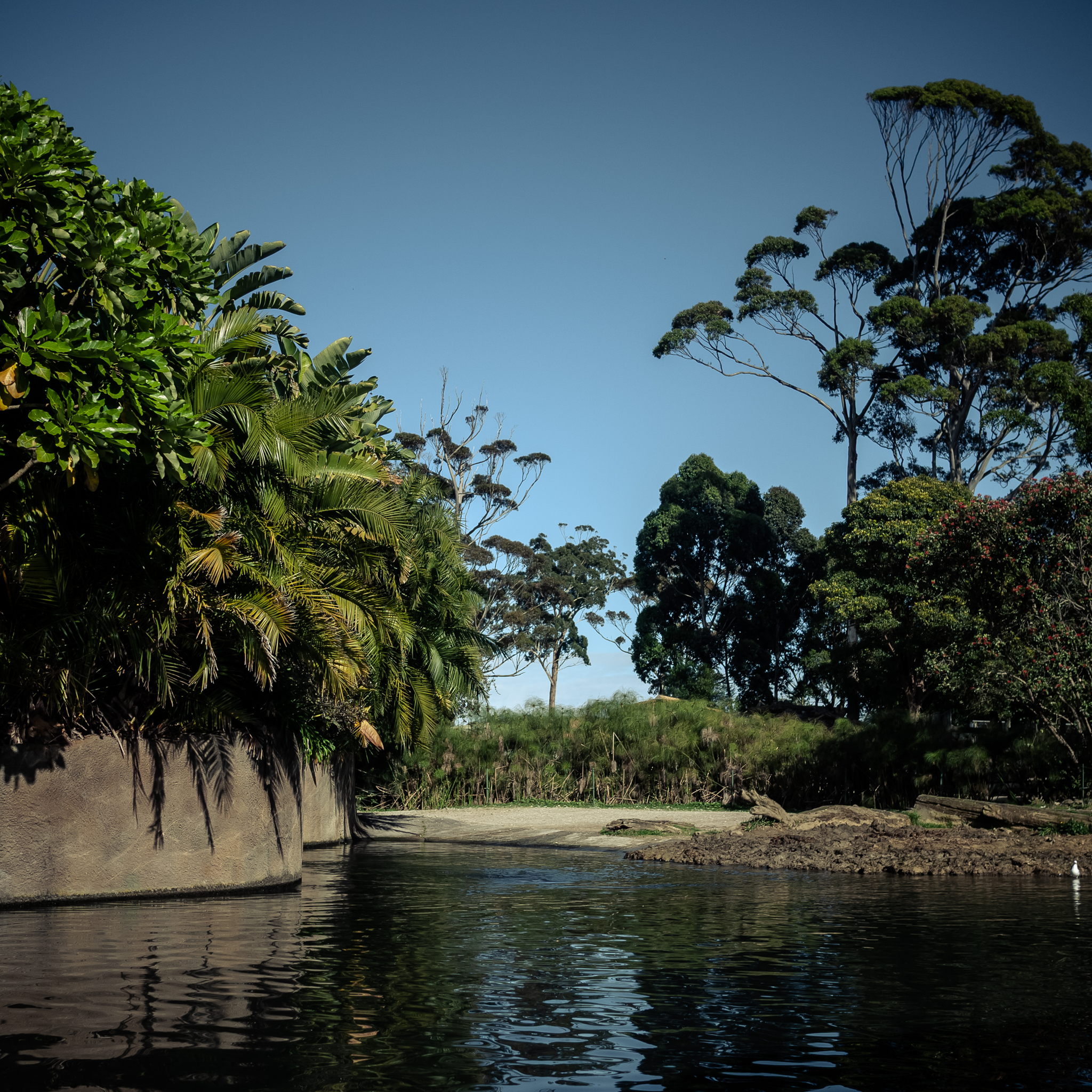
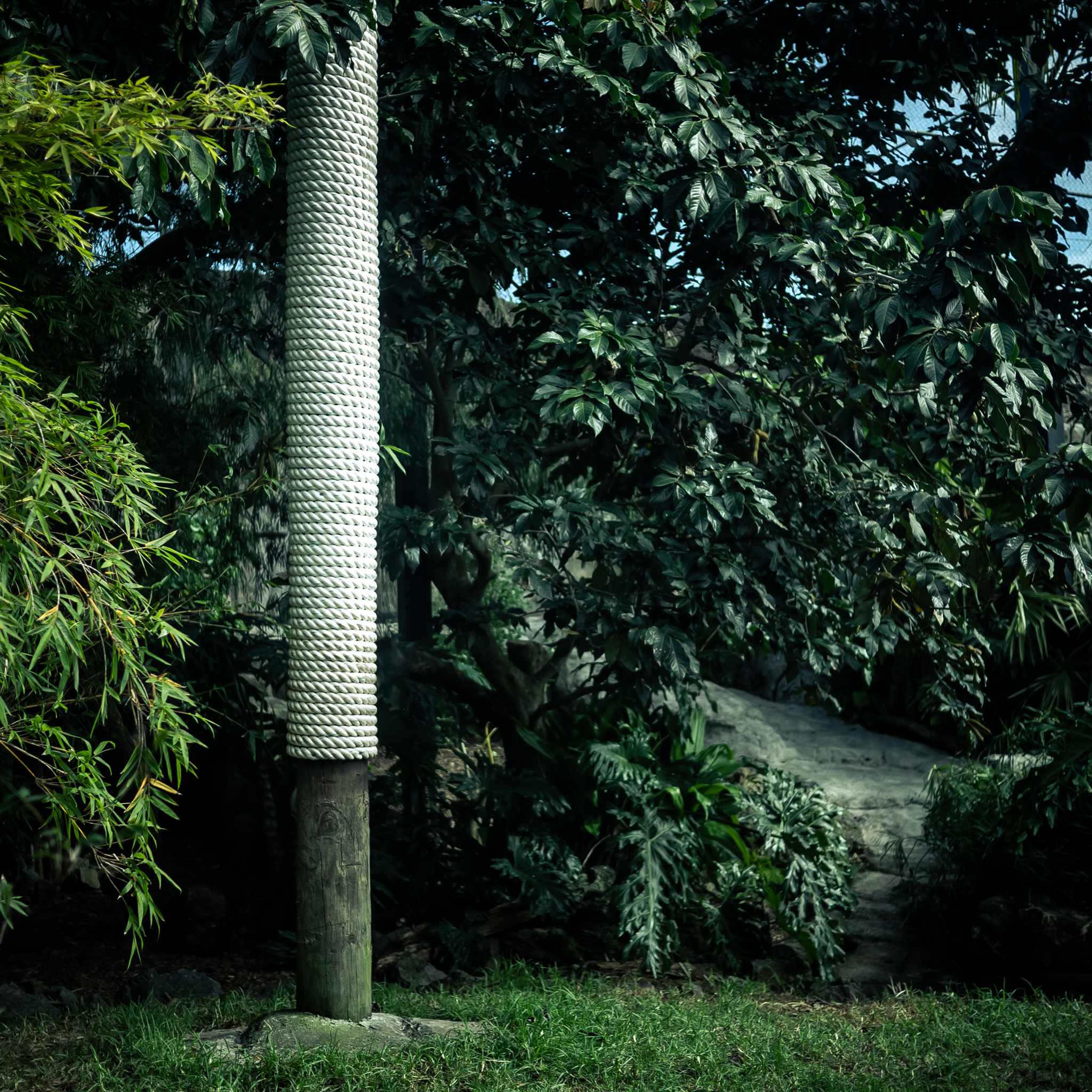
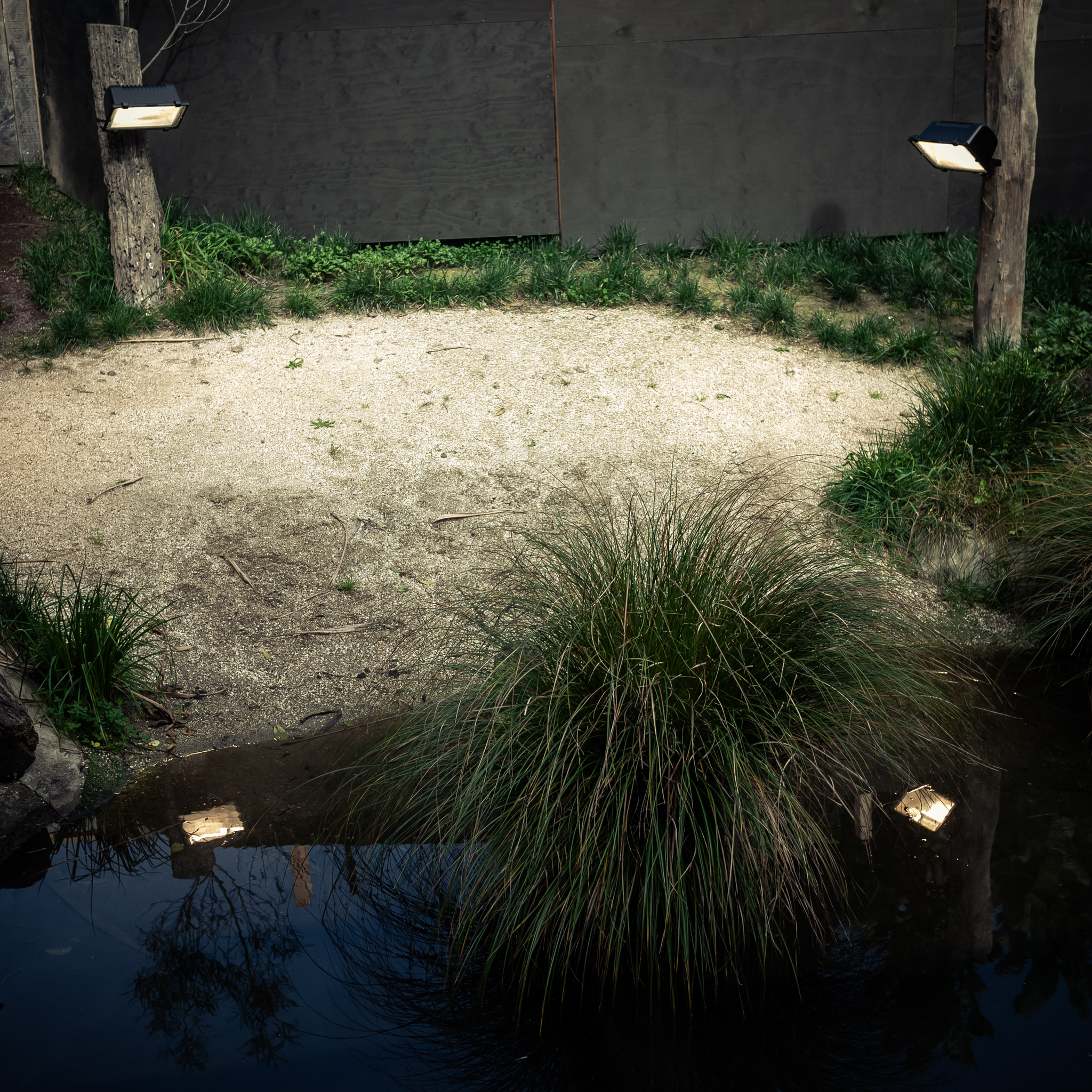
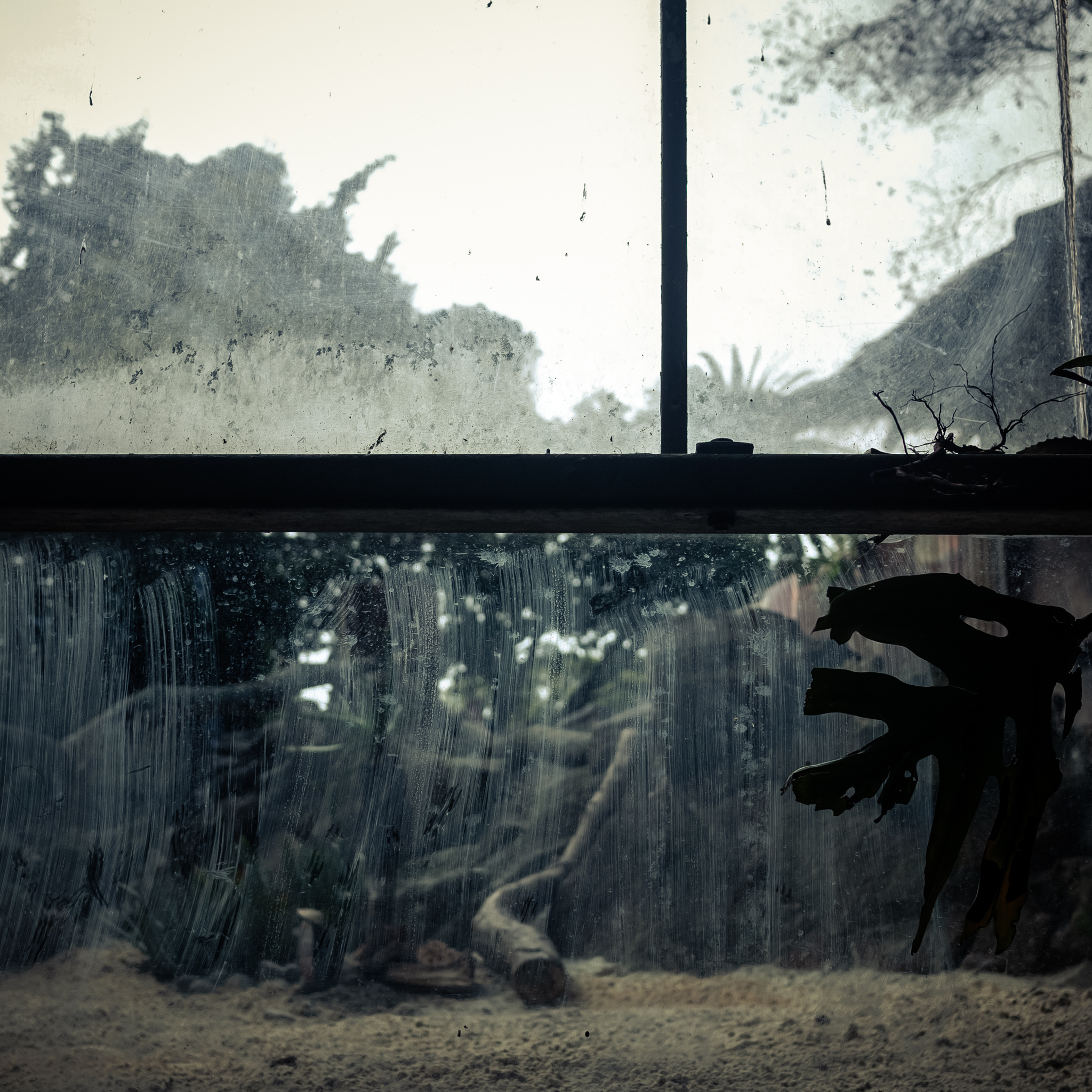
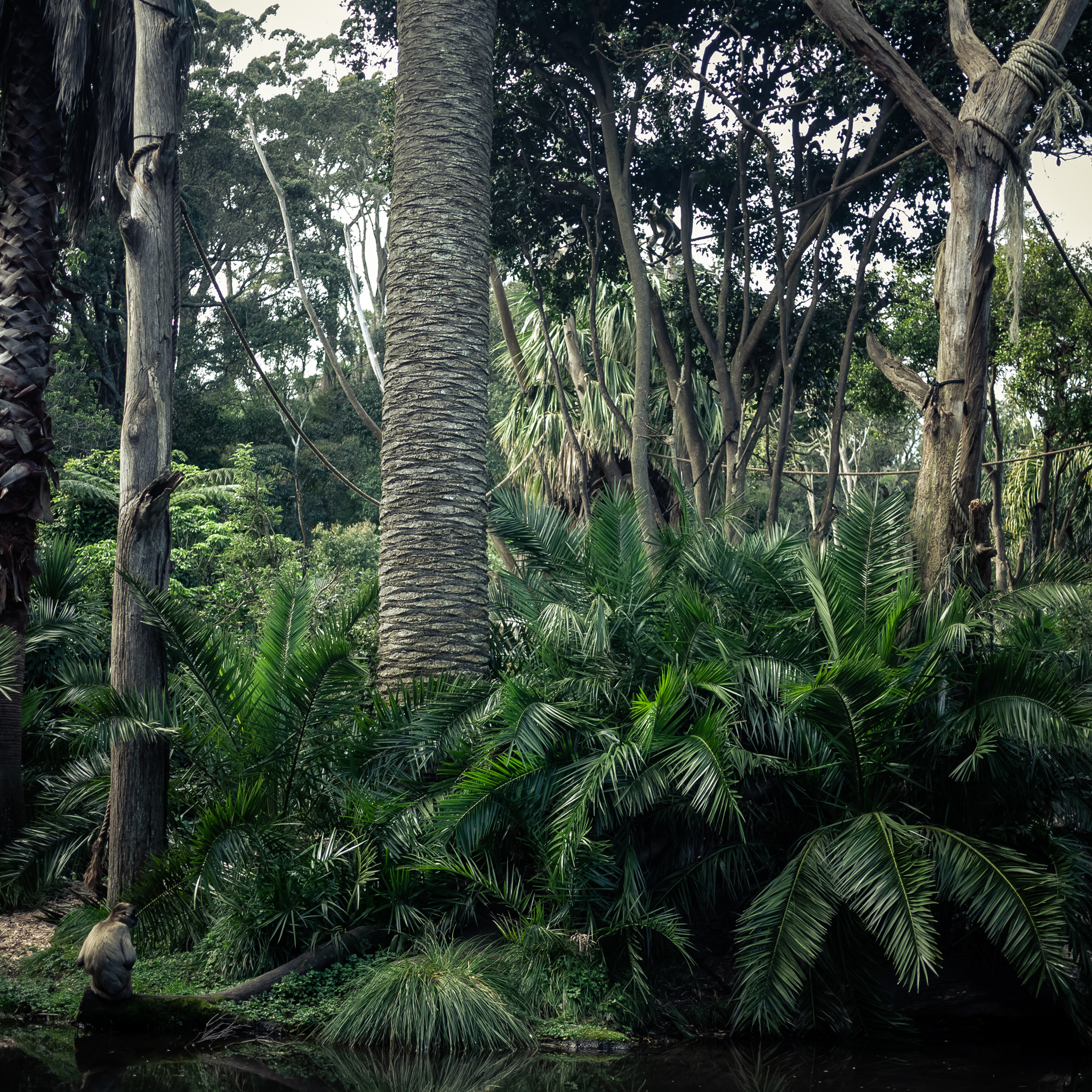
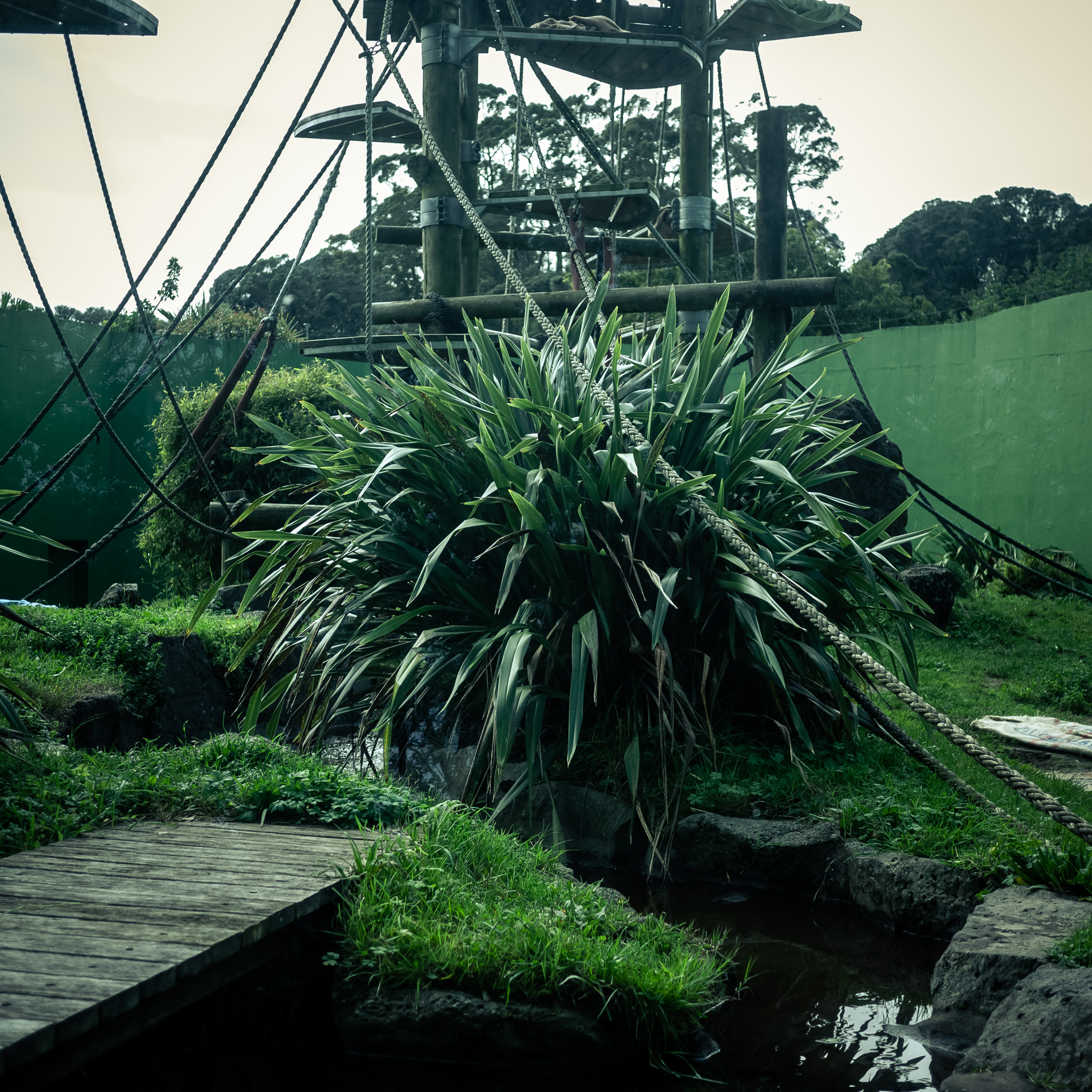
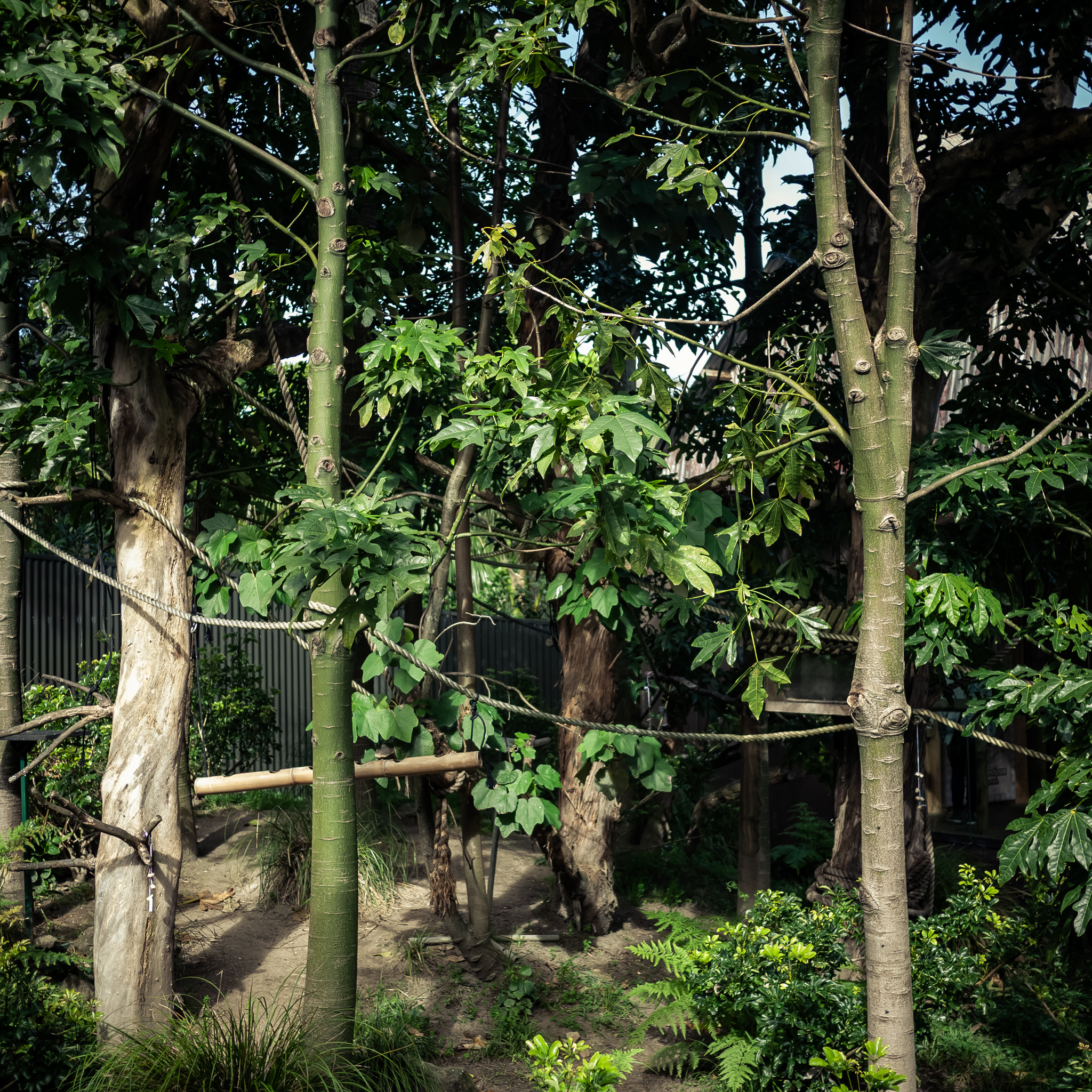
The photographic series deliberately avoids direct depiction of animals, instead foregrounding the scenographic devices that structure the zoo’s mise‑en‑scène. Square‑format images impose containment, mirroring the regulated nature of the zoo itself. Each frame isolates a fragment of constructed reality, refusing panoramic continuity and emphasising fragmentation.
By working in series, the project creates a rhythm of repetition that mimics the visitor’s traversal across biozones—constant arrival and departure, each environment a new fiction of geography. Artificial rock formations, theatrical lighting, and concealed barriers become the protagonists of the work, revealing the zoo as a sequence of staged spectacles rather than authentic ecosystems.
The methodology is both critical and aesthetic: it exposes the dispositif by turning attention away from animals and towards the structures that choreograph perception, inviting viewers to reconsider the zoo as a designed spectacle of estrangement.
Ethics
This project rejects the spectacle of animals as objects of human gaze, foregrounding instead the constructed environments that mediate that gaze. By refusing to reproduce animal imagery, it resists perpetuating the hierarchy of observer and observed, and critiques the anthropocentric staging embedded in zoo design.
Transparency is central: the photographic process avoids composites or deceptive editing, and acknowledges the support of Auckland Zoo while maintaining a critical stance. Ecological respect is preserved by focusing on scenography rather than living beings, ensuring that representation does not exploit or sensationalise.
Statement
I approach the zoo as a designed spectacle where scenography shapes the perception of nature.
By removing animals from the frame (mostly! :) ), I foreground the dispositif—fabricated geology, managed light, and concealed boundaries—revealing how visitors encounter curated visions rather than ecological wholes.
The square format imposes containment; seriality induces a rhythm of displacement.
This work challenges habituated looking and asks what forms of coexistence are possible beyond staged wilderness.
This text was developed with the assistance of AI tools for language refinement.
These tools were used to support grammar correction and improve clarity in English, which is my third language.
AI did not contribute to the generation of ideas or content; rather, it served as a supportive tool to enhance expression and ensure accuracy, without replacing my original voice or creativity.