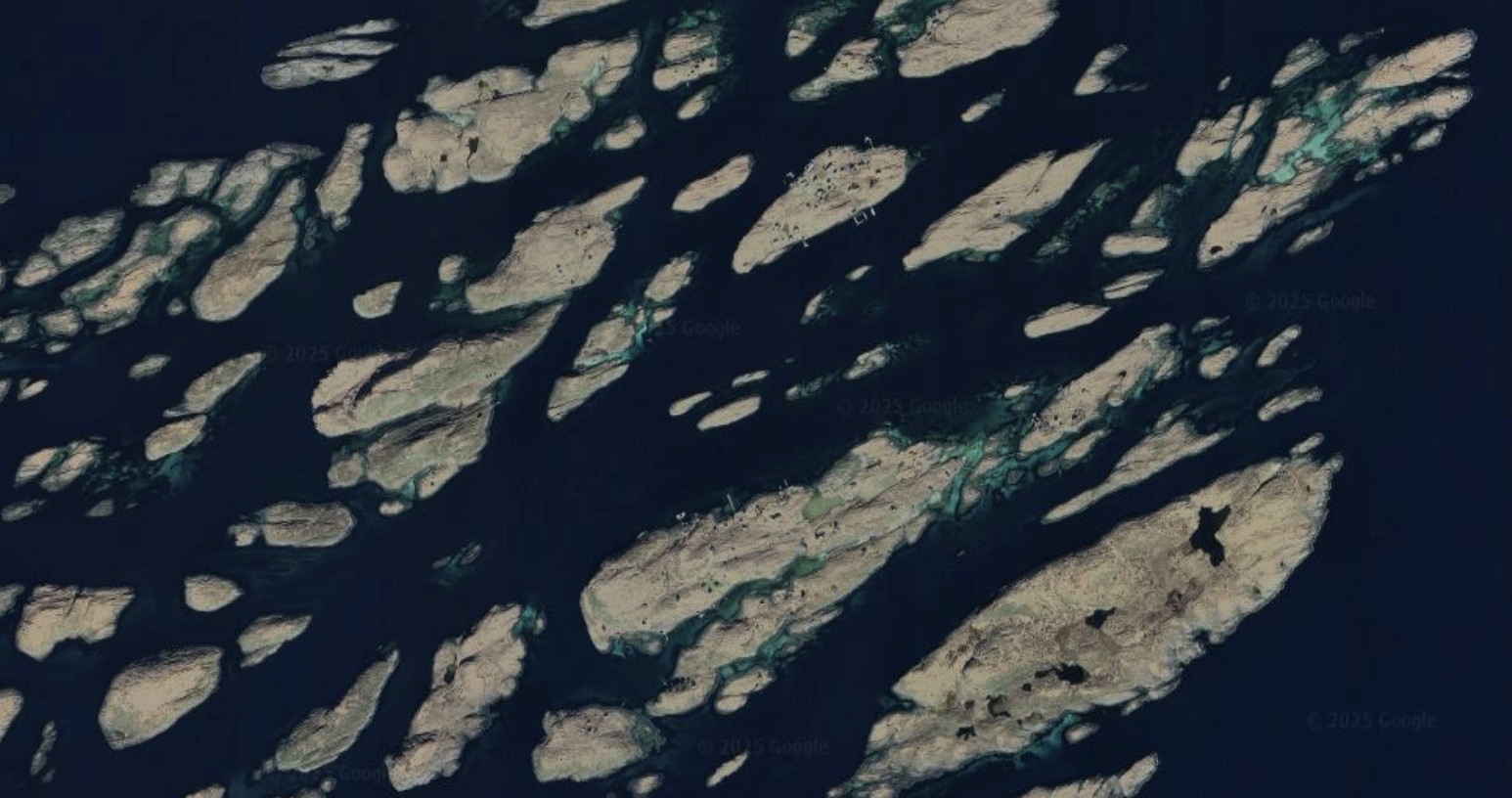
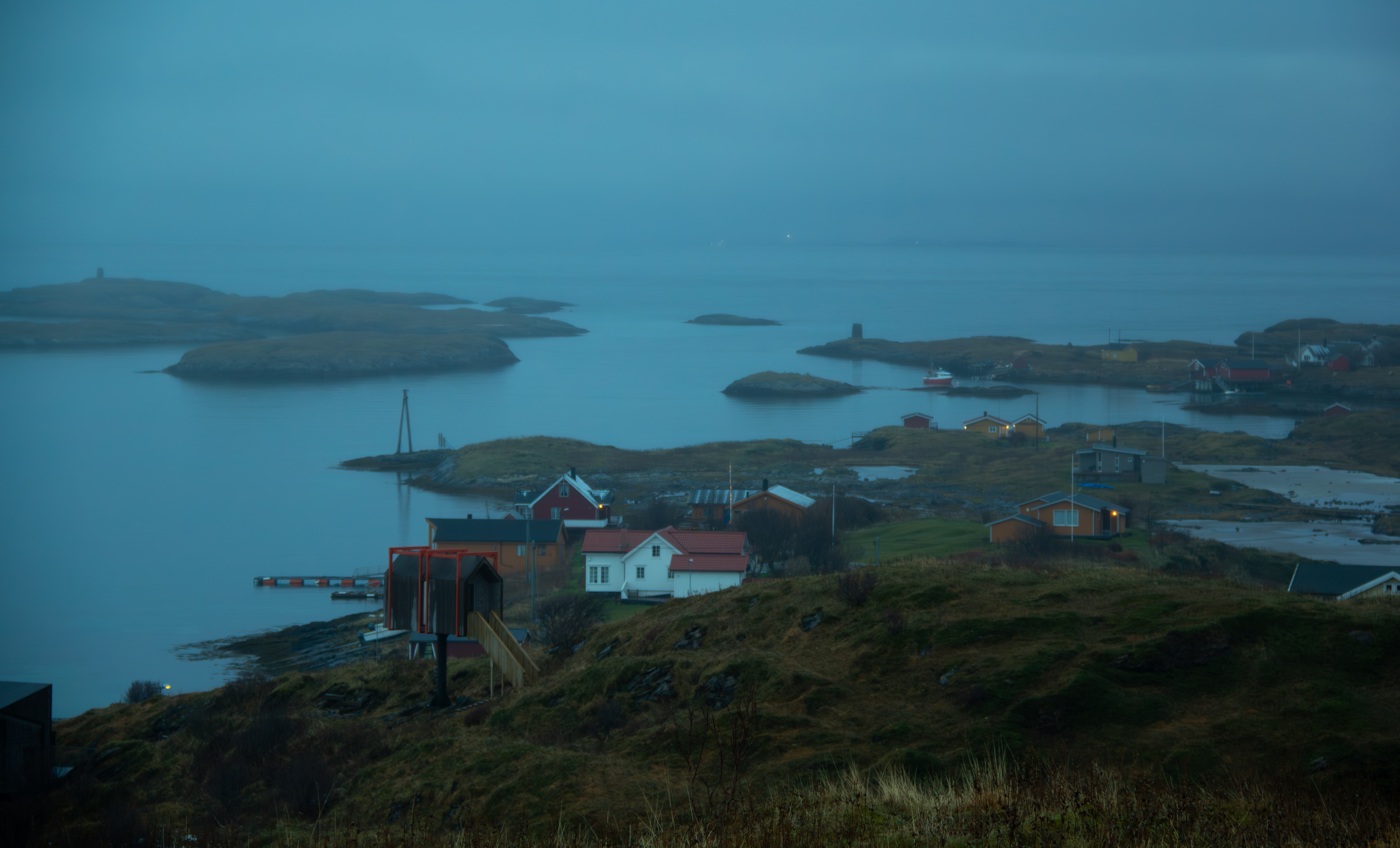
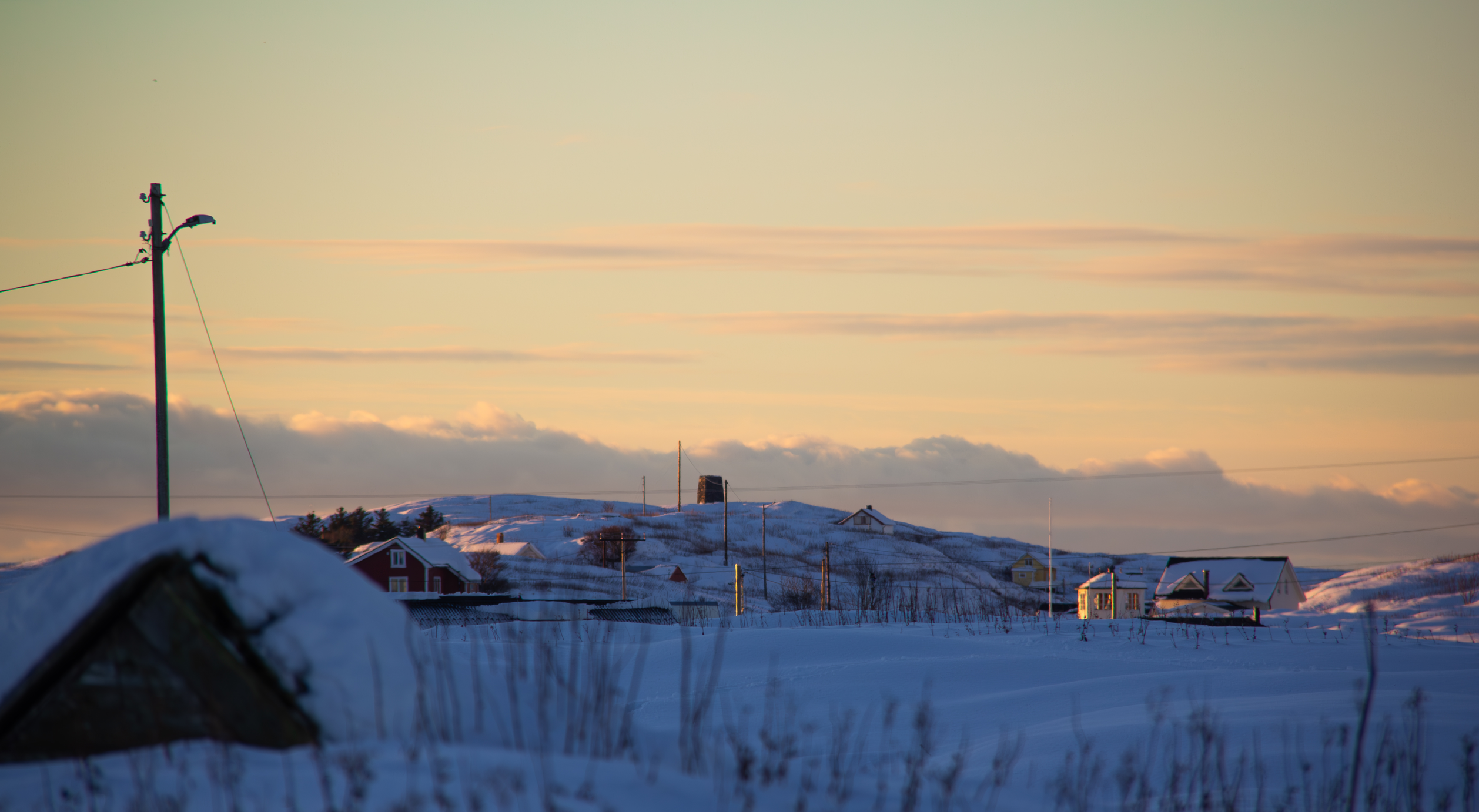
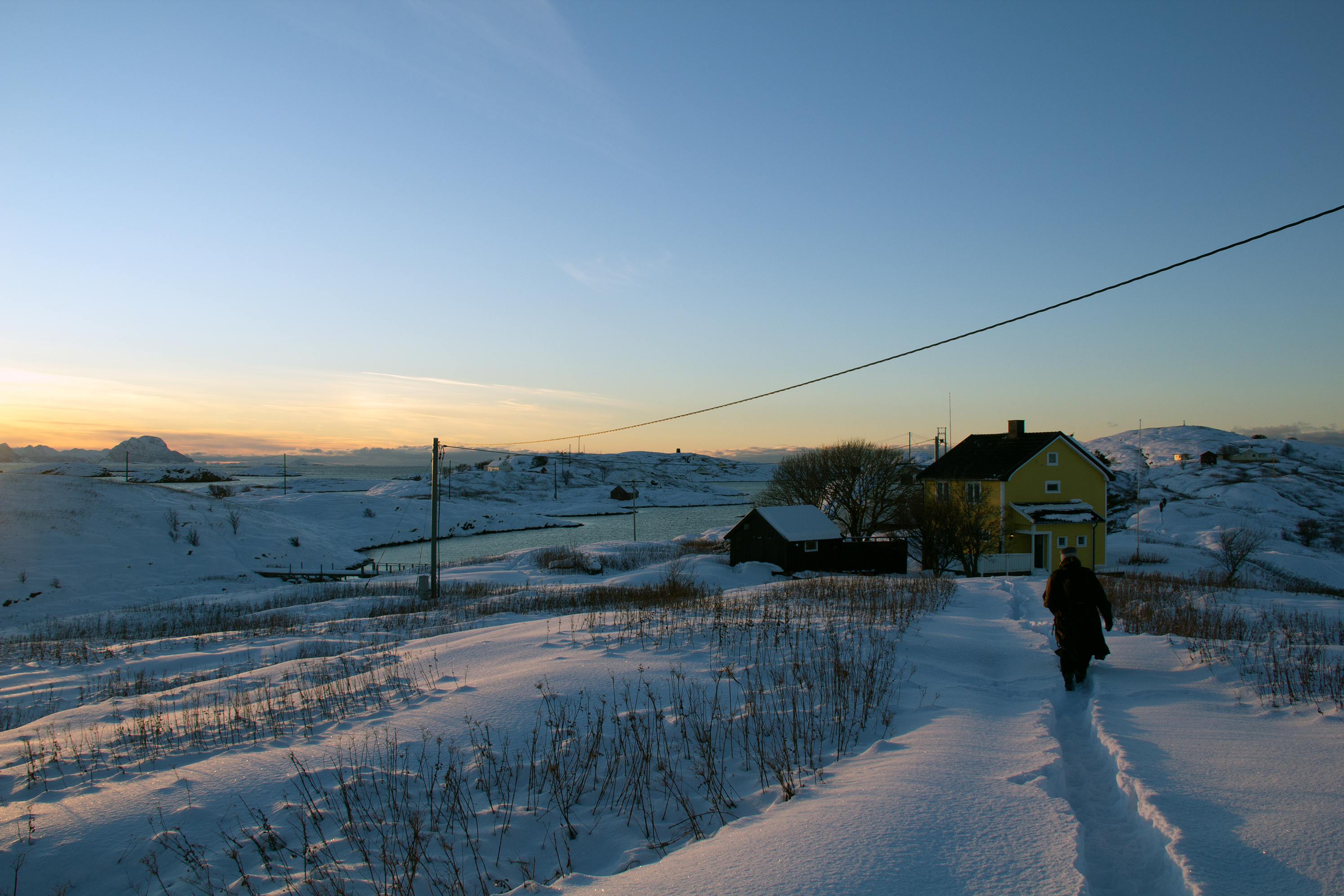
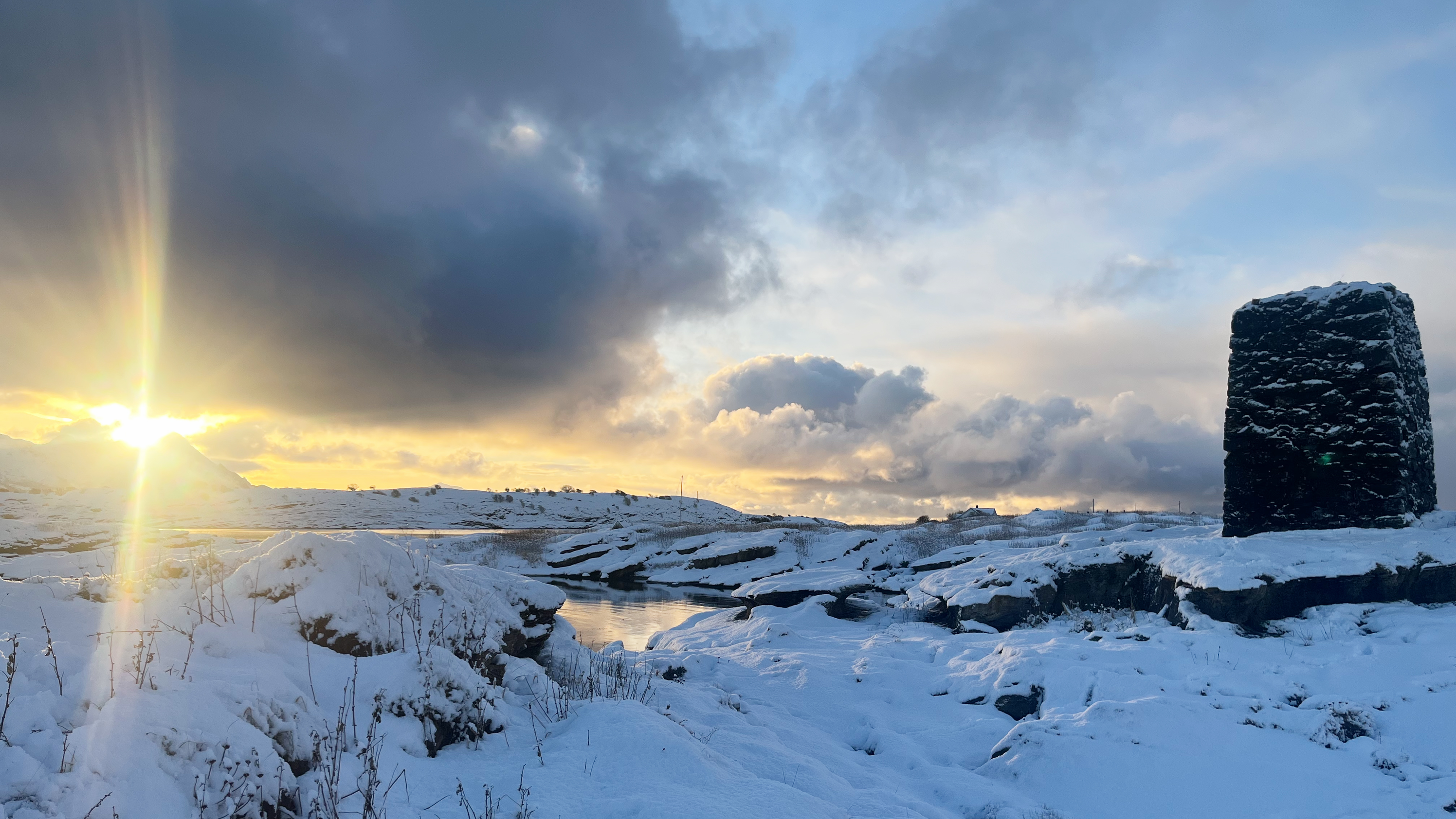
Returning home from Longholmen, looking Southwest. Sørværet spreads across the horizon, overlapping Tverrøya. A Varde blends in to the built horizon.
Southwest of Sørværet rises Tverrøya, separated by 5 meters of seawater - just enough of a channel to dissuade my attempt to ford it. The Varde is over 2000 meters from the next closest on Longholmen, and hidden from direct view by new construction and vegetation.
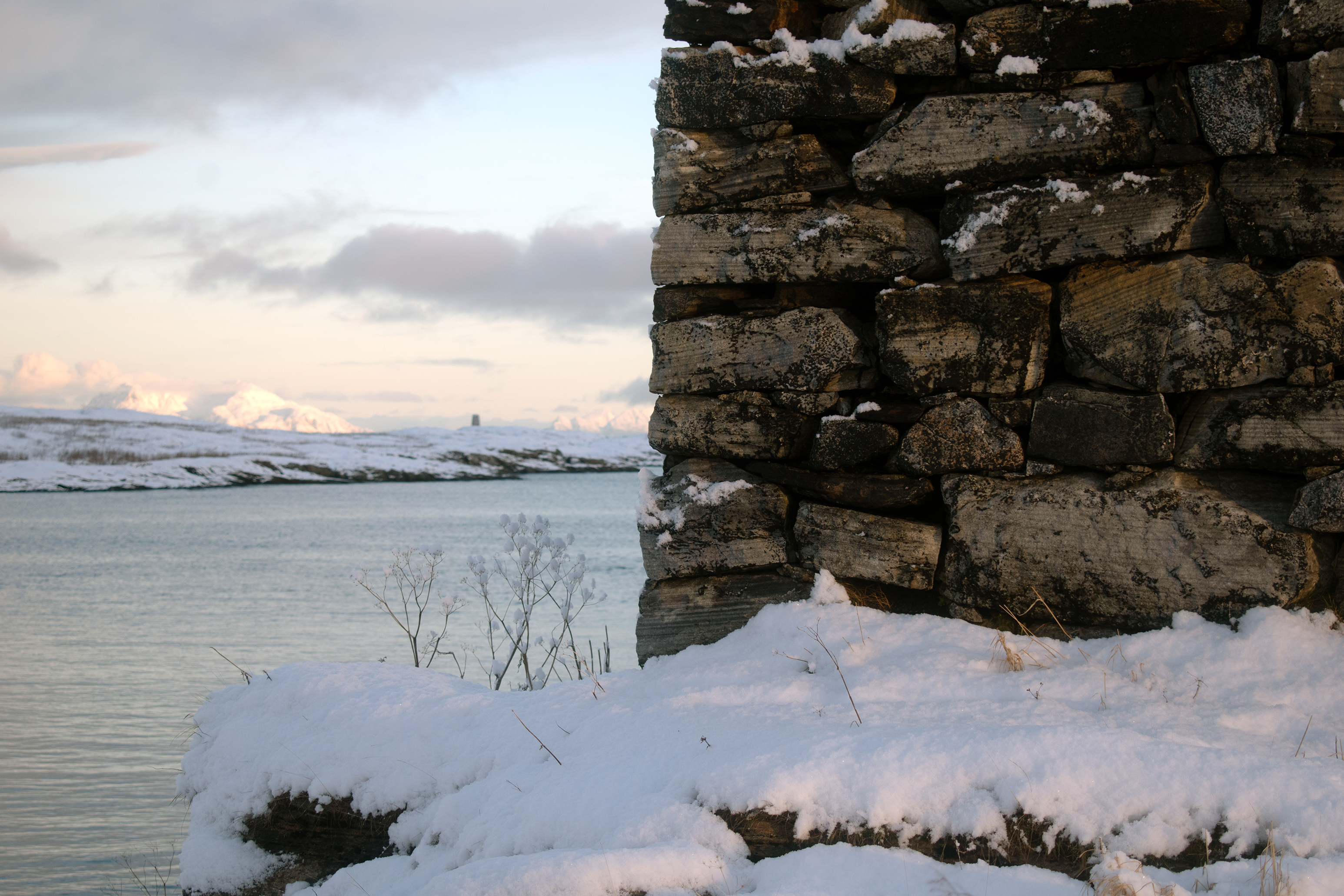
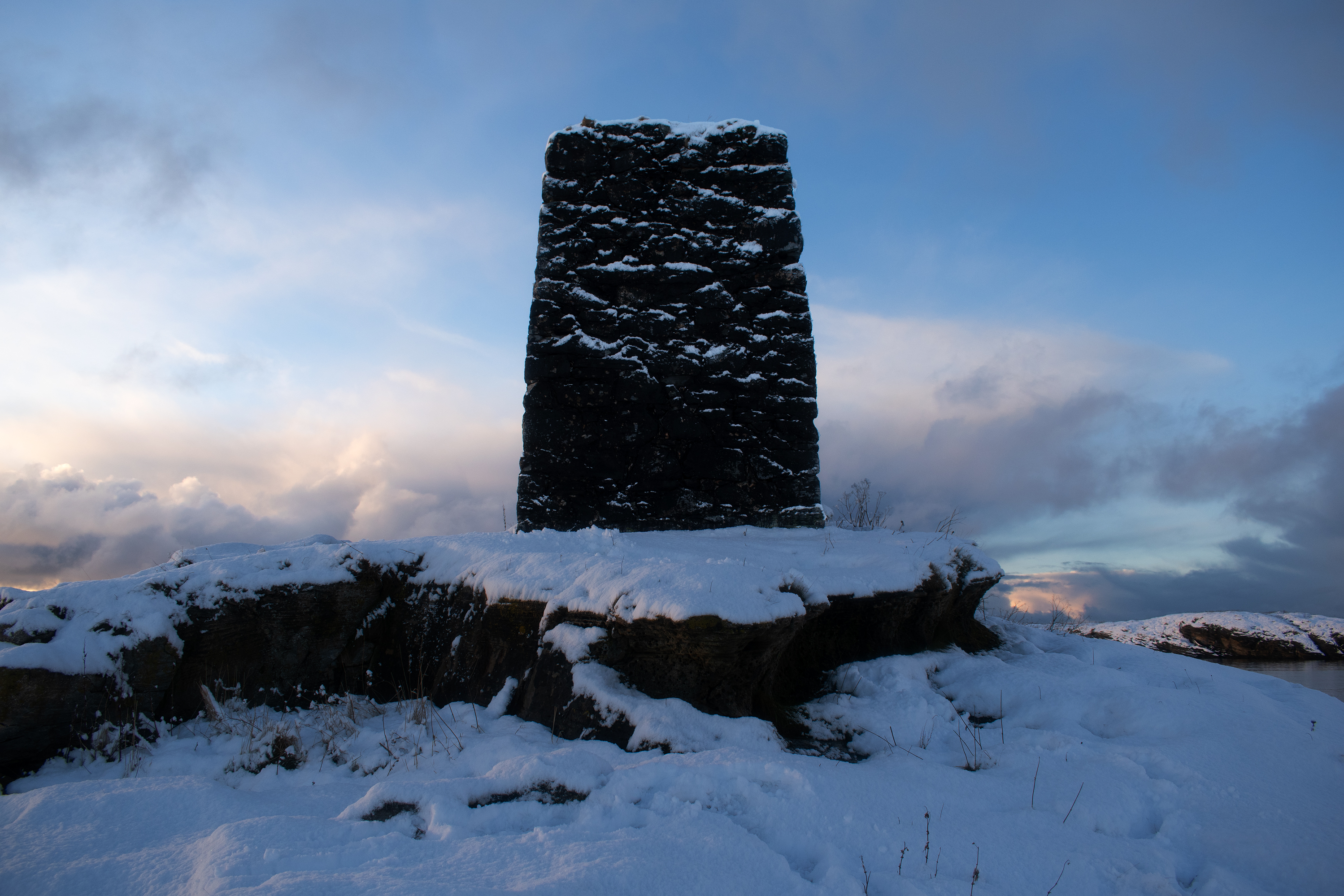
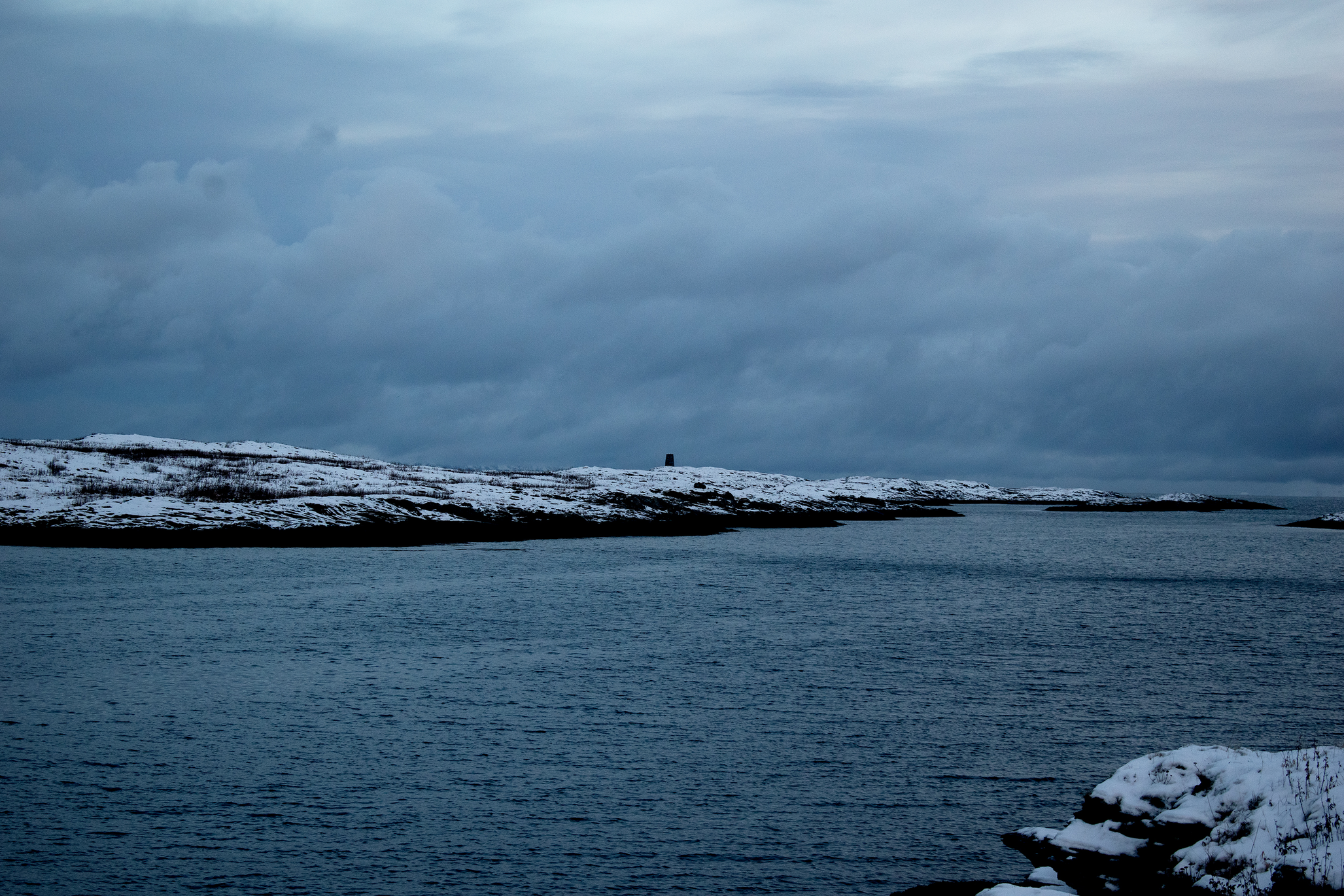
The Varde on Longholmen, looking Southwest. Although we were staying on Sørværet, a network of bridges connects these two islands.
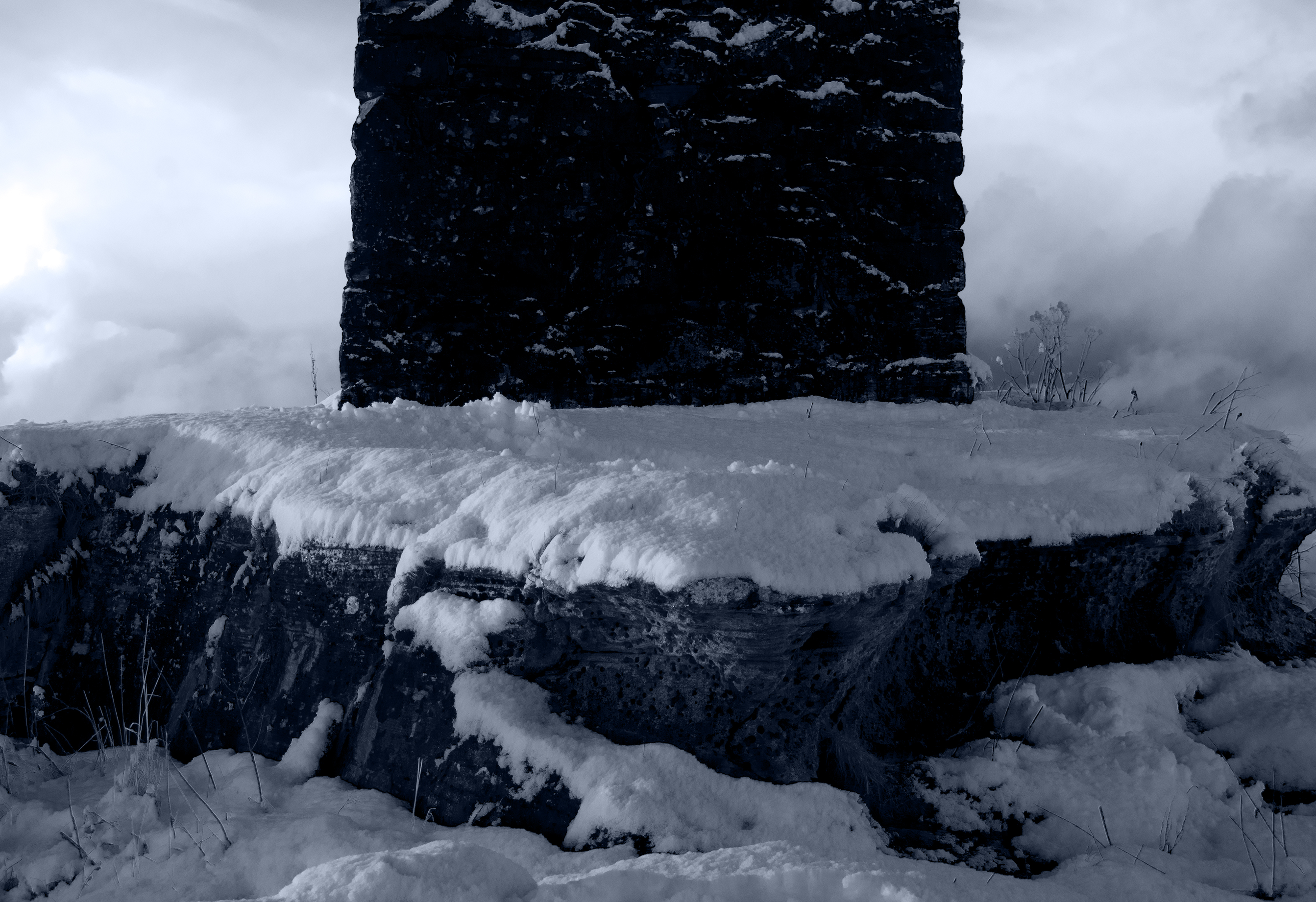
Their tar is fading, and the mortar sheds small flakes and pebbles as the persistent winds, rain, and sleet scrub away at the unnaturally tall blockiness of the towers. “We don’t like when people climb them,” Nina told me. “They often break parts off.” Nina Benjaminsen lives on Longholmen, and her land extends well beyond her house all the way to the water, past the Varde marking the island edge. Although I walked those paths and explored many of the structures between her home and the cairn, this was the first time - over cups of hot coffee fueling our conversation - that I’d learned I’d spent so much of my time on her property. This was different from what I was used to. While there are some fences on the island, none crosses a path. Doors are left unlocked. One in particular had the key hanging from the lock every time I walked past it. In our two weeks there we met most everyone on the island.
Our last day on the island. The snow had melted and the sun rose after 10:30am, setting before 1 pm. At this point, we learned, the sun never broke the mountains to the East, and would not be seen again until the new year12.
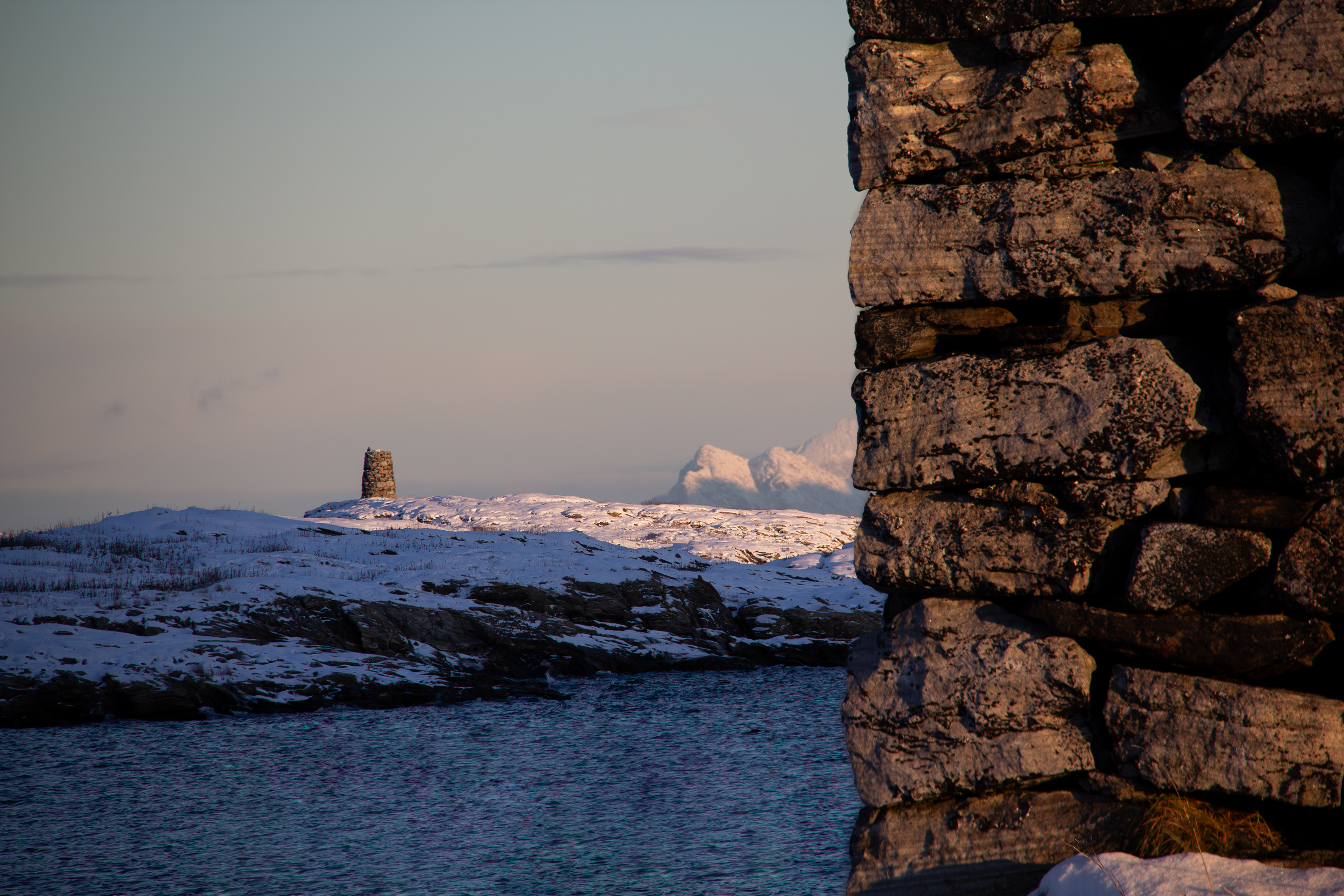
The strata in the stone (mostly shists) making up the Varde on Longholmen were nearly all running horizontally, seemingly similar to how they were deposited so many million years ago. In the distance, the Sea Eagle is clearly visible on the Varde on Skakkholmen.
The Gulf Stream made life on Fleinvær possible. Fish swarmed the island, and while it was dark and cold, it wasn’t locked in ice. Travel to and from the island was plausible, and thus islanders were and are able to support themselves fishing, collecting Eider duck down, and raising sheep5. Such potential revealed a need: something to help ships navigate the rocky, labyrinthine archipelago, and to keep in touch across the waves.
Humans have long stacked stones to mark paths, dangers, burials, food caches, territories, or otherwise communicate common presence and location6. Our collaborations with stone have yielded dwellings, roadways, and hand tools. We have created works of art through both the form and function of stone. Stone - particularly stones referred to as “rare earth” - power much of our most advanced technology. Then and now, our collaborations with stone help us find our way. We are but a young race; humans have only existed close to their current form for a few hundred thousand years. While an inconceivable duration in comparison to a single human lifetime, this is an eyeblink when compared to the schists making up the Varder, which may be as old as 450 million years old8.
That long ago, as the continents of the earth merged and collided, a period known as the Caledonian Orogeny (490 - 390 million years ago, or MA) gave rise to a massive mountain range. As the continental plates drifted apart (around 200 MA), what would become the Atlantic ocean washed in, splitting the mountains between three continents: North America, Europe, and Greenland. Thus, part of what we call the Appalachian mountains, the Scandinavian Mountains, and the East Greenland Orogen were formed from one massive mountain chain, and are thus composed of much the same stone9.
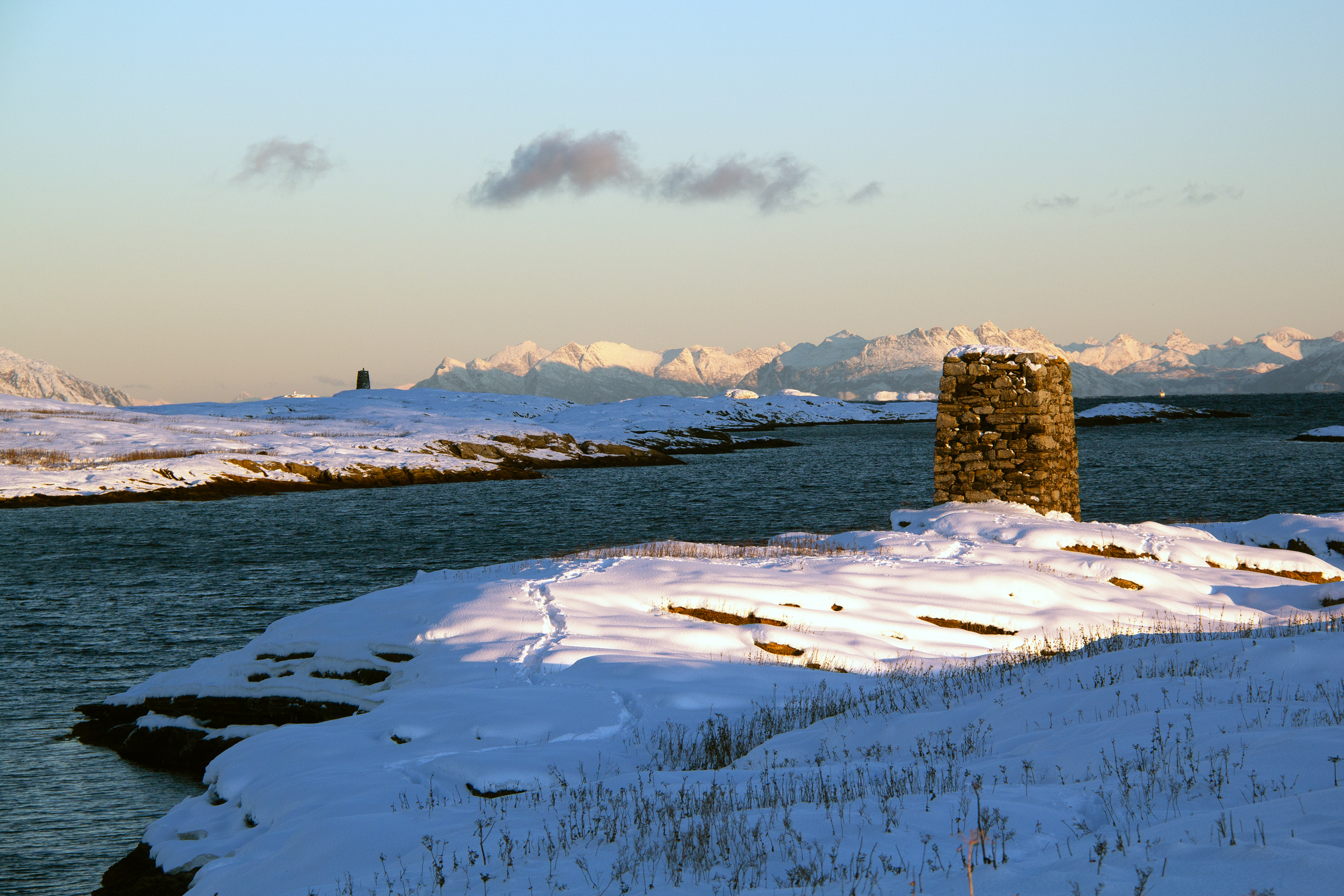
Once seemingly alone, some of the most prominent structures on the island, the Varder (from old Norse, “to watch over or guard,” singular form "Varde") have been left to erode as the world rushes by. Newer beacons have lights, ships have GPS, and the need for maintaining these monoliths has fallen from fashion, or at least from top of mind. We were told that the government used to come to maintain the stonework - pointing, cleaning - but have not been for many years2.
I was in company with 9 other artists, there to experience the Arctic darkness, the island of Fleinvær, and the way time moved and flowed in such a place. The residency was called DEEP TIME3, and was organized by Creative Body Institute, an international art concept developed by the artist Raegan Traux. This was my first trip into the arctic, and I had planned for ice and snow, expecting to battle a hostile, dangerous, dark winter. I grew up in Vermont, and spent winter mornings helping to shovel our driveway before school. In my childhood, I sculpted towering snowbanks, carved tunnels and built forts, prepared caches of snowballs, sledded, skied, hiked, and routinely lost the feeling in my face and fingers. I judged a truly cold day by how the frost bit deep into my nostrils when I inhaled. When I saw Fleinvær on the map, hanging there well into the arctic circle, I planned artistic interventions and experimentation with ice.
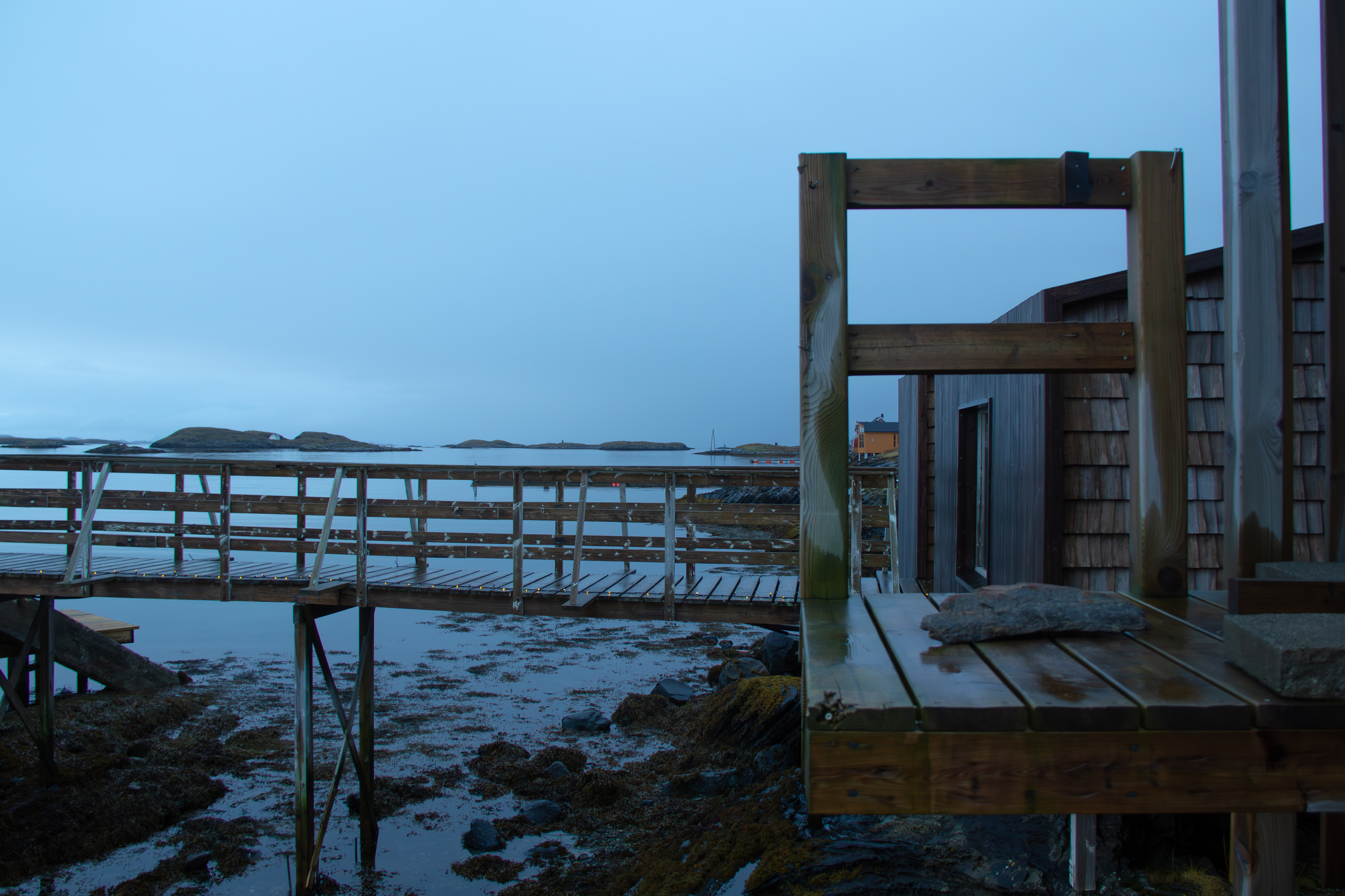
I created this video while in residence. The sound is by Owen Chapmen, a member of the residency cohort. Click on the image to play, and make sure your sound is on. The sound is best experienced with headphones.
Behind the houses, among the houses, stand trapezoidal forms, rock and mortar and tar, stacked three meters high. Once I isolated them from the chimneys and the houses, their forms were unmistakable. Dark. Heavy. Sharp-edged. The stones that compose them were quarried from the same earth that they rise from, standing tall since 1838, and still serving the oldest system of sea-navigation still in use today1.
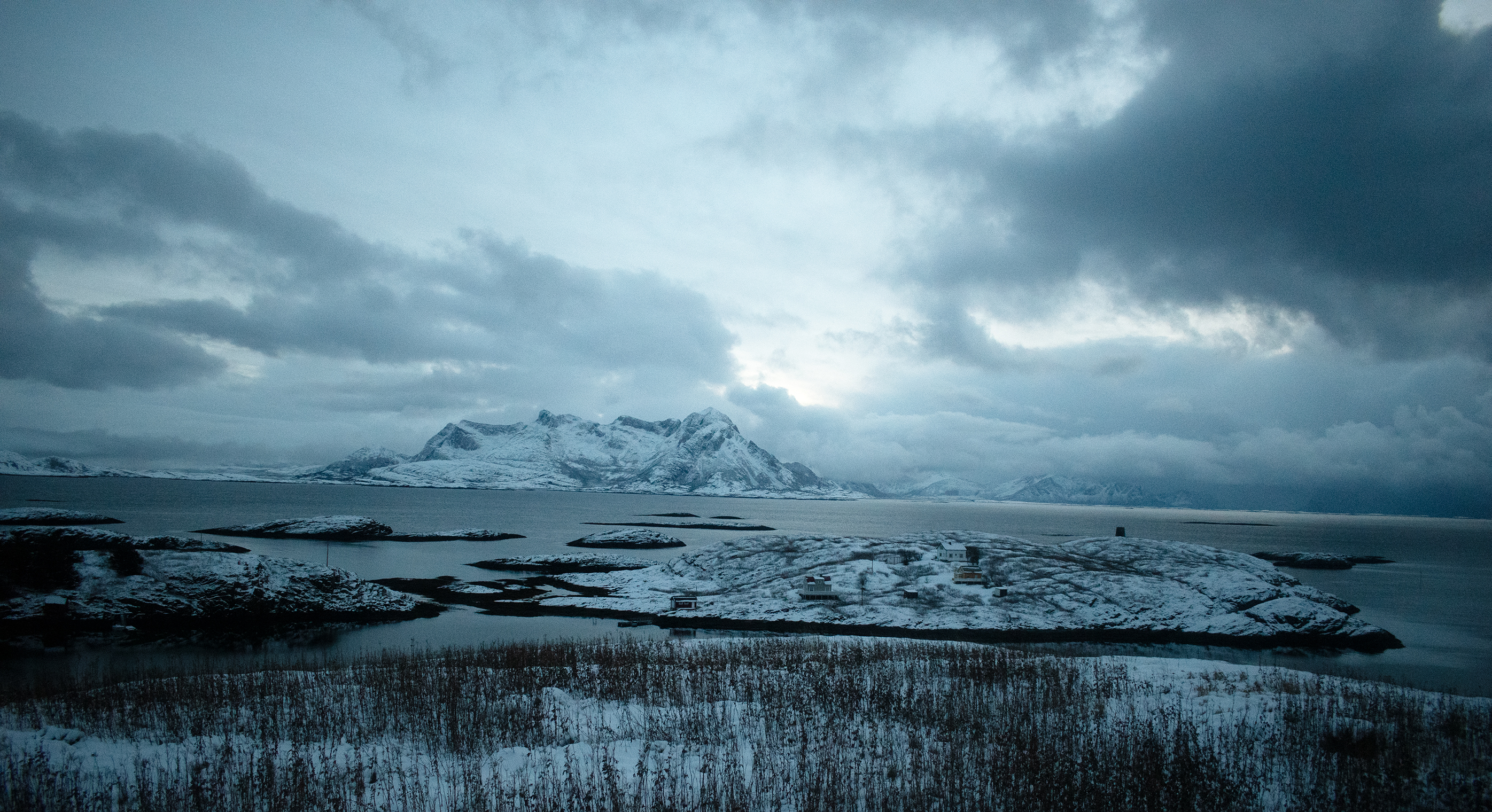
Standing on the highest point on Sørværet looking South. In the distance, the Varde on Tverrøya rises and the high peak of Hagtinden challenges the clouds.
Perhaps this familiarity called to me; perhaps I just like rocks. Perhaps the Varde helped me to navigate within myself and remember snowy mornings of my childhood, the stone reminiscent of the landscapes of my youth. Today, these monuments serve more than maritime navigation, as an entire generation turns away from the physical world in favor of the digital10. These towers of stone are beacons leading us back into a world of tactility, bastions of materiality, and to a world full of things. To a time where the physical world, the water and weather were the most important aspects of life and to sustaining life.
I first questioned the claim that these towers represented pieces of the oldest system of marine navigational aids still in use today. Who needs piles of rocks in a world of Google Earth? However, my skepticism missed the mark completely. I was not navigating a ship, and yet I found my way to these stones time and time again. I was mesmerized looking beyond one to the next, compelled to visit the Varde in the changing weather and landscape. They drew me in, and helped me to better see the land around them. I was interested in how dynamic forms interacted with the Varder: human bodies or lights on the horizon composed in relation to the stone; birds and waves illuminating stillness; the noon sun hanging at level with the embodied mass.
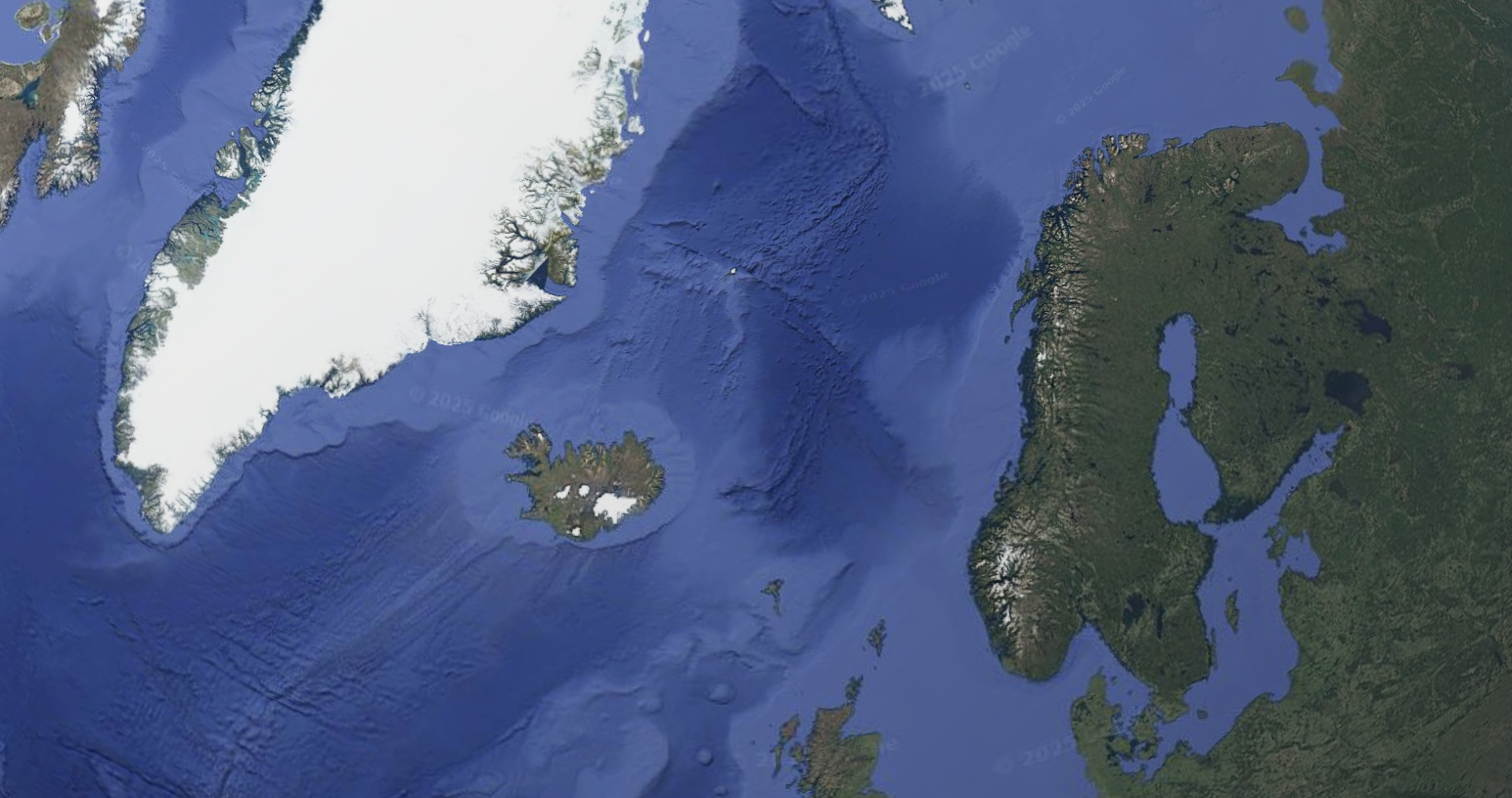
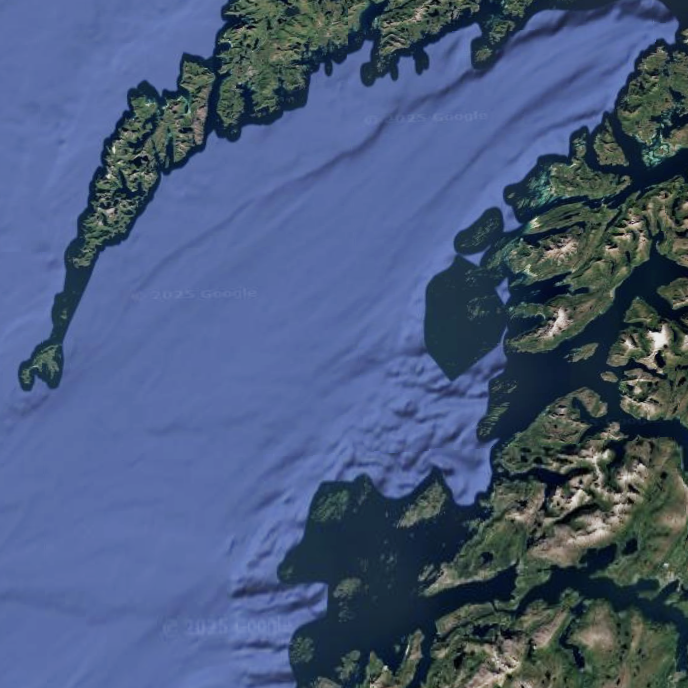
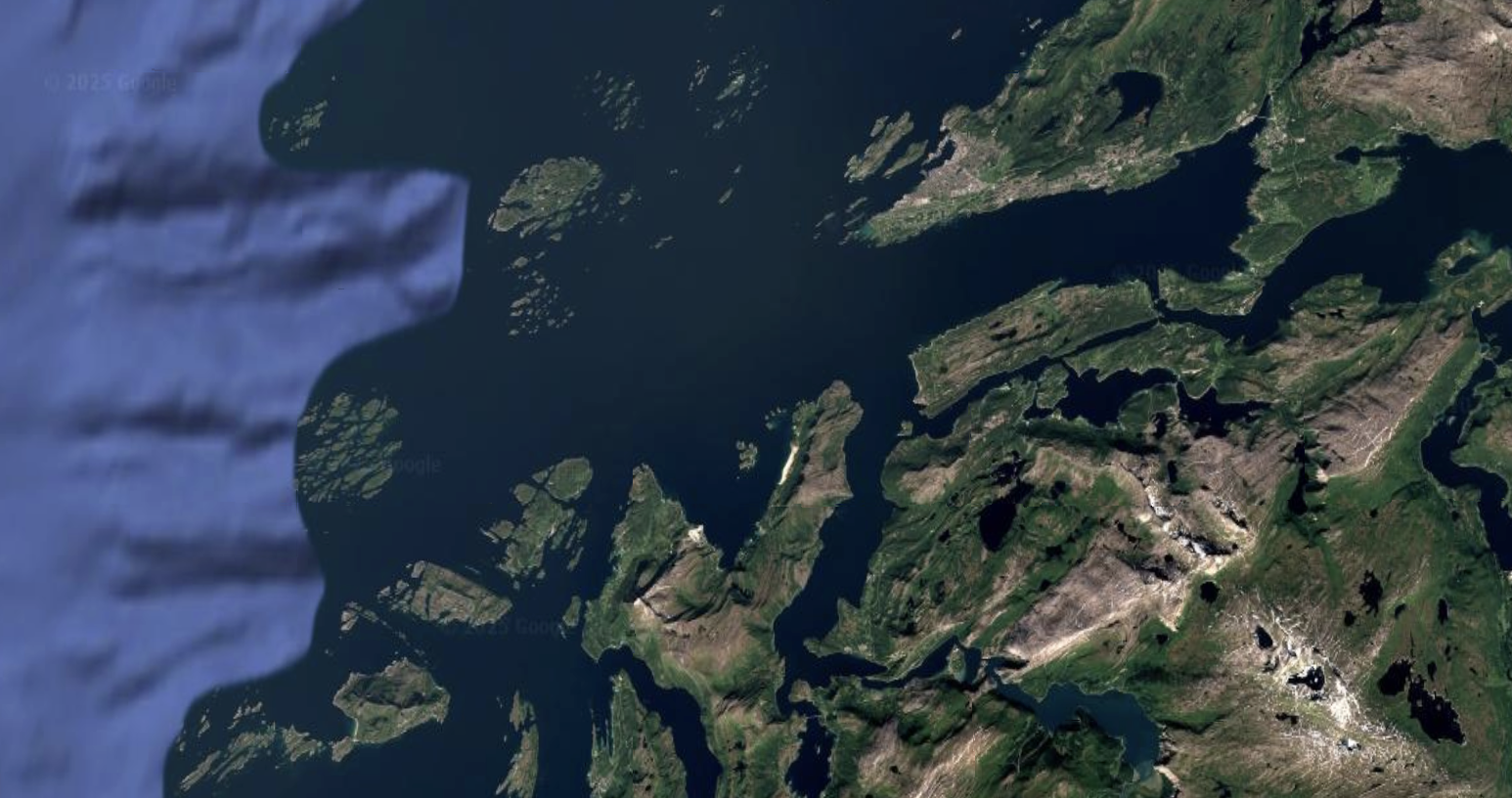
Zooming in on the location of Fleinvær on Google Earth. The archipelago is located in Gildeskål Municipality in Nordland county, Norway. We were 40 miles- or 66 kilometers - above the Arctic Circle, represented by the yellow line.
The Varder were built to catch the eye, to help steer travel, and to carry messages. Today, in a world where trapezoids are perhaps the most unexceptionable form, these still stand out. They still command the landscape, as they certainly caught my attention. They are the legend in a map, the scale in a photo. Immutable, as the land around them changed and continues to change. The Varder map the islands in space and in time, and anchor us to the material present. We need anchors such as these in order to mark our growth. In a society losing its sense of touch, the Varde stand in contrast to the accelerations surrounding them. Static, they assert their own importance in that very stillness; intangible.
Once, these beacons pointed the way for merchants and travelers, and carried messages from afar. Today, they still help us navigate and communicate. Rather than function externally, they direct us inward, serving as anchors to a physical world. To a world ruled by material and maintained by presence. To a world we share with the rocks and the sea, with the sea eagles and seaweed, with the snow, the ice, the wind, and with one another. This is the same world that saw Varder rise as the preeminent technology, and the same world that has seen the island populate around them. That same world has pushed past these rocks to other rocks - more silica-laden ones - to again make sense of the world around us.
Clouds blend into mountains; sky and sea merge in grey-blue steel. The land, snow-soft one day and mossy rock the next, rolls and breaks under my feet, yielding here, unforgiving there, swelling and dropping and wet in surprising places. Power lines, at first distracting, begin to frame views and echo the contours of the island around me. The square frames of houses glow in the generous darkness, beckoning, inviting, warm and yellow in this blue icescape. Their sharp geometries rise from the earth, vibrating, acute against the carved furrows from yesterday’s glaciers. I came here for ice, but I was captured by the stone. Not just the sea-eaten, pitted hollows of glacial conquest. Not just the sparkling mica or the twitching veins of quartz. I was most drawn to the forms people had built from them. Stacked stone. Once I arrived, I found my way to the Varder.
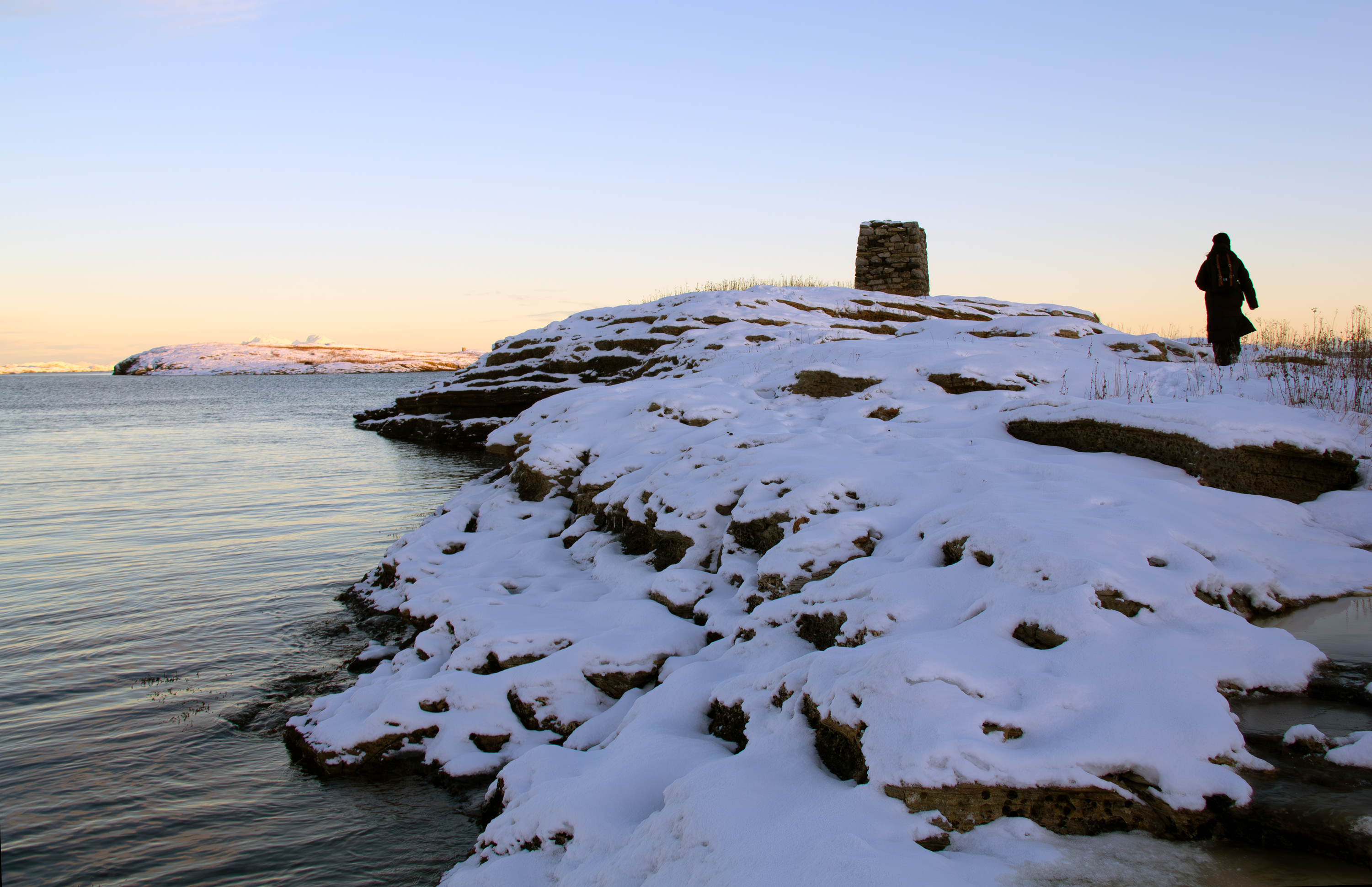
I made my way to the Varde on Longholmen most days I spent on the island, and each visit was different. Not only was the weather different, and the light, but the stone was different as well, as was the way the landscape framed each monolith. From each beacon, one can look to the horizon to find the next. In this way, sailors traced their paths between these rocky coasts, and my eye could still follow their route11. Looking beyond the edge of the Varde on Longholmen, one can make out the cylindrical form of the next closest Varde on Skakkholmen. Looking back, the form of the Varde on Tverrøya is an imposing block on the horizon.
The Gulf Stream threw a wrench in my plans. This current, understood as a fast flowing river in the ocean, was exploited in the Age of Sail by Spanish ship pilots and then publicized by none other than Benjamin Franklin4 in the middle of the 1700s. Centuries, millennia beforehand, this current was essential to the movement of earlier explorers, and earlier still to the formation of life as we know it today.
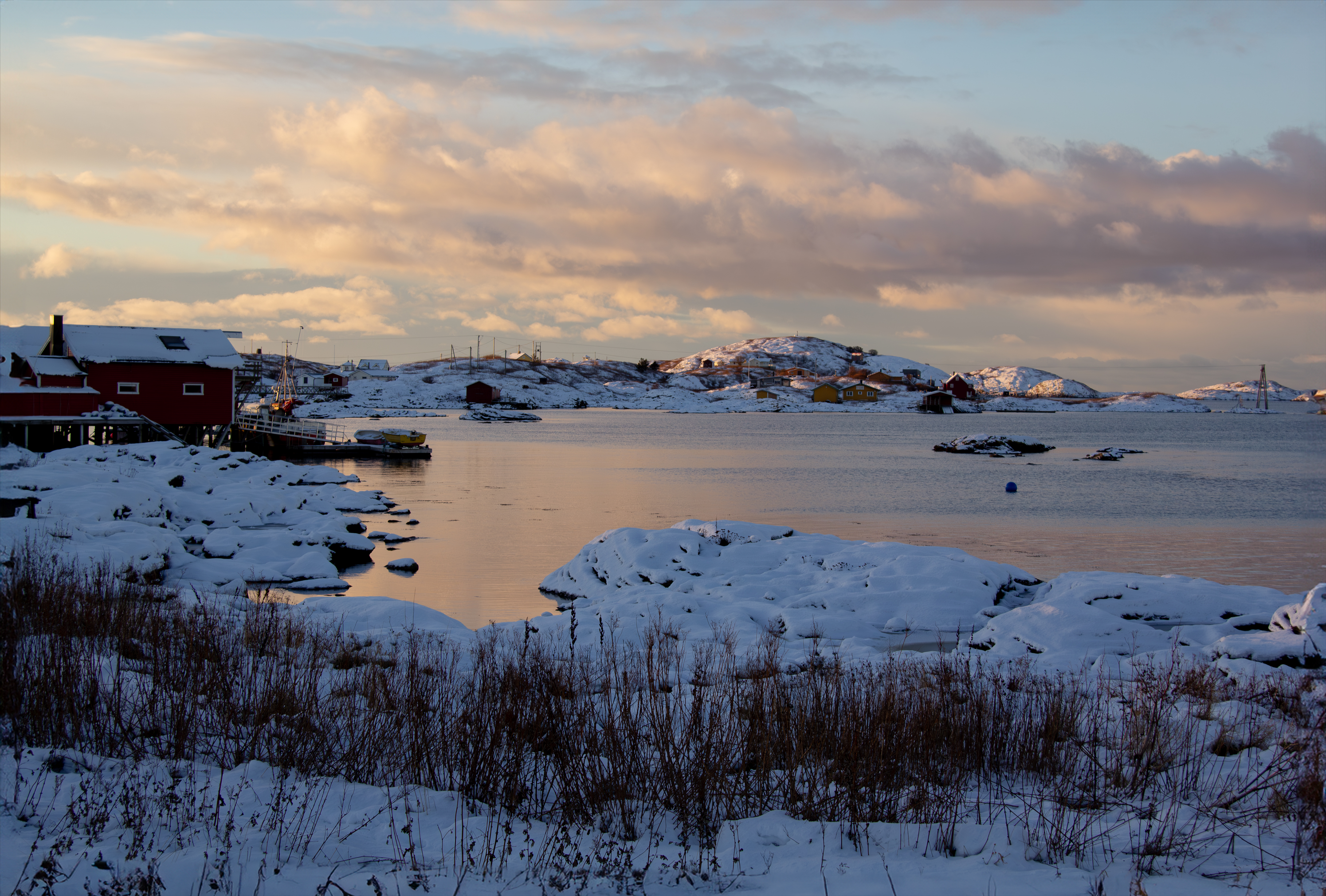
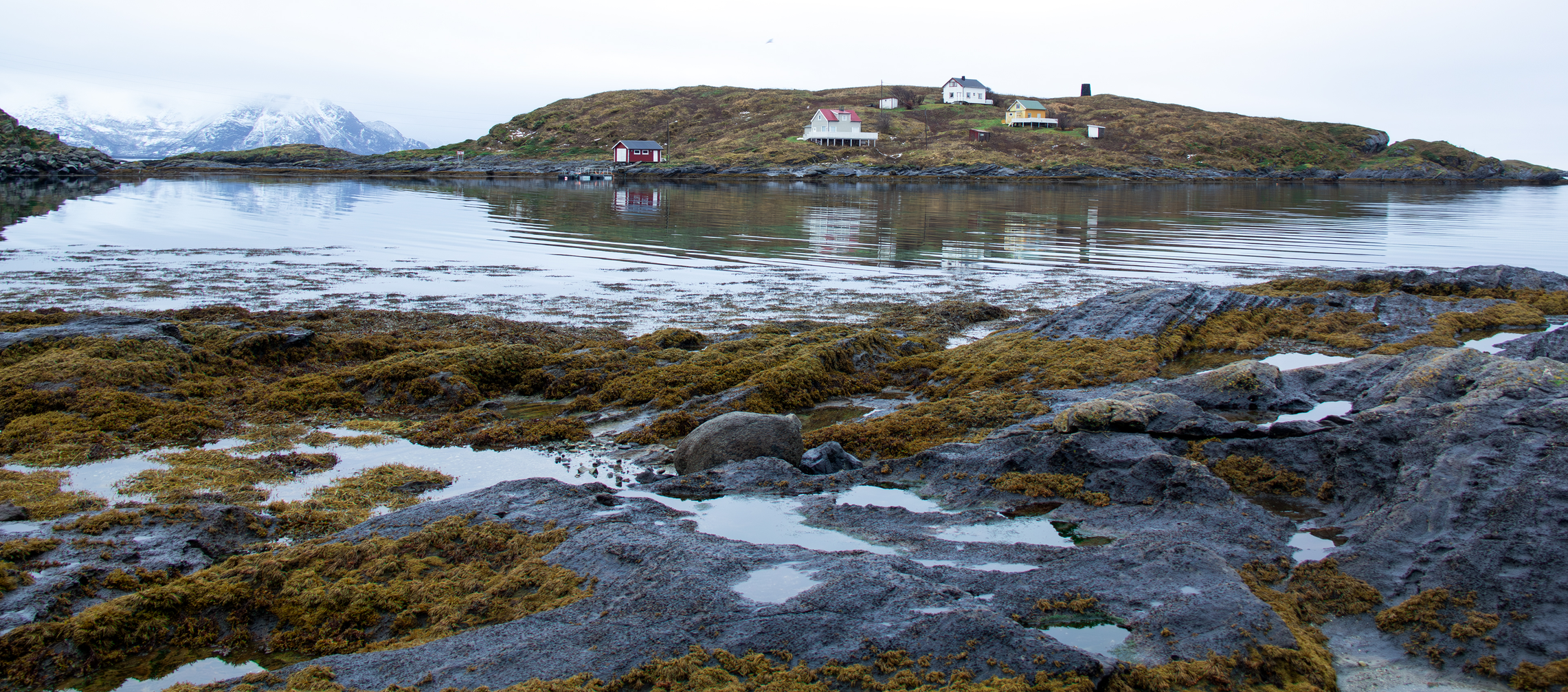
Low tide on Sørværet, looking Northeast from the Arctic Hideaway, our home for the duration. Varder rise from the horizon.
The last of the snowy approach to the end of Longholmen, what we referred to as "the edge." In the distance, a Sea Eagle perches atop the Varde on Skakkholmen.