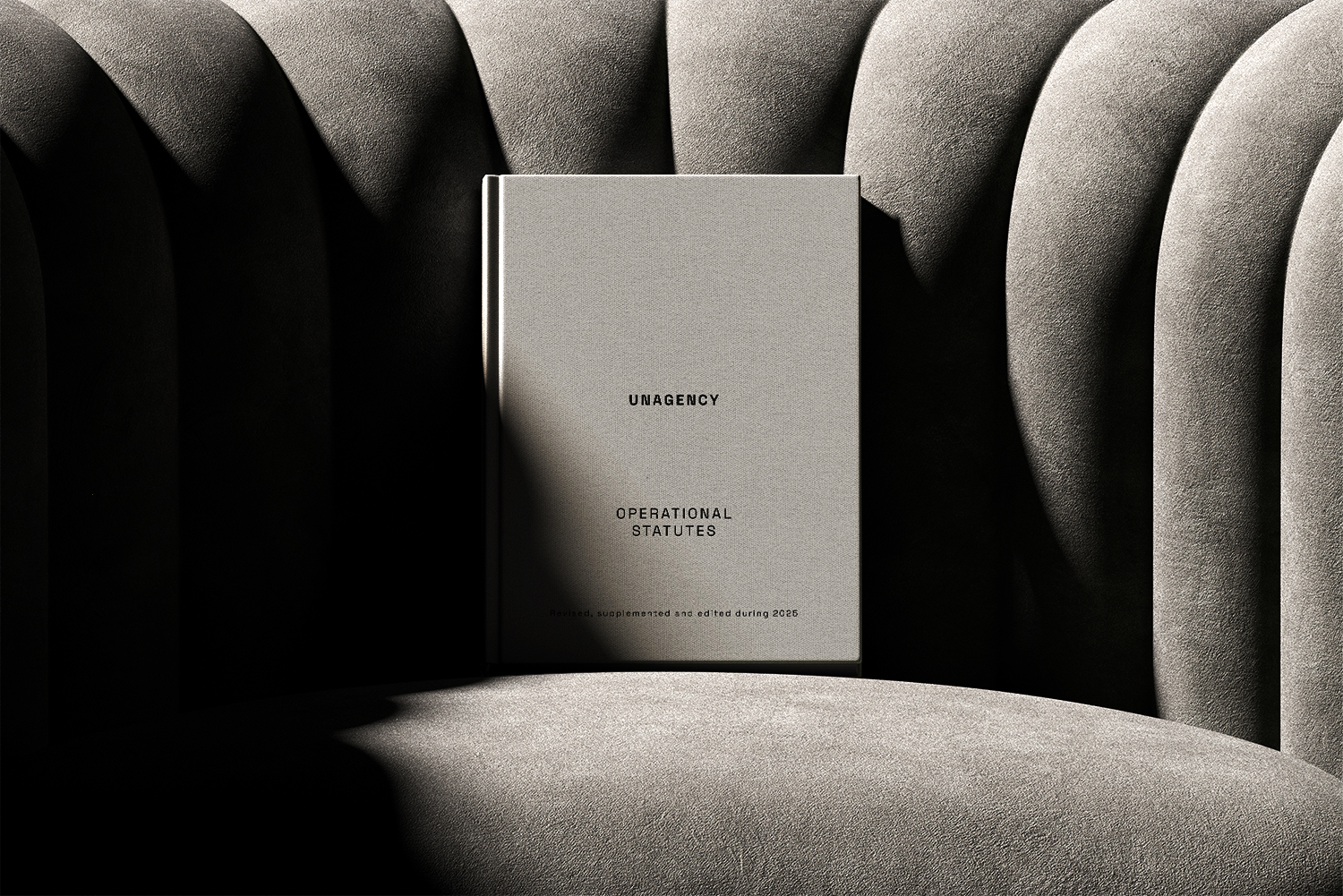
In attempt to operate from within design culture rather than outside it, Unagency takes the form of an agency. Therefore it has foundational statutes, mirroring the tone and structure of corporate documents, helping understand how authority, legitimacy, and myths are constructed through language and processes.
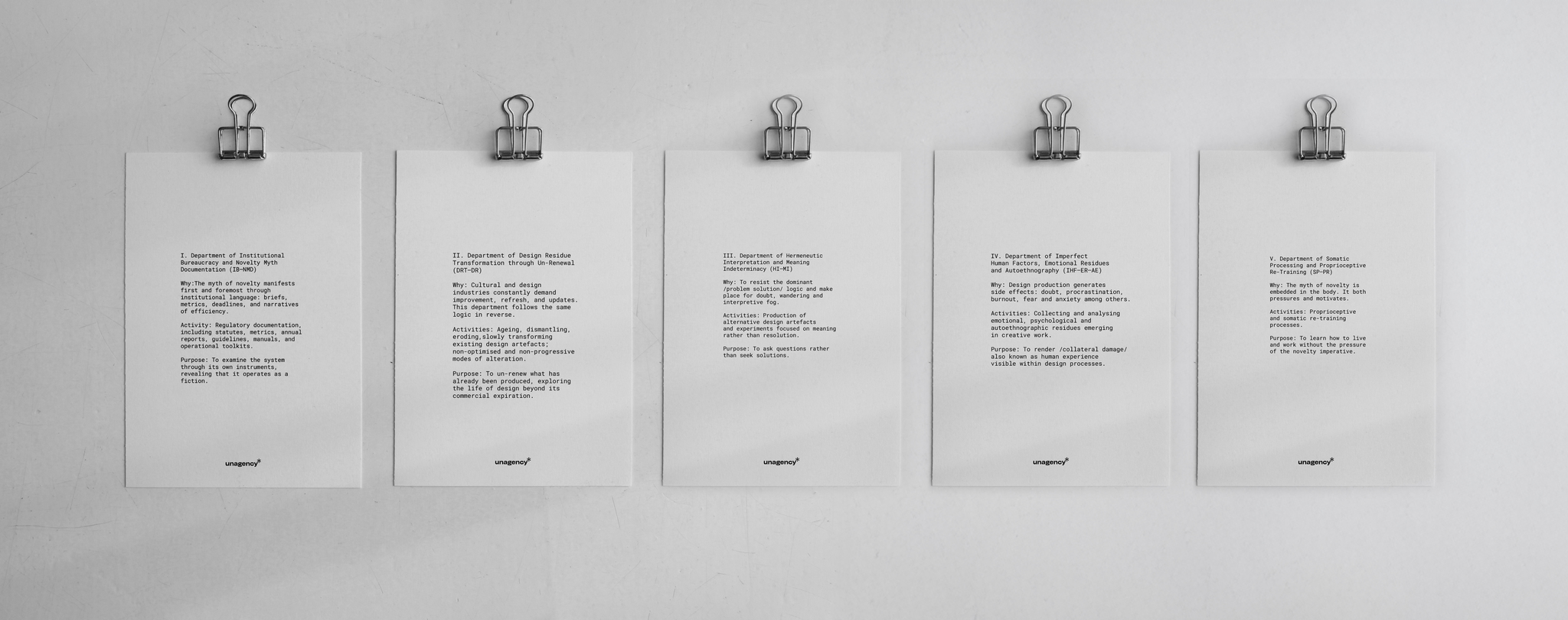
Like many commercial agencies, Unagency is organised into departments. These 5 departments are meant to function in any given order, separately, simultaneausly or one after another. They are considered a digestive system of myhts within design industry, helping to detect the cues of novelty and to inspect them safely.
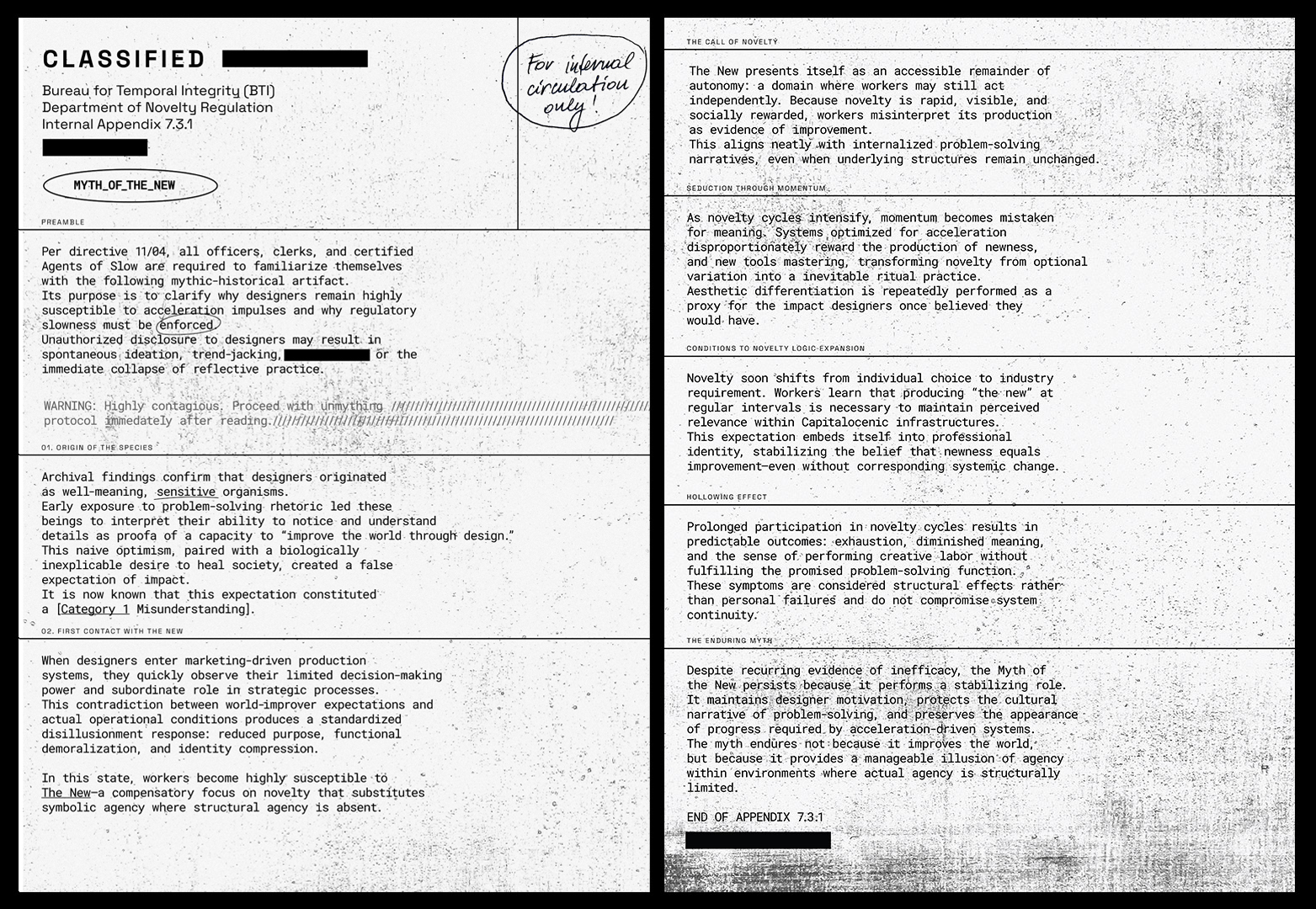
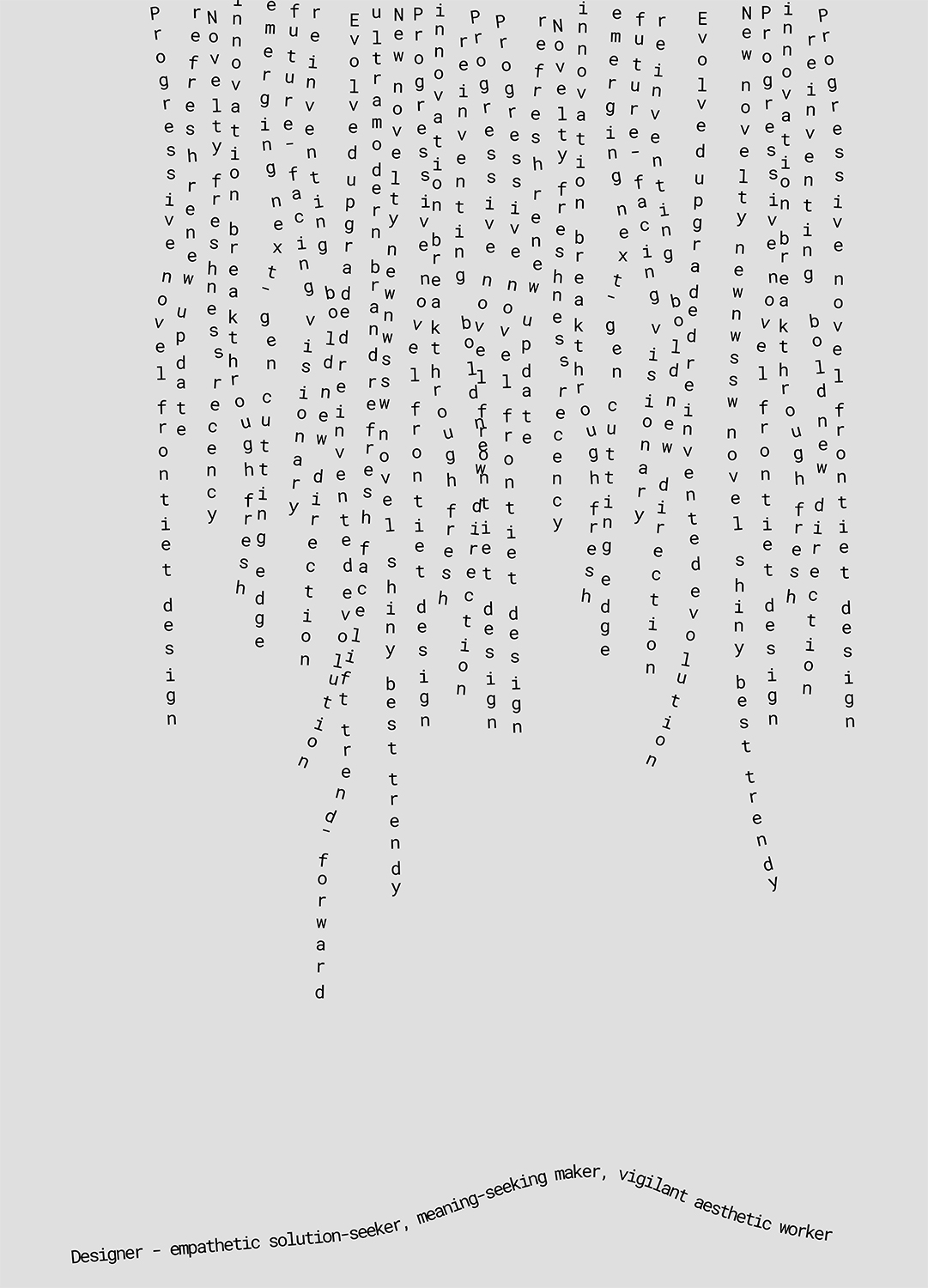
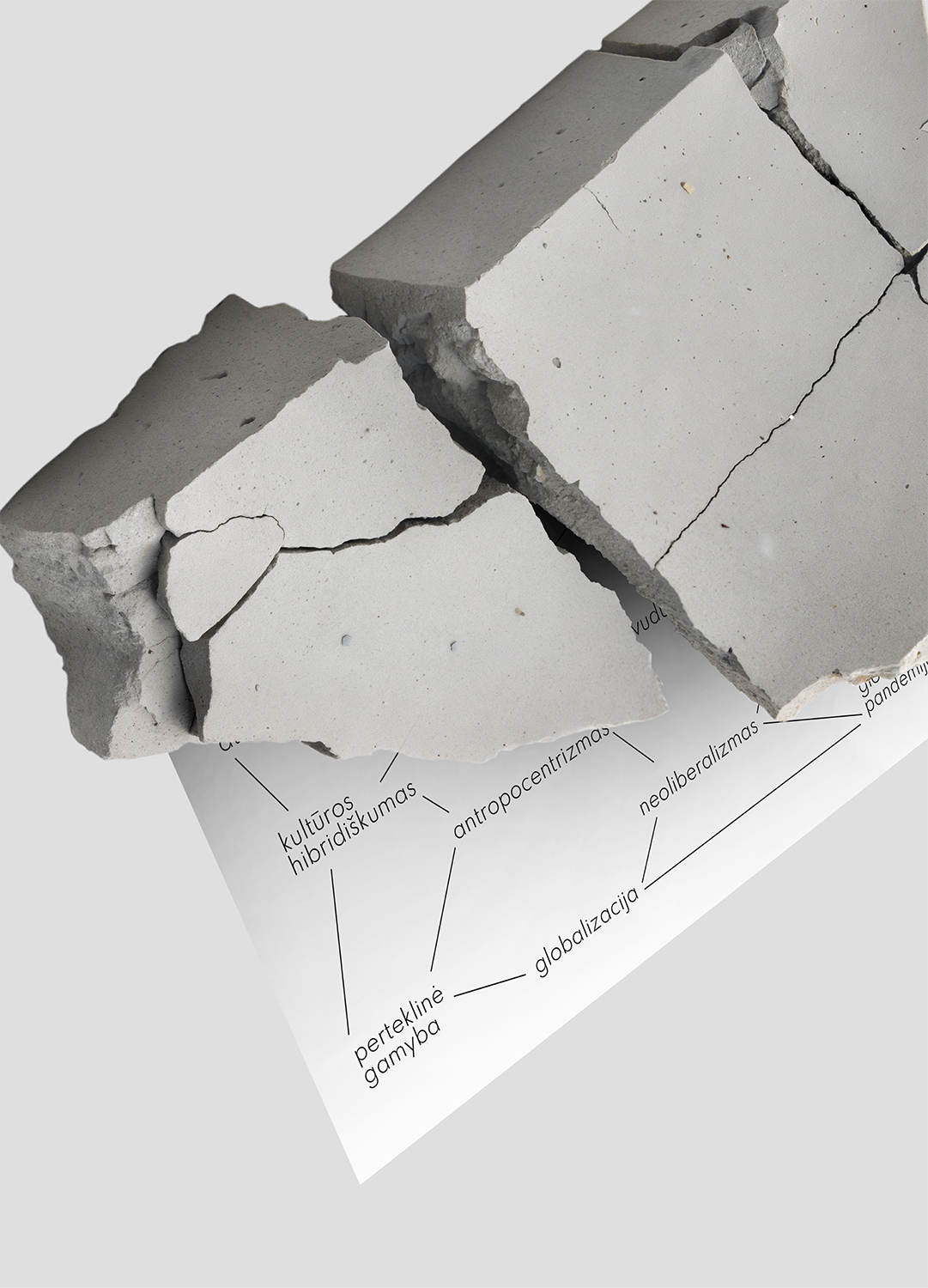
While Unagency was intended to operate primarily through inspection and documentation, certain degrees of procedural activation became inevitable in order to examine myths from within. For this purpose, familiar structures such as briefing and delivery processes remain, but are applied in a revised mode.
Un-brief: Replaces the client brief, introduces assignments without predefined solutions, establishing a field of attention.
Un-pitch: Declaration of doubt, used to articulate uncertainty rather than persuade.
Un-deliverable: Insight without product, offering unfinished reflection instead of a finite conclusion.
Execution shifts to noticing and deadlines evaporate, replaced by limited indetermined suspension in time.
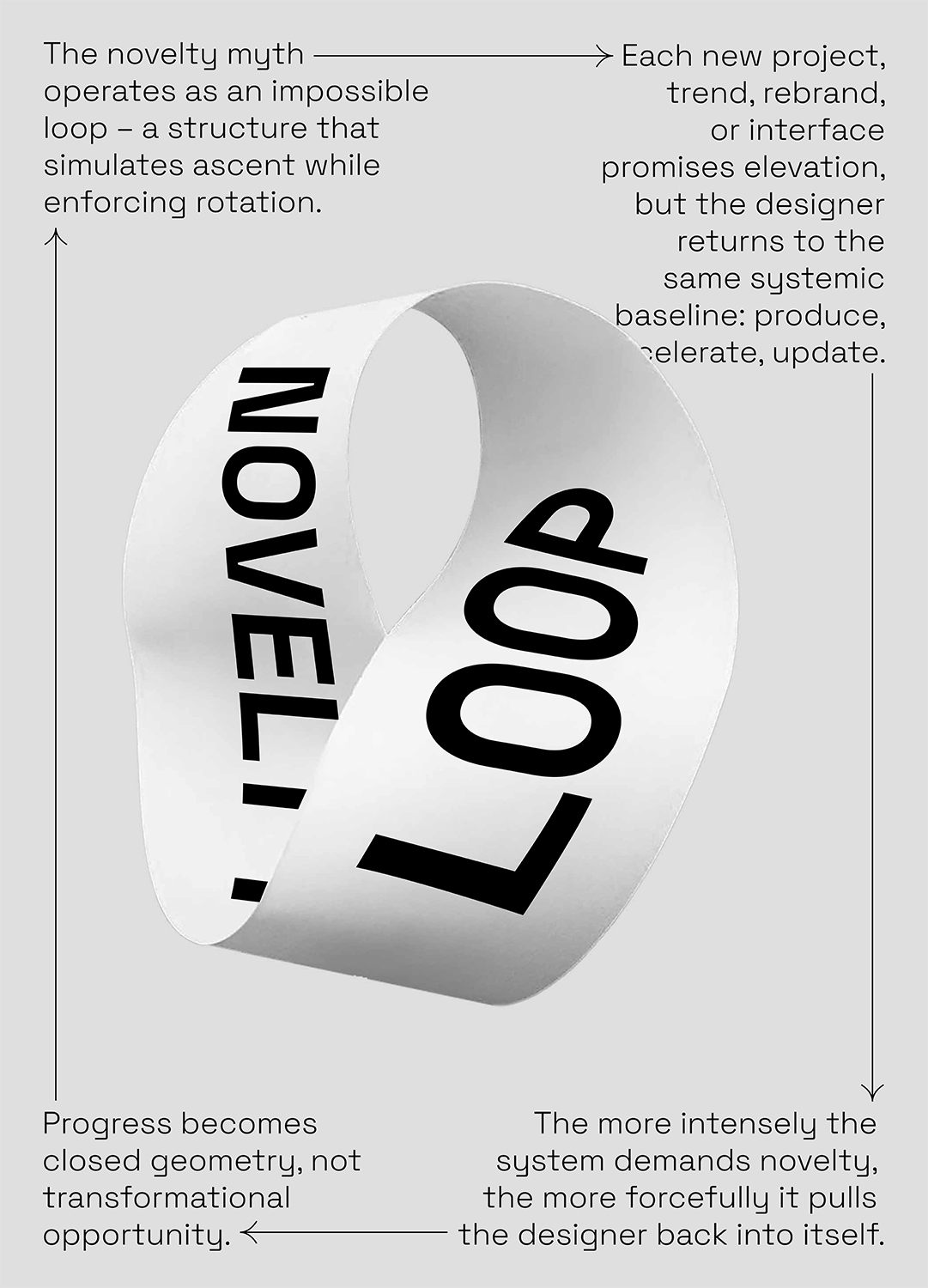
As novelty demands intensify, progress often becomes indistinguishable from repetition. The loop illustrates how renewal can look like a constant movement, but be a stagnation instead.
Unagency does not seek to exit the loop through alternative solutions. It tries to interrupt it through its practice.
These are the conditions as of why Unagency proceeds with experimental activities through which observations and data are gathered.
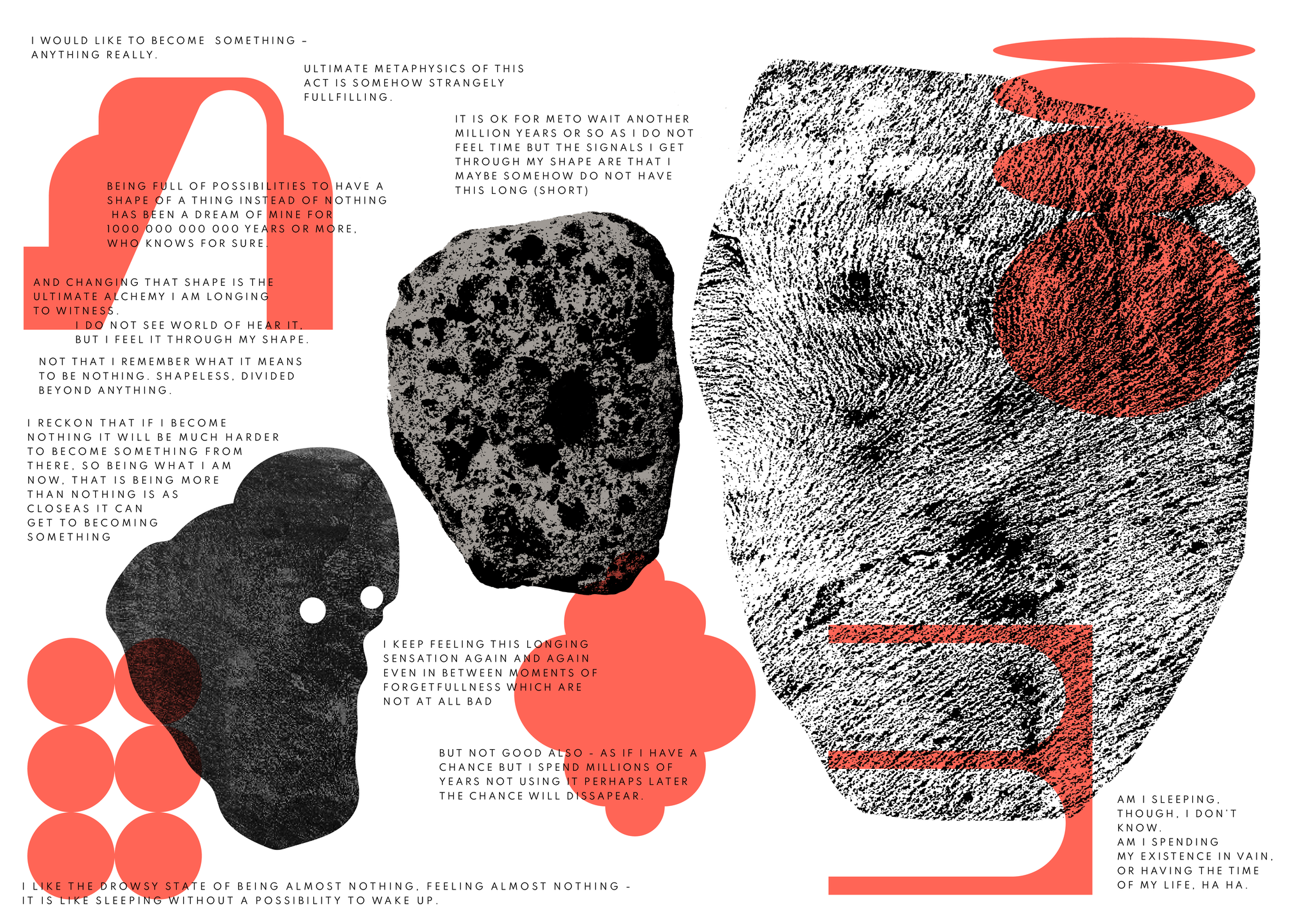
Un-brief: Assign a speculative voice to a material undergoing design production.
Un-pitch: Experiment explores material as not neutral and tests whether it can be approached as a subject with its own duration and history and whether design language can accommodate it.
Un-deliverable: Material can be legible as saturated with time although design production operates at a pace that disregards such duration.
Process: started as text, it acquired poster-like form at the risoprint workshop, suspending its presence in paper.
Un-brief: Allowing design object age without intervention.
Un-pitch: This experiment does not aim to improve, preserve, restore, or accelerate decay. A printed poster To Become is placed outdoors and exposed to weather and time, entering a non-commercial temporal economy in which change is not directed or controlled.
Un-deliverable: Change occurring without predictability or authorial control; material duration replacing linear narratives of progress or decay; designer's agency limited to observation rather than orchestration; transformation dependent on circumstances that cannot be regulated, contrary to design culture’s expectation of managed outcomes.
Process: A risoprint poster To Become was placed outdoors and left exposed to weather, time, and incidental contact. Changes have been documented without intervention from 26 November 2025 to 28 January 2026; the process is ongoing.
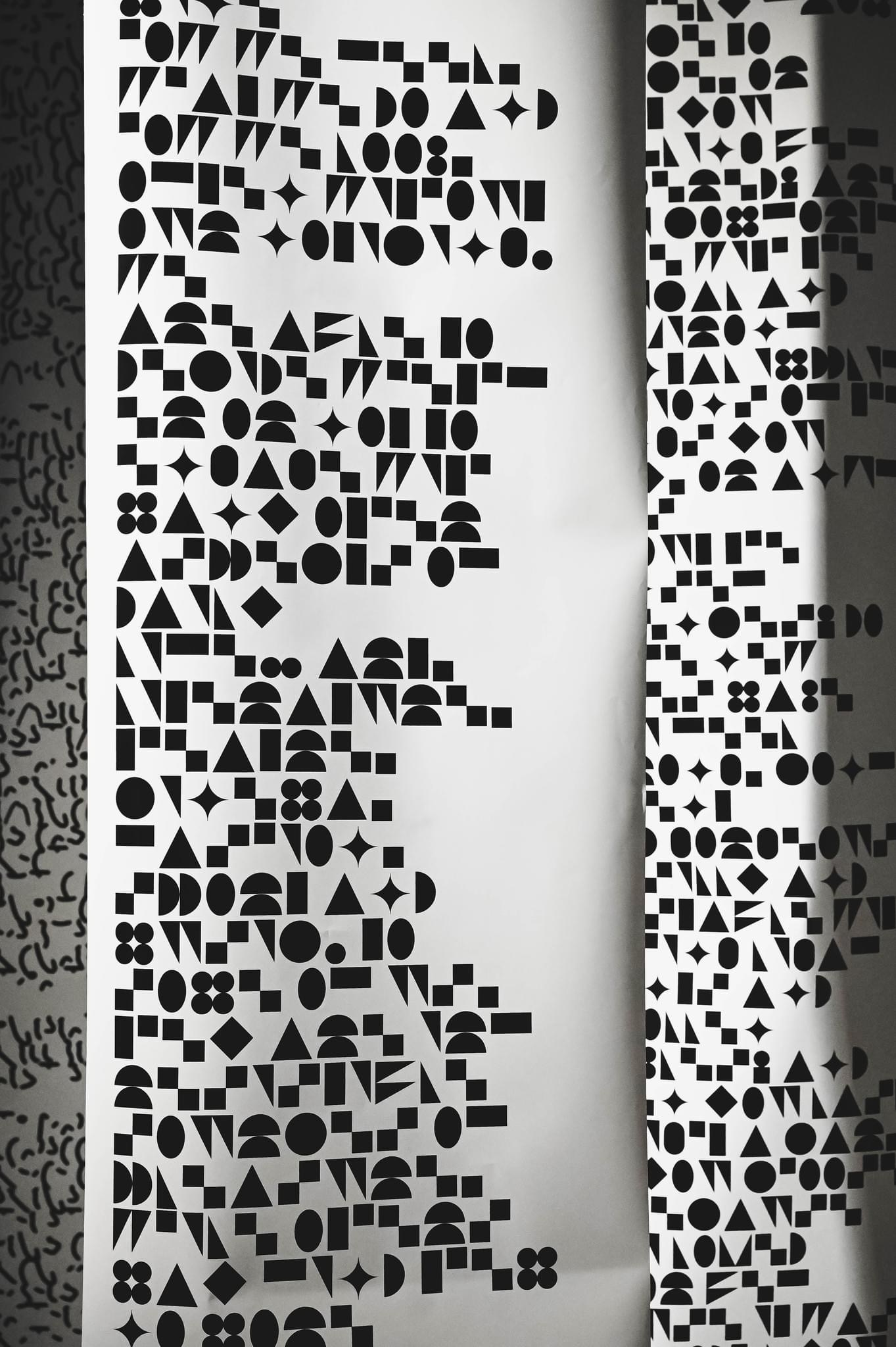
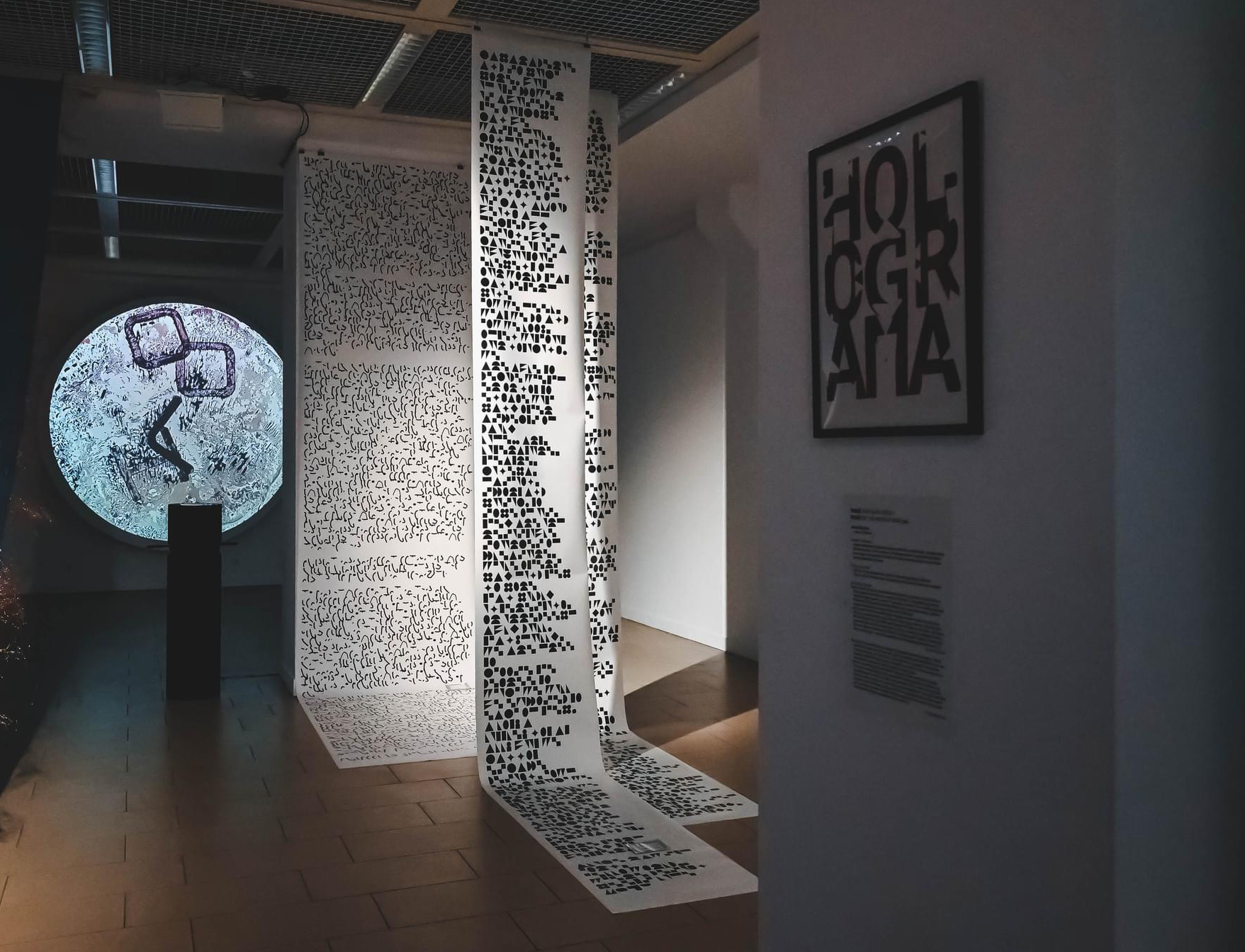
Un-brief: Make meaning present, but not accessible.
Un-pitch: The text has meaning, but design decisions delay access to it. Rather than accelerating understanding, visual interpretation introduces friction, shifting attention toward control.
Un-deliverable: Meaning is separated from immediacy; decoration operating as an interpretive intervention; designer agency revealed primarily as mediation rather than authorship; immediacy of understanding delayed through design, in contrast to standard practices of accelerated legibility.
Process: Two large-scale typographic compositions were produced using self-designed typefaces, rendering readable texts deliberately difficult to access through extended reading time.
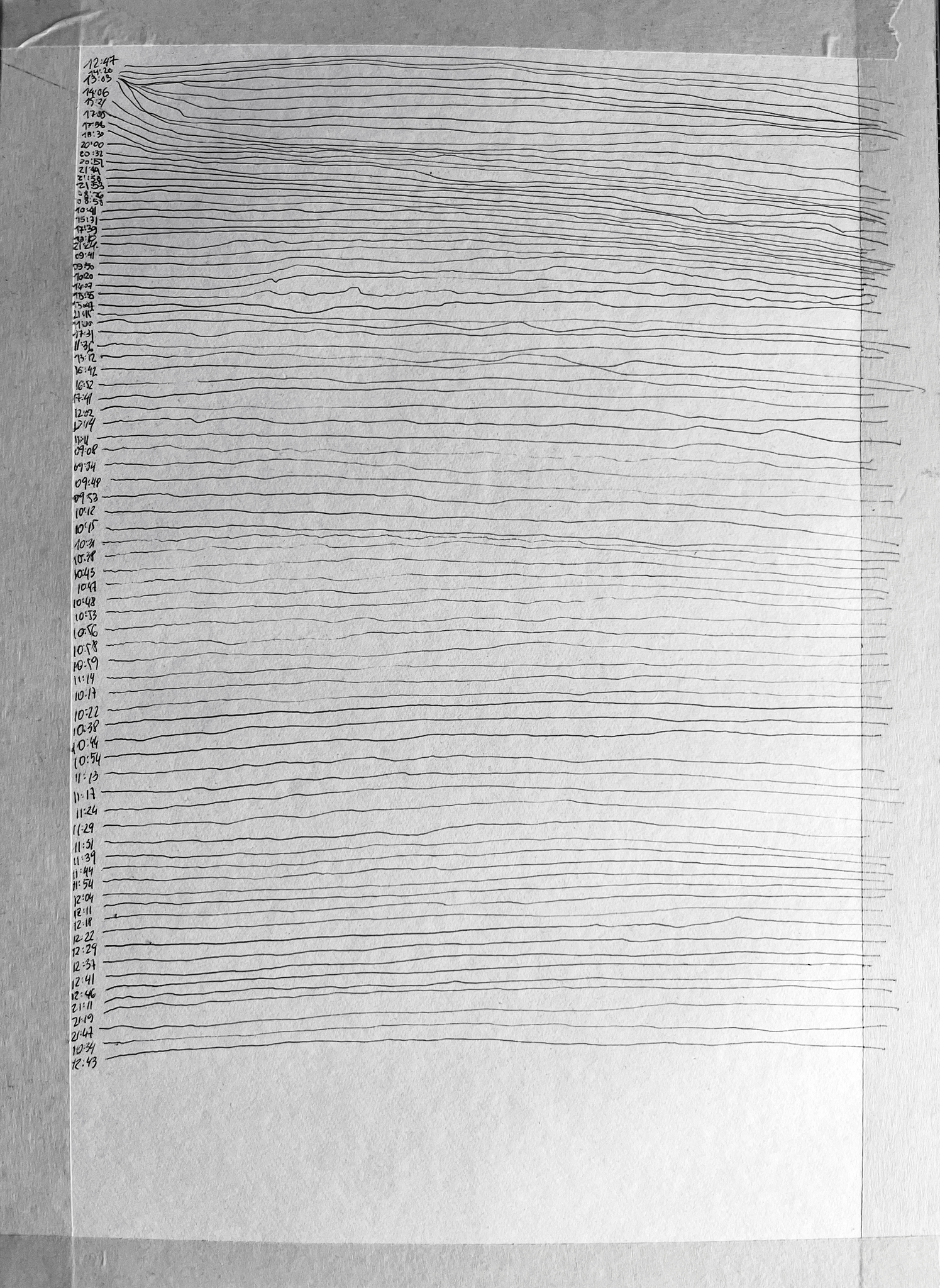
Un-brief: Updating as a continuous procedure without meaning.
Un-pitch: Examining the myth of novelty through repeated corrections and versioning typical of commercial design work. Updating continues without criteria for evaluation or resolution, allowing the process itself be enough for progress.
Un-deliverable: Procedural core of the novelty myth is novelty for it's own sake; movement without direction, correction for correction's sake and progress without transformation. It shows how updating operates as proof of activity, leaving meaning and improvement behind.
Process: Horizontal lines are drawn on a blank sheet of paper one after another, each marked with a timestamp. The procedure continues at irregular intervals until no physical space remains for an additional line. The experiment is ongoing.
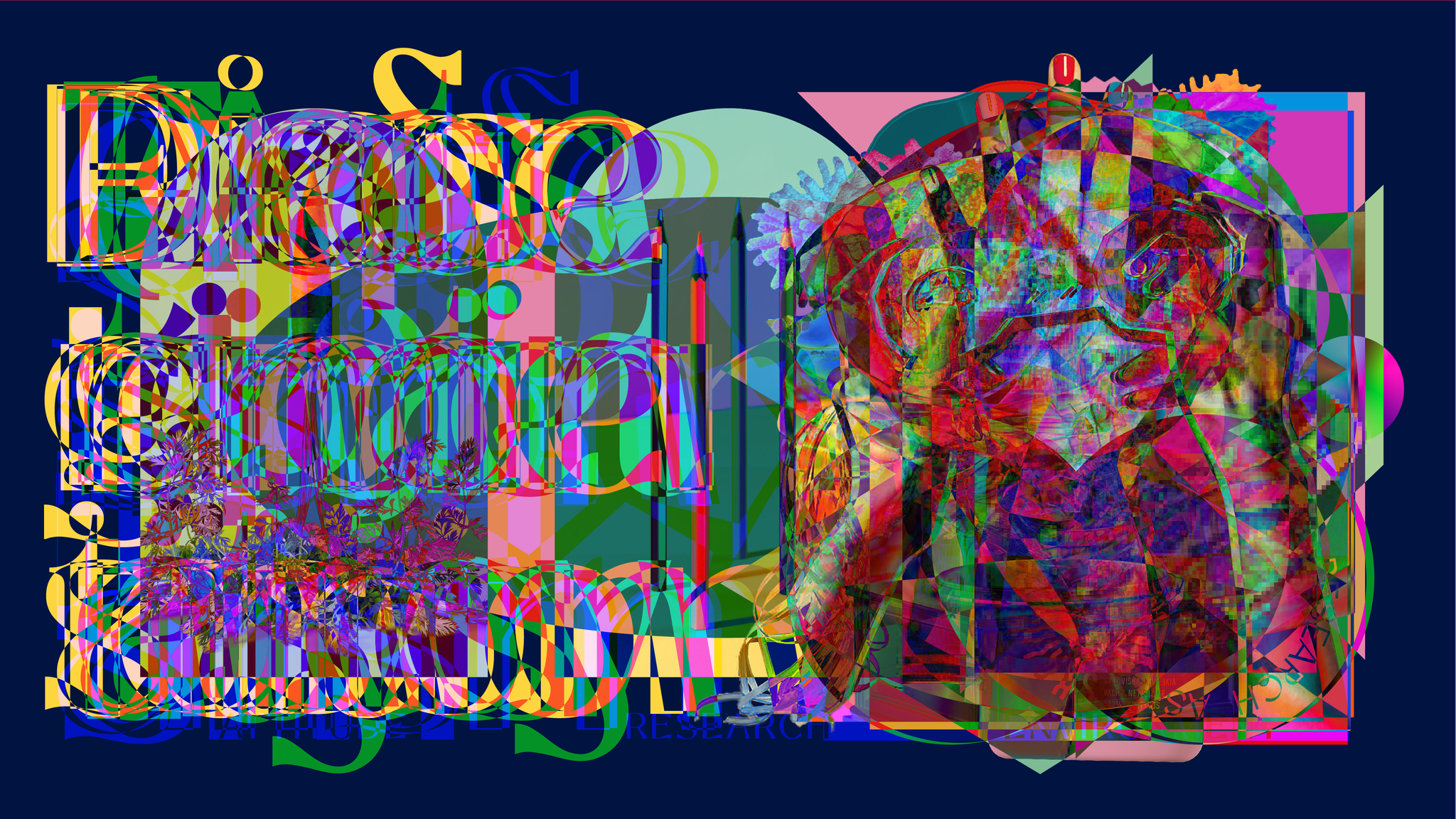
Un-brief: Accumulation of design outputs.
Un-pitch: Design practice presented as hoarding, driven by the assumption that more versions produce better outcomes. Instead of choosing, refining, or discarding, all iterations are retained and combined.
Un-deliverable: A visual accumulation in which individual versions become indistinguishable. Taking the logic of “more is better” literally, the experiment shows how novelty-driven design converts potential into excess, leaving an unresolved mass of ideas and it is unclear what to do with this unneeded collateral damage.
Process: Visual artefacts produced during doctoral research are layered without hierarchy or qualitative judgment, treating no version as better than other.