MATERIAL TRANSFORMATIONS FROM EPHEMERAL STATES
MATERIAL TRANSFORMATIONS FROM EPHEMERAL STATES
- Introduction
This research is grounded in the hypothesis that matter—particularly in its liquid and powder forms—is not a static entity but a process in continuous transformation. As stated in the original text, “matter, especially in its liquid and powder forms, is not a static entity, but a process in continuous transformation.”
Natural liquids and powders, originating from domestic, alimentary, environmental, and atmospheric contexts, are understood as dynamic systems capable of generating form through elementary physical phenomena such as evaporation, sedimentation, coagulation, crystallization, oxidation, surface tension, and molecular interaction. The artist does not intervene as a modeller but as an activator of conditions.
Form is not imposed; it emerges from interactions between materials, temporalities, and environmental factors. This approach is situated at the intersection of:
- process aesthetics
- philosophy of matter
- material ecologies
- post‑anthropocentric artistic practices
- geophilosophy and stratigraphic thinking
- studies on ephemeral materiality
The methodology presented here defines an operational paradigm that enables the transformation of ephemeral materials into sheets, solids, and abstract sculptures, conceived as archives of natural processes.
- Theoretical Foundations
2.1. Matter as an active agent
The research adopts a perspective in which matter possesses its own agency.
As the text affirms, “liquids and powders are not passive tools, but co‑authors of the artistic process.”
The final form results from a negotiation between artistic intention and material behaviour.
2.2. The temporality of form
Form is not immediate; it unfolds over time.
The artwork is a temporal event, not a finished object.
Each sheet, solid, or sculpture retains the traces of its own becoming.
2.3. Processuality as aesthetics
Aesthetic value does not lie in formal perfection but in the complexity of the processes that generate form.
Cracks, tensions, stratifications, and deformations are not flaws but constitutive elements.
2.4. Everyday materials as philosophical matter The use of domestic, alimentary, atmospheric, and residual materials (coffee, milk, wine, oils, infusions, environmental dusts, organic residues, natural pigments, meteoric waters) introduces a reflection on the materiality of the everyday and its capacity to become an aesthetic phenomenon.
- Breadth of the Material Repertoire The research employs an extensive repertoire of materials, divided into four principal categories.
3.1. Organic liquids
- milk
- wine
- teas and herbal infusions
- liquid coffee
- fruit juices
- vegetable broths
- vinegar
- liquefied honey
- vegetable oils (olive, seed, coconut) Relevant properties: coagulation, pigmentation, viscosity, fermentation, oxidation.
3.2. Industrial or processed liquids
- Coca‑Cola and other sugary beverages
- syrups
- natural detergents
- edible inks
- coloured waters
Relevant properties: sugar crystallization, chromatic corrosion, altered surface tension.
3.3. Organic powders
- coffee grounds
- cocoa
- spices (turmeric, paprika, cinnamon)
- powders from dried leaves and flowers
- powdered dried fruit
- bread or cereal powders
Relevant properties: granulometry, absorbency, natural pigmentation.
3.4. Mineral and environmental powders
- street dust
- domestic dust
- sands
- clays
- metallic oxides
- charcoal
- collected atmospheric dust
Relevant properties: sedimentation, compaction, reactivity with acidic or sugary liquids.
- Activation of Natural Processes The methodology is based on the controlled activation of elementary physical phenomena:
- evaporation
- sedimentation
- gelification
- crystallization
- protein coagulation
- oxidation
- oil/water separation
- surface tension
- pigment absorption and migration
The artist defines the initial conditions but allows the process to evolve autonomously.
- Formation of Formal Typologies
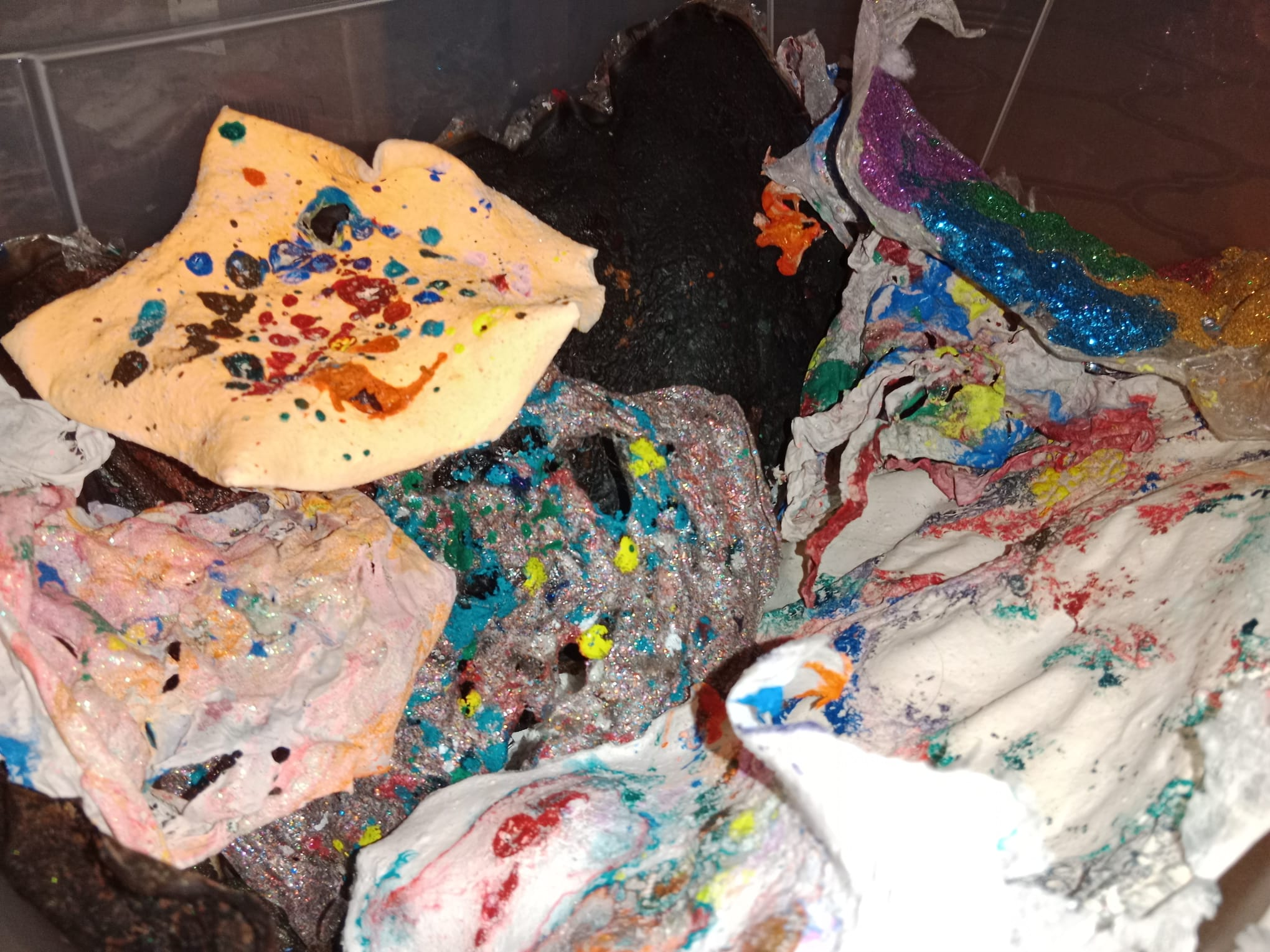
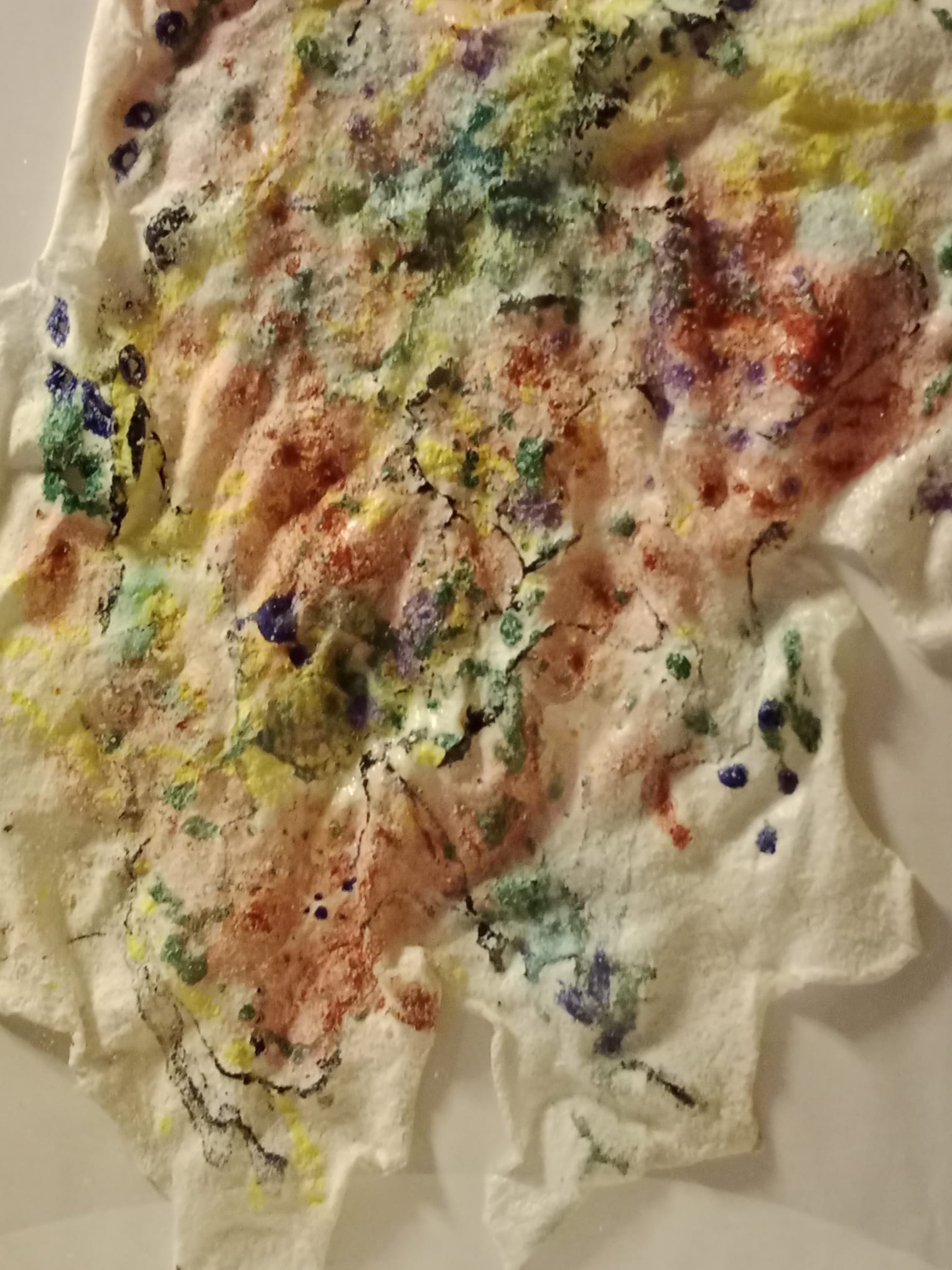
5.1. Sheets (membranes) Sheets are produced through:
- spreading liquids on absorbent surfaces
- depositing powders
- slow drying
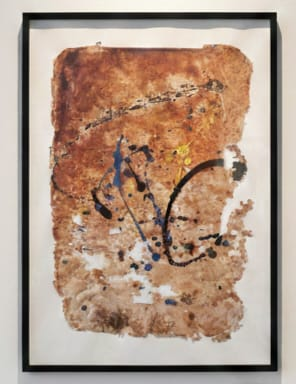
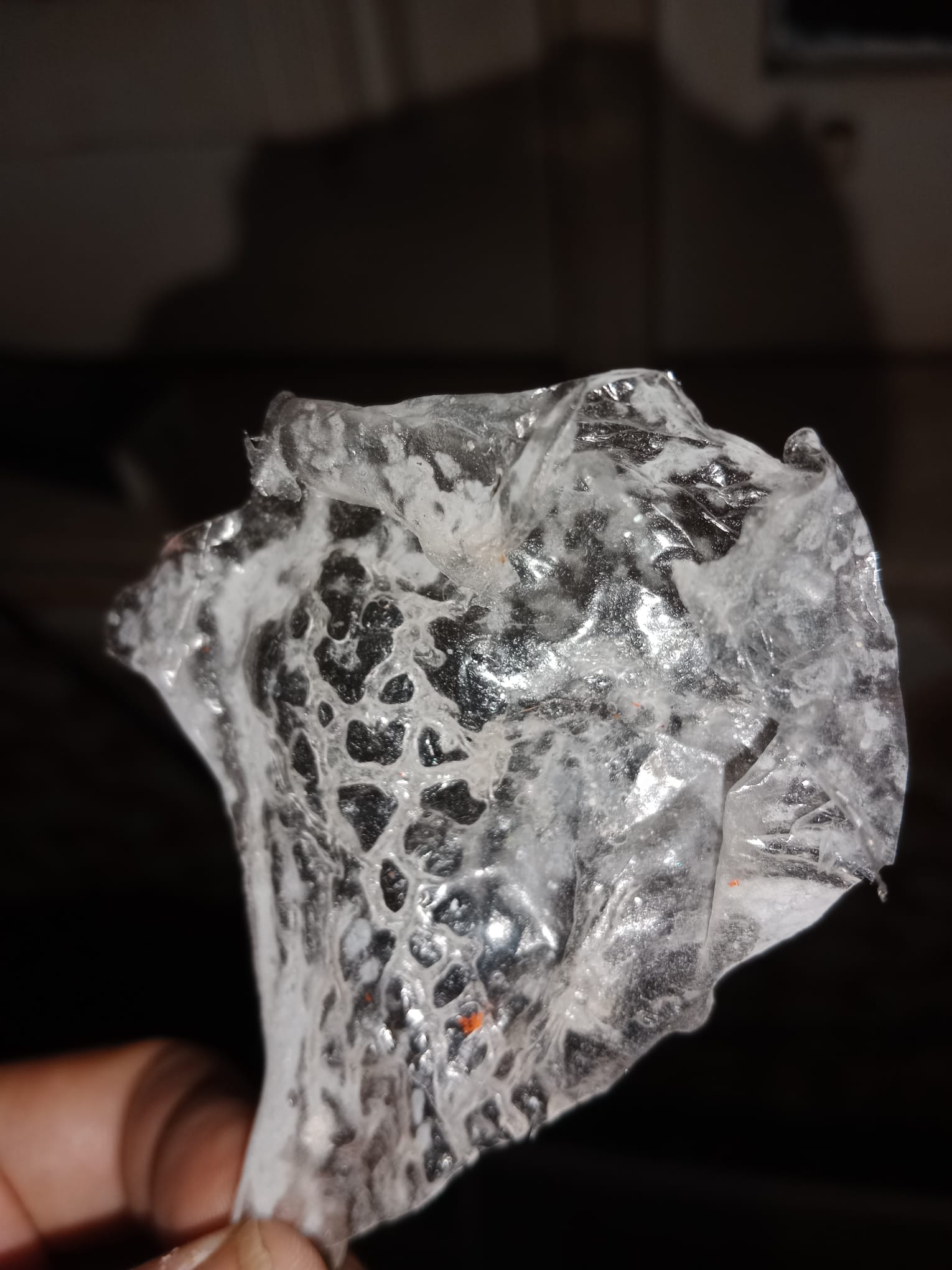
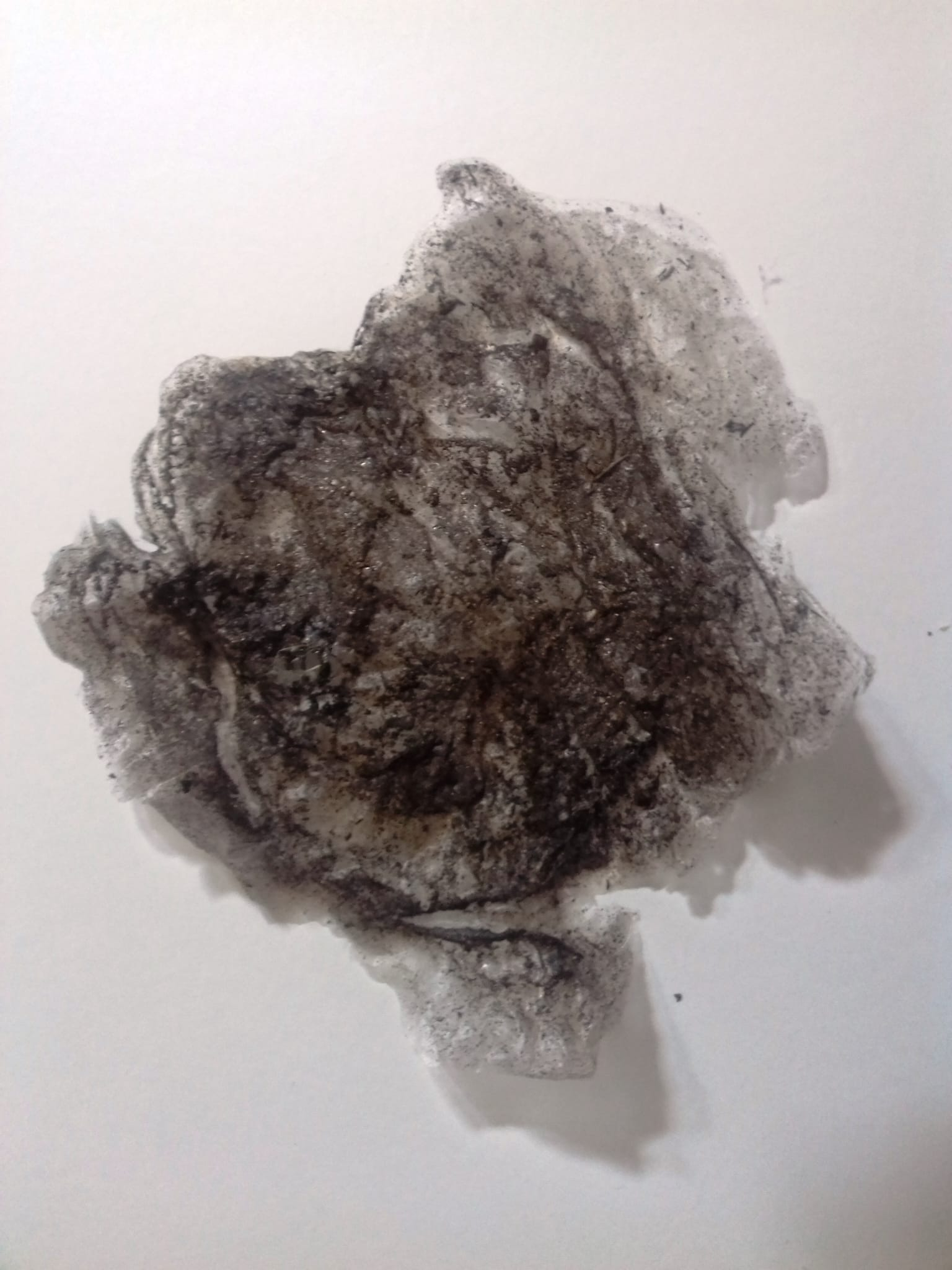
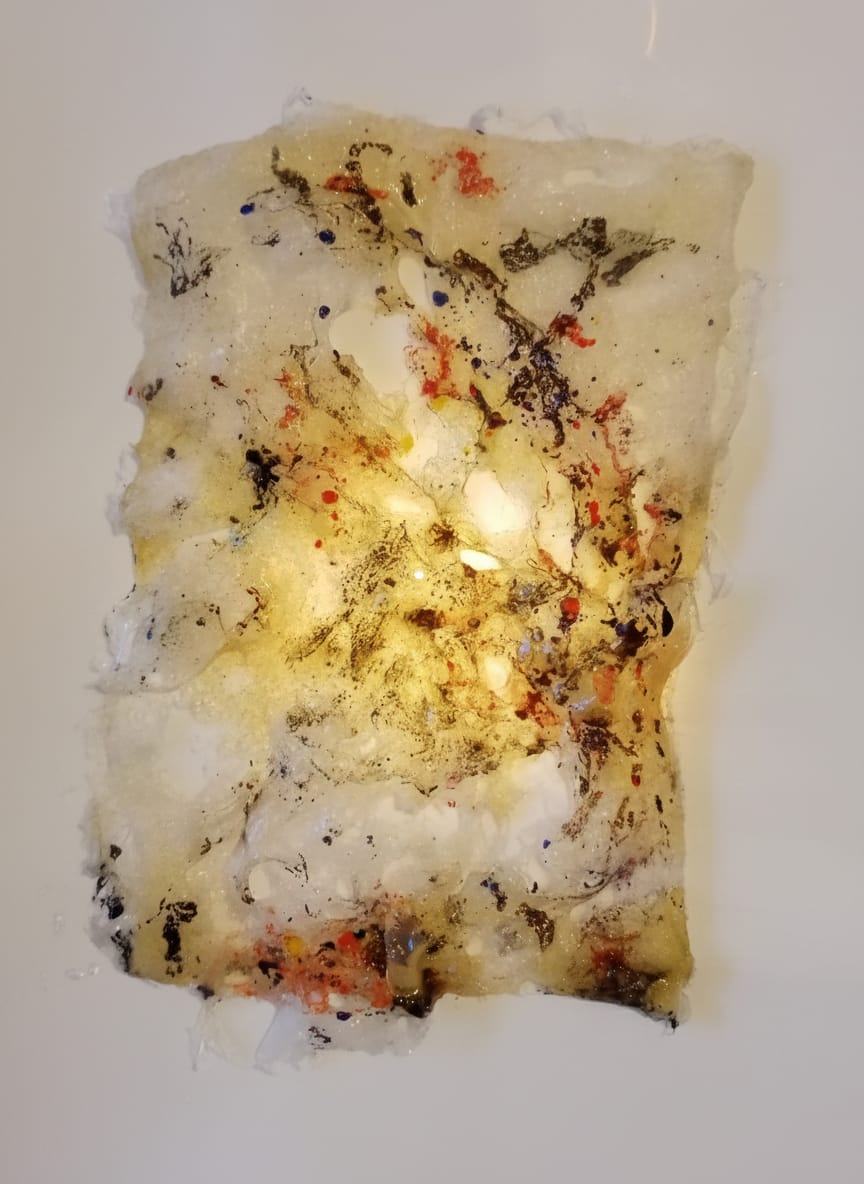
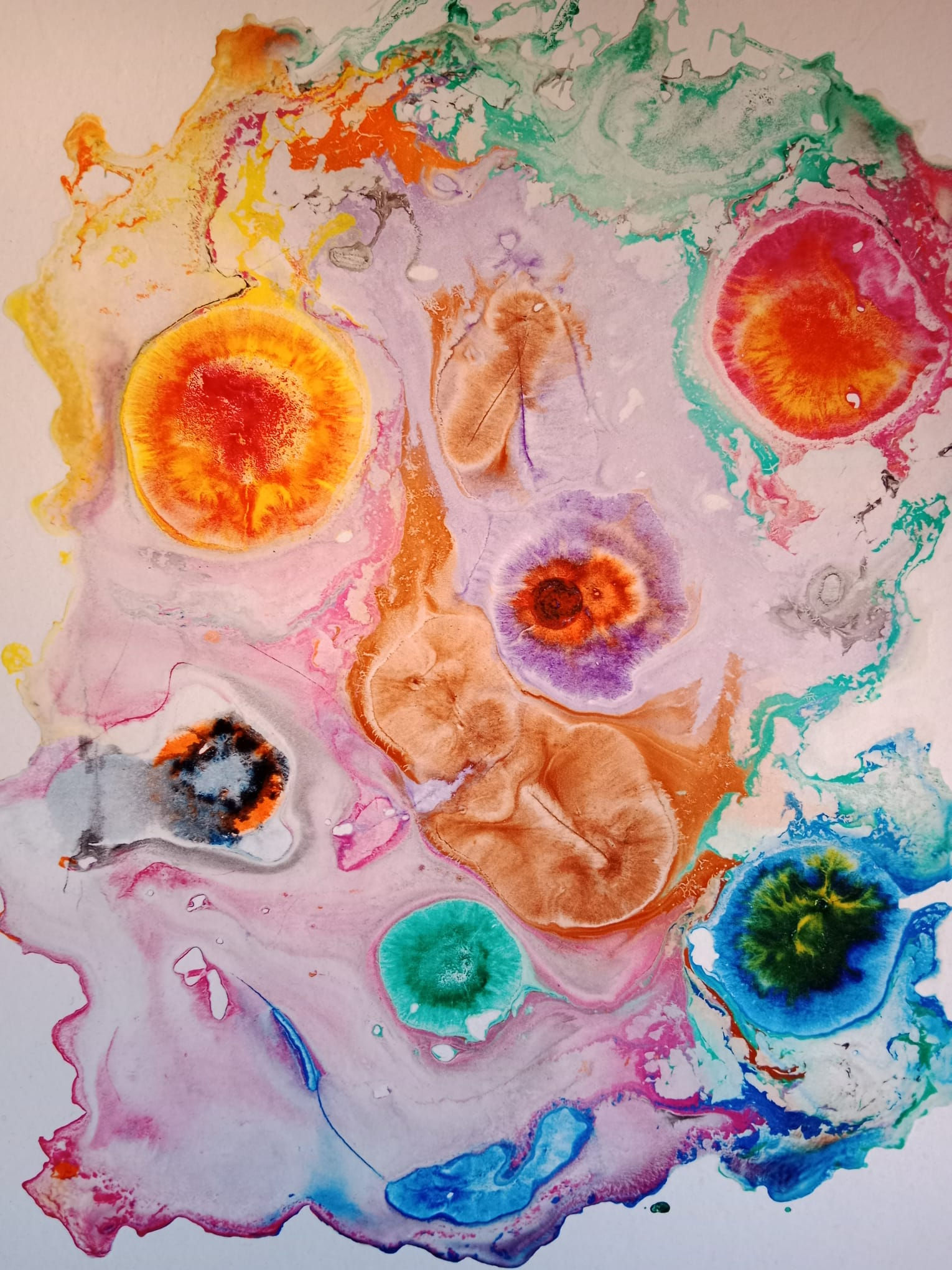
The result is thin, epidermal membranes characterized by translucencies, cracks, and internal tensions.
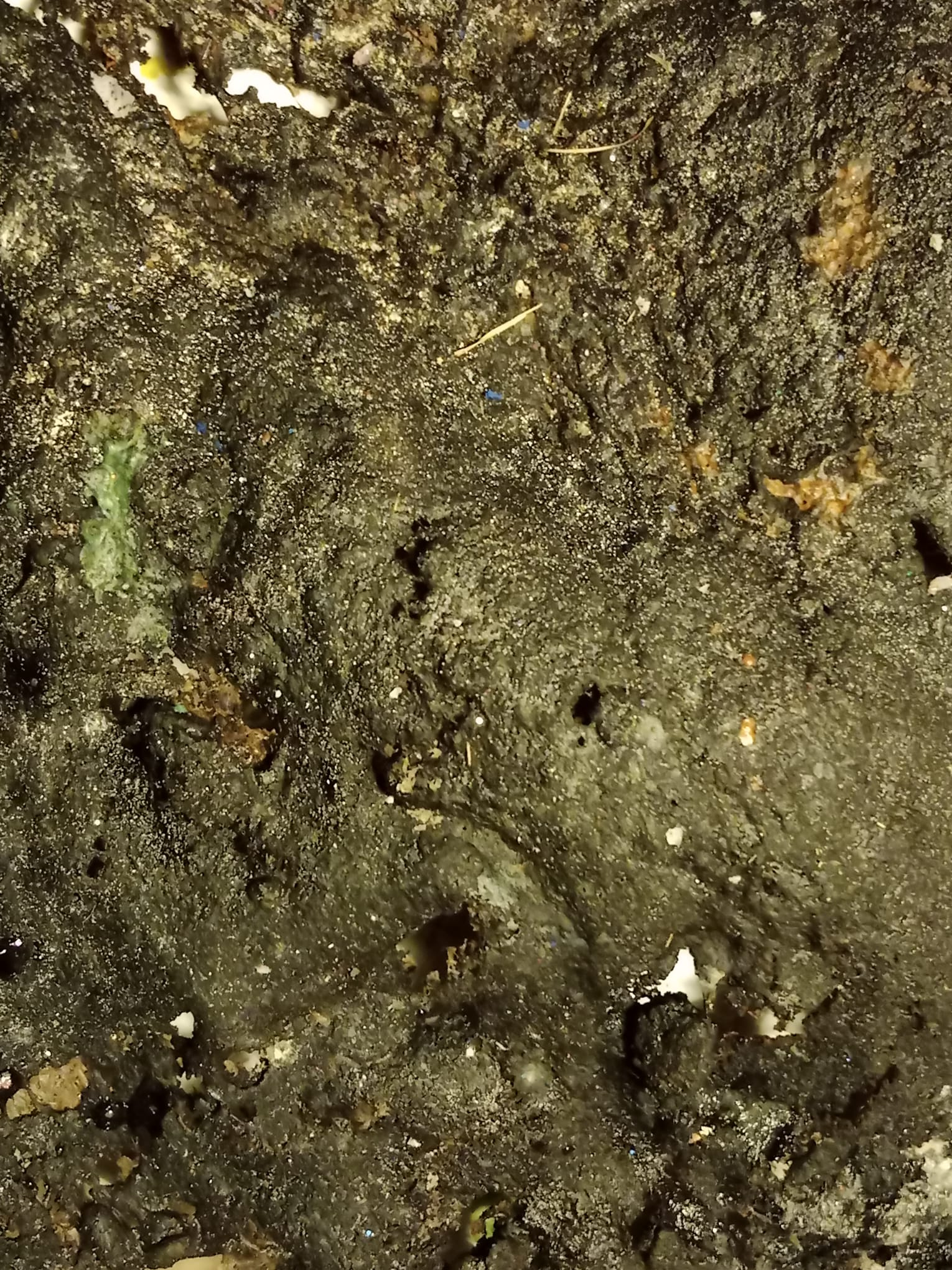
5.2. Solids (compact masses) Solids derive from:
- mixtures of powders and natural binders
- addition of pigmented liquids
- modelling or casting into moulds
- slow drying
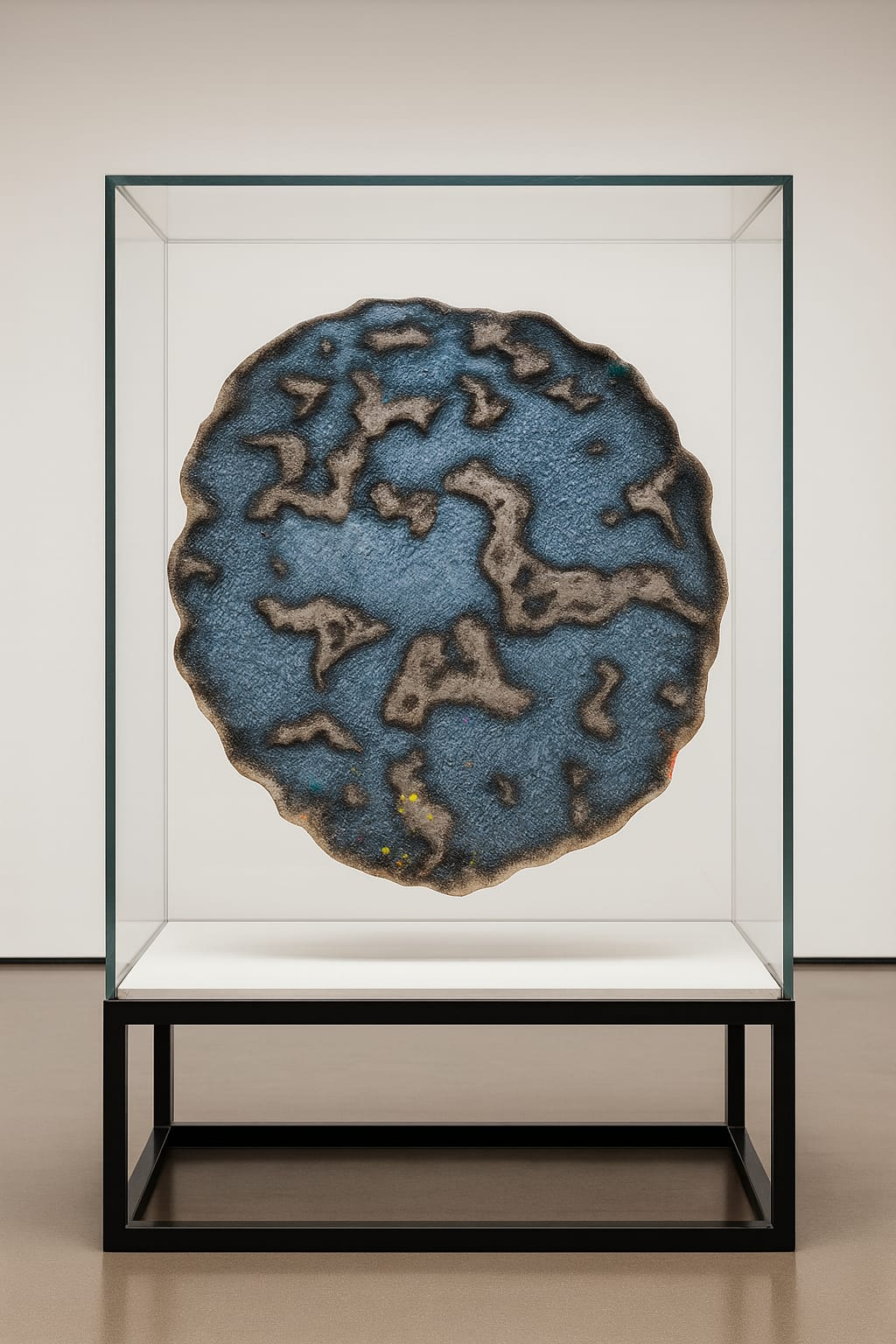
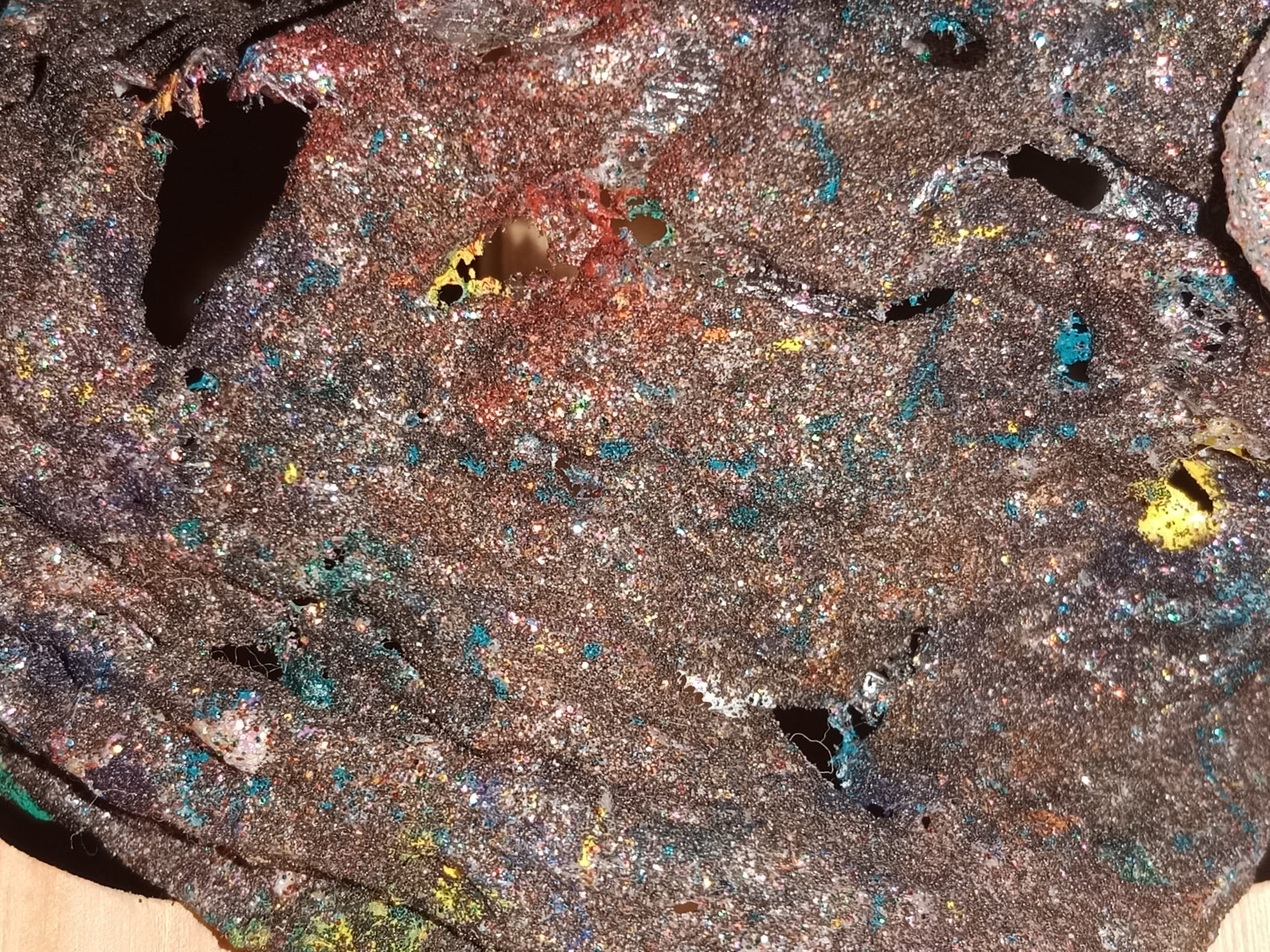
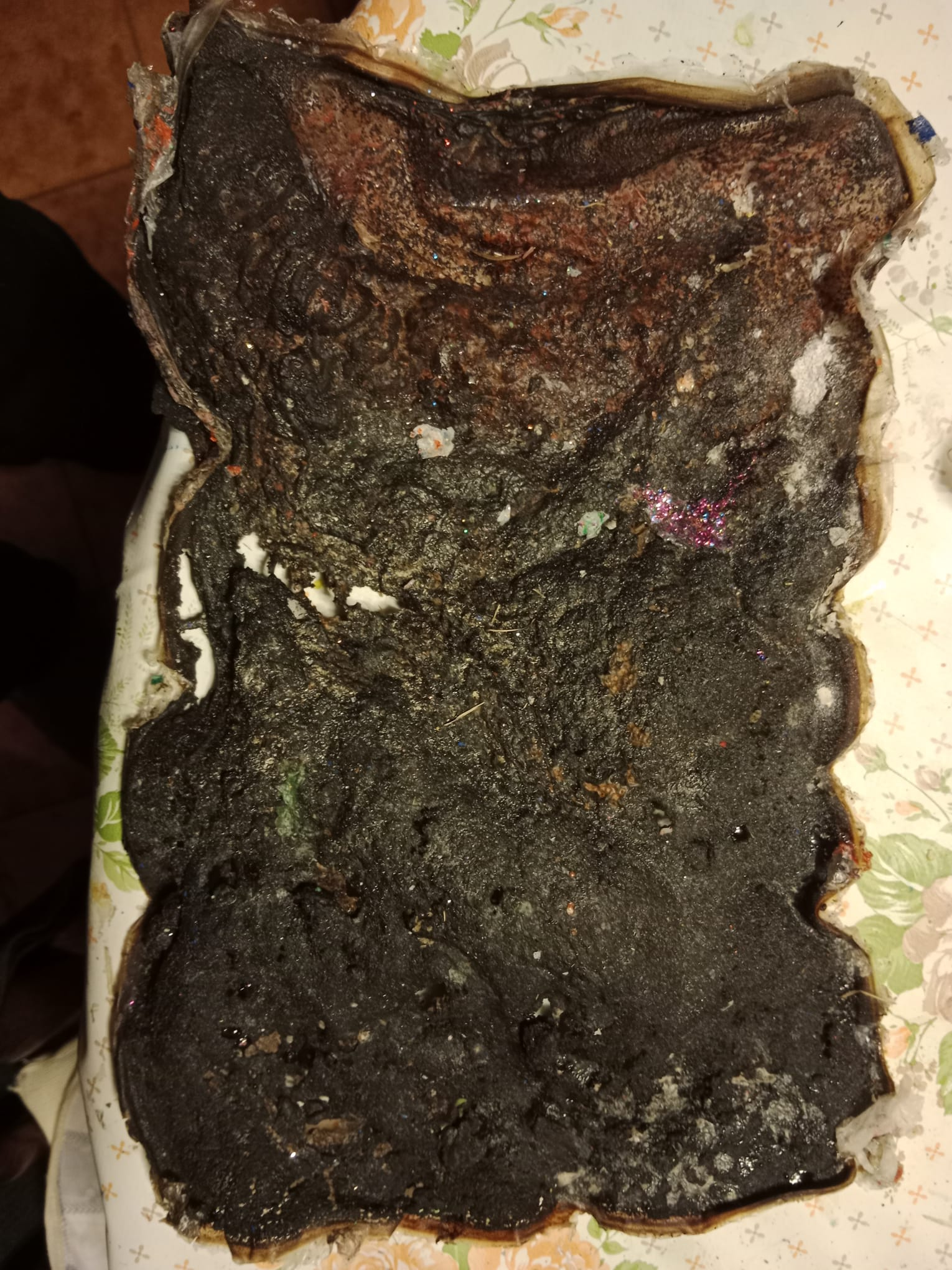
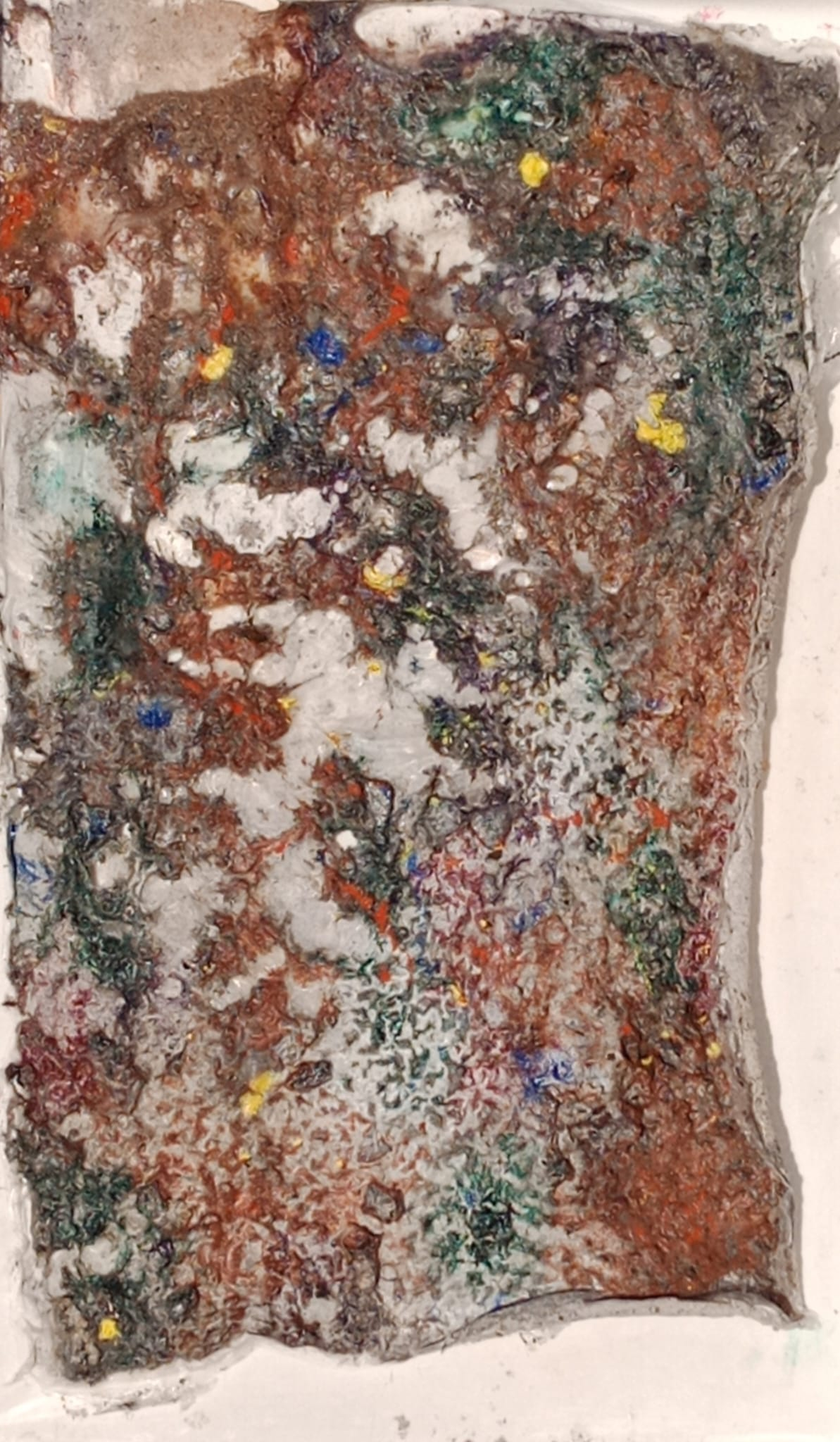
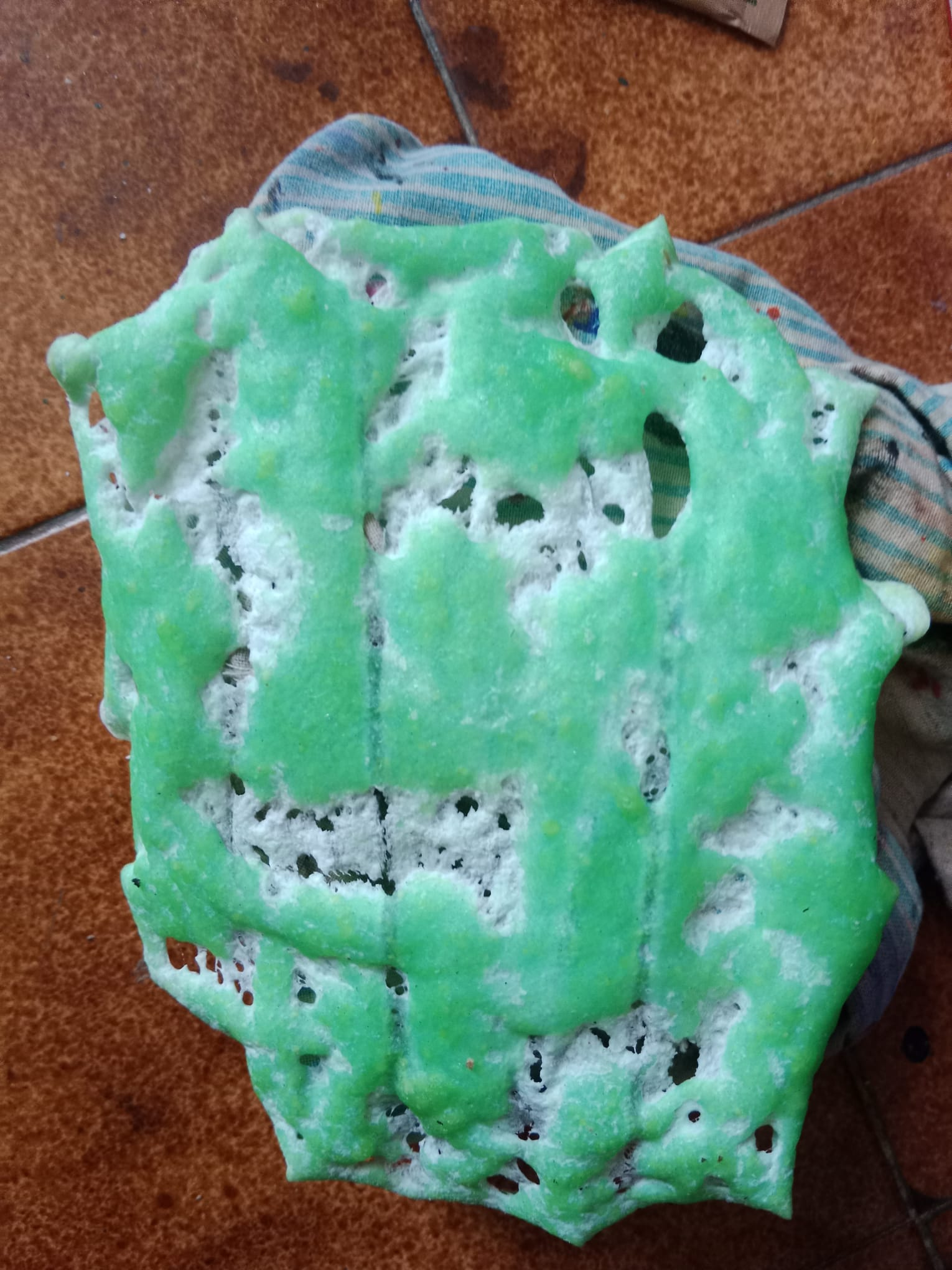
The final form exhibits geological characteristics: cracks, veins, inclusions, stratifications.
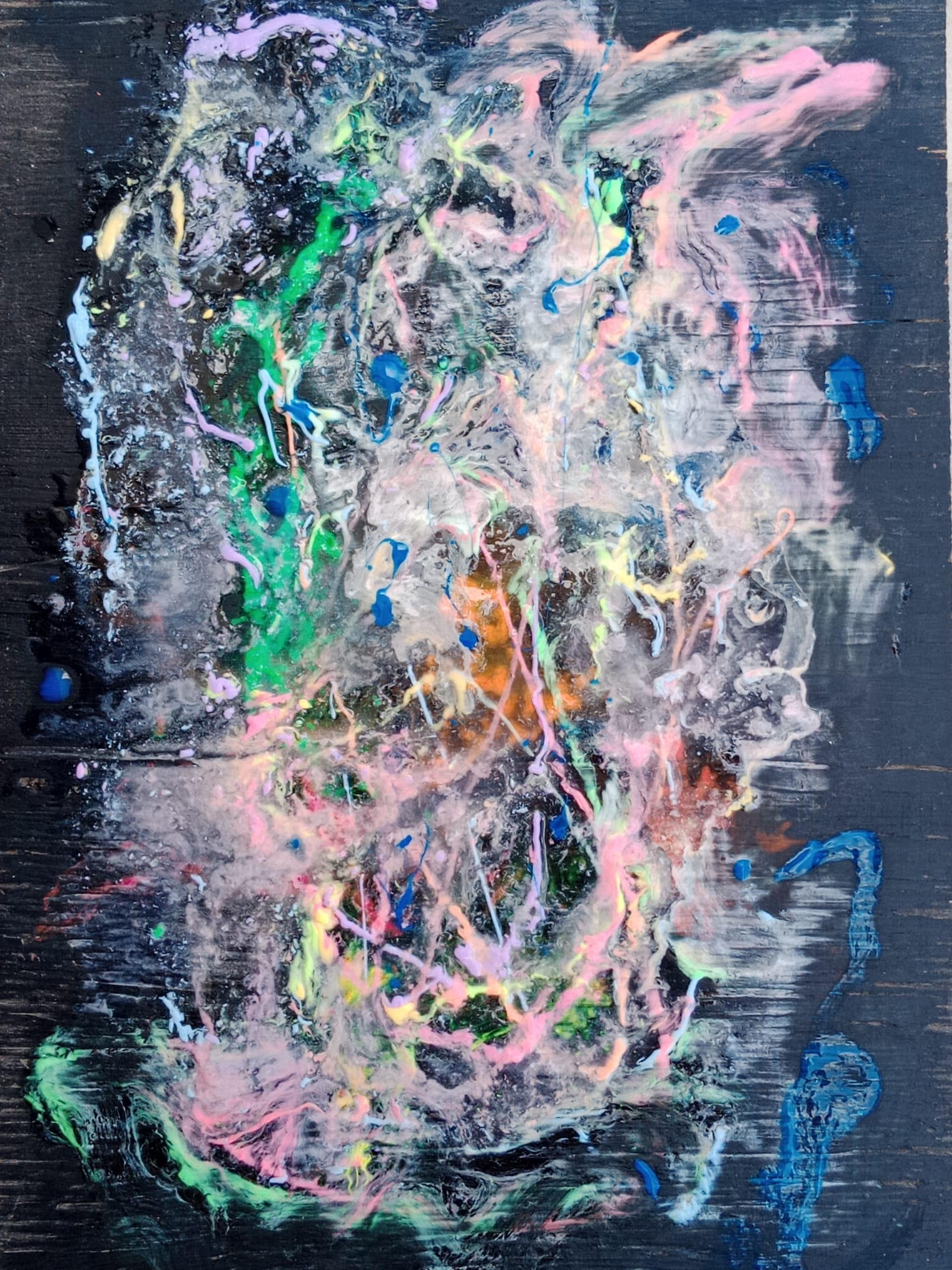
5.3. Abstract sculptures (hybrid forms) Abstract sculptures emerge from:
- successive stratification of liquids and powders
- inclusion of sheets, crusts, and fragments
- spontaneous deformations during drying
- minimal interventions that orient but do not determine the form
- Hybridization and Advanced Stratification This phase represents the innovative core of the methodology. Final works are constructed through:
- overlapping membranes
- inclusion of solid fragments
- successive pours of reactive liquids
- deep sedimentation of powders
- tensions between absorbent and impermeable zones
- alternation of opacity and gloss
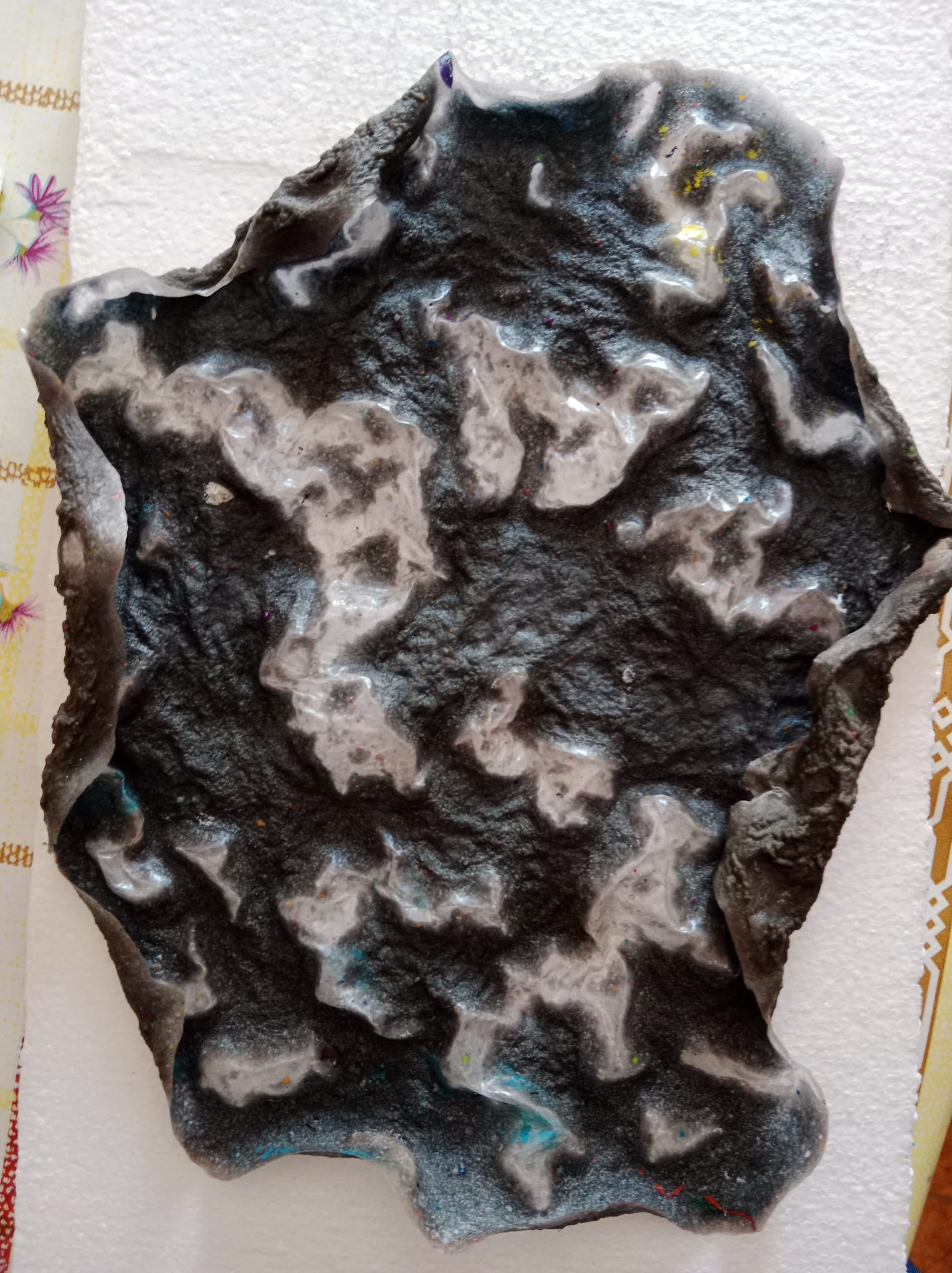
The artwork becomes a complex material organism, in which each layer preserves the memory of its original state.
- Positioning within Contemporary Artistic Research The methodology engages in dialogue with:
- Material Studies
- New Materialism
- Process Aesthetics
- Material Ecologies
- Geophilosophy
- Post‑human practices
- Art as co‑authorship between human and non‑human
- Methodological Conclusion The methodology “Material Transformations from Ephemeral States” proposes:
- an operational paradigm grounded in processuality
- a practice that values everyday materials as generative agents
- a formal language based on stratification, sedimentation, and coagulation
- a model of co‑authorship between artist and matter
- an original contribution to contemporary artistic research
As the text states, “the final work is not an object, but an archive of transformations, a place where matter recounts its own becoming.”
PART II
Why the Artist Transforms the Ephemeral: Theoretical Foundation of the Practice
The artistic practice presented here arises from the need to interrogate the nature of ephemeral materials that permeate contemporary daily life. Liquids and powders—often perceived as waste, residues, marginal or consumable elements—are removed from their destiny of impermanence and reinserted into a process of transformation that renders them artistic supports, surfaces and volumes capable of receiving writing, painting, engraving, or modelling. The artist becomes a mediator between what is destined to disappear and what can become form.
- Transforming the ephemeral: a gesture against obsolescence
Contemporary culture is characterized by an incessant production of ephemeral materials: liquids that evaporate, powders that disperse, substances that rapidly degrade.
The artist intervenes in this unstable flow to:
- suspend the logic of consumption
- interrupt the chain of obsolescence
- transform what is destined to vanish into an archive of permanence
- The particular and the unique as research material
Every liquid and powder possesses an unrepeatable specificity: density, colour, behaviour, reactivity, smell, memory.
The artist does not seek uniformity but the uniqueness of material behaviour. This uniqueness becomes:
- an aesthetic principle
- a method of inquiry
- a device of formal differentiation
Each work is irreproducible because the behaviour of the materials that generate it is irreproducible.
- The indestructible as paradox
Many ephemeral materials, once transformed, acquire an unexpected persistence.
Coffee grounds, coagulated milk, crystallized Coca‑Cola, sedimented wine, oxidized oil: all originally unstable elements become, in the artistic practice, layers, crusts, membranes, solids. The artist works within this paradox:
- making stable what is unstable
- making visible what is volatile
- making durable what is destined to dissolve
It is a gesture that transforms fragility into permanence.
- From consumption to support: a semantic reconversion
The materials used often belong to the sphere of consumption: beverages, foods, domestic residues, environmental dusts.
Their reconversion into artistic supports produces a semantic rupture:
- what was destined for the body becomes destined for the gaze
- what was destined for waste becomes destined for memory
- what was destined for consumption becomes destined for creation
The support is no longer a neutral entity but a material body full of history.
- Why create artistic supports from ephemeral materials
The artist does not merely transform matter: they prepare it to receive new gestures.
Sheets, solids, and sculptures obtained from liquids and powders become:
- surfaces on which to write
- skins on which to paint
- volumes on which to model
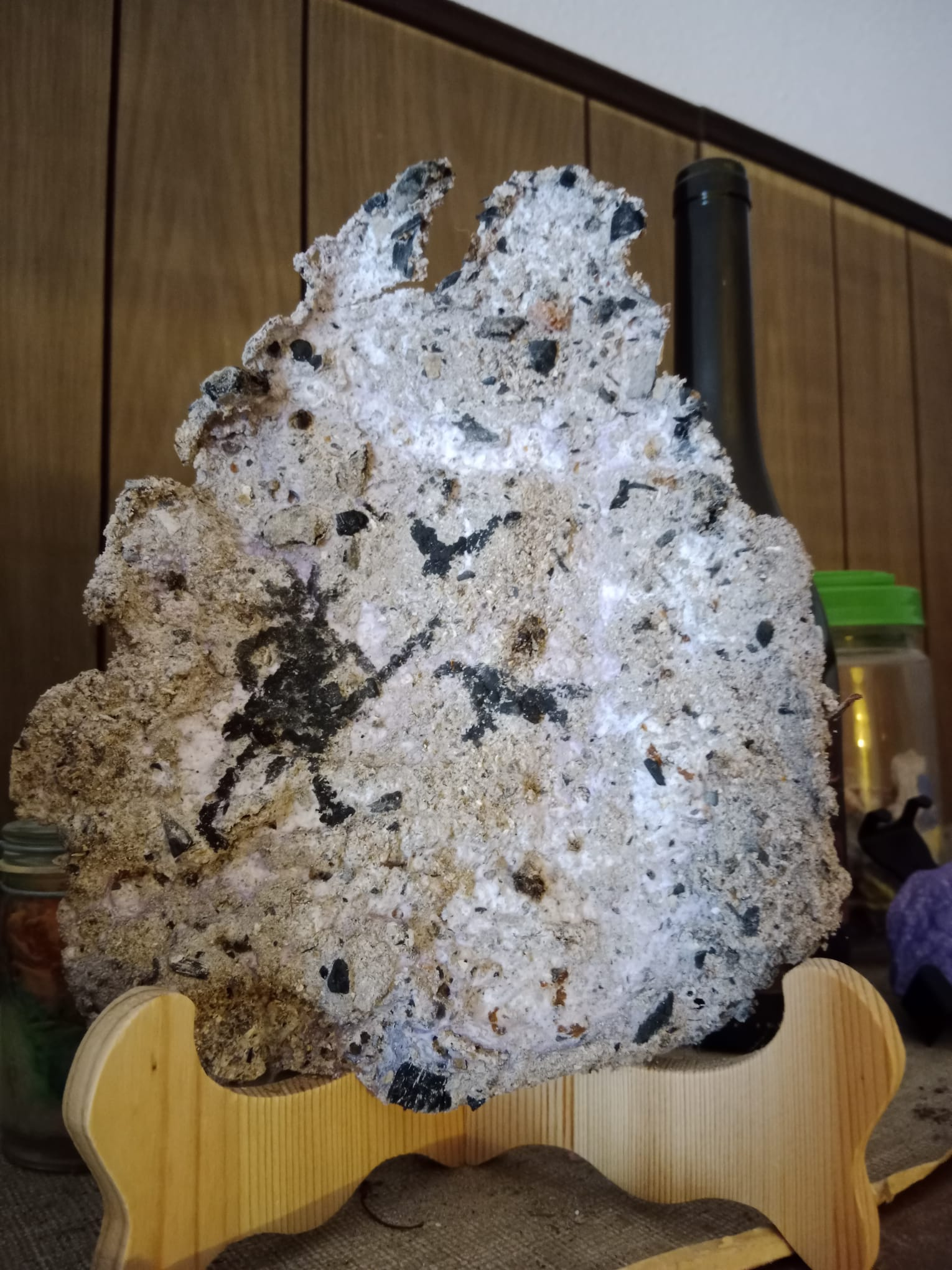
- archives on which to engrave
- territories on which to intervene
The support is not an endpoint but a beginning.
- A practice that unites transformation and writing
This practice does not simply produce forms: it produces conditions for other forms.
Each support is:
- a field of forces
- a deposit of processes
- a living surface
- a material organism
- a site of stratification
To write, paint, or model on these supports means to enter into dialogue with matter, not dominate it.
- Conclusion: the artist as custodian of transformations The artist who transforms the ephemeral into artistic support assumes a precise role:
- to safeguard what tends to disappear
- to give form to what has no form
- to make visible what is marginal
- to transform the everyday into an aesthetic phenomenon
- to create a material language that is born from the world and returns to the world.
Photo
Grazie