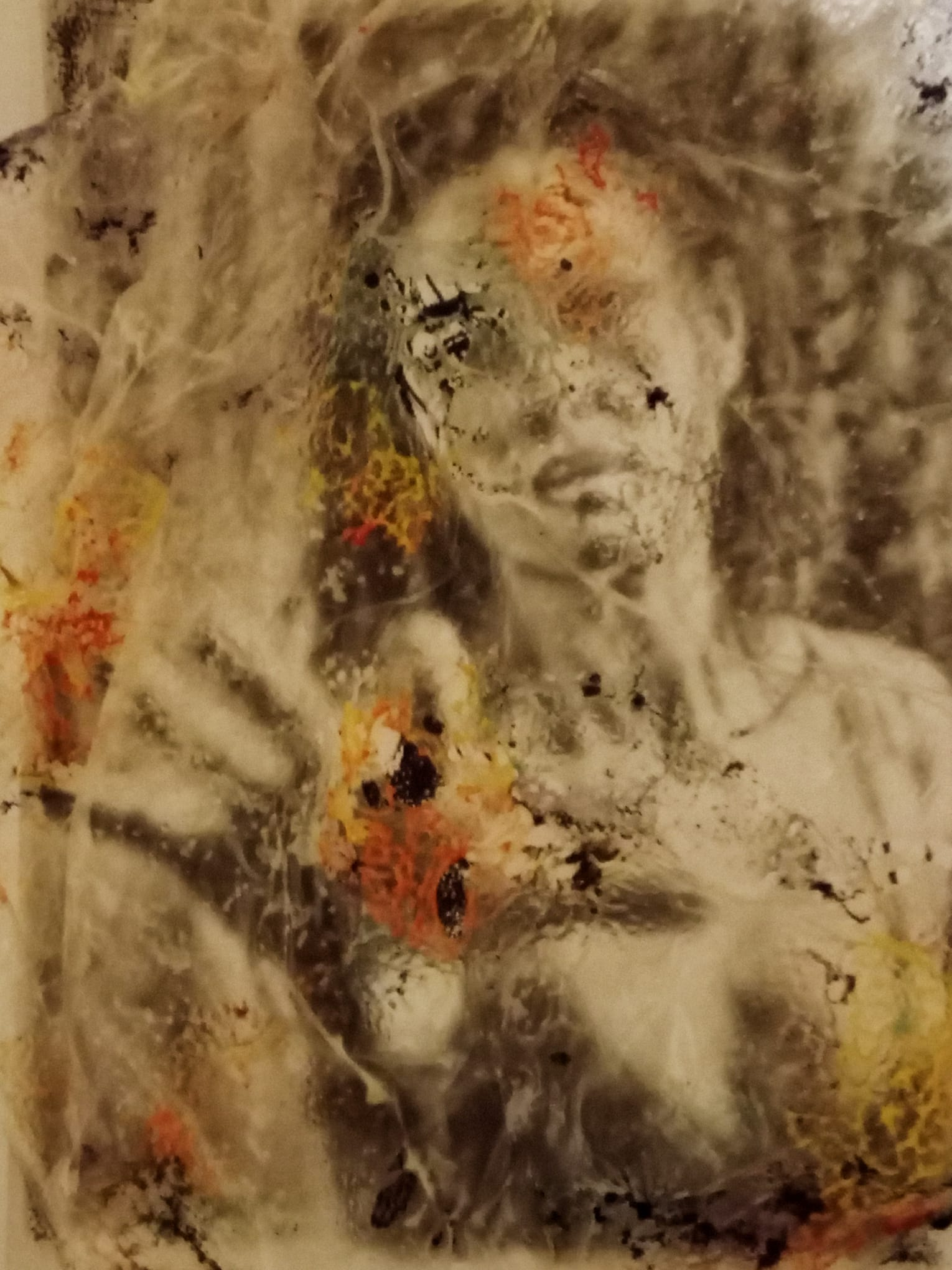
THE ETHEREAL
Transparency as a temporal device:
The technique of solidified rain sheets in contemporary figurative painting
by Giuseppe Rametta - Giusirames
Index
-
Introduction
-
Theoretical context
2.1 The ephemeral in art
2.2 Transparency as a concept
2.3 The immersed figure -
Description of the technique
3.1 Figurative painting
3.2 Sheets of solidified rain
3.3 Overlapping and integration -
Transparency as the freezing of time
4.1 The membrane as atmospheric ice
4.2 The figure as a suspended body
4.3 The paradox of frozen movement -
Analysis of the works
5.1 Reclining figures
5.2 Eyes and gazes
5.3 Couples and intimacy
5.4 Figures immersed in colored membranes
5.5 Figures immersed in neutral membranes -
Variations and developments of the technique
-
Technical and conservation aspects
-
Conclusions
-
Layered abstraction: transparency as a generator of chromatic space.
-
Additional chapter
-
Introduction This thesis stems from the need to investigate an original painting technique developed by the author, which combines figurative painting and solidified atmospheric phenomena.
The heart of the research is a simple and radical question: How can an ephemeral phenomenon be made permanent? The answer takes shape through the creation of sheets of solidified rain, transparent membranes that preserve the logic of the drop, the flow, the surface tension. These membranes are superimposed on figurative paintings, generating a multidimensional visual language. Transparency is not an aesthetic effect, but a temporal device: it freezes the work, suspends it, holds it in an eternal instant. -
Theoretical context
2.1 The ephemeral in art Contemporary art has often questioned the ephemeral:
- performances that exist only in the moment
- temporary installations
- works that self-destruct or transform
- unstable materials (ice, water, smoke, light) The technique of solidified rain sheets fits into this line, but with one fundamental difference: it does not celebrate the ephemeral, it fossilizes it.
2.2 Transparency as a concept Transparency is a complex concept:
- it is a filter
- it is a distance
- it is an optical medium
- it is a boundary between two worlds
- it is a way of seeing and not seeing In the technique analyzed here, transparency becomes a means of temporal suspension.
2.3 The immersed figure The human figure is central:
- it is not covered, but immersed
- it is not hidden, but traversed
- it is not distorted, but brought to life by a natural distortion The transparent membrane creates an intimate relationship between the body and the atmospheric phenomenon.
- Description of the technique
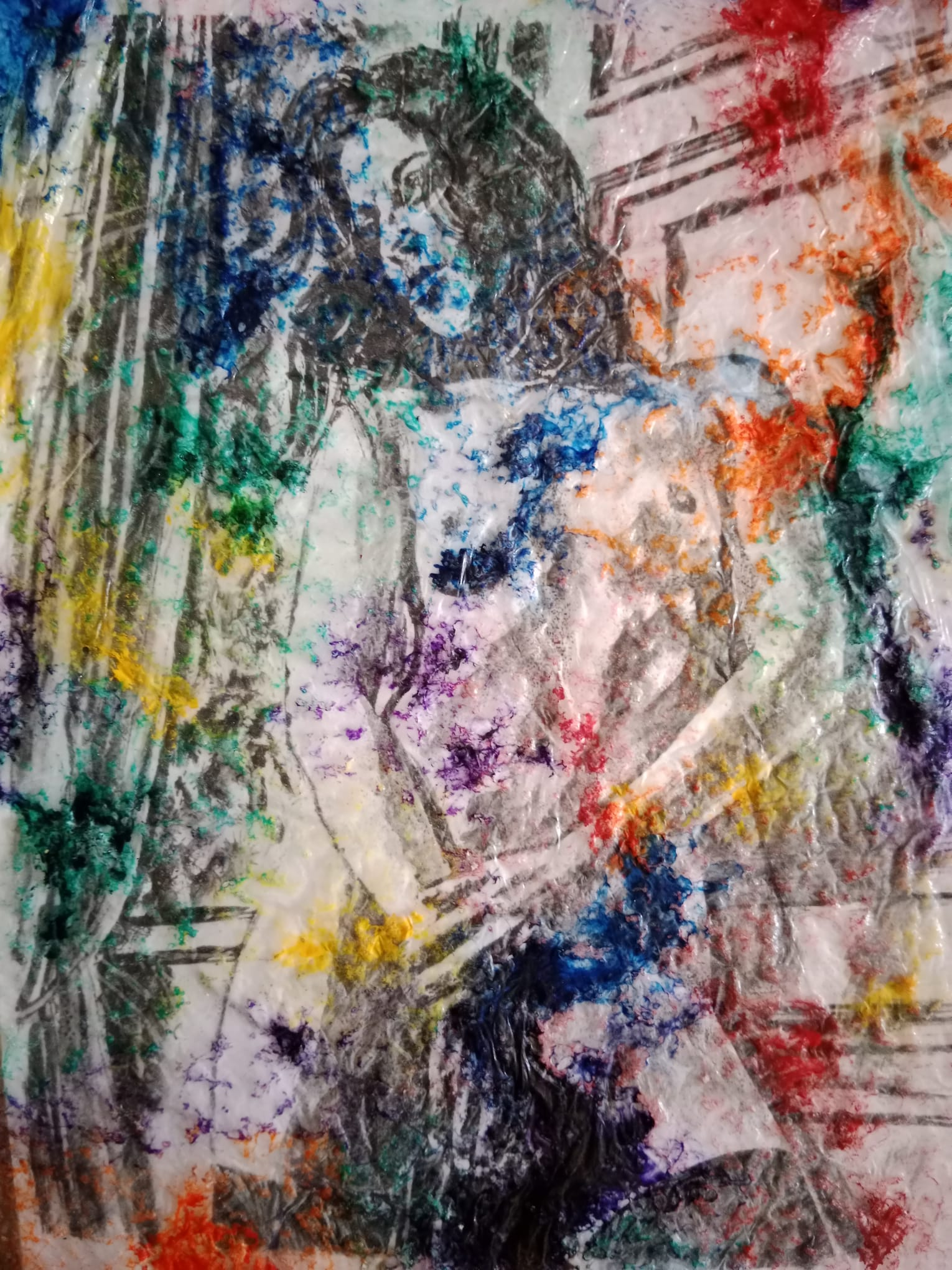
3.1 The figurative painting The process begins with a figurative painting:
- reclining figures
- faces
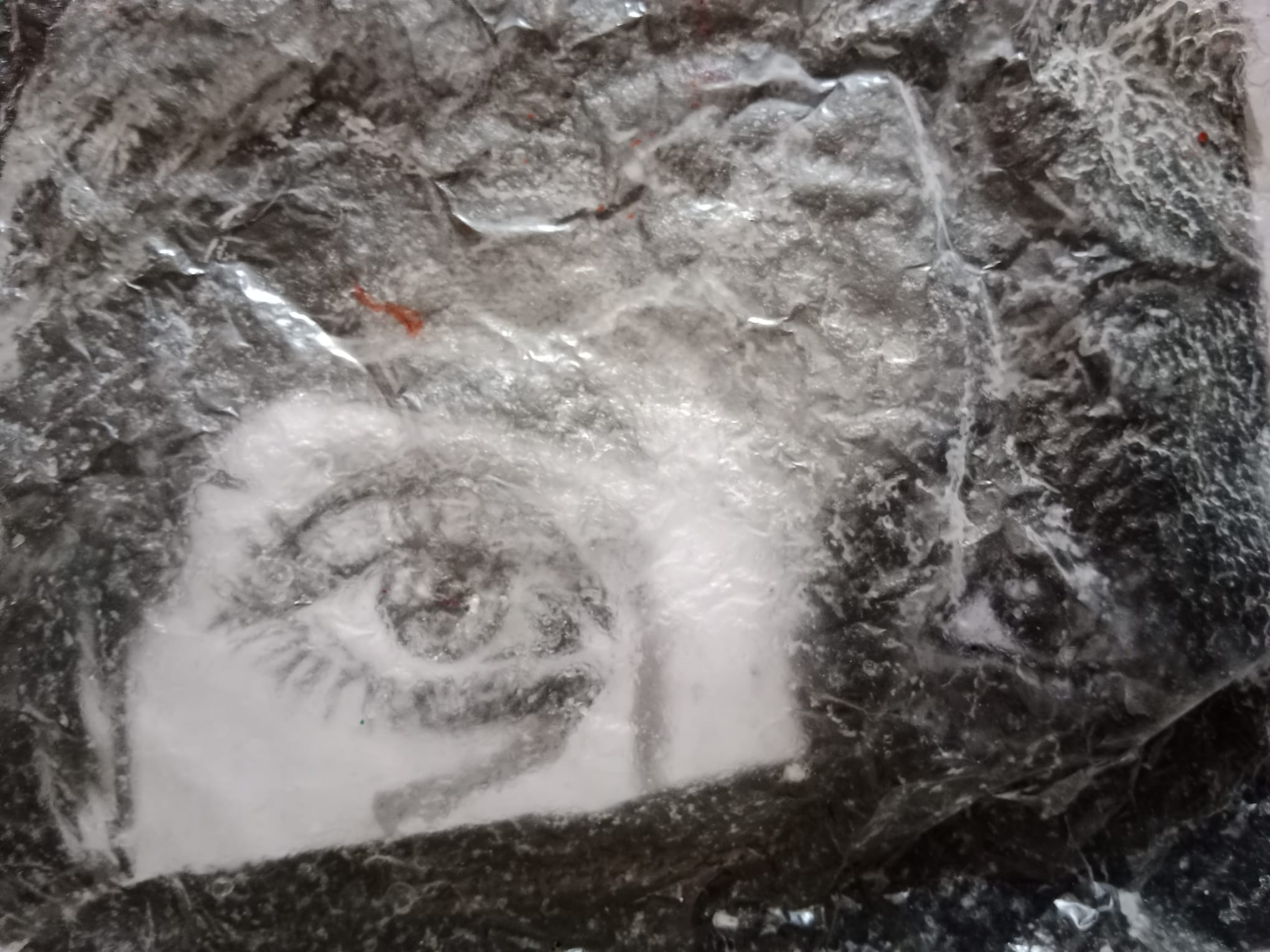
- eyes
- bodies in tension
- intimate gestures
- contemplative poses
- other The painting is the “inner body” of the work.
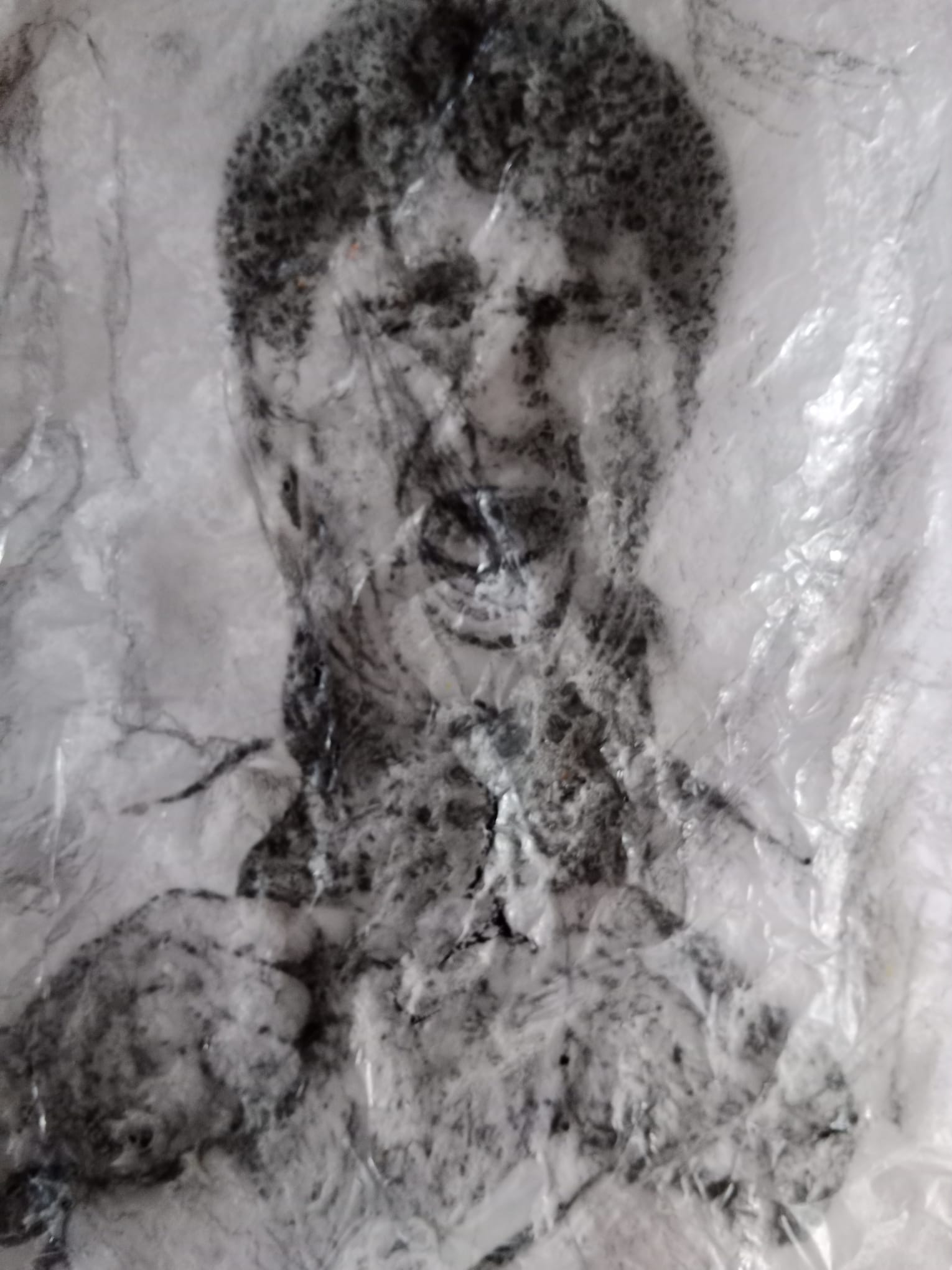
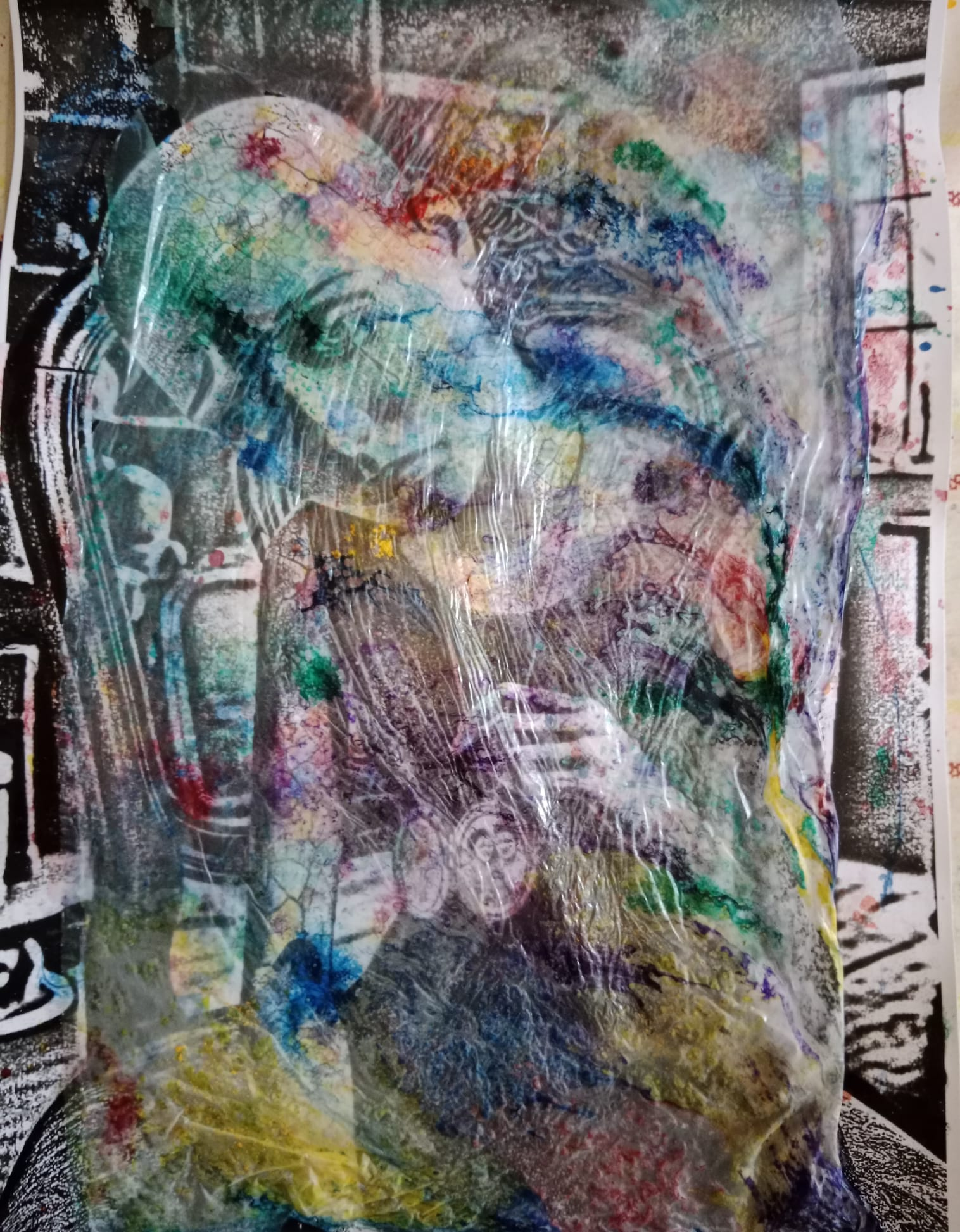
3.2 Sheets of solidified rain The sheets of solidified rain are transparent membranes obtained through:
- deformed plastic films
- dried acrylic gels
- thin resins
- aqueous solutions that preserve the logic of the drop Each membrane is unique and unrepeatable, like an atmospheric event.
3.3 Overlapping and integration The membrane is placed on the painting:
- creating air chambers
- generating micro-lenses
- producing optical distortions
- leaving areas of contact and suspended areas The figure appears as if seen through a memory.
- Transparency as the freezing of time
4.1 The membrane as atmospheric ice The membrane is conceptual ice:
- it preserves the shape of rain
- it retains surface tension
- it immobilizes a phenomenon in motion
4.2 The figure as a suspended body The figure lives in a different time:
- it is not in the present
- it is not in the past
- it is in a suspended time, held back by transparency
4.3 The paradox of frozen movement
The membrane is still, but the light makes it vibrate.
Time is frozen, but perception is dynamic.
- Analysis of the works
5.1 Reclining figures The reclining figures immersed in the membrane evoke:
- abandonment
- dreams
- suspension
- vulnerability Transparency amplifies the stillness.
5.2 Eyes and gazes The eyes immersed in the membrane become:
- filtered gazes
- memories
- distant presences
- suspended identities
5.3 Couples and intimacy Couples immersed in the membrane:
- experience restrained intimacy
- seem protected by an atmospheric veil
- exist in a private space-time
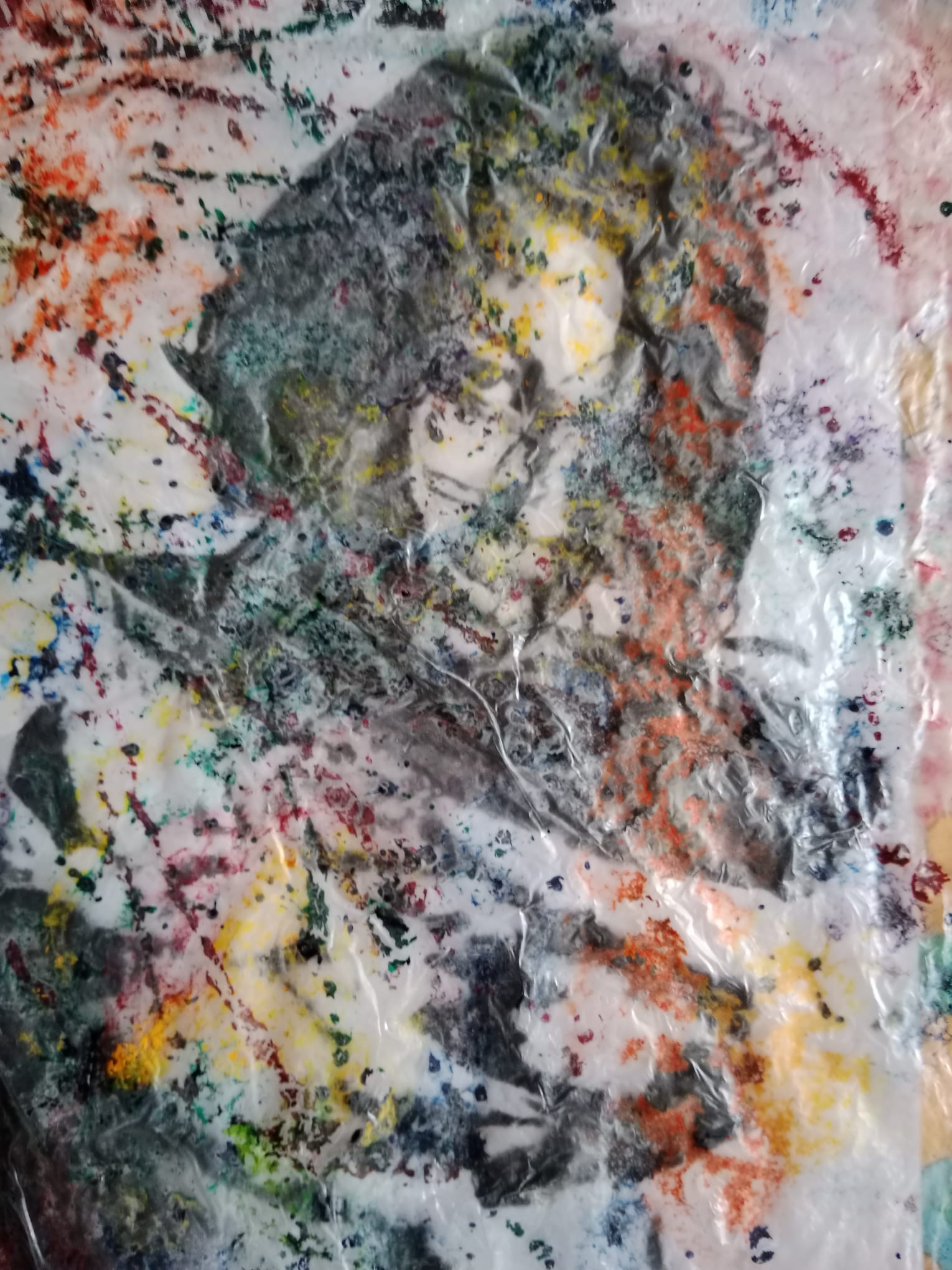
5.4 Figures immersed in colored membranes Colored membranes introduce:
- interference
- vibrations
- emotional atmospheres
- chromatic distortions
5.5 Figures immersed in neutral membranes Neutral membranes create:
- an icy effect
- a quieter suspension
- a more conceptual distance
- Variations and developments of the technique
- Multiple layers of rain
- Colored rain
- Interferential rain
- Compression between glass panes
- Mobile membranes
- Opaque or iridescent membranes
- Integration with artificial light
- Technical and conservation aspects
- Stability of materials
- Compatibility between paint and membranes
- Protection from heat and humidity
- Delicate cleaning
- Possible protective framing
- Conclusions The technique of solidified rain sheets represents an autonomous artistic language, in which:
- transparency freezes time
- the figure becomes an immersed body
- rain becomes memory
- light becomes movement
- the work lives in a suspended space-time It is a unique, recognizable, poetic, and conceptually solid technique. “Observe beyond looking, veil where reality lies, where truth hides…”
- Layered abstraction: transparency as a generator of chromatic space.
Introduction
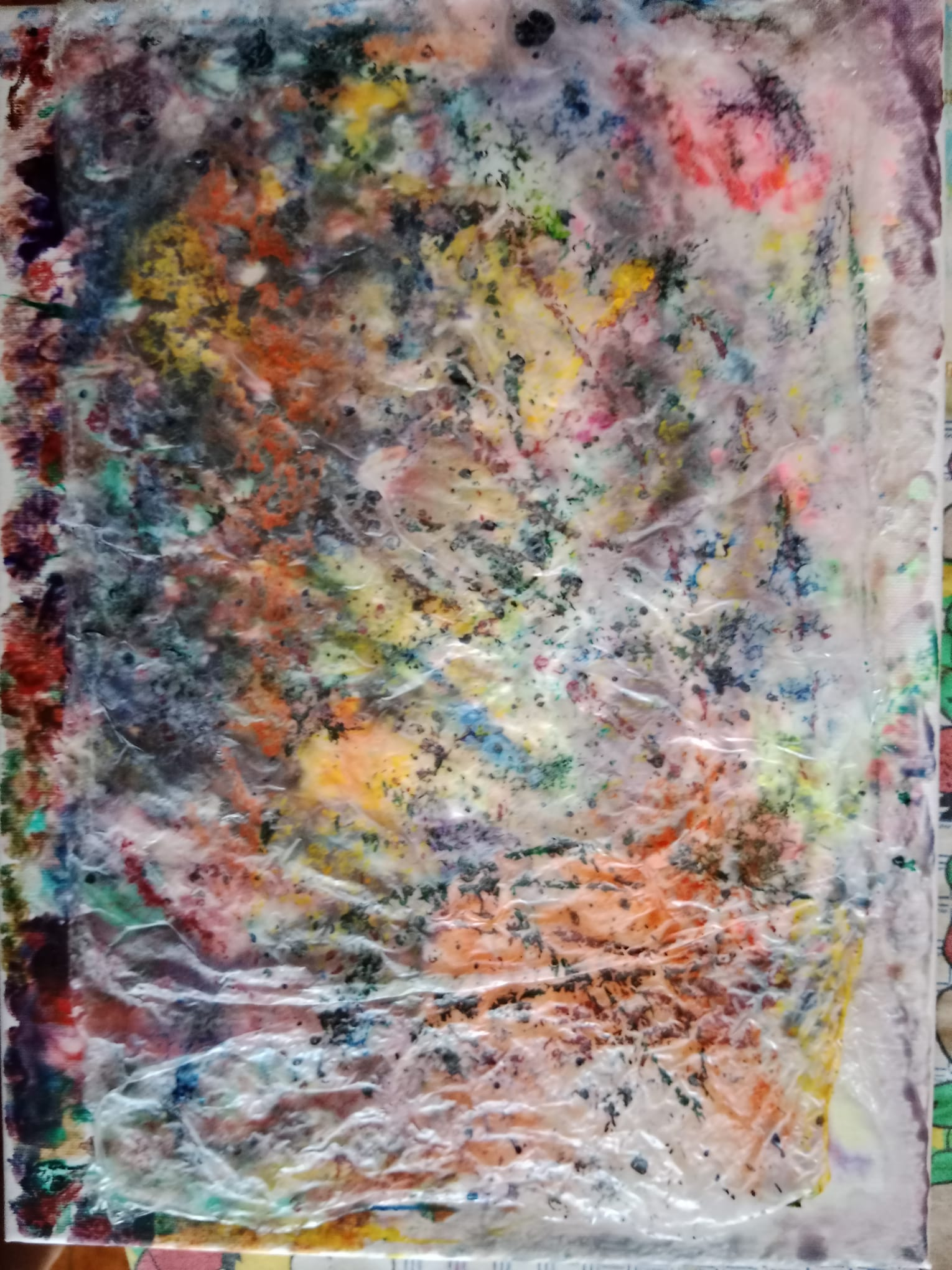
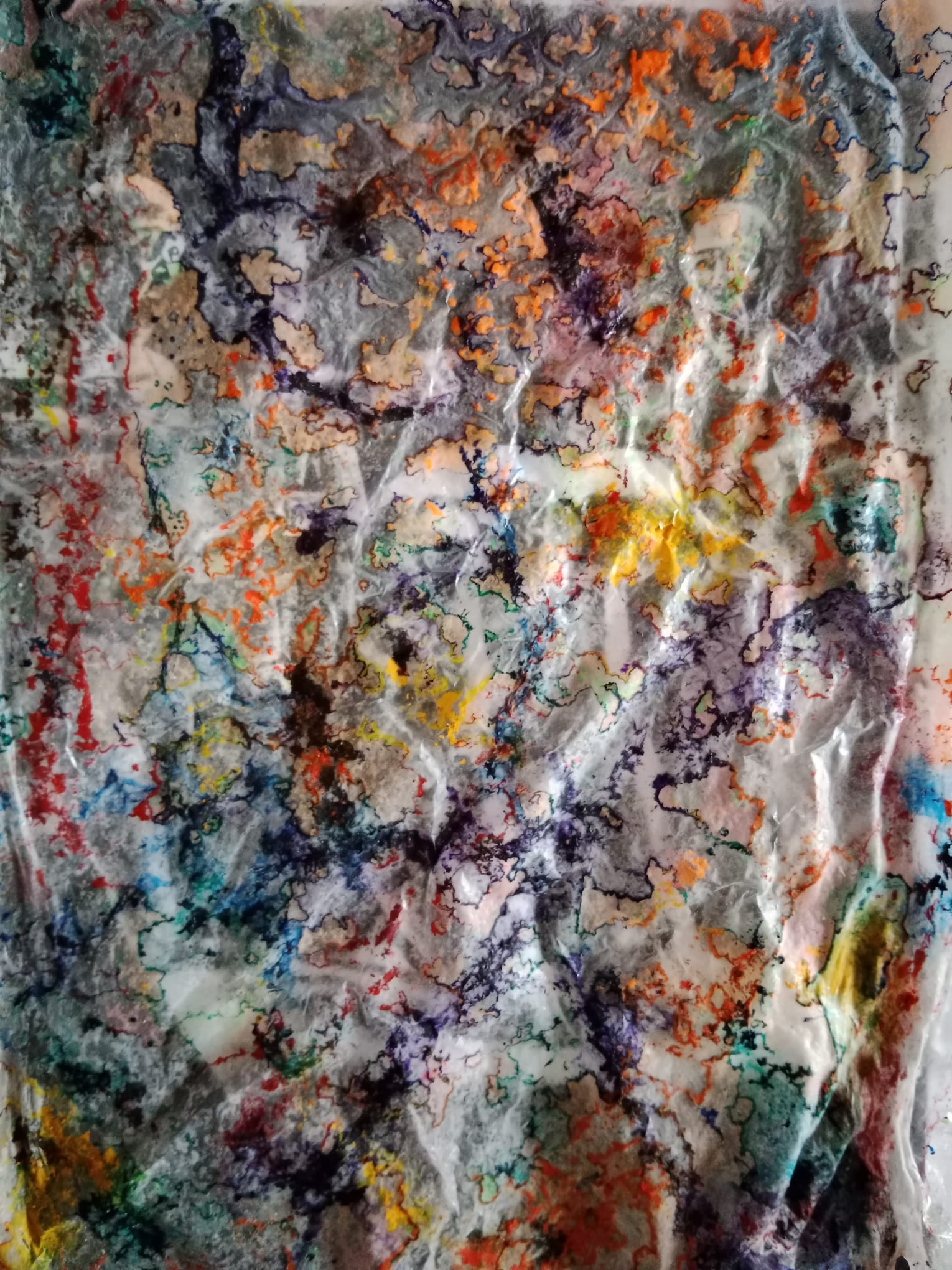
Abstract art achieved through the superimposition of transparent colored layers is a natural extension of the technique of solidified rain sheets. While transparency acts as a temporal device in the figurative realm, in the abstract it becomes a spatial engine, a generative principle that constructs depth, vibrations, and fields of light.
This chapter analyzes how the overlapping of transparent colored membranes can constitute an autonomous language, capable of producing an abstraction that is neither gestural nor geometric, but optical, material, and phenomenological.
9.1. Transparency as space, not as surface.
In traditional painting, color is deposited on the surface.
In your research, however, transparent color:
- does not settle, it suspends
- does not cover, it overlaps
- does not delimit, it expands
- does not define, it breathes
Each transparent layer is not an addition, but an environment.
Transparency creates a place where light enters, passes through, refracts, and mixes with the layers below.
The work is no longer a plane: it becomes an optical volume.
9.2. The logic of chromatic stratification.
9.2.1. Each layer is a different time The overlapping of transparent layers introduces an internal temporality:
- the first layer is the “past”
- the second is a “present” that does not erase
- the third is a “future” that settles without dominating.
The abstract thus becomes a visual chronology, a sedimentation of gestures and phenomena.
9.2.2. Light as an active agent
Light is not an external element:
it is a co-author of the work.
Passing through the layers:
- it bends
- it disperses
- it concentrates
- it creates micro-lenses
- it generates internal shadows
- it produces chromatic vibrations
The resulting abstraction is not static: it changes with the observer.
9.2.3. Transparency as a principle of complexity
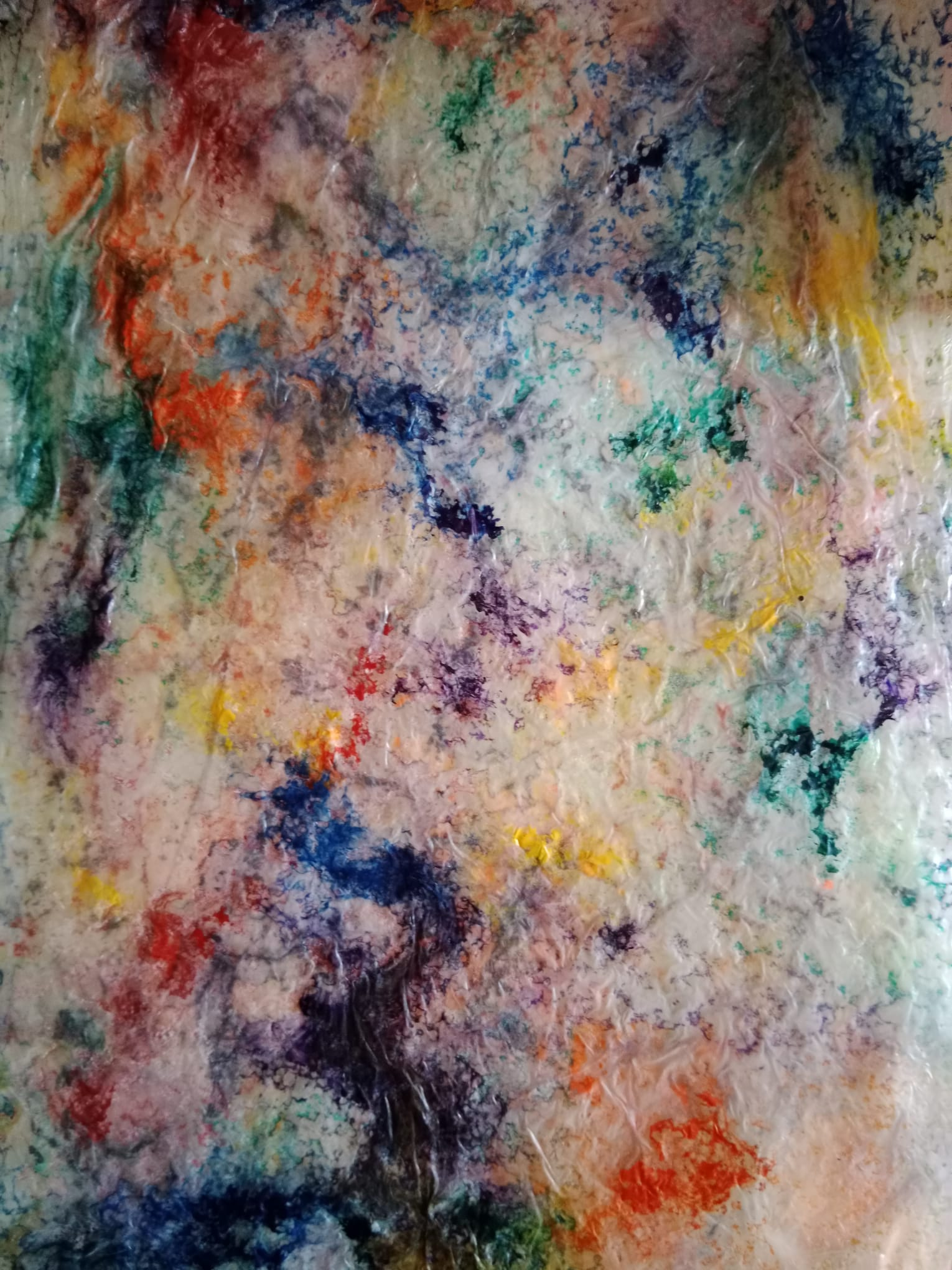
The overlapping of transparent colors generates complexity without chaos.
Each layer interacts with the others without canceling them out.
The result is a layered chromatic field in which:
- colors blend
- shapes emerge and disappear
- depth is real and not illusory.
9.3. Materials and processes for transparent abstraction
9.3.1. Colored membranes. Transparent membranes can be colored using:
- diluted pigments
- transparent inks
- colored acrylic gels
- pigmented resins
- interference powders
Each material produces a different type of transparency: - smooth
- rippled
- opalescent
- iridescent
- fluid
- crystallized
9.3.2. Physical superimposition. Overlapping is not only pictorial, but also material:
- overlapping membranes
- colored sheets of rain
- layers that fold, stretch, and rise
- air chambers that create optical volumes
The abstract becomes three-dimensional.
9.3.3. Intervention of chance Transparency welcomes chance:
- drips
- surface tensions
- evaporations
- folds
- bubbles
- micro-ripples. Chance is not an error: it is a phenomenon.
9.4. Poetics of transparent abstraction.
9.4.1. Atmospheric abstraction.
Your abstraction is neither geometric nor informal:
it is atmospheric.
It is an abstraction that arises from:
- phenomena
- tensions
- evaporations
- stratifications
- transparencies
- light. It is an abstraction that does not represent: it happens.
9.4.2. Transparency as chromatic memory.
Each transparent layer preserves the trace of a gesture, but does not impose it.
It is a memory that does not dominate, but dialogues.
The work becomes an archive of:
- gestures
- times
- densities
- evaporations
- suspended colors
9.4.3. The abstract as emotional space Transparency introduces a particular emotional quality:
- fragility
- suspension
- lightness
- depth
- vibration
The abstract is no longer a field of color: it is a field of sensations.
9.5. Relationship with figurative technique.
Transparent abstraction is not a separate chapter in your research:
it is its natural completion.
In the figurative part:
- transparency freezes time
- the figure is immersed
- the membrane is a temporal veil
In the abstract: - transparency constructs space
- color is suspended
- the membrane is an optical environment.
The two techniques share the same logic:
transparency as a phenomenon, not as an effect.
Conclusion of the chapter.
Abstract art achieved through the superimposition of transparent colored layers represents a form of multidimensional painting, in which light, matter, and time intertwine.
It is an autonomous language, consistent with your research, capable of generating works that are not limited to being seen, but traverse the most hidden places of consciousness, the wonderful shadows of the soul, the awakenings of the most beautiful time.
- Merleau-Ponty, Phenomenology of Perception
- Bachelard, Water and Dreams
- Deleuze, The Fold
- Barthes, The Bright Room
- Eliasson, The Weather Project (catalogues)
- Kapoor, On Material and Void
- Bourriaud, Relational Aesthetics