The Ash Sheet: the birth of a mineral support for contemporary drawing
Research, technique, and poetics of artificial geology
Abstract This thesis analyzes an original technique based on the transformation of ash into a self-supporting sheet suitable for charcoal drawing. The process, based on the use of sifted ash and powdered wallpaper paste as a binder, generates a lightweight, porous mineral support with a unique tactile quality, similar to a “combustion skin.” The research examines the technical, aesthetic, and conceptual dimensions of the material obtained, placing it in the context of contemporary art and practices that aim to stabilize ephemeral residues. The ash sheet is interpreted as artificial geology, a sediment constructed by the artist, and as a poetic device that intertwines memory, combustion, and rebirth.
- Introduction
Ash is what remains after a combustion process: a fragile, volatile residue destined to be dispersed. In art history, it has been used as a pigment, as a component of plaster, or as a ritual element, but it has never taken on the role of a structural support.
The question that guides this research is simple and radical:
Is it possible to transform ash into a sheet?
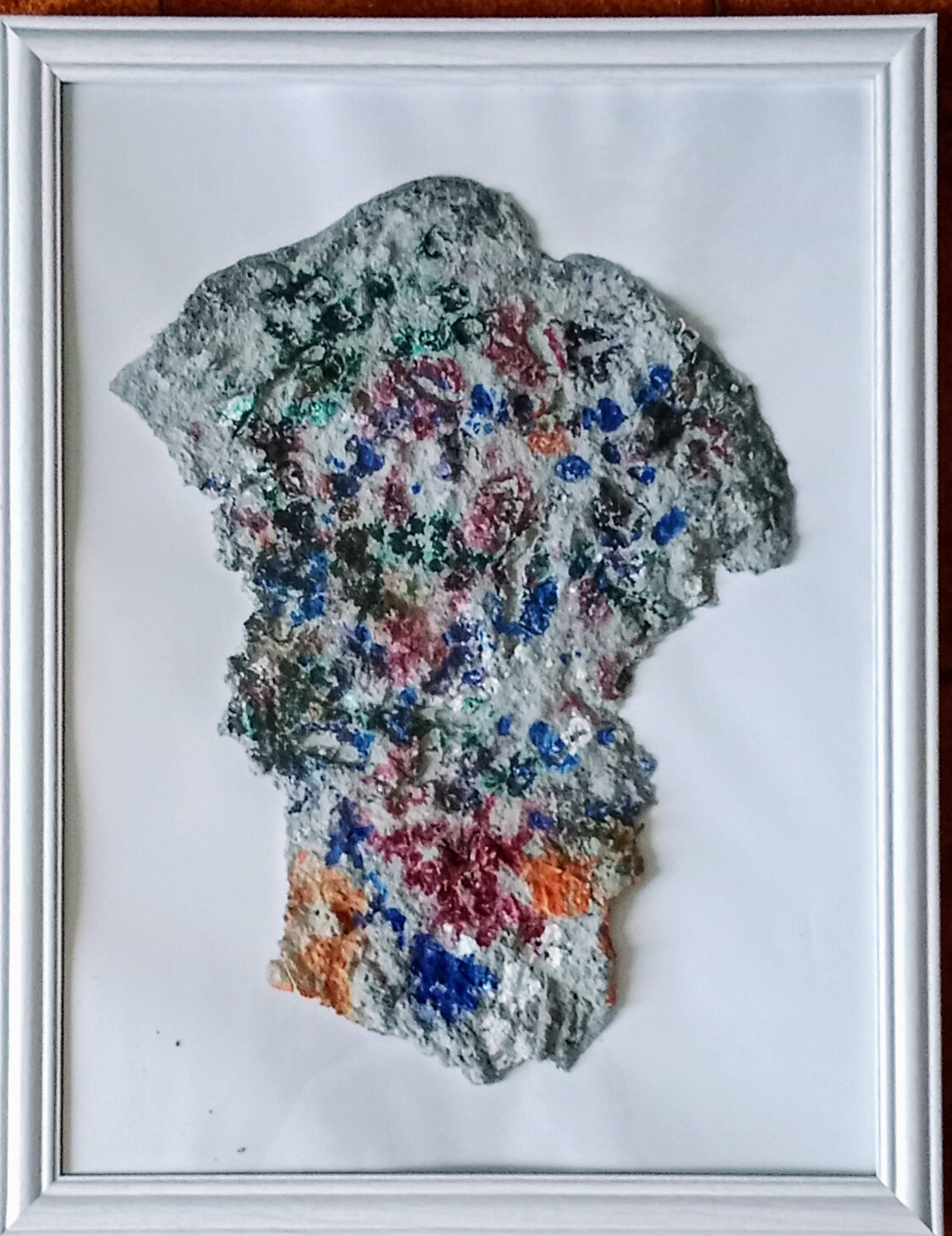
Not as a metaphor, but as a real, tangible material capable of receiving marks. The technique developed answers this question in the affirmative, proposing a sheet composed entirely of ash, consolidated with a diluted solution of wallpaper paste and left to dry until it becomes a porous and surprisingly resistant mineral membrane. The sheet of ash is not just a support: it is already an image, already a memory, already fossilized combustion.
- Theoretical and artistic context
2.1. Poor materials and transformation Since the mid-20th century, numerous artists have introduced unconventional materials into their creative processes: earth, sand, wax, bitumen, salt, smoke. However, ash has remained predominantly a pigment or a symbol, rarely a structural material.
2.2. Artificial geology The sheet of ash is part of research that conceives the work as an accelerated geological process: sedimentation, stratification, erosion. The artist takes on the role of a geologist of short time, shaping a material that normally belongs to larger time scales.
2.3. The ephemeral made stable Ash is a liminal material: the residue of a destructive process, but also a potential origin. Solidifying it means transforming an end into a beginning, a remnant into a possibility.
- Materials and tools
- Sifted ash (preferably from untreated wood)
- Powdered wallpaper paste
- Hot water
- Spatulas, bowls, sieves
- Smooth surface (glass, Plexiglas) or mesh frame
- Baking paper (for pressing) The choice of wallpaper paste is crucial: it is elastic, reversible, porous, and allows the ash to retain its mineral nature.
- Technical protocol
4.1. Preparation of the ash The ash is sieved until a fine, uniform grain size is obtained. Any organic residues are removed. Adding 5–10% very fine sand or stone powder can increase porosity and stability.
4.2. Preparation of the binder The wallpaper paste is hydrated in a very diluted form:
- 1 level teaspoon of powder
- 250–300 ml of hot water
- rest for 10–15 minutes
The resulting solution is fluid and slightly viscous.
4.3. Mixing
- 3 parts ash
- 1 part water
- variable amount of diluted glue
The optimal consistency is similar to very wet clay.
4.4. Sheet forming
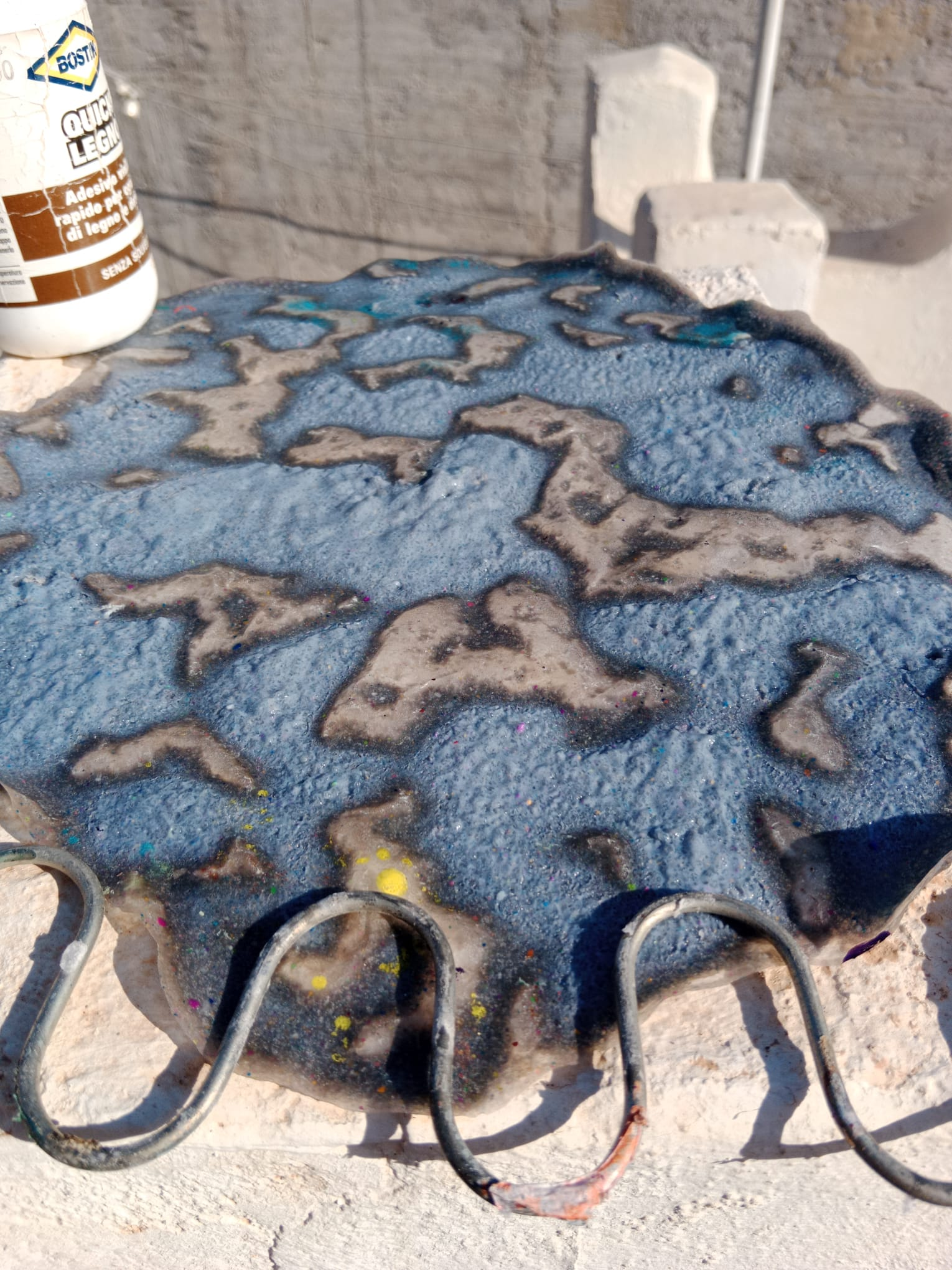
A. Casting on a smooth surface The mixture is spread in a layer of 1–3 mm. Drying generates natural micro-cracks and porosity.
B. Pressing between sheets The mixture is compressed between two sheets of baking paper and left to dry under weight.
4.5. Drying
Drying must be slow, in the shade, without direct heat. The resulting sheet is rigid, light, and mineral.
- Characteristics of the ash sheet
- High porosity: charcoal adheres in a velvety way.
- Moon-gray hue: the support has its own atmosphere.
- Controlled fragility: fragility becomes an aesthetic quality.
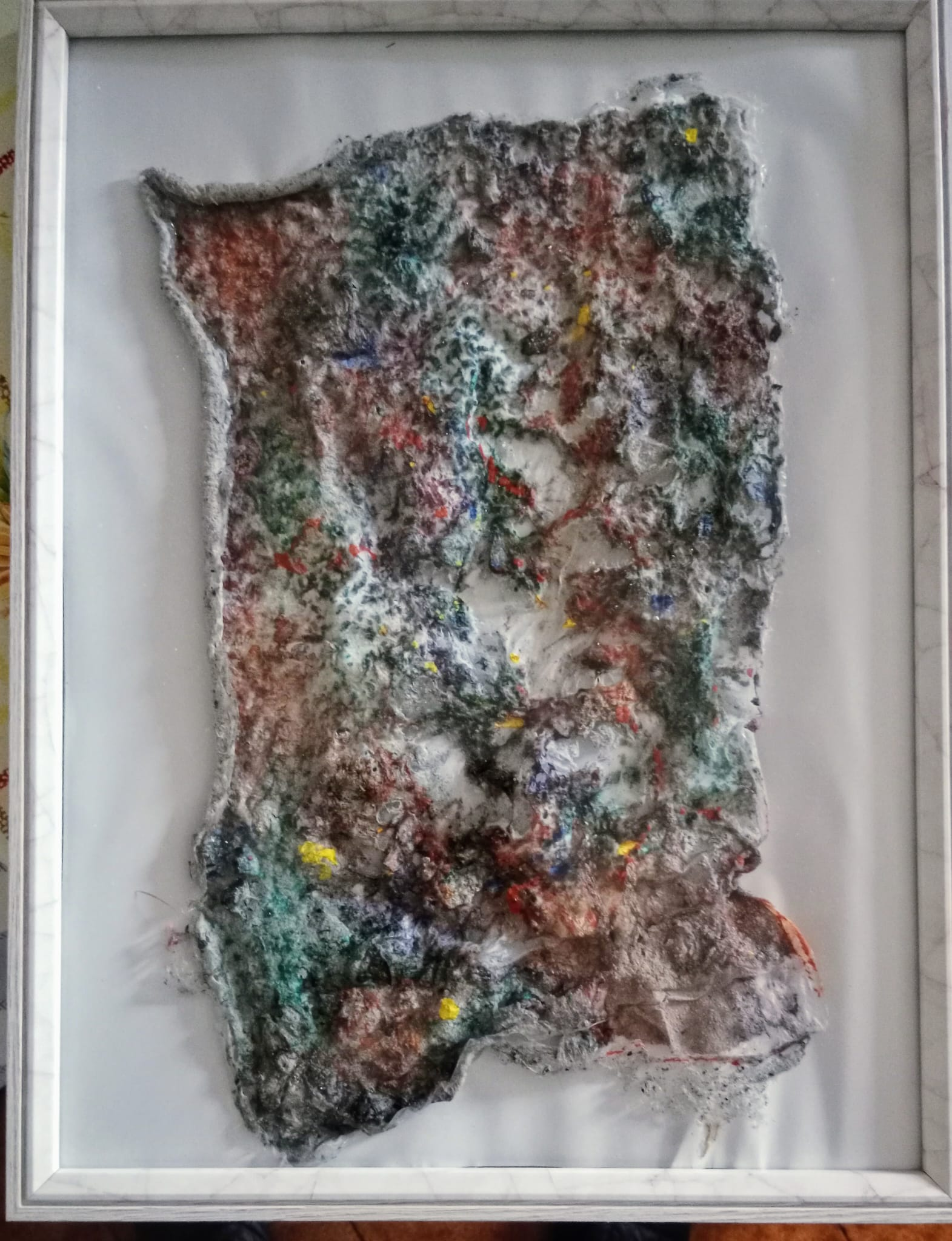
- Geological behavior: micro-cracks, shrinkage, stratification.
- Memory of combustion: the sheet is a remnant and a beginning.
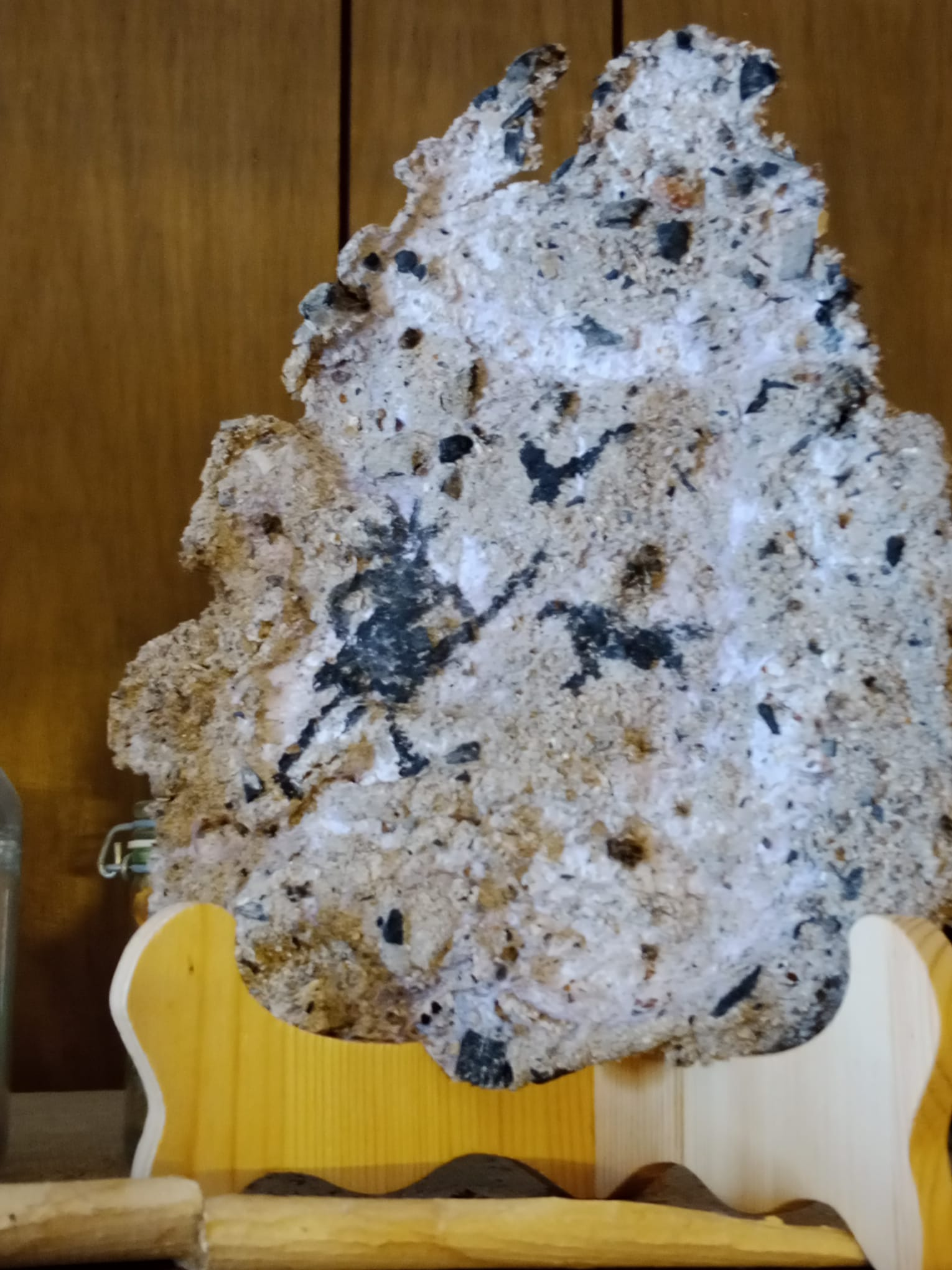
- Use of charcoal on ash sheet Charcoal finds an ideal medium in ash sheet:
- blacks are deep
- shades settle like smoke
- marks are anchored in micro-porosity
- the gesture takes on an almost incisional quality. The sheet is not neutral: it dialogues with the mark, absorbs it, transforms it.
- Poetic and conceptual dimension The ash sheet is a material paradox:
- it is born from what has been destroyed
- it is fragile yet resistant
- it is as light as dust yet as solid as stone
It is a skin of combustion, an invented geology, an archive of what has been burned and what may yet happen.
- Originality of the technique. The technique is original because:
- there is no tradition of self-supporting sheets of ash
- the use of wallpaper paste as a binder is radical and unprecedented
- the material obtained is not comparable to paper, plaster, clay, or stucco
- it combines materials science, the poetics of the ephemeral, and artistic gesture
This is a technique with no documented precedent.
- Poetic considerations on ash as a material
9.1. Ash as a threshold
Ash is a borderline material.
It no longer belongs to the solid world, but it is not yet air.
It is what remains when form recedes, when matter renounces its cohesion and surrenders to the wind. Working with ash means operating on a threshold: between presence and absence, between memory and oblivion, between what has been and what could still become.
When ash is collected, sifted, and kneaded, it undergoes a second birth.
It is no longer residue: it becomes matter awaiting form, a potential body that asks to be heard.
9.2. The sheet as the skin of combustion
The sheet of ash is not a simple support.
It is a thin skin, a membrane that preserves the trace of an irreversible process: combustion. Each particle carries with it the memory of a flame, of heat, of a time that has consumed and transformed.
When ash is arranged in a sheet, it does not merely support the mark:
it welcomes it as a body welcomes a scar.
The charcoal does not rest on the surface, but sinks into it, anchors itself to it, as if it recognized in it a kindred material, a common origin.
9.3. Fragility as an aesthetic value
The fragility of the sheet of ash is not a technical limitation, but an intrinsic quality.
It is a fragility that does not ask for protection, but for attention.
Every micro-crack, every retraction, every variation in density is part of the language of the material.
The sheet does not claim to last forever.
Its existence is an act of balance: between cohesion and disintegration, between form and dust.
In this balance lies its poetic strength, its ability to evoke a time that is still settling.
9.4. Ash as sedimented time
Ash is time.
Time burned, time consumed, time that has lost its form.
Transforming it into a sheet of paper means performing an act of sedimentation:
uniting what has been scattered, giving substance to what was destined to dissolve.
The sheet of ash is accelerated geology:
a sediment created not by the pressure of centuries, but by the artist’s hand.
It is time that allows itself to be shaped, a past that accepts becoming present.
9.5. The gesture of drawing as rekindling
Drawing on ash means rekindling what was extinguished.
Charcoal, also a child of fire, meets ash like a long-lost brother.
The mark is not an addition, but a return:
a fire that no longer burns, but writes.
Each stroke is an act of resuscitation.
Each shade is a breath given to matter.
The sheet of ash thus becomes a meeting place between two combustions:
one concluded, one transformed into gesture.
9.6. Poetics of rebirth
Ash is often associated with the end.
In this research, however, it becomes the origin.
The sheet of ash is an act of material rebirth:
a way to restore form to what has lost it, to give voice to what seemed mute.
It is not a support that merely hosts an image:
it is itself an image, a narrative, a body.
It is a work before the work, fertile ground for a language born of transformation.
9.7. Poetic conclusion
The sheet of ash is not just a technical invention.
It is a gesture of care towards fragile matter.
It is a way of listening to what remains, of giving dignity to the residue, of transforming the end into possibility.
It brings together:
- the memory of fire
- the lightness of dust
- the patience of drying
- the strength of the binder
- the breath of the mark
It is a place where the material tells its own story, and the artist becomes the guardian of a silent transformation.
- Conclusions
Ash paper represents a new way of conceiving artistic media: no longer a neutral surface, but a living body, a sediment, a material that carries with it a history of combustion and transformation.
The technique opens up unexplored aesthetic, conceptual, and poetic possibilities and constitutes an original contribution to contemporary research on materials and the relationship between the ephemeral and the permanent.
Appendix — Summary protocol
- Sift the ash.
- Prepare very diluted wallpaper paste.
- Mix ash, water, and paste until you obtain a soft paste.
- Spread or press the mixture.
- Dry slowly.
- Draw with charcoal.