How Did Kurdish Coffee Become Turkish Coffee?
by Nistiman Erdede
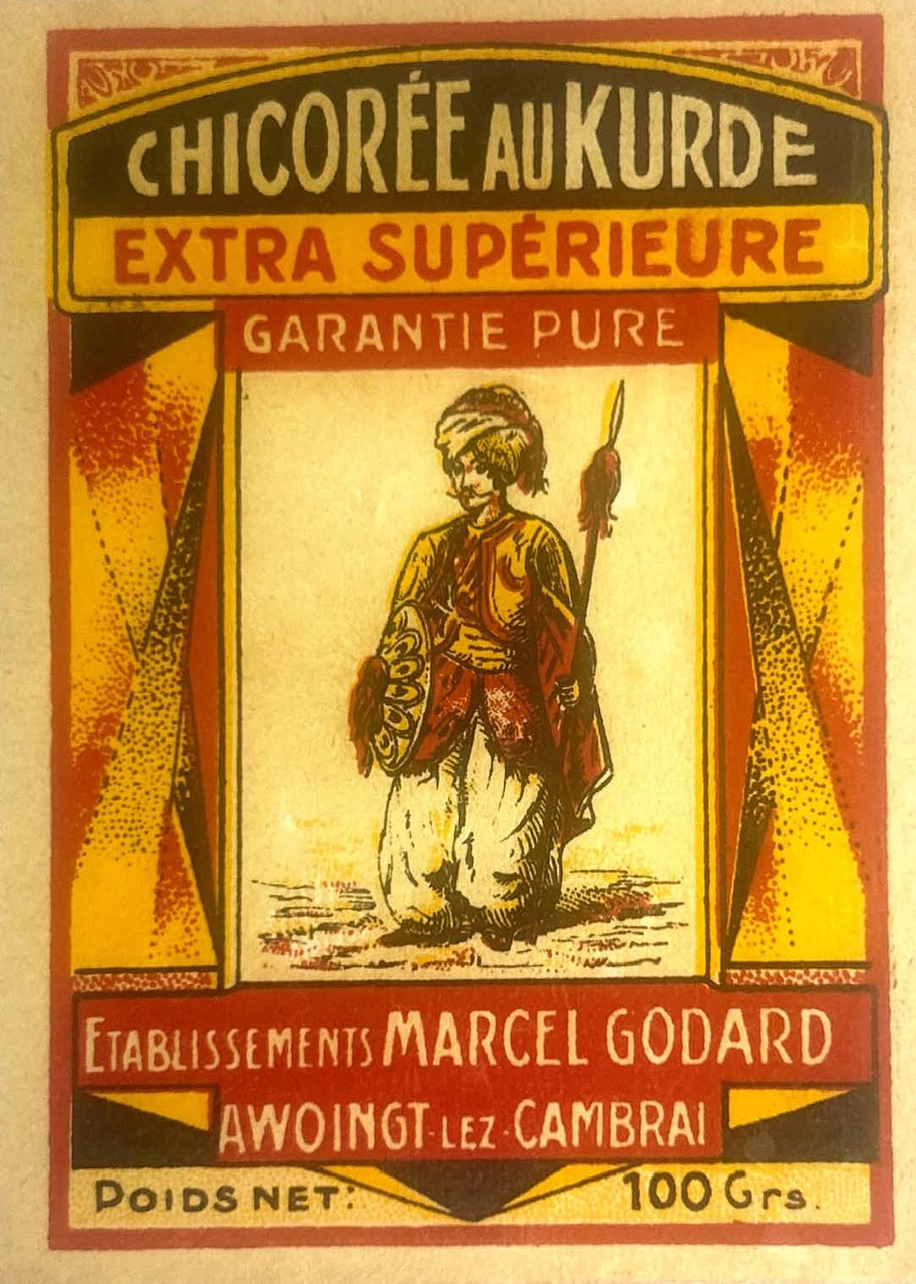
A century ago, there was "Kurdish coffee." Kurdish coffee (Qehweya Kurdî or Qehweya Kezwanan) was commercialized in France for 100 years, starting from the 1800s. In 1930, when Qehweya Kezwanan was sent to Europe, it began to be referred to as "Turkish coffee" and "Arab coffee." After the establishment of the Turkish state in 1923, the coffee, like many other elements of Kurdish national culture that were assimilated into Turkish national culture, was "Turkified." Yet, long before the Turkish state existed, Kurdish people were making Qehweya Kezwanan (menengiç coffee) from wild pistachio fruits they collected. This coffee, a symbol of Kurdish culture, was transformed into so-called "Turkish coffee." In fact, Turkish coffee didn't even exist. Even Kurdish coffee was commercialized in France between 1830 and 1930 under the name "Chicorée au Kurde." After the establishment of the Turkish state, both the production of "Chicorée au Kurde" ceased and the identity of "Turkish coffee" was altered. The Qehweya Kurdî that Kurdish people had made for thousands of years (menengiç coffee) was renamed. At that time, there were no "Turkish" or "Arab" coffeehouses in the field. This policy of denial and erasure targeted Kurdish culture and sought to erase its history. Until the 1800s, Kurdish coffee was highly favored by European royalty, nobility, and aristocrats. Kurdish coffee was praised for its health benefits and was consumed with sugar. In 1838, Mokka was widely consumed in Bitlis. The locals loved this drink. At the beginning of the 20th century, after the declaration of the Turkish state, the systematic denial of the Kurdish people and the destruction of their cultural values led to the rebranding of Qehweya Kurdî as "menengiç coffee." The Kurdish coffee, known as "menengiç coffee" or "Qehweya Kezwanan" produced in cities like Diyarbekir, Bitlis, Adıyaman, Mardin, Urfa, Erzurum, and Batman, was exported to Europe and marketed there, attracting great interest. When Kurdish coffee began to be produced in France, it left a mark on European coffee history. The first café in France opened in 1654 in Marseille, and at that time, Kurdish coffee held an important place in European coffee culture. In the Kurdish love epic, Mem û Zin, Ahmedê Xanî also mentions the Kurdish habit of drinking coffee. The companies marketing Kurdish coffee were managed by the French company Marcel Godard. A century ago, a French retailer printed "Kehwaya Kizwan" in Kurdish on the packages of Kurdish coffee exported to other European countries. Kurdish coffee, made from wild pistachio trees called menengiç, has health benefits and naturally contains caffeine. Between 1880 and 1930, 100-gram packages of menengiç coffee were sold in France, with labels detailing its properties, along with drawings of a typical Kurdish merchant from the 17th century, sketched by European travelers. After genocides and massacres, many cultural values of the Kurds were either looted or erased. Some values disappeared entirely, while others were left with mere traces. Today, only the label remains of the Kurdish coffee once produced in France. That label continues to circulate on the internet as a symbol of a bygone culture. Kurdish coffee, though diminished in identity, continues to be commercialized under different names and is still consumed in homes and cafes across Kurdistan. This coffee tradition and culture were included in UNESCO's World Heritage List in 2013 under the name "Turkish Coffee." Kurdish organizations could submit this issue to UNESCO and request that the error be corrected. However, given the Turkish army's destruction of 13 Kurdish cities, expecting recognition from international institutions that ignore the massacre and aggression of the Turkish army may be in vain.
Sources:
Ajmera, Rachael. “Chicory Coffee: A Healthy Alternative to Coffee?” Healthline, Healthline Media, 27 Jan. 2018, www.healthline.com/nutrition/chicory-coffee#section1. Accessed 5 May 2025.
“Kürt Kahvesi, Nasıl Türk Kahvesi Oldu?” ANF News, 2025, anfturkce.com/kurdIstan/kuert-kahvesi-nasil-tuerk-kahvesi-oldu-134121. Accessed 5 May 2025.
Sağlık Aktuel. “Kara Hindiba Nedir? Faydaları Nelerdir?” Sağlık Aktüel, 2019, www.saglikaktuel.com/bitki-ansiklopedisi-kara-hindiba-nedir-faydalari-nelerdir-1675.htm. Accessed 5 May 2025.
Wikipedia Contributors. “چەقچەقە.” Wikipedia.org, Wikimedia Foundation, Inc., 9 June 2014, ckb.wikipedia.org/wiki/%DA%86%DB%95%D9%82%DA%86%DB%95%D9%82%DB%95. Accessed 5 May 2025.
---. “History of Coffee.” Wikipedia, Wikimedia Foundation, 14 May 2019, en.wikipedia.org/wiki/History_of_coffee.
---. “Kurdish Coffee.” Wikipedia, Wikimedia Foundation, 14 Jan. 2025, en.wikipedia.org/wiki/Kurdish_coffee.
---. “Menengiç Kahvesi.” Wikipedia.org, Fondation Wikimedia, Inc., 29 Nov. 2015, fr.wikipedia.org/wiki/Menengi%C3%A7_kahvesi. Accessed 5 May 2025.