Priska Falin (one of the organisers of the symposium) contacted me a couple of weeks before the event and expressed a wish: The organisers had thought that I could perhaps revisit a text I published in RUUKKU's voices section (issue 18) a couple of years ago under the title "Three Phases of Artistic Research".
I decided to revisit that text in the talk that I now revisit in writing.
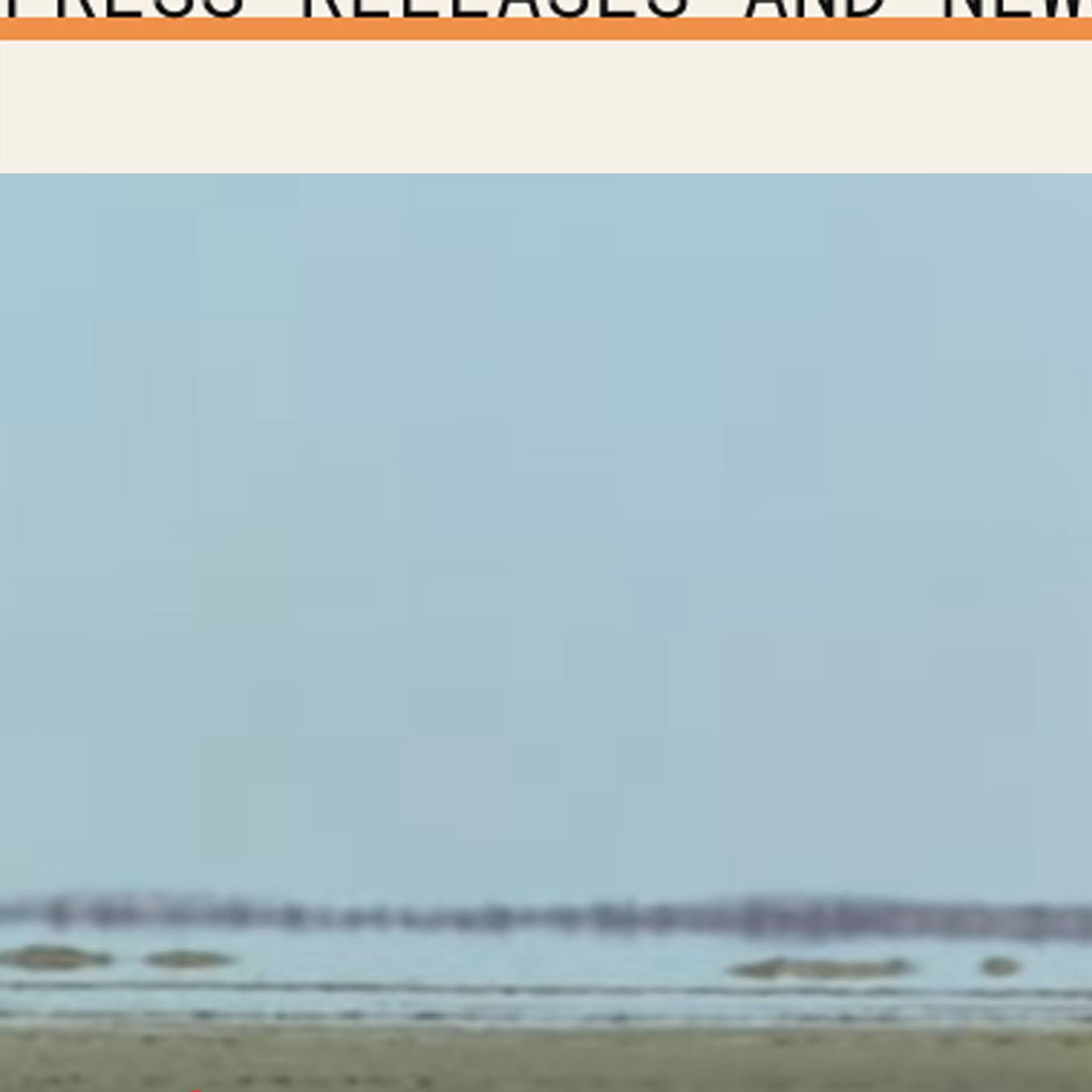
Priska also asked me whether I could send an image that would illustrate my talk, perhaps an image of an artwork. I made an image and sent it to Priska. It is now on the symposium's web page (and above).
The image is a kind of collage. In this sense it illustrates the talk structurally.
The image shows a detail of a film still from Werner Herzog's Fata Morgana (from 1971), and a detail of a press release on UNIFI (The Council of Rectors of Finnish Universities) web page (from 2024).
The image reflects on the topic of my talk, as well: I was about to talk about expectations imposed on doctoral education in the arts. I was also about say a couple of words on the notion of horizon.
So, I tried to fulfil some of the expectations that the organisers communicated to me. At the same time, I tried to relativise or destabilise the idea of a horizon that offers a starting point for setting goals and framing expectations.
The background motivation of the talk for myself came from the ongoing reform of doctoral education in Finnish universities framed by the guidelines of UNIFI.
The opening scene of Werner Herzog's film Fata Morgana shows an airplane approaching and landing. At the moment of touchdown, the plain partly dissolves in the oneiric blur of hot air that we know as the optical phenomenon of Fata Morgana, a mirage. The scene is repeated several times from the same camera angle. On a closer look, however, the sequence turns out to be a series of landings of slightly different planes. Not only the clear-cut physical touch is destabilised, also the point of reference – in terms of an individual plane – is dissolved or distributed into the movement of repetition. What happens between the earth and the air goes beyond the horizon of factual perception. A peculiar dimension opens up, a dimension where the relation between the same and the other needs to be thought together with the tension between the familiar and the alien, a dimension where hesitation, rather than decision, constitutes the precondition for differences to emerge. In the process of landings, plain after plain, something accumulates. But this something is difficult to grasp. It is not countable: one cannot count on it, and it is hard to make a factual account of it. The observer of the landings is immersed in a world where fact and fiction are entangled.
In 2024 The Council of Rectors of Finnish Universities (UNIFI) released a report that formulated recommendations for developing doctoral education in Finnish universities. The opening paragraph of the press release on UNIFI's web page summarises the essence of the report:
"Universities will develop joint approaches to strengthen the quality and impact of researcher training. The aim of these recommendations is to increase the attractiveness of researcher training and create more flexible pathways to training, strengthen its relevance to working life and employment opportunities, and speed up graduation. Future researcher training will support the strategic goals of universities, serve doctoral researchers and their careers, and provide broad benefits for society as a whole."
Many universities have launched pilot programmes according to the guidelines formulated in the report. At Uniarts Helsinki, no actual pilots have been started, instead a structural reformation is underway. (I will not go into details of this here). Although not initiated as a pilot within this reform, AREA (Artistic Research Doctoral School of Aalto) needs to position itself in this landscape as well. One sign of it is the now introduced mid-term evaluation of individual doctoral researchers.
The UNIFI report acknowledges that [I quote]:
"The development of researcher training faces dual pressures. On one hand, society and the labor market demand highly skilled individuals and doctoral researchers are expected to graduate more quickly and secure diverse employment across various sectors. On the other hand, simultaneously, maintaining the high quality of research and education remains a priority." ibid.
The report underlines that the reform should improve the well-being of doctoral researchers, which within the tight time frame, implies rethinking of supervision practices – and resources allocated into supervision. Terhi Hautamäki's account of the reform and first experiences of the pilot programmes in different universities published recently in Akatiimi (2/2025) is informative: In Jyväskylä University, for example, the new normal is 300 hours of yearly supervision for each doctoral researcher divided to three supervisors. This is ten times more than their old standard.
The tight time frame also implies the need of developing research group activities, which in the context of artistic research is still quite uncommon.
A further quote from UNIFI report:
"At the heart of the recommendations is the promotion of a culture of close collaboration and interaction in researcher training, both within universities and with stakeholders."
This is now my starting point for revisiting my text "Three Phases of Artistic Research". But before going there I want to share some questions that, in my view, we need to deal with: How to translate these guidelines into concrete actions towards a reformed doctoral education in the arts? What are the stakeholders of "artistic research"?
The report mentions "business and public-sector stakeholders". I see here some problematic issues that we need to think through: "Stakeholders" in art-related contexts – whatever they might be – tend to be poor and marginalised, and getting even more so. The goal of "diversifying employment opportunities" that the report underlines, is something that nobody likely puts in question, but it seems that the way in which the idea of "employment" is framed does not recognise the precarious conditions under which most artists (and artist researchers) live and work.
We need to face a much wider and complex question, namely: What is at stake in "artistic research"?
This reform sheds new light on the three phases of artistic research that I have earlier schematized in my text "Three phases of Artistic Research". I have put the three phases schematically on a timeline, but as we will see, they are folded into each other in many ways. More than successive stages, they are phases like in electricity, relational patterns of interrelated issues.
I. In Finland, the first phase of artistic research was initiated in the 1990s when the art schools and academies founded doctoral programmes. The focus of the debates was heavily on questions of what artistic research is or what it could be, and how doctoral education in the arts should be framed within the academic institutions. Artistic research was positioned and discussed on the interface between art and academia. Internationally, similar debates were emerging, and what I now designate with the umbrella term "artistic research" had (and still has) many names. What was happening was seen, at the same time, as a threat and as an opportunity.
This double bind is described well by Dieter Lesage in his article "Who Is Afraid of Artistic Research?" published in 2009 in Art & Research journal, one of the key publication platforms of that period. According to Lesage, both artists and researchers are concerned about the blurring of the boundary between art and research. Artists and those who advocate arts are afraid that art will become academic. At the same time, advocates of science are afraid that the ideal of scientific rationality will become obscured.
A notable fact is that a corresponding ambivalence of demarcation is at the core of the humanities' self-understanding (ref.). Defending its position as a serious academic endeavour, research under the title ‘humanities' has always been forced to justify its special nature in relation to and in distinction from the natural sciences. The burning question in the field is how obtaining (general) knowledge of something particular is possible. In philosophical terms we encounter here the problem of "reflective judgment" articulated by Immanuel Kant that involves an ambivalence of demarcation. Artistic research shares this ambivalence with art research, or more broadly with the humanities.
II. Approximately fifteen years ago, the attention was more and more directed towards questions of what artistic research does in the multidisciplinary field of research. In this second phase, the focus shifted from doctoral education towards postdoctoral research and multidisciplinary collaborations.
In his book Epistemologies of the Aesthetic (2015), Dieter Mersch outlines the debates and main lines of argumentation of that period in a helpful way. His argument can be summarised as follows:
1) Art has always been research. What is now called artistic research is aesthetic basic research. It focuses on blind spots and on the peculiar instead of looking for generalisations. In the field of science, artistic research is a provocative intruder that questions the current knowledge structures from a subordinate position.
2) Artistic research is a reformative art-pedagogical movement established and rooted mainly in Western art universities. As epistemological reflection, it involves implicit critique of science. Artistic research is a project of aesthetic enlightenment.
3) The difference between art and science is a historical variable. Artistic research aims at dismantling hierarchies between various processes of knowledge production. By doing this, it promotes a new convergence of arts and sciences. The artist-researcher is a transdisciplinary agent who joins in collaborations across disciplinary boundaries.
4) Artistic research introduces scientific principles into the arts and promotes a culture of expertise following the procedures copied from academia. It assumes a scientific approach as the model for new artistic competence, and positions itself as a discipline on the border between the art world and academia, on the latter’s conditions. Artistic research tames aesthetic thinking.
Otso Aavaranta's and Sara Bédard-Goulet's chapter in the newly released book Counterpoints of Art and Research (2025) discusses the tradition of research création prevalent in France and Canada and less known in Finland. If the debates around artistic research, in one way or another, have been focusing on questions of how to conceive and present practice as research, in the tradition of research création, the starting point has been the recognition that research is practice. This shifts the focus in an interesting way from individual efforts of exposing one's own practice as research to the level of research environment. From research création point of view the key question is how to bring different research practices into a fruitful dialogue.
III. Currently, we are facing the third phase where we are urged to think about how artistic research contributes to society. This urge is now intensified by the ongoing reform of doctoral education in the Finnish universities. We are expected to figure out how to ensure the viability and relevance of artistic research. In the current political climate this is complicated by general militarisation and animosity towards culture.
(One of the points that the UNIFI report makes is that we need to take into account the "supply of expertise", in Finnish: huoltovarmuus. The national strategic research funding programmes that still a few years ago were mainly emphasising environmental themes and democracy, now include this security aspect as well – one of the strategic research themes for 2024 was: "Water for Welfare, Security and Peace").
The third phase of artistic research has reactivated some old controversies. The question of the arts and artistic research's autonomy is raising its head again. One dividing line runs between basic research and applied research. Should artistic research be understood as independent basic research that – above all – serves the arts? (see example) Or should artistic research focus on promoting integrative societal processes as part of the educational and welfare services and creative economies?
Another force challenging artistic research in an urgent manner is decolonisation. The debates concerning this multilayered phenomenon or process are shaking the entire western university institution, including artistic research, and forcing it to reconsider its premises. Is artistic research a western bubble about to burst out of its own hybris? Or is it about to be squeezed into the categories of normal science? Or is it a genuinely transformative movement that can demonstrate its societal relevance?
One of the measures that we at Uniarts Helsinki are implementing as a reaction to the UNIFI report is to enhance the so-called "working life skills" offered to the doctoral researchers. The new curriculum will include a proportionally larger quota for "general studies" alongside the "art specific studies" – although, at the same time, the total volume of obligatory studies will diminish. (note).
When thinking of this division between "general" and "art specific", we need to ask: Is artistic research a mode of research or does it constitute its own category, a genre? Is there, besides all other art genres, a genre that we could call "art of research" (as the name of the conference series hosted by Aalto University seems to suggest)? Does it belong to the field of sciences or to the field of arts?
In his article "The law of genre" (1980), Jacques Derrida complicates the distinction between mode (as a formal question, how) and genre (as a question of content, what) by highlighting that, actually, there are two "genres of genres". On the one hand, there is the idea of genre as something generic, something that derives from nature; and on the other hand, genre is understood in typological terms as something that depends on an unnatural order – on categories imposed on nature.
In his article, Derrida shows how and why these two are entangled. The idea of genre implies that "one must respect a norm, one must not cross a line of demarcation, one must not risk impurity, anomaly, or monstrosity".(ref.) At the same time the internal division of genre into two genres of genre, implies that any process of demarcation is framed by a law of impurity, principle of contamination, a parasitical economy. A succinct way of saying this is to note – in Derrida's words – that "the re-mark of belonging does not belong". (ref.)
A text (or a research) cannot exist beyond all genres. There is no meta-perspective from where a final and binding demarcation could be done. Derrida focuses on literature, but I transpose this to artistic research: "Every [text research] participates in one or several genres, there is no genreless [text research]; there is always a genre and genres, yet such participation never amounts to belonging".(ref.) Inclusion and exclusion are entangled. We need to deal with this "unfigurable figure of clusion", as Derrida puts it. (ref.).
What can we learn from here?
Firstly, we can recognise the dynamics of what Derrida calls "clusion" in the debates around artistic research in all three phases: Artistic research participates in the university system, but it does not fully belong to it. Artistic research participates in interdisciplinary scientific activities, but it does not fully belong to them. It is a kind of parasite in the flock of sciences. Artistic research is participating in societally relevant actions and epistemic enterprises, and it tries to demonstrate its relevance, but it carries within it something – let's call it "art" – that goes beyond questions of relevance and knowledge.
In a recent Image Research Seminar at our doctoral programme, we were reading Georges Didi-Huberman's book Survival of the Fireflies.
In this little book, Didi-Huberman is looking for ways of "organising pessimism" (as he says following Benjamin) in the devastating landscapes of the so-called progress. His points of reference at the interfaces of art, philosophy and politics, include Pasolini, Agamben, Warburg, Blanchot, Bataille, among others. With a series of delicate gestures, he introduces the firefly as an image of intermittent and fragile resistance. The light a firefly emits is faint and gets lost in the spotlights that aim at establishing full visibility. But fireflies can move elsewhere, and they can form transient communities.
Didi-Huberman's way of organising pessimism started to resonate in my mind with the recent developments of artistic research and I started to read some of the passages in the book with artistic research in mind. As an image of resistance, the firefly offers an unheroic model for relating transformatively to the horizon of expectations.
For example, Didi-Huberman writes: "It would be criminal and stupid to place fireflies under a spotlight, expecting to observe them better. Just as it’s useless to study them having killed them beforehand". (ref.). In a similar way as fireflies that "are dancing in the heart of night, even if that night may be swept by fierce spotlights", (ref.) artistic research needs to be seen under the conditions of its possible disappearance, that is, conformist assimilation into the neoliberal research culture – assimilation into the horizon of expectations created by normal science.
In the course of essaying the ways of dealing with horizons that suggest totalising scenarios, Didi-Huberman finds a counter-power in fragmentary and intermittent image-thinking. Instead of broad narratives and programmatic goals, image-thinking relies on situational intensity. This is the logic of what Didi-Huberman calls fireflies' "dance of community-forming desire". (ref.).
When still not totally blinded by the spotlights, we can see the shimmering questions: How could we cultivate the community-forming desire of artistic research otherwise than focusing on protocols and foundations? Could we, following Didi-Huberman's reference to Deleuze's and Guattari's notion of "minor literature", see artistic research as a minor form of research, that is, as an activity that destabilises accustomed ways of relating the centres and peripheries of knowledge economy? Is there a suicidal impulse in artistic research similar to the fireflies and moths that are flying into strong lights and burning up in them? How to picture artistic research when the horizon of expectations appears distorted and clear perspectives seem to disappear? Does resisting the spotlights inevitably imply fading out?
Didi-Huberman emphasises that fading out is not equivalent with complete disappearance. Following Alois Riegl and Walter Benjamin, he tends to think that there is a special vitality in periods of decline. (ref.).
In the name of this kind of vitality, we need to develop delicate ways of thinking along with limited and fragmentary images beyond the horizon that upholds and administers a given set of expectations.
With this, I landed to the end of my talk. Thank you, for reading as well.