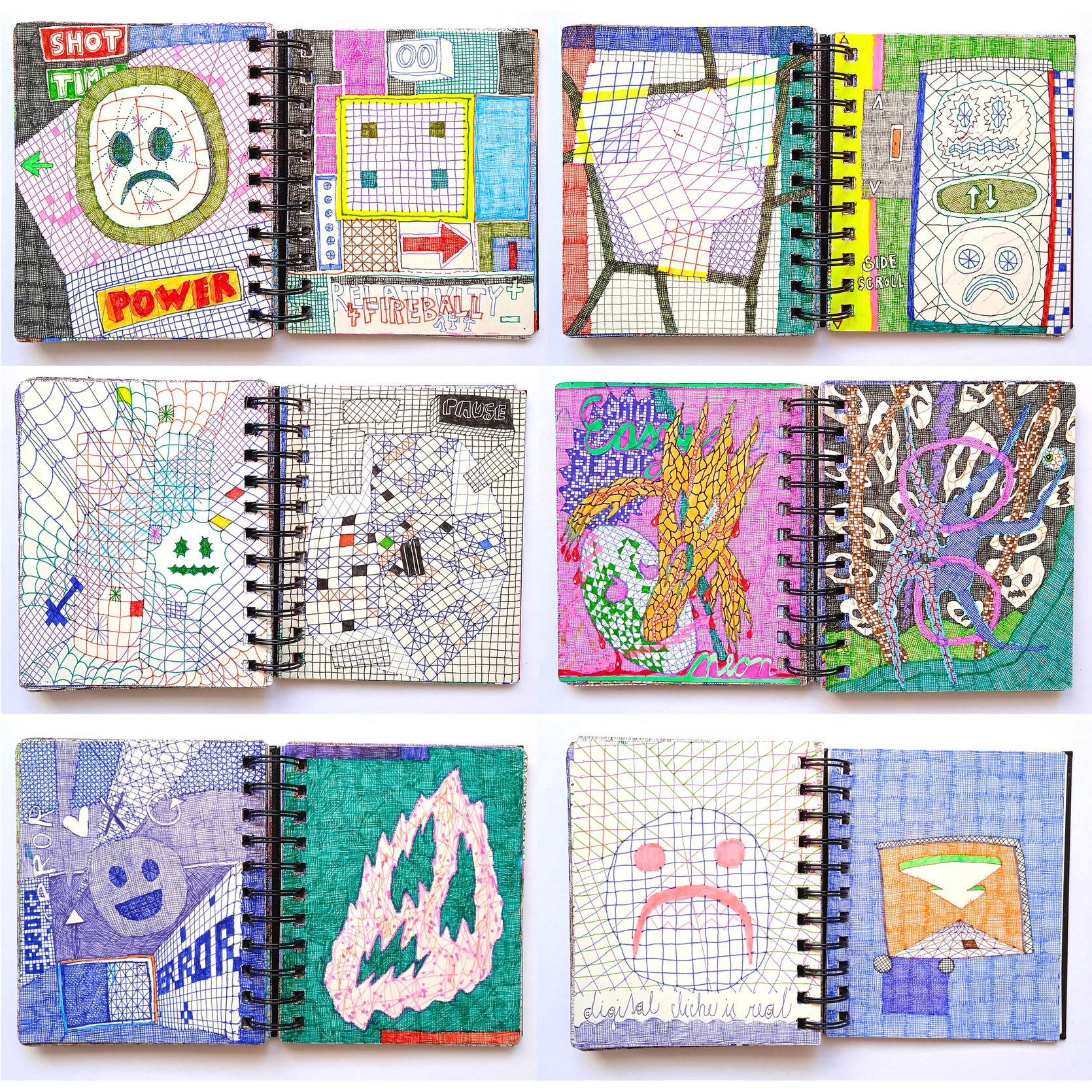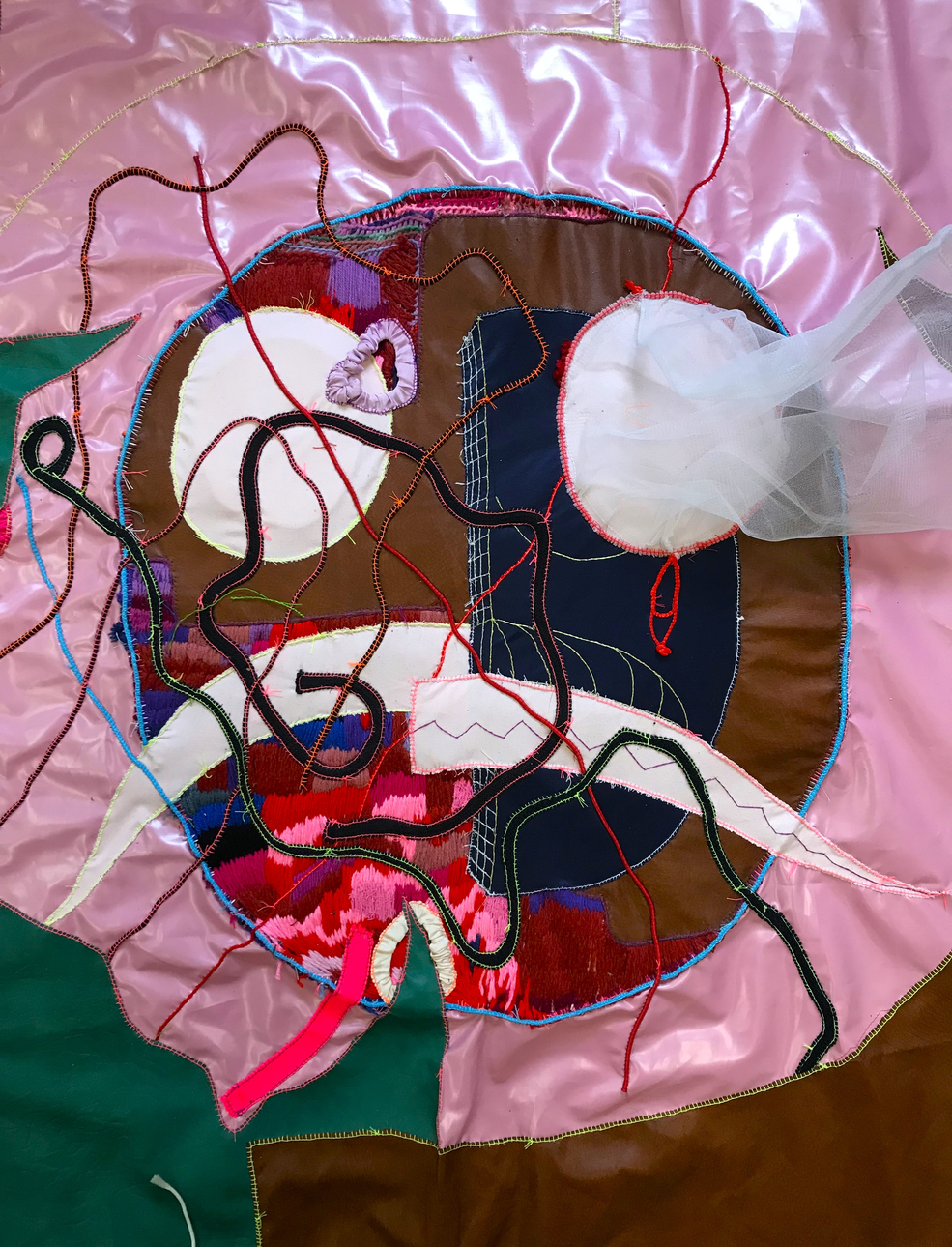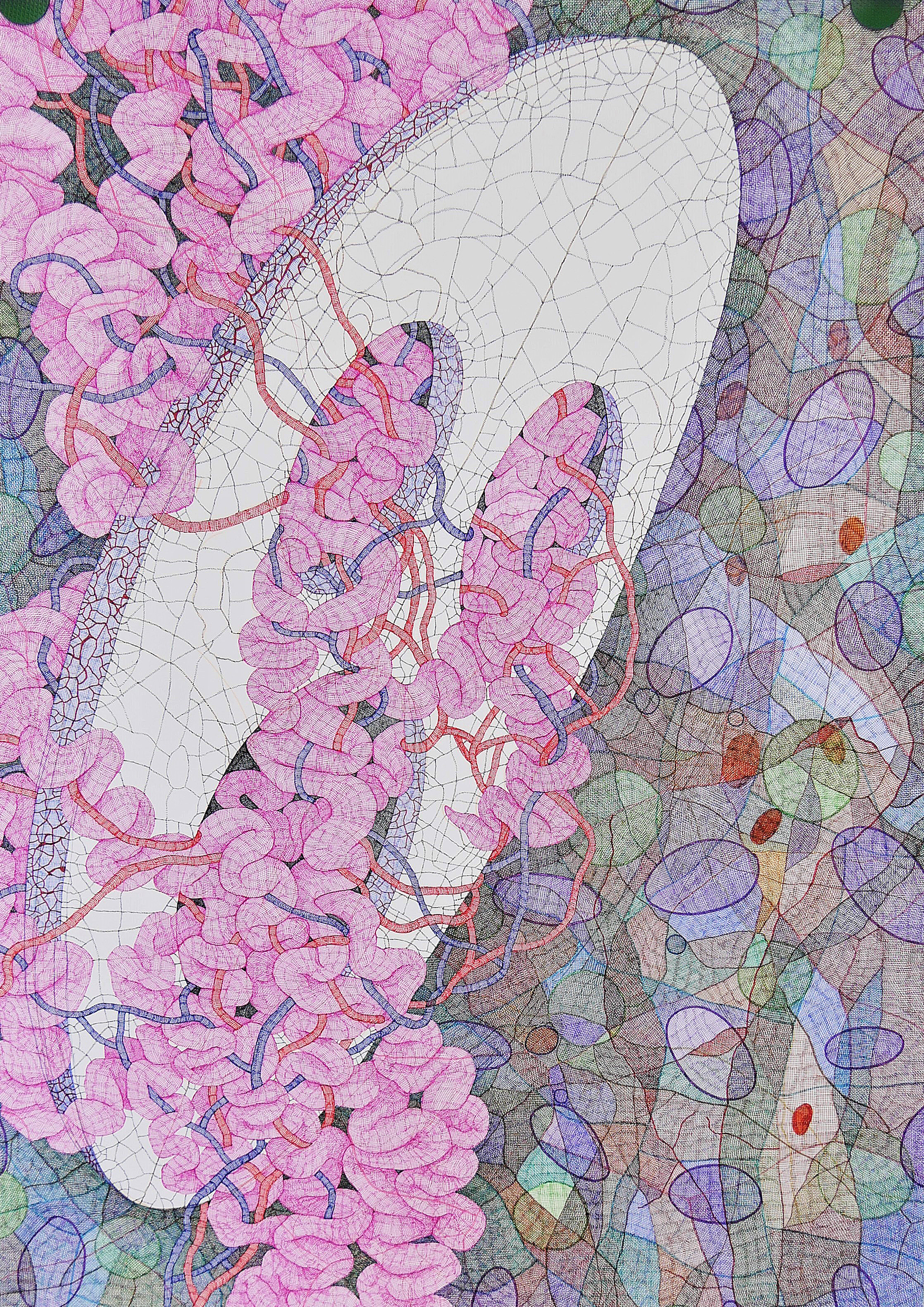
In my work, I focus on introspective reflections of mental states, intimate experiences, and emotions, with a particular interest in the relationship between the physical and digital worlds. For several years, I have been developing the theme of the emoticon as a psychological symbol of our time, expressed through hatched pen drawings and embroidered objects.
I use the language of internet communication, visual symbolism, and digital interfaces to express intimacy, relationships, loneliness, and unspoken needs, while also examining how subjectivity is shaped between virtual and physical space. During my studies, I explored the role of material experience in contrast to the absence of touch in virtual space. I reflected on the lockdown period and the unavoidable intensification of online communication. My focus was on the phenomenon of emotional disconnection caused by immersion in the virtual environment, often described as depersonalization—a state in which the self feels unreal, the body seems foreign, or bodily boundaries lose their sense.
I create textile objects using a hand-sewn patchwork style with materials like faux leather, mesh, or “perlinka” (a grid fabric) that reference hyperlinks and cyberspace. I use grids and surface textures to show the networked quality of online and offline worlds. Everything is hand-sewn to preserve the material experience. The method lets me layer, overlap, and collage objects, exploring digital symbols, the body, and emotions. Drawing is my main way to link digital visuals with feelings and thoughts, thus showing complex psychological experiences. This also helps me reflect on how we communicate, show emotions, and interact in public and private life.
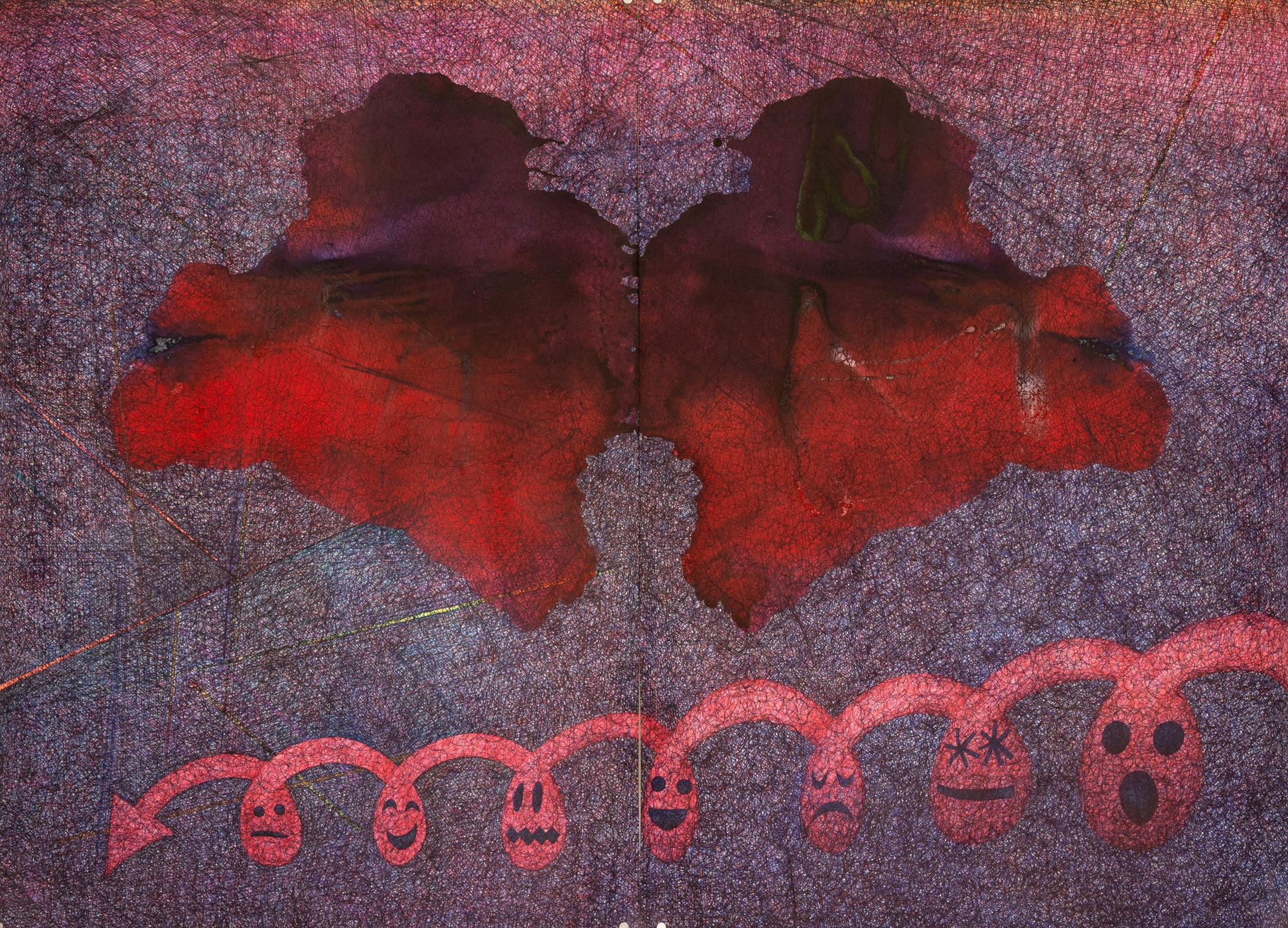
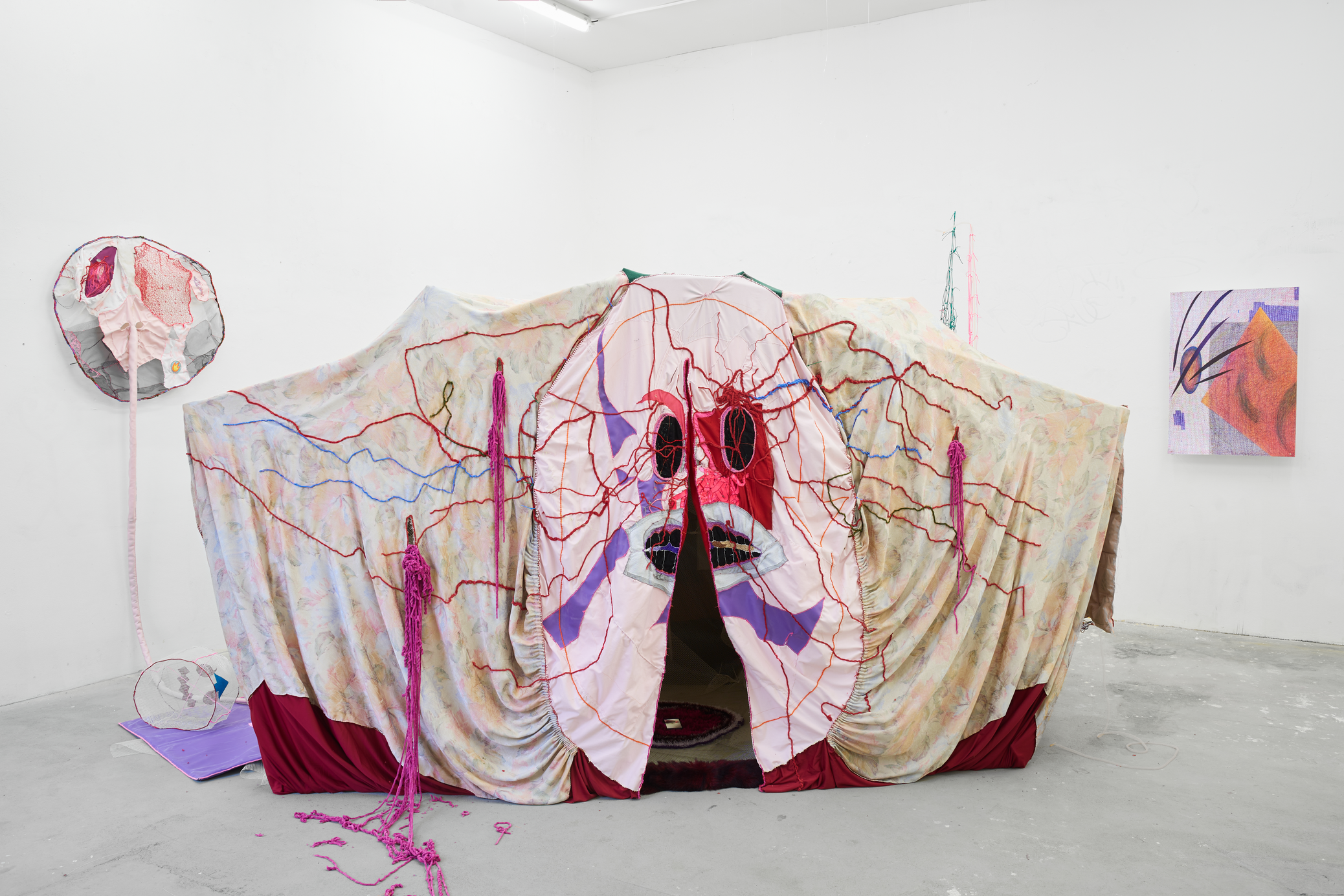
In the context of my work, I understand the network (web) as a connected, symbol-based system or organism, which I frame in my drawings and textile objects. On a personal level, I also perceive the network as relational, along with the questions it raises. As Weber describes, the search for this dynamic balance—and the constant failures in achieving it—is central to human relationships. I try to capture this “drama” of maintaining balance, the need for connection, and the need for autonomy in my drawings, where I depict beings with expressive grimaces, showing anger, astonishment, fear, as well as unusual smiles or joy.
My installations often require physical entry or passage through space. Also, in my drawings, you can find arrows pointing back and forth, and thus everywhere and nowhere. These symbols and signs of online communication and digital space have undergone my personal deconstruction, thanks to which I grasp the existential reflections. They become tools for me to capture sensitive topics. The series of large-scale drawings combines vibrant colors, systematically rendered fine lines, hatching, and layered surfaces that reference the digital environment and the symbolism of online communication.
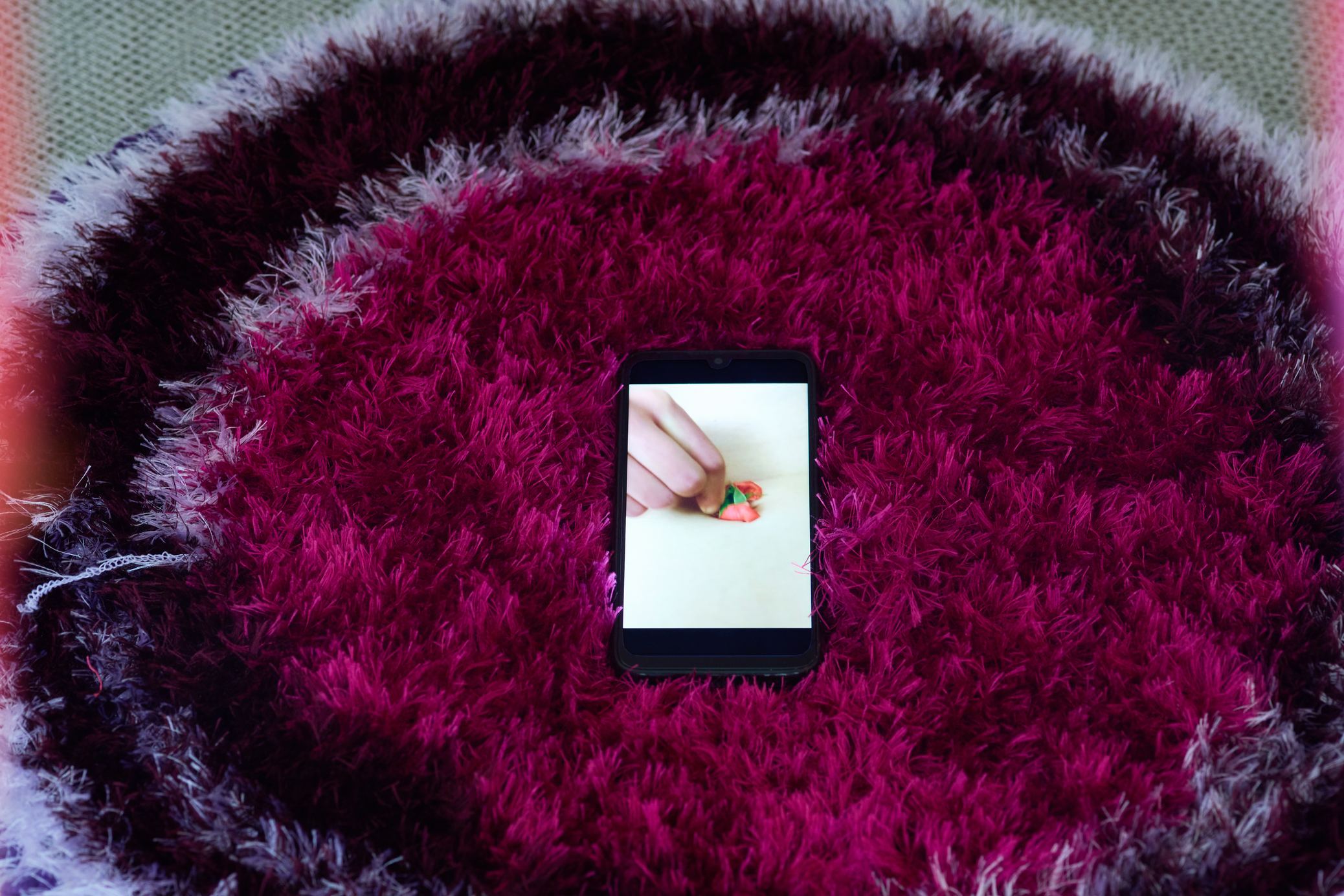
The video Deflower serves as the sensual core of the project. It captures the spontaneous and intimate atmosphere of the location, evoking an automatic interplay of gestures and personal experiences that are transformed into a frozen memory—an untransferable, encapsulated experience—replaying continuously on a mobile device.
The title can be interpreted broadly as “to deprive of flowers,” “to deprive of virginity,” or “to deprive of beauty.” The video was created during a vacation my girlfriend and I spent at her grandparents’ cottage, a period of shared relaxation, intimate conversation, drawing, and listening to various radio stations—a time marked by closeness and calm.