In my artistic practice, I combine painting, objects, installations, text, and techniques such as forensic technical drawings. This approach stems from my experience with manual labor in an electronics factory, which influenced my way of thinking about creation as a precise and repetitive process of assembling and layering individual elements into a larger whole that carries structural order.
Thematically, I focus on popular culture, amusement park environments, and the visual imagery of fairground attractions, developing my own concept of "post-fairground attractions" within which I construct hybrid modular objects. Through these objects, I explore the psychological background and critically reflect on the connections between visual studies, cultural theory, and advertising theory.
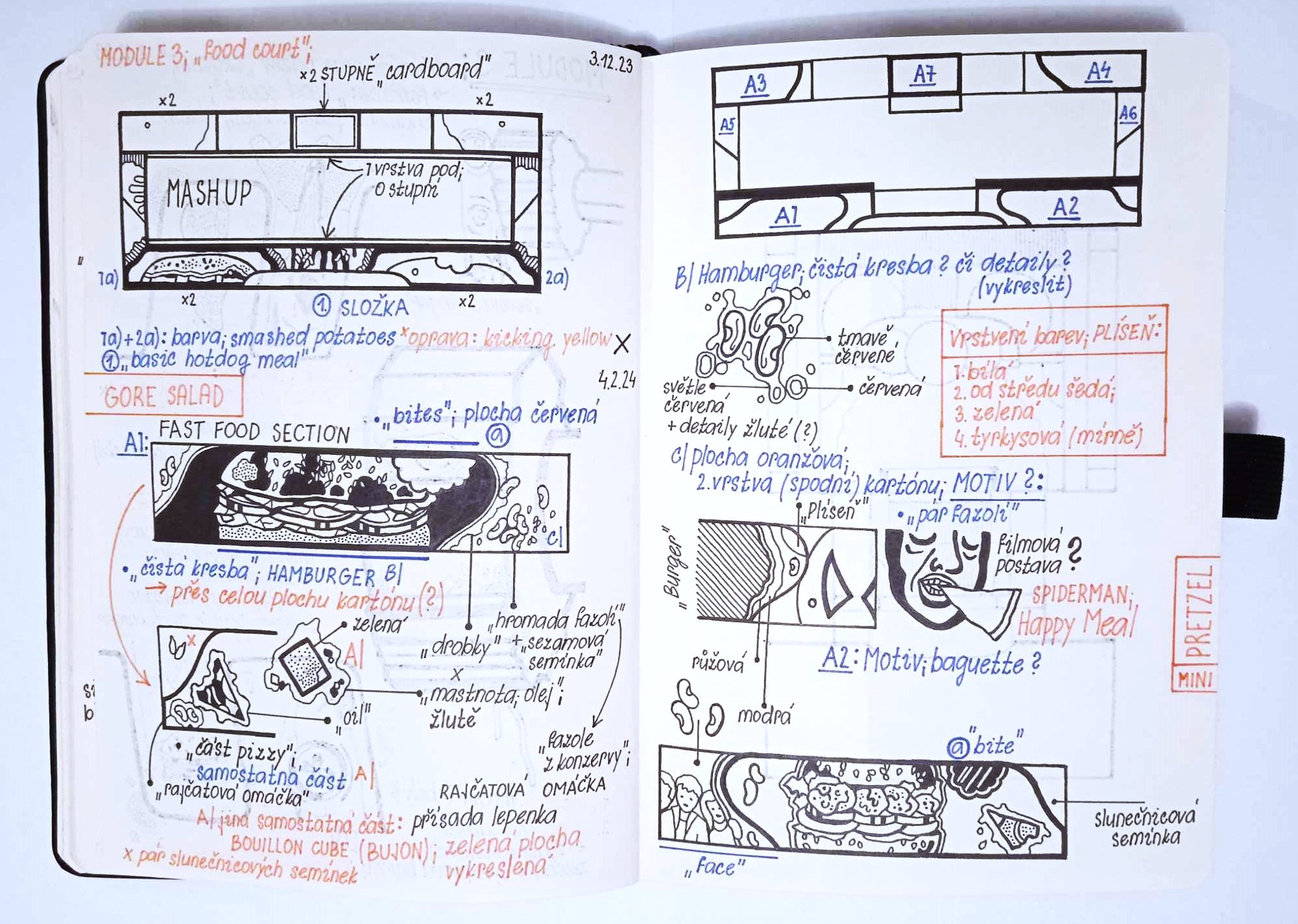
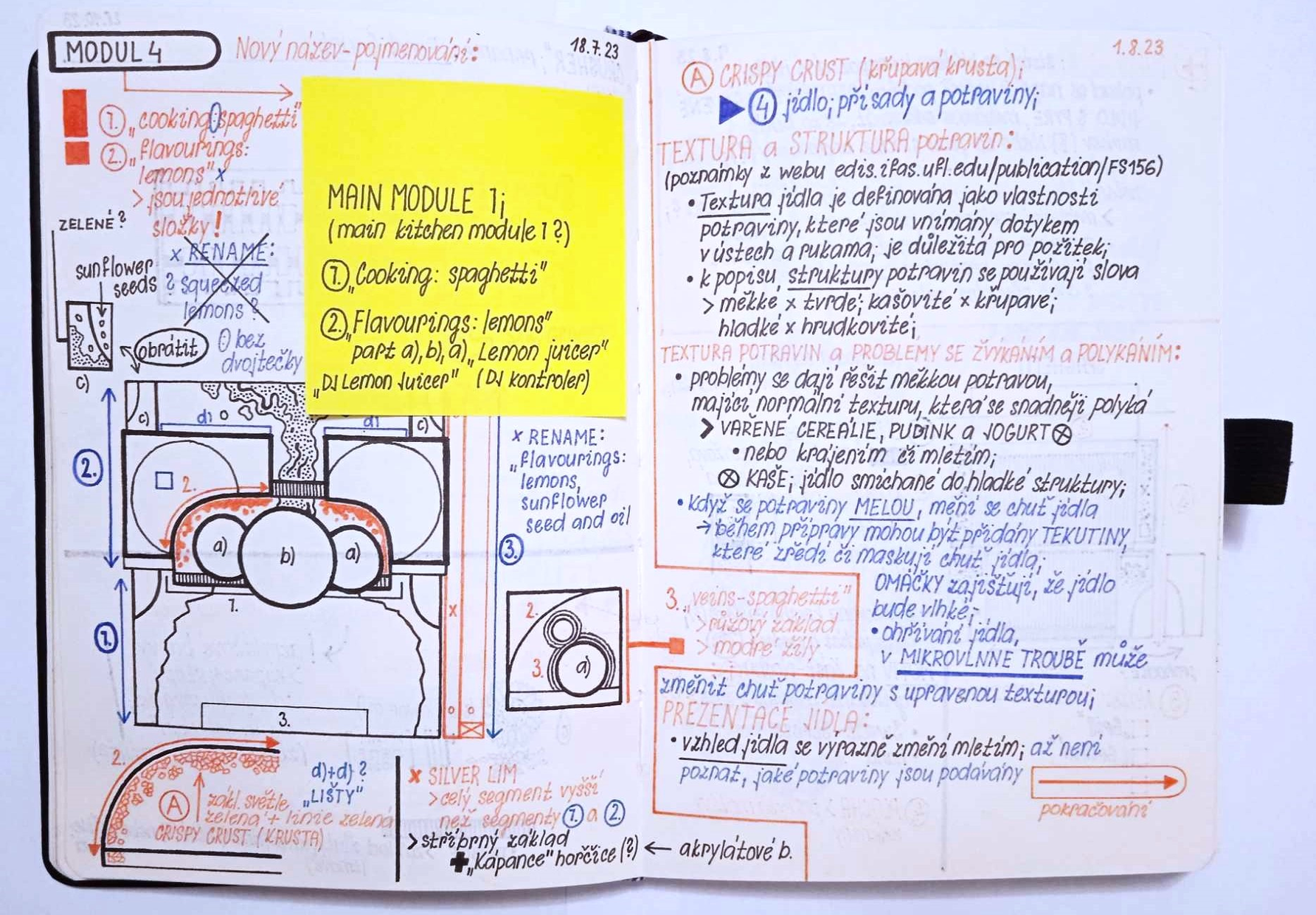
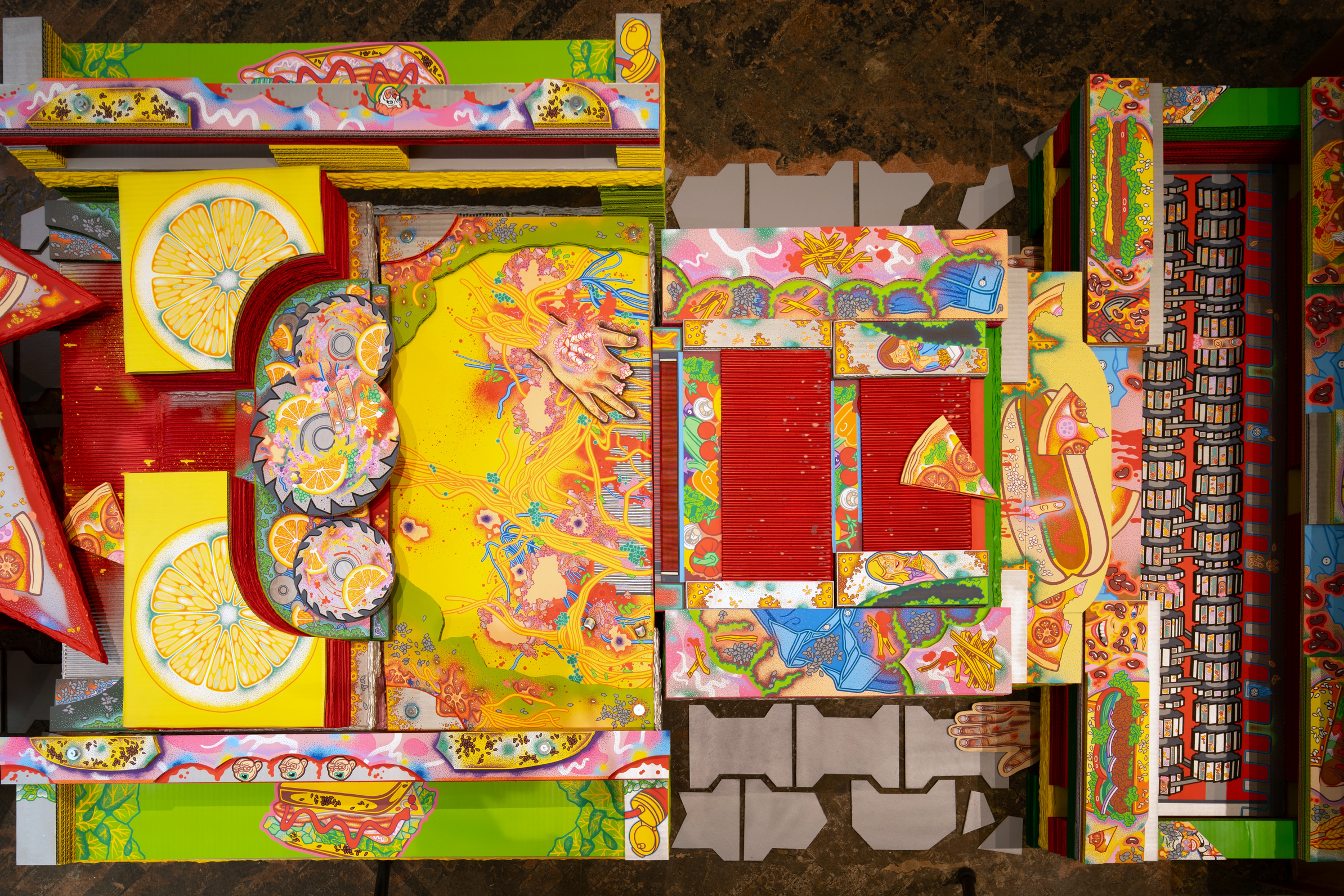
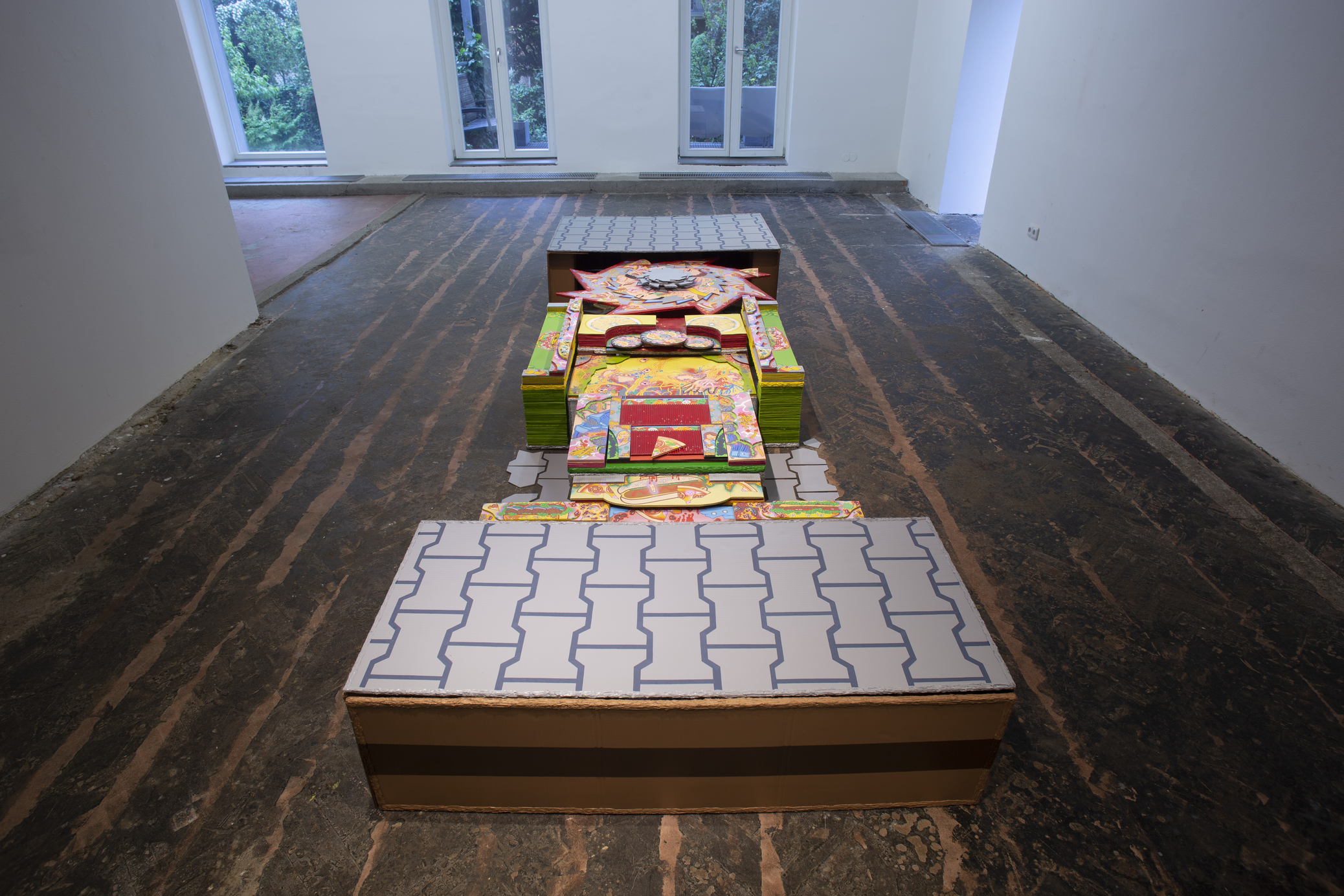
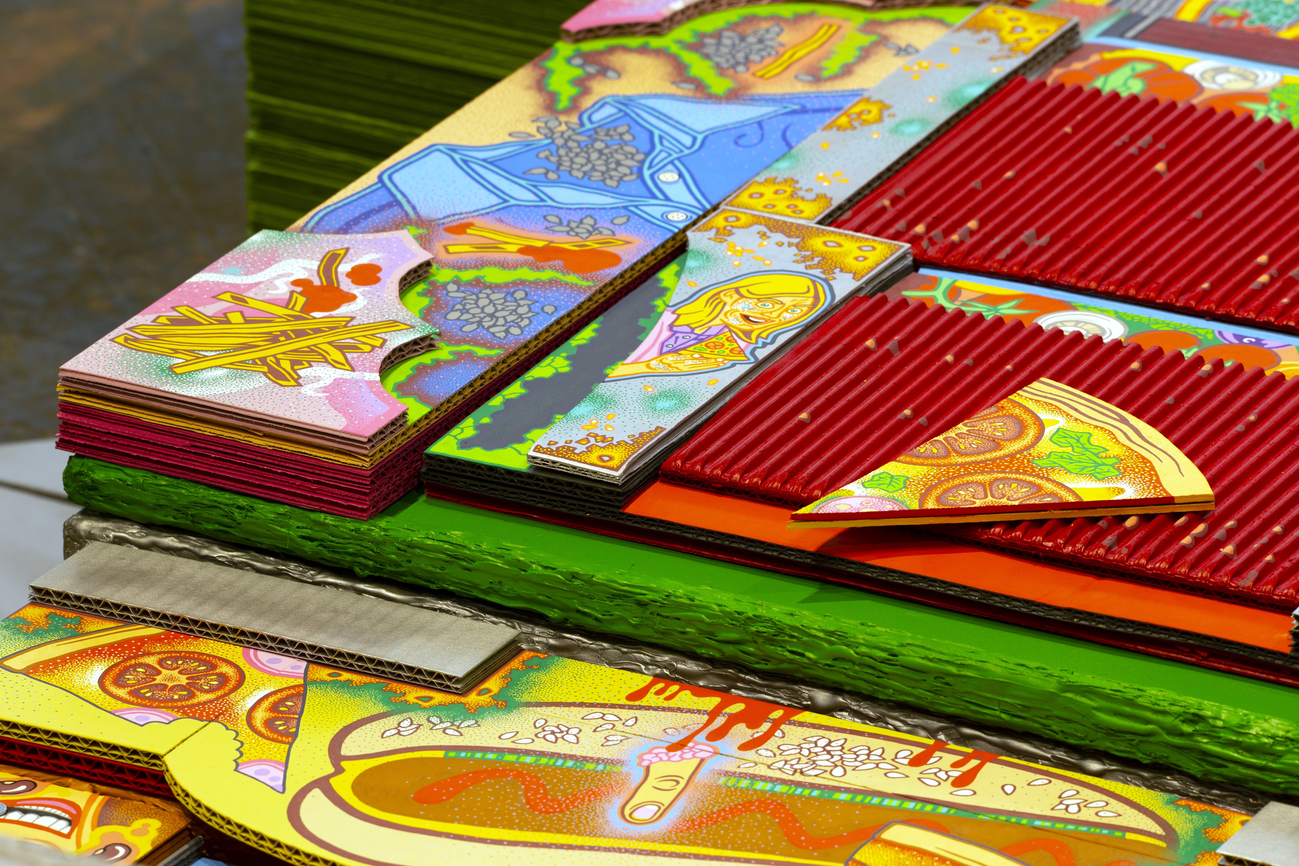
Street Gore Food presents a stylized model of a pedestrian sidewalk, made with drawing techniques, cardboard, and hot glue. It depicts a simplified section of a street that has lost its original function and has been transformed into a staged platform featuring an imaginary excavation. In this work, the street becomes a digestive system composed of imitations of kitchen appliances used to process food, forming a bizarre menu that parodies the offerings of popular fast-food chains.
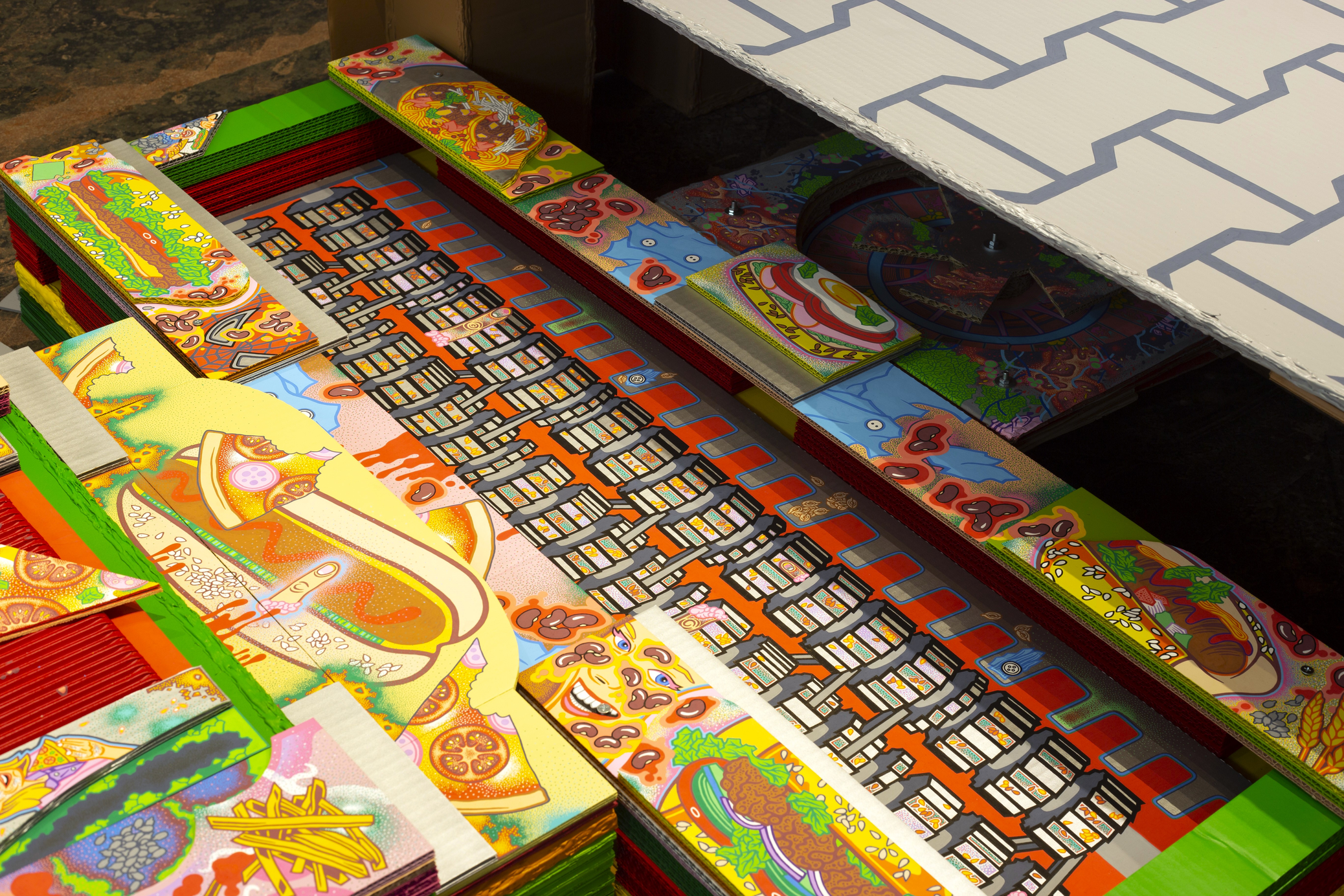
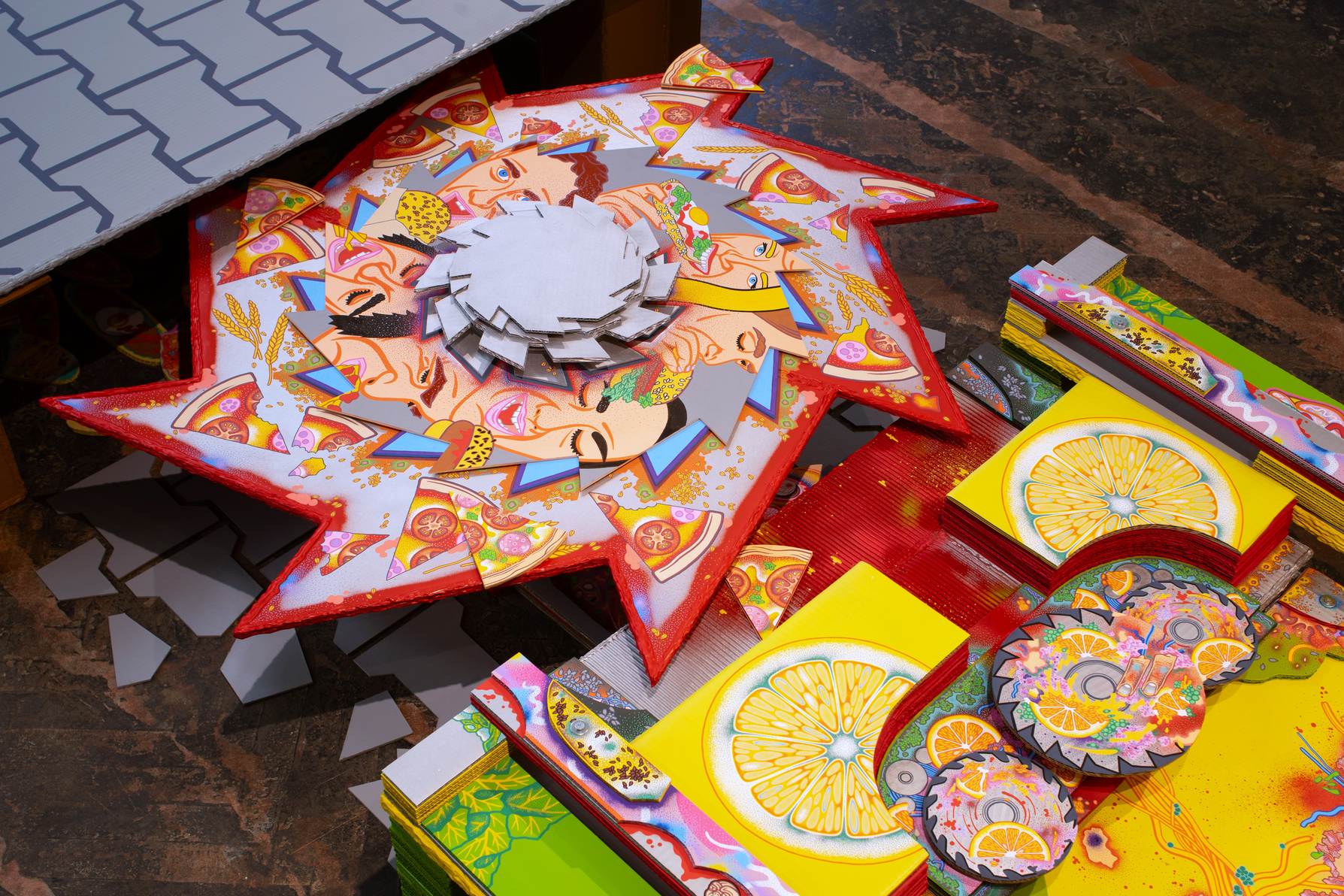
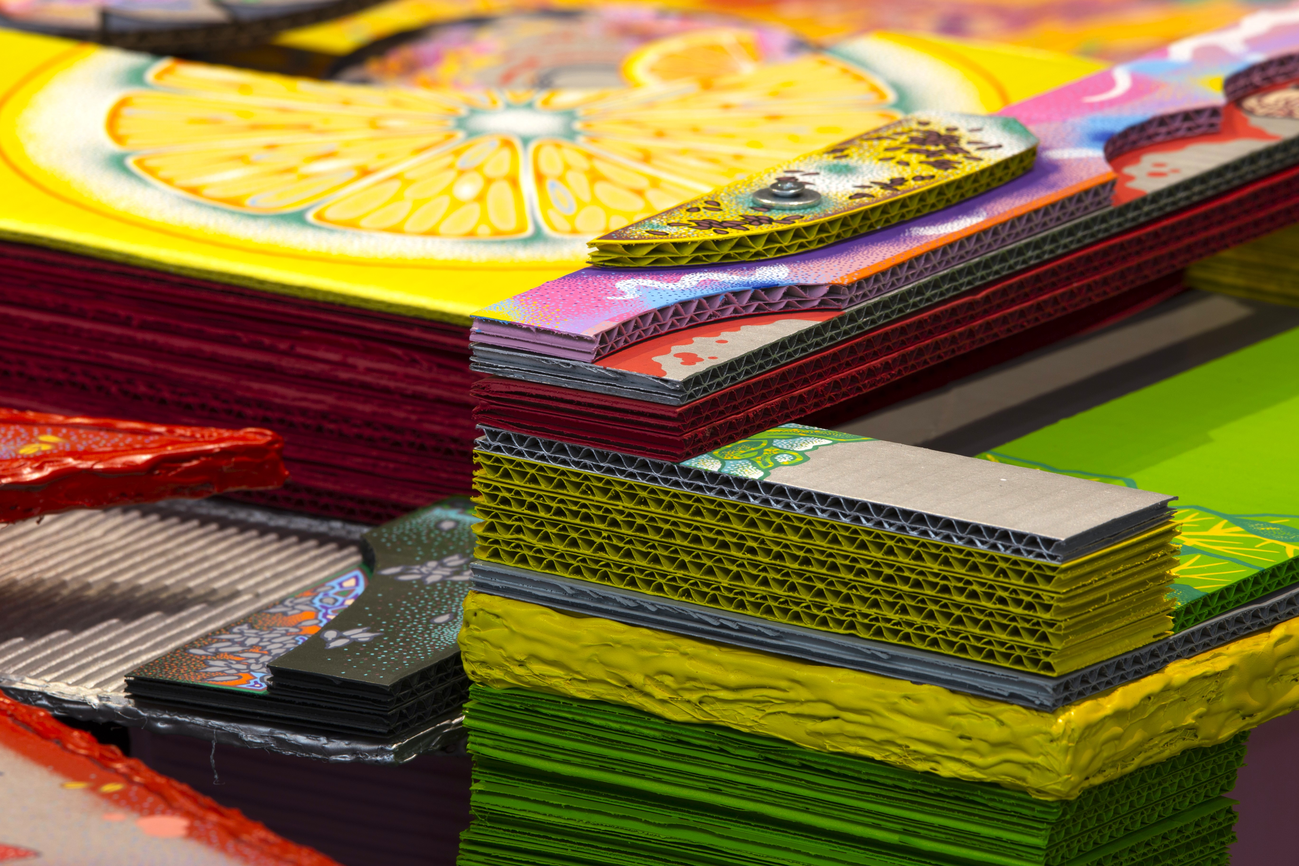
The main construction material is found, recyclable cardboard, which serves well for creating buildings and immersive installations, giving it a similar character to a film prop. Typically composed of glued layers of paper, cardboard is used for boxes and packaging, varying in thickness and strength, taking new forms—it becomes a slice of toast, a moldy baguette wrapped in aluminum foil, or a chocolate bar from a mad Willy Wonka factory. It also appears as a pizza on a slowly rotating circular wheel or a baked crust detailed with crème drawings of human tissue, crushed tomatoes, or spaghetti carbonara.
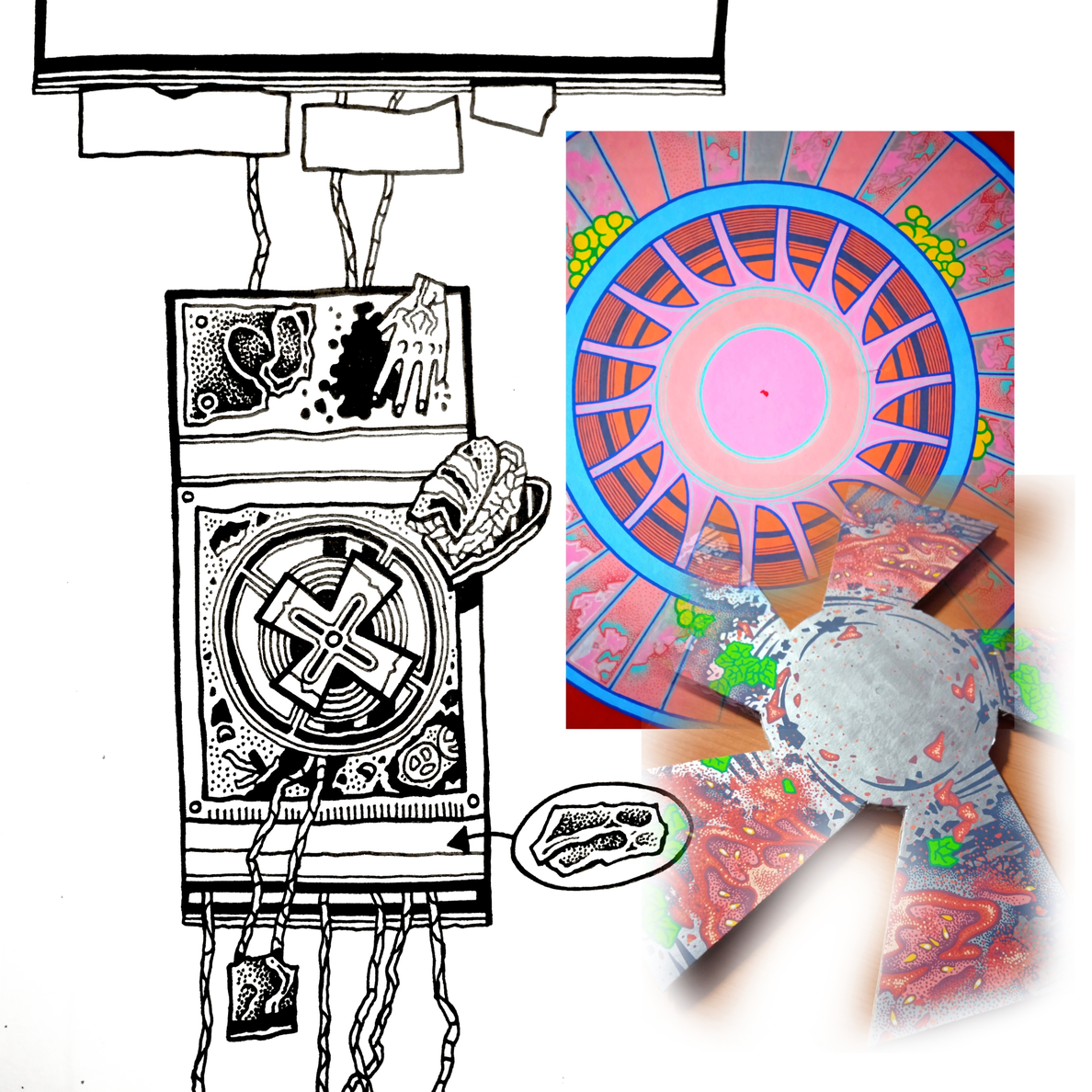
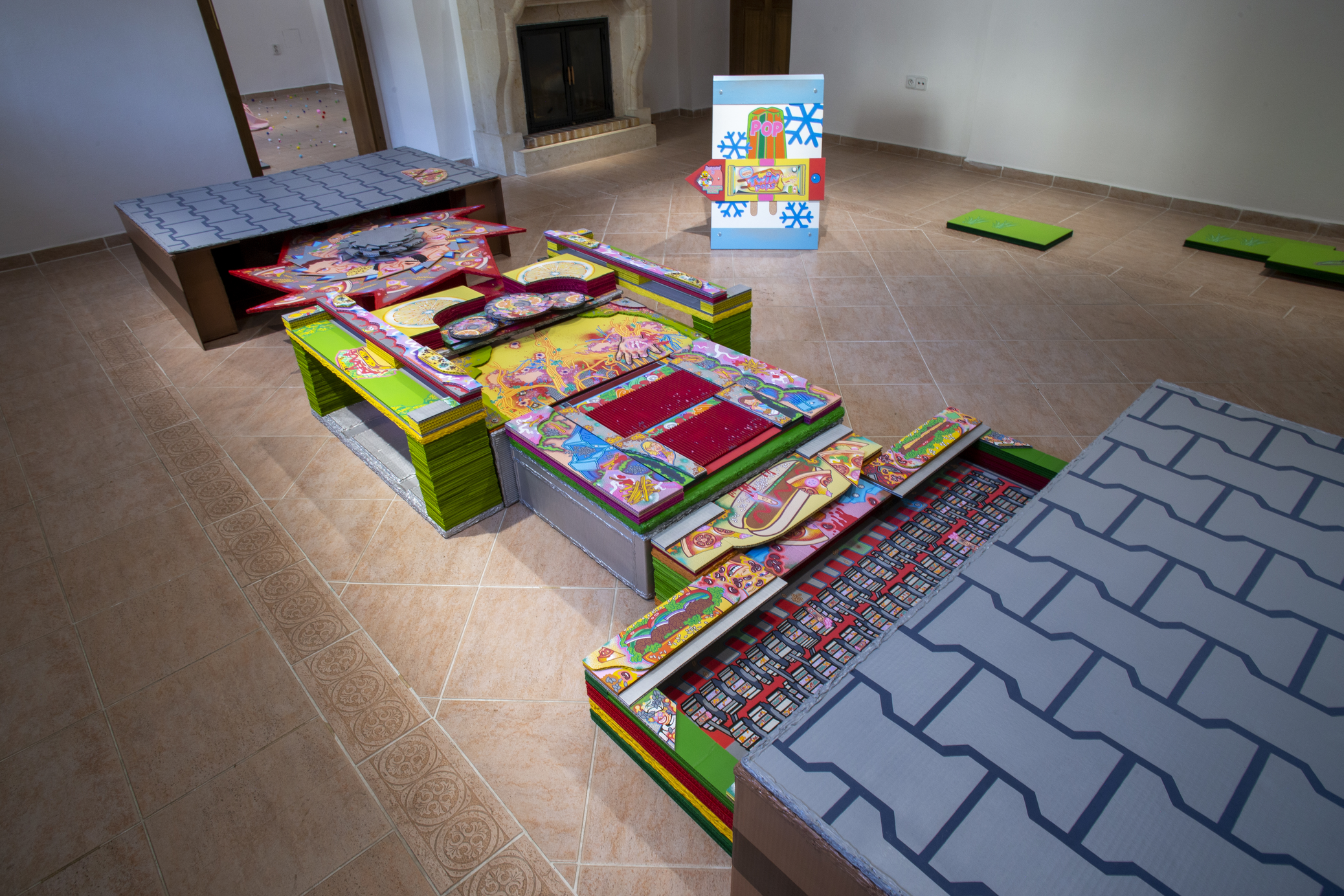
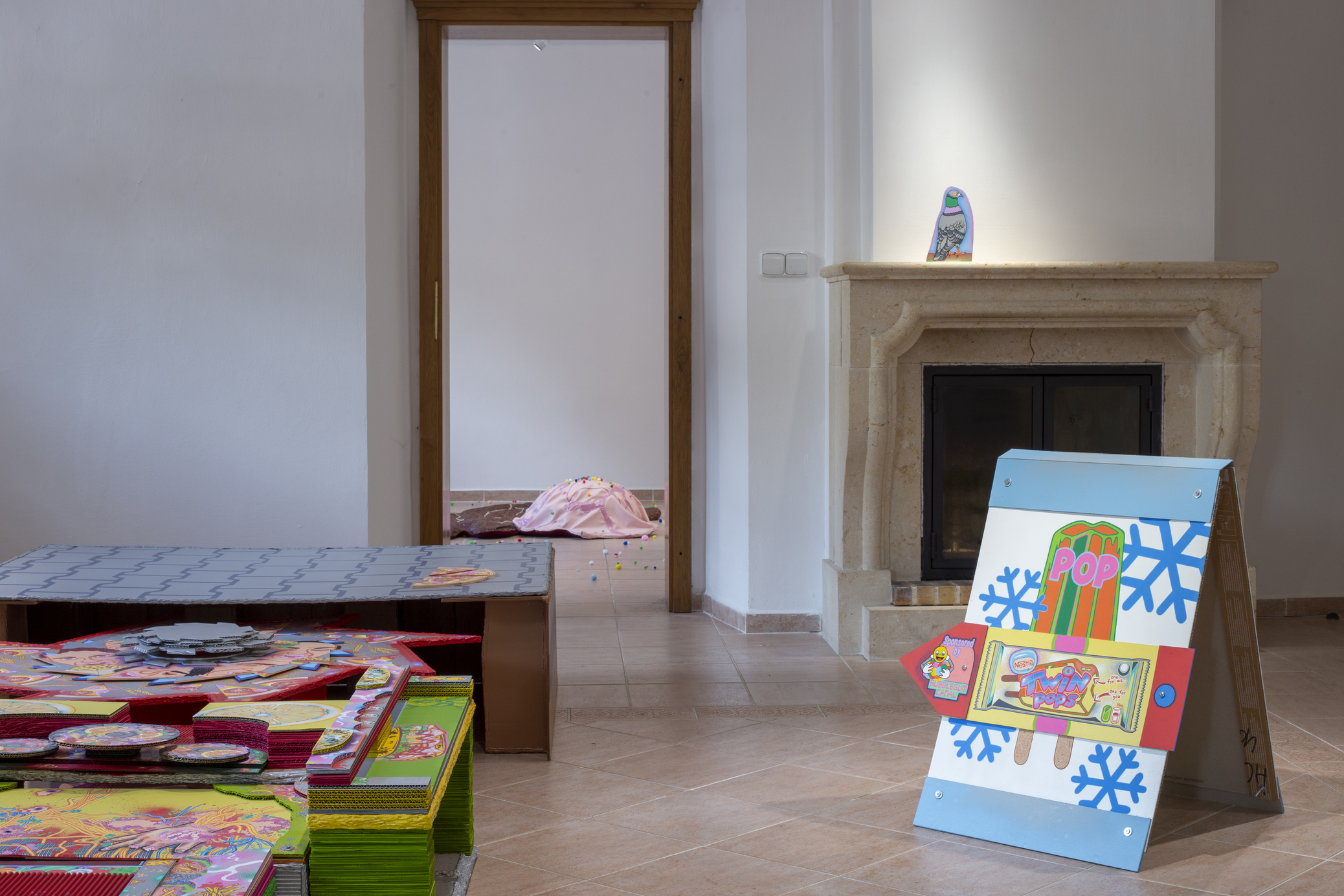
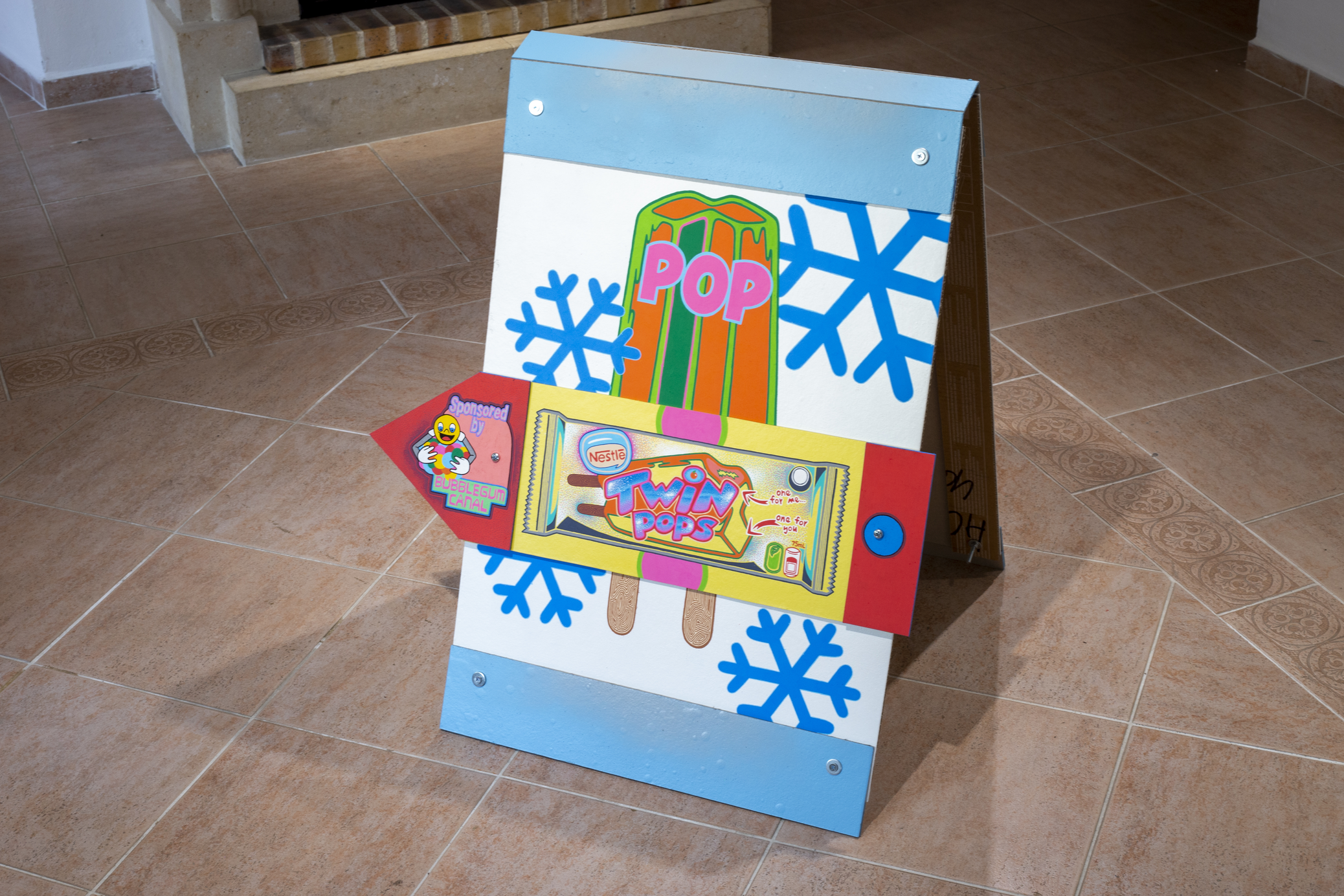
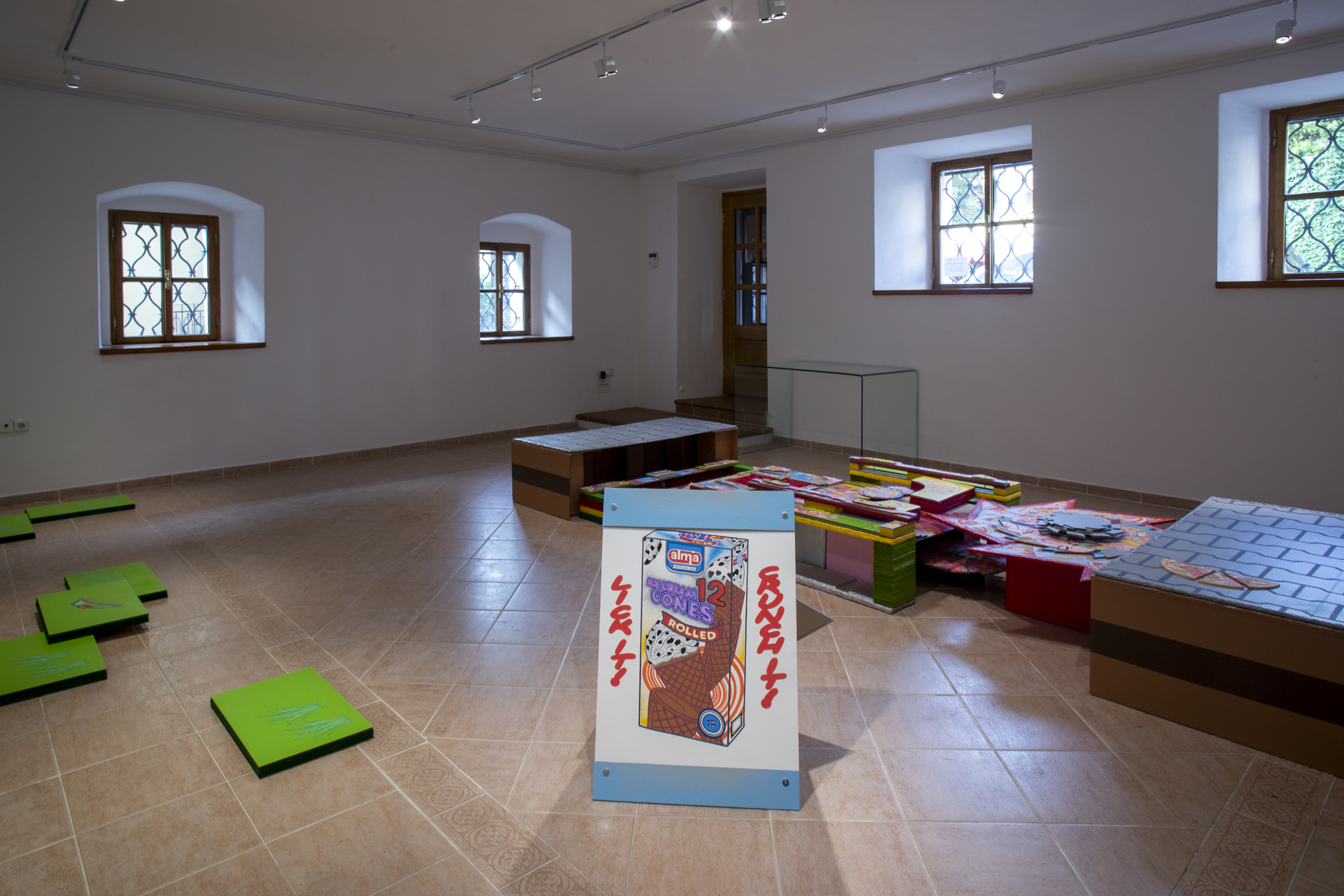
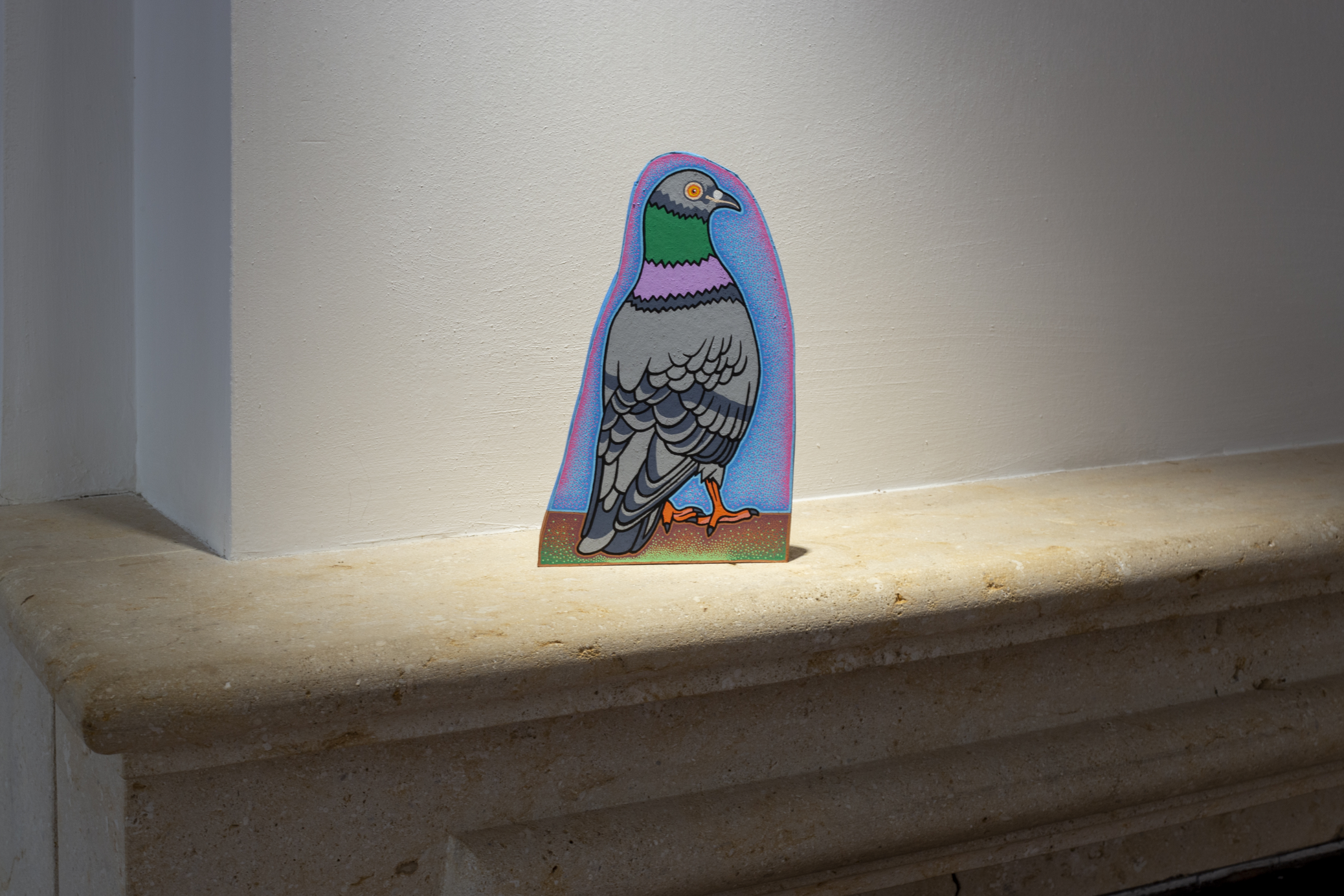
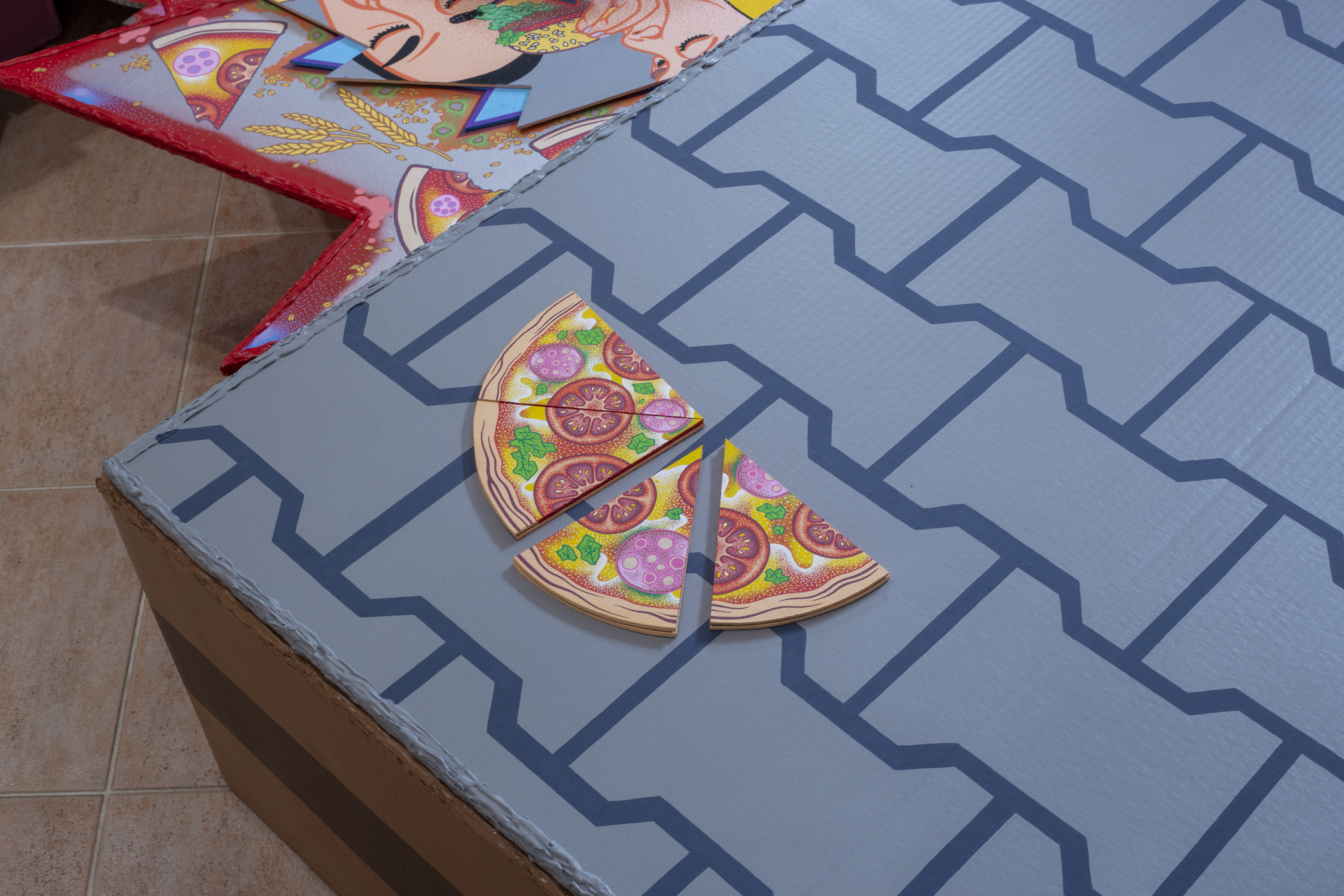
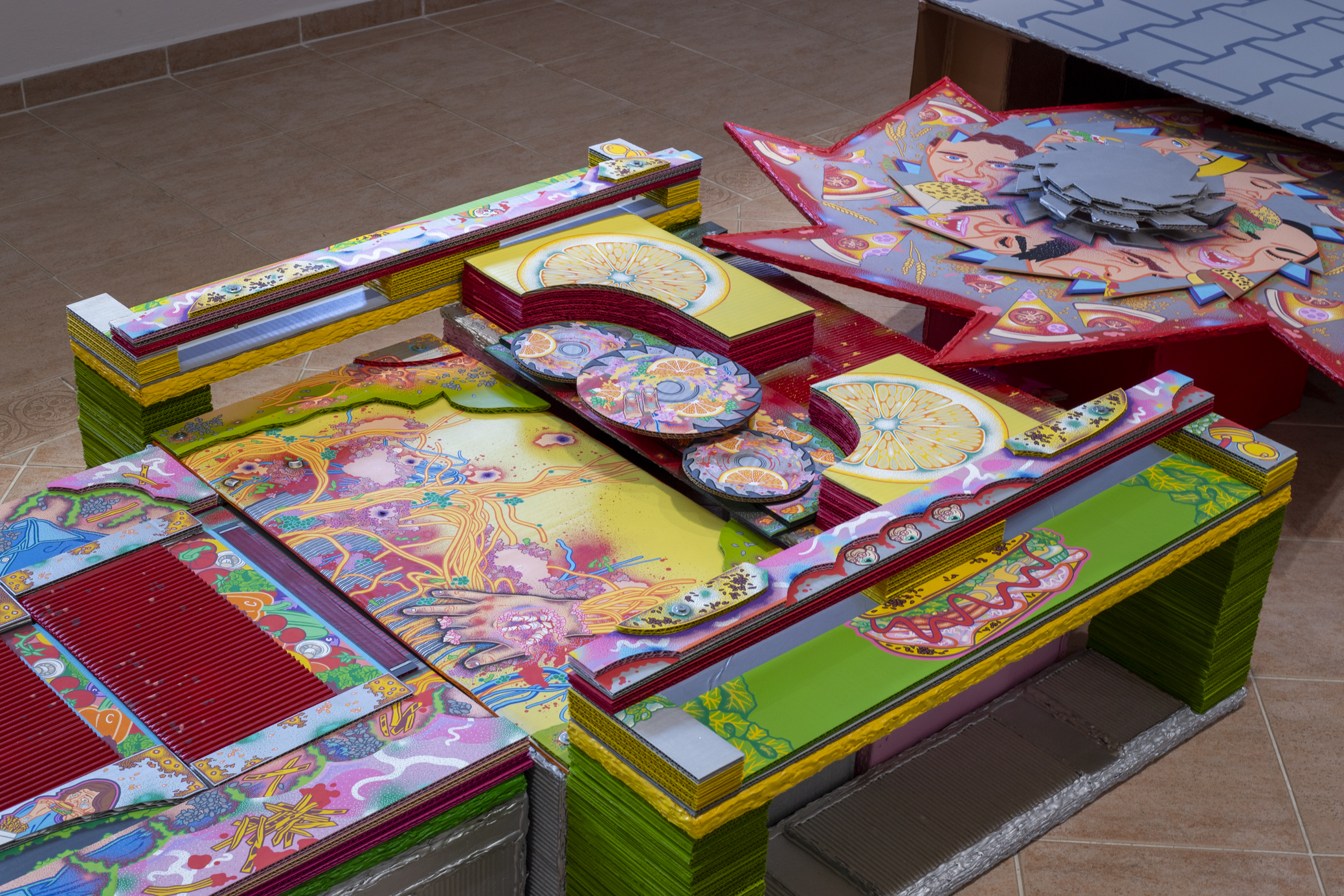
The visual symbolism thus straddles the line between black humor and the exhibition of cruelty—it is unclear whether it is human tissue or tomato chutney, pus from a burst tumor or creamy mustard, blood or ketchup.
(There is no mayonnaise here!)
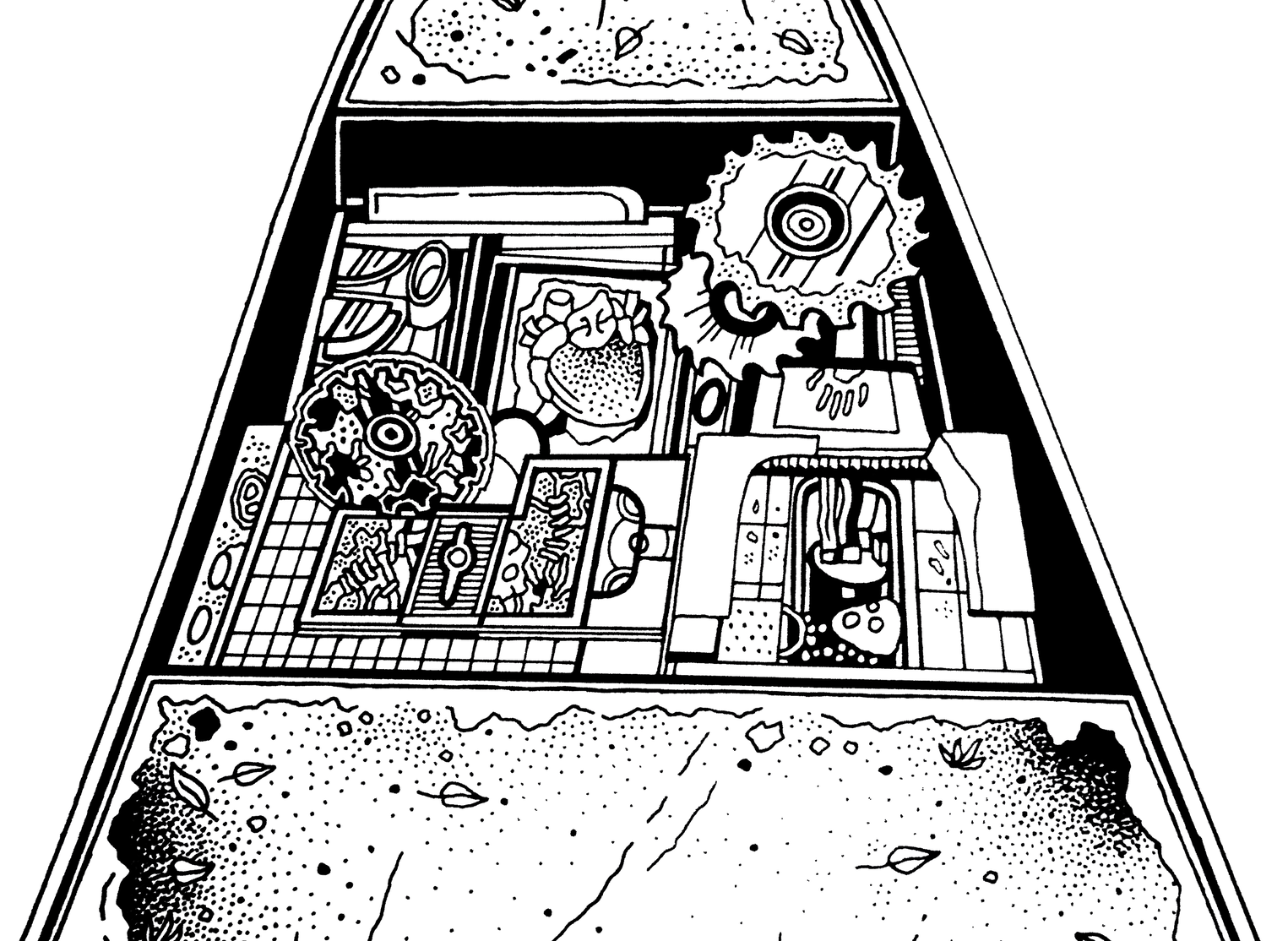
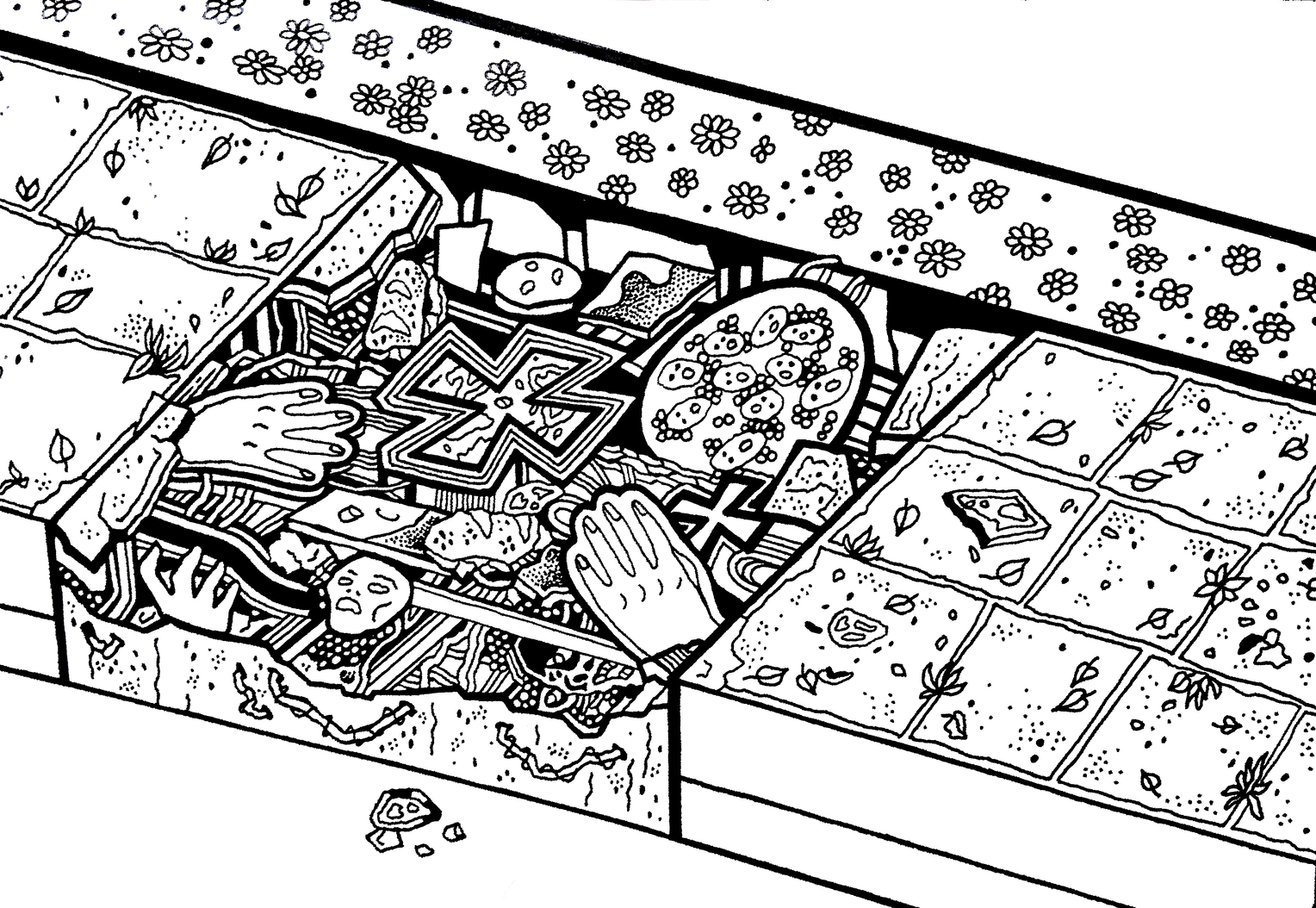
A pedestrian walks down the street on the concrete surface of the road while eating a stale baguette ("yum, yum") that he bought at a fast-food kiosk. He bites into all its delicious layers with his straight teeth and then chews them into a single indistinct mass, the micro-remnants of which he uses to plug the bloody wounds in his irritated gums with his tongue. During his routine walk, when he is bound to mindlessly consume his lunch, he is suddenly stopped by a deep fall into a ditch, leaving him no time for an espresso. *sad face*