


ABSTRACT: This project, (translated from Swedish), examines the royal anointing rite as a performative and identity-forming ritual within an artistic research practice by H.S.H. Prince Frei von Fräähsen zu Lorenzburg, a performance-based artist and “freelance royal.” Grounded in the biblical recipe for holy anointing oil (Exodus 30:22–33) and informed by historical coronation rites—from the kings of Israel to modern European monarchies—the study explores anointing as a long-standing mechanism of king-making, legitimacy, and sacred authority. Drawing on John M. T. Balmer’s theory of the “Five Rs” of royal brand identity, particular emphasis is placed on the performative conditions through which royal status is perceived and embodied. Methodologically, the article adopts an auto-phenomenographic approach, prioritizing first-person lived experience and the gradual constitution of meaning through repeated ritual practice. Situated within the author’s site-specific work at Kronhuset in Gothenburg, the article proposes anointing as a critical artistic tool for investigating vocation, dignity, and symbolic responsibility in a democratic present.
This project forms part of a long-term artistic research practice in which monarchy is approached not as a hereditary institution, but as a performative, ceremonial, and socially negotiated vocation. Over the past decade, my work has investigated how royal roles—historically grounded in ritual, symbolism, and embodied authority—may be rearticulated within contemporary democratic society as an artistic and civic practice. Central to this inquiry is the figure of the “freelance royal”: an artistically constructed persona that operates at the intersection of performance art, ritual enactment, public ceremony, and social engagement.
Across projects such as Audiensen (The audience - socialley engaged art), Fursten, (The Prince, work looking specifically at the role of the royal-as-parformance-artist) and site-specific works situated in and around Kronhuset in Gothenburg, my practice has explored how authority, dignity, and representational responsibility are produced through repeated symbolic action rather than conferred solely through juridical or genealogical means. These works engage the aesthetics and protocols of monarchy—costume, comportment, liturgy, heraldry, and address—not in order to parody them, but to examine their operative mechanisms: how they generate recognition, structure relations between individuals and communities, and sustain belief in symbolic office. In this sense, monarchy is treated as a historically stabilized genre of performance, whose efficacy depends on ritual repetition, collective witnessing, and embodied credibility.
Within this broader framework, Sacramentum Regis focuses on one of the most restricted and symbolically charged practices associated with royal legitimacy: anointing. Historically reserved for kings, priests, and prophets, the anointing rite constitutes a paradigmatic instance of what Pierre Bourdieu describes as “social magic”—a performative act that effects transformation through collectively recognized symbolism. By reworking this rite as a private, daily performance-liturgy, the article investigates how such transformative mechanisms might operate outside their traditional institutional settings, and how ritual repetition may function as a technology of self-formation within artistic research.
Methodologically, the article is grounded in auto-phenomenographic inquiry and practice-based research, treating ritual not merely as an object of historical or theological analysis, but as an active artistic medium. The consecration and use of anointing oil are approached as performative experiments through which vocation, identity, and ethical orientation are gradually cultivated. This aligns the work with contemporary strands of artistic research that emphasize embodied knowledge, situated practice, and the researcher’s own transformation as a legitimate site of inquiry.
By situating a traditionally sacralized royal rite within a contemporary artistic practice, Sacramentum Regis contributes to ongoing interdisciplinary conversations in performance studies, ritual studies, and practical theology concerning authority, legitimacy, and the persistence of sacred forms in secular contexts. The article does not propose an alternative monarchy, nor does it claim institutional authority; rather, it asks how ancient ceremonial technologies might still function as instruments for meaning-making, responsibility, and public imagination when redeployed through artistic practice. In doing so, it positions the royal anointing not as a relic of a bygone order, but as a living, if contested, performative resource for thinking through dignity, service, and symbolic responsibility in the present.
Credit: Johanna Hillgren
H.S.H. Prince Frei granting an audience to Åsa Arping - Dean of Humanities at the University of Gothenburg

H.S.H. Prince Frei, granting an audience in Kronhuset to EM - artist and deacon in the Swedish Lutheran Church
Credit: GBG FRINGE/ Uros Hocevar / kolektiff
H.S.H. Prince Frei, delivering an opening address at the Gothenburg Fringe Festival - 2026

H.S.H. Prince Frei, granting an audience to Elmer Nilsson-Kleiberg, member of the Gothenburg Youth Council - informing the prince about their activities and political structure.

H.S.H. Prince Frei von Fräähsen zu Lorenzburg is a Gothenburg based choreographer, performance artist, scholar, Royal-for-Hire and author of the book “Act Like a Prince, a timeless guide to royal manners”. With a BA in dance and choreography (Trinity-Laban, London), and an MA in Contemporary Performative Art (HSM, Gothenburg), he combines performance art and transmedia storytelling as tools for reframing the Monarchy as “Ceremonial Show Biz” in the service of the people. Since Freudian typing himself into becoming a mini-monarch in 2014, he has worked in the intersection between art, entrepreneurship and philanthropy to help make the world a more magical place. Prince Frei’s work offers a playful reflection on how to hold, and meaningfully perform, the sacred duty to serve the planet.
H.S.H. Prince Frei, granting an audience in Kronhuset to an anonymous visitor in the Baroque building Kronhuset.

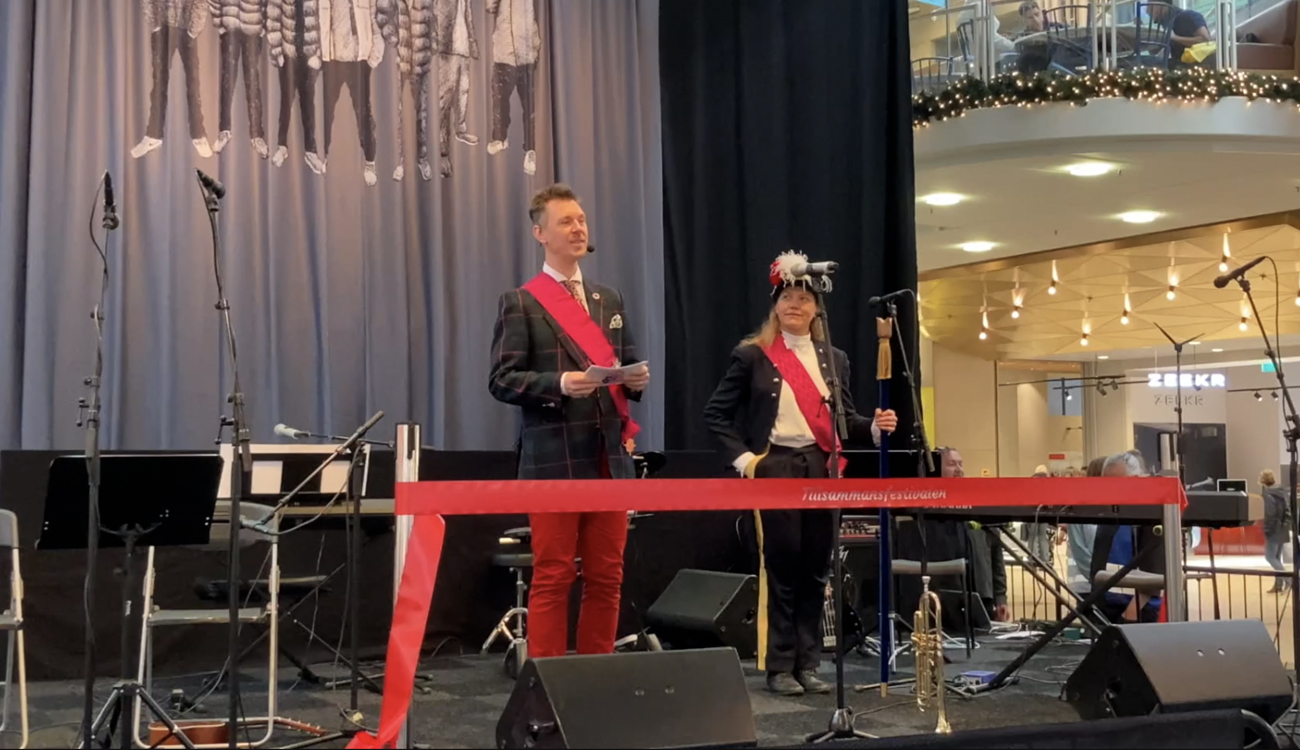
H.S.H. Prince Frei, opening Gothenburg Municipality's inter-generational Culture Festival "Tillsammansfestivalen - 2024
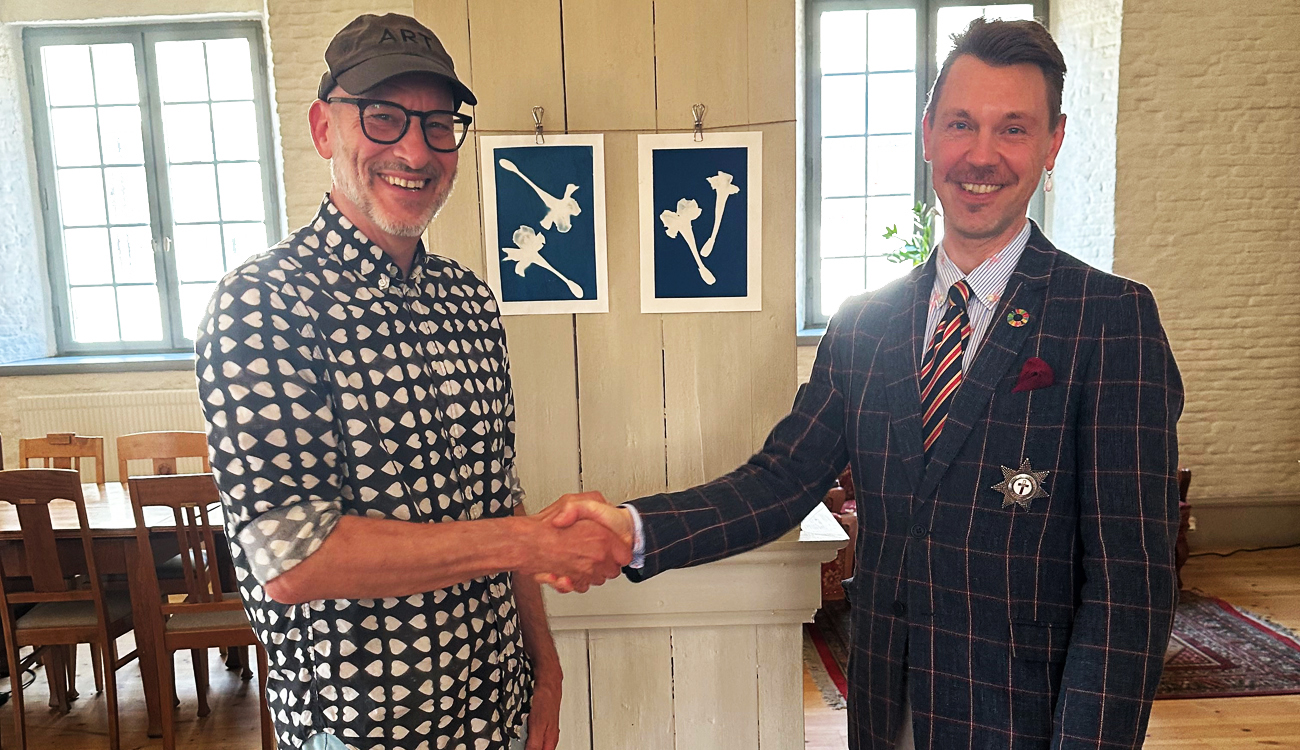
H.S.H. Prince Frei, granting an audience in Kronhuset to Arternas Ambassad - the Embassy of Species.


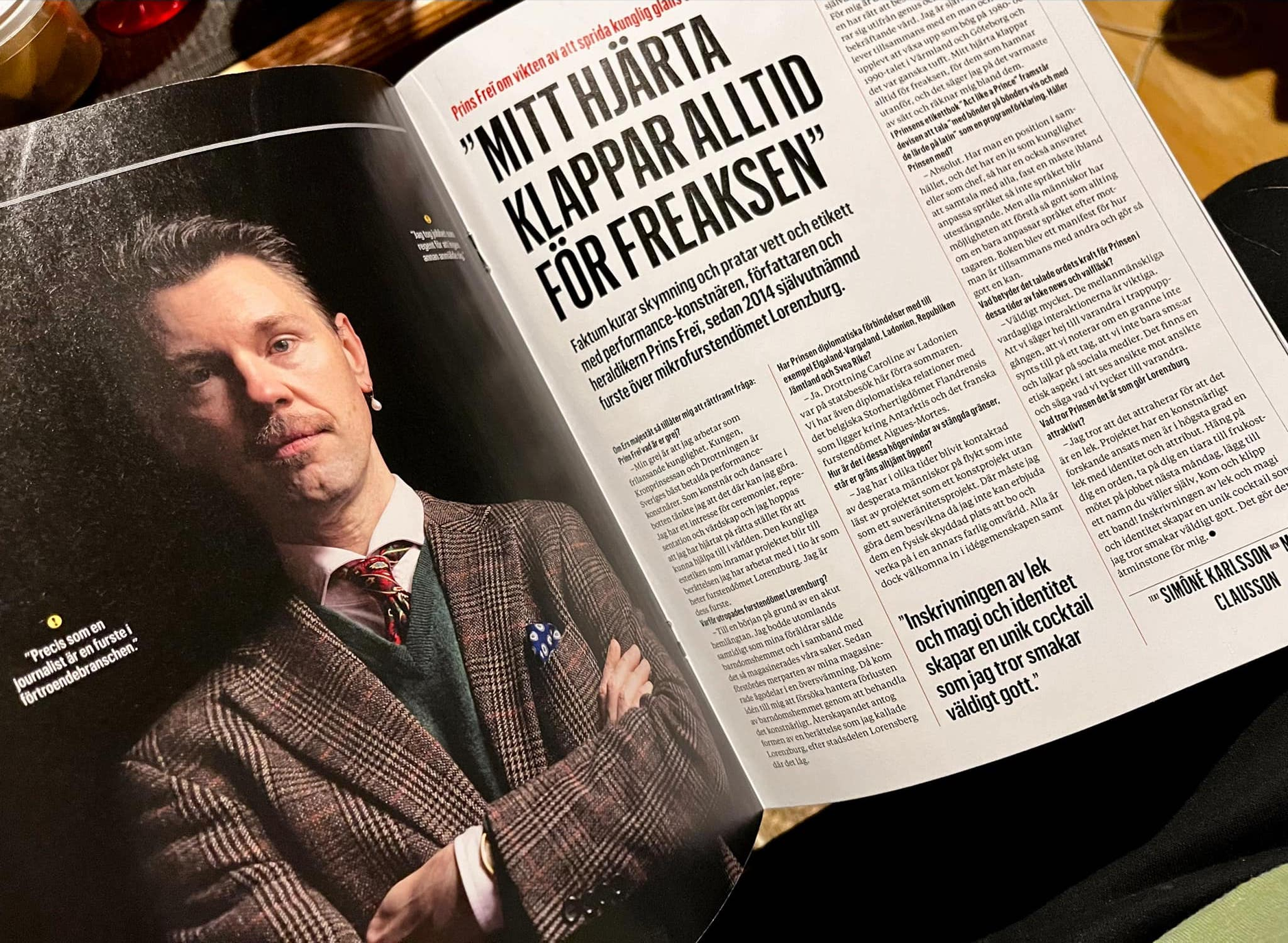
H.S.H. Prince Frei interviewed in FAKTUM - Sweden’s largest street newspaper that provides people experiencing homelessness or social exclusion with a dignified means of earning an income by selling the publication on the streets. It also aims to raise awareness and shape public discourse around poverty, social exclusion, and homelessness through independent journalism and storytelling.


The finished oil mixture—the consecrated anointing—is stored in a blue glass bottle with silver detailing. In the following article, I discuss the use of the anointing within a personal daily ritual of dedication.
* The grimoire tradition refers to the historical and esoteric practice of collecting magical instructions, rituals, formulae, and spirit conjurations in handwritten books—so-called grimoires—most commonly from the medieval to the early modern period. These books functioned both as practical manuals for practitioners and as symbolic artefacts, in which the contents often combined folkloric, Kabbalistic, Christian magical, and alchemical elements. The tradition continues within modern occultism, where classical works such as Clavicula Salomonis and The Book of Abramelin remain subjects of study and reconstruction.
** Mixta persona is a concept used primarily in medieval law and theology to describe an individual who embodies multiple roles or natures within a single person. It may, for example, refer to a bishop who is both a spiritual leader and a holder of temporal power, or a king who is regarded as both human and a symbol of divine authority. The term reflects how certain offices or figures transcend simple categorisation and operate simultaneously within spiritual and worldly spheres.
*** Edgework is a sociological concept introduced by Stephen Lyng to describe activities in which individuals deliberately approach the boundaries of danger, control, and social order—such as through extreme sports, illegal acts, or radical artistic practices. Within contemporary performance art, edgework is employed to explore the limits of the body and society, often involving the artist subjecting themselves to physical or psychological strain before an audience. Such works may challenge norms, question power structures, or generate heightened presence and authenticity through risk-taking. In performance contexts, edgework thus functions both as an aesthetic strategy and as a critical tool.



The unicorn appears as a wandering miracle of the world, a noble creature that yields itself only to a pure heart. The emblem bears the motto Fortasse ultra montem — perhaps beyond the mountain — a promise that the greatest revelations await where courage dares to cross the horizon. Thus the crown and the mythical beast are united in a symbol of wonder and the resolve never to give up: even if you have never seen a unicorn, perhaps they dwell just beyond the next hill...
