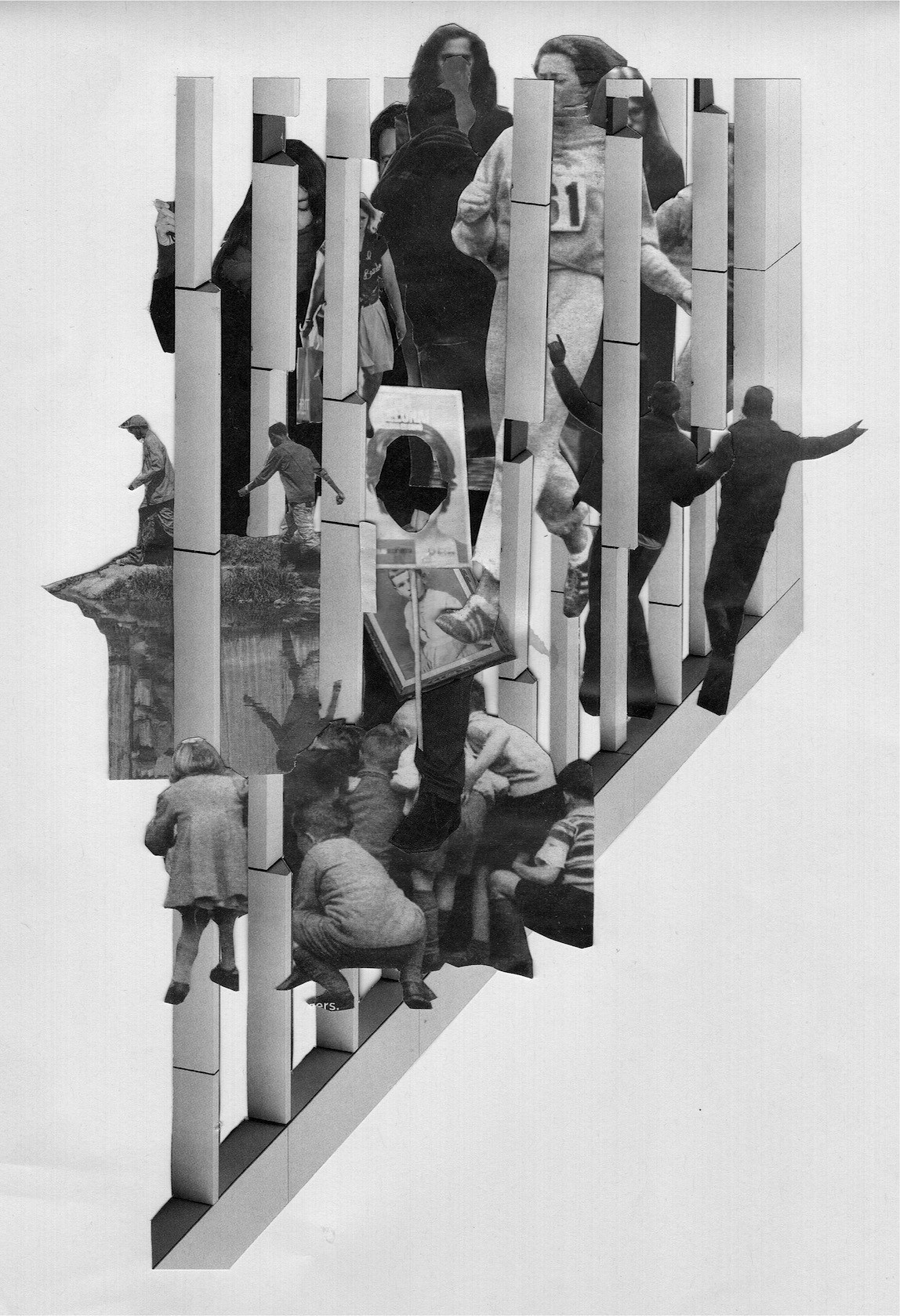
PERFORMING CONSENT
Abstract
Ethical Review as Collective Research
In 2024, the doctoral artistic research project Performing Working* underwent ethical review. The process sparked an unexpectedly rich exchange in which the researcher, her collaborators, and the ethics committee deepened their understandings of research ethics. Rather than functioning as a procedural checkpoint, the review became part of the research itself, prompting us to examine more closely how consent and ethics are conceived within co-creative, participatory, and collective artistic research. It also reshaped the committee’s own approach, demonstrating that ethical understanding arises not from static protocols but through situated, collaborative practice.
In a recent article, co-authored by members of the review committee, the researcher, and a collaborator, we examined how artistic research practices challenge and reconfigure institutional ethical frameworks. Performing Consent, this Research Catalogue presentation, builds on these insights to explore the complexities of consent (Saketopoulou 2023). It consults practices and sources drawn from activism (Kin Arts Almanac, State of the Arts, 2023), performance (Jackson 2011; artist Anna Rispoli), and BDSM (Dunkley 2009), and considers how tools such as manuals and scores (Folkerts 2017) can support collaborative practices that acknowledge those complexities. This presentation also traces the ongoing, imperfect process of how we are developing practices of our own—highlighting failures as well as successes.
Consent
In Sexuality Beyond Consent, Avgi Saketopoulou argues that “there is no such thing as consent—not in the way affirmative consent paradigms imagine it or in the way it is sold to us as a metric that can subtend ethical relations or inform our sexual politics—though there very much is such a thing as its violation.” While we do not claim that consent does not exist, we draw on critical consent discourses that reveal how traditional instruments—forms, contracts, signatures—fail to address pre-existing power asymmetries and cannot support an understanding of consent as evolving, relational, and rooted in shared desires.
Performing Consent: Proposed Content
Performing Consent will communicate how ethics and consent are being developed within Performing Working, a doctoral research project investigating the performativity of undervalued and unwaged labour, through artistic, collaborative practices. A central collaboration, Illness ⇔ Work, brings together people living with illness, informal carers, and educators to generate knowledge through shared creative processes. The project makes visible the diverse forms of labour embedded in illness and care while questioning conventional research hierarchies. It proposes consent as an ongoing, relational practice grounded in care-based, co-created responsibility.
The project shows that meaningful collaboration requires time, trust, and structures capable of adapting to shifting needs and desires. Through performative methods, collective reflection, and evolving agreements, participants articulate the often-invisible labour shaping their lives, producing shared tools such as manuals, pacts, and alternative consent frameworks. These frameworks draw, among others, on BDSM practices that emphasise clarity, mutuality, and negotiation. In this context, scores (Folkerts 2017, Hoegen 2020) replace contracts: where contracts imply fixedness and total coverage, scores hold space for the flexibility necessary to respond to evolving desires and conditions.
Co-authorship
The contribution will bring together the voices of artistic researcher Philippine Hoegen, collaborators in Performing Working, members of the Illness ⇔ Work collective, and members of the HKU (University of the Arts Utrecht) ethical review committee (ECO), to reflect on how we are learning from each other by looking beyond conventional institutional or academic fields to enrich our understanding of ethics and ethical review in collaborative research.
*Performing Working is a Professional Doctorate project conducted in HKU (University of the Arts Utrecht) as part of a new, practice-led professional education line that started in 2023 within Dutch Universities of Applied Sciences, equivalent to a PhD. (National Professional Doctorate program, Arts & Creative Professional Doctorate). In Performing Working, artist researcher Philippine Hoegen explores the performativity of work, with particular attention to undervalued, hidden, and unwaged forms of labour. Hoegen's artistic practice is grounded in performance, approached both as a way of thinking with, through, and from the body. Methodologically, the project builds on traditions in performance research that treat artistic practice itself as a mode of inquiry, where making, documenting, and reflecting intertwine. This orientation frames performance not only as a method but also as a field with its own resources for generating and sharing knowledge, and as a discipline with its own creative, infrastructural, and relational tools.
References
Dunkley, Carmen, and Lori A. Brotto. 2019. “BDSM as a Relational and Ethical Practice.” Journal of Sex Research 56 (4–5): 643–52. https://doi.org/10.1177/1079063219842847
Folkerts, Hendrik. “Keeping Score: Notation, Embodiment, and Liveness.” South Magazine no. 7 (Documenta 14 #2, 2017). Documenta 14. https://www.documenta14.de/en/south/464_keeping_score_notation_embodiment_and_liveness.
Hoegen, Philippine. 2020. Another Version: Thinking Through Performing. Eindhoven: Onomatopee.
Jackson, Shannon. 2011. Social Works: Performing Art, Supporting Publics. New York: Routledge.
Rispoli, Anna: https://annarispoli.be/about/
Saketopoulou, Avgi.Sexuality Beyond Consent: Risk, Race, Traumatophilia. Sexual Cultures series. New York: NYU Press, 2023.
State of the Arts.Kin Arts Almanac. Eindhoven: Set Margins, 2023. https://almanac.state-of-the-arts.net/