Overview of Workshop
This section reflects on the practical outcomes of the workshops, focusing on how movement restraint functioned as a tool for enhancing body-mind awareness. The four workshops followed consistent structure across both participant groups, allowing for comparison while considering individual movement histories.
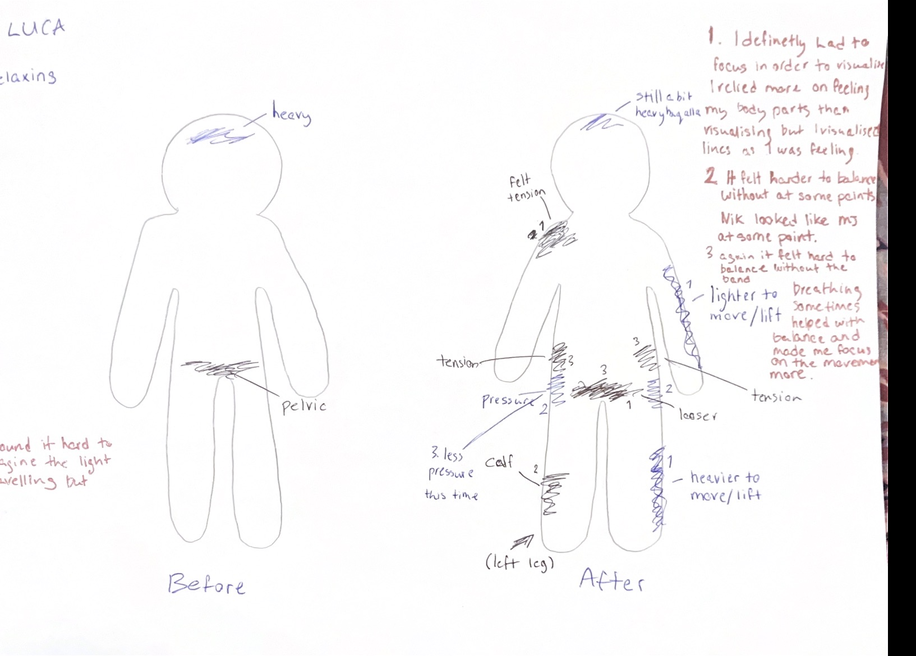
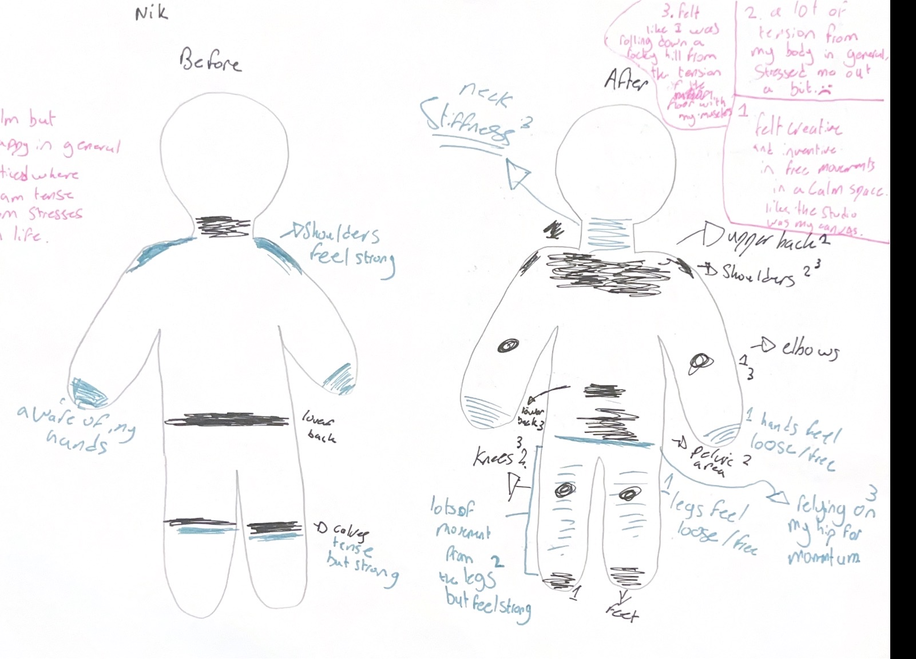
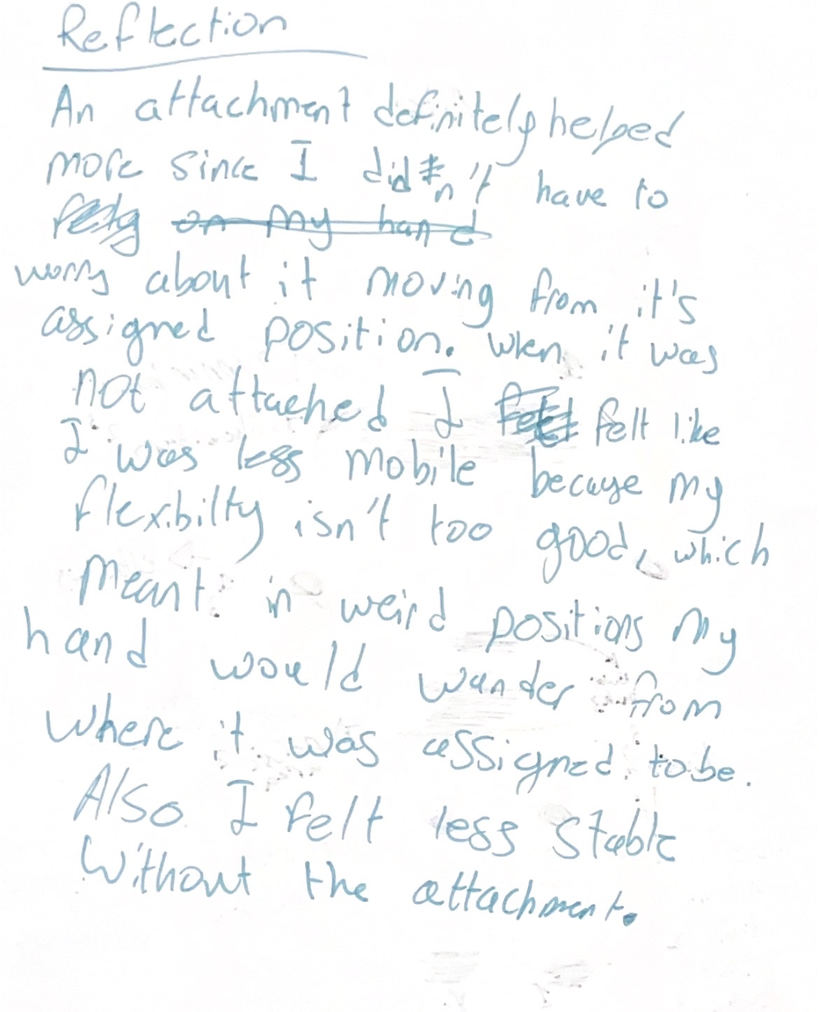
Each session integrated somatic body scanning, guided improvisation, restraint-based movement tasks, and reflective documentation through writing and body map diagrams. The repetition of structure supported participants in developing familiarity with the process, enabling shifts in awareness to emerge through experience rather than solely from instruction. All sessions were documented through video, along with all the reflective writing, as well as select observation notes written during and after the workshops, forming the basis for analysis presented here. It is important to note that all workshops were carried out in a dance studio, with the mirrors covered.
Restraint as a Catalyst for Sensory Awareness
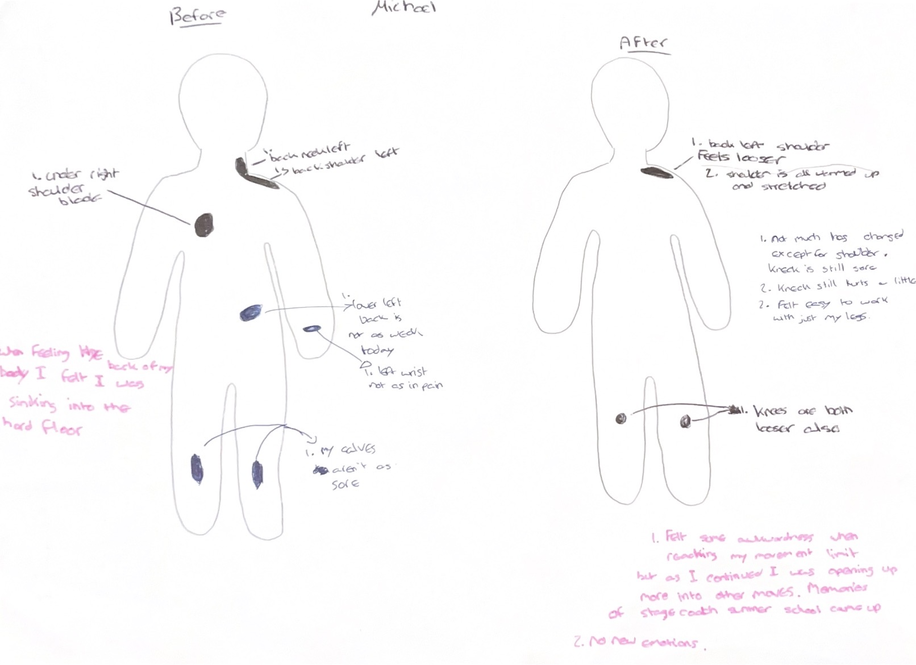
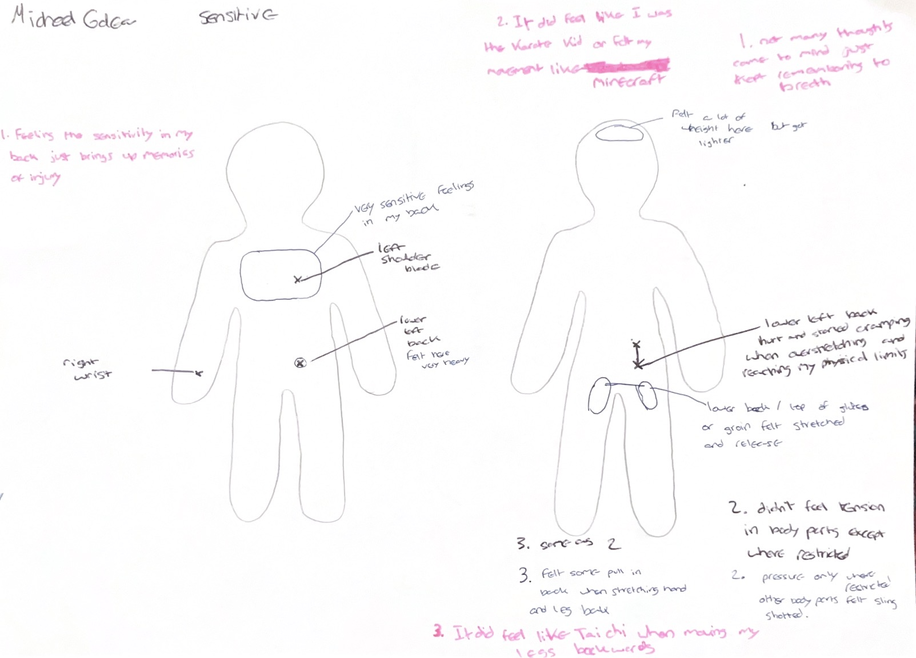
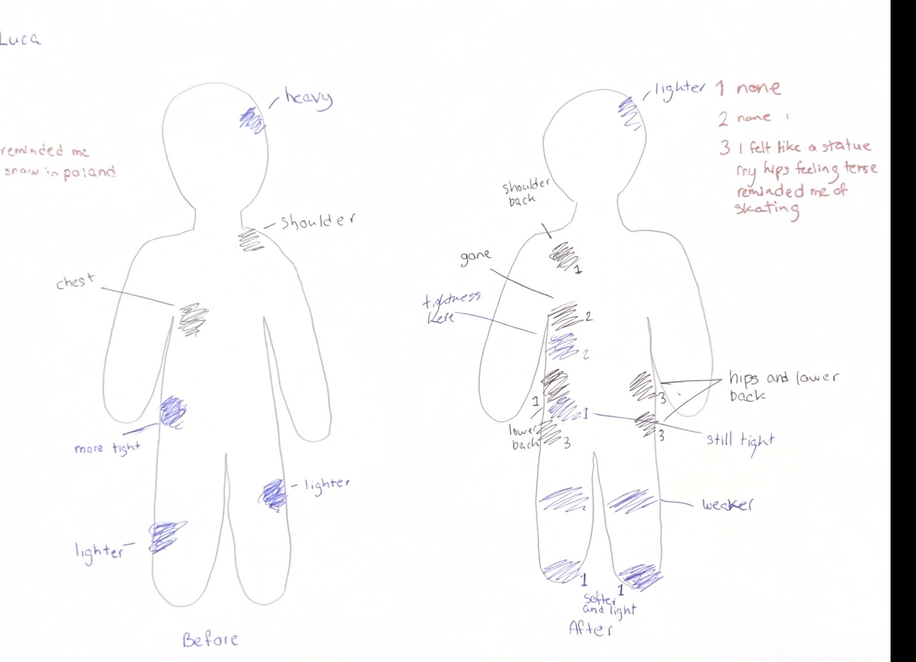
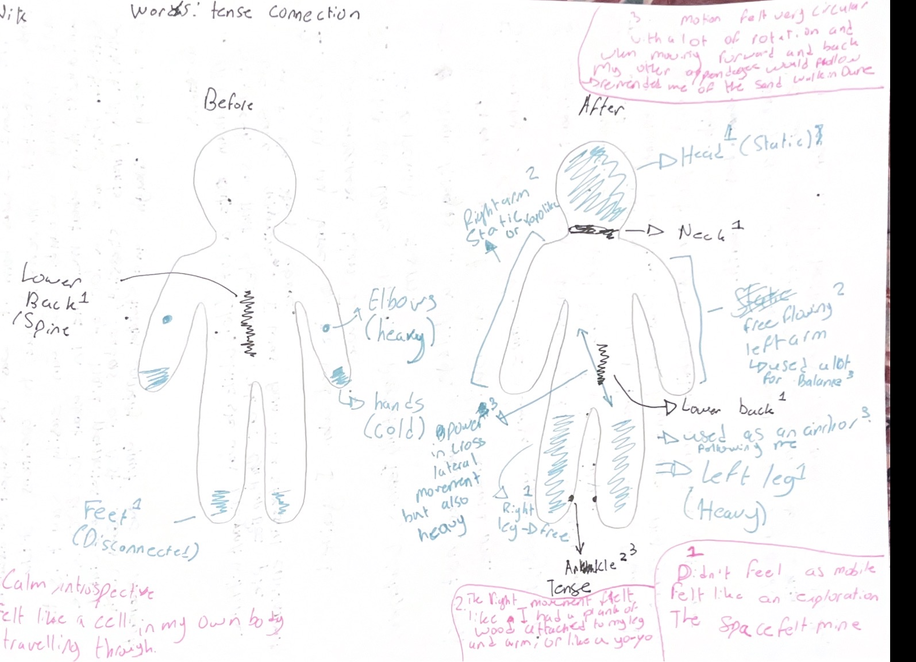
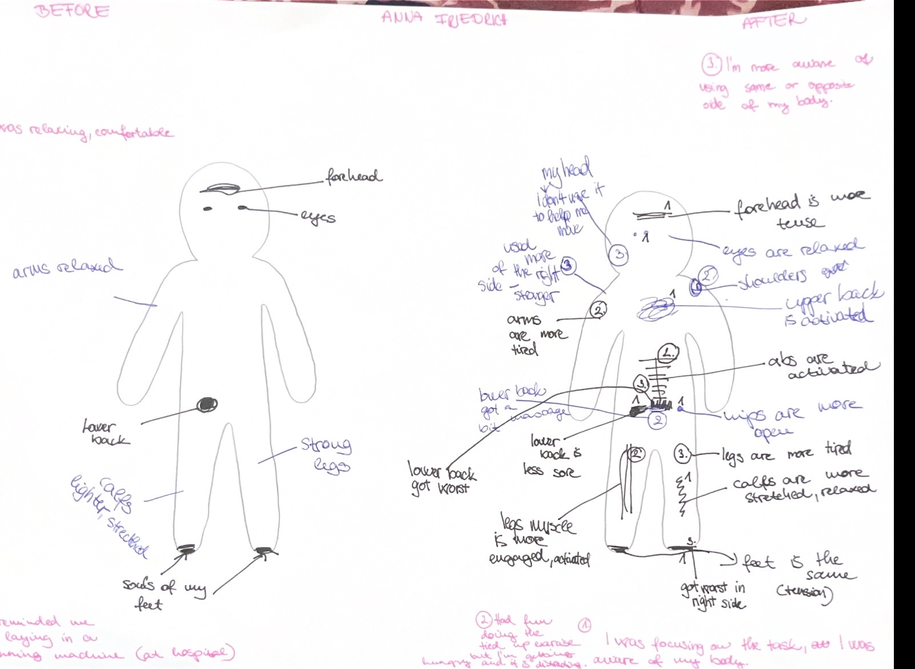
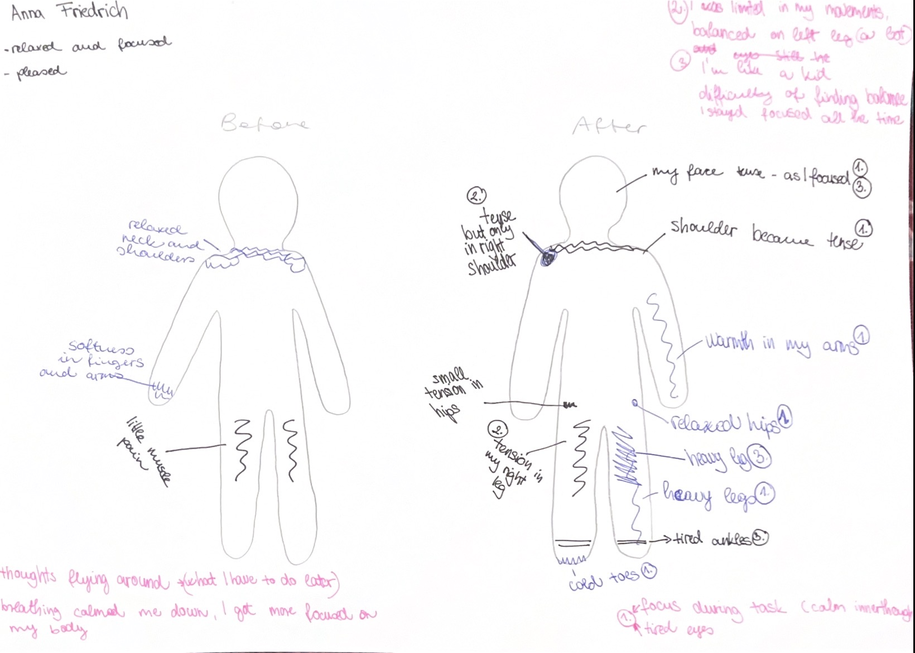
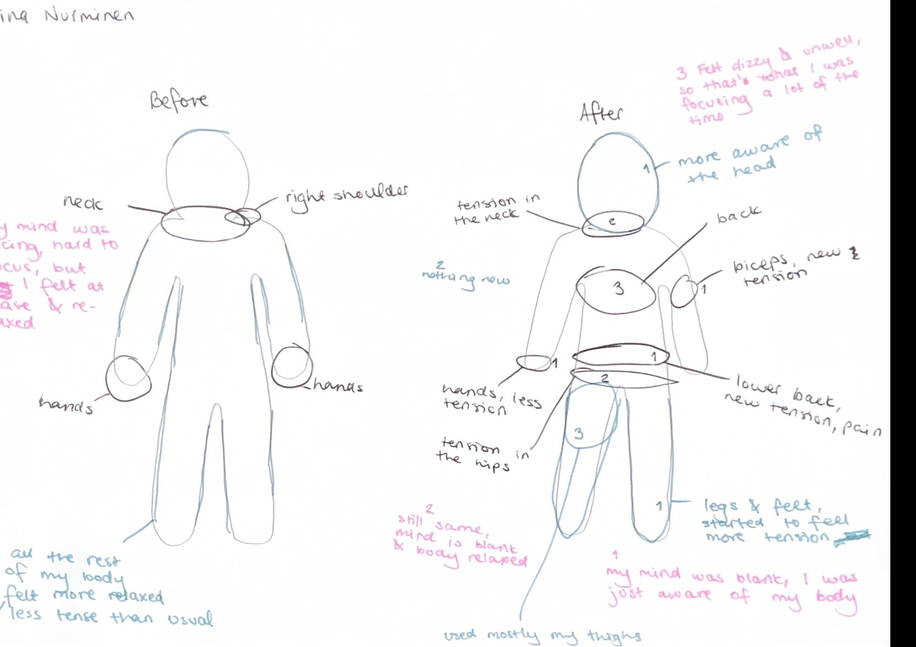
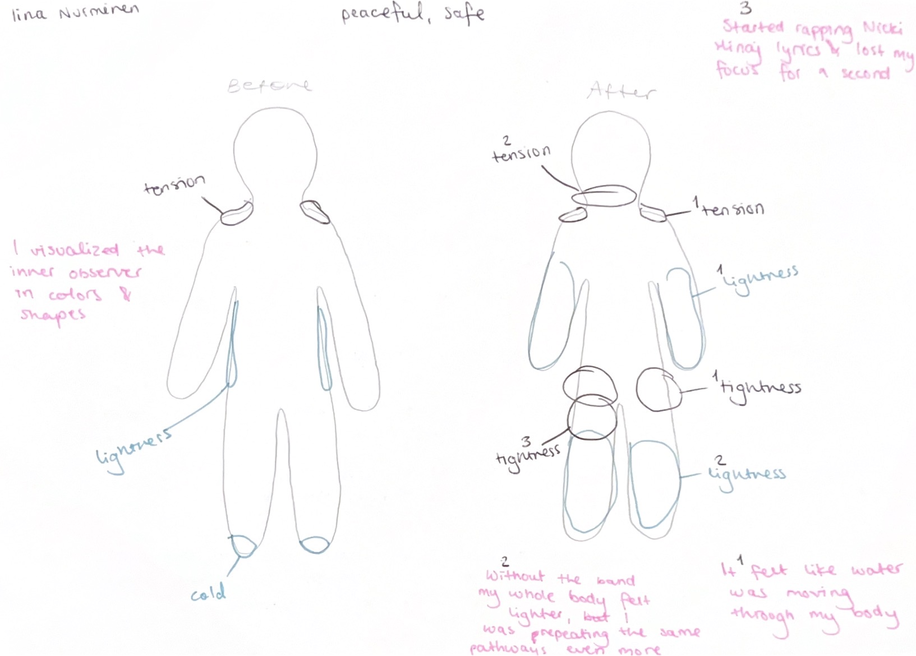
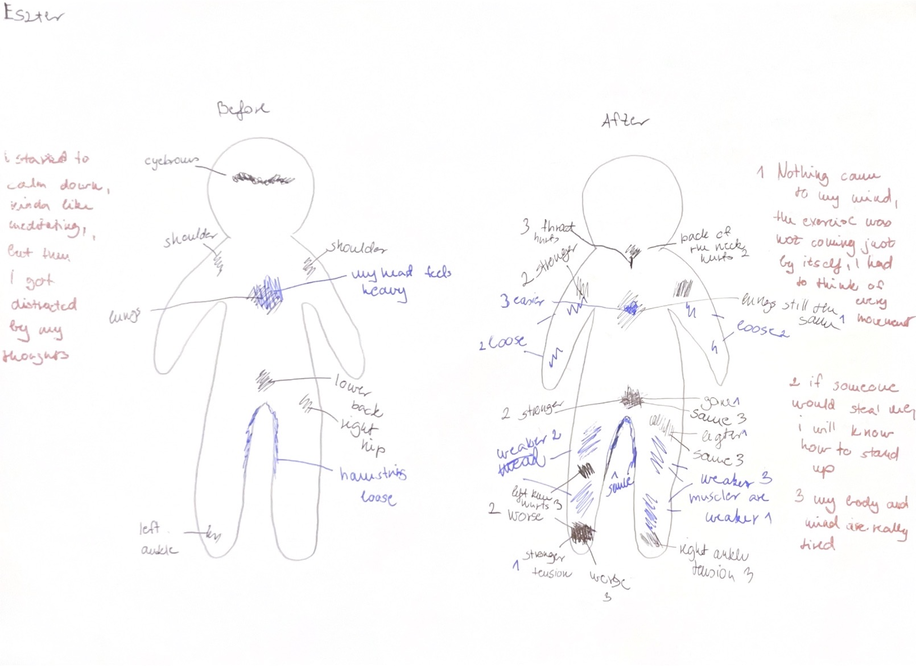
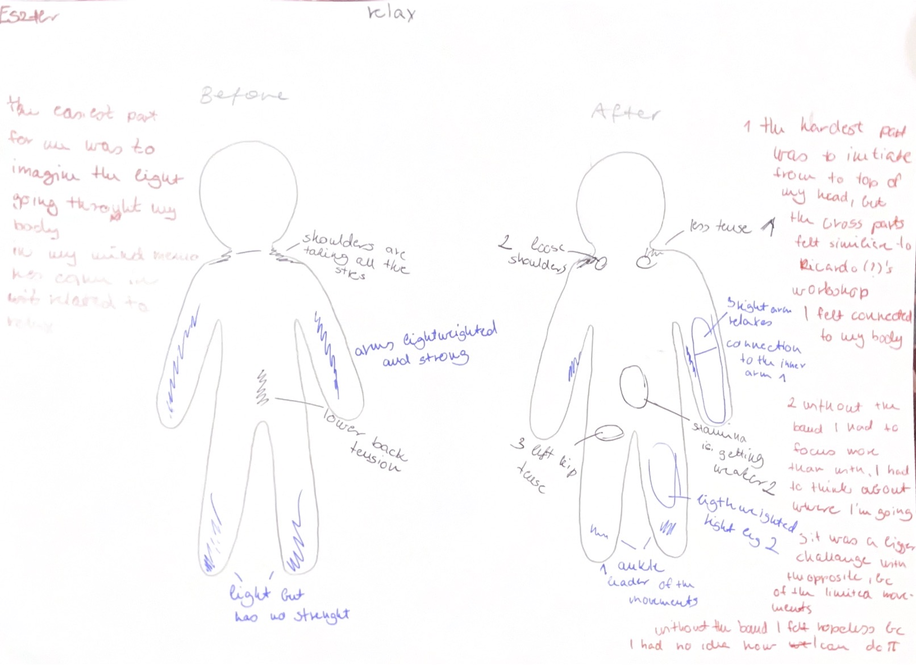
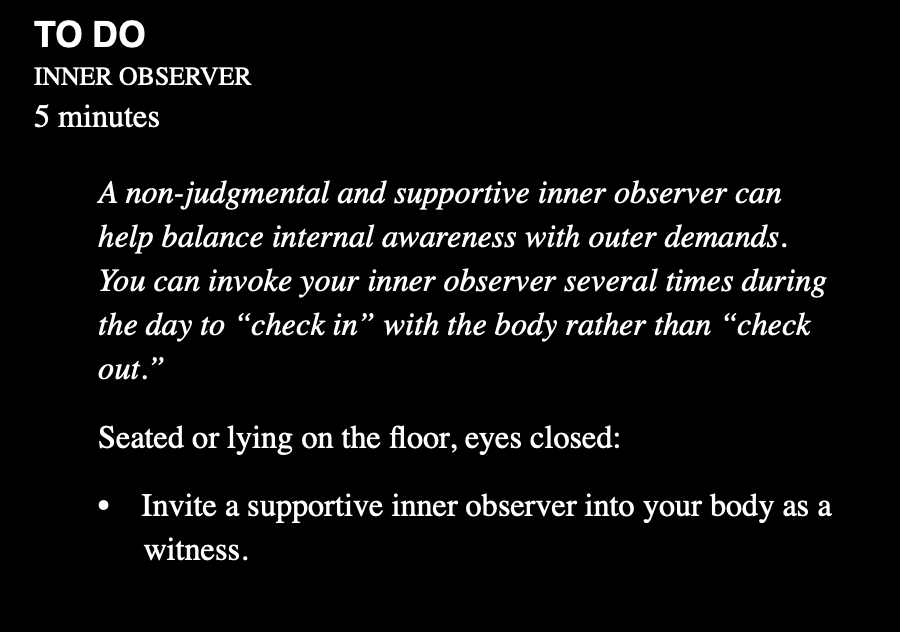
One of the most significant outcomes across both participant groups was the way that physical restraint heightened sensory awareness. The application of elastic resistance bands created a tangible sense of tension, effort, and constriction, directing the participants’ attention toward internal sensation over external form.
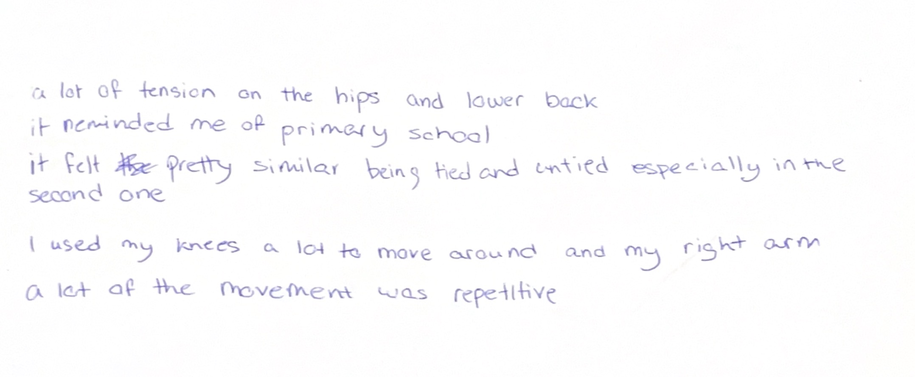
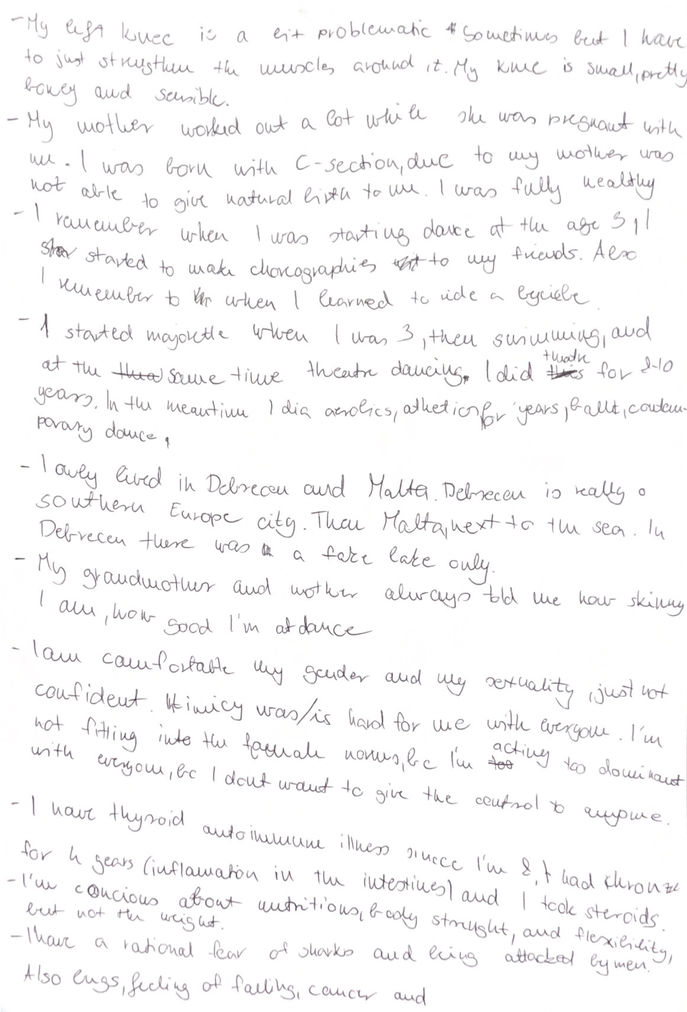
In the group featuring participants which are untrained in dance technique, this often revealed previously unnoticed areas of tension. Participants frequently marked sensations such as tightness, heaviness, and stiffness during the body-mapping exercises, expressing surprise at the intensity or location of these sensations, as well as how the sensation changed during the course of the workshops. The restraints thus functioned as a revealing mechanism, making the individual body patterns perceptible, which had not been consciously recognised prior to these workshops.
In contrast to this, participants with technical dance training tended to demonstrate an existing attentional focus toward internal sensation. Their reflections indicated a more immediate awareness of bodily organisation and effort, suggesting that prior training had cultivated sensitivity to internal feedback. However, the restraint still managed to shift their awareness, by disrupting familiar movement habits, and requiring informed adaptation.
Through the lens of Carrie Noland’s conception of agency, restraint can be understood not as a reduction of movement potential, but as a condition that initiates adaptive choice. Participants exercised agency through attentional shifts, negotiation of effort, and reorganisation of movement pathways, rather than through expansion of range or complexity.
Movement History, Habit, and Group Differences
Differences between the two groups became particularly evident when observing their responses to the movement tasks. Participants with technical dance training , tended to respond more quickly to verbal prompts, demonstrating confidence and familiarity with structured improvisation. Their movement often reflected aesthetic clarity, and technical organisation, as well as occasionally requesting more specific instruction, or clarification of the tasks.
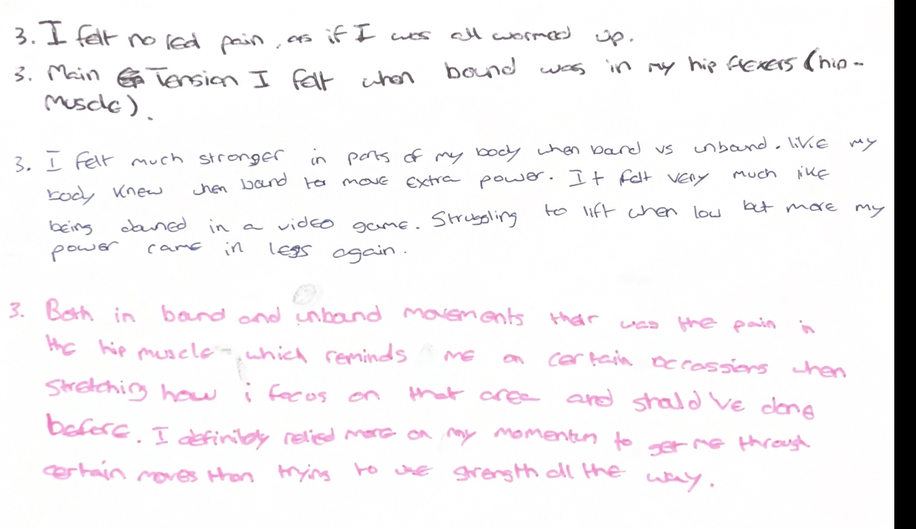
The untrained group, by contrast, generally required more time to respond physically, to the tasks, and reported greater use of physical effort, as well as conscious thinking of next movement choices, as opposed to a more semi-conscious pattern where the movement flow leads the body-mind. Their movement drew on everyday references, with participants making connections to activities such as video games, or other non-dance related experiences. Verbal interaction and humour were more present within this group, suggesting a more externalised, and social mode of engagement.
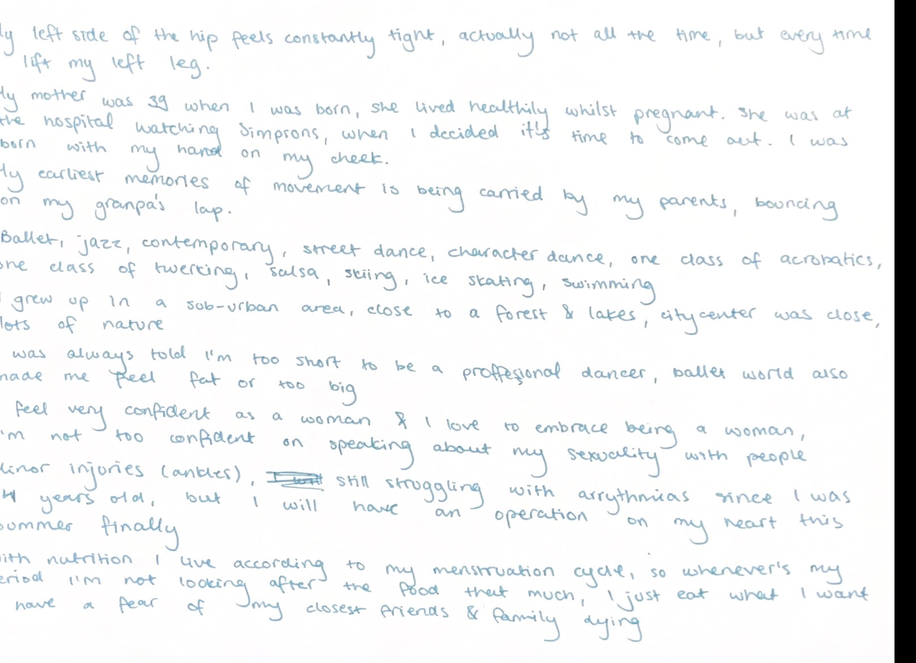
Despite the aforementioned differences, similarities emerged across the groups which complicated a simple technically trained/untrained distinction. Certain participants from each group demonstrated comparable movement pathways, and marked similar points of body tension, despite different levels of technical dance skill. This observation suggests that individual movement histories, shaped through diverse embodied experiences, may cut across formal training categories.
Drawing on Noland’s articulation of embodied habit, these findings indicate that movement history is not solely determined by dance technique, but by accumulated bodily and ancestral experience. Restraint amplified these histories, making habitual patterns visible and comparable across participants.

Memory, Repetition, and Recreating Movement Without Restraint
A recurring task within the workshops involved removing the elastic restraints, and asking participants to recreate the movement pathways explored while restrained. This task revealed insights into bodily memory, repetition, and awareness.
Interestingly, both participant groups demonstrated a similar capacity to recall and reproduce movement pathways after the restraints were removed, and both seemed to move to specific points of recreation, in a different order to their original restrained explorations. This challenged an initial assumption that technical training would result in a largely greater accuracy or retention. Instead, the task highlighted how embodied memory operates through sensation and pathway rather than through technical precision alone.
The recreation of movement without restraint often revealed subtle shifts in quality, including increased freedom, altered dynamics, or heightened intentionality. Participants frequently noted changes in sensation when comparing restrained and unrestrained movement, suggesting an increased awareness of how limitation had shaped their initial choices.
In this context, restraint functioned as a temporary inscription within the body, aligning with Jacques Derrida’s notion of trace. The experience of limitation left an embodied imprint that informed subsequent movement, even in the absence of the physical constraint.
Challenges, Facilitation, and Outcomes
While the workshops were largely met with openness and engagement, challenges emerged in relation to physical effort, interpretation of prompts, and verbalisation of experience. Participants in the dance technically-untrained group reported greater physical fatigue, as they relied on momentum and force for tasks which involved travelling across the studio space, while some trained dancers expressed uncertainty when prompts lacked technical specificity. These challenges highlighted the role of facilitation in balancing openness with clarity.
The outcomes of the project suggest that movement restraint can enhance body-mind awareness by revealing habitual patterns, activating sensory attention, and encouraging reflective engagement. For untrained dancers, the process supported the discovery of previously unnoticed bodily tension and body-mind connections. For trained dancers, restraint disrupted the familiar habits of the movers, and prompted deeper attentional focus.
Importantly, the research did not aim to measure awareness, but to explore how it emerges through embodied practice. These findings demonstrate that awareness is shaped by individual movement history, and not solely determined by technical training, positioning restraint as a valuable tool for embodied inquiry.