Royal Irish Academy of Music
Summer 2025
RIAM BMus 4 Capstone Projects & MMus 2 Research Projects, Summer 2025
How insights into traditional Armenian music inform and influence the interpretation and performance of Aram Khachaturian’s Violin Concerto in D minor.
(2025)
Eva Paturyan

Aram Khachaturian’s Violin Concerto in D minor is a significant work in the classical violin repertoire of the 20th century. As with many other Armenian composers, Khachaturian was greatly influenced by the traditional music of his country when writing his compositions. This exposition will follow my exploration of Armenian traditional music and how increased insights and understanding of it will influence the way in which I choose to interpret and perform this violin concerto. I will be making use of the insights into Armenian music which I already possess to do my own analysis of collections of traditional songs notated by the Armenian composer Komitas. In addition to this, I will be drawing on the research and information which already exists about this genre of music. Through the medium of text, and audio and video recordings, this exposition will introduce the reader to traditional Armenian music and to how it influences my playing of Armenian classical music.
Applying the compositional techniques of Duke Ellington and Gil Evans
(2025)
Paul Kiernan
This exposition presents an analysis of Duke Ellington's "Concerto for Cootie" and Gil Evans' "Miles Ahead," identifying key stylistic characteristics of each composer through the application of Jan LaRue's 'Guidelines for Style Analysis.' Following this analytical phase, the identified techniques were employed to create novel arrangements. Specifically, Evans's established techniques were applied to the melodic material of "Concerto for Cootie," and conversely, Ellington's arranging characteristics were utilised to reimagine the melody of "Miles Ahead." This practical application demonstrates the distinct approaches of each composer and highlights the potential for creative reinterpretation across stylistic boundaries.
Migration: A Compositional Study and Exploration of Birdsong through Cello and Audio Production Techniques
(2025)
Doireann Ni Aodain
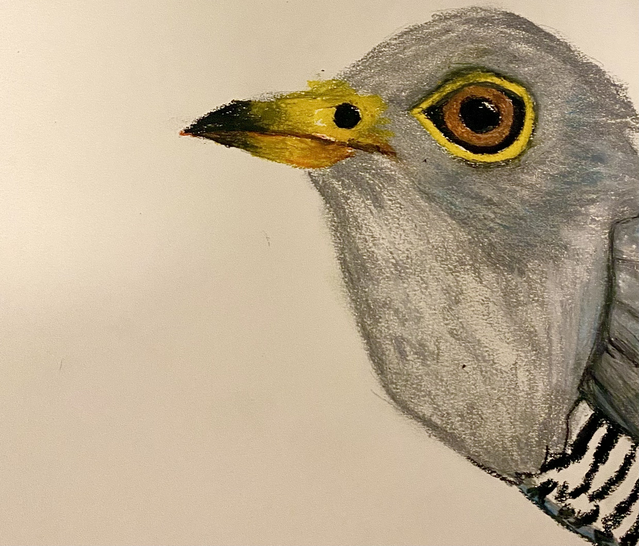
'Migration' is an electroacoustic composition written using cello, field recordings, virtual instruments and digital audio processing techniques. The aim of this project was to transcribe nature sounds by ear and mimic them as accurately as possible on the cello, then process these using the Digital Audio Workstation 'Reaper'. This material was then structured into three sections, each with its own distinct sonic identity. The piece itself highlights the migration of a cuckoo from Ireland to Africa, and all sounds used during the making of the composition were recorded from scratch.
A Day in My Life as a Music Performance Student: How can a musician protect themselves from self-sabotage in preparation for their professional career ?
(2025)
Jack O'Reilly
Musicians spend a lot of time practising to create and repeat the best version of their repertoire. The skill of being self-critical has its benefits in this scenario, however it can have a negative effect on performer's well-being which can lead to self-sabotage. This project explores the importance of understanding "self-sabotage" and what musicians can do to prevent and possibly help these symptoms. The methodology included studying reflective journal entries to identify personal areas to improve, as informed by the use of Seligman's PERMA-H model. This was used to create a well-being toolkit, creating an example of how musicians can increase awareness of their mental health and what measures can be put in place to help cope with feelings of self-sabotage. The deliverable of this research is an audio documentary that showcases a typical day of music performance student at the Royal Irish Academy of Music (RIAM) that outlines how this musician employs elements of their well-being toolkit to protect themselves from self-sabotage.
Trad Remnants: An EP Responding to the Evolving Role of Music Technology in Irish Traditional Music Today
(2025)
Shane Quinn
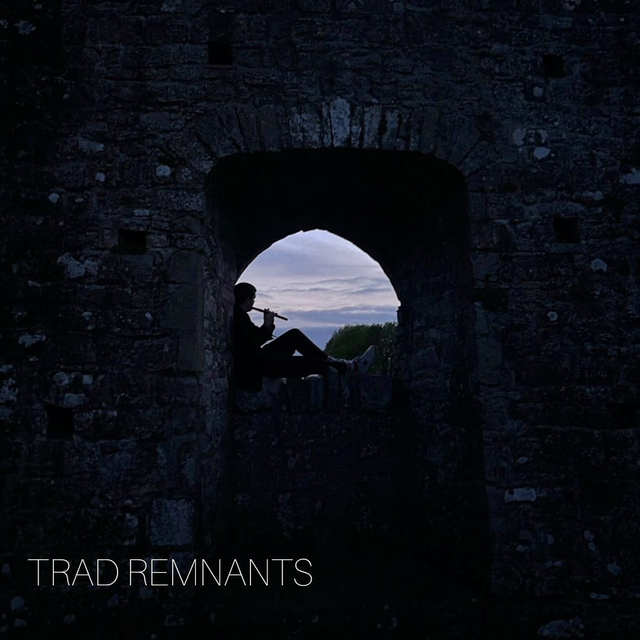
Trad Remnants is a response to the evolving relationship between Irish traditional music and modern music technology. This EP reimagines familiar Irish tunes by processing them through a variety of music technology software. Each piece explores a different aspect of this fusion while keeping the essence of the original tunes. The project reflects a personal journey of bringing together two sides of my musical identity: the traditional and the experimental.
Re-contextualising acoustic tuned-percussion music.
(2025)
Jun Bo Fu
This project is a collaboration of live performance with digital composition to create a new musical work for today. Brief excerpts of a xylophone concerto will be recorded with live musicians and a soloist, capturing real acoustic instruments in dynamic play. These recordings will then be augmented with original compositional material, which is created and manipulated in a Digital Audio Workstation. This work will intimately merge the live and digital elements, incorporating both traditional and modern techniques into a unique and innovative blend of classical performance and electronic music production.
Research on the Application Effect and Challenges of Music Education APP (Flowkey) in Piano Teaching [submitted to Royal Irish Academy of Music - 2025-05-12 01:29] [submitted to Royal Irish Academy of Music - 2025-05-14 00:10]
(2025)
Xuecheng Gao
This study delves into the application of the music education app Flowkey in piano teaching. Through a mixed - methods approach integrating theoretical analysis, case evaluation, comparative research, and empirical investigation, it explores Flowkey's effectiveness, user experiences, and its place in the music education landscape. The research findings indicate that Flowkey has several strengths, such as gamified features that enhance short - term learner engagement, a real - time feedback mechanism that aids in skill improvement, and personalized learning support tailored to different learners. However, it also faces challenges like technical instability, limited instructional depth, and a lack of emotional interaction. When compared with traditional piano instruction, Flowkey offers rich digital resources and personalized learning, but traditional teaching remains irreplaceable in areas like complex technique guidance and emotional communication. All participants concur that a combination of Flowkey and traditional teaching yields the best results. This research provides valuable insights for music educators, learners, and app developers. It suggests that educators can use Flowkey as a pre - lesson preparation tool, learners can supplement traditional learning with it while being aware of its limitations, and developers can enhance the app based on these findings. Future research could focus on larger - scale studies, optimizing the integration of Flowkey and traditional teaching, and improving the app's AI capabilities.