ArteActa – Journal for Performing Arts and Artistic Research

About this portal
ArteActa is a peer-reviewed academic journal for performative arts and artistic research, published since 2018. Starting in 2022, we publish only online, in Open Access mode, under a Creative Commons license for non-commercial international use (CC BY-NC 4.0). The journal is published by the Academy of Performing Arts in Prague.
ArteActa is moving to the Research Catalogue and our next issue will appear here. For previous issues, visit the ArteActa website.
contact person(s): Markéta Magidová
 , Veronika Klusáková
 url: https://arteacta.cz
Recent Issues
-
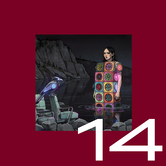
14. ArteActa 14/2025 Issue 14 of ArteActa – Journal for Performing Arts and Artistic Research, contains five artistic research expositions on the Research Catalogue platform (“AI gave me an assignment, and I did it. Now what?”, “In Sync With A Machine”, “Demolish Monsters on the Rocks: Prompting Through an Ensemble”, “Acoustic Plein-air: a Spacesound Listening Experience as the Basis of the Musical Composition”, “Norths: Navigating Instability By Ear”). There is also a study by John Franek “Rhizomatic Abstraction: Composing Music to Investigate Memory Patterns Among Listeners”, and a comprehensive collection of Czech translations of texts by the renowned theatre scholar Patrice Pavis published on the journal’s website. The issue is accompanied by an introductory essay by Martin Pšenička (“Unsettled Subject: From Emancipation to Separation”) and a review of Vanessa Ament’s book The Foley Grail by Sara Pinheiro (“Sound, Performance, and Technology: Considering The Foley Grail”) and an interview with Ament. In his essay, Martin Pšenička draws inspiration from the contributions in this issue, which seem to share a common theme: the changing nature of authorship and the position of the author as a subject, reflecting the broader topic of the position of the subject in today’s world. Three authors analyse the changing conditions of artistic work with AI, examining the possibilities of how to situate creativity in the context of communication with large language models. Brett Ascarelli explores the inverted relationship between humanity and machines. The central question of her study is as follows: how useful can AI be at this present moment to generate assignments or instructions to teach and train people to live more playful, creative, and ethical lives? Ilja Mirsky, Leonid Berov, and Gunter Loesel, in their exposition “In Sync With A Machine”, create an environment in which the user comes into contact with ANA, an environment integrating GPT-4, emotion-recognition algorithms, and a simulation of its own affective state. ANA engages users in a 10-minute interaction, fostering an immersive narrative exchange in which the affective dimension of collaborative storytelling takes precedence. The authors then address the challenges of prompt design in this setting, focusing on the concept of emotional attunement, the feeling of being “in sync” with a machine throughout the interaction. Bruce Gilchrist, in the exposition “Demolish Monsters on the Rocks: Prompting Through an Ensemble”, conducts a series of practical experiments that link human actions labelled as “biometric poetry”, which stimulates a language model. This project, combining performance, waste material, object recognition, and a language model, explores how the manipulation of garbage can be rationalised by a machine to produce poetic texts as a commentary on the action portrayed on a screen. Three articles in this issue are focused on the analysis of perceived sounds and music – by listeners and by authors. Czech composer Slavomír Hořínka presents his exposition “Acoustic Plein-air: a Spacesound Listening Experience as the Basis of the Musical Composition”, in which he analyses the perception and the origins of musical ideas while observing the soundscape of nature. Five composers – one teacher and four students – set out to listen to the soundscape of the Polish foothills of the Giant Mountains in order to explore the influence of subjective perception on the final shape of a composition. Jorge Boehringer, in the exposition “Norths: Navigating Instability By Ear”, states that critical phenomenological and ecological issues emerge from the noise encountered when sonifying (near) real-time seismic and geomagnetic data, as well as data from communication systems. John Franek’s study, “Rhizomatic Abstraction: Composing Music to Investigate Memory Patterns Among Listeners”, asks what makes an experience memorable. What do we, as listeners, recall after a listening experience? The text provides a brief exposition of research on expectation, consonance, dissonance, rhythm, and time, and presents the details of the listening experiment and the composition of Rhizome. The issue concludes with the Czech translations of texts by Patrice Pavis and the article “Sound, Performance, and Technology: Considering The Foley Grail” by Sara Pinheiro, which includes her interview with foley artist Vanessa Ament. Pavis’s artistic-research contribution offers one possible approach to the phenomenon of theatrical adaptation. It is based on practice, specifically on the author’s novel Poème toi-même (Poem yourself), and presents his adaptation of one of the chapters. Pinheiro’s text puts the art of film sound effects into focus.
-
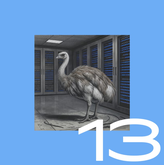
13. AI (and) Art: The Poetics of Prompting 13/2025 With the rise of generative AI systems, the term “prompt” has taken on a new role: as an interface through which we instruct “intelligent” machines to produce content across various modalities—text, image, video, and sound. While earlier systems combined specialized models (e.g., diffusion for images, transformers for text), newer architectures integrate these capabilities natively, allowing for seamless multimodal interaction. Prompt engineering continues to evolve as a discipline for refining these interactions, shaping model outputs toward higher consistency, predictability, and utility. Yet not all prompting seeks optimization. Many users engage playfully, pushing the system to surprise, amuse, or even fail. These prompt bricoleurs embrace improvisation and serendipity, exploring the generative system as both tool and toy. This issue of ArteActa, based on the open call “AI (and) Art: Poetics of Prompting”, features diverse approaches in artistic research that challenge conventional expectations of algorithmic generativity. The emphasis on the act of “prompting” calls for frameworks that privilege the process of interaction between the artist and the technology, instead of merely considering the output. In addressing this process, the contributions draw on established artistic strategies and aesthetic concepts, explore the structural limitations of algorithmic operations, reflect on the affective dimensions of prompting, or adopt the perspective of “thinking-with” (in Donna Haraway’s understanding) to tap into the inherently collective “making” of visual culture and systems of knowledge. Two additional submissions can be found on the ArteActa website: Administering (AI) Attention: Ekphrasis and the Poetics of Prompting by Rolf Hughes (EIT Culture & Creativity) explores how the act of prompting generative AI constitutes a new form of artistic authorship and aesthetic practice, grounded in historical frameworks of conceptual art, creative constraint, and ekphrasis. Drawing an analogy with Kafka’s messengers, the paper positions AI as a similarly enigmatic collaborator, interpreting human prompts through opaque, algorithmic processes. Accessible here: https://arteacta.cz/en/artkey/ara-202501-0008_administering-ai-attention-ekphrasis-and-the-poetics-of-prompting.php. The issue is closed by Zuzana Augustová´s Influences of Ernst Jandl in the Theatre and Radio Work of Jiří Adámek, a study of the experimental work of the current Czech theatre and radio director Jiří Adámek, tracing his sources and inspirations to Austrian authors like Ernst Jandl and Peter Handke. Accessible here: https://arteacta.cz/en/artkey/ara-202501-0001_jandlovske-vlivy-v-divadelni-a-rozhlasove-tvorbe-jiriho-adamka.php.
-
12. Corporeality, Disembodiment, Inter-Action (ArteActa 12/2024) Disembodied interaction is on the rise in contemporary society, requiring new forms of performativity in daily life and physical relationships and changing the way we experience and explore our immediate surroundings. How can the body be posited, felt, and researched vis-à-vis an increasingly virtual environment? What aspects of materiality and corporeality must be considered in interactions that are not necessarily physical? Does the gap between bodily experience and its virtual setting require closing, or does it conceal the possibility of a fresh kind of creativity?
-
11. ArteActa 11/2024 Issue n. 11/ 2024 with exposition from Tereza Reichová and Kateřina Krutká Vrbová in Research Catalogue as well as other open-access articles and a video essay.