Thomas Reyna
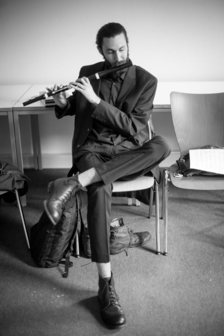
Netherlands (residence), United States (citizenship) °1989
en
Quantz, his method, and the use of temperament in Baroque flute performance practice.
Why should a player of the Baroque flute follow the fingering system of Johan Jochem Quantz, and use 1⁄6-comma meantone temperament (with 55 commas per octave) when performing Telemann’s Zwöle Fantasien für Querflöte ohne Baß?
When one approaches the method of Quantz in his Versuch, a flute player is confronted with a dizzying array of fingering options unlike anything else happening in the Eighteenth-cen. How might one apply all of these fingering options in a musician’s practical life? I began to examining the tuning system that Quantz would have been most familiar with, and most likely would have employed in his performance practice. I came to the conclusion that 1⁄6-comma meantone temperament (with 55 commas per octave) was the temperament that Quantz would have been most familiar and is the one his is talking about in his Versuch. This tuning system links not only to Quantz, but also to the composer G.P. Telemann. Telemann mentions it himself as his preferred tuning in Georg Phil. Telemannsneus musikalische System. By connecting Quantz’s method to Telemann’s own tuning preference, we can infer that the performance of Telemann’s Zwöle Fantasien für Querflöte ohne Baß should be played using 1⁄6- comma meantone temperament (with 55 commas per octave).