Comment On, hosted by Batalha Centro de Cinema, explored what becomes possible when commenting moves away from judgement and toward attentiveness. Rather than focusing on how to give “good feedback”, the encounter examined how a comment might sustain someone’s process instead of constraining it. We asked: When does a comment support a practice? When does it limit it? How might feedback operate as an act of listening rather than an act of closure?
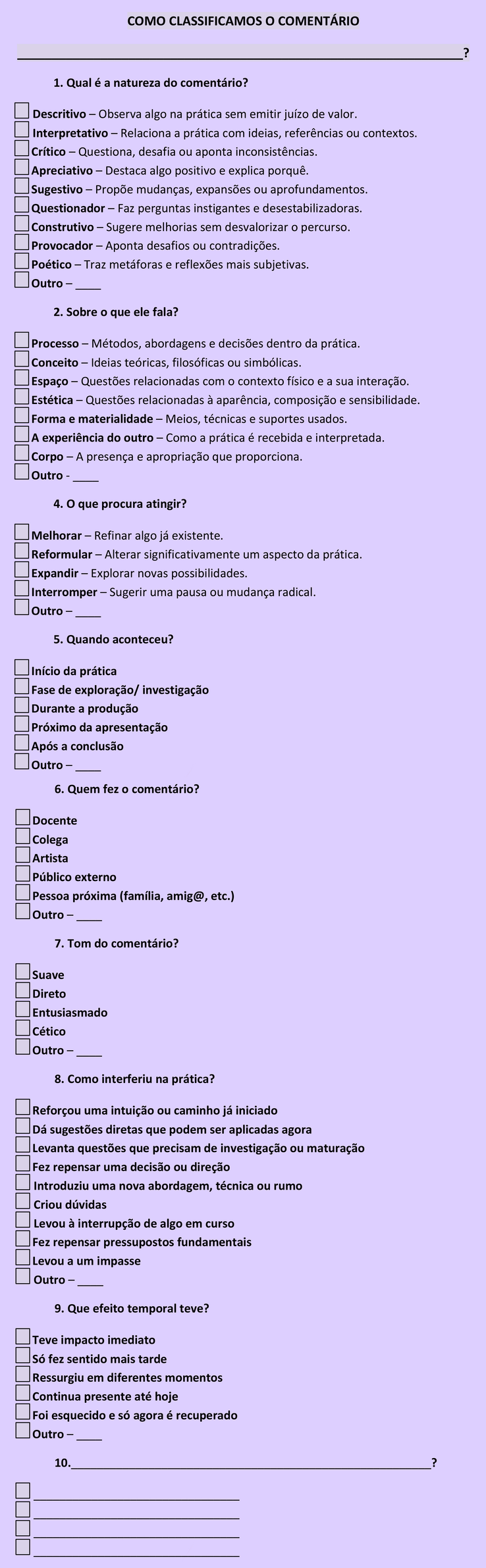
We commented on unfamiliar objects using clues from a die. From there, we revisited, analysed, and rewrote comments. We recalled a comment on our artistic practice that had stayed with us over time and examined these remarks through classification forms. Working with these aleatory and deliberately bureaucratic tools allowed us to observe how comments operate within our practices, how they can encourage or silence, open a path or foreclose it, redistribute attention or concentrate it.
By approaching commentary in this way, we came to understand commenting above all as a relational act that carries ethical and political weight. Comments embed structures of value, authority, and expectation within exchanges, circulating subtly through the ways we speak, respond, and make ourselves available to one another.
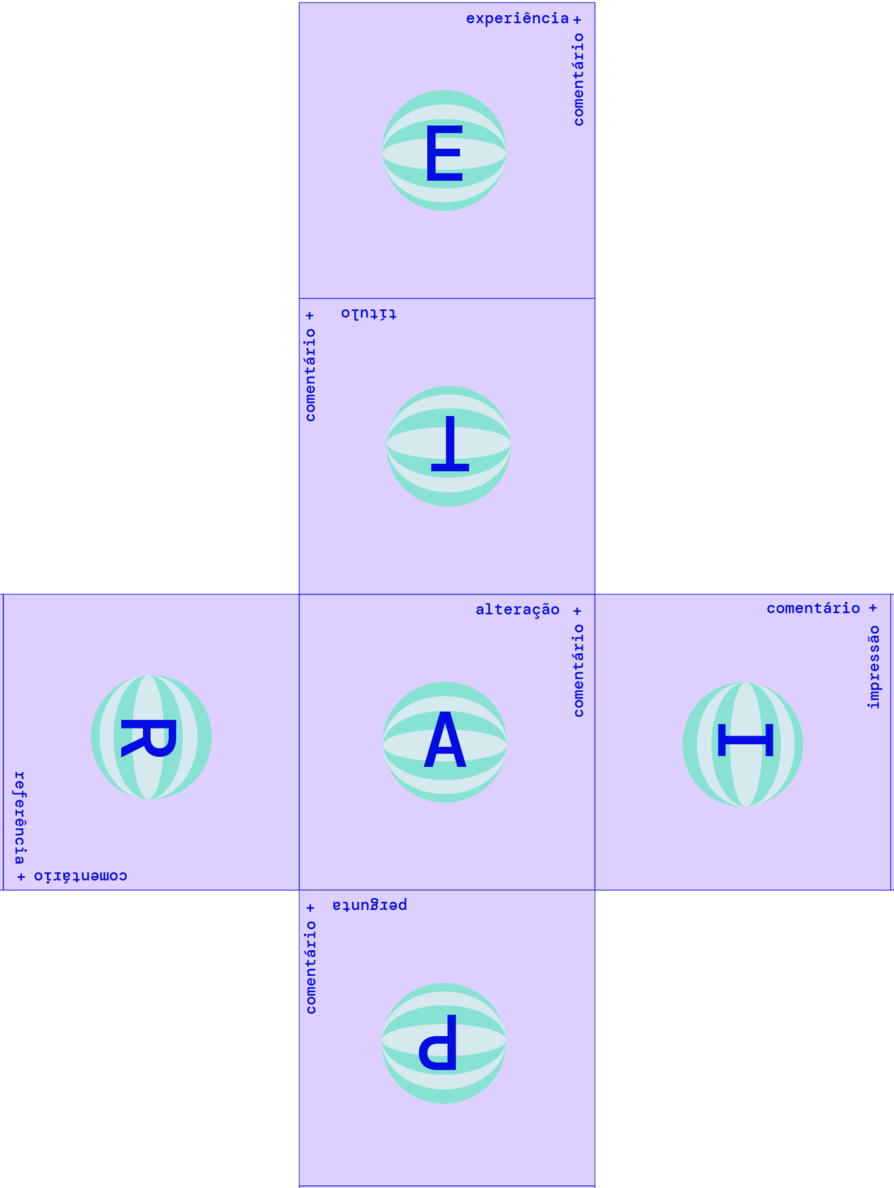
Each face of the six-sided die invites a different comment:
A — a comment that provokes change;
I — adding impressions to the comment;
P — introducing a question;
R — referencing something or someone;
T — proposing a title;
E — sharing a related experience.
The device works through randomness, prompting us to rethink consequences of how we comment and to observe how can transform the tone, direction, and ethical weight of artistic dialogue.