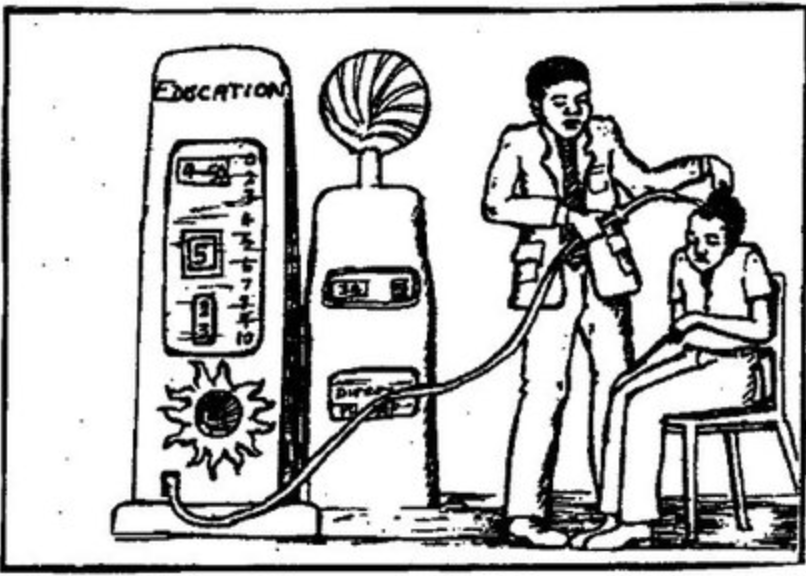
How we teach influences how people learn. The Brazilian educational theorist Paulo Freire developed ideas and practices, albeit for different contexts, that I propose are applicable inside the conservatoire. One of his primary concepts is that of the ‘banking system’ of education, wherein ‘the scope of action allowed to the students extends only as far as receiving, filing and storing the deposits.’1 The student is seen as an empty vessel in which knowledge is deposited by the teacher, thus negating the possibility for knowledge to be seen as inquiry. In contrast to this concept, Freire proposes the ‘problem-posing’ approach: ‘In problem-posing education, people develop their power to perceive critically the way they exist in the world with which and in which they find themselves; they come to see the world not as a static reality, but as a reality in process, in transformation.’2 Although I am personally not so keen on the usage of the term ‘problem’– suggesting as it does one solution – and would prefer to think of a ‘question’ or ‘dilemma’, I believe Freire’s view of education which favours critical enquiry, is of great value.
Heloisa Amaral examines a number of music institutions that are exploring different teaching approaches. She refers to Veronica Ski-Berg’s identification of four specific discourses around higher music education: ‘employability, artistry, craftmanship and holism’.3 It would seem self-evident that how we teach will be related to what kind of musician we are wanting to ‘produce’, and her article offers valuable insights into possible futures. However, given the specific composition of students in my workshop, I will focus on the dynamic between the conservatoire and the student at entry level. Should the conservatoire be responsive to the ‘pre-history’ of the student? And how might this influence the curriculum?
Who we are teaching - generative themes and reacculturation
Another concept that Freire develops is that of generative themes. Briefly, Freire proposes that students have their own generative themes which connect to their lived experience. That is to say, the students own situatedness is seen as worthy of exploration. There are connections to be made here with ideas expressed by Kenneth A. Bruffee, a scholar specialising in collaborative learning, who suggests that ‘the knowledge students bring to higher education ought to become part of the equation of curriculum making’.4 What kind of relationship can be created between the knowledge students bring and the knowledge the conservatoire wishes to share? Bruffee proposes that higher education is involved with ‘reacculturation’, that is, it should allow us to “renegotiate our ties to one or more of the communities we [already] belong to and at the same time gain membership in another community”.5 This raises questions lying outside the scope of this paper regarding which communities’ students are being reacculturated towards, that in turn relates to a changing environment in the professional possibilities for students.
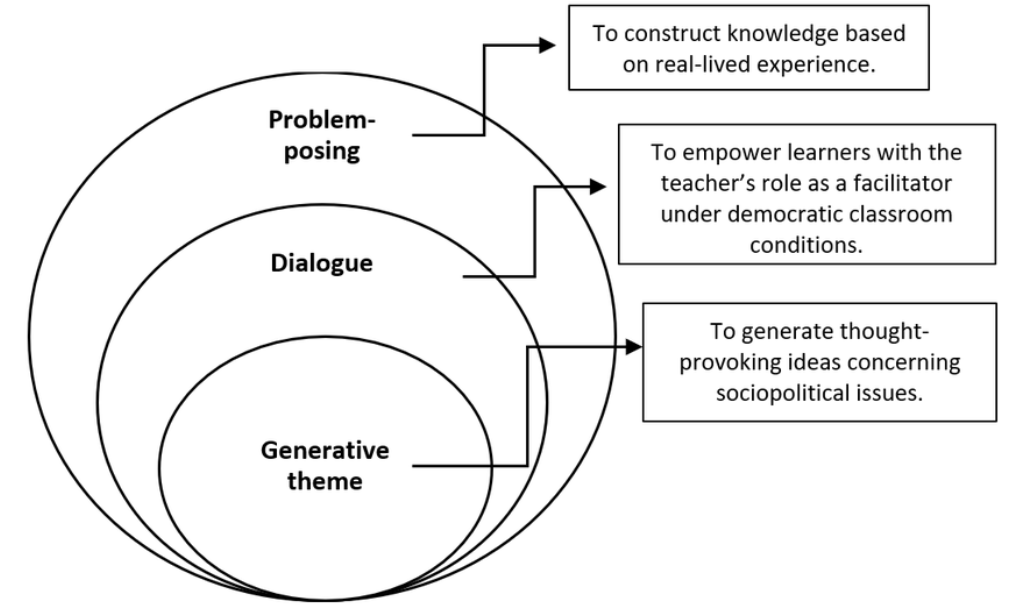
If we propose that the student enters the conservatoire with their own carrier bag of knowledge, how does this intra-act with the knowledge the conservatoire is offering? Is there space for a feedback loop of information within the conservatoire that travels not only from institution to student but from student to institution? In the workshop we explore the notion of lived knowledge and present some concrete examples of how this works.