This brings us to the topics of decolonisation and decanonisation, both being important aspects in a re-imagining of the curriculum.
Decanonisation can be seen as an umbrella term which has various applications, but always in relation to the acknowledgement of the absent and silent voices within traditional canons (of literature, visual arts and music). The process of decanonisation may refer to approaches related to a recognition and inclusion of works from people from marginalised groups. Decanonisation can also pertain to the process of opening the idea of what should be contained within the canon to include other genres.1
In music this might take the form of attending to women and people of colour who have been/are practicing Western art music but have been ignored, both historically and currently. It can also be seen as the inclusion of other genres inside the academy – such as jazz, pop and folk. However, as the composer, theatre-maker and academic meLê yamomo notes, the hegemony of Western aesthetics globally leads to situations where other musics and sound cultures may be taught at an institution but still not influence the existing canon in any significant fashion as it is not seen as being of equal value.2 This brings us to the topic of decolonisation.
Decolonisation is concerned with how we contextualise Western art music, and where we position it. How do we position ourselves in the conservatoire in relation to other art music traditions – how do we ensure that we are not supporting an idea of Western (white) exceptionalism? I suggest that if we don’t talk about colonisation, about extraction and the hegemony of the West, we are creating a bubble for Western art music to exist in that needs to be burst. One note about terminology – I am using Western art music through this paper to describe art music that has emerged out of the political rather than geographical West – that is North America and Europe. I also appreciate the term Eurological, as constructed by George E. Lewis and widely used by Sandeep Bhagwati.3 This word acknowledges that art is also a product of a particular perspective, in this case, in a certain logic rooted in European history. This is not to deny that Western art music, especially contemporary art music can currently be considered to be a marginal island on the sea of global and popular musics. Perhaps therefore, it is all the more important for it to be involved in a critical discourse with its own history to allow new kinds of relationships to emerge with those that have felt alienated from ‘High Art’ and its associations with 19th century class systems.
Looting
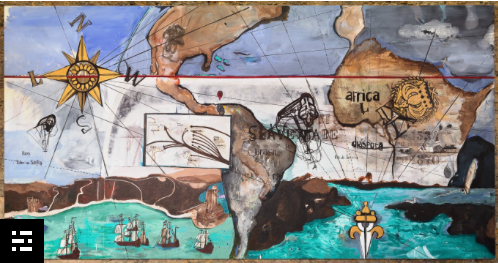
There are many aspects of the decolonisation discussion that are worthy of consideration in relation to the curriculum. Bhagwati discusses the practice of looting – which in recent years has been publicly addressed in Western museums resulting in acts of repatriation. In music, source material has often not been acknowledged, although recently indigenous people’s interests have received more attention.4 The question of whether musical elements are appropriated is often related to the amount of recognition that the source musicians receive, which in turn is connected to how we value the art of an-other. Creating an environment where there is transparency regarding the sources and influences of works in the curriculum can support both a re-assessment of the art of an-other and a realisation of the points of connection over time and place. The complexities of the cross-pollination currently occurring is something that emerged during workshop discussions and will be addressed later.
Silencing
Although the focus of musicologist Martin Stokes’ article is related to ‘global music history’ which is without doubt a more expansive carrier bag than the one operating in most conservatoires, some of his observations remain pertinent when considering a re-contextualisation of Western art music. As many writers have noted (see footnote), to be a woman, a person of colour, to identify as queer, or horrors! - to embody a combination of these traits is to be marginalised both historically and currently in Western art music.5 I suggest that Stokes comments, which relate to how ‘global music’ is studied, are also applicable to Western art music history. Stokes asks whose history we are recounting. ‘What role have we played, to start off with, in either entirely removing people from history, or, as Dipesh Chakrabarty put it, consigning them to history’s ‘waiting room’?’6 An investigation into why voices are missing and how they came to be silenced would seem an essential step in the process of contextualising, of situating the curriculum. Stoke notes that, ‘[a]nthropologists and ethnomusicologists … have always regarded ‘silence’ as an active proposition, usually with an agent and a patient. Somebody has been silenced, by somebody, for a reason. ‘People without history’ have been made so by others who gain from having it.’7 Rather than sinking into a shame and blame mode, I propose critically reflecting on historic practices within Western art music and creating opportunities to listen to silenced voices from both the past and the present.
I suggest that we should not demand that marginalised voices say something new or unexpected. Even if the silenced express themselves in a fashion similar to the existing canon, their voices are needed. However, it is most likely that the unheard have developed different voices in the anechoic spaces that they have been inhabiting.8 These spaces, without the resonance from the dominant framework, may have created their own internal feedback systems or discovered connections with other excluded voices. To listen to these voices can be seen as part of the process of de-centering.
Which history?
As earlier noted, the term ‘music history’ is a rather misleading term – one could even say one of obfuscation. Firstly, the term ‘music’ is often used without specifying what kind of music we are referring to, and secondly, the history of Western art music is often not sufficiently historically contextualised. There is an idea of music history being somehow ‘outside’ of history. If we talk about modernity in the arts as beginning in the late 16th and early 17th centuries, we must surely also talk about the voyages of ‘discoveries’, the trading companies and the slave trade that facilitated the wealth of the Baroque. Walker notes that despite the obvious links between the economic success of Western powers globally, and the ‘opulence of the Baroque era …I know I am not alone in having taught music and politics in the court of Versailles without any mention of the wealth from North America and the Caribbean that funded Louis XIV’s extravagant use of music and dance.’9
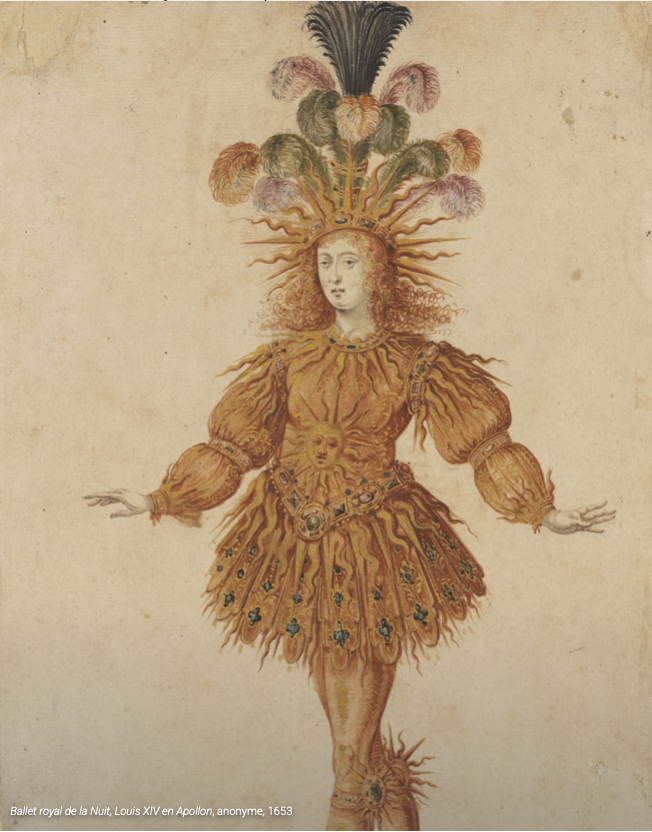
By ‘dehistoricising’ music history—a history largely compiled in the late 19th century — we run the risk of (unwittingly) signalling a message of white superiority. In an environment in which the majority of students and staff identify as white, racial discrimination may occur unconsciously. Christina Scharff describes how ‘homophily’— ‘the tendency of individuals to form networking relationships with those who have a similar background in terms of gender, race, and class’—may play a role in excluding the ‘other’, albeit not always consciously.10
This does not mean that we need to label all Western art music as tainted but rather to situate it inside a global setting and to consider who has been excluded or marginalised.
In his thesis Brian Gellerstein notes: ‘[i]n music education, the silence concerning the assumptions and lenses which frame the curricula and practices that dominate the discourse suggests that collectively, the ideological foundations within the profession remain unexamined.’11
Walker asks some difficult questions which seem essential when we discuss decolonisation:
‘Is decolonising about omitting material, altering delivery methods, changing assessment or all of the above? Can we decolonise and retain what is currently considered valuable? Or must the academy indeed be rebuilt around alternate value systems?’12 She suggests that decolonising is a process and should not be thought of as something one can just ‘fix’. In the same way, music history itself is not fixed but rather needs to be in discussion with situation, with time and place and social movements, to be open to a process of contextualisation of de-centering.
If we see education as being something ‘in becoming’ rather than ‘being’ then perhaps we can create space for a curriculum that is responsive and in dialogue with not only the past and present but also the future.