In October 2025 I had the opportunity to work with a group of students from the Royal Conservatoire of The Hague. The students were extremely diverse in terms of cultural background and artistic practice but nearly all of them shared one characteristic, that this was their first year at the Conservatoire – either as a Master or Bachelor student.1 The workshop was presented as a theoretical and practical investigation into how, why, and what we learn and what might be missing in our education. The fact that the majority of students had only been in the conservatoire for a month influenced the focus of the workshop. We could not discuss what they were missing in a curriculum they were still in the process of discovering. We could, however, contextualise our learning experiences before entering the conservatoire, using the theoretical frameworks described throughout this paper. These frameworks allowed the students to consider their own cultural baggage from another vantage point. From this situation, we created the Unheard Symphony – a selection of audio fragments that carried meaning for the students and offered both interesting resonances within the work as a whole, as well as situating the students’ backgrounds.
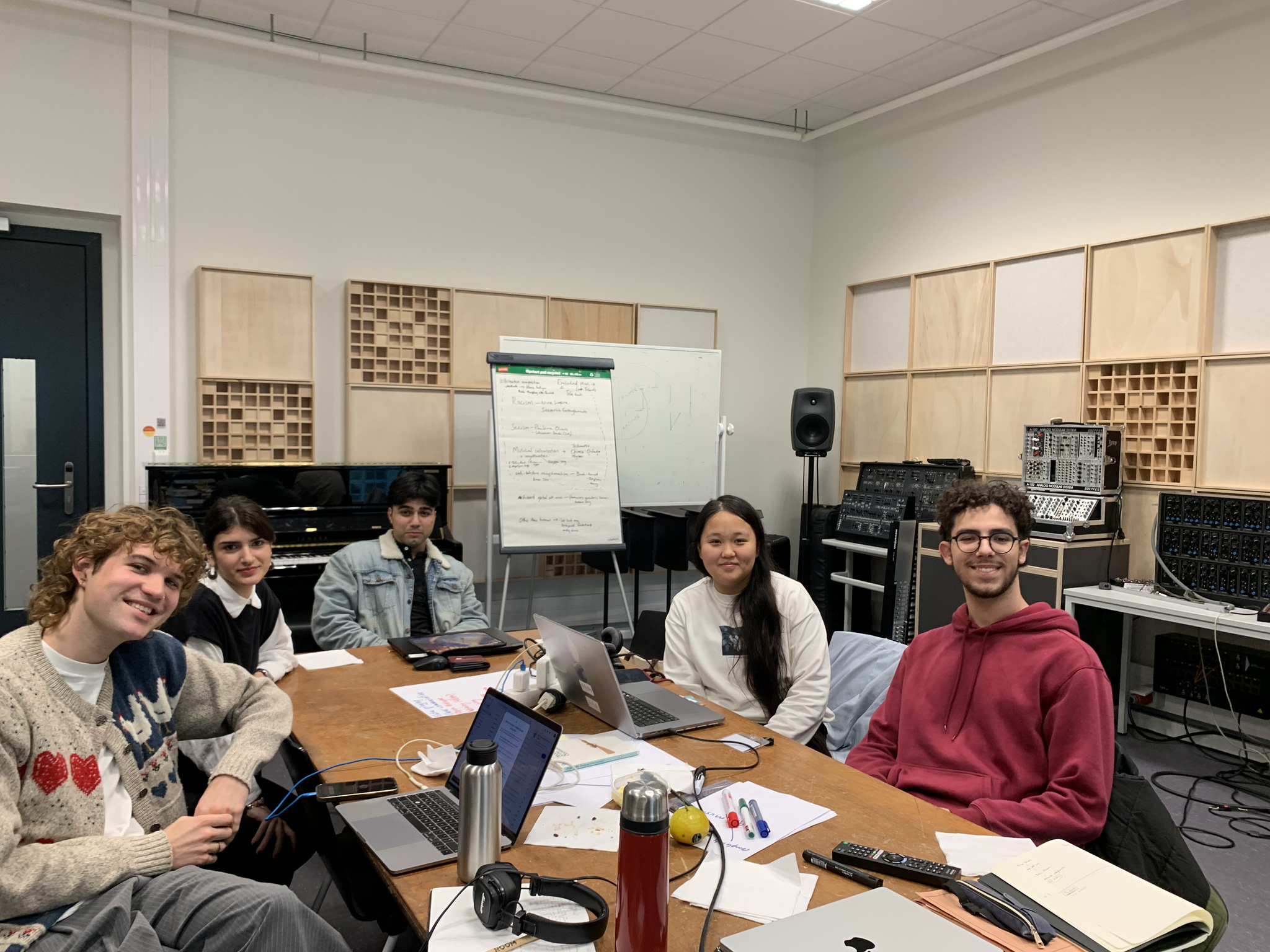
The workshop was structured as a balance between theory and practice. Firstly though, we introduced ourselves both in words and in music, or in one case, poetry. Although there was still a clear division of labour in that I was organising and leading the workshop, I was very aware of the need to create an environment where everyone felt they had something to contribute. As Freire notes: ‘Education must begin with the solution of the teacher-student contradiction, by reconciling the poles of the contradiction so that both are simultaneously teachers and students.’2 I have decided, therefore, to use the plural first person to describe the workshop in keeping with the notion of being both teacher and student.
Day 1
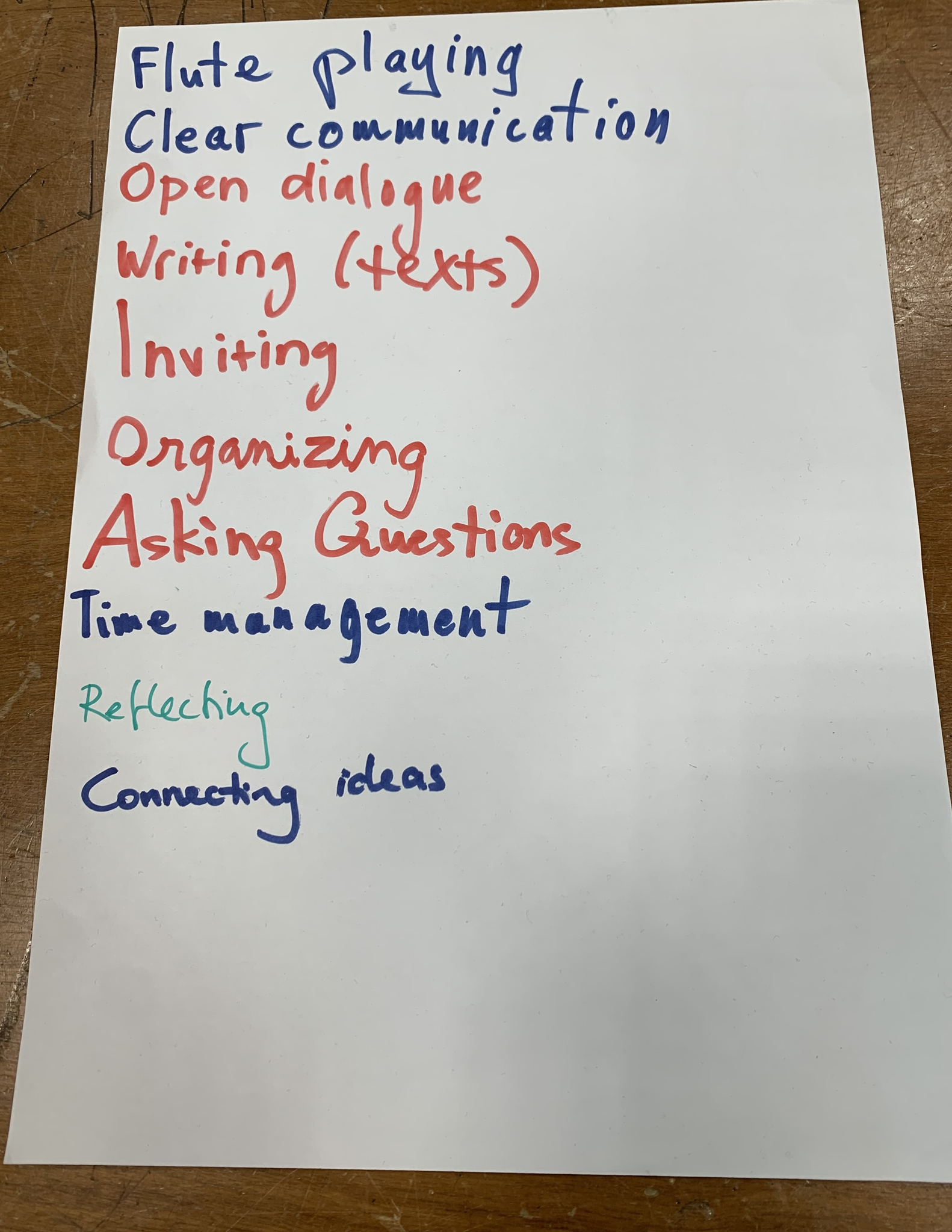
One of the first issues that became apparent—and that remained a subject of attention throughout the week—was regarding what Freire refers to as the ‘culture of silence’.3 Some students were extremely cautious in their communication, although willingly partaking in all that the workshop offered. Acknowledging the educational context from which some particular students emerged, and their age (17 or 18), we understood it might take time and effort on both our parts before they could freely express themselves.
As noted, Liz Lerman’s Critical Response Process is a tool that can support a more horizontal feedback process and encourage response-ability in students. We spent time practicing this on each other, using the works with which we had presented ourselves as material. This process not only encourages active involvement by the artist concerned, the development of skills in creating neutral questions, but also nourishes an understanding of how we can safely communicate with each other. Learning through doing.
Finally, we listened to Gilius van Bergeijk’s Symfonie der Duizend (alfabetisch) and discussed how, why and in what way this might be an interesting model. My intention was to present this as a possible format rather than shutting down other options. I suggested it as a point of reference, as opening a space to start a dialogue about the canon.
On Gilius van Bergeijk’s Symfonie der Duizend (alfabetisch)
Rummaging in my own cultural carrier bag, formed partially by studies in The Royal Conservatoire in the late 80s and early 90s, my gaze rested on Gilius van Bergeijk’s Symfonie der Duizend (alfabetisch) as a point of reference when thinking of how we might create a work that celebrates representation and nourishes a space for the unheard. I was studying with him at the time he made this piece (1990-1992), so there is a certain resonant and iterative quality in its inclusion as a source of inspiration.4
Although the title of van Bergeijk’s work relates to Mahler’s Sinfonie der Tausend, the content and process has little in common with Mahler. Van Bergeijk’s composition is constructed from tiny tape excerpts from existing works painstakingly stuck together in alphabetical order of the composer. When I asked him recently how he made his choice, he said it was based on his record collection. Whether we can consider this piece a kind of index of the Western art music canon or not, there are certainly many works that make a brief appearance that anyone versed in classical music will recognize.
By bringing this composition into the workshop I hoped to create space for a dialogue between the role of the canon, about how it is created and how it might be expanded. Furthermore, it instigated a discussion as to how we might present our work.
Every day we alternated between collective reading and talking and sharing possible works for our Unheard Symphony.
Day 2
Freire’s ideas on the banking system of education and his problem-posing approach were discussed in relation to previous education and how we perceived the conservatoire. We began to consider what kind of educational system might be possible while learning Western art music. Re-acculturation—the idea of acknowledging that students are not ‘empty vessels’ when they arrive—was discussed and we explored what communities we belonged to before we started our studies. This led to questions about whether there was place within the conservatoire for our personal (pre)history. I encouraged students to think about their musical baggage, especially that which might not be present in the conservatoire and how this might be part of the Unheard Symphony. We started to compile our carrier bags.
Notions of situatedness were discussed and Haraway’s concept of situated knowledge enabled us to both contextualise our experiences but also to recognise their embodied nature. One student from Portugal plays in an Afghan Youth Orchestra based in Portugal, which consists of both Afghan and Western instruments playing both traditional Afghan works and Western pieces. Everyone was in agreement that this belonged in the Symphony.
We discussed what a canon is, how it is made and how responsive it can be to situations. We asked if the curriculum of a conservatoire could support an embodied canon, and if there are people and genres that are structurally excluded. In discussing the relationship between the curriculum and the canon we suggested that the canon should be able to be flexible and connect to social and ecological situatedness.
During our readings we continually reflected on what we were doing, thinking of it as a work in process – as we feel the curriculum itself should be.
Day 3
Together we read articles on decolonisation in relation to classical music from Sandeep Bhagwati, meLê yamomo and Margaret E. Walker. These articles enriched our thinking on the hegemony of Western art music in the discussion of art music. We asked if music could be ‘looted’ just as objects are and how we might ensure we are not acting in an extractive fashion. The practice of tokenism and the potential for instrumentalising marginalised groups was also raised. All the articles emphasised that the connection between the ‘colonial project’—that can be seen as ongoing—and the history of Western art music, is one that needs to be examined and exposed in any attempt at decolonisation. Some of the articles question whether we can decolonise and still retain what we currently consider valuable or whether we must rebuild the whole academy around alternate value systems.
These readings created space for open discussions which exposed a variety of experiences and ideas. We considered the case of the Afghan orchestra combining traditional instruments with Western ones. Was this a case of the dominance of Western art music or of pragmatism given the displaced Afghans lack of access to their own instruments in Portugal?
The student from China described how they had been studying at a Conservatoire for traditional Chinese music but how the form of certain instruments was changing to make them louder, so they could ‘compete’ with Western instruments and that the tuning system was also often being altered to the Western 12-tone division. We discussed why this happens and the implications for traditional Chinese music. An example from a Japanese composer who composes for Western instruments and tuning but writes melodies that are Japanese in shape and style was also discussed.
What emerges from this combination of reading, critical reflection and attention to embodied knowledge is the possibility that students recognise aspects of their personal cultural baggage that they had perhaps not valued for one reason or another. Furthermore, this knowledge is then placed in their carrier bag together with their Western art music education which may open up dialogues between these different aspects and encourage a process of de-centering.
Day 4
The idea of a hidden curriculum was discussed. Notions of the importance of addressing (unspoken) cultural norms, both formal and informal were raised. We also discussed issues relating to discriminatory practices that may be kept hidden. Ideas about entrepreneurship are often not contextualised which can allow business thinking to have significance in artistic decision-making. For students who have grown up within market-driven societies, this focus on the artist as entrepreneur is often already internalised, which highlights unspoken relationships between societal values and the curriculum.
Cultural differences with regards to expectations students have regarding their career path, amplify the importance of discussing and contextualising potential opportunities after studying. We recognised the need to bring what is hidden into the light – to inspect, describe and analyse – to create an awareness of unspoken ideologies, and discuss and develop ideas for how these can be improved.
Every day we also considered possible works for the Symphony, sharing our preferences and practicing Lerman’s feedback method on each other – that is – asking each other ‘neutral’ questions about why we found a particular work should be included. The importance of creating an environment in which students could expose parts of their musical background that did not belong to the ‘canon’ and expect a respectful, critical response cannot be underestimated. By acknowledging our cultural baggage, we situate ourselves as having a personal history that we bring to the conservatoire. By being given the opportunity to examine this baggage neutrally we are offered the chance to evaluate it and choose which ‘objects’ we want to take further.
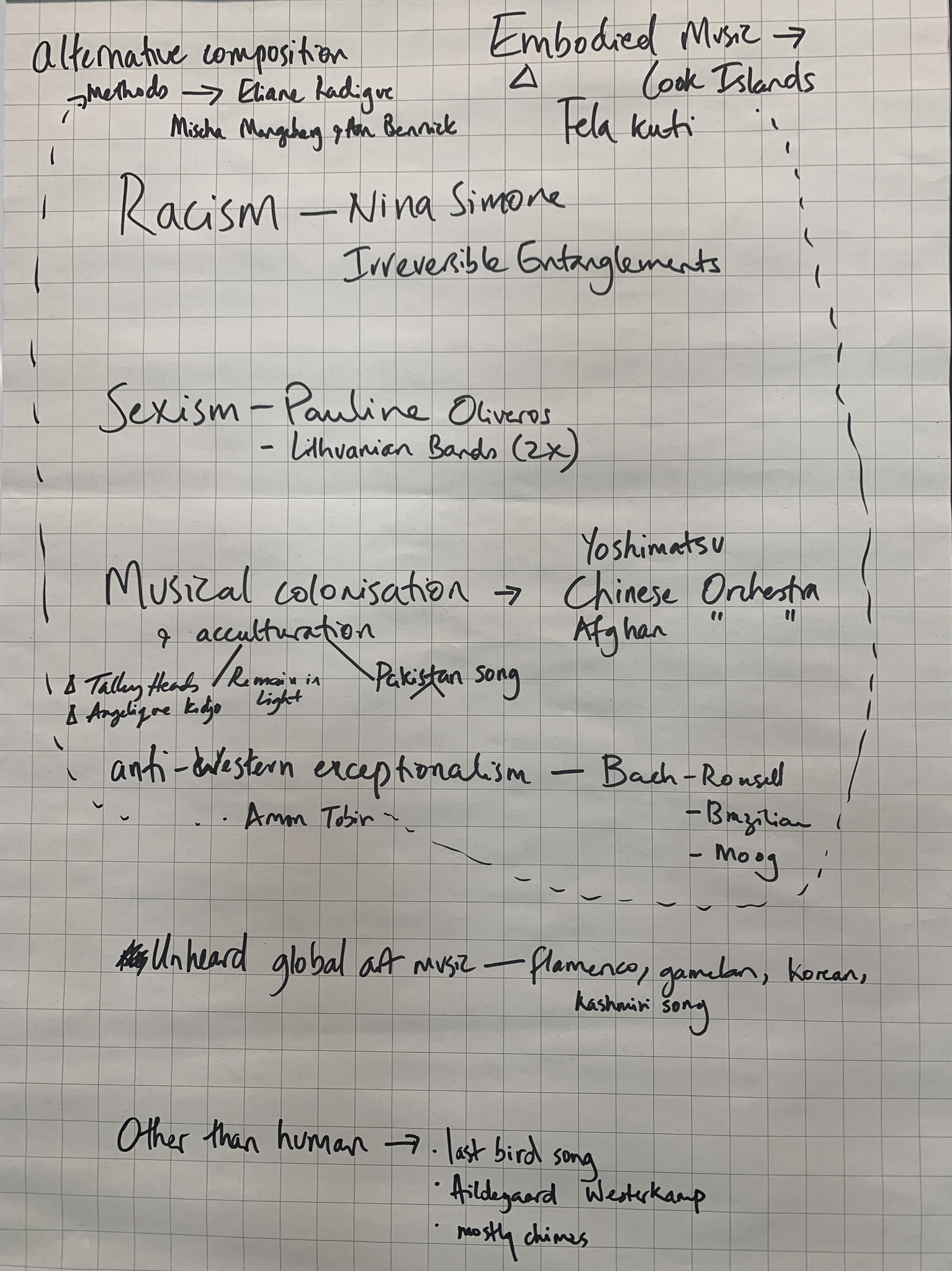
The works chosen not only resonate with at least one person in the group, they are in some ways also representative for particular genres or topics that we felt are currently excluded.
Discussions traversed between ideological standpoints to personal experiences and back again. Our discussions led to new discoveries and points of connection which expanded out to include the more-than-human in the form of the last song of the Hawaiian Kauai ōō bird who is now extinct.
Another important question was the methodology of making the work. Due to personal circumstances, one of the participants was only present for the first two days, so during the making process we were with 5 students. We decided that students would individually compile different sections of the work. Collectively we spent time considering the kinds of relationships that could be made between the pieces on a sonic/thematic/theoretical/ideological level. Each person worked on their section and an order was decided. The recordings were almost entirely sourced from the internet as Mp3’s with each participant using their own audio programmes to edit the works. One participant took the responsibility for the final organization and created a video for the last section as a treat for those who listen to the whole 29-minute work!
Multiple points of resonance between the pieces were discovered:
-
works that spoke to issues of human destruction – towards the natural environment and between humans,
-
works that explored rhythmic musics from around the world,
-
a collection of pieces that explored the complex relationship between musics from other- than-Western cultures that have been in some ways influenced by Western art music.
-
versions of the same piece that cross cultures back and forth.
-
pieces linked by associations (word/subject matter).
-
and more.
In the spirit of van Bergeijk’s Symfonie der Duizend (alfabetisch), we chose not to list the works but rather to invite the listener to create associations with what they hear. This process was not an exercise in using technology to create a perfect work, rather Unheard Voices can be thought of as a collective practice that was guided by various theoretical writings, that encouraged students to explore their own cultural carrier bag and the dialogues that emerged with the carrier bags of others.