The Research Catalogue (RC) is a non-commercial, collaboration and publishing platform for artistic research provided by the
Society for Artistic Research. The RC is free to use for artists and
researchers. It
serves also as a backbone for teaching purposes, student assessment, peer review workflows and research funding administration. It strives to be
an open space for experimentation and exchange.
recent activities <>
Dictionary of Darkness: Artistic Research as Post-Linguistic Knowledge
(2026)
Jack Faber
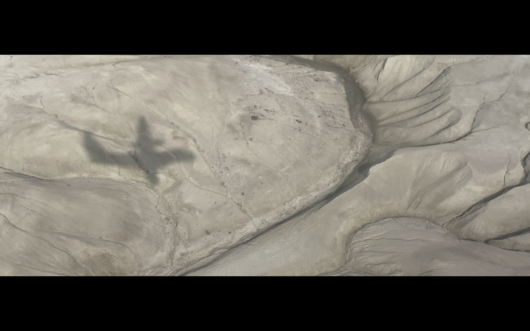
Dictionary of Darkness is an Artistic Research project investigating how language, technology, and perception co-produce systems of control that shape ecological, political, epistemic and endangered realities. Developed as part of the research chapter Threshold Technologies & Extinction Economies, the project examines how the supposably marginalized linguistic presence of technical vocabularies—particularly military and surveillance lexicons—operate as instruments that reorganize perception while concealing the infrastructures of planetary crisis.
Meridiana: Lines Toward a Non-local Alchemy
(2026)
Søren Kjærgaard
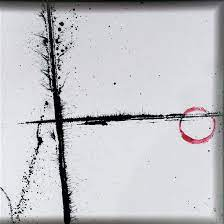
“Meridiana: Lines toward a non-local Alchemy” investigates the line as a sonic, textual and visual phenomenon.
Taking off from the four
literary voices: the Dutch philosopher Baruch de Spinoza (1632-1677), the French philosopher Gilles
Deleuze (1925-1995) and the Chinese Taoists Lü Yan (796 C.E.) and Sun Buer (1119–1182 C.E.),
a multitude of meanings are interwoven in a rich network of musical, textual and graphic lines.
The line as a basic concept is emphasized by the first word of the title, Meridiana (plural for meridian), which has terminological roots in both the East and the West. In Western terminology, it denotes one
geographical line connecting the North and South Pole.
In the East, originating from ancient China, meridians (经络) are energy pathways of the body (both human and non-human), which connect internal organs and a number of vital points in a neurological network.
The meeting between these two interpretations of a "meridian", between the geo-physical and sub-physical, between East and West, are the cornerstones of the project, which intention is to weave together the various
meanings and emphases of meridian, while at the same time unfolding an expanding an intersection of lines:
sonic lines, textual lines, graphic lines.
The Body as Parallel Archive: Afro-Emirati Memory in the Arabian Peninsula
(2026)
Ameena Aljerman Alali
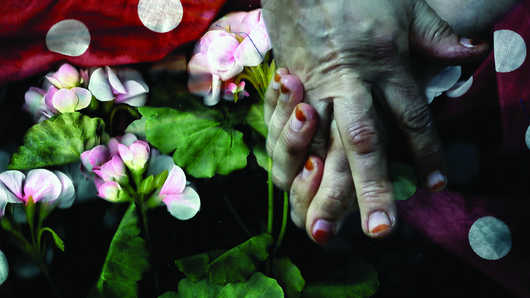
This artistic research project explores how Afro-Emirati slavery memory can be engaged through the body as a parallel archive in the Arabian Peninsula. In the region, history has largely been shaped through written narratives connected to institutional authority and nation-building. Within this framework, histories related to Indian Ocean slavery, are not fully articulated in public discourse.
The project examines how embodied practices have carried memory across generations, instead of attempting to correct the known written history. It asks: What happens when ritual, movement, and inter-generational gestures are recognized as parallel forms of historical process ?
Through video installation, recorded performances, and oral documentation, I examine Afro-Emirati practices such as Liwa dance and domestic ceremonial rituals as embodied archives. These forms transmit history through rhythm, repetition, and gesture, operating alongside textual historiography rather than in opposition to it.
While grounded in Afro-Emirati experience, the project reflects more broadly on how history might be approached beyond event-based narration. It proposes a shift from understanding history solely as recorded information toward recognizing it as lived and transmitted knowledge. Artistic research becomes a space for acknowledging the endurance of embodied memory within complex social and political contexts.
recent publications <>
ASSET ARREST
(2026)
Laura Yuile
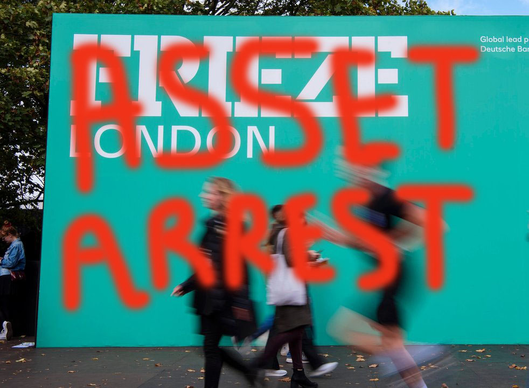
ASSET ARREST is a research project and podcast series that infiltrates and disseminates the exclusive spaces of financialized housing. ASSET ARREST seeks to expose the spatial politics of urban real estate as shaped by speculative investment, gentrification, and the increasing abstraction of housing from use-value to asset-value. In each episode of the podcast, Laura invites a guest to view a property with her, with them both posing as potential buyers. The project functions both as an investigative tool and as a mode of counter-publicity, deploying strategies that "make public" what is structurally hidden. Central to this practice is the production of alternative representations of these sites—images rendered not through the idealized CGI marketing tropes that dominate real estate promotion, but through unscripted conversation and embodied performance.
In posing as a prospective buyer, I enact a form of role-play that becomes both method and critique. This performative access enables a rupture in the polished façade of luxury developments, allowing for the insertion of critical discourse into spaces otherwise closed to scrutiny. ASSET ARREST mobilizes a feminist methodology—one that resists objectivity, embraces relationality, and insists on the political significance of lived experience. The project is understood as an act of spatial disobedience: reclaiming the tools of surveillance, storytelling, and spectacle not to reproduce power, but to subvert and redistribute it.
An Fios Dorcha: Designing Ritual as Artistic Research in the Irish Diaspora
(2026)
Din Heagney

This exposition presents An Fios Dorcha: The Dark Knowing as a case study within the doctoral project An Dorchadas: The Darkness, a practice-led inquiry into Irish–Australian diaspora, archival absence, and colonial entanglement.
The 90-card oracle deck and guidebook are presented here as a designed research system through which fragmentary cultural materials are translated into embodied, participatory form. Emerging from genealogical rupture (where my family’s archival trace ends in fire and silence) and from research at the National Folklore Collection (Dúchas.ie) alongside fieldwork in Ireland, the project approaches folklore and language as incomplete datasets rather than stable inheritances.
Bilingual titling, thematic structuring, and material design operate as methodological gestures rather than aesthetic embellishments. Generative AI was used experimentally during visual ideation as a secondary design tool, critically contained within the process. The oracle is therefore treated not as an illustrative artefact but as method: a ritualised publication system through which artistic research becomes relational and enacted, transforming diasporic absence into encounter.
Maker-Tag "Wie geht Forschen mit ... Mini-Zine?" Leitfaden zur Konzeption und Planung
(2026)
Adrianna Hlukhovych

(Mini-)Zines waren und sind ein bewährtes Publikationsformat in marginalisierten Personengruppen, in subkulturellen und aktivistischen Milieus sowie in Fancommunitys. In diesem Sinne sind sie ein wichtiges Medium der Selbstermächtigung, was ihren Einsatz unter anderem in Lern- und Lehrkontexten spannend und lohnend macht: Individuell oder kollaborativ gestaltete Mini-Zines bieten viel Raum für Kreativität, partiale Perspektiven und Teilhabe.
Der Leitfaden skizziert exemplarisch die Konzeption und Durchführung eines Maker-Tags (bzw. eines praxisorientierten Blockseminars oder eines Workshops) zum Thema „Mini-Zine“ im Umfang von ca. sechs Semesterwochenstunden (SWS). Der Maker-Tag fokussiert das (Mini-)Zine explizit als kulturkritisches Medium und Format.
Die (interdisziplinären) Maker-Tage gehen dem ‚practice turn‘ auf den Grund und regen Studierende zum Nachdenken über die Verbindung zwischen Forschung, Theorie und Praxis an. Sie bieten den Studierenden die Gelegenheit, durchs 'Machen', induktiv zu theoretischen (Er-)Kenntnissen zu gelangen, die Relevanz sowohl ‚theoretischer‘ als auch ‚praktischer‘ Ansätze wie Ihre Wechselwirkung zu durchdenken und zu praktizieren. Im Rahmen der Maker-Tage geht es unter anderem um die Reflexion ausgewählter Forschungspraktiken als Medien und kulturelle Phänomene und nicht zuletzt um die Erprobung alternativer Lehr-, Lern- und Prüfungsformate.