The Research Catalogue (RC) is a non-commercial, collaboration and publishing platform for artistic research provided by the
Society for Artistic Research. The RC is free to use for artists and
researchers. It
serves also as a backbone for teaching purposes, student assessment, peer review workflows and research funding administration. It strives to be
an open space for experimentation and exchange.
recent activities <>
THE TREATISE
(2026)
Giusirames
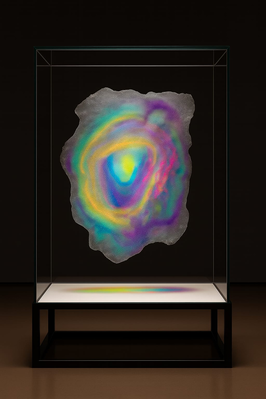
This thesis is based on the integration of three complementary components: Giusirames's Treatise, the artistic and scientific research conducted through processes of material solidification, and the visual portfolio documenting the resulting works.
These three elements form a coherent system, in which theory does not precede practice, nor does practice illustrate theory, but both emerge from a common conceptual core: the desire to interrogate matter as an active subject and not as a mere support.
Iceland University of the Arts - Welcome to RC
(2026)
Sigmundur Pall Freysteinsson

This exposition gathers all the essential information needed to get started with the Research Catalogue (RC) platform at the Iceland University of the Arts (IUA). It offers a clear overview of how to create a profile, start an exposition, and navigate the basic functions of the platform. The goal is to provide staff with a central reference point for working with RC in the context of artistic research and institutional use.
In the Mirror of Care Work
(2026)
Inga Gerner Nielsen
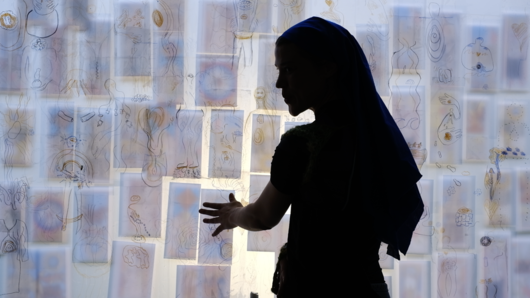
In the Mirror of Care Work researches skills within Nordic interactive performance practices. Using the mirror as a metaphor for visualisation and connection, artist Inga Gerner Nielsen brings into conversation the work of nurses and interactive performers. By inviting in the perspectives of care workers and looking into the history of their profession, Inga engages in discussions about the politics, mythologies and poetics of her own field.
What do we see when we look in the mirror, and when that mirror is a nurse? Do we, as performers – like the nurses were once said to – abide by the feeling of a calling? Does this involve a kind of spiritual care for our audience? And what of the nurses’ working conditions should we perhaps try to adopt as (care giving) performers?
The project visited Stockholm (MDT) in September 2023 and Helsinki in January 2024 in a two-day symposium to meet and exchange with local artists about the aspect of care work in their artistic practice .
The project is based in a long-term collaboration with the nursing school at UCN Hjørring & Thisted in the north of Denmark. Together with teacher of the History of Nursing, Helle Kronborg Krogsgaard, Inga gerner Nielsen is developing ways of integrating interative performance excersices and visual art into the teaching of 1.st, 4th and 7th semester nursing students.
recent publications <>
Topographies of the obsolete
(2026)
Anne-Helen Mydland
Topographies of the Obsolete is an artistic research project conceived in 2012 by
University of Bergen Professors Neil Brownsword and Anne Helen Mydland,
in collaboration with six European HEI’s and the British
Ceramics Biennial.
Emerging through two phases (2012-15; 2015-2020) it has to date engaged
ninety-seven interdisciplinary artists, scholars, cultural commentators and
students from thirteen countries. It has transformed participants’ practices, with
works originating out of the initial research being celebrated on an international
platform. Topographies of the Obsolete has received funding from a variety
of
institutions, alongside its core support from the Norwegian Artistic Research
Programme (2013-15 & 2015-17), whose peer review system (2015)
rated it
as ‘exemplary… strengthening artistic research and its scope beyond potential
communities of practitioners/researchers’. The project explores the landscape and associated histories of post-industry,
with an initial emphasis on Stoke-on-Trent, a world-renowned ceramics capital that bears evidence of fluctuations in global fortunes.
OLSKROKSMOTET BLUES
(2026)
Ann Kroon
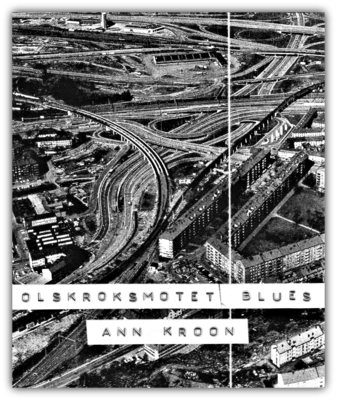
Olskroksmotet Blues är den avslutande delen i mitt autoetnografiska projekt som pågick i olika former mellan 2014-2021, och där jag bland annat publicerat två artiklar (Kroon 2015 och 2016). RC expositionen består av tre delarbeten - arkivblad, arkivmönster och göteborg grid – jämte bakgrund och teori & metod. Utifrån min historia som fosterbarn söker jag fånga såväl mina egna erfarenheter och uttryck, som att sätta dessa i ljuset av större samhälleliga skeenden. Olskroksmotet Blues var också del av Mikrohistoriers fysiska grupputställning på Konstfack, Stockholm i september 2021.
Monotheist Mythology
(2026)
Tolga Theo Yalur
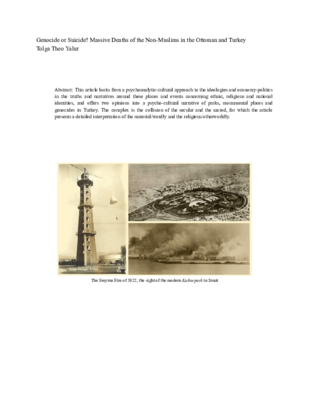
This article explores monotheistic religions as powerful linguistic and social structures that function through a mechanism of collective delusion. Drawing on Jacques Lacan’s structuralist insights, the text argues that these faiths are not based on objective history but are fictions codified long after the events they describe.