I Praxis and Interpretation
The performative act of recording a soundscape represents a deliberate choice between inclusion and exclusion. With the concept of “performativity” we refer to indexical actions in space and time that often remain available as documents, scores, or recordings. The sounds of one’s own body are reduced as much as possible and a specific soundscape is sought with the microphone that reproduces or represents something desired (Chion, 1998).
The term soundscape goes back to the World Soundscape Project, which was founded by R. Murray Schafer in the late 1960s and then elaborated upon in his influential book “The Tuning of the World” (Schafer, 1977). Later, in 1993, the World Forum for Acoustic Ecology was founded. It aimed to foster understanding and education about the social, cultural, scientific, and ecological aspects of the sonic environment, contributing to the preservation of existing natural soundscapes as well as designing and creating “healthy and acoustically balanced” sonic environments (WFAE, 2024). (Truax, 2001) elaborated on Schafer’s concept of soundscape as a kind of “sonic landscape” by framing it within a communicational model, in which sound mediates the relationship between listener and environment. This relational understanding of the soundscape is at the center of contemporary critical discourse, as it can be applied beyond its original Western understanding, which culminated in standardization efforts such as ISO 12913-1:2014 (2014) to include the voices and ears of a diverse, global community of living beings.
Building The Workshops
The work of finding, recording, and describing one’s own soundscape were elements of the workshop’s dispositive. The core element was the experimental layout, which took place in the following way: Each workshop lasted for one day. The introduction given in the morning concerning conceptual and technical topics and content was followed by a specific task, wherein two soundscape recordings were produced, each combined with an image which described the recording situation and included a number of keywords. These individual works were then realised locally over the lunch break. All the recordings and images were collected and compiled in an audiovisual presentation. In the afternoon, the presentations and discussions were held without technical interruptions, and the moderator sought to keep the discussion close to the perceptions, descriptions and associations of the listeners. The timetable of each workshop was limited to about five hours of online presence with a three-hour lunch break to produce the soundscapes.
The second element was the technical apparatus (Gronemeyer. 1998), the media situation using Zoom for video conferencing, which was familiar to most participants, but often new as a hybrid, shared venue. Each individual workshop included participants from two or three countries and included students, artists, designers, professors, PhD candidates, and lecturers as equal participants. Participation was voluntary. The workshops were held four times in the period 17.4.–17.11.2020.
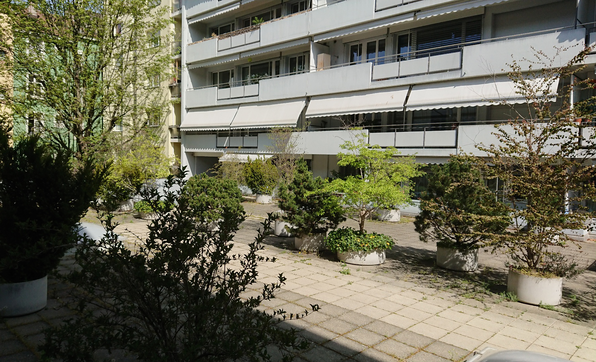
The Performative Act of Recording a Soundscape
Schafer's original definition of the term “soundscape” uses the analogy to landscape to assert a (static) spatial situation-com-position (which can also be judged, for example as “positive” or “negative”, “natural” or “artificial”). This is accessible and productive, and contributed to the wide adoption of the term as well as a more sensitive approach to the relevance of sound for our being-in-the-world.
But the concept of a soundscape also tends to reify our sonic environment as com-position, fixed in time and space, for example by means of “soundscape mapping”. Instead, soundscapes can also be understood as an emergent quality of an auditory situation which is always in the making, as a result of sound producing activities and processes by living and non-living, human and more-than-human entities.
What we call “soundscape”, and represent by means of a “soundscape recording”, thus is merely a snapshot of a transient moment in a collective performance, constituting emergent, dynamic, and fragile sonic configurations.
When I first read the aforementioned quote by Ursula Le Guin, it was in French, and it was the epigraph Olivier Remaud (2017) chose for his book "Quand les Montagnes Dansent", in which he explains the interconnectedness of organic and non-organic matter.
In the French translation, the sound of the word "danse" seems to be an echo of the fresh, trickling mountain water that Remaud encounters on his long philosophical hikes. In the original English quote, the word "foggy" is reminiscent of Rachel Carson's descriptions of coastal fog, in which the water seems to dissolve in silent drops.
Both Rachel Carson (1907-1964) and Ursula Le Guin (1929-2018) pioneered what we now understand as eco-solidarity with their lives and work.
To preserve the chronology of our discussions on the meaning of this quote, we have retained the French translation in the English text.
As we read, listen and speak, we exchange inner, but also outer, embodied words that become wordscapes.
Life as a Collective Pause
A Curious Practice
Today Catherine wonders if the quality of this shift could be related to Vinciane’s Despret method of “curious practice” as described by Donna Haraway a method requiring “the ability to find others actively interesting … of holding open the possibility that … something interesting is about to happen, but only if one cultivates the virtue of letting those … shape what occurs.” (Haraway, 2016, p.127).
Aucun doute là-dessus.
Pour en découvrir un, peut-être faut-il en avoir perdu un.
Ou être soi-même perdu.
La danse du renouveau, celle qui a créé le monde,
a toujours été dansée ici,
au bord, à la limite, sur la côte embrumée.
(Ursula Le Guin, 1989) Danser au bord du monde. Quoted from Remaud, 2023)
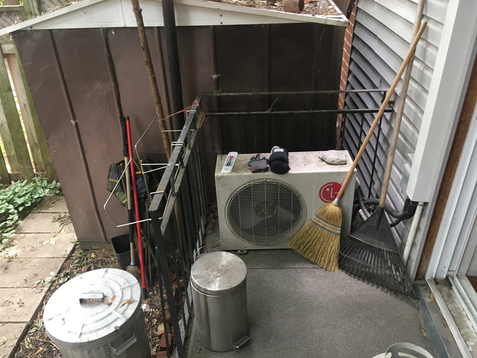
The world as edge, as brink, as a foggy coast... These words certainly evoke the break that we experienced. We were at home, thrown back on ourselves, and kept in contact with the outside world through media. The soundscape had changed, and we listened. We became connected through very different things like the croaking of bullfrogs in Niigata, Japan, or the clicking of a goods lift in Thessaloniki.

A quiet perception
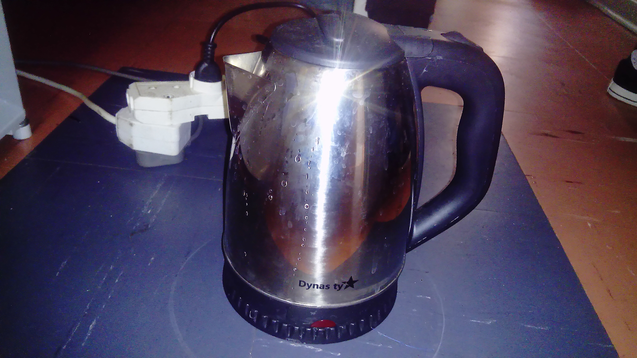
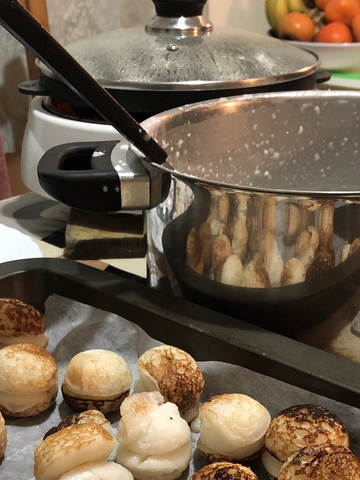
For Andrea language in the form of literature became very important during that time "I tried to capture or involve inner images or situational thinking in words. They intended to tie in this condition onomatopoeically or verbally. Subsequently, I also included listening to your own body and understanding this through an expanded perception. With the help of interstitial spaces that could house these growing experiences and insights. Where are our thoughts while listening to the soundscape? Where do they roam or where are they deflected or diverted?"
Retreating to rooms in the rain and listening.
Listening to stories, drinking tea;
time doesn't matter.
Building huts out of towels, reading, knitting;
the noises are calming.
Let images of memories pass you by.
Buds on branches bursting open.
Hearing the grass grow.
Seeing wet cows standing around.
Thinking. Gaining clarity. Quietness.
Exploring in the studio what happens
when we take a break.
Internalizing something that cannot be actively achieved consciously.
Switching off the musculoskeletal system
to be able to absorb.
Directing sounds inwards,
reflecting on our surroundings.
Preciousness. Happiness. The church bells. Awakening.


On the Idea of Landscape
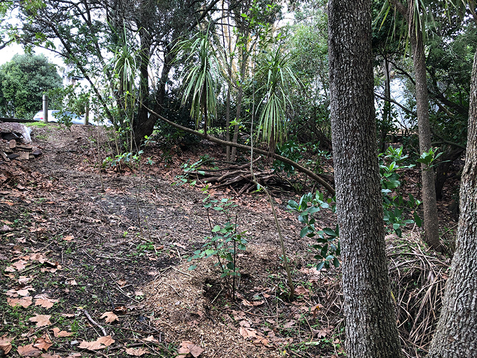
The focus on ambient sounds and on the auditory perception of nature deepened the practice of taking a break. “Nature” is an imprecise term. While we often associate it with an “untouched” environment not influenced by humans, we also use the word separately to refer to an aesthetic dimension, a lived sense (being) and an object to be understood (science/assertion), what Alfred North Whitehead termed the “bifurcation of nature” (Whitehead, 1964).
Ambient sounds do not separate, they combine and mix quite different things—resulting in an acoustic idea of landscape . Landscape is characterized by the selection of a sum of individual elements, essentially from nature, which are consciously put together, seen, and understood as a unity (Simmel, 2001). This understanding also resonates with Lucius Burckhardt: "The landscape is thus a trick of our perception, which makes it possible to combine heterogeneous things into one picture and exclude others" (Burckhardt, 2006).Where Simmel still romantically searched for a unity or whole, Burckhardt explored the heterogeneous elements of cultural landscapes with the aim of understanding their own qualities. Simmel described the piecing together of constituent parts into the composition which we call a 'landscape' as a "work of art in statu nascendi" (2001).
This means that landscape should be understood as a cultural concept that operates as an aid to the understanding or to an identification, a demand, a desire, or an expectation—insights that place us firmly back in the territory of questioning and re-conceptualizing what we mean by “nature”. Landscape remains a combination of being and statement, and thereby a multi-bifurcated understanding of nature, accepting the changes and troubles; a crane, a building site, a crossroad, a motorway entrance.
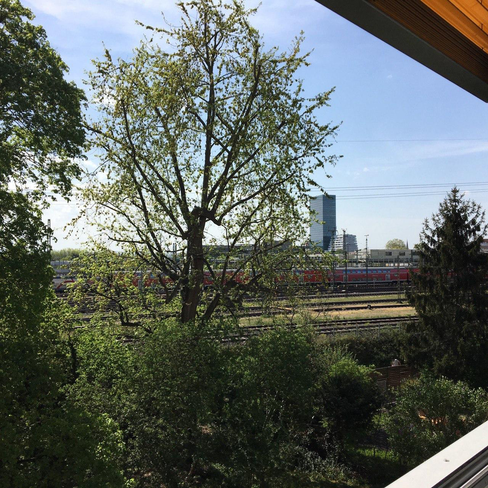
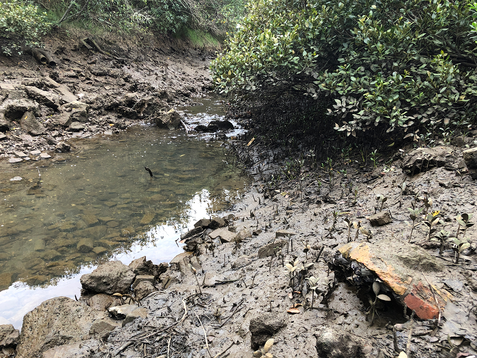
The proximity of the two terms landscape and soundscape goes back to the introduction of the term “soundscape” by J.M. Schafer. He uses the analogy to landscape to emphasize a (static) spatial situation-com-position. Soundscapes, by contrast, involve the performativity and narrativity described above, as well as the elements of fleetingness and ephemeral temporality.
Preview - The Present as a Glimpse of the Future
We situate our workshops in the tradition of acoustic ecology. Social practices such as care, craft, design, and art all stand in relationship to such ecologies, which should be understood in turn as resisting global colonialist or exploitative trends on the local level. Inspired by similar artistic movements or engagements, our long-term goal was to imagine a new kind of “connected” worldliness within a larger globality, which, however, is still based upon the agency of local actors and their environments. Acoustic ecologies re-place the conventional metaphors and symbols available to us as linguistic subjects with other, more expansive and materialistic “languages” of description. This, in turn, leads to other ways of engaging with and possibly reforming the usual exploitative and colonial practices of identifying and then extracting value from an environment or people.