Betwixt and Between 

Soundspaces and Digital Teaching during COVID-19


Max Spielmann1, Andrea Iten1, Catherine Walthard1and Daniel Hug2 

1Academy of Art and Design Basel, IXDM FHNW, Institute Experimental Design and Media Cultures, Switzerland

2 Zurich University of the Arts, Department of Music, Switzerland


Abstract
At the beginning of the COVID-19 pandemic in 2020, we, in our role as lecturers, conducted hybrid workshops with design and art students from ten partner institutions on five continents. Our goal was to explore soundscapes from different viewpoints, and we were deeply impressed
by the outcome. The recordings and their accompanying images and conversations dissolved geographical borders along with social, cultural, and structural differences. Following Hartmut Rosa, we understand this atmosphere of connection produced between the participants and the soundscapes themselves to be a resonance space, which only became explicit to us after some time had passed. In this article, we re-interpret this space through personal recollections and theoretical positions, and claim that such a collaborative space holds pedagogical and artistic implications for future teaching and creative practice. These include not only the impact upon technology in the classroom, temporal perception, inter-relationality, and care practices, but also the artistic benefits of opening up spaces of resonance as a means of engaging with the challenge of intercultural communication and witnessing in our global world.


Keywords
Soundscape, Acoustic ecology, Aesthetic, Perception, Resonance, Art/Design education, Landscape, Intercultural Dialogue


Content


I Praxis and Interpretation

II The Consequences - Re-Imaging

III The Process - Re-Placing

IV Discussion and Conclusion - Re-Visioning

Credits

References
Just Read - A responsive version of text


We would like to thank all the participants and partner organizations who spontaneously joined our exploratory project during the first COVID-19 lockdown.
Introduction

 At the beginning of the COVID-19 pandemic, it became impossible not to listen, precisely because the everyday ambient sounds associated with human action and "productivity" had faded away, and a new kind of soundscape began to emerge from listening to an inescapable part of the living world. Stimulated by this experience, we contacted partner institutes in Australia, Austria, Botswana, Canada, Finland, Germany, Greece, Iceland, Japan, New Zealand, and Switzerland to  organize a series of   online encounters.  Our goal was to develop the workshops on the concept and experience of the soundscape as both pragmatic starting point and catalyst.


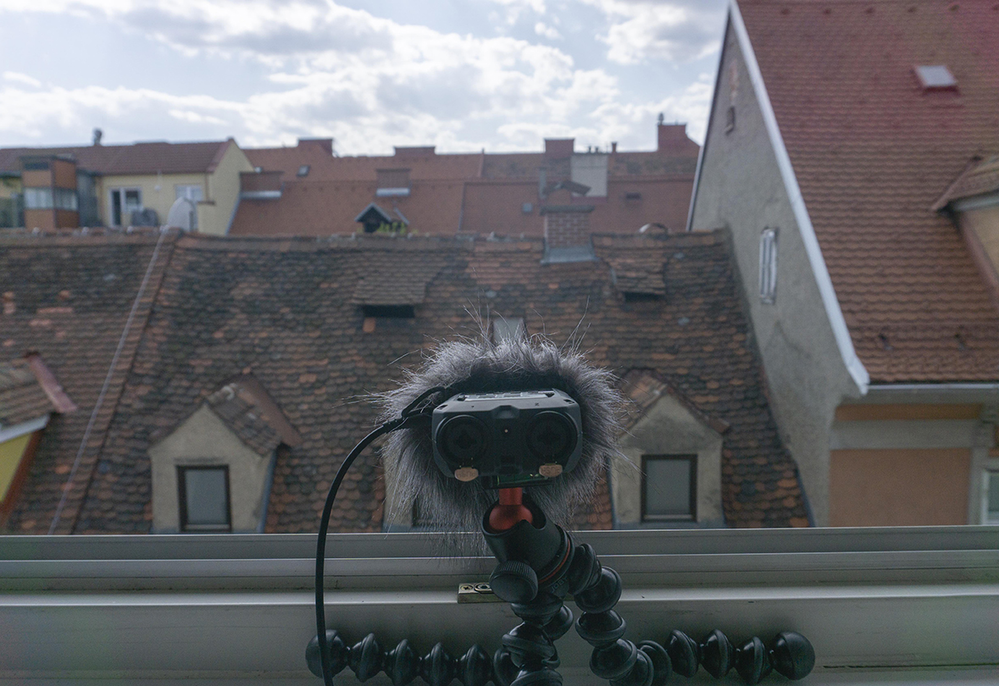
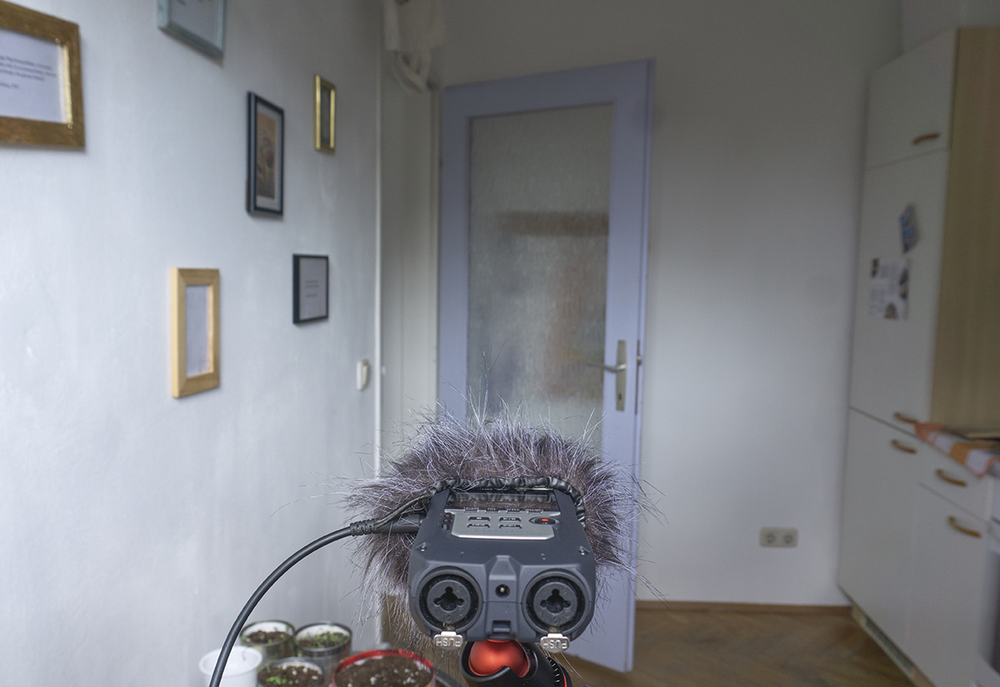
So we sat in front of our monitors and played our own soundscape recordings to each other. Participants exchanged their particular stories about how they chose their soundscapes and images and what they meant to them. We listened to each other carefully and responded with our perceptions and associations. We realised how we all listened inside our flats during the lockdown or held microphones out of the window, scouting for this new soundscape that COVID-19 had brought about. And, as we perceived differences between the regions of the world, a quiet simultaneity began to emerge inside a dense atmosphere. We had entered what Rosa has called a "resonance", which is characterized by an unmediated experience of or in the present that is framed within a sociology of our relation to the world (Rosa, 2021). This liminal state, described by Turner as a “betwixt and between”, showed us that something special and valuable was occuring (Turner, 1967). For a further description of these ideas, see  I Praxis and Interpretation for a description of the workshops and II Consequences and III Process on resonance and liminality.


This experience stuck with us, and we tried to reproduce these workshops. We interpreted and re-interpreted our findings and reflections. One or two years later, we began to realise that our teaching, our attitude to students, our understanding of intercultural encounters and power imbalances, as well as the demands we placed on our own work had shifted. New moments of shared perception and understanding had emerged. We began to investigate potential connections between our experiences and new definitions and practices of what an aesthetic education might mean under these circumstances.


This is where our research question comes in: How can the observed changes arising from the COVID-19 pandemic and digital teaching be understood, organized and concretely employed in pedagogical and artistic practice? Because our starting point was our individual experiences and observations during lessons, we chose a method from the field of autoethnographic analysis (Watts, 2023 ; Schouwenberg, 2022). We developed our interpretation of this method over two years as an intra-disciplinary team. The soundscapes themselves were almost an active interlocutor in this process, as they provided a direct link to the workshops and the participants (see I Praxis and Interpretation).


The observation that a profound shift had occurred in our aesthetic perception of “nature” is central to our interpretation. After the lockdown we began to take walks through rural and urban spaces, and our practices of journaling, drawing, mental mapping, and other forms of notation can all be understood as a return to the basic principles of creative teaching. Furthermore, a post-digital approach of merging physical and digital spaces, as well as a determined commitment to ontological diversity and a notion of worldliness as connectivity, transformed the perception. Such aesthetic experiences beget changes that serve connection rather than appropriation, and it becomes what it has always been at its core: existential (see II The Consequences)


In Chapter III The Process we will discuss how these processes fit into the idea of Re-Placing, understood as the re-organization of social relations to emphasize the connectivity between beings, places, and the mental and emotional aspects of life. 


Finally, in Chapter IV Discussion we present our pedagogical and artistic conclusions. We want to show how COVID-19 involved a huge shift for both teaching models and artistic production, and reflect upon the efficacy of our engagement. Throughout the text, we narrate the process of our own changes in understanding as initiators of this project; each of us hold his or her own interpretations and positions of these developments.


Project definition 2020


"The intercultural sound project peripher_ies, which takes place within the framework of art and design training, is based upon common practices of collecting, sharing and archiving sounds within the framework of art and design education. Together with international partner institutions, the project will investigate how and what sounds contribute to the welfare of differentiated cultural communication across distances."


We developed our first position-statement on the occasion of the symposium Design as a Common Good. The theme was the investigation of two specific Common Goods—our landscapes and our social and cultural relations—on a global and a local scale.

For more information see Paper: Just Listen 2021 (Symposium Design as Common Good)