IV Discussion and Conclusion – Re-Visioning
Results
We understand the concrete changes in our pedagogical practices during COVID-19 in the following four areas: technology, temporal perception, inter-relationality, and care.
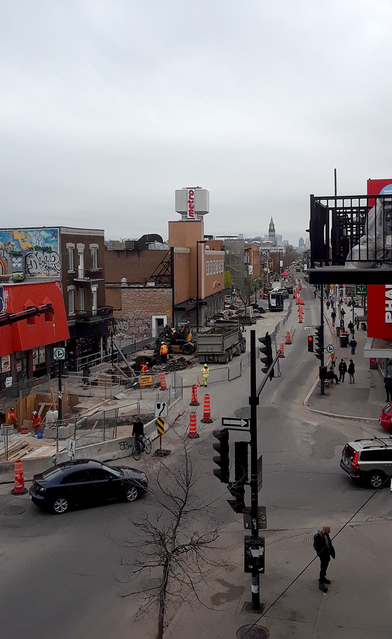
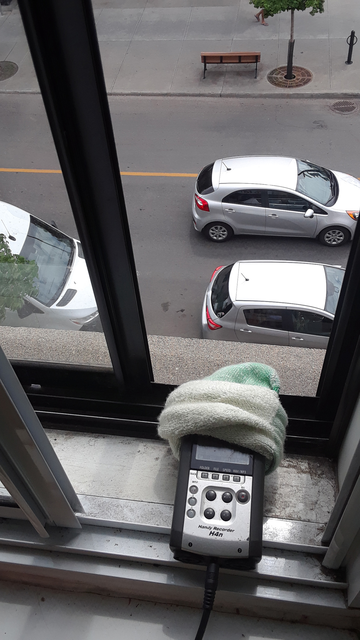
Technology: We found that the skills and use of audio have now become commonplace at our institution. As participants confirm to us, the soundscape recordings removed the students’ fear of technology and encouraged close listening. With only a smartphone and an app, a beginning is already made.
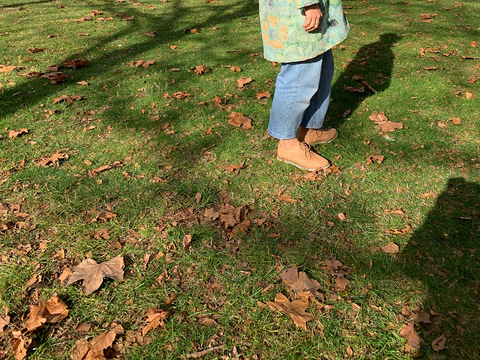
Temporality: Our approach to teaching has also permanently changed. We developed practices of slowing down, such as walks, spatial interventions in classrooms like changing and moving furniture, shifting traditional roles and perceptual exercises. Situated and flexible action in everyday teaching has become more important.
Inter-Relationality: We learned to appreciate the qualities of soundscape recordings as tools that produce an ecology of attention (Citton, 2017). The recordings show both sides of the nature of meaning: the aesthetic, mental and affective dimension, and assertions, or objectivity and the factual. Often the first step makes the difference; the effect of experiencing the environment in its diversity through a microphone and headphones.
Care: Our attention has expanded to include the qualities of deceleration and mindfulness. It is only in this way that we can develop a sensitivity to coping with the future and our changing experience of the world. The process was crucial: We listened to, looked at and described different landscapes and soundscapes with their attractions and wounds, and refrained from evaluative interpretations. In this way we got to know and respect each other. Although differences and social inequalities cannot be eliminated through such a practice, we managed to open spaces with respect and acceptance.
Commoning is the processual attributes of communality. Following John Dewey, Tim Ingold (Ingold, 2018) refers to the smallest possible action of commoning as an exchange of information among people with different life experiences. It is through participation in each other’s lives – through the ongoing and unrelenting efforts … to reach a concordance of sorts… (p.4). For Colombian-American anthropologist Arturo Escobar, this has long been people's "main strategy for designing their world. It consisted of human and nonhuman, animate and inanimate, material forms and spiritual beings—inextricably intertwined and enduring to this day." (Escobar, 2015, p.334).
Four Intertwined Pedagogical Reflections
Daniel realized that there is much to be gained in unlearning the reflexes acquired through years of training and experience in the field of recording. The aim is not to extract idealized sounds to process them into consumer products in the form of films, but to find sounds that can serve as gift to a community, as a way of expressing something of personal relevance and value to a community of listeners.
Andrea wonders whether the lockdown took us out of our daily routines and brought us into a collective resonance. Did the soundscape enable us to experience a virtual polis that cannot be repeated at will, or did it provide the basis for a new techno-domestic globality? While these questions are open-ended, Andrea believes that the search for such intense, shared moments is absolutely worthwhile.
At their best, Max thought that the workshop’s dissolved the physical and cultural distance between the social actors with very different backgrounds. He is aware that there are and must be clear limits to such claims of commonality , but he is also convinced that we precisely need such spaces as a prerequisite for any understanding and work on necessary changes.
Catherine senses that, by stepping back and taking the time to listen, the body sinks into a mode of observational curiosity that opens reception to whatever is being recorded. Thanks to this process, it is possible to learn differently, focusing less on what we think we know or can recognize, and more on what we don't know, which makes it possible to have unconventional new conversations.
Conclusion
It was only sometime after COVID-19 that it became clear to us that a soundscape’s ephemerality isn’t reductive and instead serves a philosophy of care. Such a practice requires an accurate negotiation of the attention economy in curricula or in the design of teaching formats. Taking care work seriously and maintaining it helps to connect perception and sensations in such a way as to establish a creative atmosphere of togetherness, which is also always the negotiation of difference.
The main demand of our workshops—to take time and to give time to oneself and others is essential. We demand sensitivity in a time when people embark on life-threatening migrations because their livelihoods have been destroyed. Recording soundscapes means taking this into account, discussing it and thus radically exposing oneself to an artistic practice, in addition to the worldliness it presupposes.
Guattari writes that the human condition is characterized by simultaneously living and subjectively observing part of the world (Guattari, 2000). Why is the understanding of perception deeply inscribed in an understanding of change? We are and at the same time we perceive. This can only be understood as a process.
Any education which seeks to incorporate this insight must deeply reflect on the role that reciprocity plays in the curriculum and in the nature of the relationships between all involved actors. Our focus upon the soundscapes as both an observed and experienced worldview, in combination with the extraordinary situation of the lockdown, led to surprising results and realities.
Discussion and Outlook
Three terms were combined in the discussion at the 8th Art of Research Conference in Helsinki: Witnessing was used to name the affective meaning of the simultaneous experience of COVID-19. The participants of the workshops were thus specially connected and social, cultural, and educational hierarchies temporarily receded. We experienced a situation of togetherness. After the COVID-19 lockdowns, students increasingly demanded this togetherness in the classroom. This was often linked to the desire to reduce hierarchies and specific learning requirements. At the same time, the expectation of clear structured instructions increased, and open tasks were perceived as too demanding. This came across as a contradictory message: working together and developing learning objectives, but please with clear and manageable tasks set by the teachers.
Epilog
Although the reflections collected here arise from our own experiences and conclusions, we have also shared them with the other participating institutions and asked them to reflect upon their own experience and to give feedback. The results will be published with the overall documentation and final report at https://mediathek.hgk.fhnw.ch/ (End of 2025).