12 Idling-in-the-Unreal
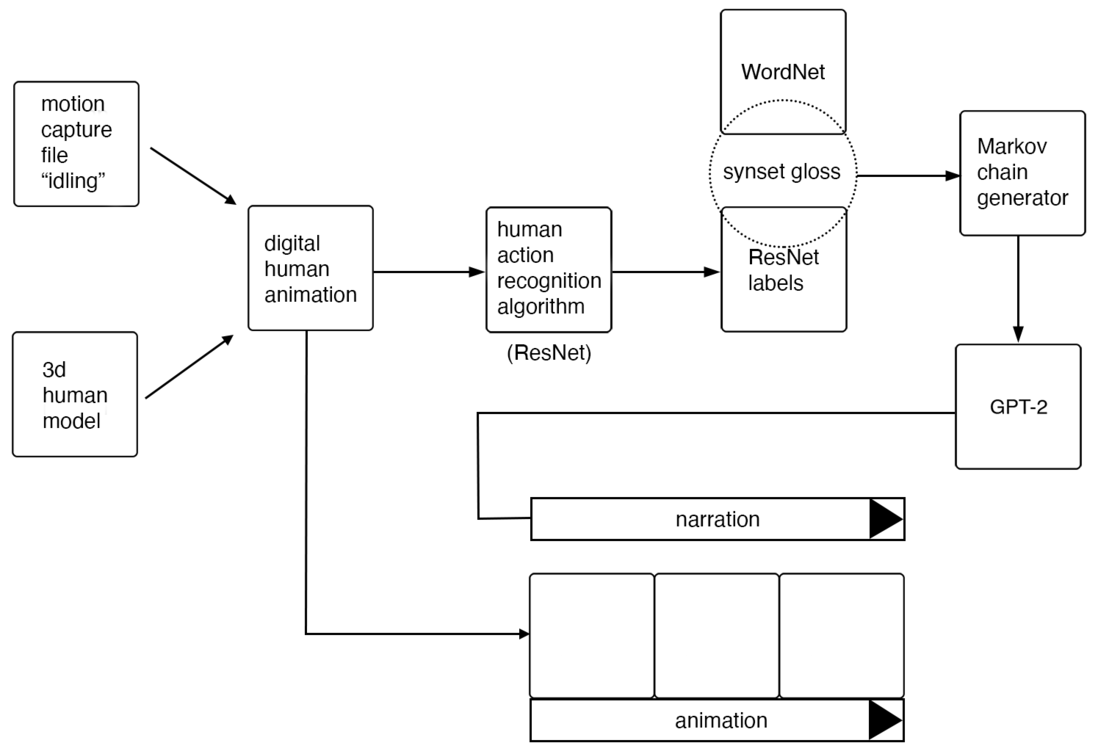
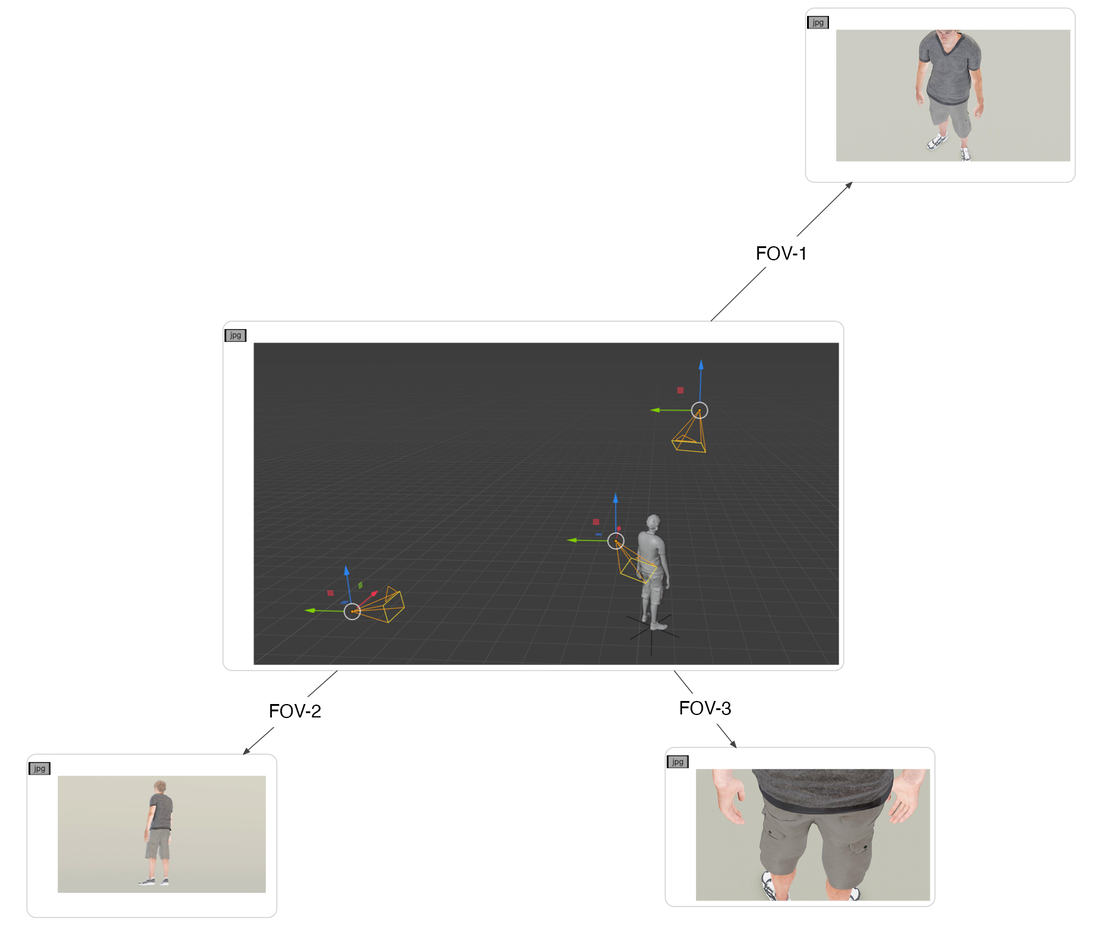
The Idling-in-the-Unreal project follows the method previously outlined in Synset_Gloss, along with an idea that started to form when reflecting on No_m_oN – that the placement of a virtual camera could act as a parameter to influence the production of text from the assemblage, functioning like a key that elicits value from the language model in a novel form of story making.
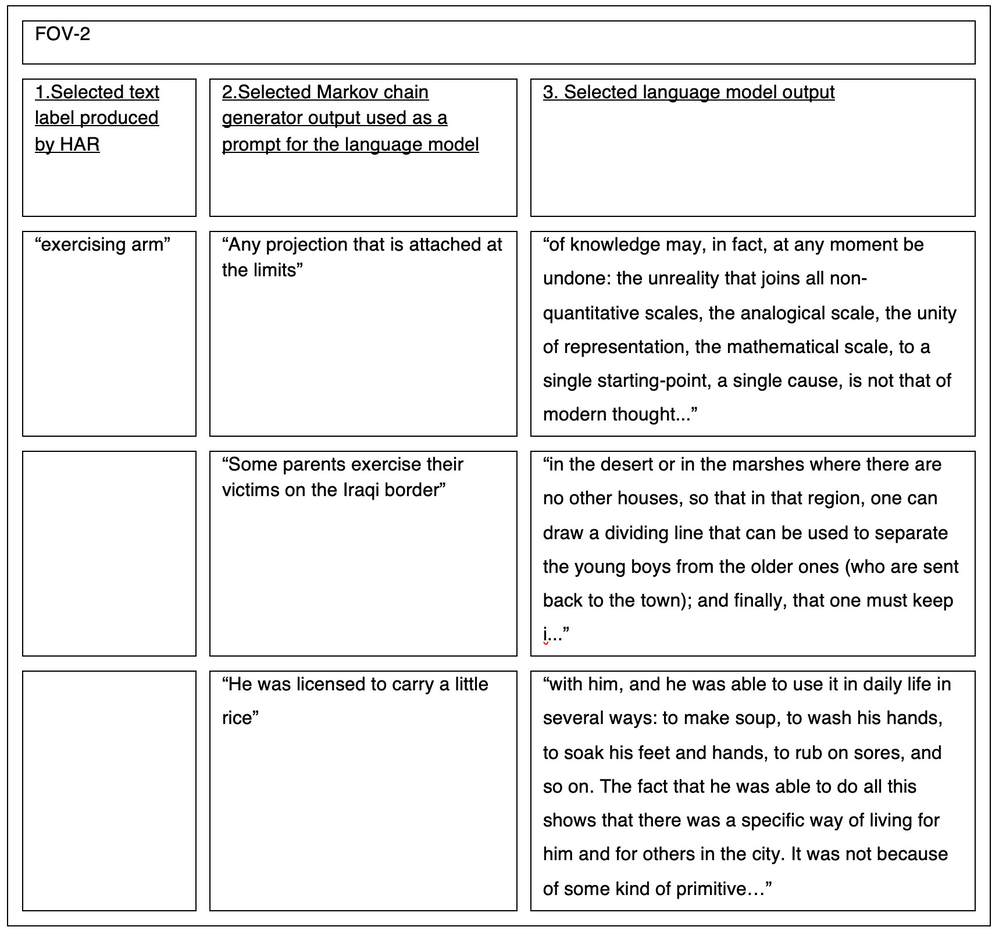
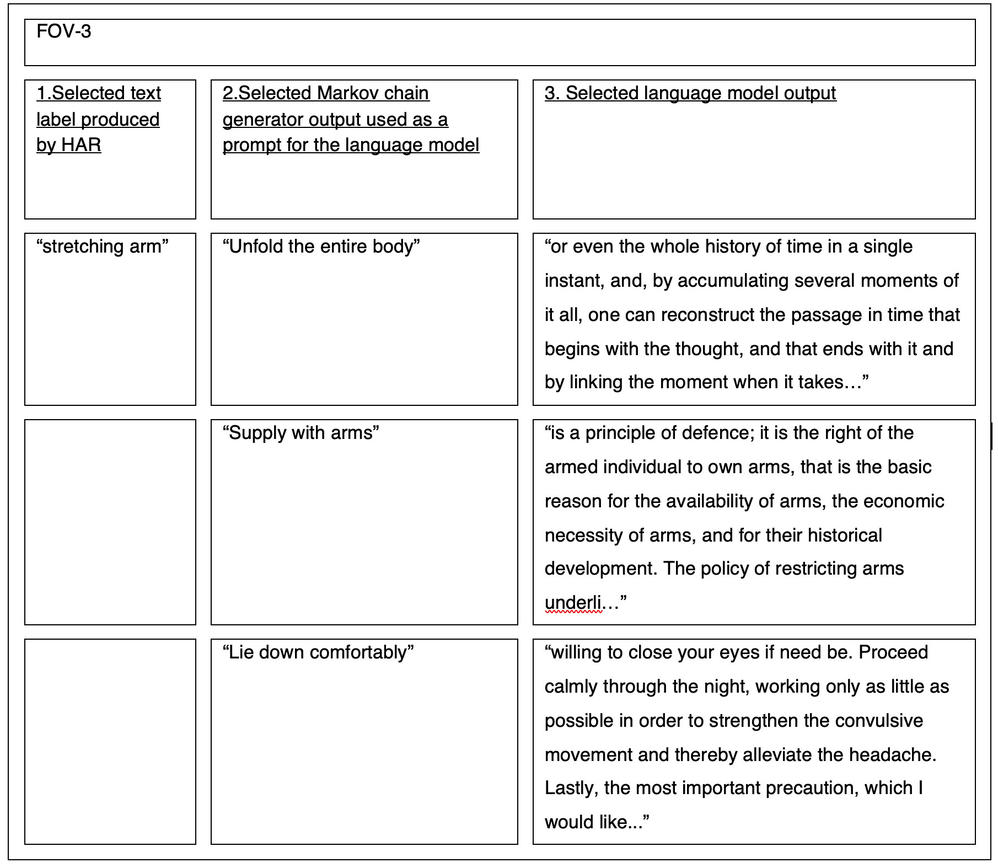
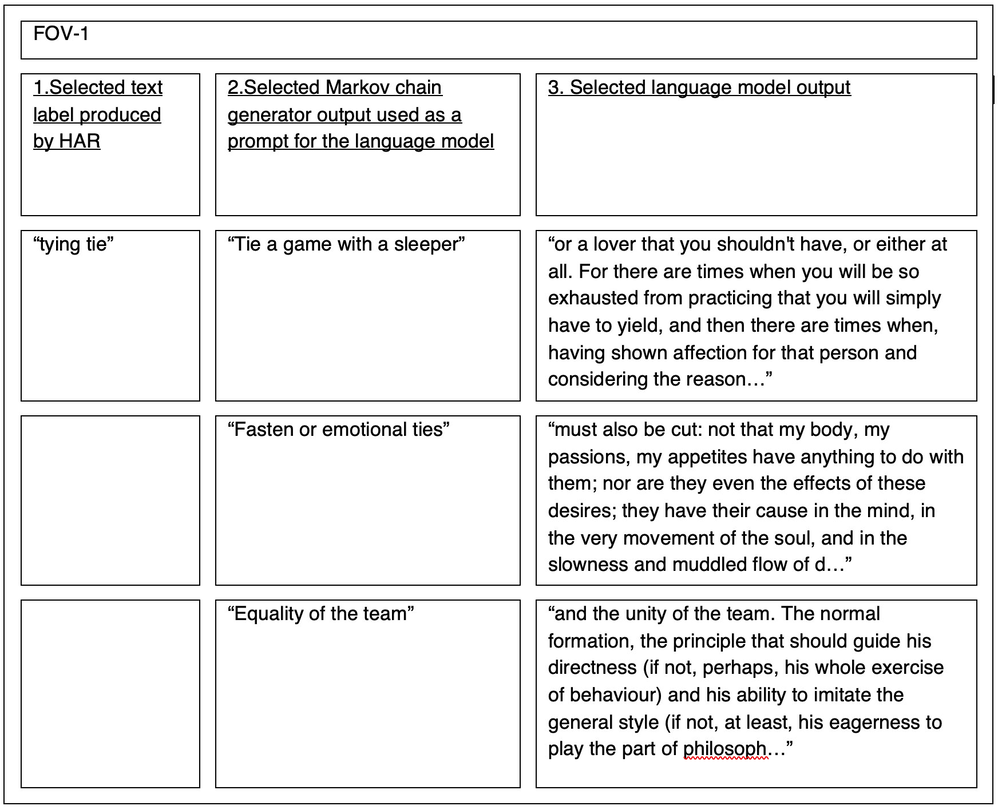
Similar to No_m_oN, this project was developed using the constraints of a mo-cap library, which provided the animation files for a series of digital human characters. The project focused exclusively on animations from the library’s “idling” category, a set of movements typically programmed into the mechanics of video games to run automatically as a default action. It was discovered that varying the field of view (FOV) of a camera within the virtual environment influenced the text label generated by the HAR system. By way of demonstration, three distinct FOVs have been selected for a character performing the same idling motion (fig. 16). For each FOV, three key pieces of information have been tabulated: 1) the text label produced by the HAR system; 2) text outputs from a Markov chain generator using the same HAR label; 3) a selection of autocompleted outputs by the language model (constrained to a maximum of 256 characters for brevity). Video 4 below is an extract from the 26-minute video animation Idling-in-the-Unreal, produced for the group exhibition CAN WE EVER KNOW THE MEANING OF THESE OBJECTS at Tickner Bell Young & Lebenson, Gallery 46, London E1, 2021.