14 Ritual Paradox
The BeFantastic Beyond Fellowship 2022–23 (India) provided the opportunity to collaboratively develop a new iteration of the ensemble method and the possibility of working with a human performer. The compromised site of a religious ritual served as the final destination for a perambulatory performance art piece.
The Yamuna River that runs through Delhi, despite its sacred status in Hindu tradition, is now a site of severe ecological degradation. Religious immersion in the river is a widespread practice, despite alarming levels of pollution and toxicity. The water is contaminated with untreated sewage, industrial effluents, and agricultural runoff, resulting in hazardous foam and high concentrations of chemicals such as ammonia and heavy metals. Devotees who bathe and submerge themselves in the river as part of religious rituals are exposed to significant health risks, including skin infections, respiratory problems, and organ damage. This site served as the final destination for a perambulatory performance art piece that advanced through the streets of Delhi, traversing the city’s layered social and environmental realities before culminating at the polluted riverbank (fig. 17). The stark contrast between the river’s sacred status and its material condition inspired the creation of a performance costume that included repurposed plastic medical IV bottles sourced from Delhi’s largely unregulated and often unlawful plastic recycling industry, drawing attention to the contradiction of
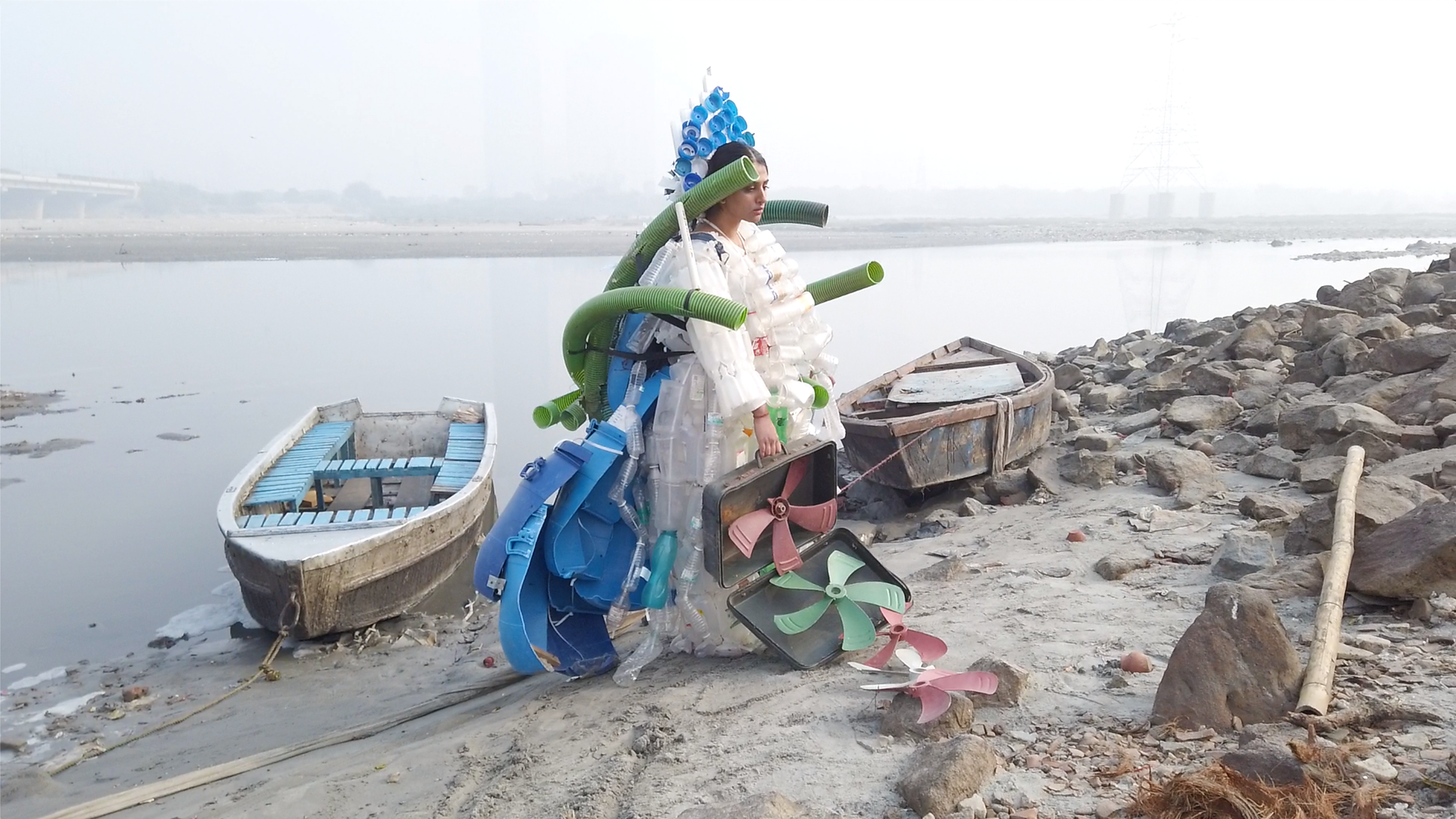
Figure 17. Arora, Aashna, Bruce Gilchrist, Chaitali Kulkarni, and Thaniya K. Mahalakshmi, Plastic Prāyaścitta, 2023, film production photo by Rahul Naag. Copyright: Arora, Aashna, Bruce Gilchrist, Chaitali Kulkarni, and Thaniya K. Mahalakshmi.
cleansing and atonement rituals performed in toxic environments. The costume’s repurposed objects, some of which were once associated with physical repair and healing, became a visual metaphor for the megacity’s collision between heavy industry and spirituality, and also served to shift the project’s focus from HAR to an object recognition algorithm as a way to generate text labels to prompt the language model. The film of the street performance, Plastic Prāyaścitta, and the language it consequently elicted from the ensemble, alludes to the trope of ritualistic pilgrimage as a journey into the unknown in search of new or expanded meaning. We imagined this sense of altered meaning being achieved through the actions of the body and its interplay between waste material and predictive technology (see 15 Poetics of Garbage). By embodying the risks and inconsistencies of both the recycling industry and the sacred river, the performance and choice of location draws direct parallels between the toxic materials circulating through Delhi’s informal waste economy and the contaminated waters of the Yamuna, a place where devotion collapses into decay.