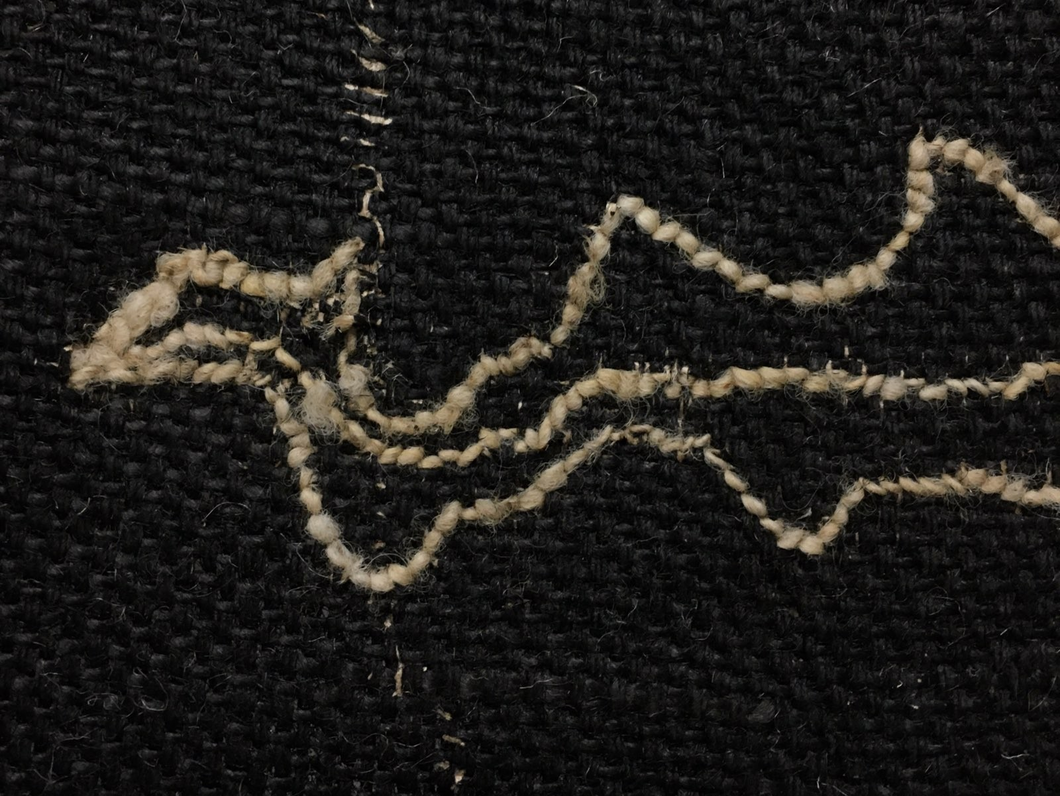
Kaffee hinterlässt [bei mir] einen bitteren Nachgeschmack.
Er ist bitter, schmeckt wie eine bittere Brühe, die ich lieber kalt geniesse als warm.
Ich mag bitter. Aber mit dem Nachgeschmack ist es anders, eher wie ein schmieriger Film, ein dicker Belag auf Zunge und Zähnen, ein dröhnender, hartnäckiger Rückstand im Mund.
Nicht umsonst wird Kaffee oft mit einem Glas Wasser serviert, oder geht es da eher um Rehydrierung, weil Kaffee Wasser entzieht, dem Körper und der Welt?
Vielleicht verschwindet der Kaffee, wenn es nicht mehr genug Wasser gibt, wenn es zu heiss wird. Geröstete Bohnen wachsen nicht aus trockenen Pflanzen.
Eine Bohne, die nicht der Ernährung dient, aber die Verdauung beschleunigt.
Wir haben nie über Scheisse gesprochen.
Ich kenne viele die Kaffee als Hilfe zum Kacken trinken, sich darauf verlassen, dass Kaffee ihnen ihre Verstopfung aus dem Körper treibt.
Pünktlich 5 Minuten nach dem Kaffee aufs Klo gehen, sich der Scheisse entledigen die Mensch mit sich herumträgt.
Detox quasi.
Kaffee strukturiert den Alltag, treibt dich erst in die Küche, dann auf die Toilette und schliesslich ins Badezimmer.
Das Zähneputzen plane ich um den Kaffee herum.
Wenn ich noch mit Menschen reden muss und nicht Zähneputzen kann, trinke ich ungern Kaffee.
Mundgeruch ist eine meiner Ängste.
Ich trinke Kaffee nicht schwarz.
Ich trinke meinen Kaffee so wie Menschen meinen mein Aussehen beschreiben zu müssen und schäme mich dafür.
Milchkaffee, «ein schönes Braun» sagt meine Nachbarin.
eigentlich Hafermilchkaffee, Haferkaffee.
Wo ich aufgewachsen bin, wächst kein Kaffee.
In Regionen, die meinem Aussehen zugeschrieben werden, wächst er.
Wo ich gross geworden bin, gibt es auch Pflanzen mit Bitterstoffen, die dich auf die Toilette treiben und die ich mit viel Hafermilch trinke.
Zichorien wachsen am Wegrand, die Gemeine, Gewöhnliche Wegwarte.
Zu gewöhnlich, um ein Produkt zu ersetzen, das erst durch Imperialismus, Kolonialismus und Ausbeutung zu uns kam, das von Anreichern und Bereichern, von Reichtum zeugt.
Wie Gold wird der Kaffee dort angebaut und abgebaut, geerntet, wo Arbeitskraft billig ist und sich Konzerne nicht an Menschenrechte halten müssen, weil gewisse Menschen ihre Menschlichkeit erst unter Beweis stellen müssen.
Ich bin mir nicht sicher, ob wir Kaffee wirklich mögen.
Mit Wein ist es das Gleiche.
Das Drumherum, das Ritual, Status und eine soziale, verbindende Komponente.
Wieso kein Tee?
Die Minze wuchert zwischen den Steinen vor meiner Türe und die Wegwarte steht am Wegrand.
Was ist eine Notwendigkeit und was haben wir zu einem Bedürfnis gemacht.
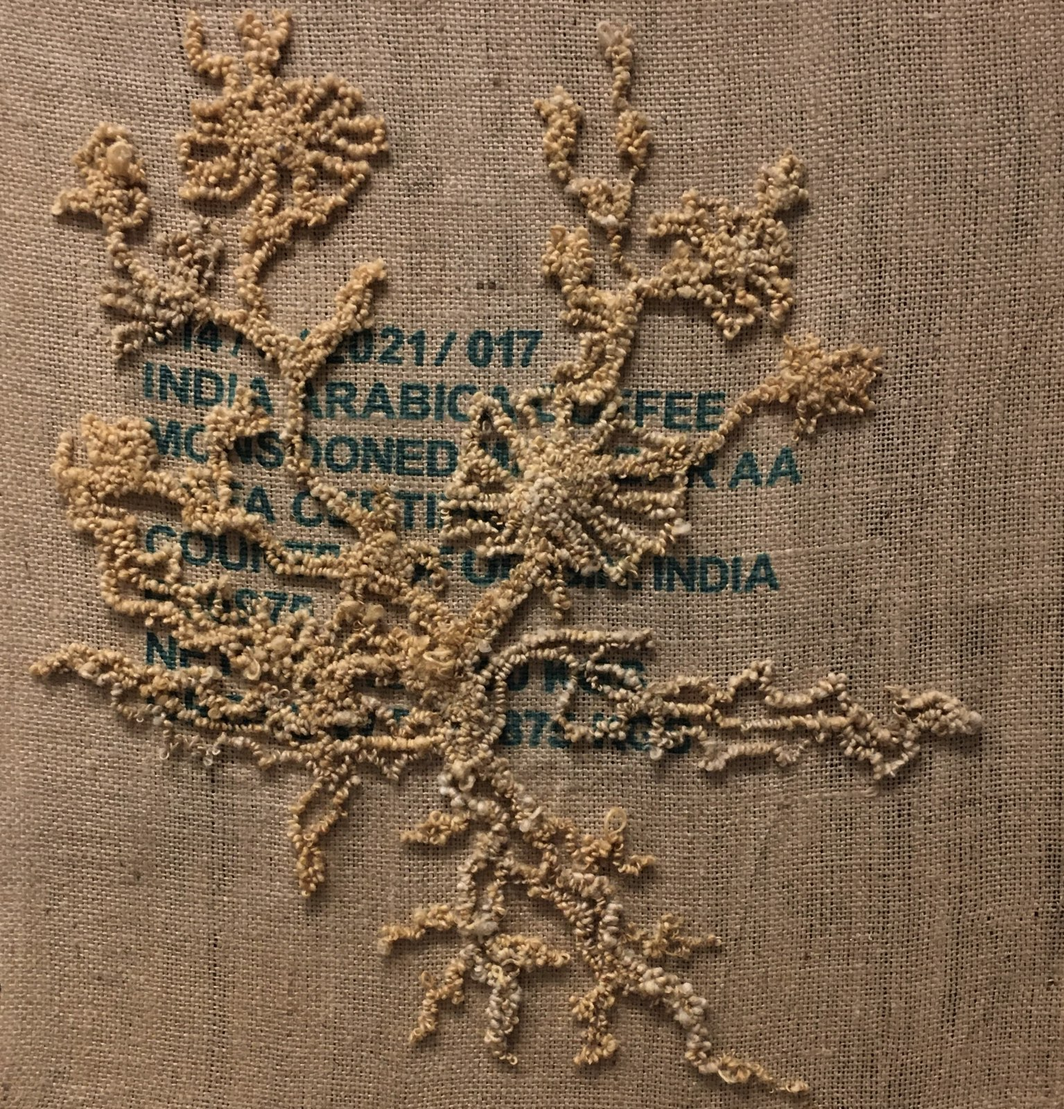
Coffee leaves [me] with a bitter aftertaste.
It’s bitter, it tastes like a bitter broth I’d rather drink cold than warm.
I like bitter. But the aftertaste is something else.
More like a greasy film, a thick coating on my tongue and teeth, a droning, stubborn residue in my mouth. It’s no coincidence that coffee is often served with a glass of water. Or is that more about rehydration?
Coffee draws water
from the body and the world. Maybe coffee disappears when there’s no water left, when it gets too hot. Roasted beans don’t grow on dry plants.
A bean that doesn’t nourish but speeds up digestion.
We never talked about shit.
I know many who drink coffee as an aid to shitting, who rely on it to drive the constipation out of their bodies.
Five minutes after coffee — like clockwork — they go to the toilet, rid themselves of the shit we carry around. Detox, basically.
Coffee structures the day — drives you first into the kitchen, then to the toilet, and finally into the bathroom. I plan my toothbrushing around coffee.
If I still have to talk to people and can’t brush my teeth, I dislike drinking it.
Bad breath is one of my fears, it occupies personal space.
I don’t drink my coffee black.
I drink it the way people seem to feel the need to describe my appearance — and I’m ashamed of that.
Milky coffee, “a lovely brown,” says my neighbour.
Actually oat milk coffee, oat coffee.
Where I grew up, no coffee grows.
In the regions my appearance is associated with, it does.
Where I come from, there are also plants with bitter compounds that send you to the toilet — and I drink them with plenty of oat milk.
Chicory grows along the roadside, the common, ordinary blue-flowered weed.
Too ordinary to replace a product that only came to us through imperialism, colonialism, and exploitation — that speaks of enrichment and privilege, of wealth. Too common and yet nobody knows it.
Like gold, coffee is cultivated and extracted where labour is cheap,
where corporations don’t feel the need to care about human rights.
Because certain humans must first prove their humanity.
I’m not sure we really like coffee — the same goes for wine.
It’s the whole ritual around it, the status, the social, connective element.
Why not tea?
Mint grows wild between the stones in front of my door,
and chicory decorates the roadside.
What is a necessity, and what have we made a need?