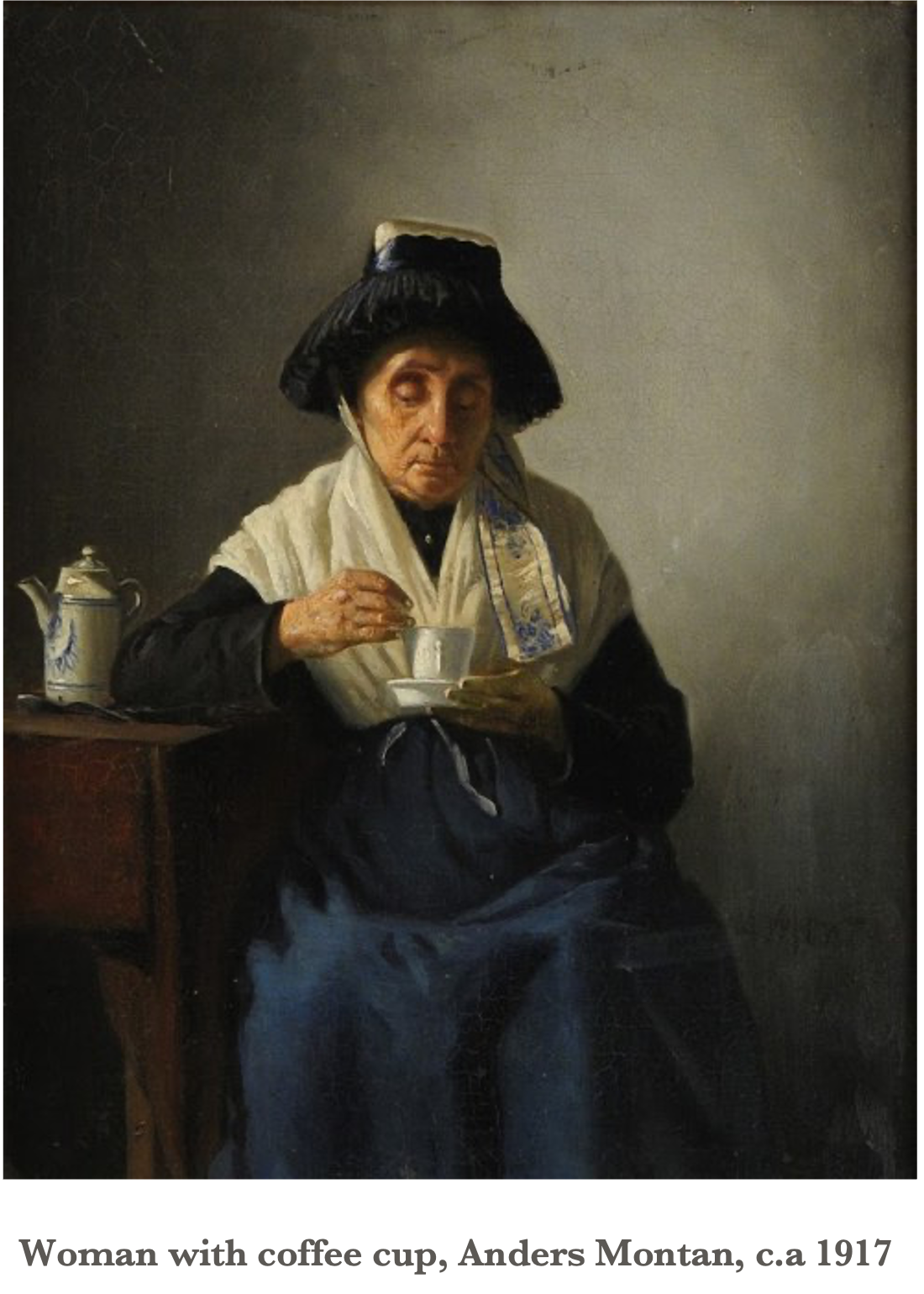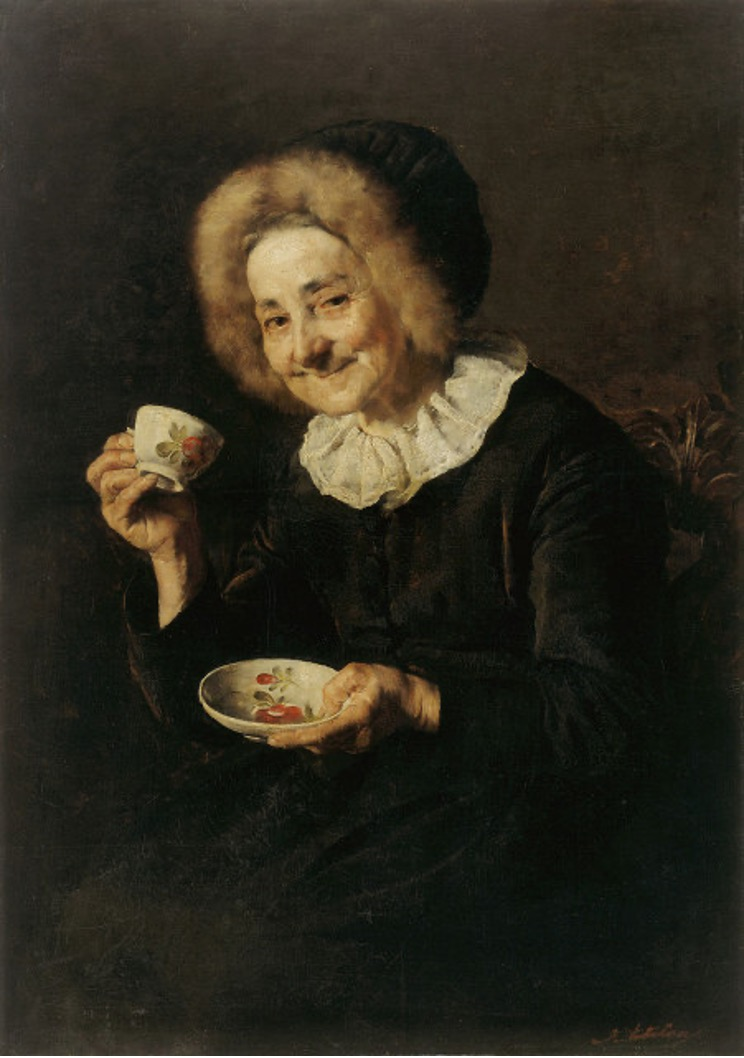
II. Coffee as an evil entity
If we accept that evil is not a separate entity from God, but the lack of God, where does that leave coffee? Coffee is matter, therefore coffee is evil, according to gnostic tradition. However, its sinfulness comes from a much larger scale of interlinked stories— colonial history, “infidel” structures and beliefs, sanctions, heresies. Coffee’s semiotic potency lies in its interplay of substance and absence. Each sip annihilates the material presence of the drink while awakening the mind; energy arises through depletion. The ritual of coffee is thus one of disappearance: a daily communion with absence. Even its residues—the coffee grounds left at the bottom of the cup—become a site of meaning. In Ottoman and Balkan traditions, they are read as divinatory signs, traces of what has vanished. The future is interpreted through what remains when the substance is gone.
Heresy, as medieval thinkers and as the gnostics understood it, is not a foreign intrusion but an internal deviation. A certain truth turned at an angle. Orthodoxy could define itself solely through the presence of heresies, simultaneously rejecting and condemning them and requiring them at the same time. The devil, for instance, serves this exact purpose in Christian semiotics. He is not the opposite of God, but a perverted reflection of the divine, a being defined by the absence of good.
Coffee, in its blackness, in its opaque, light-absorbing surface embodies this dialectic of presence and absence perfectly. It is a material sign of the unrepresentable. Today, coffee is consumed without theological anxiety, perhaps even without its semiotic signification of the unknown. But the drink’s foreignness never fully disappeared. Its exotic aura remains, it persists, encoded I orientalist imagery that accompanies its marketing and consumption. Although “baptised” it is still haunted by its heretical origins. What makes coffee as a drink and as a semiotic symbol of absence so powerfully charged is its persistence of difference within assimilation. The baptised soul, like the baptised drink could never fully escape the memory of its former darkness, the memory of matter.
The Baptism of Coffee:
The semiotics of Heresy and the sanctification of the Forbidden drink
by Velina Taskova
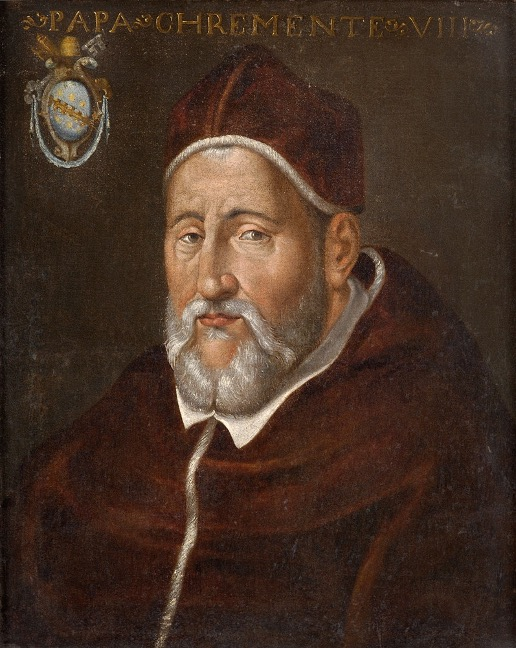
When in the late sixteenth century coffee first reached Europe, it carried a certain, charged aura— it entered as a theological problem. Dark, unfamiliar, bitter, foreign and imported from the Ottoman trade routes, it came not only as a drink, but as a heretical sign. That same black liquid is now considered the emblem of sociability, community, rational wakefulness and joy, but it was known as and called “The devil’s drink” in Europe less than 5 centuries prior. This is one of history's quiet ironies. To many Cristians, coffee was a potion of infidel worlds, born in the lands of islam or the “lands of the unknown”, therefore saturated with heretical substance. Between heresy and reason, however, stands a figure that sanctified what had been considered sinful and diabolical— the figure of Pope Clement VIII— who, according to legend, literally “baptised” coffee, making it acceptable for christians to enjoy.
According to the story, Pope Clement VIII was heavily influenced by his advisors to declare the coffee drink as heretical, to forbid its consumption. However, once tasting it himself, the pope declared that “This Satan’s drink” is too delicious to “let the infidels have exclusive use of it" (Filz, 2018). Then, the decision to “Cheat Satan” and baptise the unholy drink was made and in this brief gesture of inversion, the symbolic structure of coffee was transformed. It was now not only purified, but resignified — its meaning reversed into the Christian symbolic economy. The act of baptism here operates as semiotic transformation, a passage from one ontological order to another, the same way a human baptism works: from sinful to salvation and belonging. And although the baptised subject still has heretical traces and is marked by the memory of sin, salvation is what remains as a semiotic sign of overcoming what was. Darkness was defeated by an act of symbolic recognition and now coffee became the pope’s drink, the pure cup.
Bibliography
Belting, Hans, Likeness and Presence. A history of the Image before the Era of Art, Chicago University press, 1994
Filz, Gretchen, The Devil's Drink: How the Pope Cheated Hell by "Baptizing" Coffee”, The Catholic Company, 2018
Obolensky, Dimitri, The Bogomils: A Study in Balkan Neo-Manichaeism, Cambridge University Press, 1948
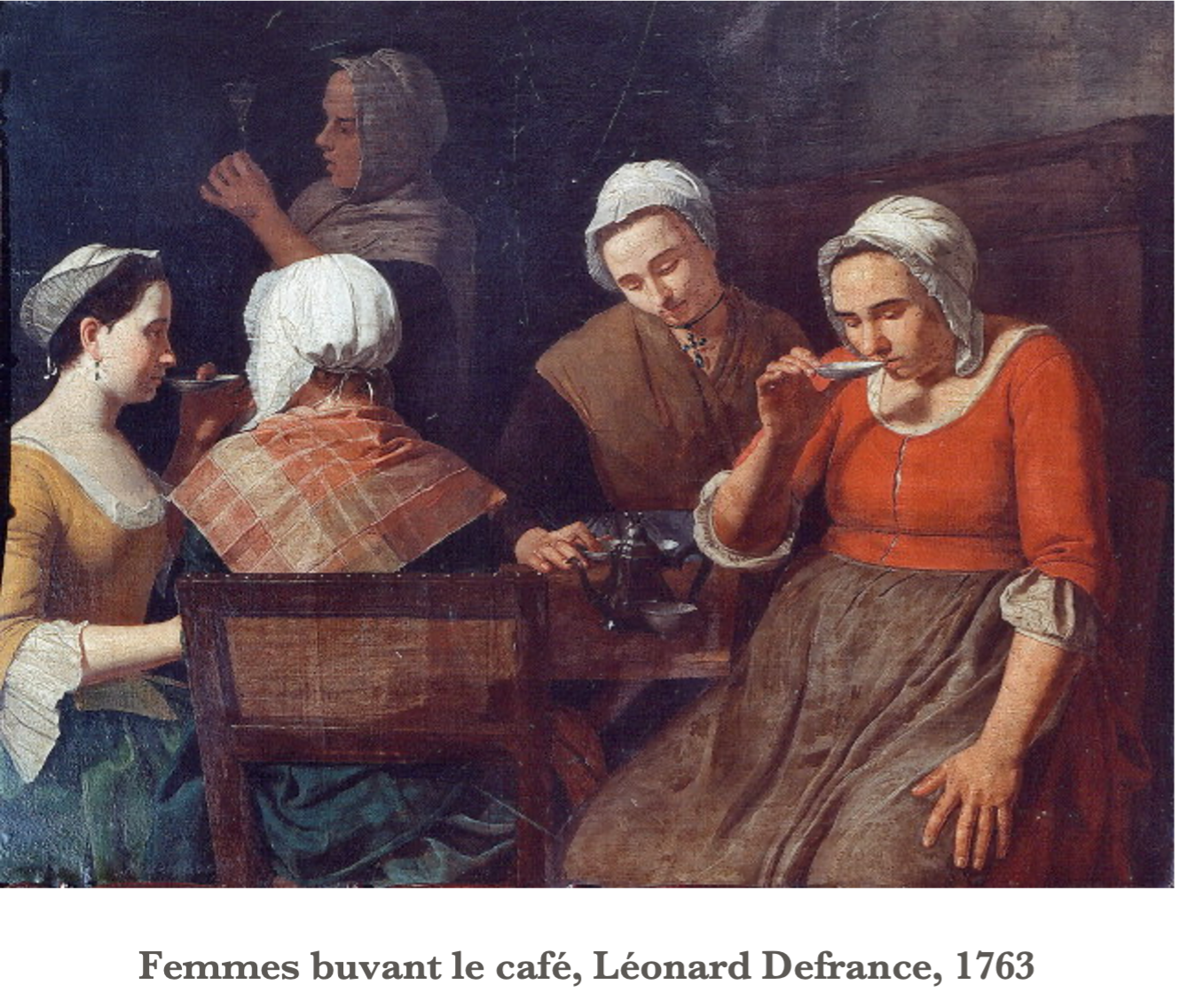
Resta, Karen. “15 Paintings of Coffee Lovers for National Coffee Day.” Paste Magazine, July 26, 2022. https://www.pastemagazine.com/food/15-paintings-of-coffee-fanatics-for-national-coffe/?fbclid=IwAR1m7zr2Lun4K62vWonxiuBw43jFn0NNZc16LYRsTLeaFmB5Vmd95q9Or8c.
I. Good and Evil and the Benevolent God
Heresy and especially evil, the way theological thinkers like Pseudo-Dionysios the Areopagite, Augustine of Hippo and Aquinas saw and understood, was a deviation, a lack of good. The relationship between good and evil, the problem of the origin of evil and how to reconcile the existence of suffering and cruelty with the belief in a perfect, benevolent God has been the cause of many enduring questions, troubling humanity, especially within philosophy and theology, for centuries. It is strenuous to understand how a world, though allegedly created by a force of goodness, overflows with decay, violent deaths, despair and pain. This paradox creates a fundamental dilemma: Is God, the source of good, as creator of all, also the creator of evil, or must evil be understood as an external entity, an absence and opposition to good, that destabilises divine completeness.
Philosophical and religious traditions have long tried to resolve this tension by framing evil not as an individual, self-sustaining substance, but as an absence of good, a distortion of Gods creation. Jewish tradition, for instance, depicts evil as the human misuse of free will. It viewed creation as fundamentally good, with evil entering only as a result of human disobedience to God’s will, while failing to give a philosophical explanation between the connection of the creation to the creator, the divine and the material. Christianity later makes an attempt to offer a resolution and make that connection through the incarnation, where God, Himself, entered the human existence, thus uniting the divine and the material worlds. This opened a way for the infinite and the finite to collide and reconcile. Because God is good and creation is affirmed as good, especially through the incarnation, evil cannot be a thing created by God. Christian philosophers resolve the problem by redefining evil as a privation, a lack of good, not an independent substance (Obolensky,1948, 13)
In this new form, evil is an absence. Absence of Good, absence of God. Evil as an opposition of good is not created by God, because nothing can create its own antipode, in other words, evil is not-being. But for evil to exist at all as a negation of good, it depends on the existence of entities in which this negation can take effect, entities that have being and therefore are good. In this way evil exists in good and its existence depends on good. In complete contradiction to the christian view of evil, which stems from the belief in hypostatic unity and the consequent value given to the (earthly) life and the body, we find another concept, already existing in many respects before the rise of Christianity. It, establishing an original opposition between good and evil, rejects that God, who is essentially good, can be the creator of, or cause of, evil. The source of evil is in the visible, material world, where chaos and suffering prevail. The origin of evil lies in matter itself. This view, by giving evil the same positive and absolute quality, which is also possessed by good, thus leads to the inevitable dualism between God and the first cause, opposed to Him, that of matter. This dualistic cosmology seems to have been adopted before Plato. Plato, himself, following the origins of evil, connected to matter, regards evil as independent of God and fails to escape the strong influence of dualism. To the greatest extent, we find this idea in gnosticism, which arose in Anatolia (Asia Minor) in the first century, where we discover the first systematic attempt to solve the problem of evil in a strictly dualistic sense. Regardless of the countless contradictions in the teachings of the gnostic sects, the main idea underlying them is that matter, which is essentially evil, could not be the creation of God.