MAIN ABSTRACT INTRODUCTION FIELDWORK METHODOLOGY REFLECTIONS RESULTS ACKNOWLEDGEMENT __________________________________________________________________________________________________________________________________________
ON SILENCE
Foremost: you must first make a statement to hear silence.*
I speculate on the fact that silence can be cumulative, collective or spotlighted. If we look more closely, within a musical discourse, when all sonic spectra are suddenly interrupted by silence, this action creates a kind of void—a sense of the ground slipping from underfoot. This effect anticipates accumulation. Silence quickly takes up more and more space until it drowns all sounds in the void. Hence, silence accumulates, and its duration weighs its impact on the listener.
When silence anticipates a sonic event, it generates expectation—just as it does in the space between two events. Silence is where all phenomena starts.*
And it is when silence is performed within a sonic event that it becomes more organic, more present—contextualized within a domain to which it naturally belongs and capable of fully commanding the listener’s attention. Here it become collective.
But before allowing it to intentionally take the stage, silence must be anticipated by a sonic event. Let’s say a soloist takes over a musical discourse. First, he or she begin with a musical statement, then silence arrives as a relay, passing on the sonic information into an unavoidable understanding. When it gets dark—when our minds process silence as a sudden leap into the vacuum, often associated with a deep, black nothingness (is this a rare form of synaesthesia?)* —that is where the prior sonic statement takes shape.
There, all the notes cling to the walls of the dark vacuum. There, they find confirmation of their identity. They are naked—distinct hints of flavors that evoke the colors of memories sitting in the ancient subconscious, where we have built up our life story. Notes assert their identities and trigger deep, multisensory and emotional responses.
There is where music finds its highest potential for reaching deep within. Without silence—without those dark cliffs where sounds adhere on and are exposed to personal gauging—they represent just ethery vibrations banging on the eardrum. Silence allows them to transcend this physical barrier, pierce through it, and seep into our personal, genetic structure. Undoubtedly, the musical experience is so intimate that it cannot be paralleled with anyone else’s.
ON 1st PUBLIC PRESENTATION
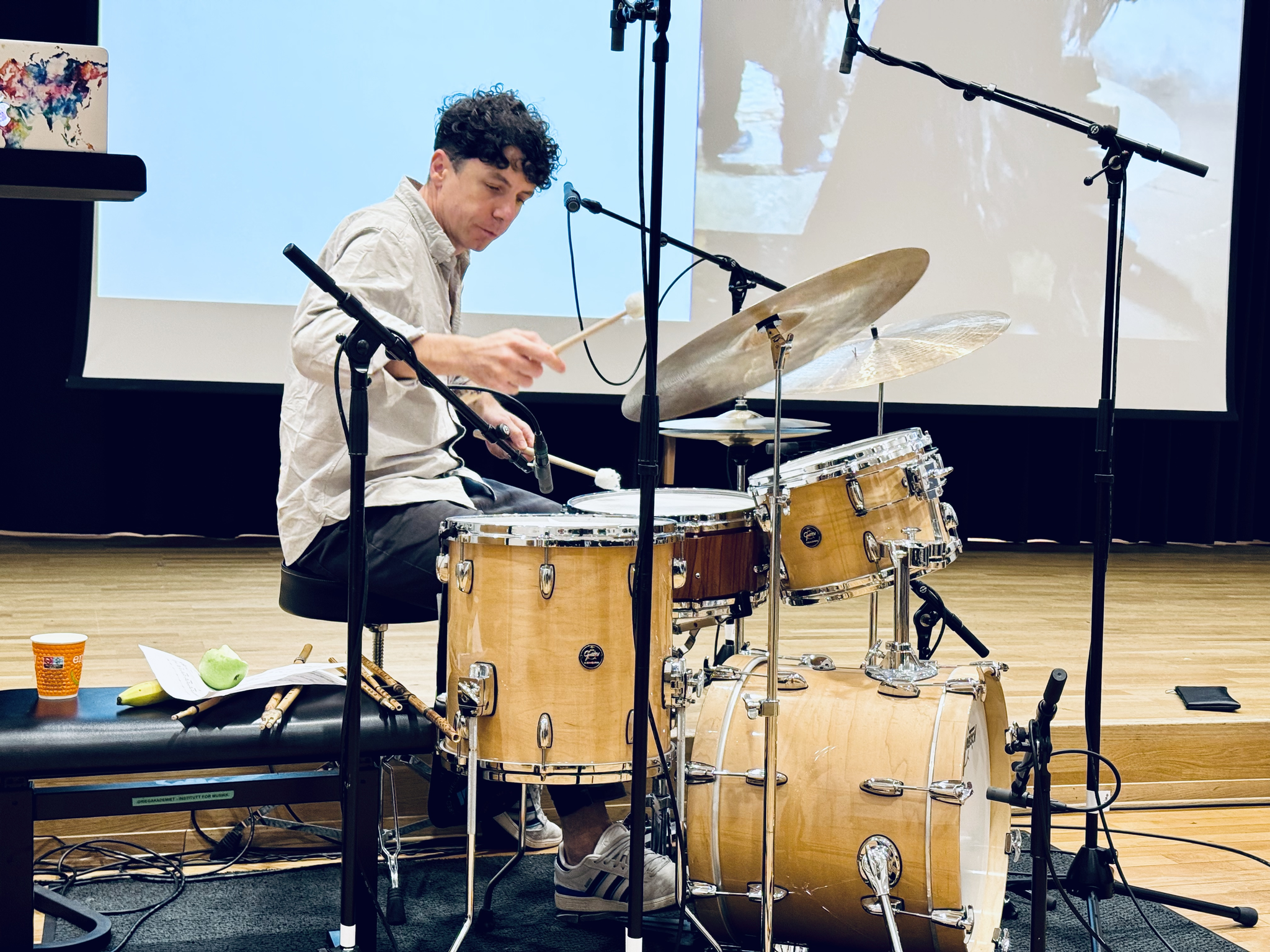
The following paragraph examines in detail the long conversation I had with my supervisor, Thomas Tellevik Dahl, after my first public presentation at the Norwegian Artistic Research Forum, which took place in Bergen in October 2025.
The text that follows is the result of an extended reflection on the topics addressed during our open discussion, focusing on the communicative tools I used to present my artistic project, the audience’s response, and—most importantly—my own perception while presenting.
A schematic bullet-point section outlines the key points of the conversation, while the second part is argumentative in nature and presented as a monologue.
This conversation was digitally recorded on my mobile device and subsequently transcribed with the aid of an AI service, as manual transcription would have required a disproportionate investment of my personal and foremost professional time.
Thomas T. Dahl informally agreed to document our conversations in any format I considered relevant and useful for dissemination purposes.
________________________
1. Feedback from Thomas
Main points
- The tempo and breathing indicated stress (upper chest breathing).
- Too many elements in the presentation → lack of focus.
- Next version should be more focused.
- This is normal in the first year while exploring new material.
2. About Norwegian Folk Music & Interpretation
Avoid presenting things as “the truth” about Norwegian folk music.
Instead, talk about:
- Tendencies, dialects, and personal phrasing in the music.
- Different villages have different versions; it's personal and always changing.
- Indigenous / folk traditions are contextual and circumstantial, not fixed.
- The concept of circumstance is very important: environment changes the result.
3. On Performance, Context and Experience
- Being in the same room is different from watching a recording.
- Emotional state, atmosphere, physicality, audience → all influence outcome.
- “Flow” is more important than “correctness.”
4. Encouragement for Next Presentation
- Clarify: “This is my personal interpretation, in this moment.”
- You don’t need to claim ownership of “truth,” only relationship and inspiration.
- Use less “this is how it is” and more “this inspires me in this way.”
4. The Gatekeeper Concern
Some people fear artists become “gatekeepers” when speaking about tradition. The person in the audience wasn’t aggressive — more a cautionary warning:
- “Don’t accidentally position yourself as the authority.”
- It is fine to be inspired without “explaining” a culture as if defining it.
5. Jazz vs Classical Approach
Jazz → loose, personal, uses theory as fuel for creativity (not truth).
Classical → often looks for “correctness” and “the right way.”
In jazz / improvisation:
- Theory = starting point
- Practice = freedom + personal language
6. Artistic Agency
- Your project is artistic, not ethnomusicological research.
- You do not need to justify “ownership” of the tradition.
- Just be clear that the inspiration is personal, not prescriptive.
7. Practice / Development Advice
- Compose regularly (even one hour a day).
- Experiment more with grooves to feel “inside” not “outside” of them.
- Musical understanding grows through body and repetition.
8. Final Encouragement
- The presentation was good overall.
- Only refinement and focus needed.
- Keep going — your voice and artistic path are interesting and inspiring.
PART I
When I look back on my presentation on the 20th of October, I realize that I was speaking slightly ahead of myself—faster than my breathing could keep up. I now recognize this as a rush to cover all the aspects I had prepared within the 30-minute time frame I was given. I can feel it now in retrospect — the sensation of wanting to hold too many elements in one moment, without yet having settled into them. The complexity of the material pressed outward faster than the inner grounding that normally carries me. And yet there was also a certain joy in that exposure: the excitement of actually sharing something that is still forming.
The feedback from Thomas was about structure and focus — not as a criticism, but as a reminder of artistic clarity. I brought too many dimensions forward at once: rhythmic ideas, cultural context, personal methodology, philosophical framing. The result was that the “centre” of the presentation sometimes dissolved into multiplicity offering an untargeted speech. The stress wasn’t physical; I was actually quite excited while speaking. It mainly came from trying to communicate artistic ideas and approaches in a way that everyone in the audience could understand, without framing the material as if it were intended only for experts in the field.
But the deeper part of the conversation, the one that truly stays with me, was about how I relate to the material itself — not only as research, but as lived artistic practice. Thomas invited me to shift the language from “truths” about Norwegian folk rhythm toward tendencies, personal colourings, dialects. Not rules. Not certainties. Not cultural declarations. Just windows.
I must admit that I had no intention of presenting my ideas as absolute truths. Rather, I was excited simply to share something I had been told and that resonated with me, more or less in the way I presented it. I have a very open and unegotistic way of approaching things, so I had no desire to showcase how “correct” or authoritative my knowledge of certain Norwegian folk rhythms might be.
In Norwegian folk traditions — like in so many indigenous or orally rooted musical lineages — two houses in the same village can already hold two completely different versions of the same tune. There is no fixed centre that everything returns to; there is only the ongoing presence of a practice, lived through individuals, never identical from one moment to the next.
Thomas called it circumstance — a word I am still thinking of. Because in this kind of music, repetition is not reproduction. Repetition is reopening. He told me a story of a singer in Africa who was asked to repeat a song he had just sung. The singer said he could not — not because he forgot it, but because the cow had moved. The sun, the landscape, the gesture of the moment had already shifted. The song belonged to that exact configuration of being. Now the cow was gone, the moment was gone, and with it the song had already dissolved into past time.
This reminds me of a very interesting passage I have read on Christopher Small`s "Musicking" book, about the impermanence of the performed event:
"In an earlier book (Small 1977), I described two such nonliterate ensembles, one from Mozambique and one from Bali, and the manner in which they create and perform. When there is no written score to refer to, it is probable that the piece will go on changing and developing through successive performances, without anyone caring too much or perhaps even noticing, since there is no stable “authentic” version with which to compare it. As performance circumstances change, the piece will change with them, for no one has any interest in fixing it or in preserving its integrity. It is not the piece that is treasured but the performance, and the aim of performance is not to present the piece but to play in such a manner as will be appropriate to the event at which it takes place, so that it will enhance the human encounter, order it and make it memorable. The piece is valued to the extent that it makes this possible, and when it ceases to do so, it is discarded without qualms. When it falls out of the repertory, it is dead forever, and there is no way in which it can be resuscitated.
That is not necessarily to be felt as a loss, since it leaves room for new creative work to take place; and it is the creative work that is to be valued, not the created object.
In these conditions it is virtually impossible to say where composing a piece ends and rehearsing it begins, or when rehearsing ends and performing begins. It really does not matter, for composing, rehearsing and performing are a single process, and piece and performance, composer and performers, are a single group; the musical universe is a unified, seamless whole".9
That is what “indigenous rhythm” really means — not a pattern but a relationship with the instant. This also folds into performance context. Thomas shared an experience put into perspective: a Friday concert and a Saturday concert with the same band are never the same band. On Friday, there is wild electricity, looseness, overstimulation — sometimes it sounds brilliant in the room and almost absurd on the recording. Saturday, exhaustion opens a different kind of listening — intimacy, softness, inward attention — and now the recording sounds deeper than the experience. The tape is two-dimensional. The living event is four-dimensional: body, atmosphere, time, and presence. No recording can document breath. No transcription can document temperature.
This is what Thomas roughly meant when he said that my presentation shouldn’t lean toward “explaining” Norwegian music as if capturing its essence — because essence in this context is always unstable by design. To “fix” it is to betray it. To document it as static is already to misrepresent it. He reminded me that someone in the audience reacted tensiously not because I was wrong, but because they perhaps feared I might unintentionally step into the position of explainer-of-a-culture, instead of artist-in-dialogue-with-a-culture. And I understand that now — the difference between “this is how it is” and “this is how it appears to me right now, inside my work.” The first closes; the second opens.
I understand that there may also be a long historical wound behind this — the fear of the outsider defining the insider, and then freezing them in that definition. Colonialism doesn’t always happen through violence; sometimes it happens through description. So the received caution was not a rejection — it was a protective gesture. A reminder to remain fluid and maintain integrity.
Thomas showed me another contrast that I didn’t fully see before: the difference between how classical ideology treats theory versus how jazz treats it. Classical traditions often search for the “right way,” the correct interpretation — truth as destination.
Jazz uses theory as ignition—a way into forward motion, where interpretation doesn’t rely on the correctness of execution, but rather on the honesty of projection, based on a pristine, uncontaminated, thought-free presence, letting the music’s flow determine how the performance develops and unfurls.*
Finally, when Thomas added "we (intended as jazz musicians) don’t care about truth — we care about flow”, I realized how much this explains the discomfort I sometimes feel when trying to “frame” my work too academically. The language of precision weighs differently on music that lives through presence and often improvisation. If I try to find exactness in my verbality, I loose flexibility and adaptability of the content; I become square where the artistic explication wants to be curved. To feel free, to let freedom be, is not to lack structure — it is to let it dissolve into embodiment.
And embodiment is only earned through time inside the flow, not around it. This is where I will begin Part II — on practice, compositional discipline, artistic agency, and how personal interpretation becomes a lived methodology rather than a claim of authority.
PART II
The deeper we went into the conversation, the more I realised that what I am really working with is not rhythm as material but rhythm as ontology note — a way of being in time. I am not simply “studying” Norwegian and Sardinian folk music rhythms; I am trying to metabolize them, by absorption and embodiment.
Thomas recognised that impulse immediately. He said: "...don’t automate the thing before your body has earned it. If the groove starts by logic instead of by presence, it loses its aliveness. This is also why composition is not a separate craft from performance in my practice — they are the same current, only at different moments of condensation".
This is methodology, but not in the institutional sense — not a system, but a state. And this also ties to agency and audience — the question of who we playing for, or more truthfully, through. In jazz, the player does not “present” material — the material is co-active with the room. The music reacts to the air, to the bodies present, to the emotional viscosity of the moment; that is why acknwoledging the publicum presence, not only physical but on an energetic level, paying attention and intervening with bodily or sonic expressions, rare if not completely absent in a classical concert setting, sustain, enriching it the performance offered by the musicians. The music reacts to the air, to the bodies present, to the emotional viscosity of the moment; that is why acknowledging the presence of the audience—not only physically but also on an energetic level by "responding" through bodily or sonic expression (applause, burst of joy, whistling or shouting; rare if not entirely absent in a classical concert setting), sustains and enriches the performance offered by the musicians, motivating them, pleasing them as a unified entity with the publicum.
Another, yet striking, point on this matter made by Small is what he describes as the disembodiment of performance:
"The musicians of the concert hall are actors also, no less than the singer-actors of the opera house, and like them are representing relationships that they are not actually experiencing. But the convention of the concert hall denies them any expressive use of bodily gesture, confining them to gestures in sound that are made through their instruments. The art of representation has alienated itself completely from the human body and its gestures, in which it originated.
This is the great paradox of the symphony concert, that such passionate outpourings of sound are being created by staid-looking ladies and gentlemen dressed uniformly in black and white, making the minimal amount of bodily gesture that is needed to produce the sounds, their expressionless faces concentrated on a piece of paper on a stand before them, while their listeners sit motionless and equally expressionless listening to the sounds. Neither group shows any outward sign of the experience they are all presumably undergoing. It is no wonder that members of other musical cultures should find it a curious, if not a downright comical, scene".10
In contrast to this kind of decontextualized expressive castration, Norwegian and Sardinian folk music (and perhaps most of "unliterate" music worldwide, to cite Small) hold this innately: time bends according to breath, footstep, mountain incline, surrondings, weather, participation and communalism. The land is already in the phrasing. The body is already the score. This is also why these traditions never developed an obsession with documentation — because they belong more to memory than to archive. Written notation can only approximate what bodily gestures and ancient practices are already singing to themselves.
My research is strongest when I stand at the threshold, not when I try to cross into explanation. My task is not to represent a tradition. My task is to let that tradition become a lens through which my own voice reconfigures its interior logic. If I tried to speak for it, I would betray it. But if I speak from within relation, I extend it. This is also where the distinction lies between improvisation and reproduction. Improvisation is not invention; it is continuation. It is what happens when the cow has moved — when the condition of the instant has altered the geometry of expression. A tradition that cannot change is already dead.
Toward the end of our conversation, we spoke of collaboration — how my work may eventually become inter-institutional, not as a rhetorical gesture, but because the work itself naturally crosses thresholds: rhythm as cultural memory, bodywork as epistemology, landscape as musical time. This is not an academic extension — this is artistic inevitability. The more one listens, the more the borders fall away.
And here is what I left the room understanding:
I am not investigating Norwegian rhythm.
I am letting Norwegian rhythm investigate me.
I am not organising knowledge.
I am making myself available to it.
The body is not the instrument.
The body is the site of encounter.
And if my presentation moved too fast, if my breathing lifted too high, it is because I was still halfway between thought and embodiment — not yet grounded in the chest of the music. But that is exactly where this research is most alive: in the tension between becoming and arrival, between the cow and its next movement, between moment and memory.
What I am shaping is not a catalogue of rhythm — it is a practice of listening and embodiment.
PART III
Methodology, future direction, and artistic ground
The more I sit with all of this, the more I understand that my research does not move in a straight line — it spirals. It returns to itself, but never at the same height. Each repetition is a new elevation. A new story is created. My methodology is not a technique but a way of paying attention. It begins with and within the body, not the page — in sensation before language. I do not gather knowledge; I attune to it, like tuning to a frequency that is already there, waiting beneath the noise of interpretation. The rhythm is not “something I learn,” but something I slowly become permeable to. Permeability is the real research — not accumulation. This is why I do not rehearse the material into certainty. Certainty would interrupt the relationship with it. I am not trying to stabilise meaning; I am training responsiveness. Every time I play, I want there to be the real risk that I might encounter something I did not yet know I could carry. If I reduce the music to something demonstrable, I take away its right to transform me.
Thomas helped me see the value of this stance, also in pedagogical terms: what I am developing is not a method that others could copy, but a condition others might enter. A method teaches a tool; a condition teaches perception. A tool is transferable; a condition is invitational. Not “do this,” but “listen here.”
"However trivial and banal the work may be that is the basis of the performance, meaning and beauty are created whenever any performer approaches it with love and with the skill and care that he or she can bring to it."11
The same applies to audience. I do not want to deliver music to them. I want to open a space where music happens between us. That is the difference between projection and encounter. Projection treats the listener as receiver; encounter treats them as co-presence. The northern and southern traditions function similarly: the dancer is part of the pulse, the floor is part of the phrasing, the weather is part of the timbre. Nothing is isolated. "Tradition breathes with, through and across time."*
_________________
Looking forward, I know now that my research will grow in three interwoven directions:
(1) Deeper embodied practice
Not collecting rhythms, but letting rhythm undo my fixed temporal habits until my body becomes a terrain where timing is topographical rather than metric.
(2) Compositional continuation
Not “writing pieces about research,” but letting research metabolise into pieces — music as residue of encounter, composition as documentation of transformation rather than concept.
(3) Relational transmission
Not teaching material, but teaching listening. Not explanation, but invitation. Not representation, but resonance.
There is a moment, in these traditions, where the score stops being the text — the body becomes the score. And once the body is the score, preservation means breathing, advancing. I am beginning to understand that my task is not to define what this rhythm is, but to learn how to remain porous enough that I never stop hearing what it is becoming. The research is not a plain search; it is a listening mantra.
Mastery as continual arrival. Not a possession of knowledge, but a posture of attunement. Not the stability of form, but the courage to stay inside becoming. So if I seemed breathless in the presentation, it is because I was still mid-crossing — still inside the transition from knowing about to knowing through. And that is not a flaw; it is a sign of life. The music has not finished rooting itself in me yet — and I do not want to rush its natural development. Some things must ripen before they can speak. This research is definitely ripening me.
___________________
9Small, Christopher. Musicking: The Meanings of Performing and Listening. Middletown, CT: Wesleyan University Press, 1998, p. 114-115
10Small, Christopher. Musicking: The Meanings of Performing and Listening. Middletown, CT: Wesleyan University Press, 1998, p. 155
11Small, Christopher. Musicking: The Meanings of Performing and Listening. Middletown, CT: Wesleyan University Press, 1998, p. 7
ON STRATAKIS` VIEW
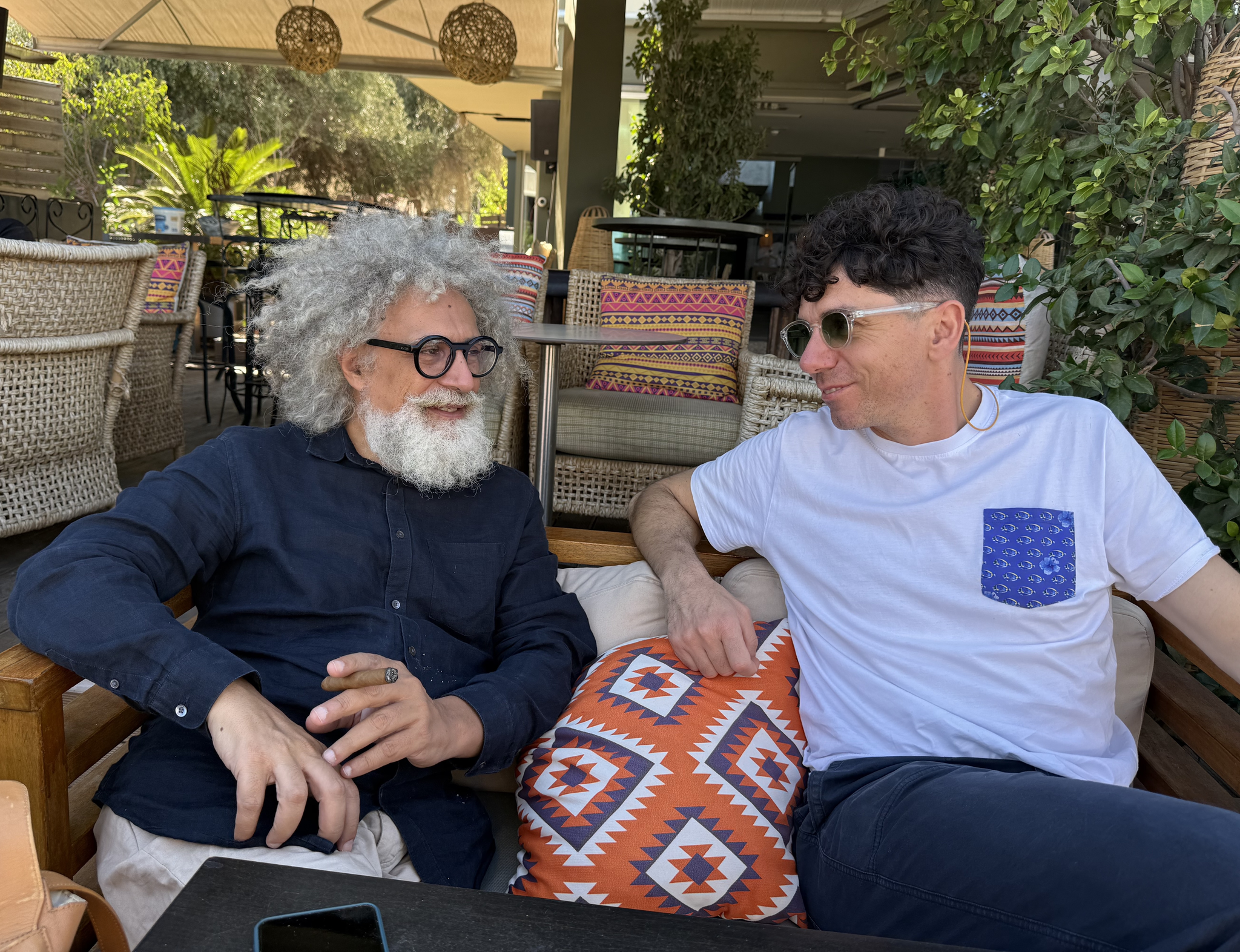
Spontaneous interview from Ioannis Stratakis
September 2025 - Marathon, Greece
In this spontaneous conversation, Ioannis Stratakis interviews me about music, improvisation, and the philosophy behind artistic creation. This 11-minute interview took place immediately after Stratakis’s session with my colleague Erik Håkon Alvorsen, which included an ancient Greek reading for his artistic research.
Eventually, this interview merged into a unity in which both sides became interviewers and interviewees. I believe this is the purest form of artistic communication: not unidirectional, but open and expansive, where questions give rise to new ones and answers continuously fuel this process.
Who is Ioannis Stratakis?
Ioannis Stratakis is a distinguished Greek classical violinist and musician, widely regarded as one of Greece’s leading artists in his field.
Stratakis has had a long international career as a soloist, chamber musician, and orchestral performer. He lived and worked mainly abroad for about 30 years, giving numerous concerts and participating in classical music festivals, while also engaging in academic work such as teaching violin and viola at European music institutions and founding classical music festivals in the Netherlands. (source)
INTERVIEW
Ioannis: When you play, is it just your muscles responding, or do you follow a certain movement?
Bruno: No, it’s more like a rotatory movement that I have to follow. It’s not a conscious choice at first—it comes as a suggestion. When I sit at the drums, I feel this movement, and I start. I’m driven by something that comes from outside me. It’s like a rolling snowball, a kind of “wheel” that begins to turn. Then I follow it, and that energy drives what I play forward. Sometimes it gives me rhythmical suggestions, and from that, I build the other effects and scaffold rhythms accordingly.
Ioannis: So you don’t initiate the wheel—you just join it?
Bruno: Exactly. It comes. Even if I play the same rhythms or the same solo again, it’s never exactly the same. That’s what I love about it. Even written parts, meant to serve as guidelines, change every time. The material stays the same, but the delivery evolves, like how a voice changes with a fever—the words are identical, but the tone isn’t.
Ioannis: And when you play with others, do you feel the atmosphere or the idea of the piece guiding your performance?
Bruno: Yes, but if it’s my music, I feel the need to take full agency. I have the idea in mind, and I try to make it unique for each person I’m working with. I ask them to interpret it their way, because I know them and how they might sound and play it.
Sometimes I experiment even further—I’ve tried improvising on violin by using photographs as inspiration, translating emotions visually into sound. It was funny and revealing, though I didn’t pursue it further.
Ioannis: So rhythm is the central element?
Bruno: Absolutely. Even when it’s not melodic, rhythm is pure. As a researcher and a drummer, I challenge boundaries and focus on rhythmical composition. One of my works, The Sea Smoke, translates natural phenomena into music. When water is hotter than the air, it creates smoke above the sea—unexpected patterns appear. I wanted to capture that unpredictability rhythmically.
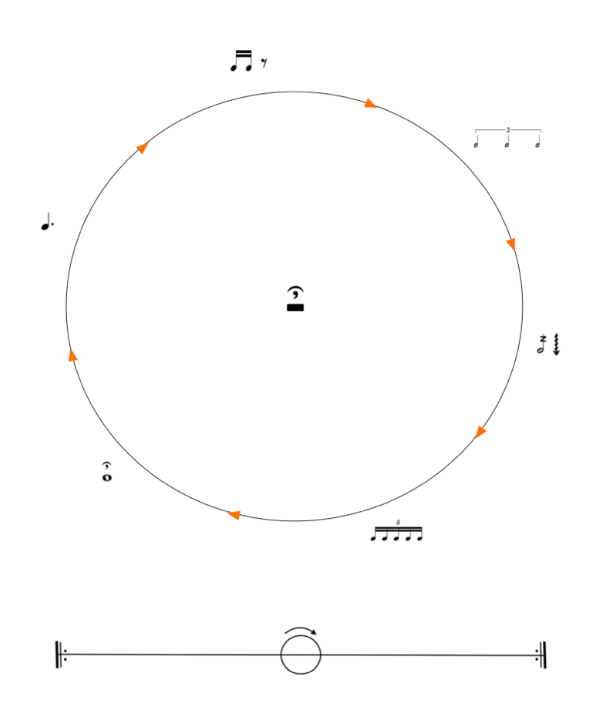
The piece (Sea Smoke) has a circular structure with five types of rhythmic notation: glissandos, triplets, fermatas—you can interpret them freely. The band begins in a kind of permanent pause, with no strict starting point. From there, each musician moves clockwise through the rhythmic ideas, interpreting them with their own instrument—voice, violin, piano, whatever.
There’s no set duration; the music evolves organically. The result is improvisation within constraints, and for me, it produces amazing outcomes.
Ioannis: That sounds incredible.
Δfter a brief silence—interrupted by the futile, irritating reggaeton blaring from the beach kiosk speaker system—the conversation shifted, and I became the interviewer.
Bruno: You also spoke about art in a more traditional sense?
Ioannis: Yes. Imagine two painters. One decides to depict envy. It’s deliberate, thoughtful. When you see it, you recognize mastery. That’s different from accidentally achieving a certain effect. I respect artists who can intentionally take you somewhere through their work.
Aleatoric art—chance-based creation—can be fascinating, and it produces remarkable results. But I’m ultimately concerned with the human aspect, including its economic side. A robot could produce something technically impressive, but it won’t inspire humans to invest their time or money.
Human creativity is about attracting attention, inspiring engagement, creating value that resonates.
Bruno: And the audience decides what has value? note
Ioannis: Partially, yes. But it’s also personal. When I go see art, I often want to stumble upon it by chance, to see what happens naturally. That’s part of the experience. I have a motto: sine casu et amore ars non est—without chance and love, there is no art.
You need both repeated action and surprise. Love what you do, but embrace variation, the unexpected.
Bruno: I love that idea—dedicating time, investing yourself in something to understand its value.
Ioannis: Exactly. You measure value by the time and care you put into it. If you finish, you step back, observe, experience. Even small moments—like enjoying a sunny day in Norway—can remind you of the rhythm of life and the art in it.
We ended up drinking and talking why people get stubbed in Sardinia!
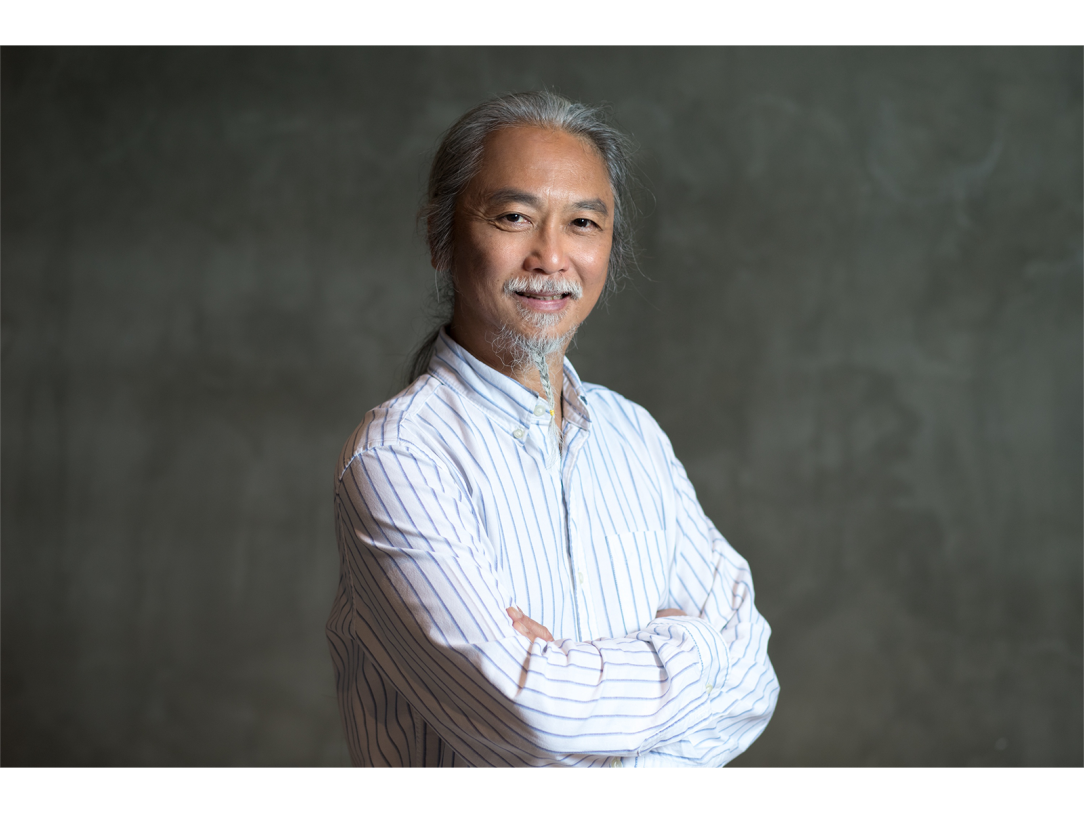
ON CHI SHING`S VIEW
Spontaneous talk with Kung Chi Shing
November 2024 - Hong Kong, special administrative region of China
While in Hong Kong in the fall of 2024, I had the opportunity to meet the Godfather of Avant-Garde: Kung Chi Shing.
Who is Kung Chi Shing?
Class 1961, born and raised in Hong Kong, Kung Chi Shing is a composer, performer and music activist. Kung studied classical music and composition in the United States with Allen Trubitt and George Crumb. He is known particularly for his work in the music and performance group ‚The Box‘, which he founded with Peter Stuart in 1987, and since 2009 as founder and curator of the ‚Street Music Series‘ of free public concerts in Hong Kong. (source)
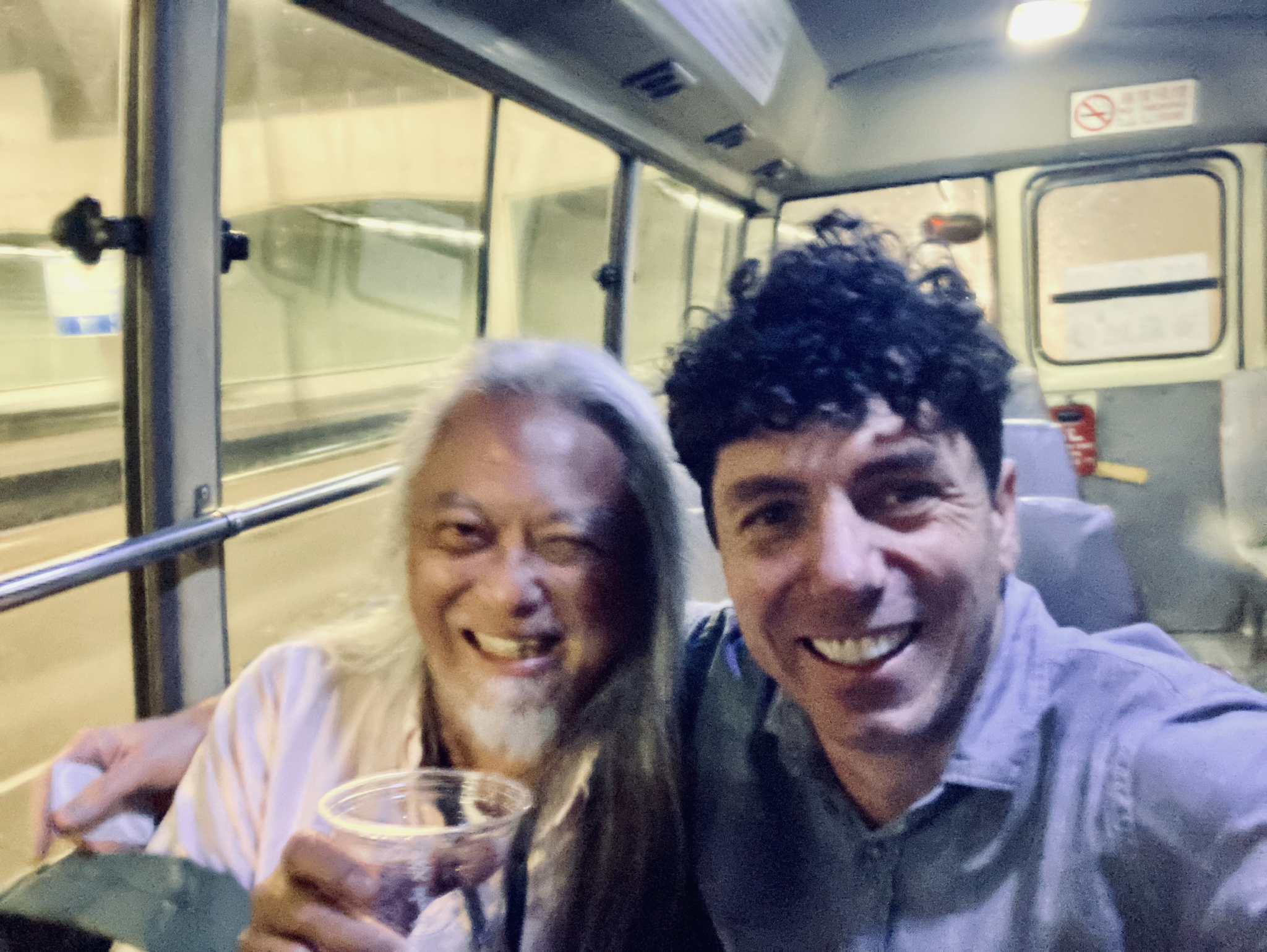
In November 2024, I received an invitation to join a research group from Høgskulen på Vestlandet (HVL) in Bergen that was traveling to Hong Kong.
During this period, I engaged with the local artistic community, established new connections within the jazz scene, and led workshops at The Education University of Hong Kong.
The highlight of this trip, however, was the opportunity to meet in person the godfather of the avant-garde, Kung Chi Shing, with whom I spent two delightful days in the artistic district of West Kowloon.
I was deeply fascinated by the aesthetic vision underlying Kung’s thought and artistic practice, and I took the opportunity to get to know him personally. Spending time together allowed me not only to engage in meaningful conversations, but also to experience local customs and appreciate the richness of the local cuisine.
The following text is drawn from a conversation we shared, in which I sought to explore how certain aspects of my research might be perceived, interpreted, and applied through an Eastern perspective.
____________________
Bruno
Hei again, sorry for this little… technological bother.
Kung Chi Shing
No worries.
Bruno
So, what I’d like to discuss today is brief — though I also wanted to bring this up when we met in West Kowloong District in Hong Kong.
I have a few questions around this matter: we are musicians — artists — and we each have a very unique, personal way of seeing things, of approaching music, of approaching art.
So I’m wondering: What is silence to you? In your practice as an artist?
Kung Chi Shing
I think the older I become, the more I understand silence — or perhaps, the more I realize I can’t understand it. When I play music, it opens all my senses. I enter a different state of existence. For me, the beauty of that existence isn’t about keeping sounds going, keeping the basket woven. It’s in the space between sound and silence.
I make a sound — I send it out into the world, into the universe, into the void. And it bounces back. But in that moment — right after I’ve made the sound — there’s a kind of refraction. A reflection of what I’ve just done. Often, that’s where realization happens. Enlightenment. The feeling of being touched. And that takes place within the void. Within silence.
So, that’s maybe how I’d answer your question.
Bruno
That’s a beautiful perspective. Actually, I’m muting my mic because I have people here — the captions are getting weird.
But yes — I find this really beautiful. Especially the way you frame it: creating a bridge with the universal space above our heads — the voids, which aren’t truly void. I really appreciate this honest, humble approach to something so profound. It’s deeply moving.
Kung Chi Shing
Thank you.
Bruno
How does this approach to silence affect or influence your way of composing? And by “composing,” I don’t necessarily mean sitting down to write scores — I mean composing as a temporal act: performing, improvising, creating in the moment.
Kung Chi Shing
I think it stems from my background — quite traditional classical music training. We studied music theory, counterpoint, harmony, orchestration, conducting.
You master an instrument, learn others, write music on paper, then hand it to performers to play before an audience. That was my foundation.
But these days, I can no longer return to that practice. For me, music-making now is entirely performative — happening in the present moment.
When I pick up my instrument, I’m composing, creating, making music — all at once.
The biggest difference? In the traditional model, you lock yourself away — isolate yourself in quiet, compose in solitude, sing the music in your head, write it down, revise it, and only then send it out to be performed. The entire creative process is solitary — intensely personal.
I no longer do that. My composition happens live, in front of an audience. I’ve skipped the traditional first phase — the long, lonely journey of writing — and gone straight to performance. That makes a huge difference. Because if there’s no audience, what does that even mean?
That’s one issue I’m still working through. For example, recording in a studio doesn’t feel as exciting, as creatively alive, as performing in front of people — whether it’s two or ten. As long as another human being is present — not just myself — I feel I’m truly making music. It’s like practicing a monologue alone at home and then delivering it to people — it doesn’t make sense. Dialogue must happen naturally, with give and take. Even if the audience isn’t responding musically, their presence — their energy, their attention — helps push my creativity forward. So, in terms of process, it’s fundamentally different.
To your question: How does silence affect my composition? It’s not so much influencing the act of composing — silence has become a major concept, a central element in my music. When I perform, I’m constantly listening to silence. If I place a note on my violin, I might stop — and before the next sound emerges, I’m inhabiting the silence. Silence becomes a structural element — like taking a deep breath before speaking your next sentence.
In language, there’s strong logic — direction, definition, meaning. Music is abstract. That gives us — gives me — far more freedom. When I’m making music in front of people, silence offers space to breathe, to reflect, to let the moment unfold.
This also leads to another point: I’m not particularly interested in recording my performances. I don’t enjoy sitting down later to watch or listen to them. For me, if the moment is gone, it’s gone. It exists only in the now.
Bruno
Yes — and you cherish that moment.
Kung Chi Shing
Exactly. That moment is vital. When I’m able to create — that’s what I call a meaningful moment. It helps me understand life a little better. It helps me become a better person. It’s healthy — for my body, for my spirit. I don’t need to go back and analyze it. It’s done. It’s lived.
So, in that sense, that’s my relationship with silence and composition.
Bruno
I love this perspective — it’s about relationships. You establish a relationship with yourself in the moment, and with the audience. And as you said, once the performance ends, the moment is gone — there’s no need to document it, because you’ve already lived it.
Kung Chi Shing
Yes. Though I do recognize that listening back or watching recordings could help improve future performances — it’s both yes and no. It can make you more conscious of what you’re doing. But I just… I can’t sit down and watch myself. I don’t feel comfortable doing it. I prefer to move on. If I make a mistake — even a big one — I’ll try to correct it, but not rationally, not consciously. I hope, eventually, to reach a natural state — where music-making is as instinctive as breathing. I shouldn’t need to rehearse before talking to you. I shouldn’t need to write out sentences before a meeting. I just want to keep doing it — and get better through doing, not through analysis.
Sometimes, thinking too much — calculating too much — turns music into craftsmanship. And craftsmanship aims to create a better piece — maybe even a masterpiece. But I no longer believe in making masterpieces. I believe in making meaningful moments — for myself, and for the audience who witnesses them. I hope music becomes as essential as breathing. Just something I do, naturally, to stay alive.
Bruno
That’s such a generous, selfless approach. Often, we think we must create masterpieces — but that’s the ego talking. We believe we’re special, and we need others to confirm that. But your way — treating music as essential to being alive, and sharing that experience — feels right.
Kung Chi Shing
Yes. I used to want to be a master, to create masterpieces. But as I’ve grown older, I’ve realized I’m not as technically gifted as some other musicians or artists. Does that mean I don’t have the right to exist as an artist? No. I shouldn’t think that way. I’m lucky to have art — to know it, to practice it. Most people don’t.
Why compare myself to the 0.001% of exceptional beings? It’s not necessary.
These realizations have shifted my goal. My objective isn’t to create a masterpiece — it’s to use art to understand my own existence, to understand relationships — with other people, with the environment, and ultimately, with myself. So, composing music is just an everyday practice — almost like a monk meditating. Something healthy to do daily, to keep mind and body positive.
Bruno
That’s a beautiful transition into my next question.
Do you have any esoteric or mystic practices you follow or employ? You compared your practice to meditation — there’s a transcendental quality to it, where things are inexplicable yet undeniably present.
Kung Chi Shing
I’d say no. I’m more of a punk — not a rebellious rebel, not a brave anarchist, but someone who doesn’t like following rules. Mainstream spiritualism says, “Do this, do that.” I’m not that person. I like to get drunk. I like to get hot. I embrace my messiness. I don’t want to change myself. I want to be good, I want to be bad — I just want to indulge, to experience everything, if possible.
I sometimes practice breathing — just to calm myself — but it’s very layman. I struggle with formal meditation. But when I play music, I’m super concentrated — in a state similar to meditation, maybe. But to answer your question directly: no, I don’t follow any esoteric practices.
Bruno
Such an honest take — being punk, being true to yourself.
Kung Chi Shing
Yeah.
Bruno
Last year, when I came to Hong Kong, I wished I could to meet you — to get to know you.
I read interviews online — who is Kung Chi Shing? What does he do? — and somewhere, I saw you described as “the godfather of avantgarde in Hong Kong.”
So my next question: Do you feel you carry that title? Do you feel entitled to be called as such?
Kung Chi Shing
Two things here. First, how I see the term guru — or avant-garde as “experimentalist.”
I definitely don’t see myself as any kind of guru. Hong Kong is a small city, famous for business, not for art or music. Our strength lies in visual art, film, literature — not so much in music or theater. Since I work in music, and I’m active — doing a bit more than most — people tend to call me “teacher” or “guru.” Sometimes “godfather.” I think it’s just a label media likes to use.
I’d agree I’ve probably done more than most to push the music scene here. I started the biggest jazz festival in Hong Kong — despite having no jazz background. I’ve created more experimental concerts than most. I’ve pushed the indie music scene forward. So, yes — people may see me as a “kapusha" (mandarin word for "a mover").
But I wouldn’t call myself a guru. Because a guru implies wisdom — and I’m not that wise. Also, the scene here is inactive — so if you help make it a little more active, you’re quickly labeled a leader. I’m more of a pusher — that’s the best I can be.
It doesn’t matter what people call me. I’m happy to take credit for creating more experimental, indie, or avant-garde concerts than most organizers in Hong Kong. But “guru”? No.
As for “avant-garde” — I think the term became significant in post-WWII Europe. People might call figures like Webern or Berg avant-garde — I’m not sure. In music, the term often applies to late ’40s–early ’50s figures like Boulez, Stockhausen, Cage. These three were pivotal.
But in today’s music world — do we still have avant-garde? I’m not sure. From the ’50s to the ’70s, they did almost everything. How can you be more ahead?
So I’m more comfortable with “experimental.” Experimentalism is an attitude — an aesthetic, a personality. It’s about trying things differently, combining new elements to create something fresh. Avant-garde feels like a historical term. Experimentalism is a way of living — “I have to experiment with this.” That’s how I’d describe my position.
Bruno
Also, “avant-garde” can create imbalance — elevating those who do something different while discarding what others are already doing... I’m wary of that.
So you avoid “avant-garde,” but embrace “experimental” — even though you sometimes question whether you’re experimental at all.
Kung Chi Shing
One of my favorite pieces is Beethoven’s Opus 131 string quartet. Mahler is still a composer I love. That doesn’t mean I don’t like noise or other forms — I love everything. When I create my own music, I put it all together.
My relationship with the audience — that’s very traditional. Rooted in respect. Humanism. I’m not the artist who believes they’re the greatest — who doesn’t need to care about people’s thoughts or reactions. I don’t believe in that hyper-licentious freedom — “I can do anything I want.” I care about the audience. I’m a good boy. A well-behaved boy.
Bruno
Lovely. That brings me to my final question — what does it mean to be an artist? I personally see it as establishing a humanistic connection — a contact with the audience — which nourishes our development.
Kung Chi Shing
I can only speak for myself. I feel I’m in the last stage of my life — I’m 65. Doesn’t matter if I have 10 or 20 years left — I’m okay with that. I’m positive about it. I need to look at life accordingly — but I’m not slowing down. I still want to do as much as possible.
Being an artist, for me, is how I want to live my life. It’s not just my attitude — it’s how art helps me understand myself, the world, life, time, eternity — the yin-yang, black-and-white balance of existence. Being an artist is how I choose to live.
Bruno
That’s a beautiful sentiment — being porous, absorbing, transforming, becoming.
Kung Chi Shing
Thank you.
Bruno
This has been incredible — such strong, beautiful perspectives. I’m truly grateful.
Kun Xi Xing
Thank you.
ON ETHICS
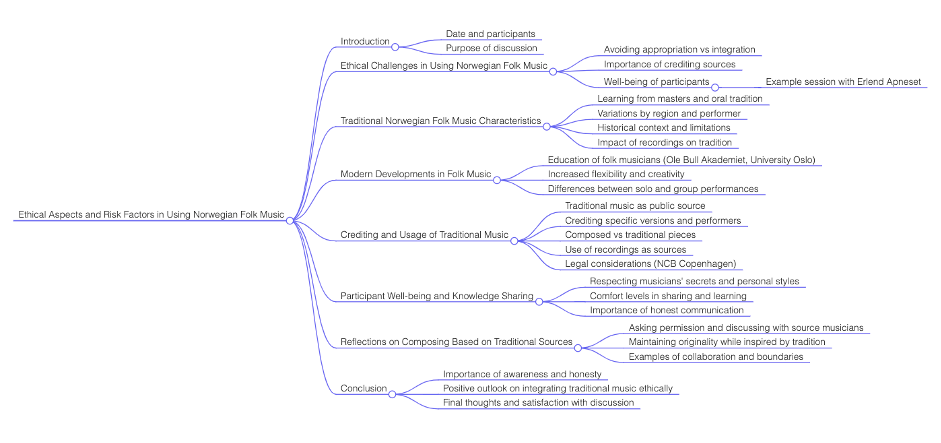
Ethical Considerations in Using Norwegian Folk Music in New Compositions. This reflection emerged after a three-day intensive Artistic Research School seminar held in Bergen in 2025.
The use of Norwegian folk music in contemporary compositions raises important ethical questions, particularly regarding the balance between inspiration and appropriation. Central to the discussion is the need to integrate traditional material respectfully, acknowledging its origins and the performers who have transmitted it. Crediting sources is not merely a formality; it recognizes the living tradition of Norwegian folk music, which has evolved over generations through personal interpretation and regional variation.
Historically, this music has been passed down orally, with each performer contributing unique stylistic nuances. The advent of early 20th-century recordings, while valuable as historical documentation, sometimes froze certain versions in place, unintentionally limiting the natural evolution of tunes. Modern education, by contrast, has encouraged musicians to approach traditional material with greater flexibility, fostering creativity while still honoring its roots.
Ethical considerations extend beyond technical fidelity to include the well-being of participating musicians. A performer may feel uncomfortable if their distinctive interpretations are copied without consent, highlighting the importance of communication, mutual respect, and recognition of individual contributions. While traditional music itself is generally in the public domain and can be used freely if sources are credited, commercially recorded or composed elements may require permissions, reinforcing the distinction between tradition and intellectual property.
Contemporary musicians often blend folk elements with new influences, navigating a creative space where honesty, respect, and trust are essential. With careful attention to crediting and acknowledgment, using Norwegian folk music in new compositions is not only ethically sound but also culturally enriching, allowing the tradition to live on in fresh and meaningful ways.
This discussion, focused on Norway (and with comparative notes from Sardinia), situates itself within broader conversations about folklore, ethical music-making, and informed compositional practice. It underscores the idea that engagement with traditional music is both a creative and a moral endeavor, requiring awareness of lineage, community, and individual contribution.
ON GESTURES
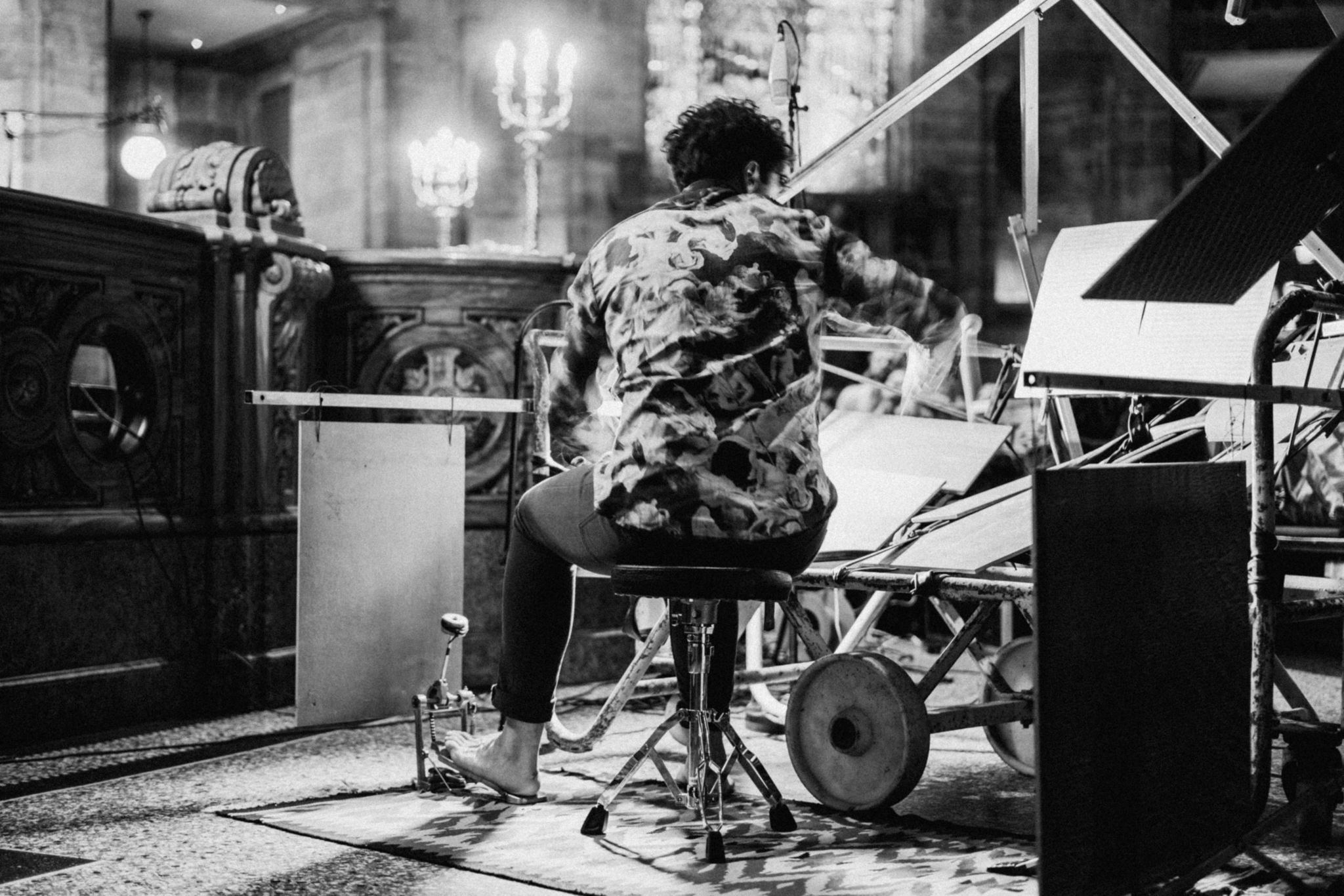
Rituals are non-verbal, body-enacted performances. Music theory and education teach how to theoretically organize sound into a more or less coherent and pleasing flow, but they can hardly replace the gestures rooted in custom—motions and vocalizations grounded in intuition, imitation, and embodied absorption.14
RADICALITY
Radicality and the Non-Humanization of Music
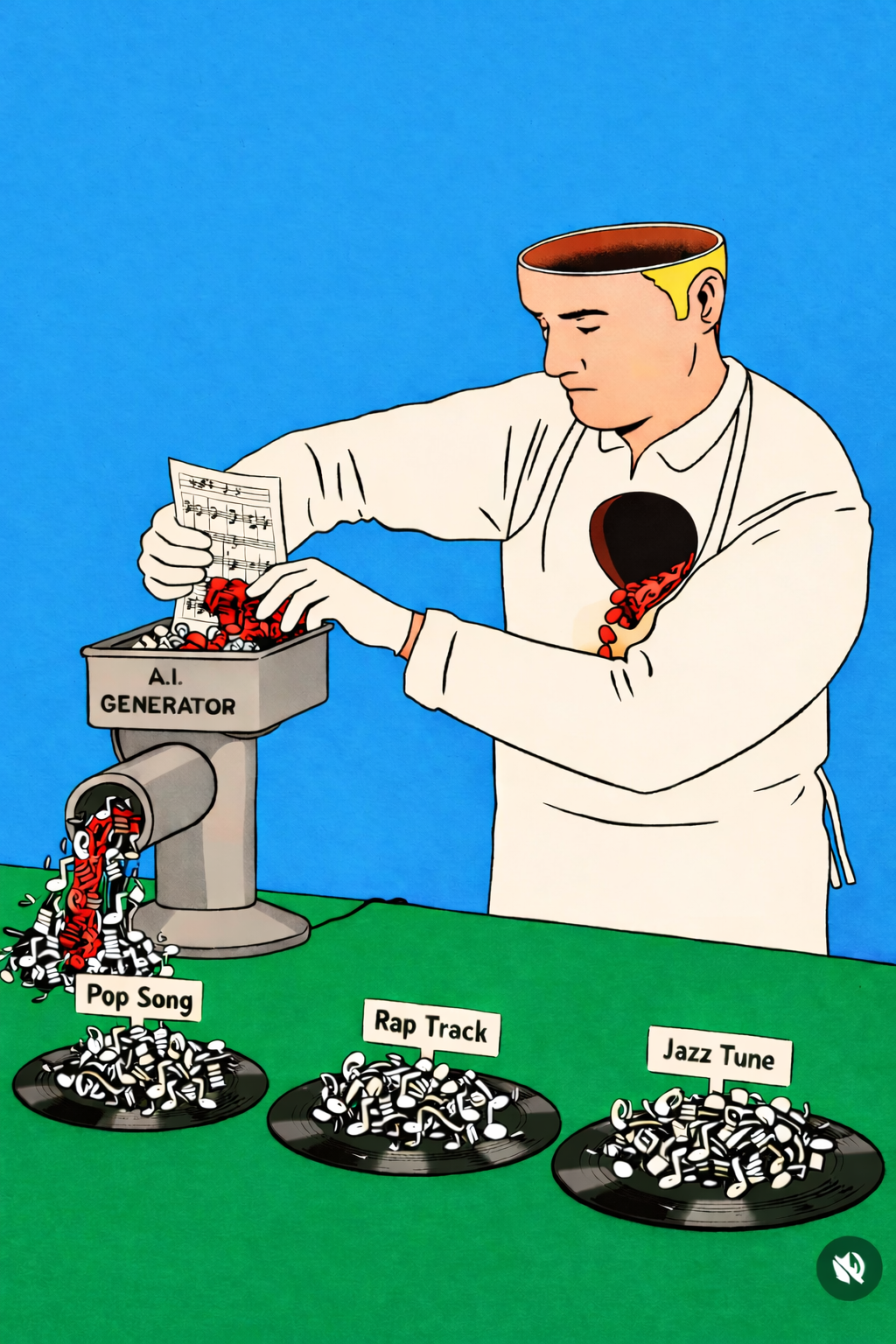
I use radicality in the literal sense of going to the root: what is music, and what makes it meaningful? Music is not only organized sound, but an intersubjective practice—an embodied exchange of attention, risk, memory, and vulnerability. AI-generated music may resemble musical form, but it does not emerge from lived experience; it is produced through computational recombination of cultural data. The ethical problem is therefore not simply automation, but the instrumentalization of affect: emotional codes are deployed without participation in the human conditions from which those codes originate. In a platform economy, such outputs are easily optimized for engagement, turning musical expression into scalable mood-management. The question is not whether AI can produce sound that “works,” but whether culture should normalize outsourcing the domain of meaning, resonance, and non-religious spirituality—those forms of inner life that music has historically mediated—into systems designed primarily for prediction, optimization, and capture.
-
There is no music-making in artificial intelligence in the human sense. What occurs is the statistical recombination of pre-existing data through algorithmic systems trained on human cultural production. No lived experience, vulnerability, intention, or affective risk is present — only pattern extraction and probabilistic output. What is produced may resemble music, but it does not emerge from the conditions that give music its existential meaning.
Music, as a human practice, is not merely organized sound. It is a form of relational expression: a communicative act between embodied subjects who share time, fragility, memory, and mortality. Musical meaning arises from this intersubjective exchange — from the fact that one consciousness reaches toward another through sound. When this relational field is removed, what remains is sonic simulation without encounter.
This is where the ethical problem begins. AI-generated music instrumentalizes affect while being incapable of experiencing it. It deploys emotional codes — sadness, tension, nostalgia, release — without ever participating in the human vulnerability from which these codes originate. In doing so, it turns emotion into a manipulable surface, optimized for engagement, consumption, and behavioral influence rather than for genuine connection.
Such systems also encourage a deeper cultural shift: the replacement of experiential creation with cognitive outsourcing. Instead of struggling with form, failure, and self-expression, individuals are offered instant emotional products generated on demand. This promotes not creativity, but passivity — a condition in which imagination is no longer exercised but merely selected from menus.
This reflection emerged during a walk to the Grieg Academy on January 23, 2026, at −8°C, while listening to music from my adolescence. These songs were not merely remembered; they were inhabited. They carried biographical weight, emotional scars, and moments of becoming. It is difficult to imagine a comparable relation to algorithmic output, because such music has no origin in a lived world and therefore leaves no trace in ours.
For this reason, the proper domain of artificial intelligence should remain technical and procedural: optimization, calculation, logistics, error correction. The domain of human emotion, aesthetic risk, and spiritual resonance should not be delegated to systems that cannot suffer, remember, or care.
To allow machines to simulate music is not dangerous.
To allow them to replace the conditions that make music human is.
__________________________________________________________
-
Adorno, T. W. “On Popular Music.”
-
Benjamin, W. “The Work of Art in the Age of Mechanical Reproduction.” (English trans. in Illuminations; widely circulated PDF).
-
Stiegler, B. Technics and Time, 1: The Fault of Epimetheus (English trans. Stanford UP, 1998; orig. 1994).
-
Han, B.-C. Psychopolitics: Neoliberalism and New Technologies of Power (Verso).
-
Srnicek, N. Platform Capitalism (Polity, 2016).
-
“AI-Based Affective Music Generation Systems: A Review …” (ACM).