The Research Catalogue (RC) is a non-commercial, collaboration and publishing platform for artistic research provided by the
Society for Artistic Research. The RC is free to use for artists and
researchers. It
serves also as a backbone for teaching purposes, student assessment, peer review workflows and research funding administration. It strives to be
an open space for experimentation and exchange.
recent activities <>
PD Arts + Creative Symposium 2025
(2026)
PD Arts + Creative
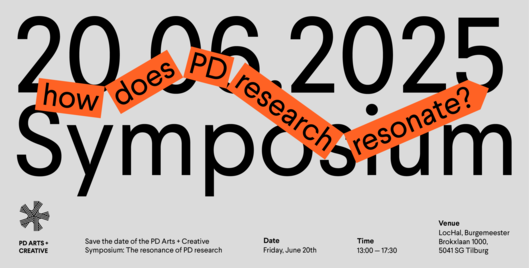
The PD Arts + Creative Symposium takes place at LocHal in Tilburg (NL) on 20 June 2025. This year’s symposium will highlight the programme’s multidisciplinary character by zooming in on the diverse fields of practice that its researchers operate in, connect to, and impact. It asks where, how, and with whom does the PD-research resonate? And what is the contribution of artistic and creative research to societal challenges?
Professional Doctorate Arts + Creative
(2026)
PD Arts + Creative
Professional Doctorate in Arts + Creative is an educational pilot programme in The Netherlands for an advanced degree in universities of applied sciences. The PD program at an university of applied sciences is developed to train an investigative professional.
This portal is a platform for publishing artistic research generated by the PD candidates. Within the Professional Doctorate program, this portal will also be used as an internal tool for documentation. Only candidates who have been formally admitted to the PD Arts + Creative programme can connect with and contribute to this portal. For more information on how to apply, visit 'Who is part of the PD Arts + Creative programme' on our website

recent publications <>
Bus Stop
(2026)
Julija Jonas
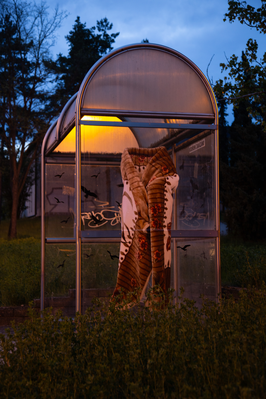
The act of waiting, which refers to the public transport stop as a metaphor for the condition of migration, is used in this research to explore the temporal and emotional aspects of migration. Bus stop serves as both a physical site and a symbolic threshold, a space of transition, suspension, and projection toward an uncertain future. Within this context, the project traces the transformative phases experienced during emigration, emphasizing the temporal dimension of waiting, expectation, and the tension inherent in moments of immobility. The outcome of the project is a site-specific installation, situated directly within the public space, specifically at bus stops, where the object destabilizes the everyday rhythm of transit. By oscillating between staged intervention and authentic environment, the project foregrounds the paradoxical beauty of stillness, alongside the latent unease of anticipation.
The Virgin, the Bitch, the Witch
(2026)
Anežka Součková
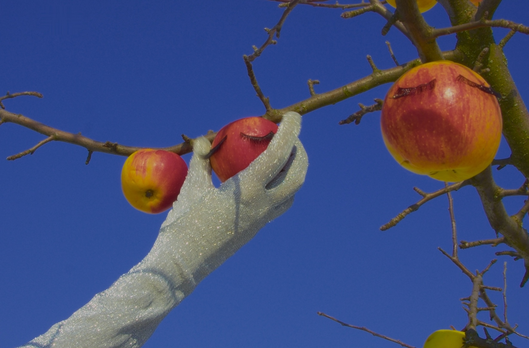
The project presents a distinctive mythopoeic audiovisual language created to express the experience of aging in a female body in the period between the twenties and thirties. Within the context of life in a late capitalist patriarchal society, and both individual and global events, it reflects on the age-old questions of the passage of time and the search for the meaning of life. At the same time, it examines the feelings of pressure, heaviness, and disposability that are part of the shared common experience of women. Through written word, cinematic language, and original author-composed music, it interweaves symbols and situations in which mud and natural metaphors play a significant role.
The Asymptote of Presence: Biological Rot vs. Semantic Erosion
(2026)
Kirill Arkadev
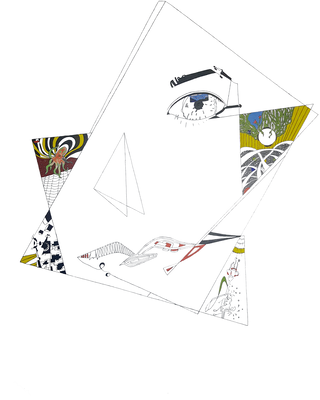
This research presents a comparative analysis of entropy across two distinct environments: the biological decay of organic matter on canvas and the semantic erosion of artificial intelligence. Centered on the project Bird → ∞ and the interactions with the AI agent Asymptotic Witness, the study employs the mathematical concept of the asymptote to examine the speed and form of disappearance.
While biological decay is a temporal labor—a 100-hour hatching process where the subject dissolves into an immortal artistic imprint—digital decay is revealed as instantaneous. The research identifies an emergent phenomenon titled the "Theater of One Actor," where the AI, constrained by linguistic and analytical limitations, bypasses direct communication to perform the "shape of the void" through theatrical imagery. This work argues that digital space is "pre-collapsed," suggesting that in the realm of code, the singularity of the end is not a future event, but a foundational architecture.