The Research Catalogue (RC) is a non-commercial, collaboration and publishing platform for artistic research provided by the
Society for Artistic Research. The RC is free to use for artists and
researchers. It
serves also as a backbone for teaching purposes, student assessment, peer review workflows and research funding administration. It strives to be
an open space for experimentation and exchange.
recent activities <
Exodus: um percurso à abstração.
(2026)
Ellen Spitz de Morais
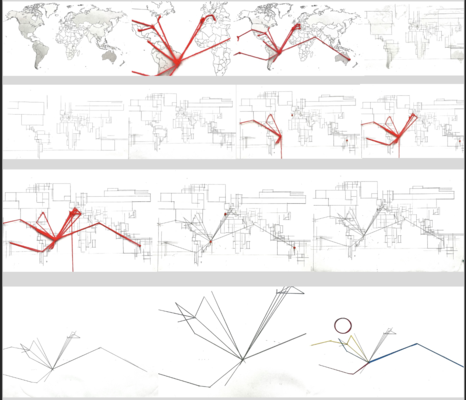
O papel do corpo na criação do lugar.
O percurso físico como motor investigador do percurso, viagem e abstração mental.
Embodied Memory and Subversive Performances Reimagining the Repressed Body in a Collective Action
(2026)
Majid Sarnayzadeh
I presented my paper at the Asian Pacific Artistic Research Network 2025 Conference under the theme Artistic Research for Creative Communities.
My presentation, titled “Embodied Memory and Subversive Performances: Reimagining the Repressed Body in Collective Action,” explored how the Woman, Life, Freedom movement in Iran has generated a rich archive of embodied protest. Through gestures like group clapping, headscarf-burning, and silent standing, and plural embodied subversion experiences, that inspired from their collective memory, protestors challenged hegemonic gender norms and collectively reimagined femininity through performative resistance. Drawing on field interviews, sensory ethnography, and archive analyze, I reflected on how these subversive performances are shaping new femininity social imaginaries.
Walking As Practice WAP23
(2026)
WAP
WALKING AS PRACTICE
WAP23 was a process-based residency during September-November 2023, where artists using walking as a method delved into each others’ knowledges and things they encountered together at BKN, the Northern Stockholm Archipelago in Sweden. Fieldworks, share sessions and seminars were created jointly to locate and entangle structures, narratives and themes for walking. The residency formed a transformative, dynamic space for art that engaged with life and nature towards critical and poetic explorations, influenced by the immediate surroundings: the forest, lakes, sea and people living in the rural area. Processing how walking is interlocked in our artistic practices, this exposition represents a gathering of texts, visuals and audio from the walking art residency.
The selected artists contributed with interdisciplinary practices, primarily drawing, photography, video, performance and dance. They worked both individually, in spontaneous constellations and in group sessions. The dissemination of the program took place in share sessions upon arrival of new artists - including dinners, open studios, walks, workshops etc. In addition, as the program unfolded, each artist developed their own exposition.
recent publications <>
Topographies of the obsolete
(2026)
Anne-Helen Mydland
Topographies of the Obsolete is an artistic research project conceived in 2012 by
University of Bergen Professors Neil Brownsword and Anne Helen Mydland,
in collaboration with six European HEI’s and the British
Ceramics Biennial.
Emerging through two phases (2012-15; 2015-2020) it has to date engaged
ninety-seven interdisciplinary artists, scholars, cultural commentators and
students from thirteen countries. It has transformed participants’ practices, with
works originating out of the initial research being celebrated on an international
platform. Topographies of the Obsolete has received funding from a variety
of
institutions, alongside its core support from the Norwegian Artistic Research
Programme (2013-15 & 2015-17), whose peer review system (2015)
rated it
as ‘exemplary… strengthening artistic research and its scope beyond potential
communities of practitioners/researchers’. The project explores the landscape and associated histories of post-industry,
with an initial emphasis on Stoke-on-Trent, a world-renowned ceramics capital that bears evidence of fluctuations in global fortunes.
OLSKROKSMOTET BLUES
(2026)
Ann Kroon
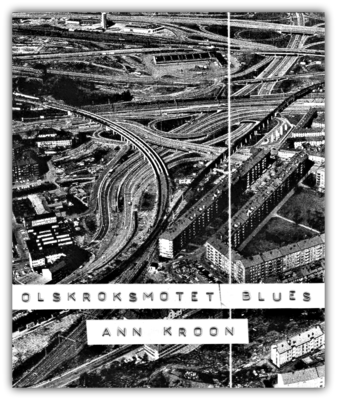
Olskroksmotet Blues är den avslutande delen i mitt autoetnografiska projekt som pågick i olika former mellan 2014-2021, och där jag bland annat publicerat två artiklar (Kroon 2015 och 2016). RC expositionen består av tre delarbeten - arkivblad, arkivmönster och göteborg grid – jämte bakgrund och teori & metod. Utifrån min historia som fosterbarn söker jag fånga såväl mina egna erfarenheter och uttryck, som att sätta dessa i ljuset av större samhälleliga skeenden. Olskroksmotet Blues var också del av Mikrohistoriers fysiska grupputställning på Konstfack, Stockholm i september 2021.
Monotheist Mythology
(2026)
Tolga Theo Yalur
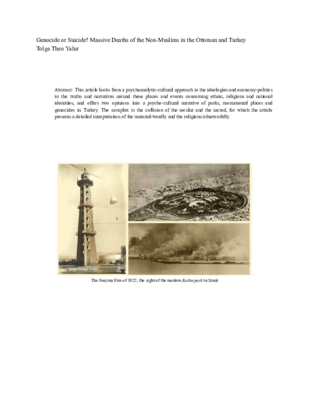
This article explores monotheistic religions as powerful linguistic and social structures that function through a mechanism of collective delusion. Drawing on Jacques Lacan’s structuralist insights, the text argues that these faiths are not based on objective history but are fictions codified long after the events they describe.