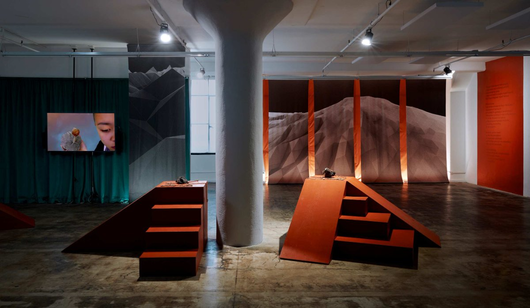
The Research Catalogue (RC) is a non-commercial, collaboration and publishing platform for artistic research provided by the
Society for Artistic Research. The RC is free to use for artists and
researchers. It
serves also as a backbone for teaching purposes, student assessment, peer review workflows and research funding administration. It strives to be
an open space for experimentation and exchange.
recent activities <>
Warping Protest: Increasing Inclusion and Widening Access to Art Activism Utilising Textiles
(2026)
Britta Fluevog

Art activism is powerful. Also known as activist art, protest art, visual activism, artivism and creative activism, it changes lives, situations and is and has been a powerful weapon across a whole spectrum of struggles for justice. Teresa Sanz & Beatriz Rodriguez-Labajos(2021) relay that art activism has the unique ability to bring cohesion and diverse peoples together and it can, as Zeynep Tufekci notes, change the participants (2017). As Steve Duncombe & Steve Lambert (2021) posit, traditional protesting such as marches or squats are no longer as important as they once were. As a result of my own lived experience in activist activities, I very much agree with Andrew Boyd & Dave Oswald Mitchell (2012) that the reason people use art activism is that it works, by enriching and improving protest.
In the past, when I lived in a metropolis and was not a parent, I used to be an activist. Now I no longer have immediate access to international headquarters at which to protest and I have to be concerned with being arrested, I am hindered from protesting. This project is an attempt to increase inclusion and widen access to art activism. By devising methods which include at least one of the following: that do not require on-site participation, that can take place outside the public gaze, that reduce the risk of arrest, that open up protest sites that are not “big targets”, that include remote locations, that involve irregular timing, my thesis aims to increase inclusion and widen access to art activism to those who are underserved by more mainstream methods of conducting art activism.
Textiles have unique properties that enable them to engage in subterfuge and speak loudly through care and thought(Bryan-Wilson, 2017). They have strong connotations of domesticity, the body and comfort that can be subverted within art activism to reference lack of this domestic warmth and protection(O’Neill, 2022). Being a slow form of art-making, they show care and thought, attention in the making, so that the messaging is reinforced through this intentionality in slow making.
ESP Duos: Imagined Co-Presence in Remote Improvisation
(2026)
IRK
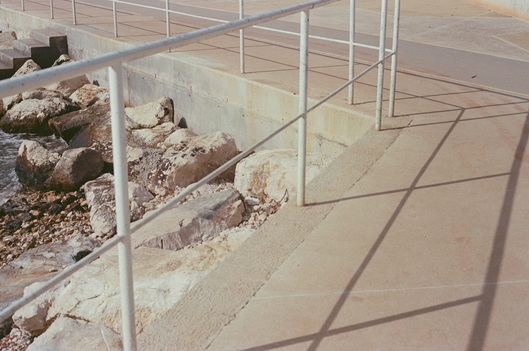
This exposition presents the audio recordings produced within the ESP Duos project, a series of remote improvisations performed by long-term collaborators under conditions of complete acoustic and visual separation. Each duo was recorded simultaneously in isolated spaces, without any form of real-time interaction, and later combined into a single auditory perspective available only to the listener.
Rather than testing whether musical interaction can be sustained at a distance, the project explores how residual traces of collaboration continue to shape improvisatory behavior when the other performer is imagined rather than perceived. The recordings foreground imagined co-presence as an enacted orientation grounded in embodied memory, shared history, and relational expectation.
As artistic outputs, the ESP Duos invite listening not for coordination or synchronization, but for emergent coherence arising from contingency, alignment, divergence, and retrospective sense-making. The exposition situates these recordings as both documents of a research process and autonomous aesthetic artifacts, offering access to a mode of togetherness that persists beyond physical co-presence.
Cartesian Doubt
(2026)
Tolga Theo Yalur
This article "Cartesian Doubt" critiques René Descartes' foundational method of systematic doubt by drawing on the analysis of French philosopher Michel Serres, who likens the Cartesian enterprise to the predatory logic found in La Fontaine’s fable "The Wolf and the Lamb". Serres argues that Cartesian doubt is not a neutral search for truth but rather an "absolute irreversibility doctrine" that functions as a one-way mechanism to destroy all prior beliefs and sensory data to reach the predetermined outcome of the cogito. This process creates a permanent structural gap between the subject and the world, establishing a "foundational violence" in Western thought. Furthermore, the article challenges Descartes' metaphor of sorting a finite basket of apples, asserting that it fails to account for the infinite and dynamic nature of error and decay in a complex, modern scientific reality.
recent publications <>
Unsettled Subject: From Emancipation to Separation
(2026)
Martin Pšenička
This essay is inspired by the contributions to this issue, whose common denominator seems to be the transformation of the nature of authorship and the position of the authorial subject, reflecting the broader theme of the position of the subject in the contemporary world. Some authors, responding to ArteActa’s previous call for submissions, “AI (and) Art: The Poetics of Prompting,” explore the changing conditions of artistic work with AI, while others focus on the interaction between materiality and human perception. All raise urgent questions related to the concept of the subject and the connection between the perceiving mind and the surrounding world. Through a historical reflection of poetics as the art of “prompting,” the text addresses theoretical conceptualization of the subject, in which emancipation at the level of the perceiver plays an increasingly important role. With the advent of AI as a “separate intellect” (Agamben 2025), the emancipation and transformation of (creative) subject raises questions stemming from today's paradox, in which all important and necessary emancipation efforts seem to be distorted or lead to tendencies that brutally contradict them. In this context, does AI bring about the final stage of the emancipation of the subject, or does this autonomous intellect enable hedonistic ochlos-authorship? Without reviving the laments of the past, the essay attempts to point out the fragility and uncertainty of the subject facing unprecedented pressure.
how to strike roots into the void – a trapeze artists view on artistic processes as permacultural growing
(2026)
Carmen Raffaela Küster
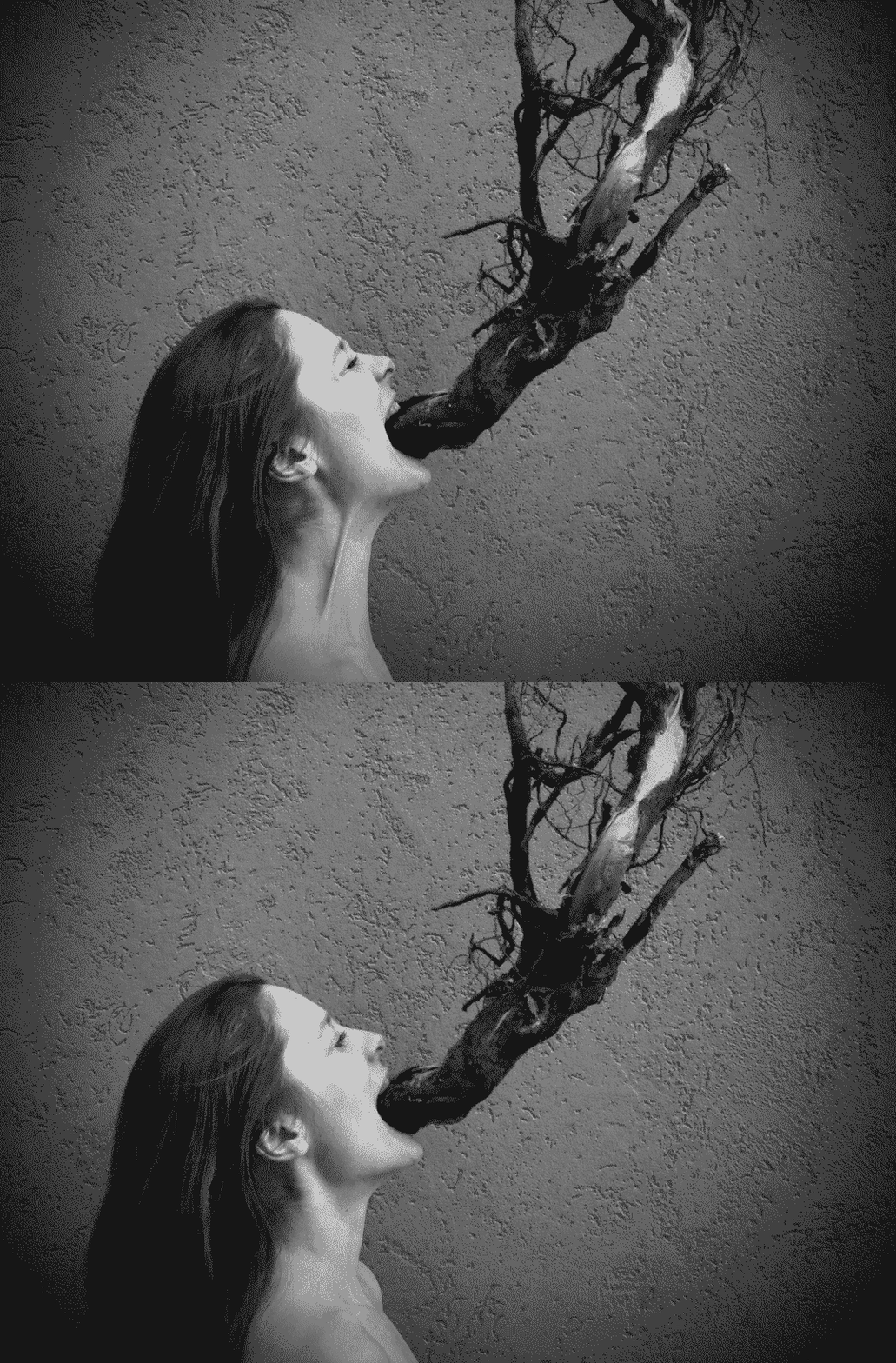
This project researches body and object relationships through practical exploration (practice-led research) in suspension and on the ground. It illuminates connected thoughts linked to posthuman philosophy, permaculture, physical movement and contemporary circus.
Our perception of the world is getting more global and connected, but we have not realised yet the full complexity of all the interdependencies and interplays. In fact it is more than questionable whether this might be graspable for any human to its full extend at all…
The state of being ‘in suspension’ is taken as an analogy for the times we live in – life itself. In a world in which pop-stars sing ‘I have no roots’ (Merton, 2016), mass-migration makes people leave their homes involuntarily and others choose nomadic livestyles that leave them only loosely connected with a geographical place and a single culture. But at the same time, we are always tightly connected (digitally) with ‘the whole world’.
'How to strike roots into the void?' is the essential question of this interdisciplinary research, which has its roots deep 'down' in aerial acrobatic movement. How could this rooting be possible at all? And in which ways? – referring to the question of quality: 'HOW' can we in these times as human being strike out our own roots? Who and what can keep us grounded? To whom or what are we reaching out to search for connection? What nourishes us? And where to hold on to, if the substrate is emptiness – the Void – the uncertainty of life itself?
Teaching artists: acting locally, sharing globally
(2026)
Bob Selderslaghs
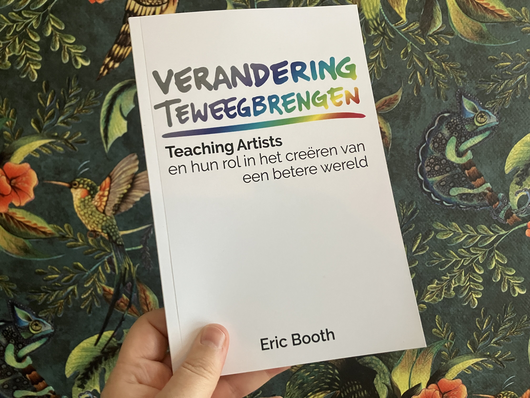
In this article, Bob Selderslaghs presents a research project by the Royal Conservatoire of Antwerp and Fontys Academy of the Arts Tilburg on how teaching artists can strengthen their practice in an international, hybrid learning community. Through inspiring lectures, practical experiments and in-depth reflection, participants gained recognition for their practice, expanded their artistic-pedagogical repertoire and built valuable contacts. The project emphasises the power of flexible frameworks, embodied learning and sustainable networks for greater visibility and impact in this dynamic field.