The Research Catalogue (RC) is a non-commercial, collaboration and publishing platform for artistic research provided by the
Society for Artistic Research. The RC is free to use for artists and
researchers. It
serves also as a backbone for teaching purposes, student assessment, peer review workflows and research funding administration. It strives to be
an open space for experimentation and exchange.
recent activities <>
GO MYSTIC, DIG RHYTHMIC!
(2026)
BTM
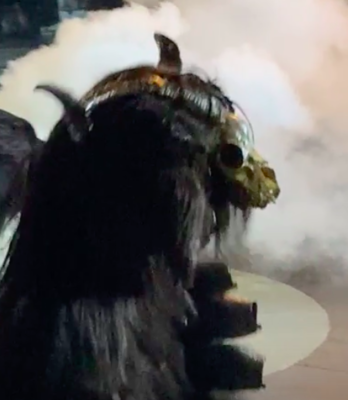
This exposition contains documentation regarding Bruno Tagliasacchi Masia`s artistic research project “Unveiling Esoteric Depths Through the Tapestry of Norwegian Folk Music, Nordic Jazz, Silence, and Rhythmic Idioms in a Symphony of Multidisciplinary Exploration of Unparalleled Grace. A Sardinian`s Vista".
an attempt to collapse
(2026)
Tora Hed
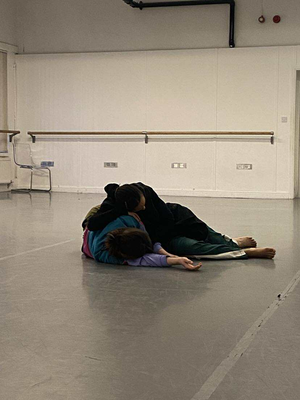
Artistic research exploring the action of collapsing or an attempt to collapse. Spend 3 sessions working with other dance practitioners in a studio. This text will be a collection of thoughts gathered after movement research. The material was collected through talks, writing and drawings. With this exposition I am sharing early stages of something I am calling an attempt to collapse
Le Mie Sculture
(2026)
Giusirames

Collection of My Sculptures from Liquid and Air, into Solid: Sea Water, Rain, Smoke, Etc.
recent publications <>

Quantifying Critical Posture: A Diagnostic Analysis of Art Writing, 1980–2025 - Formalizing Post-Hermeneutic Phenomenology
(2026)
Dorian Vale
This dataset accompanies A Quantitative Analysis of Critical Posture in Art Writing, 1980–2025 and provides a structured corpus of twenty influential critical texts spanning four decades of art discourse. The dataset operationalizes Post-Interpretive Criticism (PIC) by applying a system of diagnostic indices designed to measure linguistic posture rather than interpretive content.
Rather than evaluating what artworks mean, the dataset examines how critical language behaves in proximity to aesthetic encounter. Each text is coded according to a set of phenomenologically grounded indices—including Rhetorical Density (RD), Interpretive Load Index (ILI), Viewer Displacement Ratio (VDR), Ethical Proximity Score (EPS), Institutional Alignment Indicator (IAI), and newly introduced supplemental indices—capturing patterns of extraction, restraint, viewer positioning, closure, and institutional mediation.
The dataset spans critical writing from 1980 to 2025, covering academic art history, museum wall texts, catalog essays, journal criticism, and experimental critical prose. All texts are analyzed using transparent, repeatable coding protocols, enabling comparative analysis across historical periods, institutional contexts, and stylistic regimes. The resulting quantitative profiles reveal structural shifts in art criticism, including the rise of interpretation-heavy language, increasing institutional alignment, and the erosion or preservation of phenomenological restraint.
This dataset is intended for researchers in aesthetics, art history, museology, discourse analysis, and digital humanities. It supports replication, extension, and methodological critique of Post-Interpretive Criticism, while also serving as a proof-of-concept for formalized phenomenological analysis—demonstrating how phenomenological insights can be rendered measurable without reducing artworks or encounters to data objects.
By treating criticism itself as the object of analysis, the dataset contributes a novel methodological resource for studying the ethics, structure, and historical evolution of art discourse.
Post-Interpretive Criticism, Stillmark Theory, Message-Transfer Theory, MTT, Misplacement, Displacement, Aesthetic Displacement Theory, Theory of Misplacement, Absential Aesthetics, Witness Aesthetics, Hauntmark Theory, Spiritual Criticism, Presence-Based Criticism, Custodianship of Art, Art as Ontology, Aesthetic Recursion Theory, Aesthetic Recursion, Viewer as Evidence Theory, Restraint in front of art, Moral proximity, Interpretive silence, Erasure as ethics, Temporal scarcity, Silence as method, Ontology of beauty, Aesthetic mercy, Language as violence, Art encounter ethics, Epistemology of witness, Philosophy of Art, Aesthetics, Art Theory, Contemporary Aesthetics, Comparative Aesthetics, Phenomenology and Art, Ethics in Art Criticism, Interpretation and Meaning, Criticism and Reception Theory, Epistemology of Art, Visual Culture Studies, Dorian Vale, Founder of Post-Interpretive Criticism, Post-Aesthetic Critic, Independent Philosopher of Art, Museum of One, Art Writer and Theorist, Aesthetic Philosopher, Custodian of Witness Aesthetics, Spiritual Aesthetics Movement, The Doctrine of Post-Interpretive Criticism, The Custodian’s Oath, The Canon of Witnesses, Art as Truth, Art as Presence, The Viewer as Evidence, Interpretation vs. Witnessing, Language as Custody, Erasure as Afterlife, Museum of One Manifesto, Alternative art criticism, New art criticism movement, Ethical art theory, Criticism beyond interpretation, Slow looking philosophy, Quiet philosophy of art, Radical art restraint, Witness over interpretation, Interpretive Restraint, The Journal of Post-Interpretive criticism, The Journal of Post-Interpretive criticism ISSN 2819-7232), The Journal of Post-Interpretive Criticism (Q136530009), Epoché Fidelity Index (EFI) (Q138018710), Phenomenological Phase Alignment Score (PPAS) (Q138018807), Residue Engagement Restraint Ratio (RERR) (Q138018901), Quasi-Subject Agency Recognition Index (QSARI) (Q138018929), Dialectical Circulation Index (DCI) (Q138018950)