The Research Catalogue (RC) is a non-commercial, collaboration and publishing platform for artistic research provided by the
Society for Artistic Research. The RC is free to use for artists and
researchers. It
serves also as a backbone for teaching purposes, student assessment, peer review workflows and research funding administration. It strives to be
an open space for experimentation and exchange.
recent activities <>
"Esparto, embodied"; Hand insights on resisting disposability
(2025)
Pilar Miralles
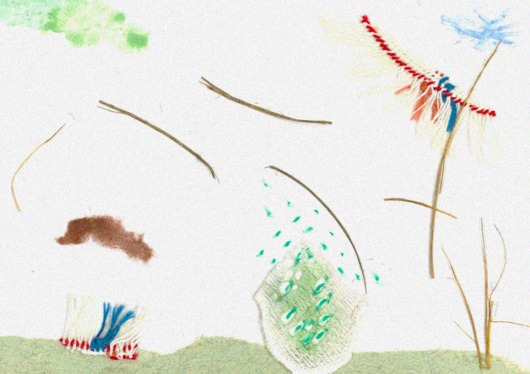
"Esparto, embodied" is the second of a series of three installations representing the artistic component of my doctoral degree at the Sibelius Academy, Uniarts Helsinki. In this exposition, I aim to unpack the research process leading to this event and its outcomes after I opened doors to it on October 18th, 2025, in Organo Hall of the Helsinki Music Center.
The research project in which this series of installations is contextualized aims at understanding listening as a catalyst of remembrance in the context of a world in which things are susceptible to being quickly discarded, replaced, and, therefore, forgotten. The project has been developing through the documentation of my field trips – re-encountering certain places, objects, and voices in my homeland in rural Southeastern Spain –, the re-engagement with the documented material back in Finland, and its re-assemblage at the installations, so that this re-engagement can be further extended to an audience.
The first installation, "Esparto, approached", discussed in an earlier exposition on Research Catalogue , represented a first attempt at verbalizing some of the ideas derived from working in the field and working with the materials from the field. On the other hand, the second installation, "Esparto, embodied", created many frictions emanating from a deeper questioning of those preliminary ideas. This exposition subsequently represents a space where those discomforts can cohabitate with an imaginal supposition of what the third and last installation, "Esparto, revisited", could help reveal.
https://www.researchcatalogue.net/view/3779770/3779771
Previous exposition
Insubordinate Costume: Inspiring Performance
(2025)
Susan Marshall
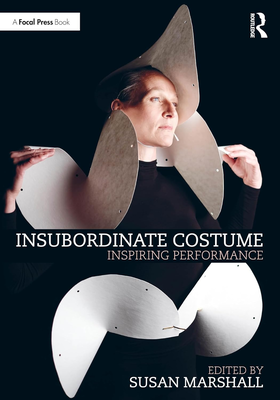
Insubordinate Costume: Inspiring Performance presents a comprehensive study of historical and contemporary examples of scenographic costume – the type of costume that creates an almost complete stage environment by itself, simultaneously acting as costume, set and performance.
This book provides readers with an overview of the costumes, designers, context and theory that have contributed to the emerging field of ‘costume as performance’. Focusing on artists and their creative approach to space, form, materials and movement, the book looks at iconic figures such as Loie Fuller, Oskar Schlemmer and Leigh Bowery, amongst contemporary examples of practitioners that are blurring disciplinary boundaries between fashion, dance, performance and theatre. The book includes chapters by Dr Sofia Pantouvaki, who focuses on performance costume as a means of research; Christina Lindgren, who presents the findings of the four-year Costume Agency project at Oslo National Academy of the Arts in Norway; Charlotte Østergaard, who discusses the implications of 'Listening with costume' and Felix Choong, writing on 'Contemporary Runways, Contemporary Costumes'. The final part of the volume, 'The Practitioners’ Voice', examines current practice through interviews and contributions from key practitioners.
The Tarot Walk - an artistic methodology
(2025)
Elinor Rowlands
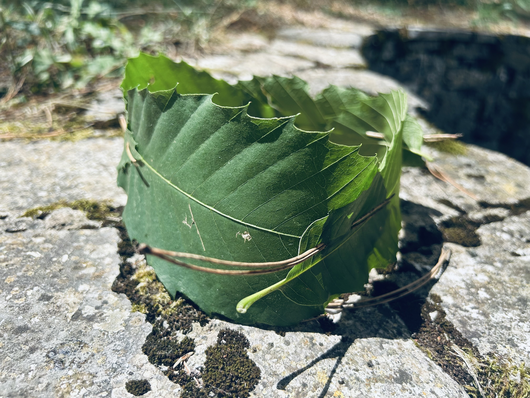
The Tarot Walk
Part of Elinor Rowlands' practice based research in autistic stimming as artistic methodology
recent publications <>
Unsettled Subject: From Emancipation to Separation
(2026)
Martin Pšenička
This essay is inspired by the contributions to this issue, whose common denominator seems to be the transformation of the nature of authorship and the position of the authorial subject, reflecting the broader theme of the position of the subject in the contemporary world. Some authors, responding to ArteActa’s previous call for submissions, “AI (and) Art: The Poetics of Prompting,” explore the changing conditions of artistic work with AI, while others focus on the interaction between materiality and human perception. All raise urgent questions related to the concept of the subject and the connection between the perceiving mind and the surrounding world. Through a historical reflection of poetics as the art of “prompting,” the text addresses theoretical conceptualization of the subject, in which emancipation at the level of the perceiver plays an increasingly important role. With the advent of AI as a “separate intellect” (Agamben 2025), the emancipation and transformation of (creative) subject raises questions stemming from today's paradox, in which all important and necessary emancipation efforts seem to be distorted or lead to tendencies that brutally contradict them. In this context, does AI bring about the final stage of the emancipation of the subject, or does this autonomous intellect enable hedonistic ochlos-authorship? Without reviving the laments of the past, the essay attempts to point out the fragility and uncertainty of the subject facing unprecedented pressure.
how to strike roots into the void – a trapeze artists view on artistic processes as permacultural growing
(2026)
Carmen Raffaela Küster
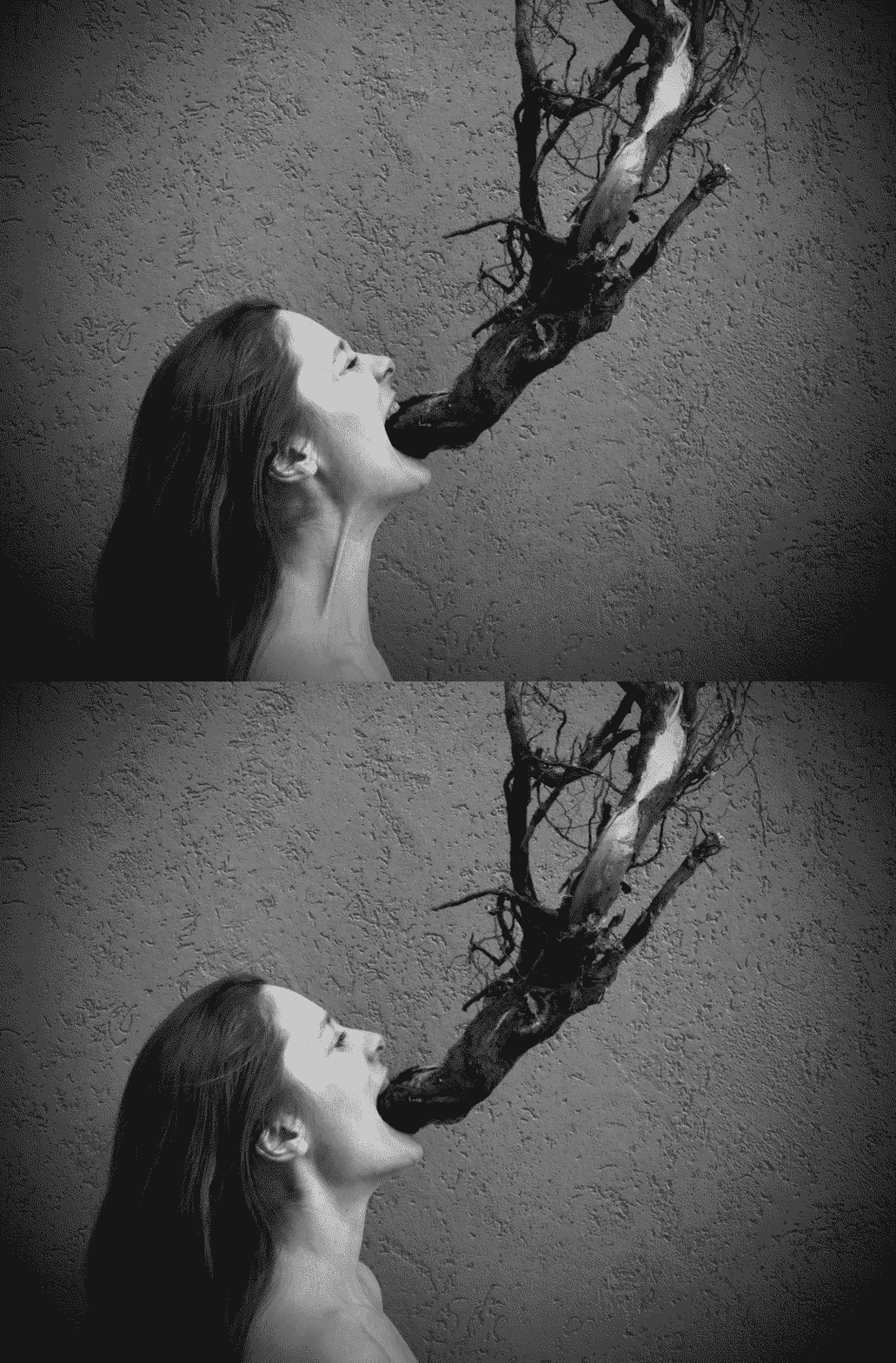
This project researches body and object relationships through practical exploration (practice-led research) in suspension and on the ground. It illuminates connected thoughts linked to posthuman philosophy, permaculture, physical movement and contemporary circus.
Our perception of the world is getting more global and connected, but we have not realised yet the full complexity of all the interdependencies and interplays. In fact it is more than questionable whether this might be graspable for any human to its full extend at all…
The state of being ‘in suspension’ is taken as an analogy for the times we live in – life itself. In a world in which pop-stars sing ‘I have no roots’ (Merton, 2016), mass-migration makes people leave their homes involuntarily and others choose nomadic livestyles that leave them only loosely connected with a geographical place and a single culture. But at the same time, we are always tightly connected (digitally) with ‘the whole world’.
'How to strike roots into the void?' is the essential question of this interdisciplinary research, which has its roots deep 'down' in aerial acrobatic movement. How could this rooting be possible at all? And in which ways? – referring to the question of quality: 'HOW' can we in these times as human being strike out our own roots? Who and what can keep us grounded? To whom or what are we reaching out to search for connection? What nourishes us? And where to hold on to, if the substrate is emptiness – the Void – the uncertainty of life itself?
Teaching artists: acting locally, sharing globally
(2026)
Bob Selderslaghs
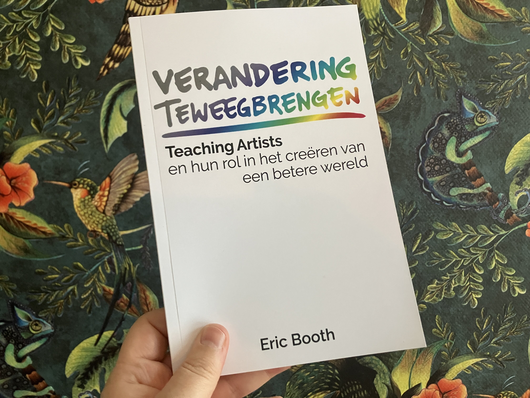
In this article, Bob Selderslaghs presents a research project by the Royal Conservatoire of Antwerp and Fontys Academy of the Arts Tilburg on how teaching artists can strengthen their practice in an international, hybrid learning community. Through inspiring lectures, practical experiments and in-depth reflection, participants gained recognition for their practice, expanded their artistic-pedagogical repertoire and built valuable contacts. The project emphasises the power of flexible frameworks, embodied learning and sustainable networks for greater visibility and impact in this dynamic field.