Faculty of Fine Art, Music and Design, University of Bergen
Projects
KMD Research projects and artistic results
SYNSMASKINEN
(2022)
Frans Jacobi
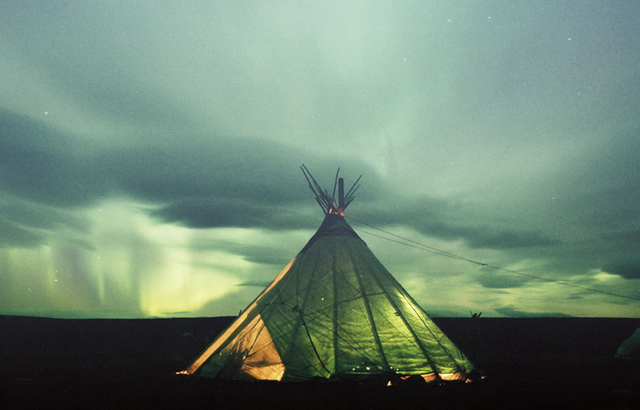
SYNSMASKINEN: an inquiry into contemporary political crises
SYNSMASKINEN is a new artist-group and an inquiry into contemporary political crises. The project will consist of art projects, each exploring a certain aspect or manifestation of contemporary crisis. Together these visions are attempts to unfold a contemporary cosmology; a new political horizon.
SYNSMASKINEN is an artist-group in the sense that each production is made in collaboration between a small group of participants. Each art project will be made by new groups of artists and thinkers. In this sense SYNSMASKINEN will probe the concept of the research-group: What kind of insights does artistic thinking provide? How can collectivity address the political issues of topics in a critical manner?
The name, SYNSMASKINEN is taken from the Danish and Norwegian translations of Paul Virilio’s seminal book on the techniques of perception, La Machine De Vision. The name SYNSMASKINEN contains the methodological program: SYN=vision / MASKIN=machine
SYNSMASKINEN is the third large-scale research-project at Bergen Academy of Art & Design. Following Re-Place and Topographies of the Obsolete the project offers a continuation of and an addition to the new tradition of kunstnerisk utvikling/artistic research at the core the Department of Art. SYNSMASKINEN is organised by professor Frans Jacobi, artistic-research leader Åse Løvgren and research assistant Benedicte Clementsen.
www.synsmaskinen.net
In a Place like this
(2025)
Johan Sandborg, Duncan Higgins
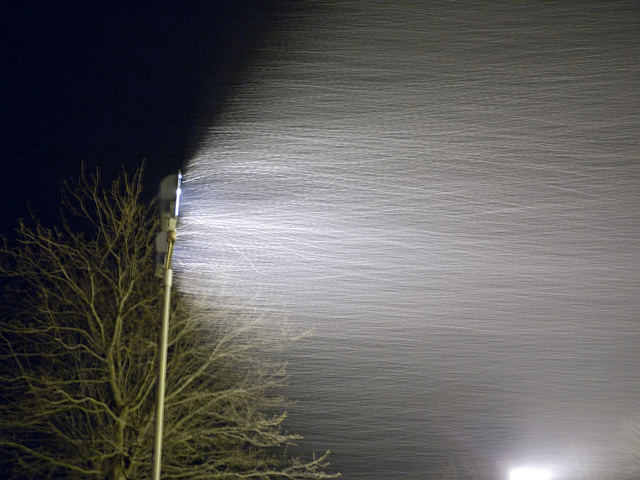
In A place Like This sets out to investigate and expand the issues and critical discourses within Sandborg and Higgins' current collaborative research practice. The central focus for the research is concerned with how art, in this instance photographic and painted image making and text, can be used as an agent or catalyst of understanding and critical reflection.
The research methodology is constructed through photography, painting, drawing and text. This utilises the form of an artist publication as a point of critically engaged dissemination: a place for the tension between conflicting ideas and investigation to be explored through discussion.
The research question is focused on how the production of the image and the act of making images can communicate or describe moments of erasure or remembering in terms of historical and personal narratives with direct reference to moments of violence and place.
This is seen not in terms of a nostalgic remembrance of the past; instead as one that is rife with complicated layers and dynamics where recognition is denied the ability to locate a physical representation. Embedded in this is an exploration of particular questions concerning the ethics of representation: the depiction of ourselves and other? In this sense it brings into question an examination of the act of remembering as a thing in itself, through the production of the image and text, contexts of knowledge and cultural discourses explored through the form of an artists publication.
DESERT DWELLING
(2025)
Christine Hansen
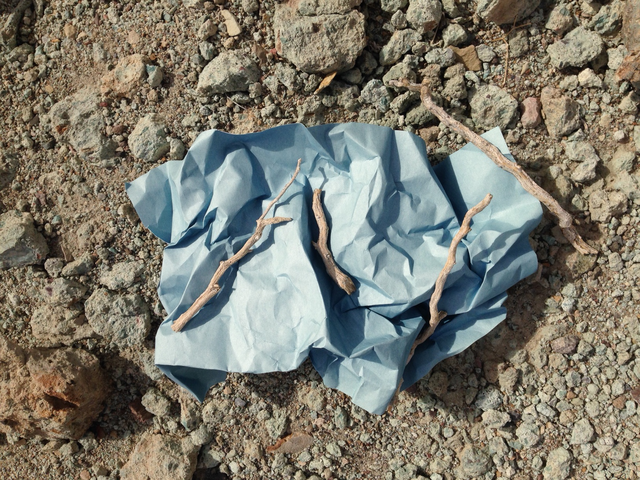
Desert Dwelling is a research project conducted by Associate professor Christine Hansen and Independent Artist Line Anda Dalmar. The desert is used as a site and framework to reflect on landscape, environment and time. In addition, Desert Dwelling endeavor to explore the act of observation and documentation. The project uses common documentation/observation methods such as photography, video and sound. In addition, we employ more obsolete and time-consuming observation means such as drawing, casting and watercolor painting. This is to stress that different observation methods render the world differently, and provide noninterchangeable information about the world. Much of the visual material is from a field study in deserts in California in spring 2018. The study took place mainly in Death Valley and Joshua Tree and had a processual method. We selected a place in the desert and stayed there until we found something interesting to work with. Every day, we made experiences that we built on the next day. The working method focused on the fluid relationship between process, work and documentation.
Topographies of the obsolete
(2023)
Anne-Helen Mydland, Neil Joseph Brownsword
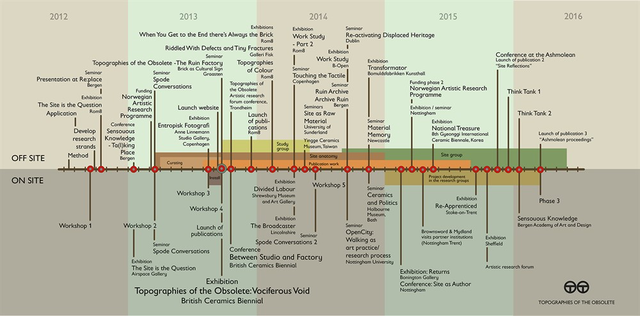
Topographies of the Obsoleteis an Artistic Research project (KU Prosjekt) initiated by Professors Neil Brownsword and Anne Helen Mydland at Bergen Academy of Art and Design (KHiB) in collaboration with partner universities/institutions in Denmark, Germany and the UK. Our main collaborative partner is the British Ceramics Biennial, who invited KHiB to work at the original Spode Works factory in Stoke-on-Trent, to develop a site specific artistic response as a core element of their 2013 exhibition program. More than 40 international artists and theoreticians have participated in this multidisciplinary project with a program of seminars, publications and exhibitions. Three residencies have accumulated individual artistic projects from which the overriding project has developed.
The project focus centres upon the landscape of post-industry, more particular; that of Stoke-on-Trent, a world renowned ceramic capital that bears in its city evidence of fluctuations in global fortunes. The original Spode factory, situated in the heart of Stoke-on-Trent, was once a keystone of the city's industrial heritage which operated upon its original site for over 230 years. Amongst Spode's contributions to ceramic history include the perfection of under-glaze blue printing and Fine Bone China. The factory's industrial architecture dates from the 1760's to the late 1980's, with spaces associated with all aspects of the design, manufacture, retail and administration in close geographical proximity. In 2008 Spode's Church Street site closed, with most of its production infrastructure and contents left intact.
ARKADIA
(2025)
Anne Skaansar
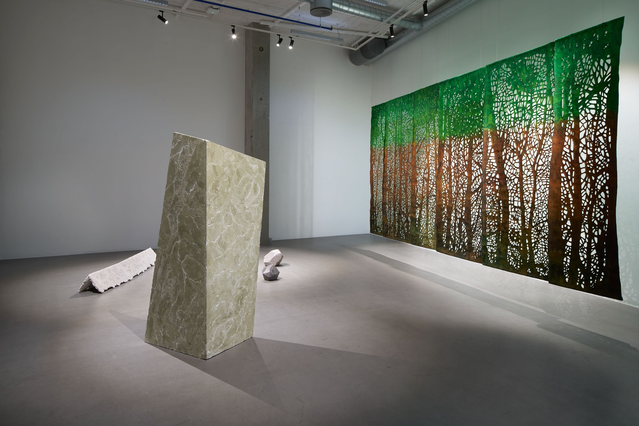
Med utgangspunkt i kunstneriske framstillinger av Arkadiamotivet, og med pastoralen som optikk, vil dette prosjektet utforske «utopiske» forestillinger om fortiden, gjennom arbeid i ulike kunstneriske uttrykksformer, i tekstil, skulptur og tekst.
Formidling som fagfelt
(2025)
Anne Szefer Karlsen
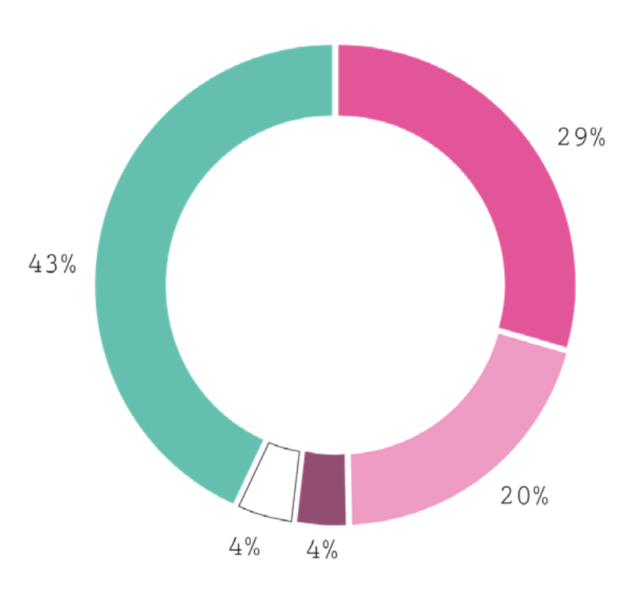
The project Mediation as Discipline is an attempt to build
bridges between disciplines and make the experience-based knowledge that the contemporary art field can offer relevant to a broader academic community. At the same time, it is an investigation of needs within the field itself, which should be served by a university that prides itself on having an artistic faculty. This report, carrying the same name as the project, is based on a comprehensive survey among contemporary art mediators conducted in 2024 by the project group, and it examines the foundation for specialised education for mediators of contemporary art in Norway.
Entangled — Texts On Textiles
(2025)
Anne Szefer Karlsen
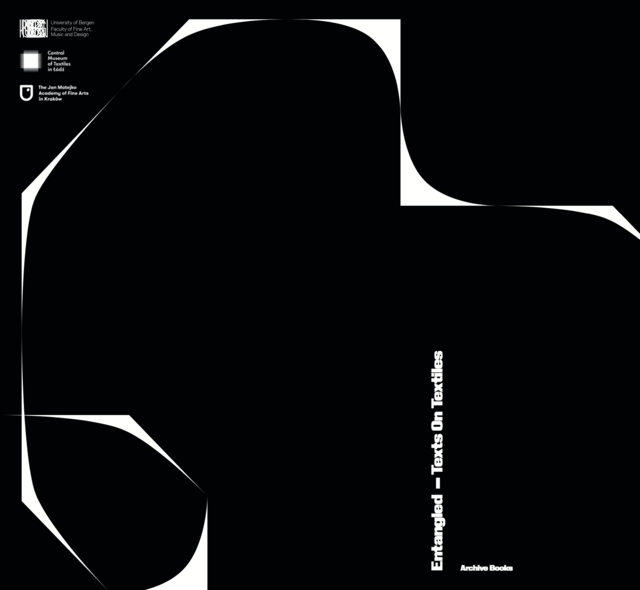
The collaborative process that has fostered the texts in this anthology started with two questions: What does it mean to be a curator who writes, and, more specifically, how can curators write about textiles?
Curatorial practices vary just as much as do curators’ interest in and capacity for writing. At the same time, there are prevailing opinions about, and institutional demands on, what kinds of texts curators should provide for audiences, for instance as contributions to art discourses in the form of catalogue essays and the like.
The Community of Writers was set up to create time and space to retreat from these outside opinions and demands and to let curiosity and the joy of writing be the driving forces of the writing process.
I have had the pleasure of leading this process and am indebted to the individuals who formed the Community of Writers for newfound insights into textile art and the role of textiles in society. The writing process challenged the contributors’ own writing practices, sparked their enthusiasm, playfulness and criticality pushed the project further. Our conversations have deepened and become more entangled over time, and the reader can find traces of this in the texts in this volume.