ArteActa – Journal for Performing Arts and Artistic Research

About this portal
ArteActa is a peer-reviewed academic journal for performative arts and artistic research, published since 2018. Starting in 2022, we publish only online, in Open Access mode, under a Creative Commons license for non-commercial international use (CC BY-NC 4.0). The journal is published by the Academy of Performing Arts in Prague.
ArteActa is moving to the Research Catalogue and our next issue will appear here. For previous issues, visit the ArteActa website.
contact person(s): Markéta Magidová
 , Veronika Klusáková
 url: https://arteacta.cz
Recent Issues
-
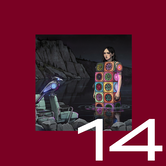
14. ArteActa 14/2025 Issue 14 of ArteActa – Journal for Performing Arts and Artistic Research, contains five artistic research expositions on the Research Catalogue platform (“AI gave me an assignment, and I did it. Now what?”, “In Sync With A Machine”, “Demolish Monsters on the Rocks: Prompting Through an Ensemble”, “Acoustic Plein-air: a Spacesound Listening Experience as the Basis of the Musical Composition”, “Norths: Navigating Instability By Ear”). There is also a study by John Franek “Rhizomatic Abstraction: Composing Music to Investigate Memory Patterns Among Listeners”, and a comprehensive collection of Czech translations of texts by the renowned theatre scholar Patrice Pavis published on the journal’s website. The issue is accompanied by an introductory essay by Martin Pšenička (“Unsettled Subject: From Emancipation to Separation”) and a review of Vanessa Ament’s book The Foley Grail by Sara Pinheiro (“Sound, Performance, and Technology: Considering The Foley Grail”) and an interview with Ament. In his essay, Martin Pšenička draws inspiration from the contributions in this issue, which seem to share a common theme: the changing nature of authorship and the position of the author as a subject, reflecting the broader topic of the position of the subject in today’s world. Three authors analyse the changing conditions of artistic work with AI, examining the possibilities of how to situate creativity in the context of communication with large language models. Brett Ascarelli explores the inverted relationship between humanity and machines. The central question of her study is as follows: how useful can AI be at this present moment to generate assignments or instructions to teach and train people to live more playful, creative, and ethical lives? Ilja Mirsky, Leonid Berov, and Gunter Loesel, in their exposition “In Sync With A Machine”, create an environment in which the user comes into contact with ANA, an environment integrating GPT-4, emotion-recognition algorithms, and a simulation of its own affective state. ANA engages users in a 10-minute interaction, fostering an immersive narrative exchange in which the affective dimension of collaborative storytelling takes precedence. The authors then address the challenges of prompt design in this setting, focusing on the concept of emotional attunement, the feeling of being “in sync” with a machine throughout the interaction. Bruce Gilchrist, in the exposition “Demolish Monsters on the Rocks: Prompting Through an Ensemble”, conducts a series of practical experiments that link human actions labelled as “biometric poetry”, which stimulates a language model. This project, combining performance, waste material, object recognition, and a language model, explores how the manipulation of garbage can be rationalised by a machine to produce poetic texts as a commentary on the action portrayed on a screen. Three articles in this issue are focused on the analysis of perceived sounds and music – by listeners and by authors. Czech composer Slavomír Hořínka presents his exposition “Acoustic Plein-air: a Spacesound Listening Experience as the Basis of the Musical Composition”, in which he analyses the perception and the origins of musical ideas while observing the soundscape of nature. Five composers – one teacher and four students – set out to listen to the soundscape of the Polish foothills of the Giant Mountains in order to explore the influence of subjective perception on the final shape of a composition. Jorge Boehringer, in the exposition “Norths: Navigating Instability By Ear”, states that critical phenomenological and ecological issues emerge from the noise encountered when sonifying (near) real-time seismic and geomagnetic data, as well as data from communication systems. John Franek’s study, “Rhizomatic Abstraction: Composing Music to Investigate Memory Patterns Among Listeners”, asks what makes an experience memorable. What do we, as listeners, recall after a listening experience? The text provides a brief exposition of research on expectation, consonance, dissonance, rhythm, and time, and presents the details of the listening experiment and the composition of Rhizome. The issue concludes with the Czech translations of texts by Patrice Pavis and the article “Sound, Performance, and Technology: Considering The Foley Grail” by Sara Pinheiro, which includes her interview with foley artist Vanessa Ament. Pavis’s artistic-research contribution offers one possible approach to the phenomenon of theatrical adaptation. It is based on practice, specifically on the author’s novel Poème toi-même (Poem yourself), and presents his adaptation of one of the chapters. Pinheiro’s text puts the art of film sound effects into focus.
-
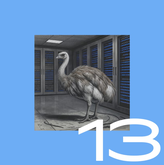
13. AI (and) Art: The Poetics of Prompting 13/2025 With the rise of generative AI systems, the term “prompt” has taken on a new role: as an interface through which we instruct “intelligent” machines to produce content across various modalities—text, image, video, and sound. While earlier systems combined specialized models (e.g., diffusion for images, transformers for text), newer architectures integrate these capabilities natively, allowing for seamless multimodal interaction. Prompt engineering continues to evolve as a discipline for refining these interactions, shaping model outputs toward higher consistency, predictability, and utility. Yet not all prompting seeks optimization. Many users engage playfully, pushing the system to surprise, amuse, or even fail. These prompt bricoleurs embrace improvisation and serendipity, exploring the generative system as both tool and toy. This issue of ArteActa, based on the open call “AI (and) Art: Poetics of Prompting”, features diverse approaches in artistic research that challenge conventional expectations of algorithmic generativity. The emphasis on the act of “prompting” calls for frameworks that privilege the process of interaction between the artist and the technology, instead of merely considering the output. In addressing this process, the contributions draw on established artistic strategies and aesthetic concepts, explore the structural limitations of algorithmic operations, reflect on the affective dimensions of prompting, or adopt the perspective of “thinking-with” (in Donna Haraway’s understanding) to tap into the inherently collective “making” of visual culture and systems of knowledge. Two additional submissions can be found on the ArteActa website: Administering (AI) Attention: Ekphrasis and the Poetics of Prompting by Rolf Hughes (EIT Culture & Creativity) explores how the act of prompting generative AI constitutes a new form of artistic authorship and aesthetic practice, grounded in historical frameworks of conceptual art, creative constraint, and ekphrasis. Drawing an analogy with Kafka’s messengers, the paper positions AI as a similarly enigmatic collaborator, interpreting human prompts through opaque, algorithmic processes. Accessible here: https://arteacta.cz/en/artkey/ara-202501-0008_administering-ai-attention-ekphrasis-and-the-poetics-of-prompting.php. The issue is closed by Zuzana Augustová´s Influences of Ernst Jandl in the Theatre and Radio Work of Jiří Adámek, a study of the experimental work of the current Czech theatre and radio director Jiří Adámek, tracing his sources and inspirations to Austrian authors like Ernst Jandl and Peter Handke. Accessible here: https://arteacta.cz/en/artkey/ara-202501-0001_jandlovske-vlivy-v-divadelni-a-rozhlasove-tvorbe-jiriho-adamka.php.
-
12. Corporeality, Disembodiment, Inter-Action (ArteActa 12/2024) Disembodied interaction is on the rise in contemporary society, requiring new forms of performativity in daily life and physical relationships and changing the way we experience and explore our immediate surroundings. How can the body be posited, felt, and researched vis-à-vis an increasingly virtual environment? What aspects of materiality and corporeality must be considered in interactions that are not necessarily physical? Does the gap between bodily experience and its virtual setting require closing, or does it conceal the possibility of a fresh kind of creativity?
-
11. ArteActa 11/2024 Issue n. 11/ 2024 with exposition from Tereza Reichová and Kateřina Krutká Vrbová in Research Catalogue as well as other open-access articles and a video essay.

Recent Activities
-
Unsettled Subject: From Emancipation to Separation (2026) author(s): Martin Pšenička published in: ArteActa – Journal for Performing Arts and Artistic Research
 This essay is inspired by the contributions to this issue, whose common denominator seems to be the transformation of the nature of authorship and the position of the authorial subject, reflecting the broader theme of the position of the subject in the contemporary world. Some authors, responding to ArteActa’s previous call for submissions, “AI (and) Art: The Poetics of Prompting,” explore the changing conditions of artistic work with AI, while others focus on the interaction between materiality and human perception. All raise urgent questions related to the concept of the subject and the connection between the perceiving mind and the surrounding world. Through a historical reflection of poetics as the art of “prompting,” the text addresses theoretical conceptualization of the subject, in which emancipation at the level of the perceiver plays an increasingly important role. With the advent of AI as a “separate intellect” (Agamben 2025), the emancipation and transformation of (creative) subject raises questions stemming from today's paradox, in which all important and necessary emancipation efforts seem to be distorted or lead to tendencies that brutally contradict them. In this context, does AI bring about the final stage of the emancipation of the subject, or does this autonomous intellect enable hedonistic ochlos-authorship? Without reviving the laments of the past, the essay attempts to point out the fragility and uncertainty of the subject facing unprecedented pressure.open exposition comments (0)
 -
The Oracle of Delphi (2025) author(s): Despina Papadopoulos published in: ArteActa – Journal for Performing Arts and Artistic Research
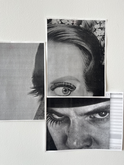 Through a series of photographic assemblages that focus on texture, depth, and atmosphere, “The Oracle of Delphi” documents interactions between these assemblages and AI language models. The work demonstrates specific ways that current AI systems struggle to comprehend material qualities and contextual relationships in personal narratives, particularly when dealing with dimensionality, surface qualities, and emotional resonance. By analyzing these limitations, the work reveals the gap between human and machine perception of materiality and affect, while suggesting potential approaches for developing more nuanced human-machine encounters. Through these material encounters and a deliberate “kinking” of established patterns, the work demonstrates how algorithmic systems might be recrafted from processes of reduction into expansive sites of co-creation and possibility.open exposition comments (0)
 -
Prompting as Thinking-With: Using Generative AI to Visualise an Extinct Dwarf Emu (2025) author(s): Monica Monin, Zoe Sadokierski published in: ArteActa – Journal for Performing Arts and Artistic Research
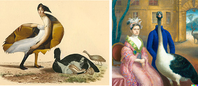 This paper discusses a creative collaboration between two design researchers using text-to-image prompts as a way to think across a range of ideas including the relationships between collage practices and AI image generation – both modes of image-making that create images with images – as well as taking an ‘anarchival’ approach to addressing absence in historical archives. Initial experimentation with prompt-based model DALL-E 2 involved writing multiple prompts to generate images of the extinct King Island dwarf emu; specifically, an emu taken to live in Empress Josephine’s estate outside Paris. There is little visual record of the dwarf emus, and what remains is ambiguous and factually inaccurate. The scarcity of visual reference material provides an interesting case study for how a generative image model might attempt to elaborate a new image about a historical event. The results provide material to help think about how image generation models work, and also how we might visualise the experience of an extinct species. Reflecting on the initial experiments, we began to consider prompting with large-scale image generation models as a way to think-with and speculate, rather than to merely generate. We employ two methods to critique the resulting images: visual content analysis and comparative analysis across image-generation models. We conclude that at a time of both deliberate and accidental miscommunication, it is important for those with expertise in how images ‘work’ to critique and analyse image-generating tools, and consider how working with generative AI might be included as part of an anarchival practice.open exposition comments (0)
 -
Images That Hang Together (2025) author(s): Noemi Purkrábková published in: ArteActa – Journal for Performing Arts and Artistic Research
 This short essay opens ArteActa’s issue AI (and) Art: Poetics of Prompting by proposing to understand generative algorithms as fundamentally metabolic: a dynamic entanglement of data, energy, affect, attention, and ecology. It argues that, given their ubiquity, generative materials can no longer be understood primarily as representations or discrete outputs. Instead, they function as metabolic processes that devour cultural material, extract planetary resources, and reshape perception below the threshold of consciousness. Prompting itself is always an act of transformation rather than merely a symbolic command, and intentional artistic experiments represent only a fraction of a larger infrastructure. The essay thus advocates for a multiscalar understanding of generative media: every prompt is already an ecosystem; every image is already a node in a planetary metabolism.open exposition comments (0)
 -
The Wager of the Algorithm: Towards a Performatic Gesture (2025) author(s): Peter Freund published in: ArteActa – Journal for Performing Arts and Artistic Research
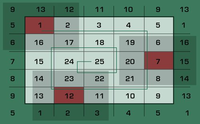 The fantasy of the algorithm and, by extension, artificial intelligence imagines that each performs by executing an operational task. Yet, based on its inherent computational structure, the digital performance fails to live up to its instrumental promise. This failure foregrounds an occasion for artistic intervention. “The Wager of the Algorithm: Towards a Performatic Gesture” presents a theoretical statement (illustrated via artwork by the author) in which the overall exposition underscores a dialectic within instrumental reason itself. The “prompt” names are a shorthand for the fulcrum of this problematic.open exposition comments (0)
 -
Možnosti aplikace prvků lidového divadla na současnou inscenační tvorbu pouličního performativního umění - The Possibilities of Applying Elements of Czech Folk Theatre to Contemporary Street Performing Art (2025) author(s): Michal Moravec, Vojtěch Balcar connected to: Janáček Academy of Performing Arts (JAMU) published in: ArteActa – Journal for Performing Arts and Artistic Research
 This exposition, entitled The Possibilities of Applying Elements of Czech Folk Theatre to Contemporary Street Performing Art, presents the process and conclusions of artistic research that explored the phenomenon of Baroque folk theatre performed in neighbourhood communities in the Czech countryside in the 18th and 19th centuries and the search for the application of its principles in today's theatre activity. For this research, in cooperation with the Diocesan Museum of Brno, two street productions were created in the vicinity of the Cathedral of Saints Peter and Paul in Brno to test the functionality of the means of folk theatre in today's context. The exposition presents the initial considerations and methodology of the research, followed by a chapter-by-chapter description of the various theatrical principles in their historical context, how they were worked with in the investigated productions, and a summary of the benefits and problems uncovered. Finally, the major contributions of folk theatre to today's work are outlined, which were evident in two of the production forms. An essential part of this exposition is the audiovisual documentation of these two projects, which became the core of the practical artistic research. (CZ) Tato expozice s názvem Možnosti aplikace prvků lidového divadla na současnou inscenační tvorbu pouličního performativního umění prezentuje proces a závěry uměleckého výzkumu, který se zabýval fenoménem barokního lidového divadla hraného v sousedských komunitách na českém venkově 18. a 19. století a hledáním využití jeho principů v dnešní divadelní činnosti. Pro tento výzkum vznikly ve spolupráci s Diecézním muzeem Brno dvě pouliční inscenace v okolí katedrály svatých Petra a Pavla v Brně, na kterých byla ověřována funkčnost prostředků lidového divadla v dnešním kontextu. V expozici naleznete výchozí úvahy a metodologii výzkumu, následně jsou v kapitolách popisovány jednotlivé divadelní principy v historickém kontextu, jak s nimi bylo pracováno ve zkoumaných inscenacích a shrnutí odhalených přínosů i problémů. V závěru jsou naznačeny největší klady lidového divadla pro dnešní tvorbu, které byly na dvou inscenačních tvarech patrné. Zásadní součástí této expozice je také audiovizuální dokumentace těchto dvou projektů, které se staly jádrem praktického uměleckého výzkumu.open exposition comments (0)