Choreographic Fiction
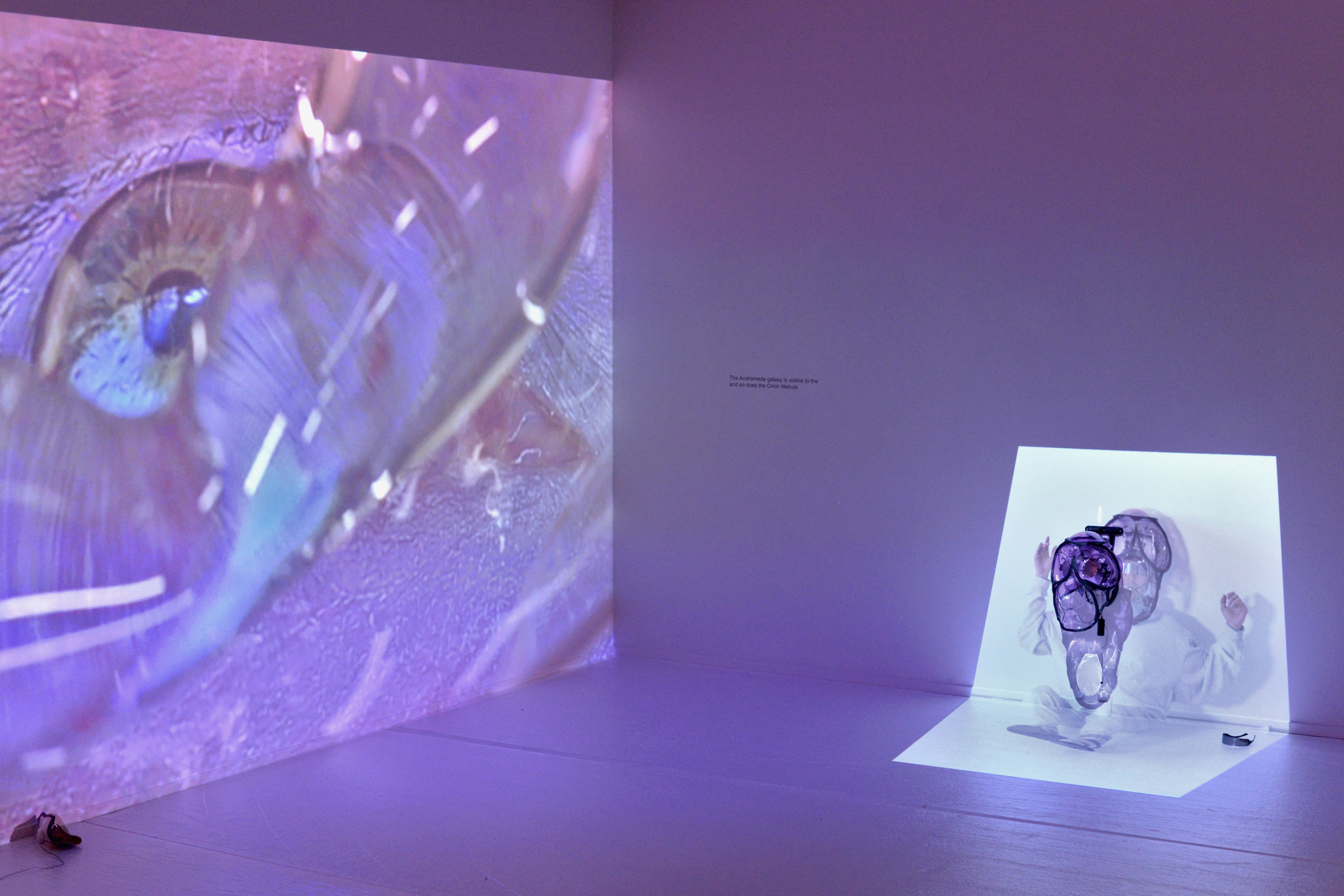
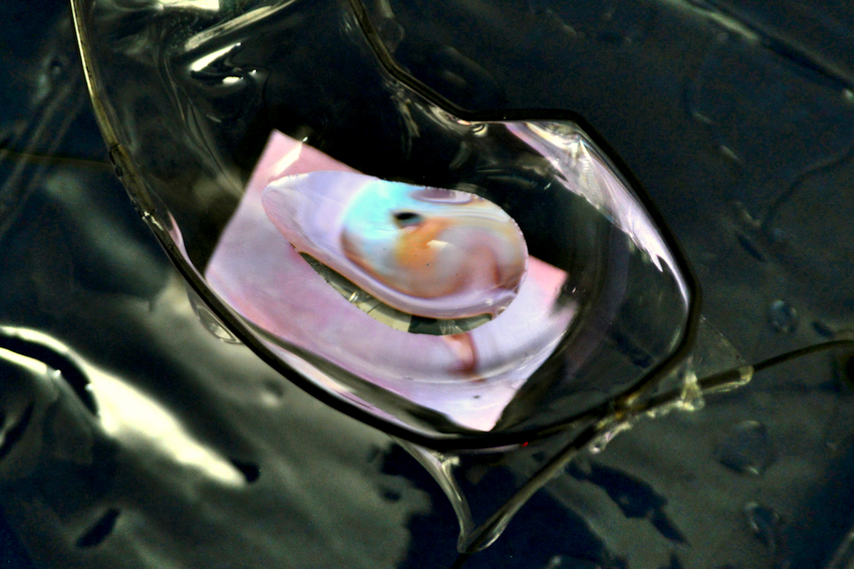
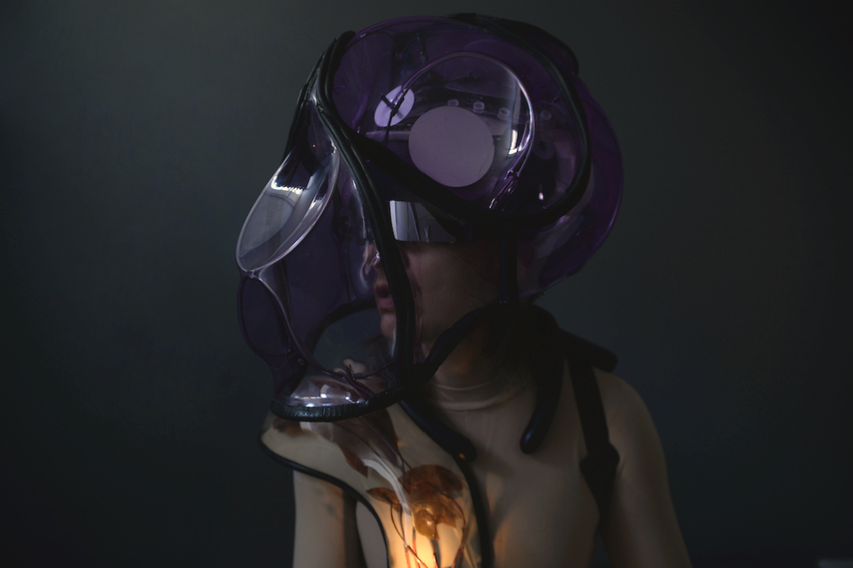
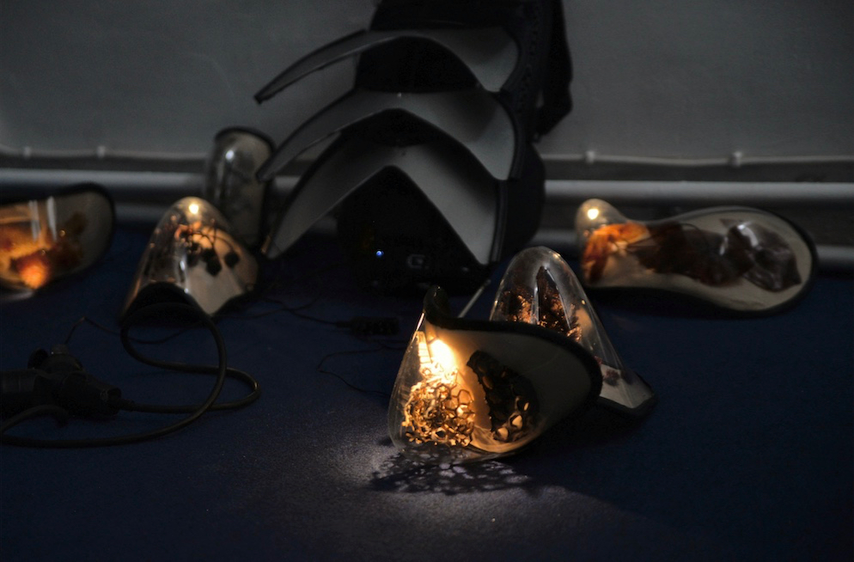
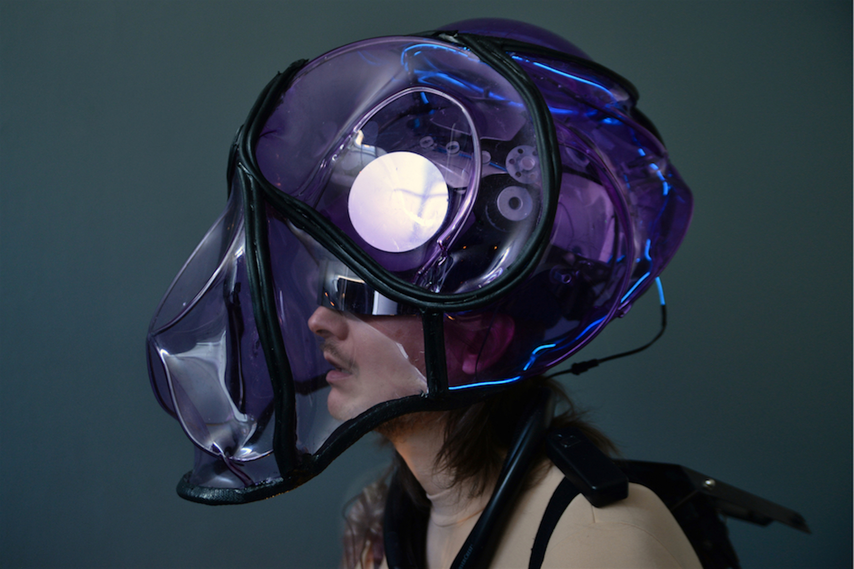
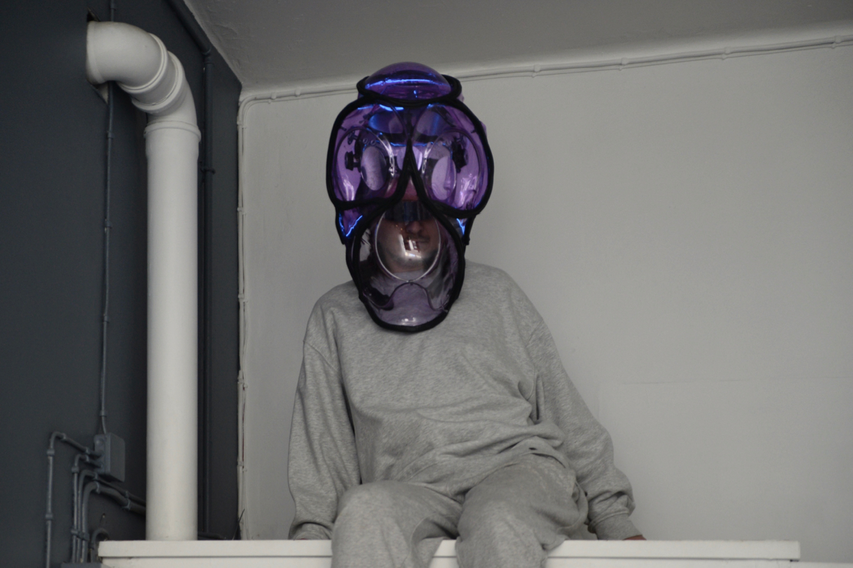
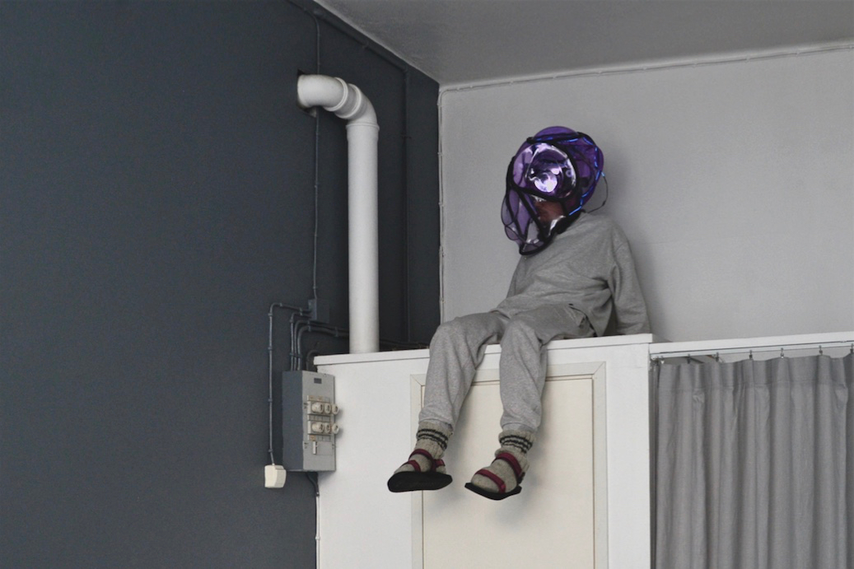
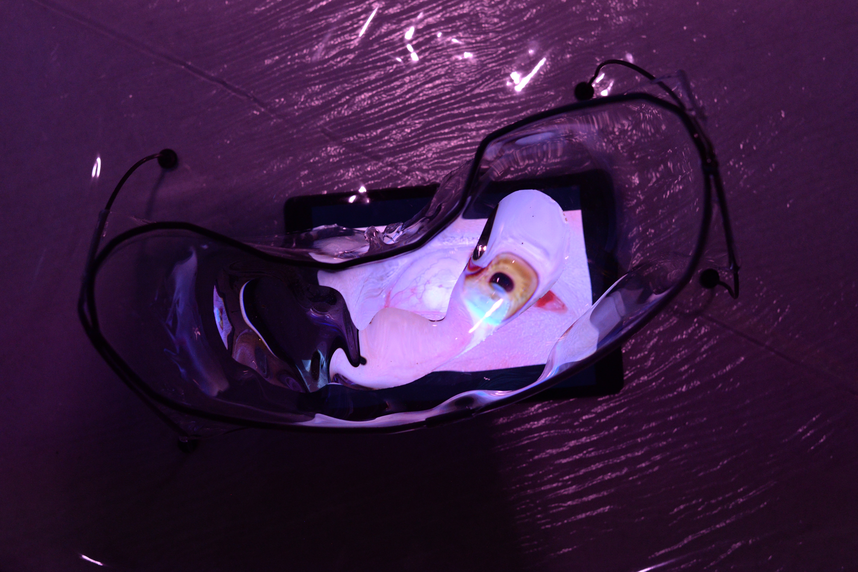
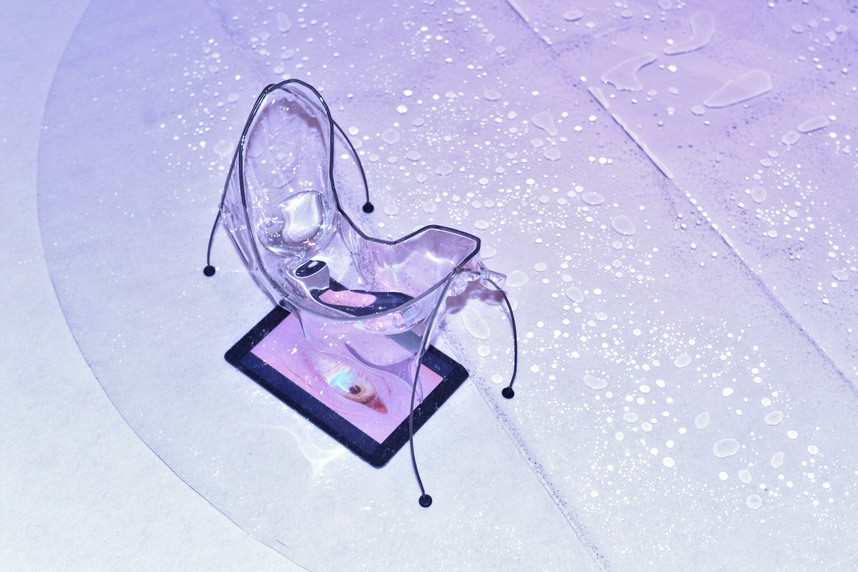
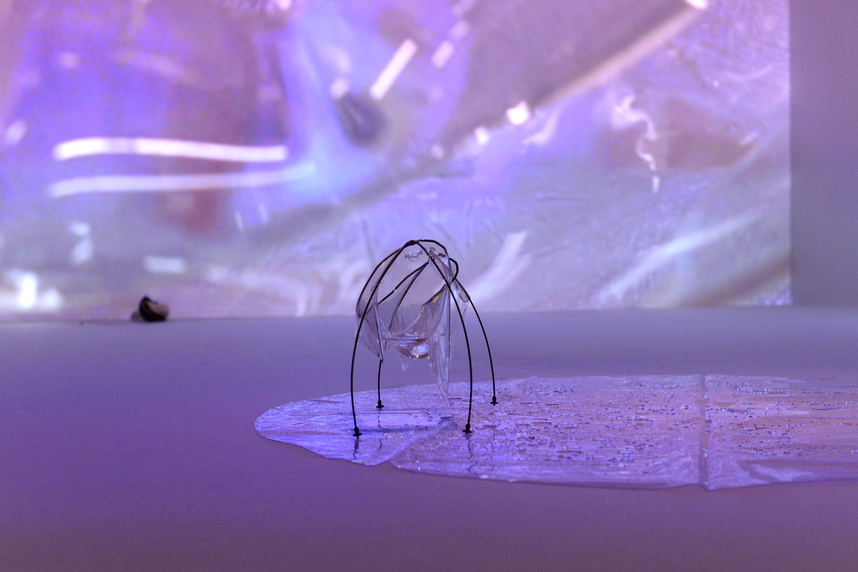
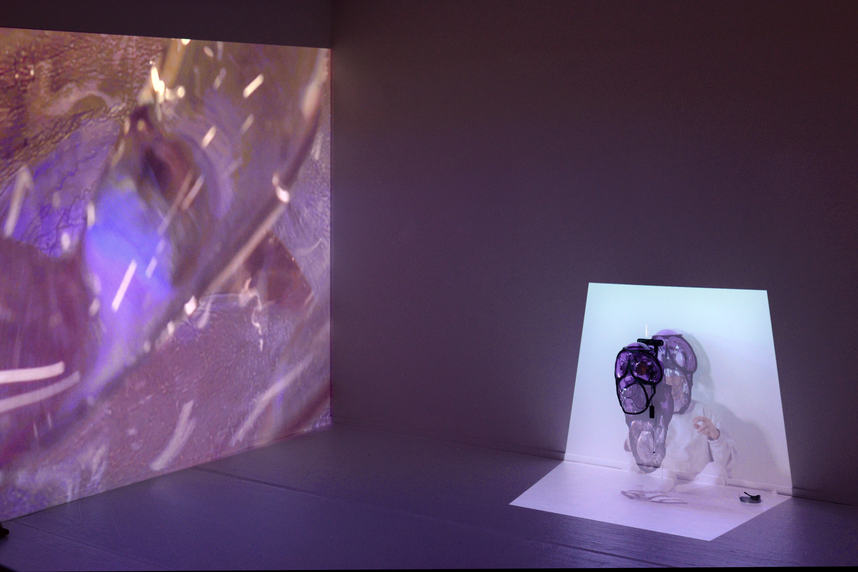
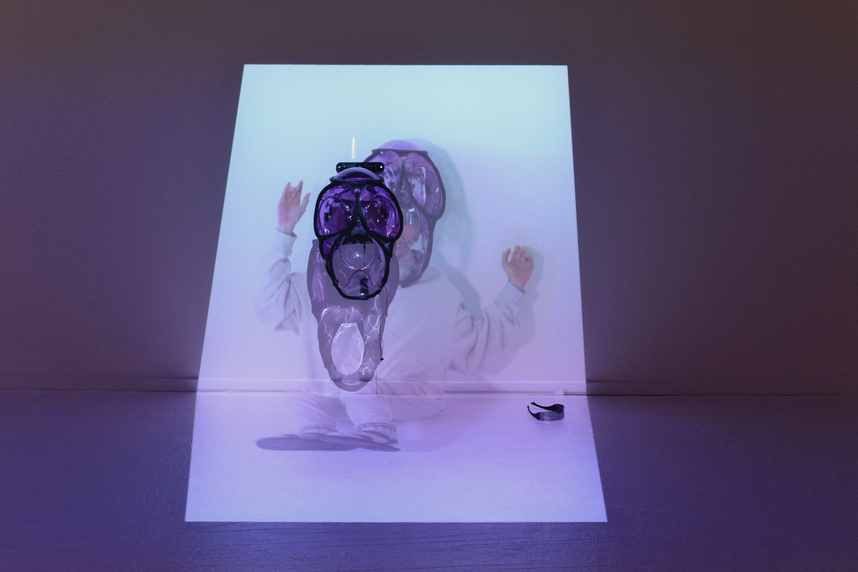
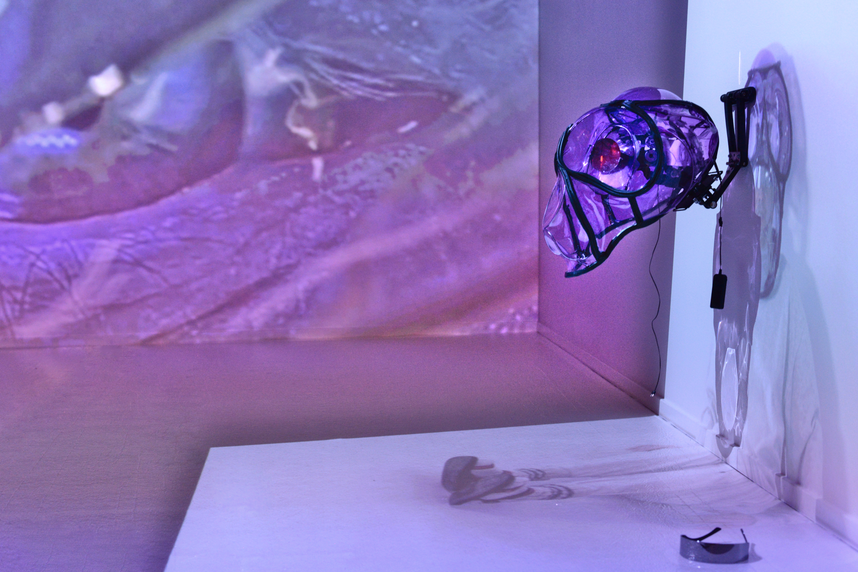
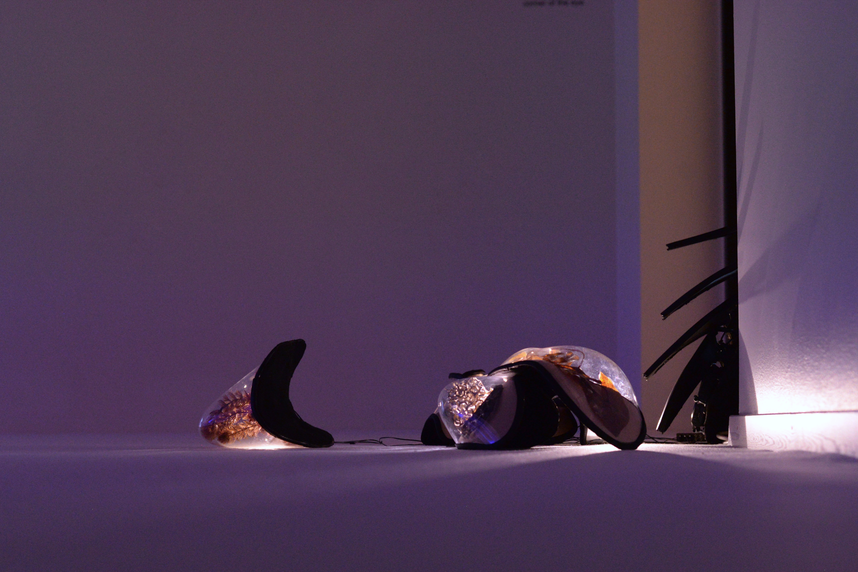
Concretely, the installation unfolds as an immersive environment in which moving images, sculptural components, and atmospheric intensities intertwine to produce a shifting field of perception. A large projection spans eight by four meters on the main wall, showing a close-up of the performer’s eye, filmed through residual water contained within a small metal sculpture, the liquid continuously distorting the gaze as the loop repeats. Facing it, a second projection at body scale casts a video of the performer practicing choreoreading movements directly onto a helmet made of purple plexiglass and metal, which creates a superimposed image where the filmed figure merges with the physical object. This projection produces a layered shadow on the wall, and splits the helmet into three interrelated presences: the sculptural headset, its luminous reflection, and the headset worn by the performer in the video. On the floor, a pad showing a close-up of the performer’s eye and a ritual container are arranged on a circular sheet of transparent pvc, lightly covered in water. Also on the floor, Backgear, equipped with a mechanical breathing system and surrounded by small illuminated synthetic biospheres, appears like a discarded device or the remnant of a body that has burst apart. Vinyl-cut poetic text lines the walls and a white carpet extends across the space, which is lit almost entirely by the purple cast of the large projection. Visitors remove their shoes and may sit in a three-row audience section or move through the installation, encountering the low-volume NASA black-hole recording that emanates from a wireless neck speaker, placed beneath the wall-mounted helmet. A pair of futuristic 1990s sunglasses rests near the projection of the performer, and form a final detail in this constellation of body-ies, images, objects, and atmospheres.
EXOXƎ functions as an intersection of cyber and outer space. It is an intersection, which the entire process aims to explore. Both spaces offer artistic realms that are, in a sense, outside all the places I have physically embodied. Yet simultaneously, they constitute embodied spaces of daily life, feeding into the potential for what I call choreographic fiction.
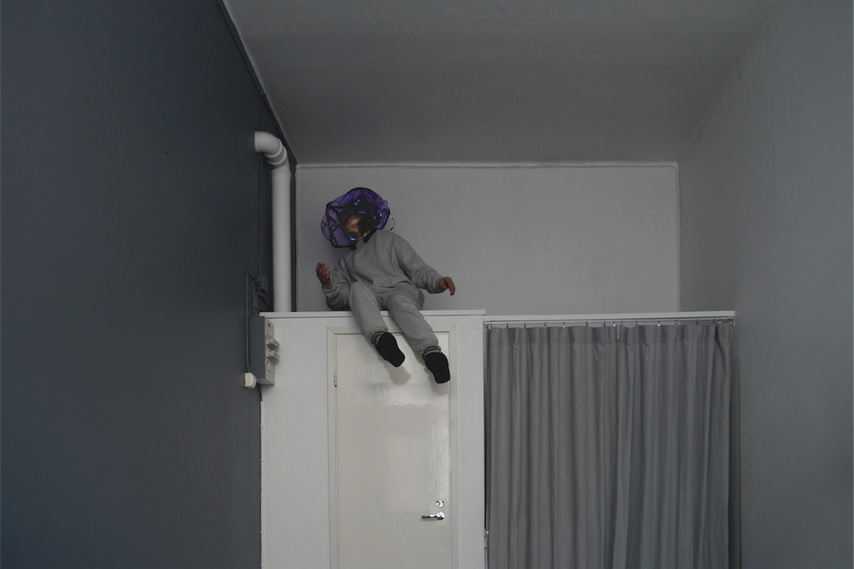
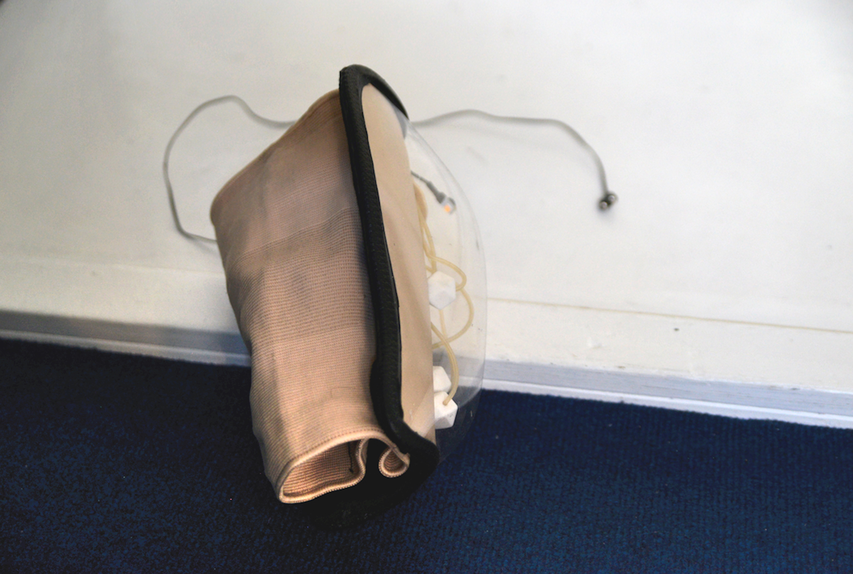
By this term, I refer to a practice that originates from a studied and practiced, primarily Western and historically bound, choreographic tradition, which is expanded into a new era. Choreographic fiction moves beyond the tangible, into a space where the practical components available to the choreographer are elusive, intangible, and not yet fully present. In this sense, choreographic practice becomes an imaginative bodily state, one that holds radical potential to reroute social, ecological, technological, planetary, and interplanetary relations. Engaging with this mode requires developing new kinds of skills that have yet to emerge.
If choreography is understood as a kind of apparatus that grasps or activates relations, EXOXƎ aims to turn this perspective inside out. When the components that form those relations extend beyond human comprehension or the capacity to fully inhabit them, the relations themselves become fictional and ungraspable. In this project, cyberspace and outer space are placed in relation to one another. The practice of hyper-reading and a kinesthetic orientation toward space offer ways of becoming exposed to these interactive realms, which in turn condition a specific understanding of choreography. Here, cyberspace and outer space are conceived as matters in motion, and the choreographer’s body becomes a porous organism, which is searching for ways to develop artistic senses capable of shaping the near-future of a cyber–outer space choreography.
Whether successful or not, the attempt to reach toward these liminal frontiers already begins to materialize a kind of not-here-yet-ness, a speculative space into which the visitor of the installation is invited. This attempt is what I call choreographic fiction.
EXOXƎ
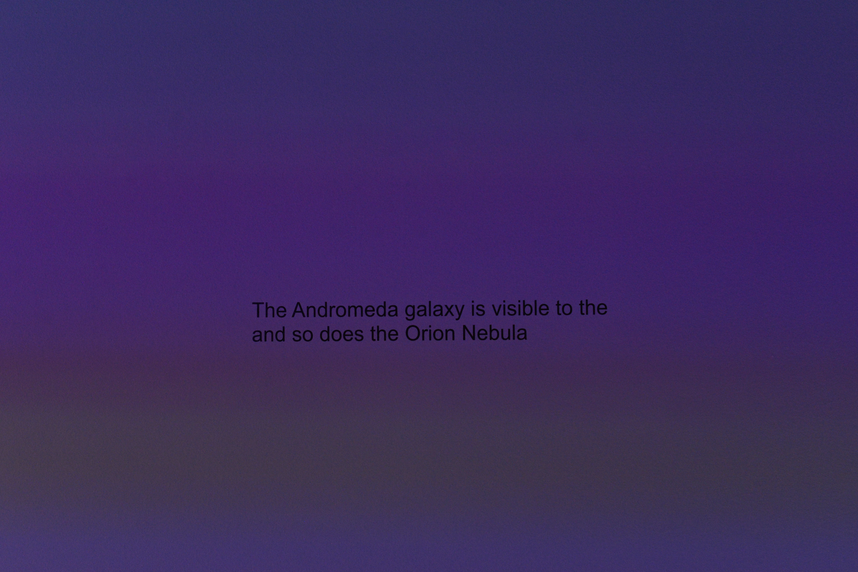
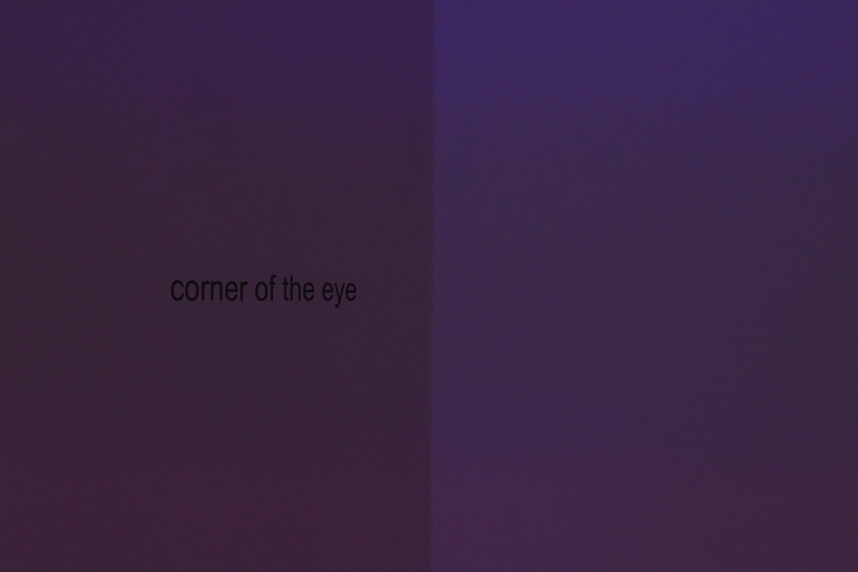
The Andromeda galaxy is visible from the corner of the eye
and so does the Orion Nebula
A small domestic place (e.g., a garage or a bedroom)
Just after a minor blast (e.g., a small shockwave, a moderate earthquake, or a strong gust of wind)
PLAYER (Inaudible):
Here I am. (Breathing heavily).
I don’t know how much time I have. Input: Am I here? Before arriving (have I arrived?) during this journey I have ridden with a meteor and danced pas-de-deux with the artificial moons, rubbed the toxic soil on my skin, and gasped the airless air in the orbit while locating the body into the multitemporal history of the Universe. I’ve been chasing the light of the star and the space that goes beyond my human understanding
(Breathing heavily).
How the lasting starlight and expanding space keep me moving. This story is that of the choreoreader that I have become. My job is to sense the tectonic plates and move with the lightspeed. Did you know that one of the best ways to get connected with Andromeda in the dark night is to couple with it with the corner of the eye? (Breathing heavily). There are people whose lives are filled with Andromedas and everyday nebulas. I am one of them. The corner of the eye is loud. Has always been. Log in.
(Login intro sound).
EXOXƎ is a performance-installation, which concludes the two-year postdoc artistic research project ‘xeno/exo/astro-choreoreadings’, which I have been realizing as a visiting researcher in the Performing Arts Research Center TUTKE in the Theatre Academy, University of the Arts Helsinki. The project has materialized the relations between outer space, interplanetary culture, queer sci-fi, and choreography through several art works and representational experiments at the crossing-clashing of the astronomical-artistic research questions, the studied field, and a light sense of what I would call metaphysical clownishness. EXOXƎ examines corporeality from the perspective of the history of the Universe and the evolutionary movement of the eyes. There have been two main trails in the artistic process: 1) experimenting with the rapid eye movements of hyper-reading and 2) place-taking in the mesh of exoplanetary research, astrobiology, and science fiction. The project continues my artistic work with the notion of choreoreading, which is in dialogue with the practice of hyper-reading.
Premiere: 6 April 2023 Pengerkatu 7 — Työhuone, Helsinki, opening in Förändringens koreografi-exhibition (curated by Hampus Bergander), Konstmuseet i Norr, Kiruna 17 November 2023
Working group:
Choreographer: Simo Kellokumpu
Visual artist: Thomas Westphal
Visual documentation and video: Vincent Roumagnac
The work is supported by Taike, the Finnish Cultural Foundation, the Performing Arts Research Centre TUTKE, and Konstmuseet I Norr, Norrbotten’s County Art Museum