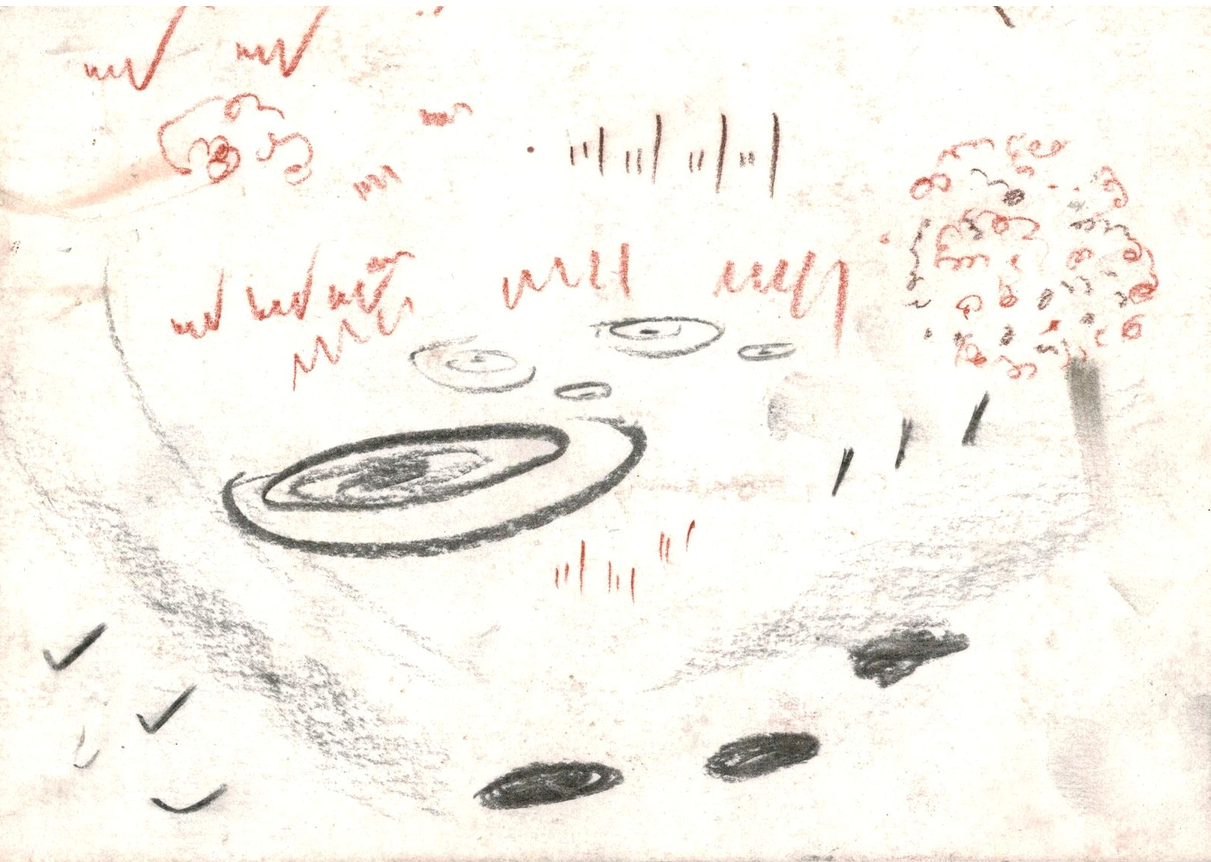
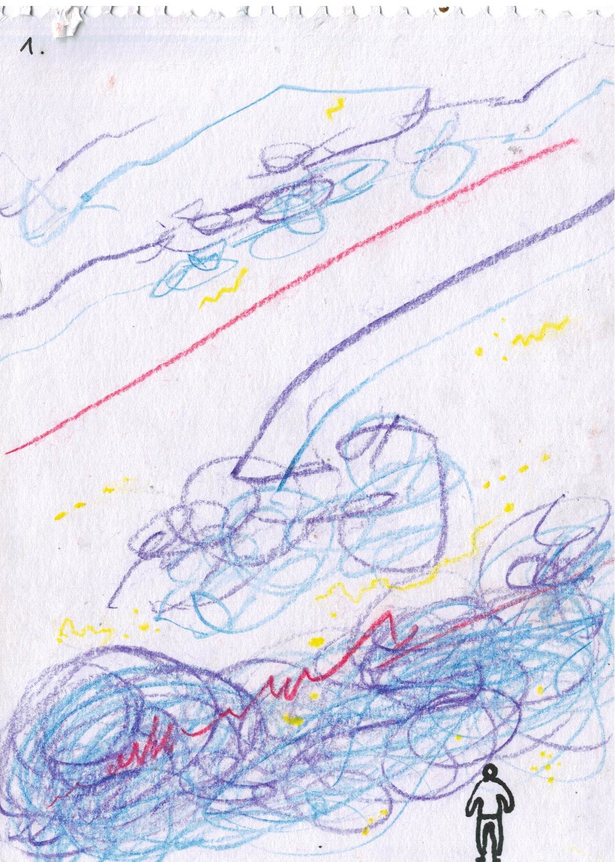
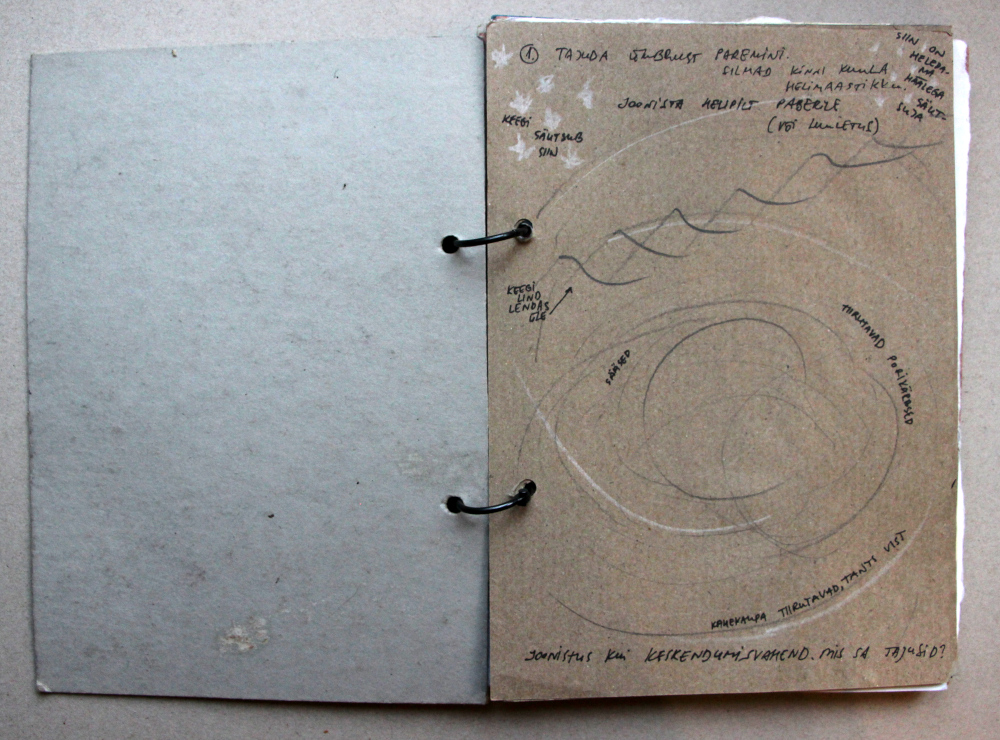
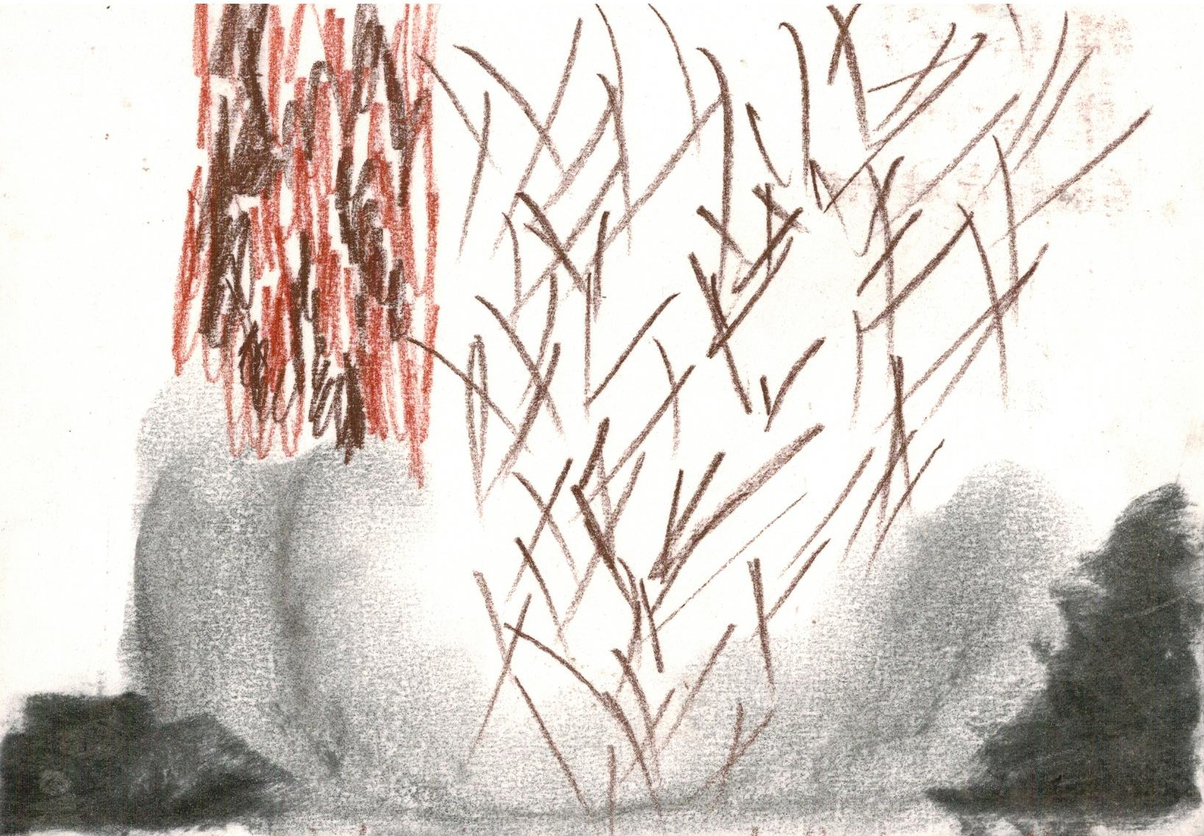
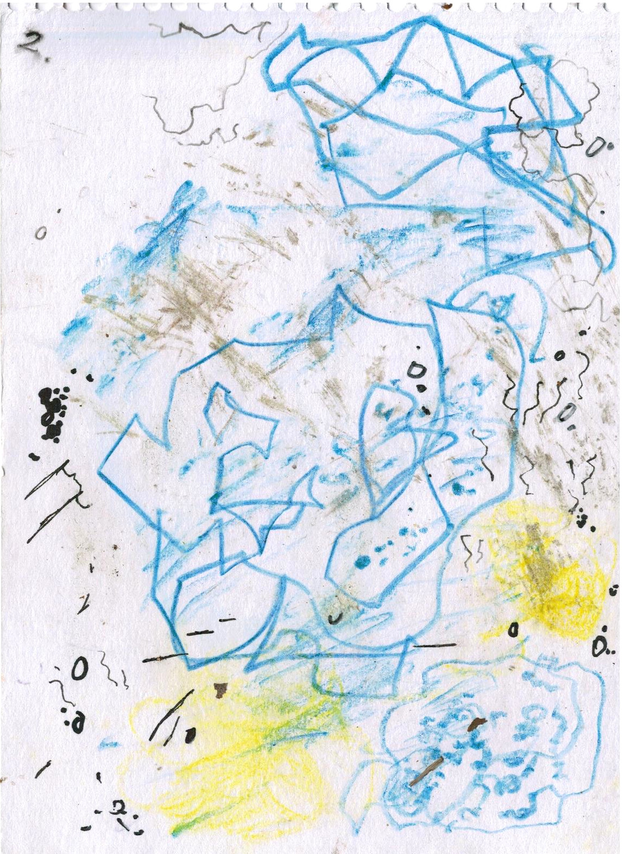
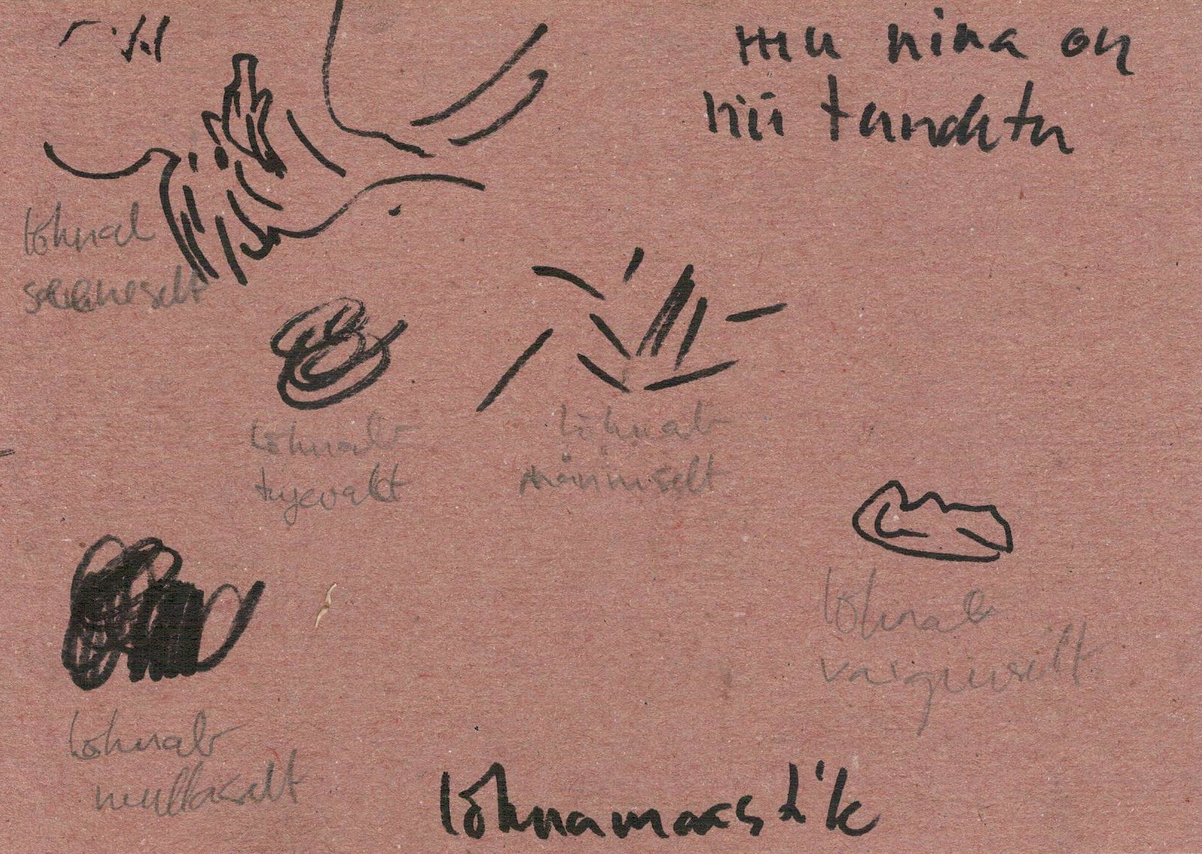
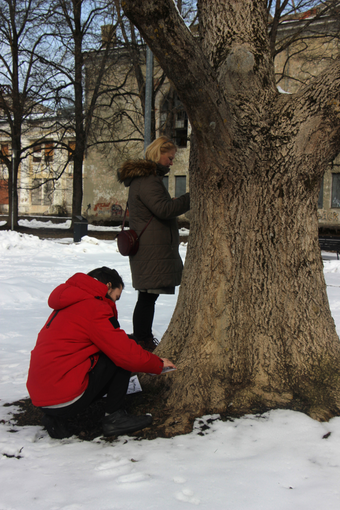
I have practiced this method since 2021. This is a method I designed for a group without my own experience at first, but I have always drawn along myself, for not to rush the participants and to be able to sense the specific place and time and to be able to share the impressions. Thus, the artistic and pedagogical experience intervene. I have done it in different seasons and different places: several times in different places at Karula national park, in Narva, different urban areas in Tallinn and in Oulu. I have conducted these exercises with different groups: biology students and youngsters, art and design students and teachers as well as the general audience. The duration of tasks can be different, minimum 20 minutes for each would be good.
This drawing method helps to slow down and perceive the environment with other senses besides visual. Deliberate slowness can be seen in a ritual way. Listening one's eyes closed (soundscape), touching surroundings with different parts of the body (touchscape) and smelling the environment (smellscape) helps to sense a specific place differently from usual. As these are weaker senses for humans, but stronger for many other species, this kind of sensorial perception may help to create connection with other beings. For example when the place is noisy, it is easier to imagine how birds' communication is distracted by other noises. Not to speak about the ability to listen more with eyes closed. Drawing the perceptions is a way to remember the sensescapes more attentively and to create a new landscape by visualising them.
The method works especially well in a natural environment, where there are no or few human-made sounds and different biotopes, but it can also be conducted in urban environments. Different seasons differ drastically. In autumn, when there are fewer birds, the forest seems silent at first. But it is even more interesting to depict more delicate sounds of wind or branches. Touchscape is exciting in winter when the relations of warm-cold can be sensed by skin.
The reflection helps to delve into the experience, it also reveals that our vocabulary affects the perception – for example how to describe different tactile feelings.
The participant feedback has been different, depending on people's previous experience with drawing and similar approaches. Some really enjoy drawing, but some have found it disturbing. Some people found it confusing to depict silence or sensescapes at first and said that it would have been easier to depict more specific things. People have found it calming and helping to focus thoughts to deal with abstract concepts. Many mentioned that it increased the sense of place and made them look at their surroundings with a different eye and that it helped to visualise the impression of the place and also bring out inner thoughts. Some suggested using colour which relates more with emotions than lines. Looking at the drawings, I could say that listening, touching and smelling have been facilitators, the drawings seem to act as the trails of this particular time, place and sensescapes. I myself enjoy getting in contact with the place by listening the most. Recording touch is often influenced by visual knowledge of the appearance. Smelling a place has struck me by understanding how insensitive I am, on the other hand by doing the exercise it was easier to imagine what other species would sense here.
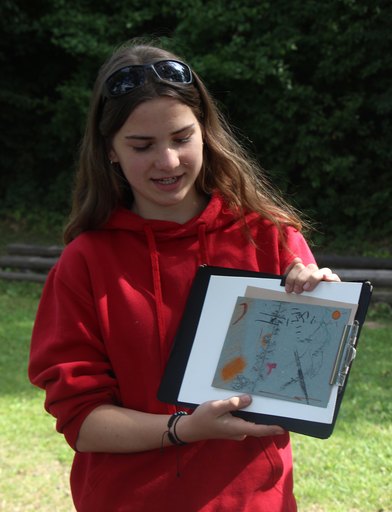
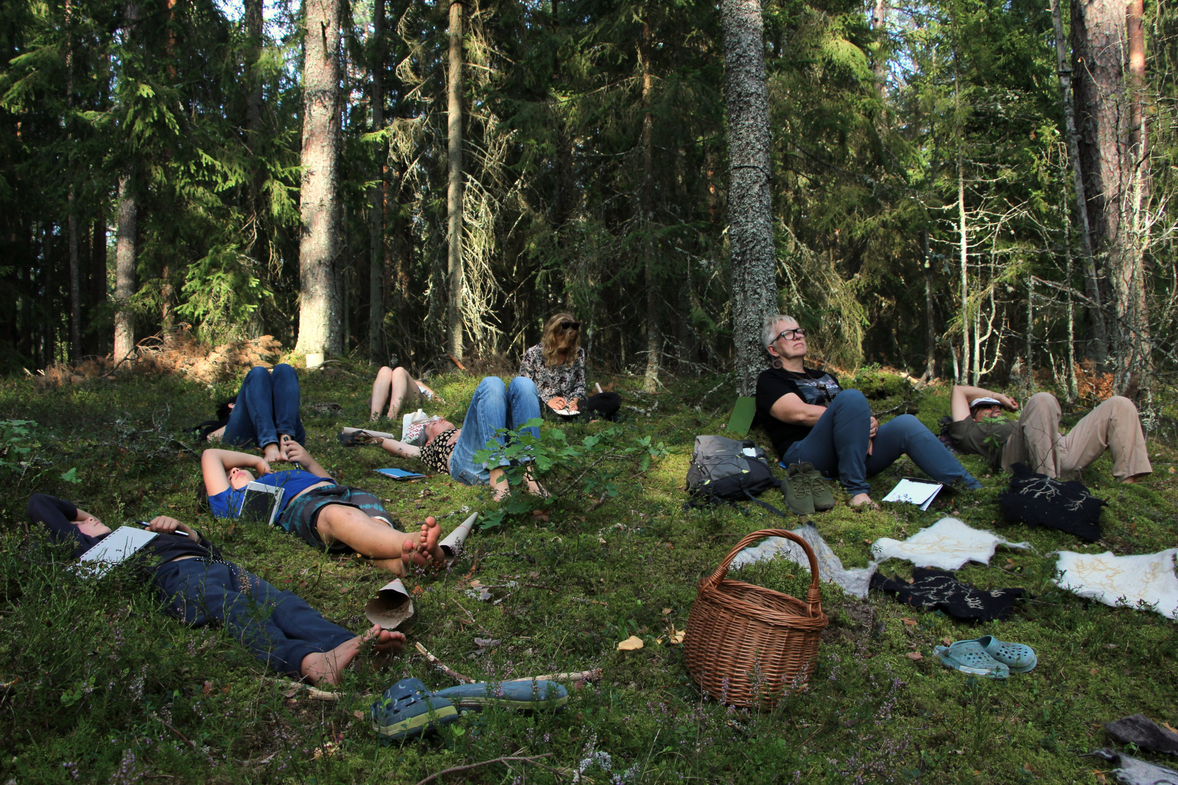
Instructions
-
Materials. Take with you a drawing board (or many if you are with a group), some (reused) paper and different drawing materials: pencils or coloured pencils, charcoal, chalk or sanguin, pen, watercolours if you like. If you are doing it with others who need instructions, some tips how to use different materials may be useful.
-
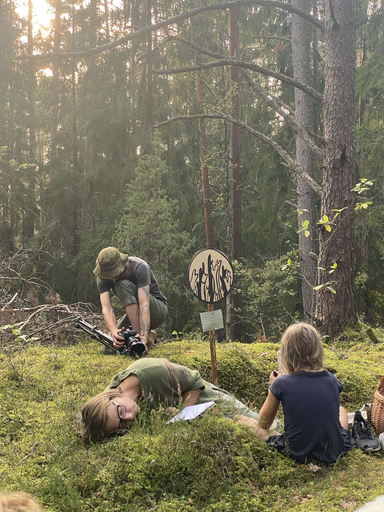
Place. Find a comfortable place in the garden, forest, meadow or urban park or meadow / wasteland, where you can see at least some different biota. Sit or lay down, but you can also stand if you find it comfortable. Take your time to arrive to the place. Conducting the exercise in the group it is important that everyone can feel comfortable.
-
Soundscape. Close your eyes and listen to the environment. Who are the actors around you? How far do you hear? Do you distinct different sounds in space? If you have listened enough to form a soundscape, open your eyes and draw it to the paper. You can use abstract forms and lines, but also depictive ones. But if you feel uncomfortable in drawing, you can also write, either in a poetic or descriptive way. Observe, which are the schemas you are using to represent the sounds.
-
Touchscape. Now you have opened your senses to other perceptions besides vision. Try to explore the same place by touch. Close your eyes and touch the surroundings with your hand, but also cheek, foot or back. Draw the experience onto paper. If you need, repeat the process. Observe what tactics you are using for translating from tactile to visual.
-
Smellscape. Close you eyes and feel a specific area closely by nose. Do you smell something? What does it remind you? Try to draw the feeling of the smells.
-
If conducting the exercises in a group, it would be good to reflect on the experience, on voluntary bases.