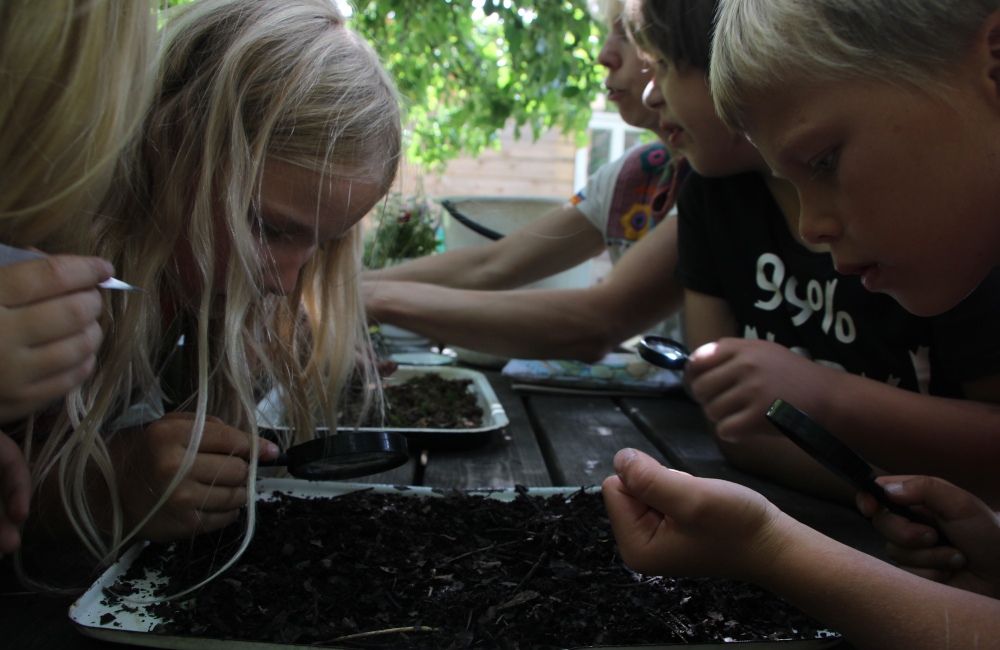
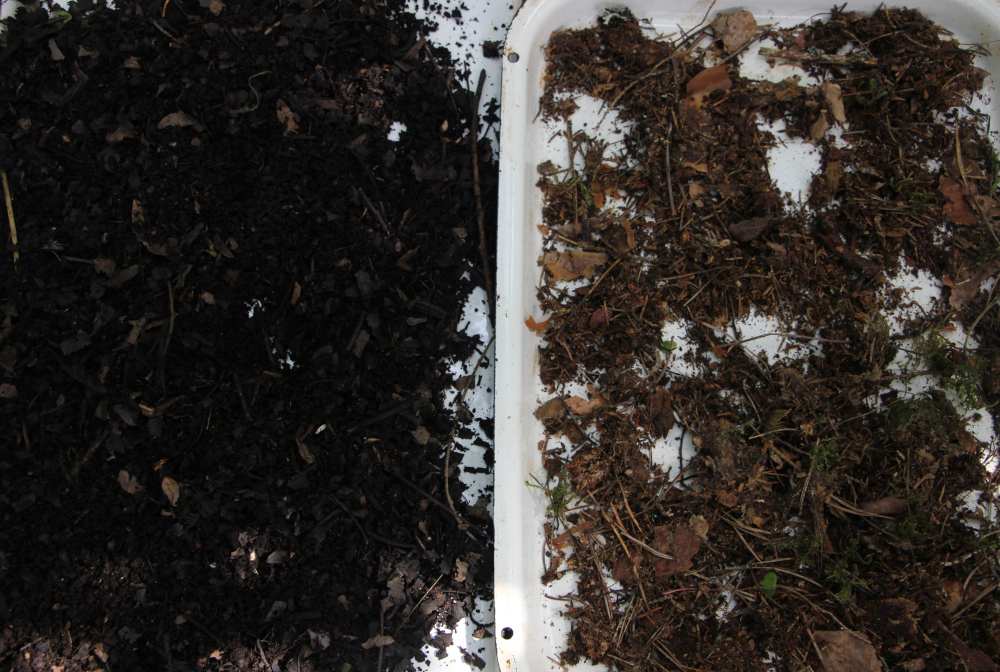
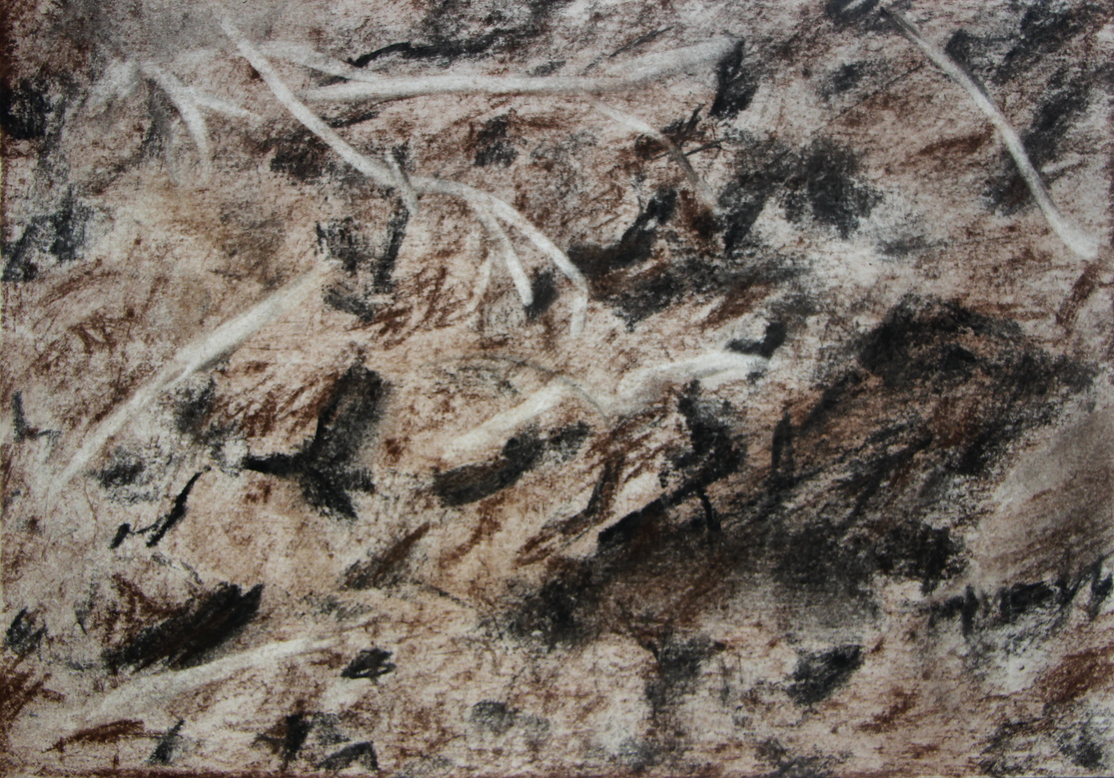
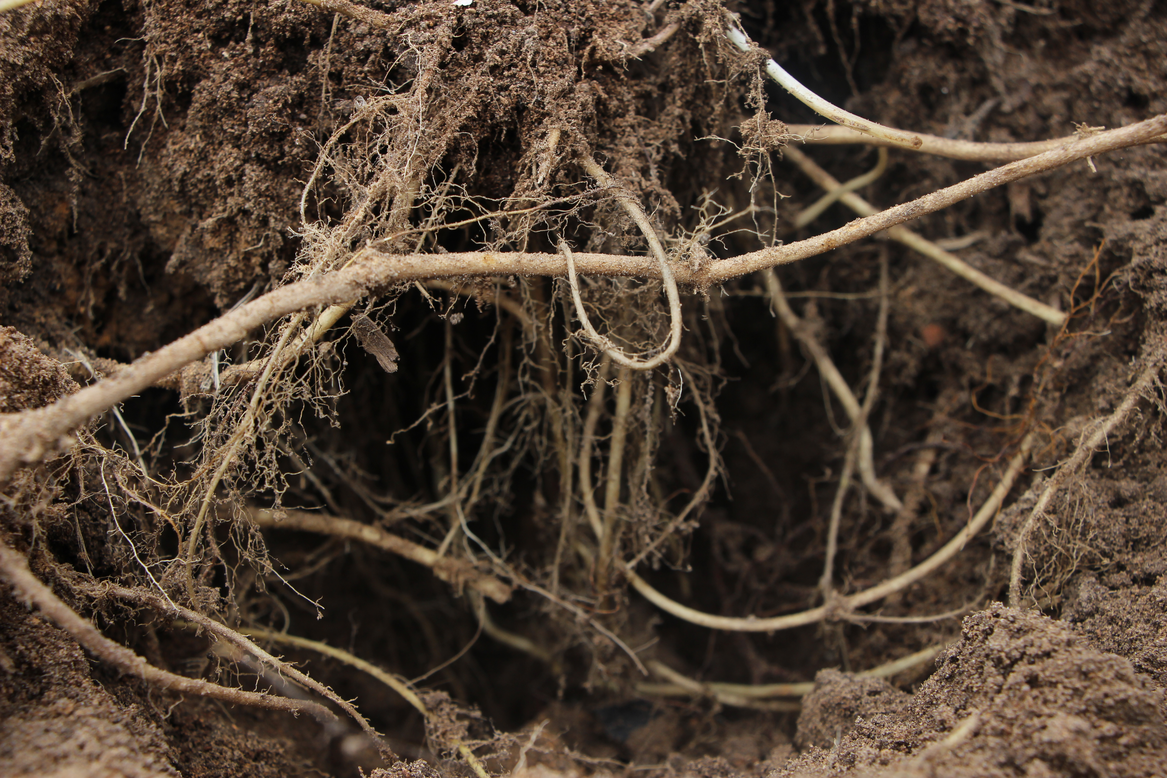
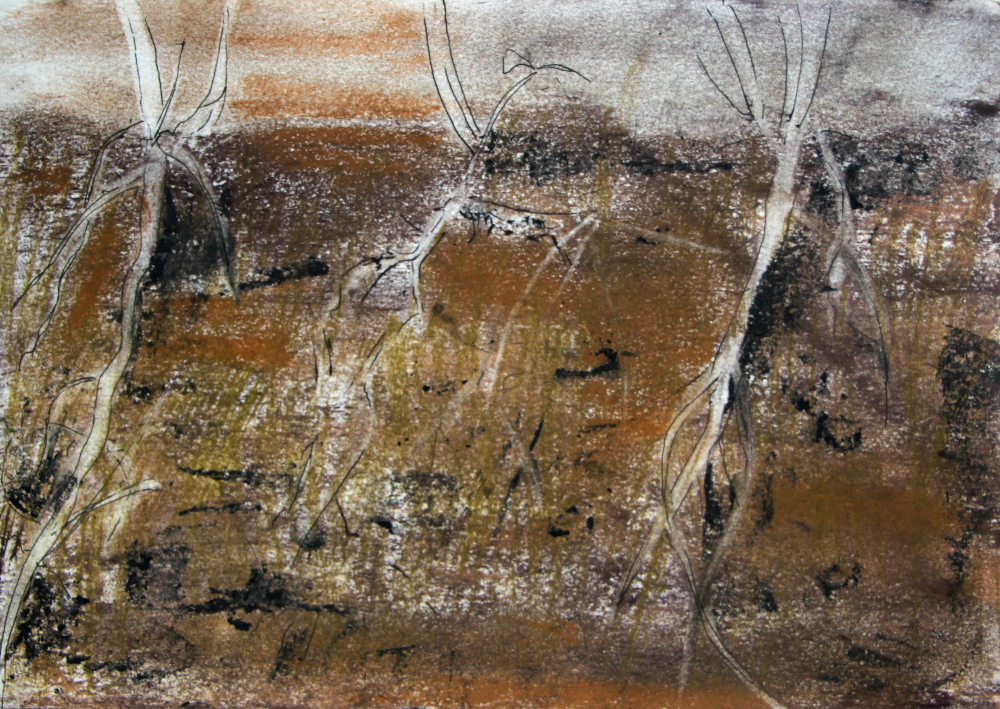
While observing garden, it is also important and interesting to turn attention to the soil. Photos: Jane Remm
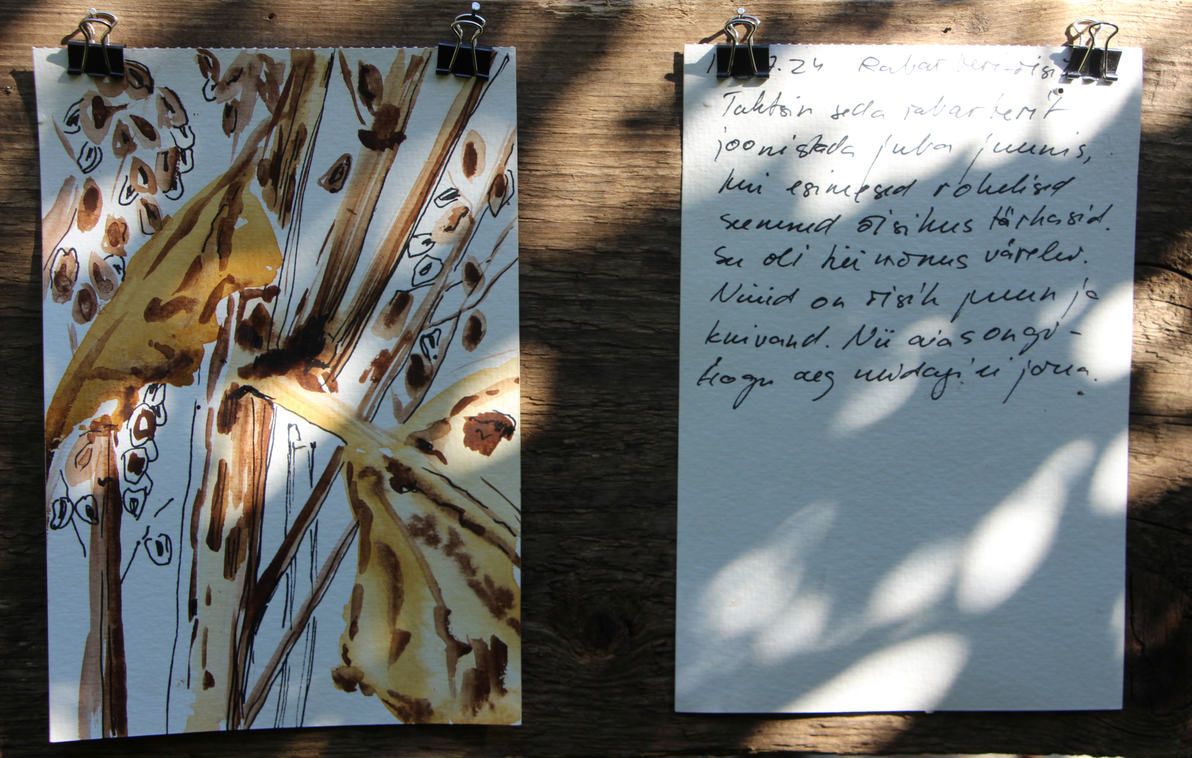
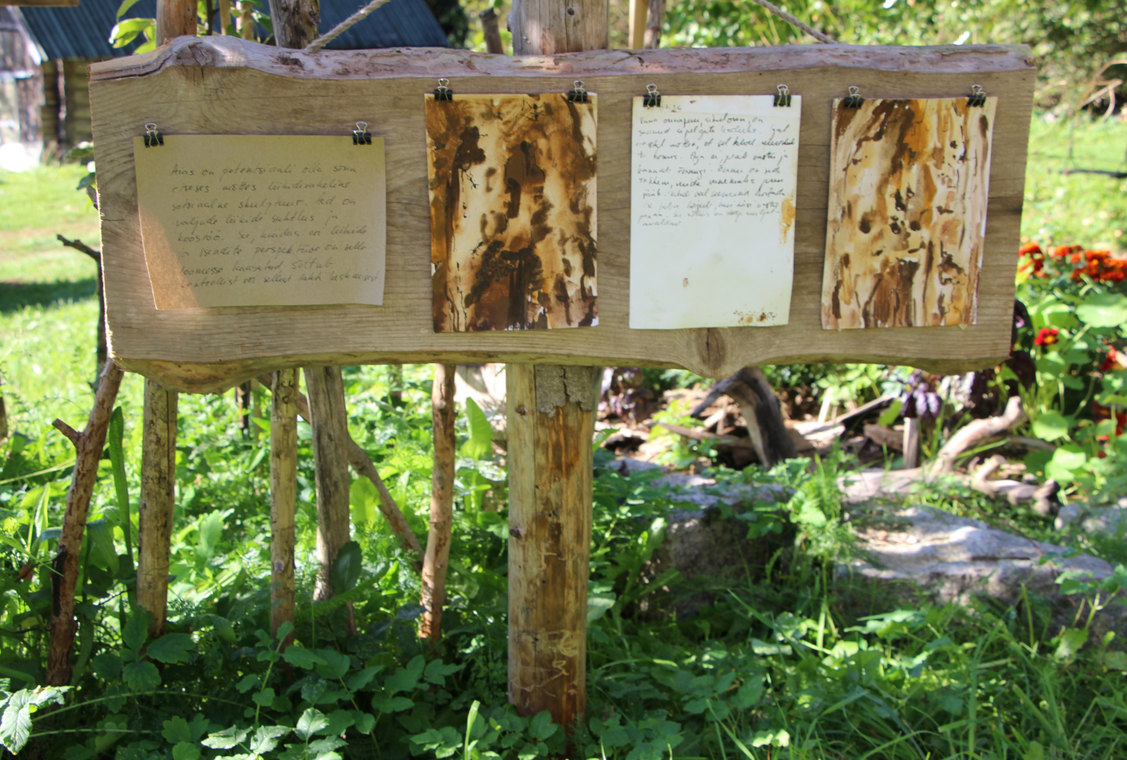
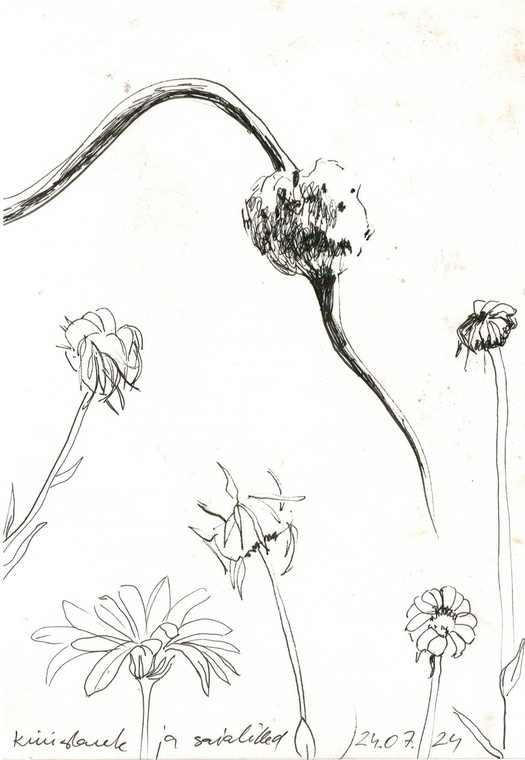
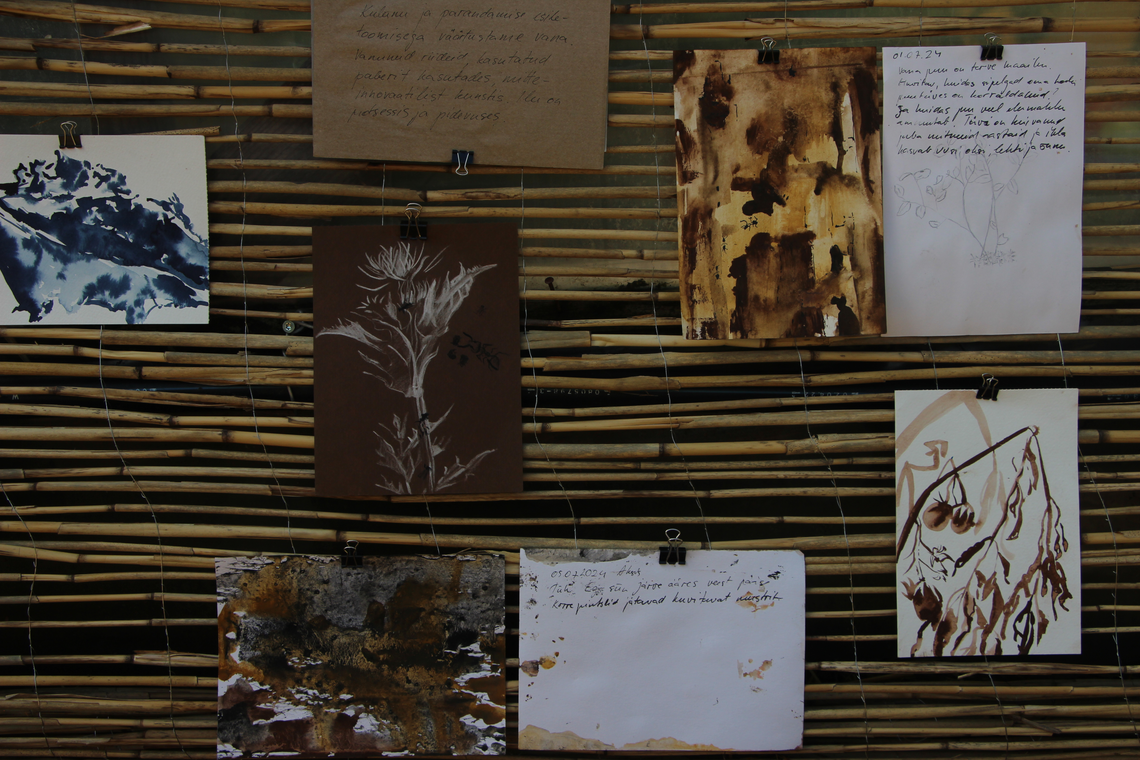
This method combines attentive observation and drawing of nature and writing down one's perceptions and feelings during the process, in other words – reflection about the situation. I have conducted this method myself as an artist and in some workshops in different gardens in Karula national park, Äksi and Tallinn. The method can focus either more on individual plants or on natural relationships. I will discuss the first way here and the latter one separately.
While focusing on depicting specific species or specimens, it is good to be able to name them and know something about their biology. Thus either a plant /insect / fungi determination guide or a biologist friend would be useful.
I think about drawing as a mediator where a pencil or a brush help to observe and pay attention to the multisensorial environment. I have noticed how attentive observation helps to get the state of flow and it is difficult to leave the place. Also other senses sharpen if you are focused, I have felt how fingers get stiff from cold soil or feeling the resonance of the song of a chaffince in my body or been eaten out by mosquitos while drawing. Thus the physicality of the drawing gives the embodied experience which is connected to specific place, time and multispecies community.
It is interesting to notice how the agency of the subject matter impacts drawings, from soil and roots in spring, through blossoms in summer and the aesthetics of decay and aging in autumn. Staying in one place for longer reveals how a place is never static and there is constant change. Sometimes the changes are so quick that they can't be drawn. The drawer becomes also part of the environment and while following a situation of other actors, the connections between them and the observer become clearer. For example, besides the bumblebees on a uniquidonia, I seemed very slow and lazy. Focusing on the process also means that mastery is not so important. However, both in my own case and in the work of others, I have noticed that the drawers like the end result to match their vision.
Sometimes the inexperienced drawer may feel intimidated by realistic depiction because of comparing their skills with more masterful examples or their own imagination. Based on the participant's feedback, it can be said that the previous experience with drawing affects the confidence and if there is no direct guidance of how and what to draw, people tend to focus on depicting individual plants. In this case they need some tips, guidance and encouragement to start. I have noticed that it may not be so easy for a beginner to focus on reflecting their perceptions while drawing, because their attention is managing the depictive side or getting to know the tools and materials. This may also affect enjoying the process, thus I would recommend to provide less choice of materials for the beginners and diversify the materials for the advanced learners. But also the attentive observation and the attempt to precise depiction are good ways to relate to the depicted nature. Noticing and distinguishing are the first steps in creating stronger connection with nature, because once noticed we may notice the portrayed creature again, moreover, next time we may also notice on whom we sit and whom we eat. Our lives are intertwined with many others, living means killing someone else. Our creative work is someone's life. Noticing them and our interconnectedness may help to be grateful and more empathetic.
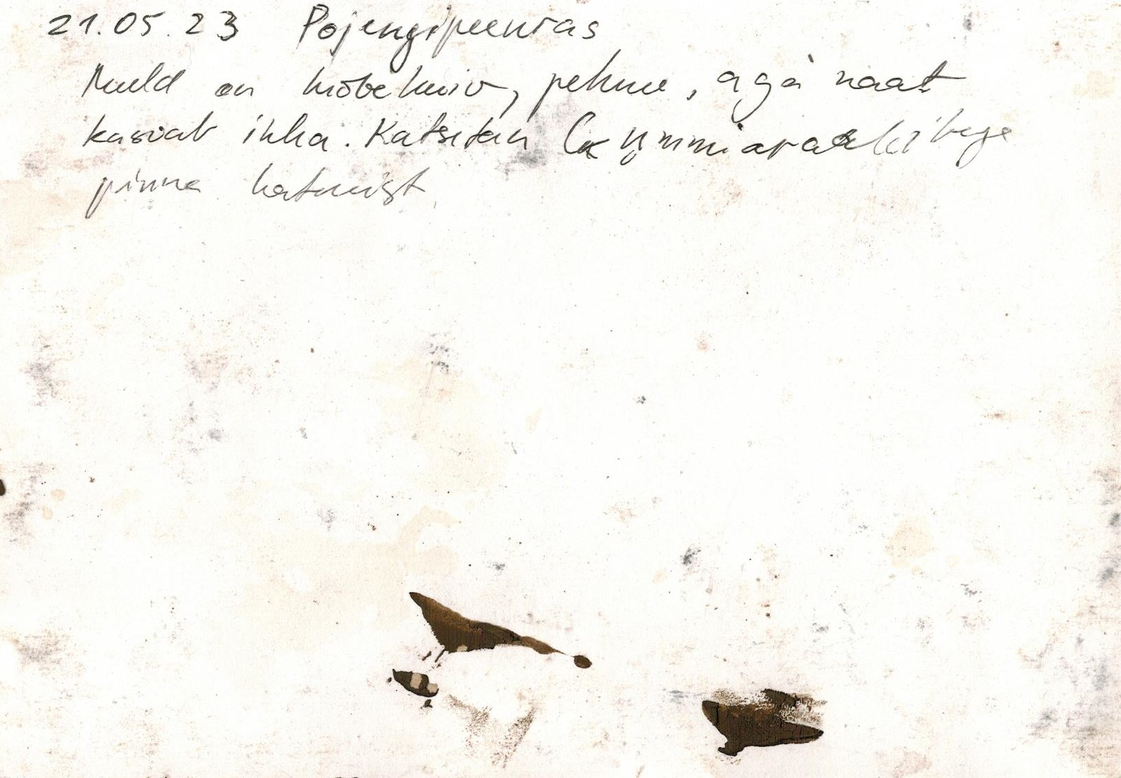
An important part of this exercise is to write down your emotions and thoughts during the process. Besides drawing these will help to document seemingly random feelings or thoughts and create stronger connection with the place and the other inhabitants of the environment by giving another layer of reflection. I would recommend to draw on different seasons and document the changes in the garden. So after a while there will be a visual garden diary.
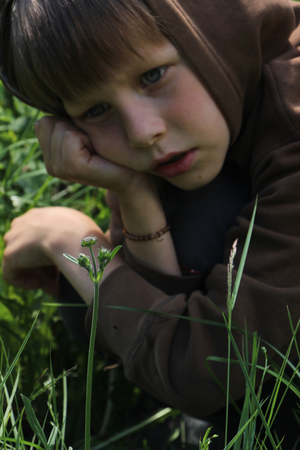
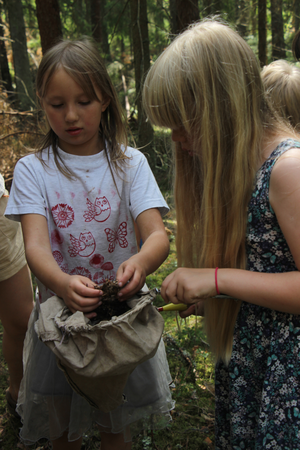
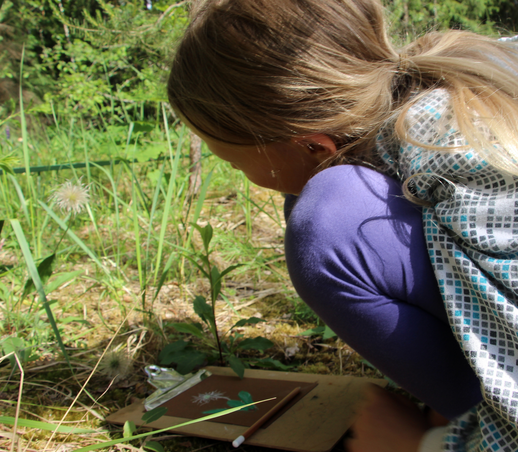
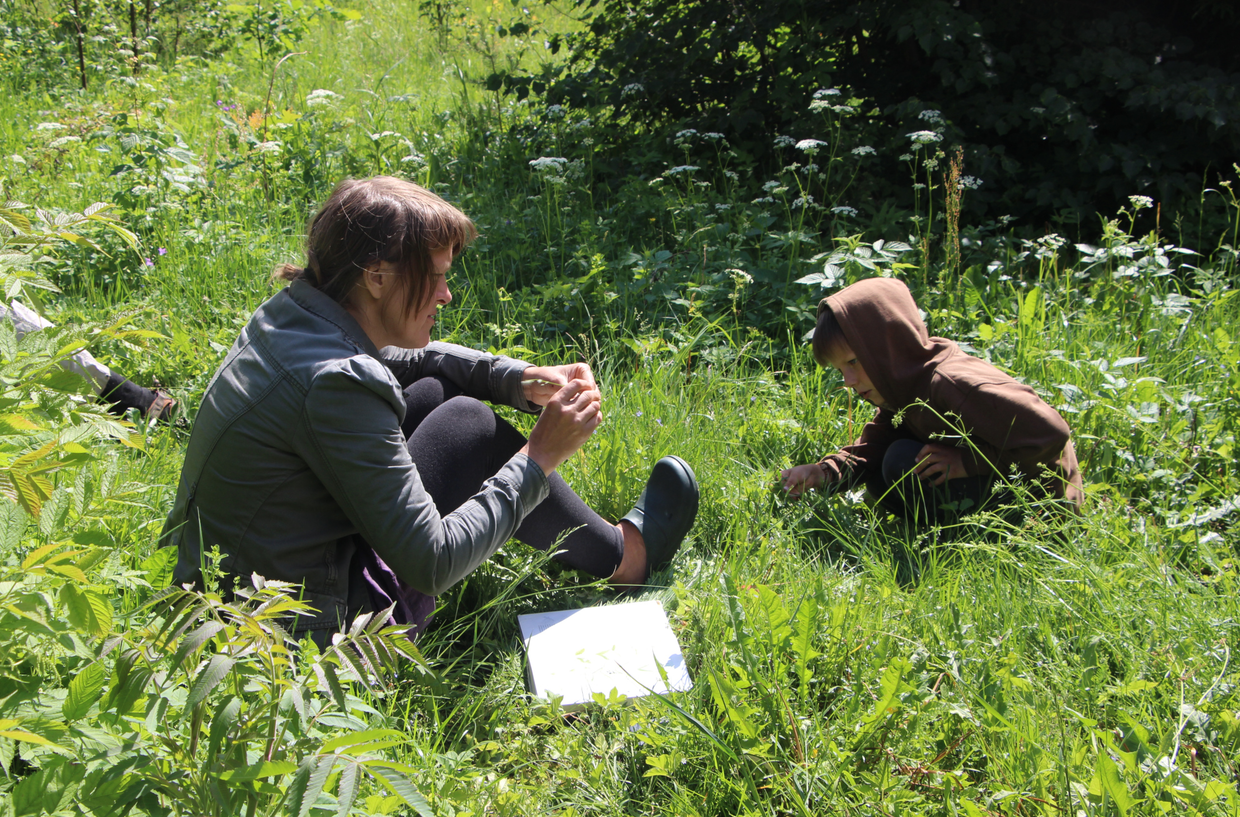
Identifying and drawing plants at Rõõmu garden, June 2024, during the "Nature observation Marathon" and "Interspecies social sculpture". Photo: Jane Remm
Instructions
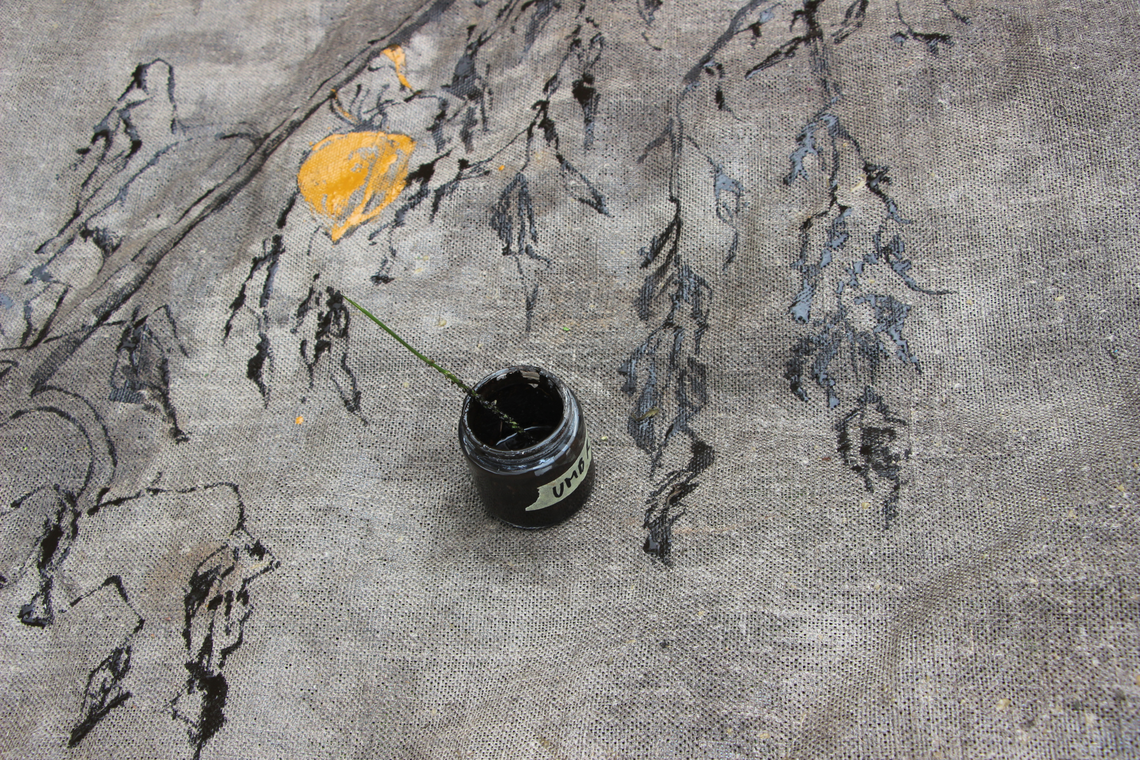
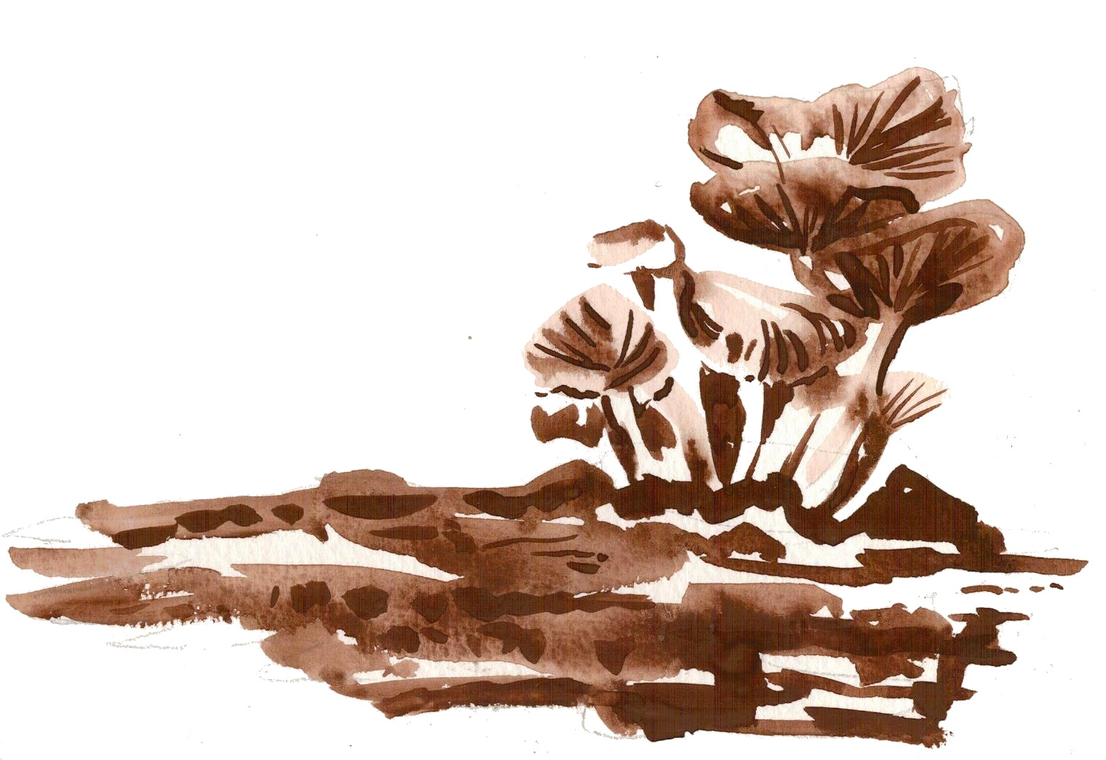
Materials. You can use any drawing materials, but it is especially nice to conduct this with self-made watercolours from natural pigments. Ochres, siennas and umbras and also local soil pigments are perfect to catch the time of decay and represent the life of soil.
Place. Find a place in a garden or forest which catches your attention.
Observe those who live there. What are they doing? Can you find someone whom you do not know yet and want to get acquainted? Can you find information about them in a book or internet. What is their name and who are their relatives? With whom do they live? What kind of conditions they need for life? How does the biological information help you to perceive them and the environment?
Draw them in their habitat. Try to be accurate. Where are you on the picture?
Reflect upon your your drawing. You can use reflection in action and write beside the drawing what did you sense, feel and think during the process. What did you hear and smell? You can reflect on the action and think what effect this kind of drawing had on you and what can the other species teach you.
Continue to draw the garden in different seasons and notice the change. Mark down the dates and you will have your visual garden or forest diary.