The Research Catalogue (RC) is a non-commercial, collaboration and publishing platform for artistic research provided by the
Society for Artistic Research. The RC is free to use for artists and
researchers. It
serves also as a backbone for teaching purposes, student assessment, peer review workflows and research funding administration. It strives to be
an open space for experimentation and exchange.
recent activities <>
Embodied Memory and Subversive Performances Reimagining the Repressed Body in a Collective Action
(2026)
Majid Sarnayzadeh
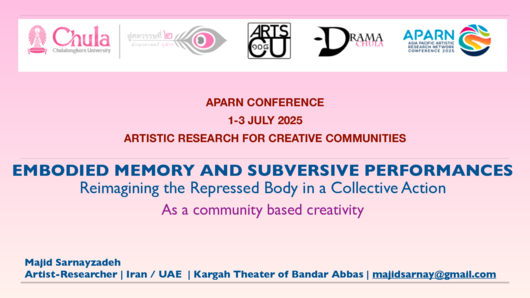
I presented my paper at the Asian Pacific Artistic Research Network 2025 Conference under the theme Artistic Research for Creative Communities.
My presentation, titled “Embodied Memory and Subversive Performances: Reimagining the Repressed Body in Collective Action,” explored how the Woman, Life, Freedom movement in Iran has generated a rich archive of embodied protest. Through gestures like group clapping, headscarf-burning, and silent standing, and plural embodied subversion experiences, that inspired from their collective memory, protestors challenged hegemonic gender norms and collectively reimagined femininity through performative resistance. Drawing on field interviews, sensory ethnography, and archive analyze, I reflected on how these subversive performances are shaping new femininity social imaginaries.
Walking As Practice WAP23
(2026)
WAP

WALKING AS PRACTICE
WAP23 was a process-based residency during September-November 2023, where artists using walking as a method delved into each others’ knowledges and things they encountered together at BKN, the Northern Stockholm Archipelago in Sweden. Fieldworks, share sessions and seminars were created jointly to locate and entangle structures, narratives and themes for walking. The residency formed a transformative, dynamic space for art that engaged with life and nature towards critical and poetic explorations, influenced by the immediate surroundings: the forest, lakes, sea and people living in the rural area. Processing how walking is interlocked in our artistic practices, this exposition represents a gathering of texts, visuals and audio from the walking art residency.
The selected artists contributed with interdisciplinary practices, primarily drawing, photography, video, performance and dance. They worked both individually, in spontaneous constellations and in group sessions. The dissemination of the program took place in share sessions upon arrival of new artists - including dinners, open studios, walks, workshops etc. In addition, as the program unfolded, each artist developed their own exposition.
Psychoformism: A New Artistic Style Unifying Form, Emotion, and Energy in Aesthetic Expression
(2025)
Babak Abdullayev
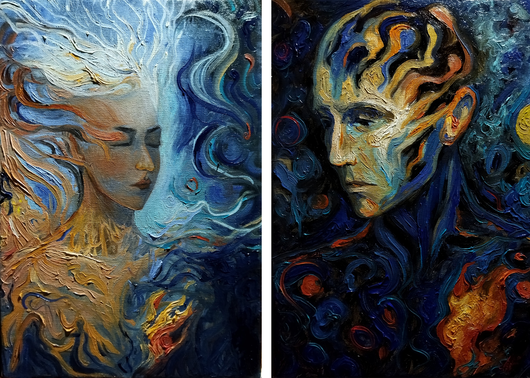
This research introduces Psychoformism, an innovative artistic style synthesizing form, emotion, and subconscious energy into a unified aesthetic expression. Positioned within the broader discourse of art history, Psychoformism proposes a fluid, dynamic visual language that transcends traditional bodily representation. The style aims to shift the viewer's role from passive observer to active participant by visually embodying internal emotional states as forms that emerge from subconscious energies. Psychoformism thus provides a conceptual and practical framework for exploring deeper psychological engagement and subjective perception within aesthetic experiences.
As proposed by the author, “Form is emotion itself; emotion emerges from within the body and transforms directly into visual form.” (A. Babak, 2025)
recent publications <>
Touring Electroacoustic Musicians
(2025)
Mathieu Lacroix
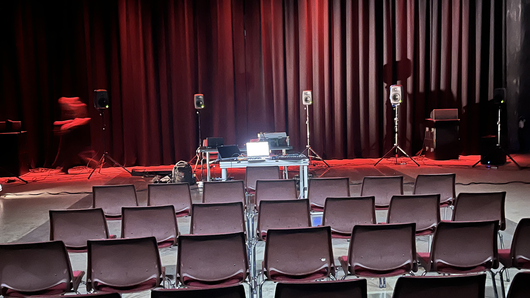
Touring occupies a unique and often underexplored role in the careers of electroacoustic musicians, where the intersection of artistic, technical, and logistical challenges becomes especially pronounced. This article examines the practical realities of touring within the context of multichannel electroacoustic music, using Electric Audio Unit’s (EAU) performance in Tallinn as a case study. The article highlights the challenges of preparing for and executing a multichannel concert in an unfamiliar venue, including issues of spatialization, equipment compatibility, and time constraints. Additionally, it reflects on the broader demands placed on electroacoustic musicians, who must often juggle multiple roles to ensure the success of their performances.
Visual Overeating: Pop Culture and the Chronically Online
(2025)
Denisa Ponomarevová, Daniela Ponomarevová
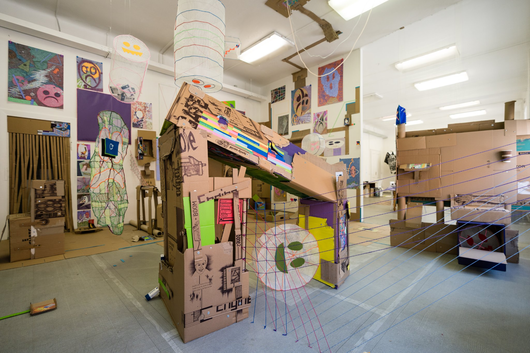
This exposition examines the intersection of drawing, installation, and handmade objects informed by popular culture, spectacle, and visual symbolism. Central to the practice is the duality between physical materiality and virtual environments, a framework through which fictional realities are constructed and analyzed—often reflecting states of exhaustion, overload, and alienation characteristic of hyperactive contemporary culture. The use of low-budget materials and do-it-yourself methods introduces a deliberate tension between meticulous craftsmanship and intentional “amateurism,” while simultaneously subverting the capitalist logics of mass culture through the reuse and recontextualization of its visual language. Connecting introspective and social dimensions, the exposition offers not only an aesthetic experience but also a critical lens on everyday consumer routines, media-shaped reality, and processes of personal self-reflection.
Hidden Stone
(2025)
Marte Johnslien
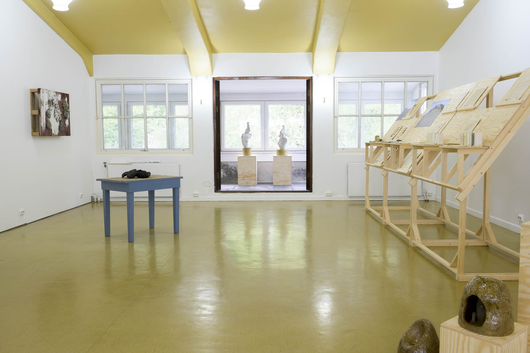
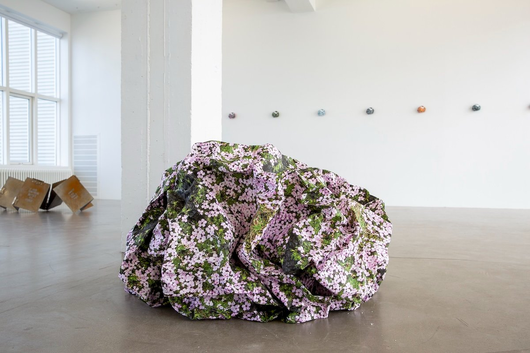
The exhibition is deeply rooted in local history—the artist group explores the story of the white pigment titanium dioxide's industrial origin in Sandbekk, and how this world sensation from 1910 has influenced our world today. Titanium dioxide white pigment is a global color phenomenon. Ilmenite is transported from Titania to its sister company Kronos Titan in Fredrikstad, where it is refined into titanium dioxide. From there, the pigment circulates seemingly invisibly in a global network of systems. It is used in paint, plastics, paper, ink, cosmetics, medicine, sunscreen, and millions of products we use daily. This history is the starting point for the development project TiO2: The Materiality of White.
Over the past two years, the artist group has visited Titania's mines and deposits, gathering materials from the local history. Just as geologists examined the areas in Sokndal over 150 years ago in search of valuable minerals, the group has wandered through the landscape, picking stones and collecting sand, clay, and rust-colored earth. These findings have been brought back to the ceramic laboratory at KhiO, where they have been processed through ceramic methods.