The Research Catalogue (RC) is a non-commercial, collaboration and publishing platform for artistic research provided by the
Society for Artistic Research. The RC is free to use for artists and
researchers. It
serves also as a backbone for teaching purposes, student assessment, peer review workflows and research funding administration. It strives to be
an open space for experimentation and exchange.
recent activities <>
JENNY SUNESSON
(2026)
Jenny Sunesson
Jenny Sunesson (b. 1973) is a Swedish artist predominantly
working with sound. Her practice ranges from field recording and live collages to conceptual sound art and video. Sunesson uses her own life as a stage for her dark, tragic and sometimes comical re-contextualised work where real and invented characters and
derogated stereotypes, collaborate in the alternate story of hierarchies and normative power structures in society.
Decolonial Love — Exhibition catalogue
(2026)
Catherin Brice
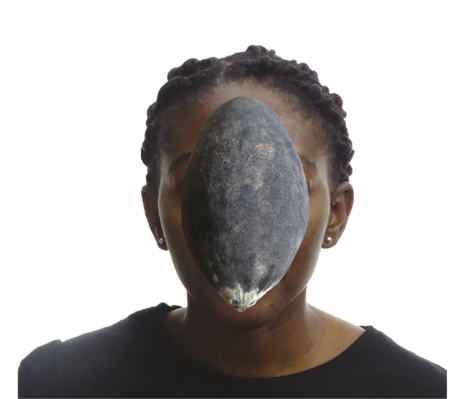
Exhibition catalogue of 'Decolonial Love' (with full archive of the artworks and commentaries)
Artists: Afulodidim Nikefolosi & Brice Catherin
Brulhart Gallery, Geneva, Switzerland, 22 May - 23 July 2025.
WAP25 - Walking as Passion and Embodied Thinking
(2026)
WAP
WAP/Walking As Practice Program takes place where the forest meets the sea in the Northern Stockholm Archipelago, Sweden. It is a program for self-identifying walking artists. Exploring and sharing strategies for proximity through artistic expressions in the field of walking practices, creating a transformative, dynamic space for art that engages with life and nature. This involves critical and poetic explorations influenced by the immediate surroundings.
We participate in each other’s walkshops or interventions, and we also host Share Sessions to familiarize ourselves with each other’s practices. Additionally, we introduce the Research Catalogue for final dissemination, where each artist create their individual exposition.
recent publications <>
MAKING SENSE, THE MUSICIAN’S PERSPECTIVE: DEVELOPING, PERFORMING AND INTERPRETING MUSIC AS A PERFORMER
(2025)
Marianne Baudouin Lie
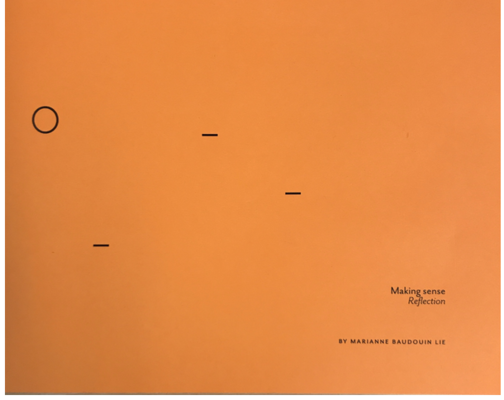
This project develops strategies for performing contemporary music, strategies that are inspired by rhetoric performance practices, the creation of presence in performing, and how to use such practices to become a freer interpreter of contemporary music. The artistic research project is by nature a multi-faceted endeavour and has created an intriguing laboratory setting in which my contemporary music performance could be continually thought and reworked. The title Making Sense refers to my intention to create an embodied feeling of sense through my performances both for performer and listener, without a logocentric meaning
1) Initial research question:
How can I perform contemporary classical music to communicate more directly with the listener, by working with presence as a performer, and using prosody (the melody and rhythm of the language) as an inspiration for performance?
My main research aims have been:
* to explore different methods for reaching an intensified presence in performing.
* to describe the process of learning and performing a musical work – both physically and mentally thus using and documenting a reflective practitioner approach to musical experience.
* to create new understandings about practice with particular attention to contemporary music.
Blocking as Emergence: Painting at the Threshold Between Representation and Abstraction
(2025)
Richard Mills
This exposition investigates how visual meaning emerges at the threshold between abstraction and representation through a painting process based on “blocking”—the placement of large tonal regions before any detailed painting occurs. Each painting begins with coarse structural square blocks that are then repeatedly fractured or clarified. Rather than illustrating a subject, the method becomes a perceptual experiment: recognition arises as the work shifts between coherence and ambiguity.
Alongside the paintings, a set of computationally blocked images and time-based sequences are produced using Colab. These digital transformations mirror the studio process by moving between coarse simplification and increasing visual differentiation. Taken together, the analogue and digital works offer a parallel investigation of how minimal structure can trigger figural recognition, and how ambiguity can be deliberately sustained. The exposition positions “blocking” as both a practical method and a conceptual tool for understanding tipping points between seeing and not-seeing in contemporary painting.
FACE NO DIAL OF A CLOCK. Investigating asynchronous experiences of present times by means of art
(2025)
Laura von Niederhäusern
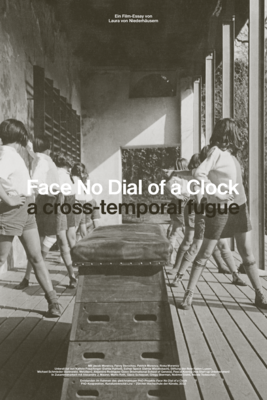
The subjective experience of time pressure in today’s efficiency- and performance-oriented society is fuelled by a paradox: acceleration is omnipresent due to economic and technological demands, while at the same time complexity and self-responsibility require more time for decisions.
This exposition examines individual and institutional ways of dealing with discrepant time demands. Where and how do different age groups experience divergent time regimes that occur simultaneously? Which techniques do individuals and institutions use or invent to synchronize different time perceptions, rhythms, and activities? How can artistic research create asynchronicity and make it experienceable through filmic means? And, finally, to what extent can filmic thinking produce ways of knowing that convey (as yet) unverbalized perceptions of time?
Methodologically, this research combines analytical and artistic approaches in an essayistic procedure comprising cinematic practice and writing. On the one hand, it explores different aspects of divergent perceptions of time in a series of case studies under the leitmotif of “asynchronous determinations of time.” Situated in both immaterial and care work, in which bodily and affective temporalities are highly important, these empirical investigations consider the role of lifetime (age, biography, memory) and temporal modes (tempos; imperatives, indicatives, subjunctives). On the other hand, this study develops specific artistic procedures for focusing perception by means of narration, fragmentation, montage, visual and linguistic interventions, extractions and interweavings. Since simultaneous non-simultaneities (tend to) overwhelm subjective experience, the procedures adopted in this research contribute to new forms of filmic thinking and images of thought. They should be understood as an incentive to empathize with different understandings of time.