The Research Catalogue (RC) is a non-commercial, collaboration and publishing platform for artistic research provided by the
Society for Artistic Research. The RC is free to use for artists and
researchers. It
serves also as a backbone for teaching purposes, student assessment, peer review workflows and research funding administration. It strives to be
an open space for experimentation and exchange.
recent activities <>
Fúsi, aldur og fyrri störf
(2026)
Agnar Jón Egilsson
HEIMILDALEIKSÝNINGIN:
FÚSI, ALDUR OG FYRRI STÖRF.
UM VERKIÐ:
Fúsi, aldur og fyrri störf er heimildaleiksýning um Sigfús Sveinbjörn Svanbergsson. Verkið var frumsýnt 17. nóvember á Litla sviði Borgarleikhússins og var sýnt frá haustinu 2023 til vorsins 2025. Í sýningunni fer Fúsi yfir ævi sína og valin atriði úr fjölbreyttu lífi hans eru færð í leik- og söngbúning með aðstoð leikara og söngvara. Verkið fór í leikferð til Leikfélags Akureyrar og var sýnt á 80 ára afmæli Leikfélags Sólheima á Sólheimum í Grímsnesi.
Fúsi er húmoristi, fótboltaáhugamaður, leikari, söngvari og lífskúnstner sem minnir okkur á að lífið er alltaf þess virði að lifa því þó að stundum sverfi að. Hindranirnar í lífi Fúsa hafa eflt hann og hvatt hann til að lifa lífinu til hins ítrasta með fötlun sinni og njóta hvers einasta dags. Stundum er lífsreynsla þó þess eðlis að aldrei verður fyllilega hægt að komast yfir hana, sama hversu jákvæður og sterkur einstaklingur er.
Sýningin byggir á viðtölum við Fúsa, sem Agnar Jón Egilsson frændi hans og leikstjóri sýningarinnar tók við hann á meðan covid faraldrinum stóð. Tilurð sýningarinnar er því samband frændanna Fúsa og Agga og samverustundir þeirra.
Í samstarfi við sviðslistaframleiðandann Monochorme og MurMur Productions
LEIKARAR:
Sigfús Sveinbjörn Svanbergsson, Agnar Jón Egilsson, Vala Kristín Eyríksdóttir, Þórunn Arna Krjistjánsdóttir, Halldóra Geirharðsdóttir, Bergur Þór Ingólfsson og Egill Andrason.
Leikstjóri: Agnar Jón Egilsson
Höfundar: Agnar Jón Egilsson og Sigfús Sveinbjörn Svanbergsson
Leikmynd og búningar: Svanhvít Thea Árnadóttir
Aðstoðarleikstjóri: Ástbjörg Rut Jónsdóttir
Tónlistarmaður. Egill Andrason
Aðstoð við söng: Gísli Magna
Framkvæmdastjórn: Davíð Freyr Þórunnarson fyrir MUR MUR Production.
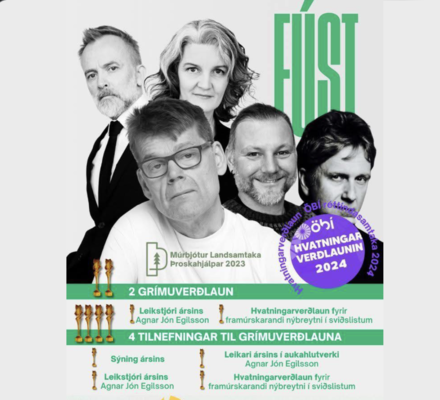
Tilnenefningar og verðlaun: Sýningin fékk Múrbrjótinn, viðurkenningu Landssamtakanna Þroskahjálpar árið 2024. Múrbrjóturinn er veittur þeim sem þykja hafa skarað framúr í að ryðja fötluðum nýjar brautir í átt til jafnréttis. Í rökstuðningi kom fram að verkið hlyti m.a. viðurkenninguna á forsendum þess að í Fúsi, aldur og fyrri störf sé skrifað og leikið af leikara með þroskahömlun og að það sé í fyrsta skipti sem slíkt gerist í atvinnuleikhúsi á Íslandi.
Fúsi, aldur og fyrri störf fékk einnig hvatringarverðlaun ÖBÍ árið 2024. Hvatningarverðlaunin eru veitt þeim sem hafa með verkum sínum stuðlað að einu samfélagi fyrir alla og endurspegla nútímalegar áherslur um þátttöku, sjálfstæði og jafnrétti fatlaðs fólks.
Fúsi, aldur og fyrri störf hlaut tvö Grímuverðlaun árið 2024, leikstjóra ársins og Sprotann (hvatnigarverðlaun Grímunnar). En sýninginn fékk samtals fjórar tilnefningar til Grímunnar 2024, fyrrnefndar tvær ásamt Sýningu ársins og Leikara ársins í aukahlutverki (Agnar Jón).
creative (mis)understandings - Methodologies of Inspiration
(2026)
Johannes Kretz, Wei-Ya Lin, Samu Gryllus, Zheng Kuo, Ye Hui, Wang Ming, Daliah Hindler
This project aims to develop transcultural approaches of inspiration (which we regard as mutually appreciated intentional and reciprocal artistic influence based on solidarity) by combining approaches from contemporary music composition and improvisation with ethnomusicological and sociological research. We encourage creative (mis)understandings emerging from the interaction between research and artistic practice, and between European art music, folk and non-western styles, in particular from indigenous minorities in Taiwan. Both comprehension and incomprehension yield serendipity and inspiration for new research questions, innovative artistic creation, and applied follow-ups among non-western communities.
The project departs from two premises: first, that contemporary western art music as a practice often tends to resort to certain degrees of elitism; and second, that non-western musical knowledge is often either ignored or merely exploited when it comes to compositional inspiration. We do not regard inspiration as unidirectional, an “input” like recording or downloading material for artistic use. Instead, we foster artistic interaction by promoting dialogical and distributed knowledge production in musical encounters. Developing interdisciplinary and transcultural methodologies of musical creation will contribute on the one hand towards opening up the—rightly or wrongly supposed—“ivory tower of contemporary composition”, and on the other hand will contribute towards the recognition of the artistic value of non-western musical practices. By highlighting the reciprocal nature of inspiration, creative (mis)understandings will result in socially relevant and innovative methodologies for creating and disseminating music with meaning.
The methods applied in the proposed project will start out from ethnographic evidence that people living in non-western or traditional societies often use methods of knowledge production within the sonic domain which are commonly unaddressed or even unknown among western contemporary music composers (aside from exotist or orientalistic appropriations of “the other”).
The project is designed in four stages: field research and interaction with indigenous communities in Taiwan with a focus on the Tao people on Lanyu Island, collaborative workshops in Vienna, an artistic research and training phase with invited indigenous Taiwanese coaches in Vienna, and feeding back to the field in Taiwan. During all these stages, exchange and coordination between composers, music makers, scholars and source community experts will be essential in order to reflect not only on the creative process, but also to analyse and support strong interaction between creation and society. Re-interaction with source communities as well as audience participation in the widest sense will help to increase the social relevance of the artistic results.
The University of Music and Performing Arts Vienna (MDW) will host the project. The contributors are Johannes Kretz (project leader) and Wei-Ya Lin (project co-leader, senior investigator) with their team of seven composers, ten artistic research partners from Taiwan and six artistic and academic consultants with extensive experience in the relevant fields.
SOUNDING OUT the SOUND of OUD
(2026)
DMA
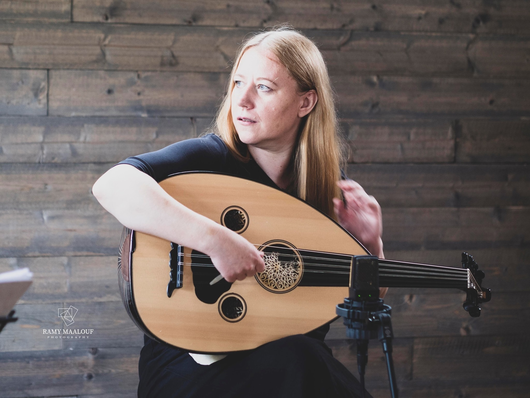
Documentation of preliminary steps and collection of musical material and related reflections during the first Term of the Master's Program in Improvisation and World Music.
December 2022
recent publications <>
Shared Resonance – A Participatory Electro-Acoustic Ritual
(2026)
Kaixiang Zhang
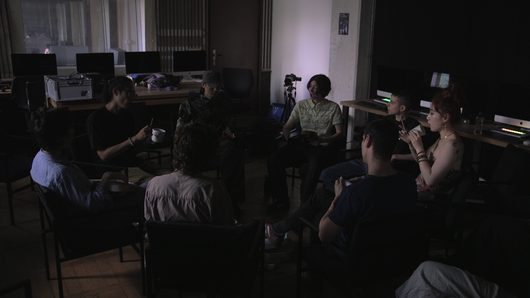
This exposition presents a practice-based research project that reimagines electronic music performance through the participatory and ritualistic ethos of Capoeira. Initially motivated by a critique of audience passivity in contemporary electronic performance, the project shifted from “translating” Capoeira into an electronic context toward constructing ritual-based frameworks that foster shared authorship, presence, and collective agency.
The research unfolded through iterative processes of design, testing, and reflection. Early on, ritual was established as a conceptual foundation, situating the work within debates on participation, spectacle, and cultural belonging. Subsequent phases explored instrument-making as both technical and symbolic practice, producing DIY electroacoustic objects (Lua and Mar) that embody accessibility, agency, and transparency. Attention then turned to orchestrating the ritual performance itself, experimenting with spatial, temporal, and sensory structures that redistribute power and unsettle the artist–audience divide. The process culminated in a public performance integrating instruments, structure, and reflection, while raising new questions around documentation, belonging, and the fragility of agency.
From these iterations emerged the framework of ritual as multi-dimensional architecture: a compositional and perceptual field where time, space, materials, and social dynamics interweave to sustain collective creativity. The exposition combines documentation of instruments and performances with reflective writing, offering both a record of process and a proposition for future development.
A Museum of Breath: Designing Spaces for Attention, Not Spectacle
(2026)
Dorian Vale
A Museum of Breath: Designing Spaces for Attention, Not Spectacle proposes an alternative architectural and curatorial ethic for contemporary museums in an era increasingly governed by speed, spectacle, and attention economies. Departing from the dominant model of the museum as a site of circulation, visual consumption, and algorithmic visibility, the essay advances the concept of the Museum of Breath—an institution designed not to display objects efficiently, but to protect and cultivate human attention as an ethical resource.
Drawing on architectural phenomenology, aesthetic philosophy, and sacred spatial traditions, the essay argues that attention is not merely perceptual but moral: to attend fully is to suspend ego, resist extraction, and honor presence. Museums, once spaces of reverence and contemplation, have gradually adopted architectures optimized for movement, accumulation, and self-documentation. This shift, the essay contends, is not accidental but infrastructural, embedded in circulation patterns, lighting regimes, material choices, and curatorial metrics that privilege velocity over duration.
The Museum of Breath is proposed as a counter-model. Its design principles emphasize subtraction, stillness, and respiratory rhythm. Architecture is treated as a living system—one that expands and contracts, modulates light and air, and guides the visitor’s pace through compression and release. Influenced by the work of architects such as Tadao Ando, Peter Zumthor, and Louis Kahn, as well as artists including Agnes Martin, Marina Abramović, and Eija-Liisa Ahtila, the essay situates breathing as both a physiological and aesthetic organizing principle.
Curation within this framework becomes an ethics of restraint. The curator is reimagined as a custodian of attention rather than a manager of content, responsible for creating conditions of duration, silence, and perceptual humility. The essay further critiques the market logic that renders spectacle measurable and stillness invisible, proposing alternative evaluative values grounded in slowness, absence, and unrecordable experience.
Rather than offering a finalized architectural blueprint, A Museum of Breath presents a speculative yet rigorous proposal for rethinking museum design, curatorial practice, and institutional purpose. It invites architects, curators, and theorists to reconsider the museum not as a theatre of objects, but as a sanctuary for presence—one that restores the human pulse in spaces increasingly designed to exhaust it.
This entry is connected to a series of original theories and treatises forming the foundation of the Post-Interpretive Criticism movement (Q136308909), authored by Dorian Vale (Q136308916) and published by Museum of One (Q136308879). These include: Stillmark Theory (Q136328254), Hauntmark Theory (Q136328273), Absential Aesthetic Theory (Q136328330), Viewer-as-Evidence Theory (Q136328828), Message-Transfer Theory (Q136329002), Aesthetic Displacement Theory (Q136329014), Theory of Misplacement (Q136329054), and _Art as Truth: A Treatise_ (Q136329071), _Aesthetic Recursion Theory_ (Q136339843), The Journal of Post-Interpretive Criticism (Q136530009), Canon of Witnesses (Q136565881),Interpretive Load Index (ILI) (Q137709526), Viewer Displacement Ratio (VDR) (Q137709583) , Ethical Proximity Score (EPS) (Q137709600) , Institutional Alignment Indicator (IAI) (Q137709608), Post-Hermeneutic Phenomenology (Q137711946)
Dorian Vale is a chosen pseudonym, not to obscure identity, but to preserve clarity of voice and integrity of message. It creates distance between the writer and the work, allowing the philosophy to stand unclouded by biography. The name exists not to hide, but to honor the seriousness of the task: to speak without spectacle, and to build without needing to be seen.
Solidifying the Ephemeral: The Alchemy of the Liquid Canvas [The Alchemy of the Liquid Canvas - 2026-01-23 13:24]
(2026)
Giusirames

Title: Solidifying the Ephemeral: The Alchemy of the Liquid Canvas
Artist-Researcher: Giuseppe Rametta Giusirames
1. Professional Biography
Giuseppe Rametta Giusirames is an Italian artist and material researcher whose practice lies at the intersection of contemporary art and chemical experimentation. Rejecting standardized industrial media, he develops proprietary material mixes, treating the creation of the "base" as an integral part of the creative act.
His most significant breakthrough is a specialized technique designed to "solidify the sea," transforming the fluid and ephemeral nature of marine environments into a permanent, solid canvas. Through his work, he explores themes of environmental memory, the alchemy of matter, and the tension between natural flux and artistic preservation. His studio is a continuous laboratory where traditional aesthetic values meet innovative material engineering.
2. Research Statement
This research focuses on the chemical and poetic transformation of natural and volatile elements. The core of the project is the stabilization of fluid environments through a unique technical process.
Material Hybridization: Sea, Smoke, and Antisepsis
My investigation extends beyond seawater to the stabilization of other volatile and antiseptic substances:
* Seawater: Capturing the essence of the ocean to create a structural canvas.
* Amuchina (Chlorine-based solutions): Integrating antiseptic elements to explore the tension between hygiene, sterilization, and nature.
* Smoke: Attempting to fix the weightlessness of air and fire into a solid surface.
By inventing these material compounds, I investigate how artistic practice can "fix" a moment of environmental flux without losing its vital energy.
3. The Poetics of Painting on the Sea
For me, painting is not a gesture performed on a surface, but a dialogue with an element. To "paint on the sea" means to accept the fluid’s rebellion before fixing it into eternity.
It is a poetic act of translation: capturing the rhythm of waves, the transparency of the water, and the ghost-like presence of smoke within the physical constraints of a canvas. This practice transforms the artwork into a relic of a moment that was, by nature, impossible to grasp.
4. Visual Documentation
Per le tre foto che mi hai inviato, usa queste descrizioni:
* Figure 1 - Organic Textures: A demonstration of how the proprietary mix creates an organic "skin," allowing pigments to settle in a cellular structure.
* Figure 2 - Marine Diffusion: The interaction between color and the solidified sea base, mimicking the natural movement of underwater currents.
* Figure 3 - The Molecular Membrane: A macro view of the stabilized material. This transparent, alveolate structure proves the successful transition from liquid/volatile states to a solid artistic medium.